Shareece Wright says he has mainly fond memories from his four years at Colton High School, except for whenever he was alone with a female athletic trainer who happened to be the head football coach’s daughter.
Wright alleges in a lawsuit that she began to groom him in 2002, when Wright was a 15-year-old freshman on the team and the trainer was 21, and eventually sexually abused him at school and at his coach’s home.
Wright, a former USC and NFL cornerback, is one of nine plaintiffs who have alleged that they were sexually abused by athletic trainer Tiffany Strauss-Gordon while they were minors playing for her father Harold Strauss’ Colton High football team during the 2000s. The allegations have been made in two lawsuits filed in San Bernardino Superior Court.
Wright was one of six plaintiffs in the first such lawsuit, which was filed in September 2022. Although he and the other plaintiffs in both were listed as John Does, Wright recently became the first of them to publicly reveal his identity.
“I was reading about how often this happens to kids and how much is so swept under the rug and how much people don’t come out and talk about it,” said Wright, 36, who’s the father of two boys, ages 10 and 2. “And I was just going through these different emotions and I just felt like I wanted to do more to help. … And I feel like I was in a position to be able to and I have a platform to be able to do that, to shine a light on it. And I just felt like if I didn’t say this and I didn’t come out then I’m kind of doing the same thing that everybody else is doing and I’m not helping the cause.”
The lawsuits, which name Strauss-Gordon and the Colton Joint Unified School District as co-defendants, allege that Strauss-Gordon “took advantage of her position of influence, authority, and power — given to her by CJUSD — to develop the players’ trust and then to sexually assault, harass, and molest them.”
“These were male football players, they were recruited, they were largely African American and they were from vulnerable households,” said attorney Morgan Stewart, who represents Wright and six other plaintiffs in the lawsuits. “So you’ve got that mixture of basically a school district using these kids for their own benefit and acting like they’re not responsible for anything that occurred to them.”
Colton High football coach Harold Strauss, who died in 2019, is shown in November 2002. In separate lawsuits, his daughter Tiffany Strauss-Gordon is being accused of sexually abusing nine of his former players, including Shareece Wright.
(Robert Gauthier / Los Angeles Times)
Strauss-Gordon has denied all the allegations against her in multiple court filings and during a 2022 police interview, as seen in a video published by ESPN. Strauss-Gordon’s attorney, Daniel Kolodziej, also maintained his client’s innocence in an email to The Times.
“Ms. Gordon denies these old allegations, already investigated and presumably rejected by law enforcement personnel, and will continue to vigorously defend the joined lawsuits to achieve a favorable disposition,” Kolodziej wrote. “The court of public opinion will not decide that outcome, but she appreciates the ongoing support from those who recognize her dedication to and substantial positive contributions to the Colton High School community.”
Strauss-Gordon, who was athletic director at Grand Terrace High when the first lawsuit was filed, was put on administrative leave at that time. Kolodziej said she is still employed by the Colton Joint Unified School District.
According to ESPN, the school district learned of the upcoming lawsuit in the summer of 2022 and alerted the Colton Police Department, which opened an investigation. The San Bernardino County district attorney’s office told ESPN it lacked sufficient evidence to file charges against Strauss-Gordon. The school district and its attorney, the D.A.’s office and the Police Department did not immediately respond to messages from The Times.
“I can surmise and guess there were statute problems by the time most of this came out,” Stewart said.
The Colton Joint Unified School District has filed a cross-complaint against Strauss-Gordon and three companies that provided athletic trainers for the school district during the years mentioned in the lawsuits.
“Although the current administrative team members were not in leadership roles with the district 20 years ago, the district leadership team is extremely concerned about the allegations being made,” the school district said in a statement following the first lawsuit in 2022. “Our commitment is always to the safety and well-being of our students, families and staff, and we will work with local law enforcement to protect our community and lend our support to any victims in this case.”
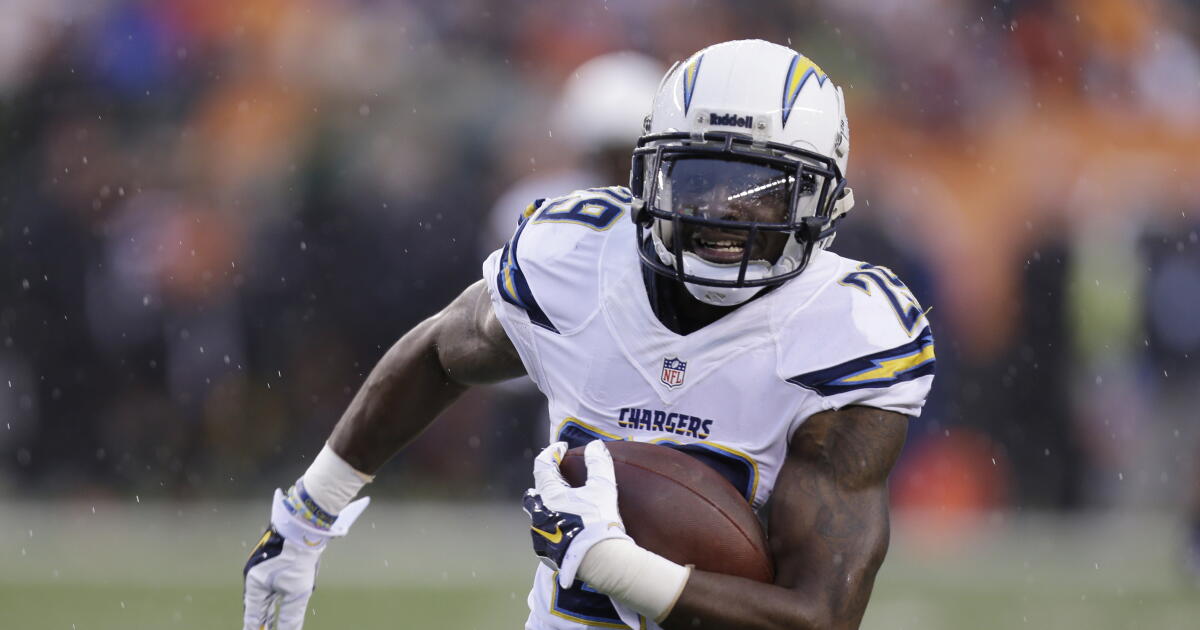
Wright, a 5-foot-11, 184-pounder, was a third-round draft pick for the Chargers in 2011. He also played for the Baltimore Ravens, Buffalo Bills and Houston Texans before his NFL career ended after the 2018 season.
Before all that, though, Wright was a standout running back and defensive back at Colton High. He said he started receiving what seemed like special treatment from Strauss-Gordon during his freshman season in 2002. The trainer gave him the nickname “Sherry,” Wright said, and displayed a protective attitude toward him.
Wright said that he had heard rumors of inappropriate behavior between Strauss-Gordon and football players before he entered Colton as a freshman. “I didn’t believe it until it happened to me,” he said.
“The attention she showed me was different from everyone else at the time,” Wright said. “I’m a freshman. I’m not really understanding what’s going on, you know the grooming process and all those things. These are things that I’m unaware of at the time, of how predators work.”
According to the lawsuit, the relationship gradually became more physical, with Strauss-Gordon allegedly performing oral sex on Wright for the first time the summer after his sophomore year. While Wright was a junior, the lawsuit alleges, Strauss-Gordon performed oral sex on him at least 20 times and the two sneaked off to have vaginal intercourse at least 15 times during weekly captain meetings at the coach’s house.
She would “sneak me into her room and, you know, it would happen there,” Wright said.
Wright said that Harold Strauss gave no indication he was aware of the alleged relationship between his daughter and Wright.
“I don’t know how he couldn’t have known,” Wright said of his old coach, who died in 2019. “I just feel like he just kind of like ignored it.”
Wright said he also had a sexual encounter with Strauss-Gordon at the house of an assistant coach while she was housesitting. Afterward, Wright said, he told that coach and his wife about what had happened while they weren’t home.
“They kind of like, you know, laughed about it,” Wright said. “We had a little conversation about it, but it wasn’t like, ‘Oh my God!’ ”
At the time, Wright said, he didn’t realize how inappropriate the alleged relationship was .
“I didn’t think of it like, ‘Hey this is, like, absolutely damaging to me and it’s gonna affect me in the future,’ ” Wright said. “I’m not thinking in the future. I’m thinking of like right now, of how good it felt every time it happened, every time we’re having these interactions.”
Wright said his alleged sexual relationship with Strauss-Gordon ended when he got a girlfriend his senior year, but that experience ended up affecting him for years to come.
“I’m in therapy now,” he said, “trying to help myself realize and understand what happened and how to cope with it and not run from it and not try to ignore the fact that this actually happened to me.”
“It’s just the way I’ve been feeling about women in general and the respect that I have and my overall outlook on sexual interaction, and just me looking back at it, you know?” Wright added. “And me chasing that sexual sensation that I was feeling as a kid when that was happening and me trying to find a woman that can make me feel this way. And I’m chasing this in different women and just not really being willing to, like, settle with one woman and just having thoughts about what was happening to me.”
It wasn’t until his NFL career was over, Wright said, that he told his mother about the inappropriate sexual relationship he allegedly had with an adult while in high school. Telling her, he said, was a turning point for him.
“I had told adults in the past and it was like a joke to them,” Wright said. “When I told my mom it was, like, serious. She didn’t laugh about it, she didn’t joke about it. She was hurt and sad and she was disappointed and she was upset. … And the way she felt, it made me look at it differently and just feel differently about it. She just made me think about it a little bit differently. So that happening and me having kids and being a father now, that kind of led up to me feeling like I wanted to do something about it.”
Now, Wright said, his focus is on helping others in similar situations.
“I just hope that I can encourage young kids that this is happening to speak up about it, to understand that it’s not OK for you to be having any sexual interaction with an adult,” he said, “Whether it’s someone in your household or someone at your school or someone at work or whatever situation you’re at, to understand that it’s not OK. As much as it feels good or as much as you think it’s cool, it’s not. And it’s not healthy. I just want to encourage kids, to give them the strength to be able to talk about it and to tell someone that can help them.”
iQOO is adding one more device to its Z Series with the launch of iQOO Z9. According to the company, the smartphone will be launched in India on March 12, 2024.
Sharing details about the smartphone, the company said that the smartphone will be powered by the segment’s first MediaTek Dimensity 7200 processor.
“With an AnTuTu benchmark score of over 7.3L+, the iQOO Z9 stands out as the fastest device in its segment, rivalling even higher-priced competitors,” the company said in a release.
In terms of camera, the smartphone will come with a 50MP Sony IMX882 camera combined with OIS capability.
“The iQOO Z9 takes display technology to new heights with the brightest AMOLED in the segment, boasting an astonishing 1800 nits local peak brightness. The 120Hz Ultra-Bright AMOLED, coupled with a 300Hz touch sampling rate, guarantees a visually immersive and responsive gaming experience,” the company said.
The smartphone is also equipped with dual stereo speakers and is around 7.83mm thick with a 5000mAh.
In terms of design, it features a unique brushed pattern with a striking contrast between the black camera module and the Green metallic overall look. “The Brushed Green variant is designed to stand out, featuring a stunning metallic finish that exudes sophistication,” the company said.
Canada’s government is reimposing some visa requirements on Mexican nationals visiting Canada, an official familiar with the matter told The Associated Press on Wednesday.
Canada Immigration Minister to announce changes in visa rules for visitors from Mexico (File Photo)
Quebec’s premier has been urging the federal government to slow the influx of refugees which he says has been straining resources.
Hindustan Times – your fastest source for breaking news! Read now.
The official spoke on condition of anonymity as they were not authorized to speak ahead of the Thursday announcement. The official said the new rules will take effect late Thursday and they won’t mean a complete return to pre-2016 rules. Canada’s immigration minister is expected to announce details.
Prime Minister Justin Trudeau’s government lifted the visa requirement for Mexican visitors in late 2016, removing a major irritant in relations between the two countries.
But Canadian Immigration Minister Mac Miller has said asylum claims from Mexico have shot up since Canada lifted the visa restriction in 2016. Canada getting rid of visa free travel from Mexico is also expected to reduce the number of illegal crossings of Mexicans into the U.S. from Canada.
In 2023, Canada’s Immigration and Refugee Board had 17,490 claims from Mexico, making up 19% of claims referred that year. A year prior, the number was 7,483 making up 12% of claims.
Previously, refugee service providers in Montreal have said that Mexican families are fleeing violence, insecurity and a lack of jobs in Mexico.
Canada only grants asylum to people it believes cannot safely live in any part of their home country because officials are unable or unwilling to provide those conditions.
During his daily press briefing Wednesday morning, Mexico President Andrés Manuel López Obrador suggested Canada was going to announce actions when he took a reporter’s question about potential U.S. tariffs on Mexican steel exports and launched into a rambling complaint about a lack of respect coming from Mexico’s North American neighbors.
The president said that conservative forces in Mexico had been lobbying in the United States and Canada for actions that would reflect poorly on his administration. He mentioned U.S. complaints about fentanyl production in Mexico and assertions by both the U.S. and Canada that Mexico was not doing its part to control immigration flows.
“The immigration issue, it’s Mexico’s fault,” López Obrador mocked. “’We’re going to build a wall and that’s how we’ll solve the problem. We’re going to militarize the border and that’s how we’ll solve the problem.’”
“And now Canada is doing the same, they’re wanting to take measures against Mexico; we really regret it,” López Obrador said. “They’re negotiating to reach an agreement, that we can control the migration flows to Canada, as we always have. And we have acted generously toward them, with the administration of Prime Minister Trudeau, but they were already at the point of imposing unilateral measures, right now, when there are elections in Mexico.”
López Obrador also raised the possibility that he would not attend the North American Leaders’ Summit, scheduled for April in Quebec. “If there isn’t respectful treatment, I don’t participate,” he said.
I’ve said it before, this is the greatest new British musical for years. Transferring from the National Theatre to the West End’s Gillian Lynne after bagging Best New Musical and Best Original Score at the 2023 Olivier Awards, Britpop legend Richard Hawley’s back catalogue soundtracks a gut-punchingly charged tale of three sets of inhabitants of one flat across six decades in Sheffield’s iconic brutalist Sky Hill estate.
The spectacular set towers over us, complete with the iconic neon sign saying, “I love you, will you marry me,” and, as in reality, it only sometimes lights up. The sensational rock orchestra tucked onto the estate’s overhead walkways sighs and swoops over tender moments or erupts into stadium-filling fury as the magnificent cast tell the stories of a particular place at a particular time that is also all of us and all of our stories.
In 1960 a working-class couple move into the wondrous new “castle in the sky.” In 1989 their grown son returns to the crumbling estate and falls in love with a young Liberian refugee before Londoner Poppy buys the gentrified flat in 2015, fleeing her cheating girlfriend.
The timelines interweave on stage, often sharing the same space simultaneously, layering in the emotions alongside potent social and political commentary. Chris Bush’s note-perfect script tugs and heartstrings as much as it tickles funny bones. Too many shows overdo the misery or suffering, which usually leaves me cold. Make me laugh, make me care – and then I will cry.
We’re won over with a glorious barrage of references to poncey Southerners’ love of Ocado and vegan cuisine, Sheffielders’ devotion to Henderson’s Relish, and one older chap drily admitting he loves Sheffield Wednesday AND much-maligned United more than his wife. And then, only then, our wide-open hearts are torn apart.
There’s much debate over the music and its place here. A colleague suggested the book is strong enough to be a standalone play. Some critics have questioned whether the songs slow down the narrative. Jukebox musicals about pop icons like Tina Turner or the Temptations too often suffer from inserted hits that vaguely, creakily fit the story… just about.
Hawley’s exquisite compositions through the years are more like living poetry and have been steadfastly inspired by his city, its landmarks and its people. His own working-class roots weave through his blood and bones. I see this as a play with a soundtrack, the songs inform and enhance the mood of a scene and often provide a moment for us to reflect. Savour his lyrics as the orchestrations carry you away.
The Act 1 finale after Thatcher’s 1979 election victory is a spine-tingling explosive of sound and fury to There’s A Storm A-Comin.’ Hawley’s gorgeously tender mix of melancholy and painful acceptance pierce the beautiful After The Rain and For Your Lover Give Some Time.
The entire cast is superb, the musicians shine and the inventive, propulsive choreographry works shopping trolleys and swinging carrier bags into a Sheffield version of La La Land. The surging storylines finally coalesce to blow us away in a crescendo of love, heartbreak and the acceptance that life goes on. We must not forgot who and what we have lost, individually and as a nation, but we must look up and move on. That neon sign will shine again.
Yes, we know I’m a crier, but I was not alone, tears streaming, as we rose, roaring, to our feet at the end.
STANDING AT THE SKY’S EDGE IS CURRENTLY PLAYING AT THE GILLIAN LYNNE THEATRE
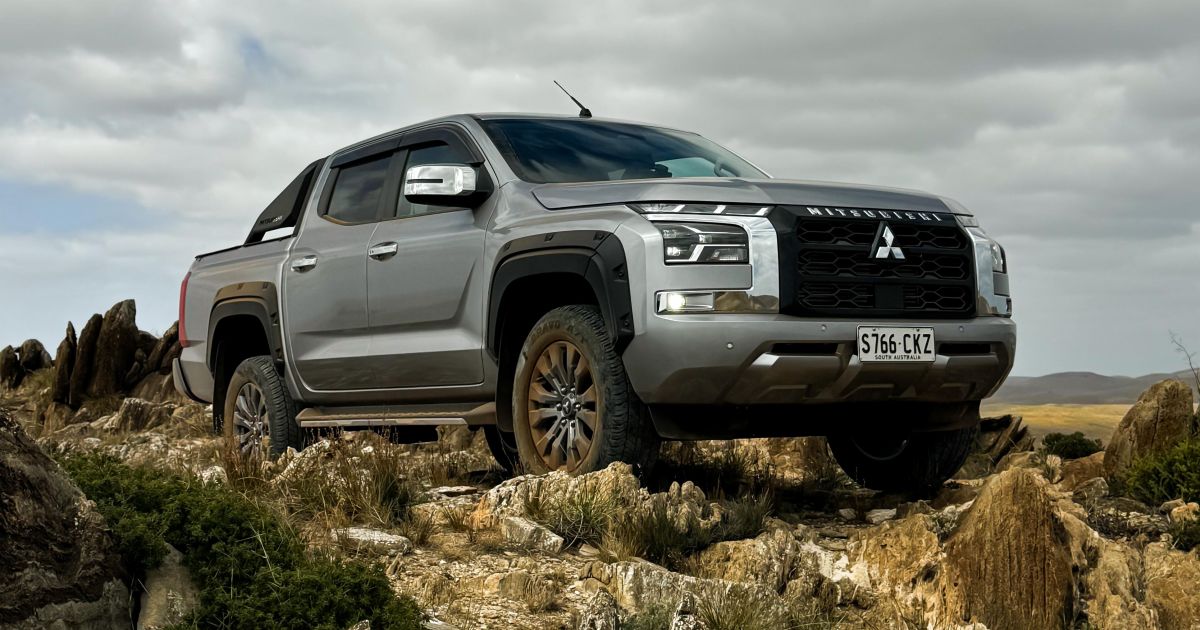
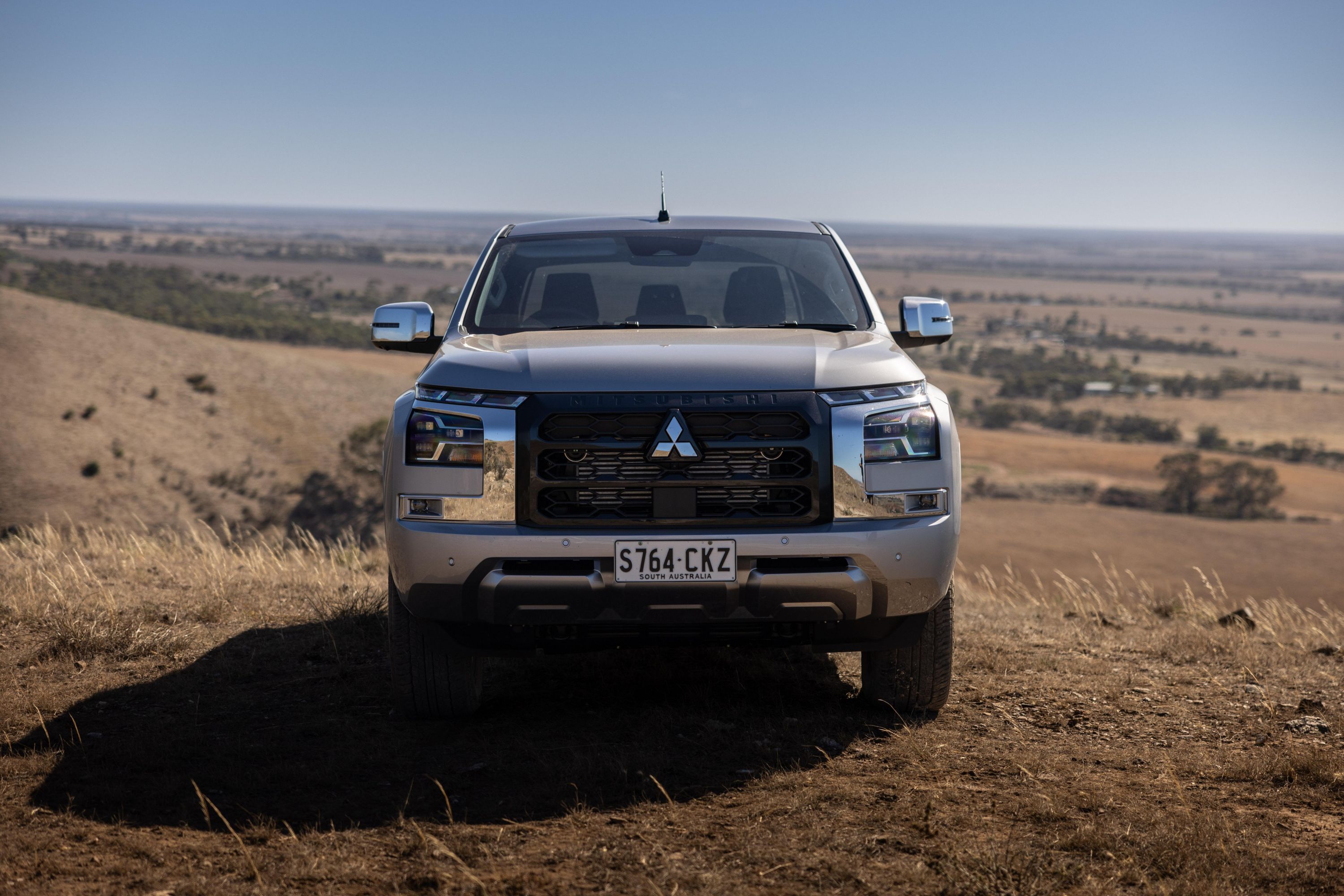
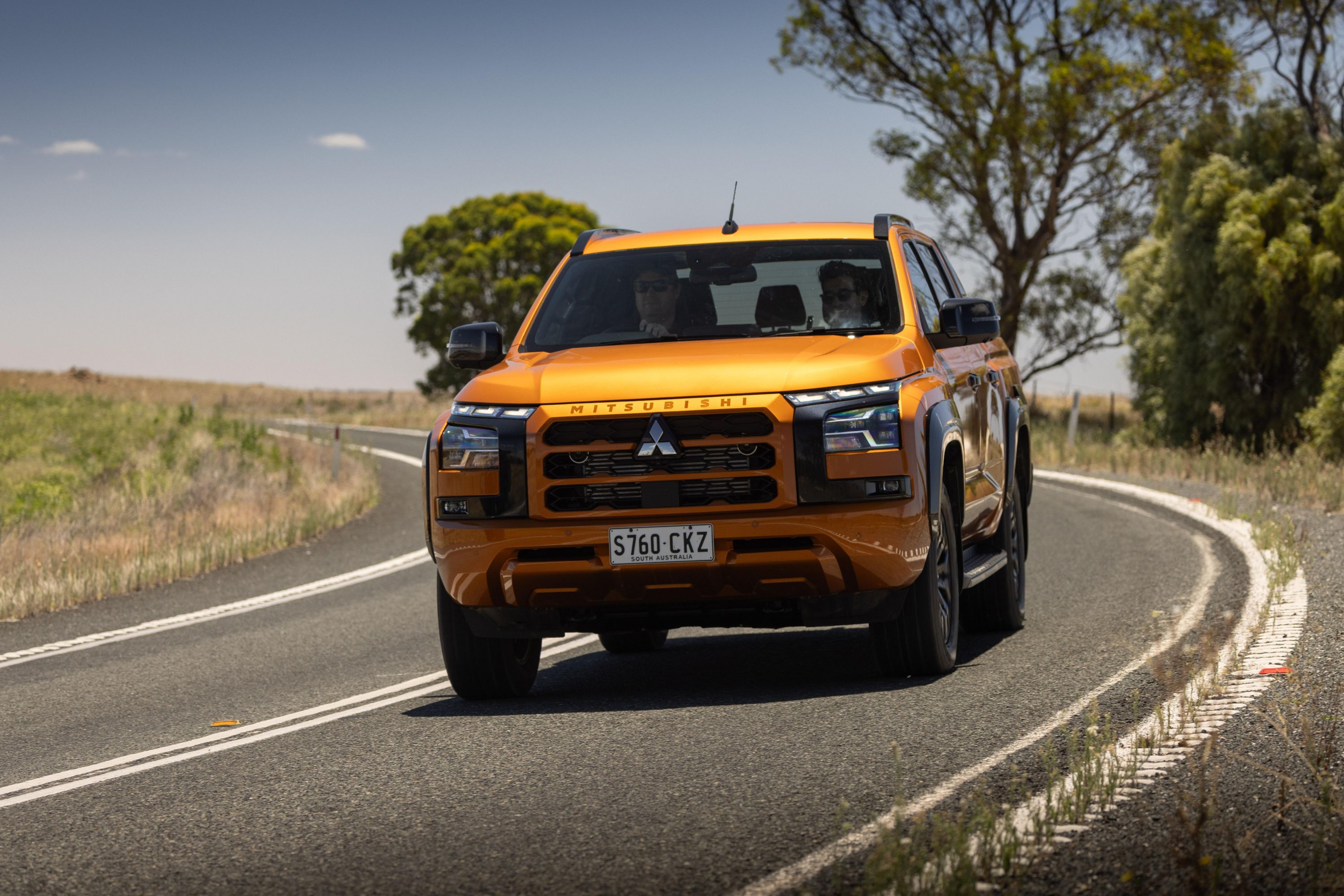
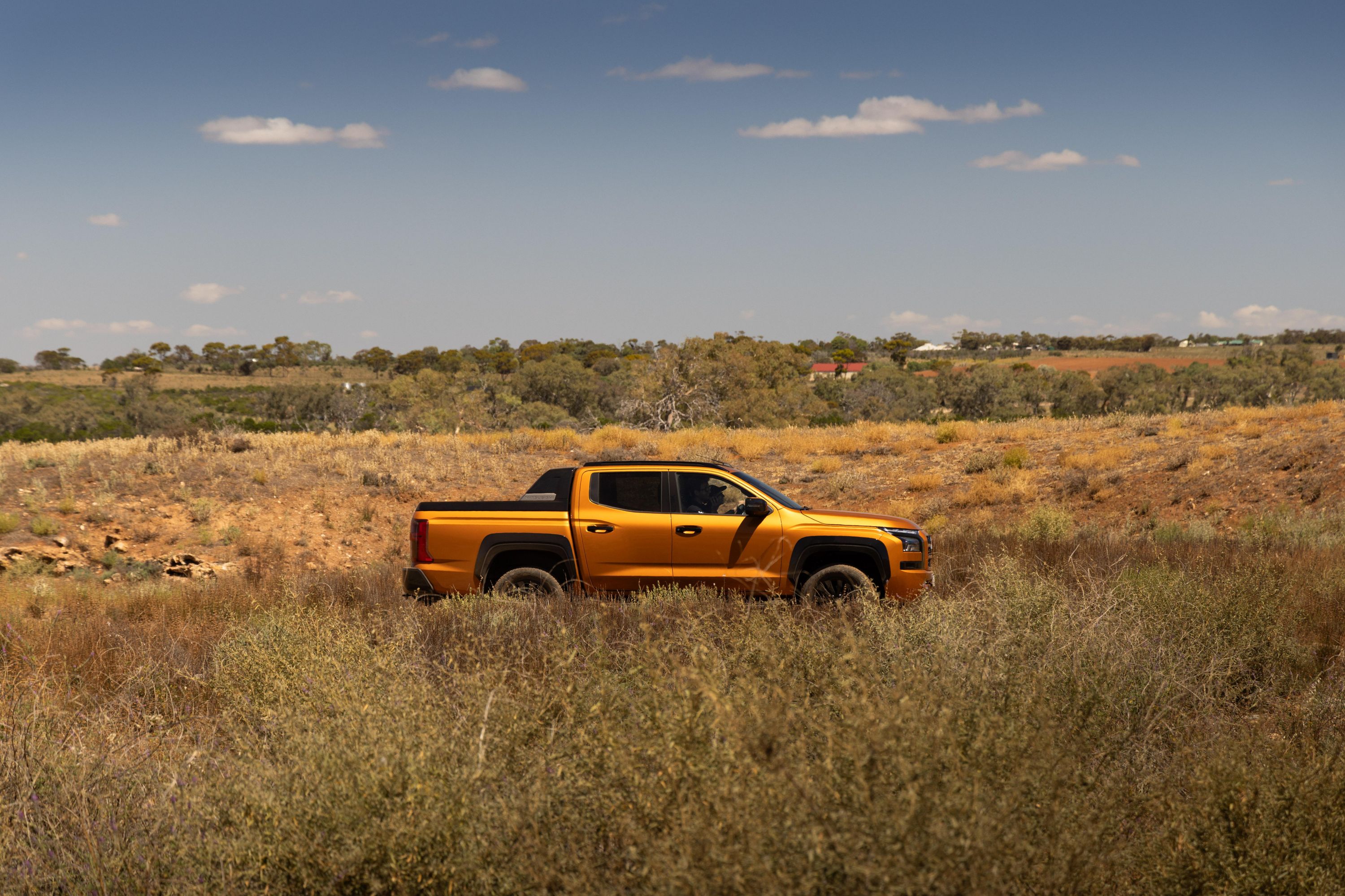
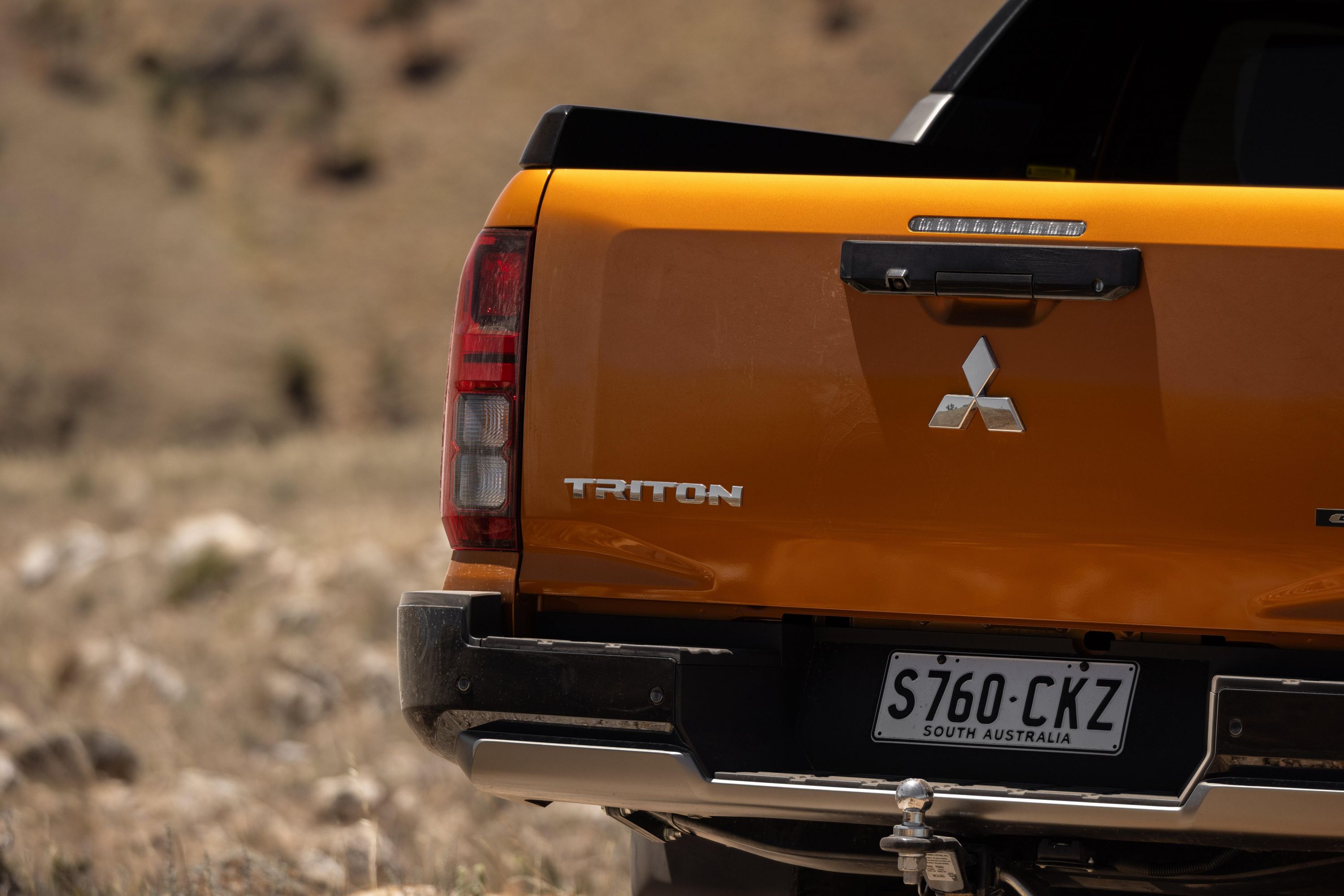
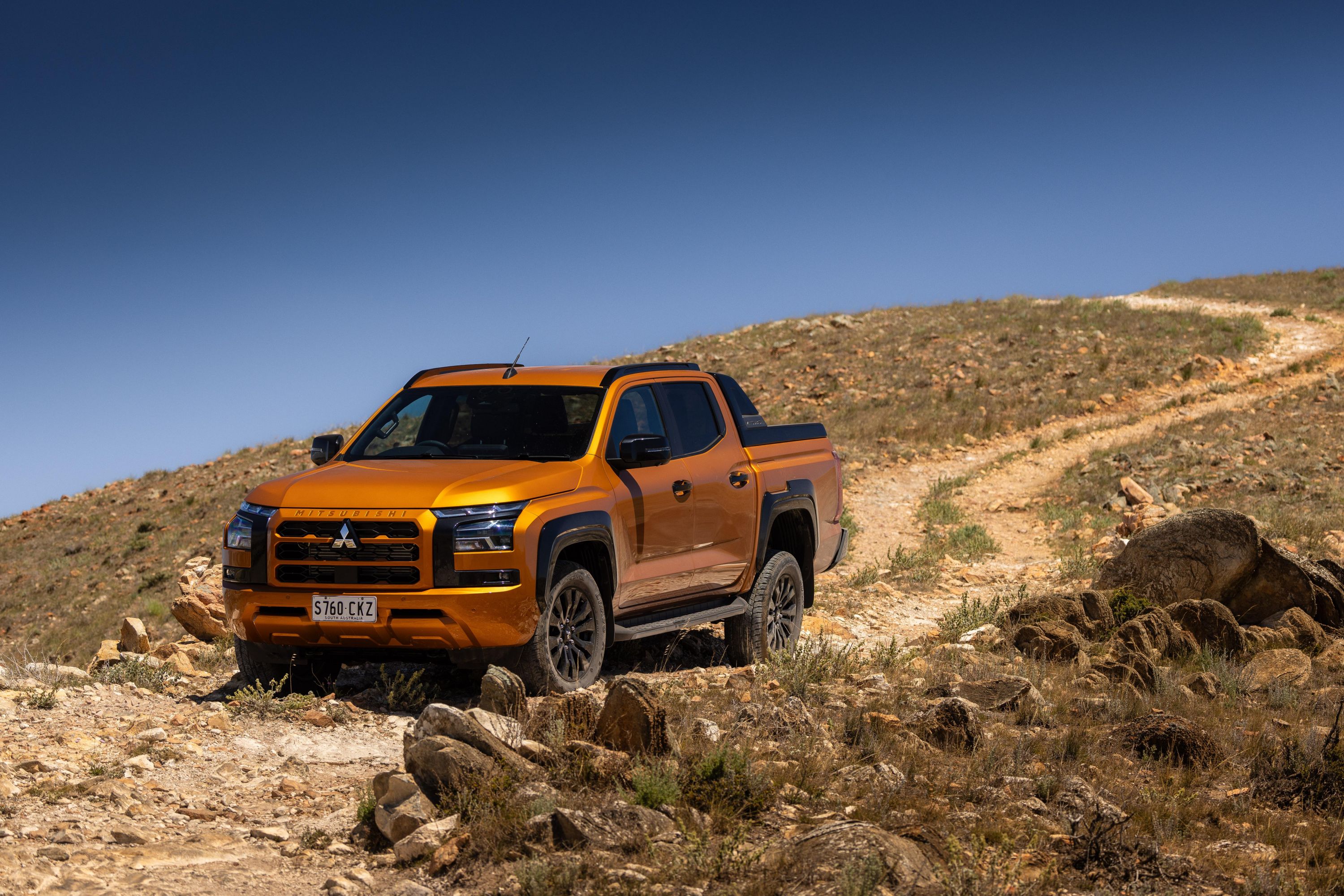
The 2024 Mitsubishi Triton has finally landed in Australia.
GSR
It’s the brand’s second-best seller behind the Outlander SUV, and shapes as a critical product for the company in ute-hungry Australia.
Now in its sixth generation, the Triton – or L200 as it’s known elsewhere – is marketed in nearly 150 countries and has sold a cumulative 5.6 million units worldwide since the original launched in 1978.
Australia ranks as its third largest market behind ASEAN (Association of Southeast Asian Nations) and Latin America. Last year some 16,600 examples of the previous model were registered Down Under; the year before that over 27,400 examples found Aussie homes.
That’s despite the fifth-gen Triton turning 10 years old in 2024, and being up against incredibly strong rivals that probably need no introduction – the Ford Ranger, Toyota HiLux and Isuzu D-Max to name a few.
Mitsubishi has gone hard on capability and technology for this latest iteration, with notable gains in size, practicality, towing capacity, performance, and of course safety – all areas where old one was fast falling behind the pack.
WATCH: Paul’s first drive of the Triton off-road!
Ride, handling and refinement were also high on the priority list, with a new, more rigid chassis underpinning the dual-cab ute. It packs suspension revisions and a new variable power steering system for a more confident and engaging drive.
Mitsubishi Motors’s chief product specialist, Yoshiki Masuda, said development of this ‘New-Gen Triton’ started in 2017, and the company’s local arm hopes it can help catapult it back into the third spot on the sales charts behind the Ranger and HiLux.
We headed to South Australia to properly trial the new ute on-road and off-road to see if it has a good shot at hitting those goals.
How does the Mitsubishi Triton fare vs its competitors?
View a detailed breakdown of the Mitsubishi Triton against similarly sized vehicles.
Mitsubishi
Triton
How much does the Mitsubishi Triton cost?
Pricing for the new Triton is up to $7600 dearer than the equivalent predecessor, and at launch just dual-cab versions with automatic transmissions will be offered – though Cab Chassis, Club Cab and manuals are all on the way.
To see how the new Triton stacks up against its rivals, check out our comparison tool.
What is the Mitsubishi Triton like on the inside?
If the new exterior look was a big change, wait until you hop inside.
GSR pictured
The old Triton was feeling old inside particularly in terms of tech and design. Here, Mitsubishi has taken an almost two-generation leap.
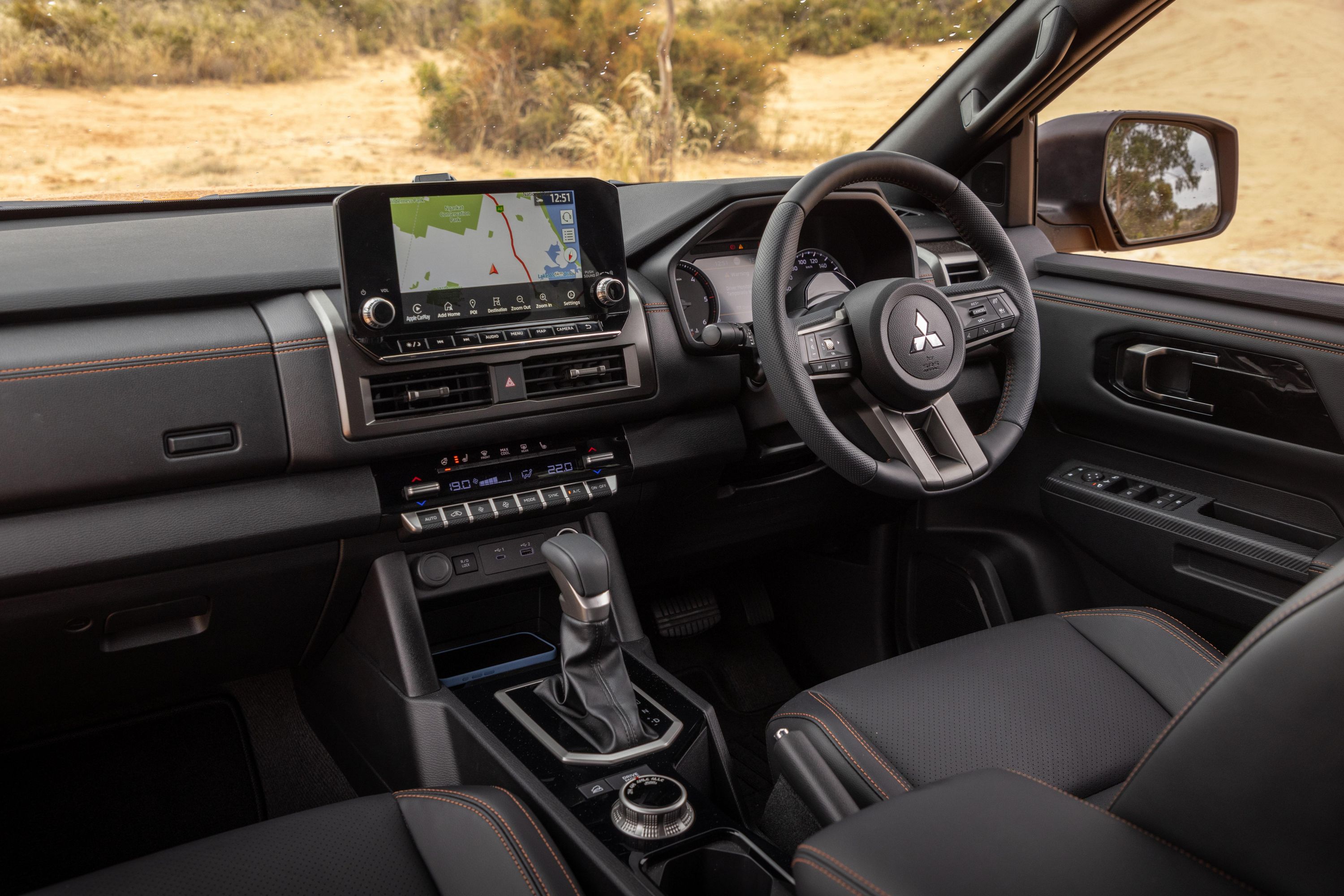
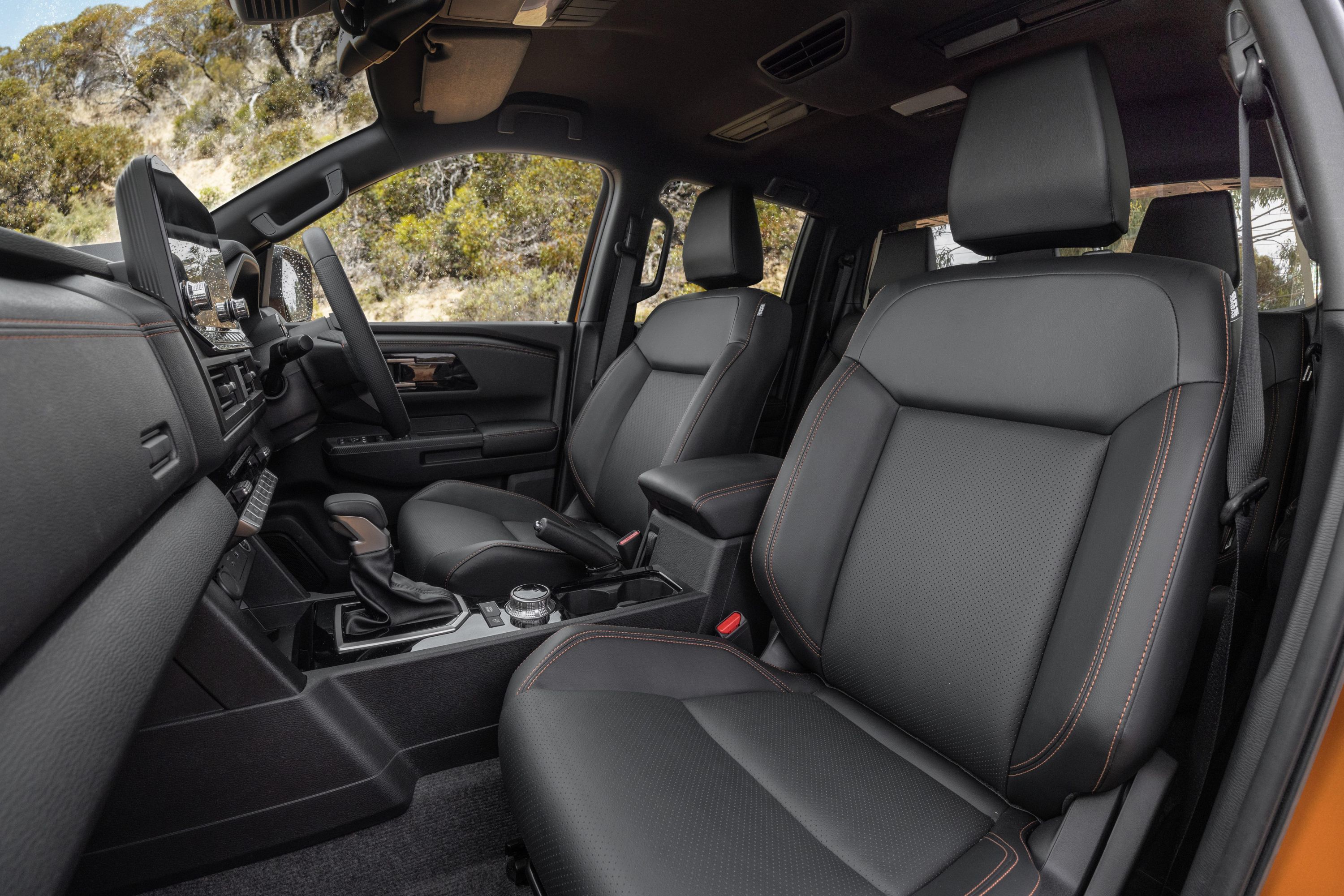
It’s a very bluff and upright design, with plenty of straight lines and chunky buttons to reiterate the tough and rugged pitch. But look closer and it gets some handy new displays that won’t scare off a Ranger or Amarok, but definitely take the Triton from being one of the worst to one of the best in segment.
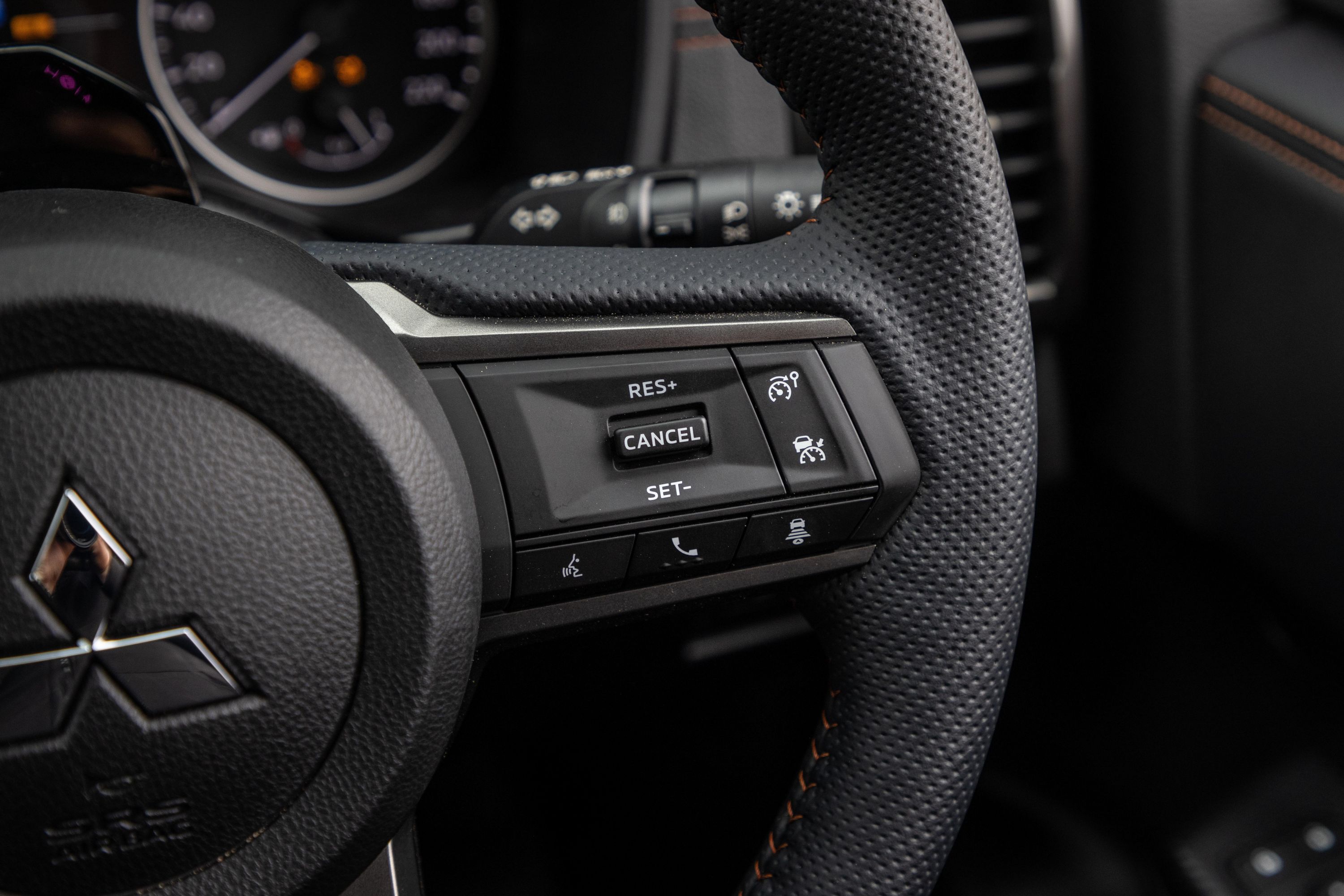
A tactile new steering wheel looks like it could have come out of a Lancer Evolution, with a sporty circular hub and a thin rim that feels just right. There’s no fully digital instrument cluster, but the new 7.0-inch TFT display flanked by clean and classic analogue dials works just fine here.
The standard 9.0-inch central touchscreen is a freestanding design and is effectively lifted out of various Renault-Nissan-Mitsubishi Alliance vehicles like the Outlander and Nissan X-Trail SUVs.
It comes with satellite navigation, as well as wireless Apple CarPlay and wired Android Auto from the base GLX grade, though you need to step up to the GLX+ for DAB radio.
As in the other Alliance models this unit features in, it’s user friendly, well featured, and the 9.0-inch display is good for the segment. The glossy black finish could be prone to scratches and fingerprints, however.
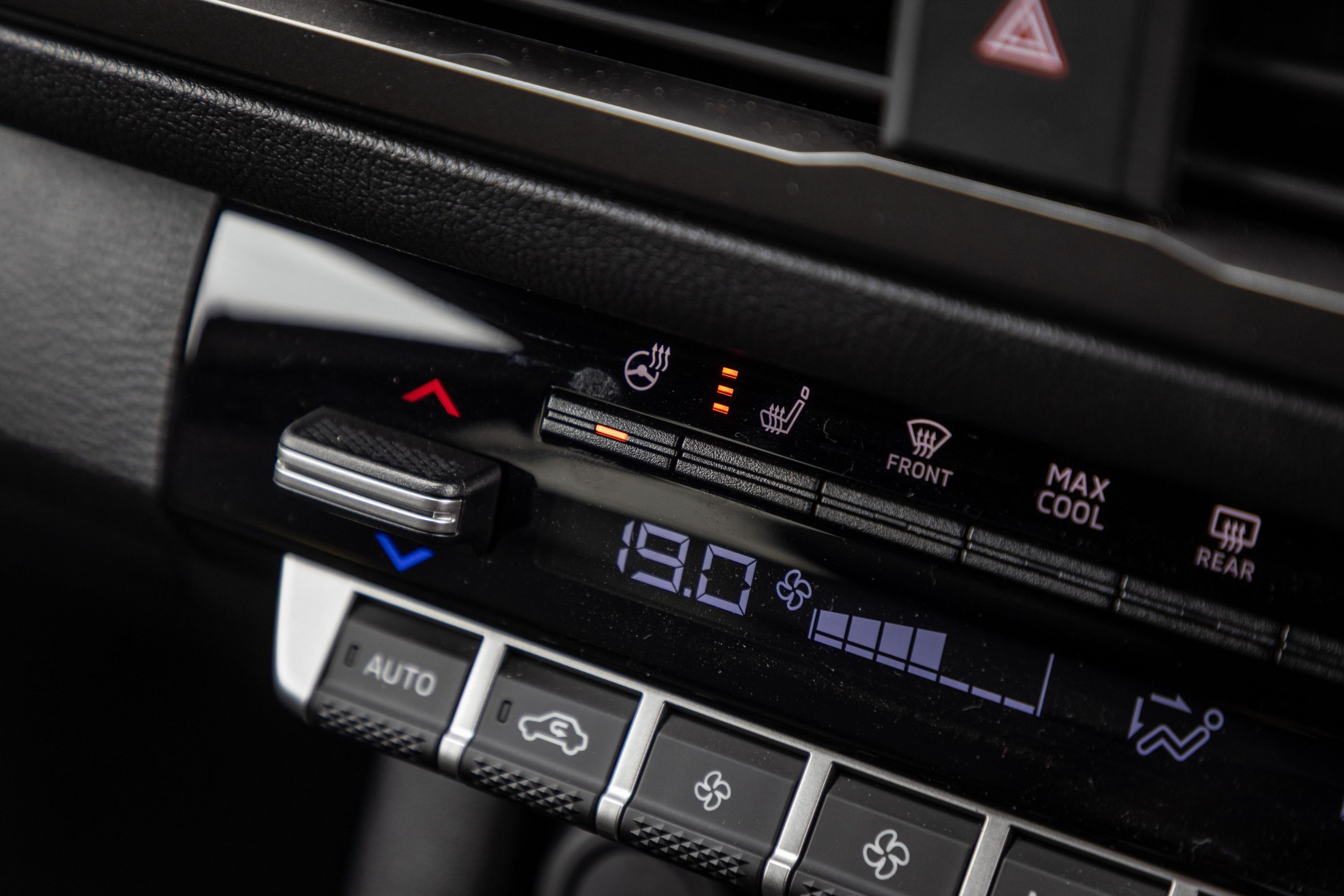
The toggle-style switches for the climate controls look good and are tactile to use, and there are storage options including a rubberised phone holder that doubles as a wireless charger on the GLS and GSR.
We only trialled the GLS with Leather Interior Option ($1500) and GSR both with leather upholstery and powered driver seats. In these specs the captain’s pew is comfy and supportive for long journeys, though sportier side bolstering would have been welcome for harder cornering or when venturing onto the rough stuff.
Mitsubishi says it has raised the hip point of the driver’s seat by 20mm for a more upright posture, and the available power lumbar support offers better comfort and support on the lower back.
Door handles and the 4WD selector have been designed to be the ‘perfect fit’ for fingers, even when using gloves. The 4WD selector’s push and rotate operation is claimed to stop fingers from hitting other panels.
Likewise the steering wheel rim has been carefully design to offer secure grip for fingers, as well as a thumb rest for when ‘gripping softly’.
Other practical solutions include dash-mounted cupholders in the flagship GSR – why not across the range? – as well as door pockets large enough for big bottles and an A4 clip board.
Behind the front passenger’s seat are personal device pockets that can hold a laptop and phone while they’re connected to charge ports.
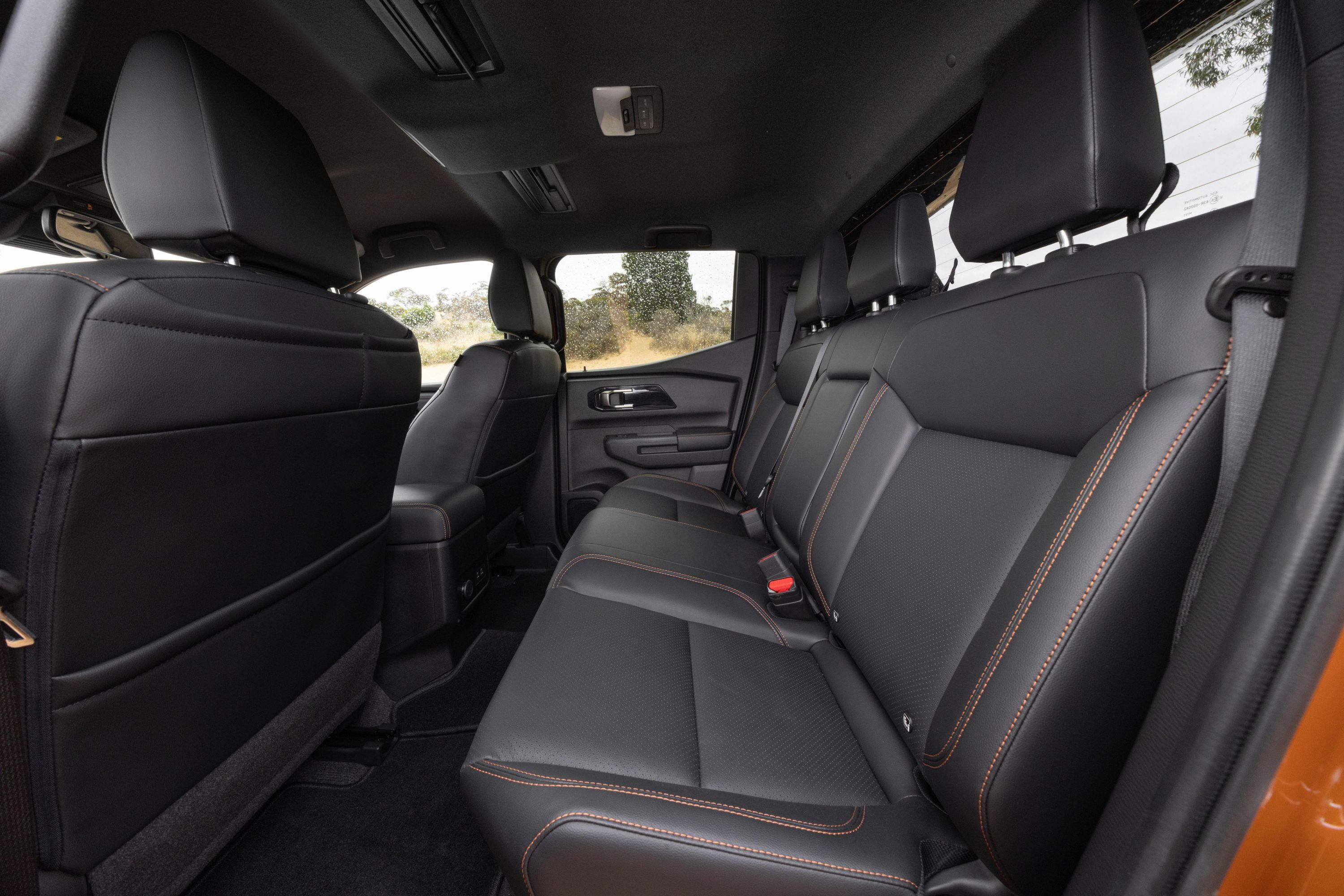
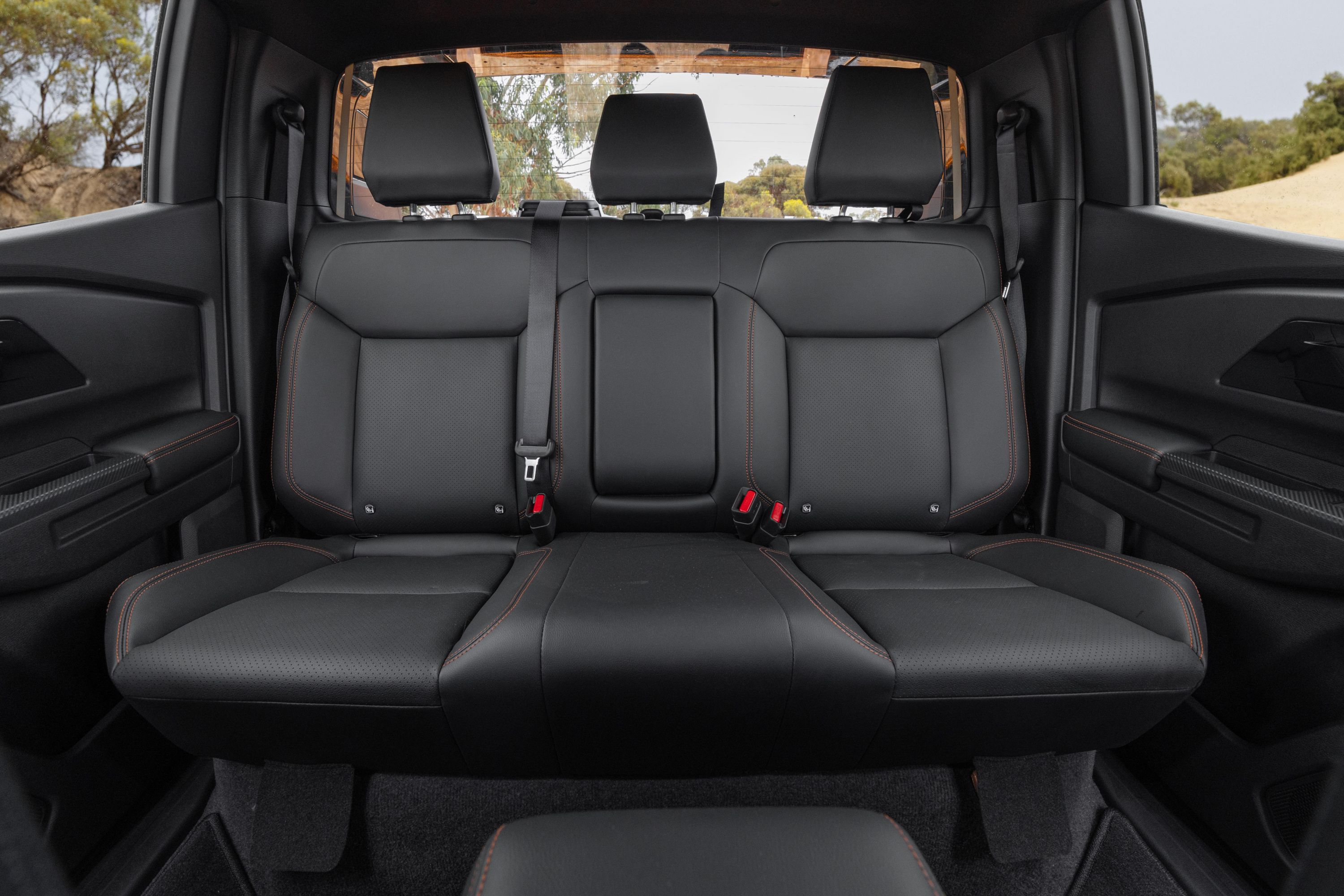
The swollen vehicle dimensions have opened up more space in the rear. Where the old Triton was compact by ute standards, the new one is a more practical option with very good seating for four, five at a pinch if you need.
A fold-down centre armrest with cupholders is handy when only the outer seats are in use, and Mitsubishi has retained the roof-mounted rear air circulator which claims significantly improved A/C performance compared to the old model.
Parents planning to use their Triton for work and play can secure little ones using the supplied ISOFIX anchors and top-tether points where required.
The tub has been revised to offer a 42mm lower load floor height for easier access, which now sits at 821mm off the ground for models fitted with 18-inch wheels. When fitted with a bedliner, the Triton has capacity for a standard Euro pallet.
The tray for Dual Cab versions has grown 35mm in length to 1555mm, with width quoted at 1545mm. It’s 526mm deep, and there’s 1135mm between the arches. A full-size spare wheel lives under the tray.
What’s under the bonnet?
The Triton has been treated to a new Euro 6-certified bi-turbo diesel.
Model
Mitsubishi Triton 2.4 4N16
Engine
2.4L 4cyl bi-turbo diesel
Power
150kW (3500rpm)
Torque
470Nm (1500-2750rpm)
Transmission
6-speed automatic
Driven wheels
Rear-wheel drive or four-wheel drive
Weight
2000-2170kg (kerb)
Fuel economy (claim)
7.5-7.7L/100km
Fuel tank size
80 litres
Gross vehicle mass
3070kg (2WD) to 3200kg (4WD)
Gross combination mass
6210kg (2WD) to 6250kg (4WD)
Payload
1030kg (GSR) to 1110kg (GLX+ Club Cab)
Braked towing
3500kg
How does the Mitsubishi Triton drive?
The old Triton always drove well enough, but the new one has to prove itself against segment leaders.
Our first stint behind the wheel was leaving the Adelaide Airport and out into the hills, over a mix of city, suburban, highway and country driving.
From the get-go, the Triton’s new Euro 6-certified bi-turbo diesel showed excellent refinement for the class, with minimal noise intrusion and clatter relative to what is a fairly agricultural segment, and pretty smooth pulling power in everyday scenarios.
The six-speed automatic – while down on cogs compared to some rivals – shifts smoothly and decisively. Media quizzed Mitsubishi as to why the Triton didn’t move to the eight-speeder found in the Pajero Sport, though Masuda-san said the existing six-speed was found to be the best fit for the Triton’s application, with revised ratios.
It’s best driven in a measured manner, as you can reach its limits revving it out hard. The otherwise refined drivetrain can get a little vocal when pushed – and let’s face it, this isn’t a Ranger Raptor so you shouldn’t need to drive it like a performance car anyway.
Perhaps my highlight of the Triton’s drive experience is the steering, which is among the best systems I’ve experienced in a dual-cab ute of late.
The new variable-ratio electronically-assisted rack balances manoeuvrability and feel very nicely, and makes the Triton feel like a much smaller car than it really is. It also does a great job of avoiding the vagueness around centre you get in some other utes and 4WDs with super light electric steering.
It offers accurate responses, and weighs up as the speed climbs or lock increases. It inspires more confidence both in corners and the open road, but also helps to avoid that twirly-whirly feel when doing carpark manoeuvres.
There’s also a new Active Yaw Control function which uses torque vectoring via braking for more confident cornering. While it didn’t explicitly make its presence felt, that’s kind of the point.
Road noise is kept at bay pretty well, though those big mirrors bring about a bit of wind whistle and buffeting once you start driving at over 100km/h – particularly in the windier conditions we encountered.
Masuda-san quoted a 60 per cent increase in bending rigidity and 40 per cent in torsional rigidity thanks to the new chassis frame. While there is definitely less flex and shimmying than the last Triton, we noted a pretty unsettled ride over pockmarked city streets as well as over corrugated surfaces at lower speeds.
This is where the Triton simply cannot match the likes of the Ford Ranger and Volkswagen Amarok, which are as close to SUVs as you can get for a tray-backed vehicle in this price bracket. Many Triton owners are likely to have the vehicle loaded up with weight in the tray regularly, which should offset this somewhat.
Unfortunately we were not able to test it with a payload beyond people and luggage, nor did we perform any kind of tow test. It will be interesting to see how the new bi-turbo oiler fares with more weight tacked on, given the Triton now quotes 3.5 tonnes of braked towing capacity.
During our Dual Cab Ute Mega Test in 2023, CarExpert found the entire field of four-cylinder utes were unable to reach 100km/h on the high-speed bowl at our Proving Ground towing a 1600kg trailer dynamometer set to 3 kilonewtons (kN), which is designed to simulate a fairly steep ascent – we’ll have to put it to the test with a longer loan.
The Triton otherwise was pretty well-sorted in other on-road scenarios, save for a couple of mid-corner skips when going over a bump during a turn at speed. You could feel the rear lose composure for a moment, which again may be remedied with weight in the back.
Another major development for Triton has been the assistance tech, which is now in line with the segment benchmarks. You get stuff like adaptive cruise control and lane keep assist which is helpful on the open road, while front and rear cross-traffic alerts as well as blind-spot warning help when negotiating higher traffic scenarios.
We didn’t have much trouble with the driver attention monitoring, which uses a steering-mounted camera to track the driver’s eyes and face to detect fatigue or distraction. Save for one instance while off-roading where it completely freaked out, it wasn’t as intrusive as some other systems on the market.
I will note the Triton lacks a semi-autonomous highway assistant or lane centring function like some rivals (i.e. Ranger, D-Max and BT-50) which can take the load off, but for many this is a good-to-have rather than a necessity. Thankfully the steering is accurate enough that you rarely find yourself wallowing about in your lane or having to make many corrections on the move.
Now, the rougher stuff at Eagle View 4WD Track in Sanderston, about a 90-minute drive east of the South Australian capital.
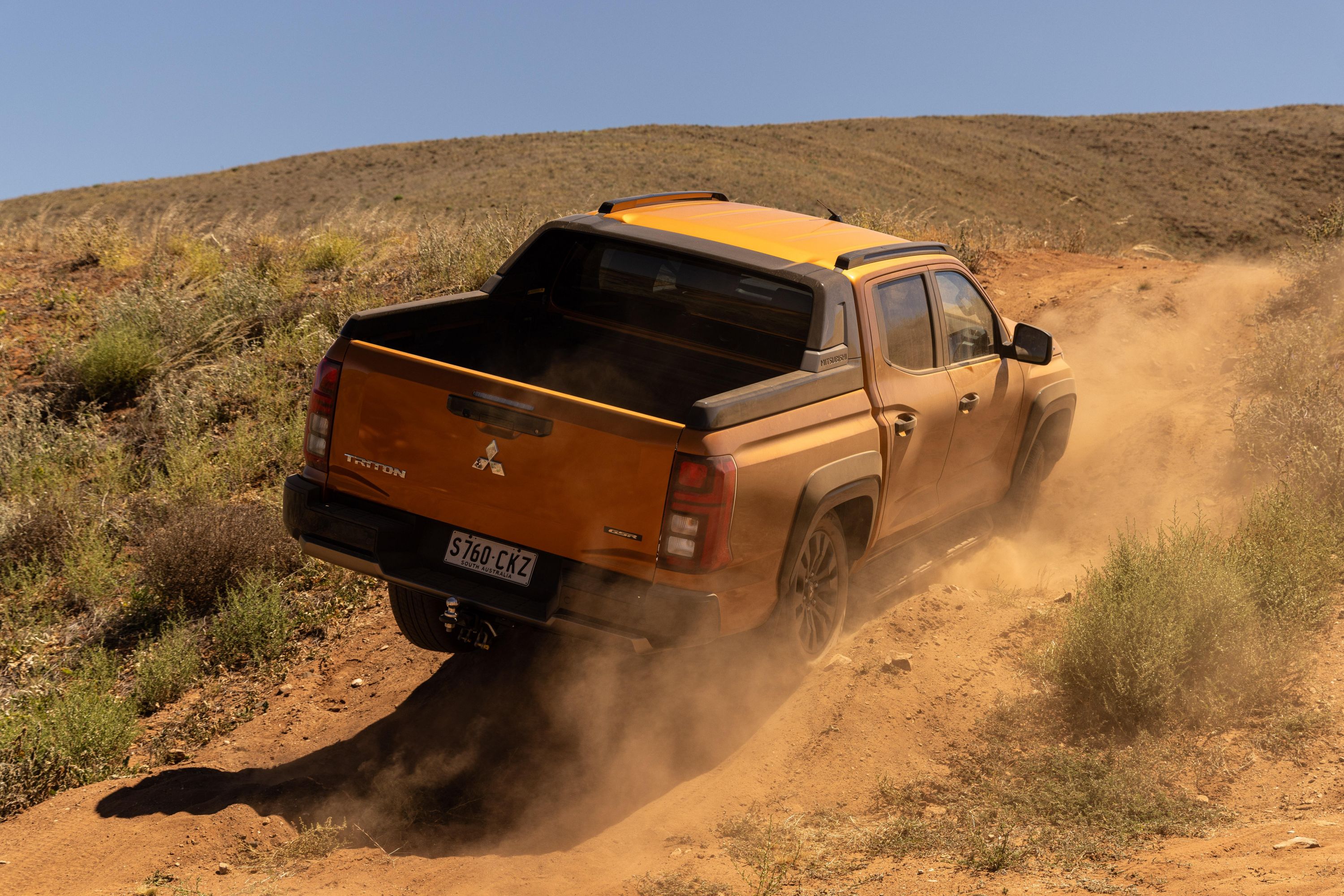
Here we took the Triton through a number of trails, which ranged from mild to more challenging dips and climbs featuring dirt, sand and some pretty rocky sections as well. We also tested out the high-spec Triton’s Super Select II 4WD system with various modes, and just general grip, clearance and articulation.
Approach, ramp-over and departure angles differ depending on grade – GLX and GLS quote 30.4/23.6/22.8 degrees respectively, while the GSR is 29.0/23.6/22.8 degrees. Minimum ground clearance is 222mm across the range for Dual Cab Pickup versions.
We drove the GLS and GSR off the beaten track, giving us access to the Triton’s full suite of 4WD features.
Most of the initial exercises were doable in the 4H drivetrain mode, which unlike most competitors is usable on sealed surfaces as well as unsealed surfaces.
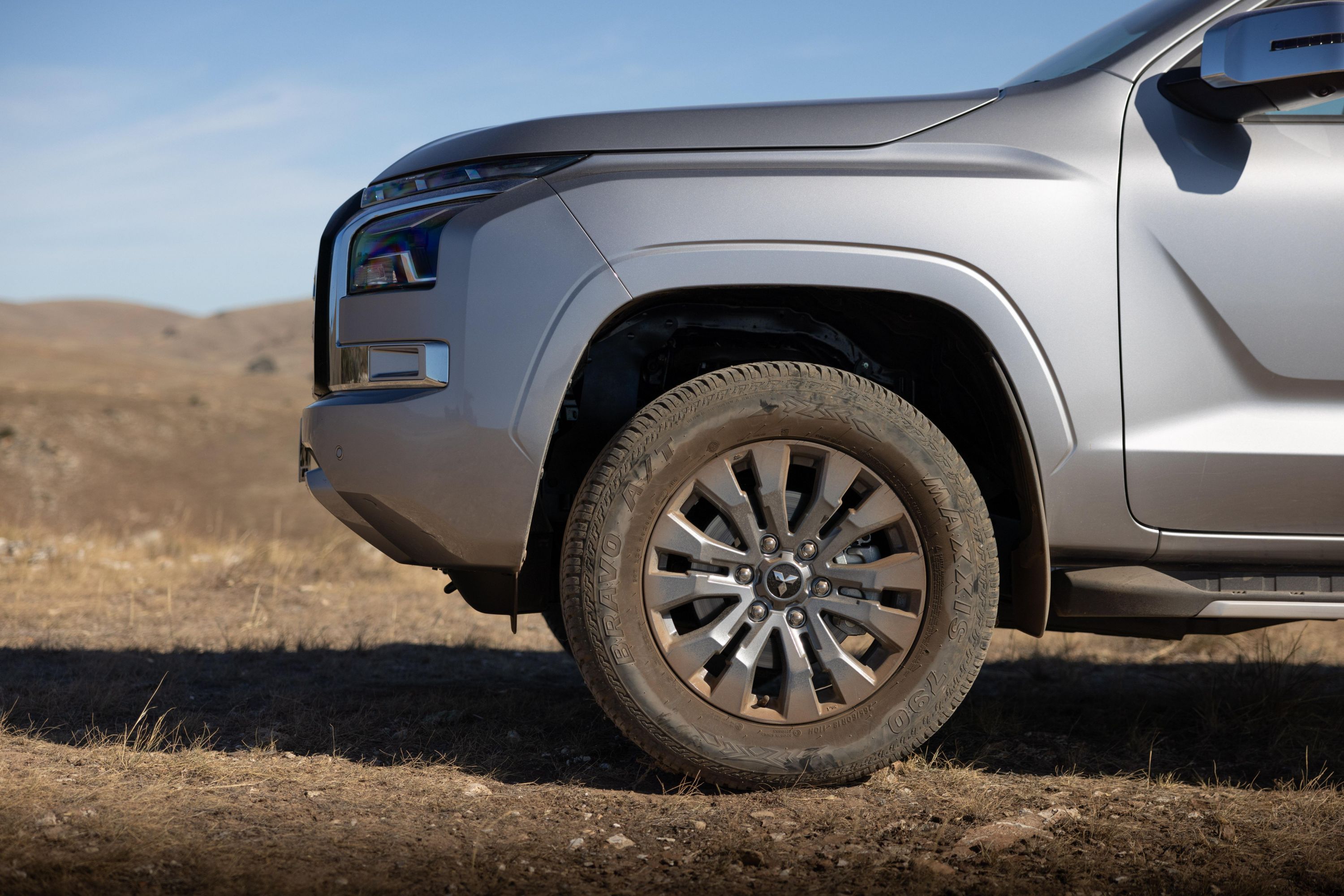
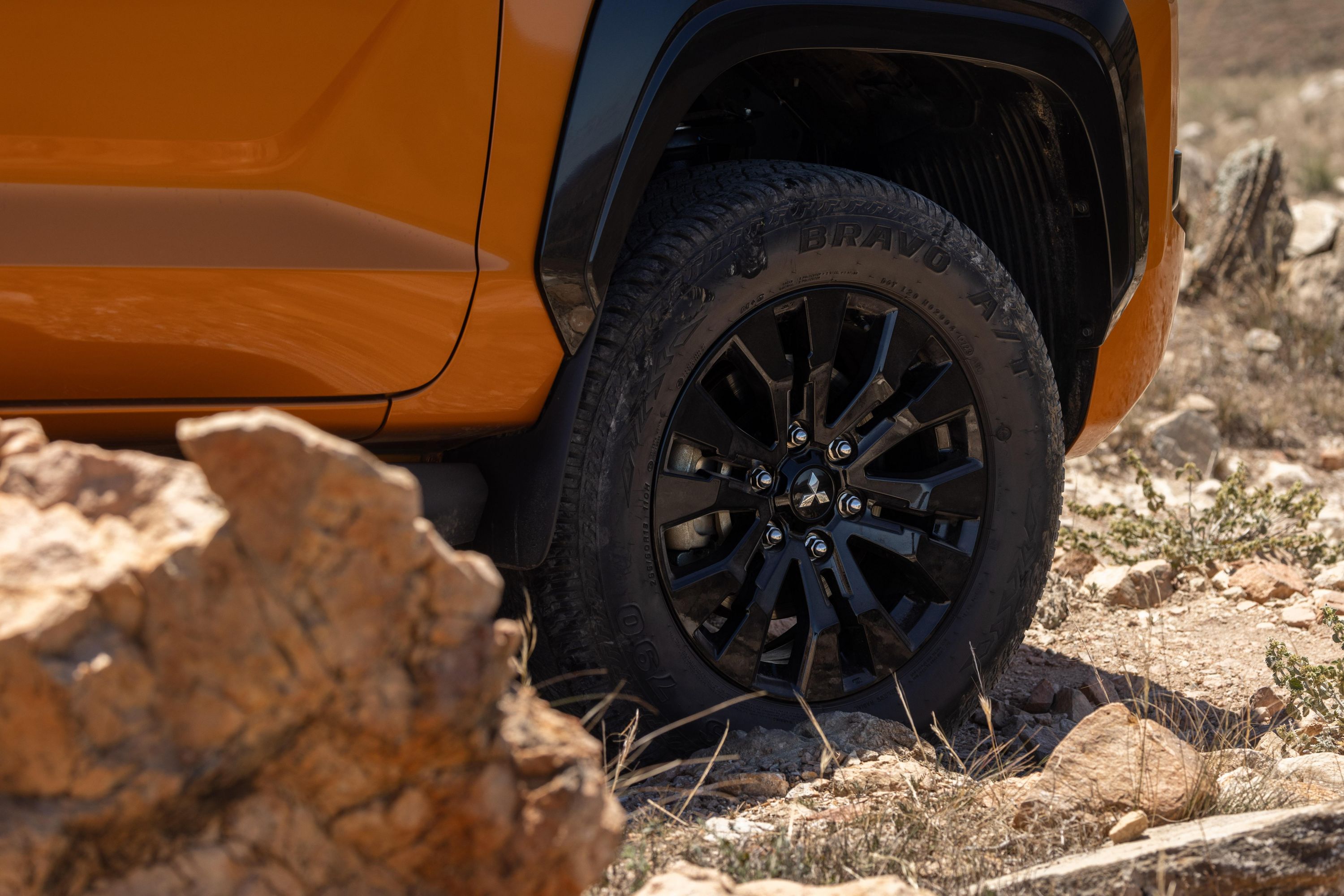
Even with jagged rock edges, sharp dips and steep climbs, the new Triton walked up like a mountain goat on its standard tyres – which on the GLS and GSR were Maxxis Bravo AT-790 265/60 units.
Using the 4HLc (with locked centre differential) makes these tasks easier but for most of the time we didn’t even need it, or to engage low range.
For a lot of people the Triton will offer more 4WD capability than you’ll ever need, and serves as a great starting point for those who frequent the aftermarket.
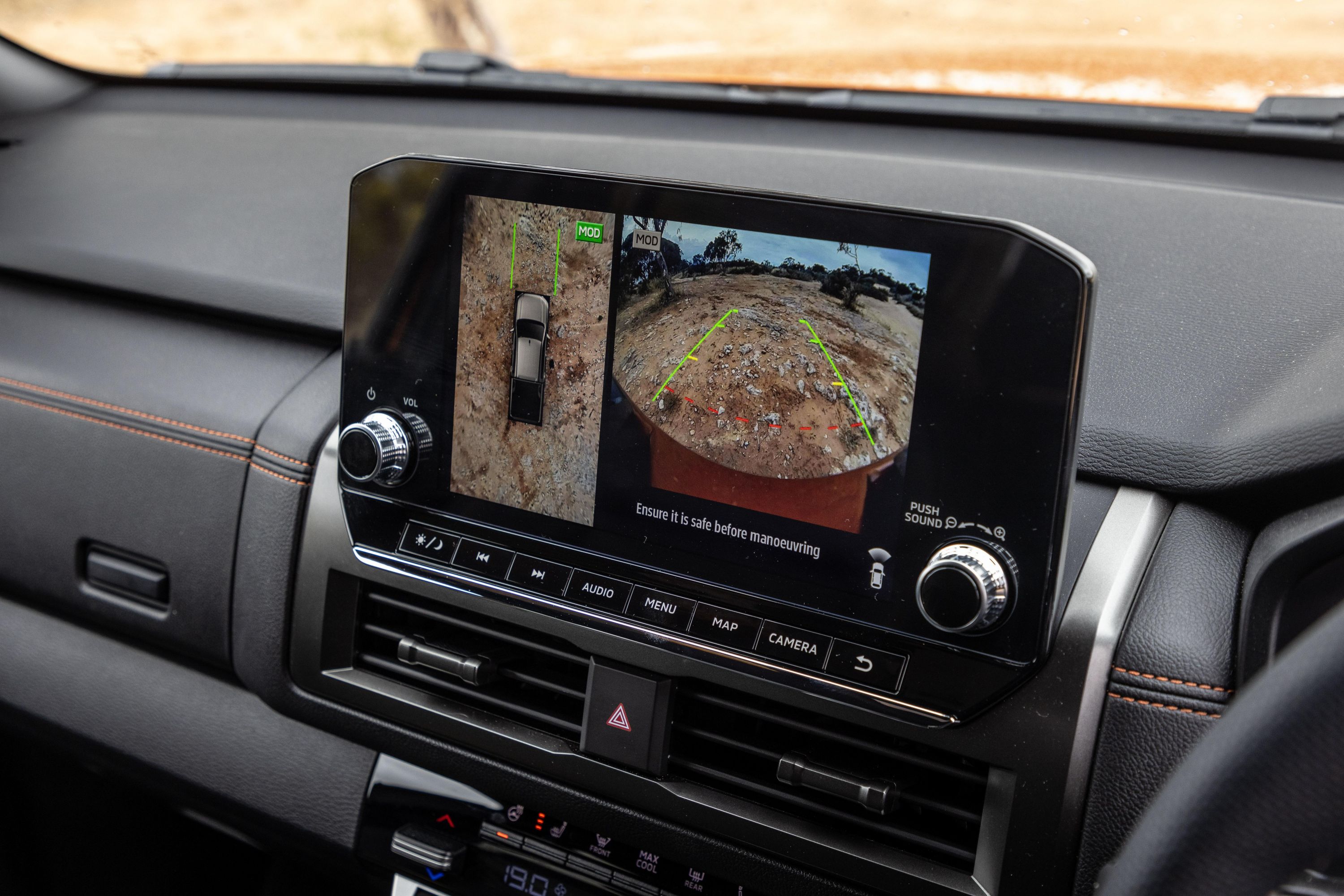
The surround camera system standard from the GLX+ grade came in handy when navigating tighter sections or driving over crests, as the Triton’s wide and bluff bonnet could limit forward visibility in these scenarios.
You can also toggle through various terrain modes which team with the 4WD modes to tailor the drivetrain response and electric assists to optimise the Triton for the terrain – choose from Normal, Eco, Gravel, Snow, Mud, Sand and Rock.
It would have been good to try the GLX or GLX+ with the standard 4WD system, or the base model without the limited-slip rear differential. But, from what I saw of said vehicles in the convoy, they had barely any more trouble than I did navigating the trails than I did in the Super Select II-equipped GLX and GSR.
All told, this won’t be knocking the Ford Ranger off its mantle anytime soon, but it’s definitely competitive with the likes of the HiLux, D-Max and BT-50 which are all still more expensive like-for-like.
What do you get?
While there have been price increases, there’s much more standard equipment.
Triton GLX highlights:
17-inch wheels
Automatic high-beam
Heavy Duty rear suspension
Keyless entry
9.0-inch touchscreen infotainment system
Wireless Apple CarPlay
Wired Android Auto
Satellite navigation
4-speaker sound system
7.0-inch TFT supervision display
Black fabric upholstery
Manually adjustable driver’s seat with power lumbar
The Mitsubishi Triton has yet to be tested by ANCAP.
Standard safety equipment includes:
8 airbags incl. front-side
Autonomous emergency braking (AEB)
Pedestrian, Cyclist detection
Adaptive cruise control
Blind-spot monitoring
Driver attention monitoring
Emergency lane keeping
Front, rear cross-traffic alert
Intelligent speed limiter
Lane keep assist
Multi-collision brake
Parking sensors front, rear
Trailer stability assist
Reversing camera
Tyre pressure monitoring
GLX+ and up get a surround-view camera and rear AEB.
How much does the Mitsubishi Triton cost to run?
The 2024 Mitsubishi Triton is backed by a 10-year, 200,000km warranty if you service through Mitsubishi dealers.
Mitsubishi offers a 10-year capped-price servicing program too, with the same 12-month/15,000km intervals as before.
The company says it has worked to reduce ongoing running costs, including parts that require less servicing than before, which has led to a $50 reduction in total maintenance costs over the 10-year term.
2024 Mitsubishi Triton service pricing:
Interval
1yr/15k
2yr/30k
3yr/45k
4yr/60k
5yr/75k
6yr/90k
7yr/105k
8yr/120k
9yr/135k
10yr/150k
Total
Cost
$489
$489
$489
$489
$489
$799
$749
$949
$849
$899
$6690
While our launch drive wasn’t necessarily indicative of real-world conditions, we struggled to get near the brand’s high-7.0L/100km claim, seeing closer to 9-10L/100km on higher-speed country roads.
The Triton’s EU6 diesel also brings about AdBlue injection, which means there’s and additional tank for the substance – a non-hazardous, non-toxic, and non-inflammable aqueous urea fluid that converts noxious nitrogen oxides (NOx) into nitrogen, water, and tiny amounts of carbon-dioxide in the exhaust chamber.
Shaun Westcott, CEO for Mitsubishi Motors Australia, said in response to doubts about vehicles running out of AdBlue and going into limp-home mode: “Fingers crossed, depending on how much you drive you will typically not need to top up or refill your AdBlue between services.”
Read more about what Mitsubishi Australia is doing to educate dealers and customers about AdBlue here.
CarExpert’s Take on the Mitsubishi Triton
This is a massive step forward for the Triton nameplate.
The technology, drivetrain, refinement and capability developments are almost a two-generation jump instead of just one, and put the Triton back in contention with some of Australia’s most popular new vehicles.
However, while it’s been a marked change over the ancient predecessor, it still cannot match class leaders like the Ranger and Amarok for their on-road manners and tech suites – but they do cost quite a bit more.
What it lacks in V6 muscle and all-road prowess, the Triton makes up for in value, aftersales support and blends new-age tech and features with the wonderful simplicity that Mitsubishi tends to offer across its range. I also am also very fond of the steering, it’s just so nice.
And, despite price rises across the line-up, the Triton remains solid value relative to its competitors in the segment. You can have a GSR for similar money to a lower-spec Ranger XLT, or a mid-spec D-Max.
There are some sticking points, though. The jittery urban ride will grow tiresome if you rarely fill up the tray with heavier stuff, and the way it skipped over mid-corner bumpers in our experience may be unsettling on a winding high-speed country road that no doubt many a Triton have travelled.
We also have to knock Mitsubishi for not coming to market with a product that moves the game forward in electrification. The Japanese brand is a leader in plug-in hybrid tech, and the Outlander Plug-in Hybrid EV is proof that Mitsubishi can develop a capable PHEV that can carry heavier vehicles with payload requirements.
That said, there is an all-electric pick-up on the way, and the brand’s executives alluded to refinements and improvements in the coming two or three years, with powertrain lineup expansion one of the areas hinted at for further development – basically, watch this space.
For the time being, the sixth iteration of Triton is a worthwhile update that brings Mitsubishi back into the fold with the added surety of one of the longest aftersales programs in the business. It’s definitely worth taking a look if you’re considering any four-cylinder competitor.
Click the images for the full gallery
MORE: Buy a Mitsubishi Triton MORE: Everything Mitsubishi Triton
The cryptocurrency market is experiencing a significant boom, with Bitcoin (BTC) reaching a new milestone at $64,000 ahead of its halving event, marking a historic moment. Similarly, the altcoin sector is seeing robust gains, with Ethereum (ETH) achieving a long-awaited goal for its investors by climbing to $3,500. This surge has led analysts to anticipate record-breaking highs for numerous crypto assets. Meanwhile, traders are curious about which cryptocurrencies will be the first to surpass their previous all-time highs in March.
Bitcoin (BTC)
Given that the Bitcoin halving event is scheduled to occur on April 20, there are numerous forecasts suggesting that Bitcoin could reach a new all-time high prior to the halving. Currently, Bitcoin is on track to conclude another month with positive gains, having increased by 47% since the beginning of February.
Bitcoin price is now around 11% away from its previous all-time high of $69K, achieved in 2021. On Wednesday morning, Bitcoin’s price surpassed $63,000 for the first time since November 2021, driven by an increase in trading volumes of spot bitcoin exchange-traded funds (ETFs) over the week.Top of Form
Analysts indicate that with spot Bitcoin ETFs drawing record inflow volumes and rising interest from institutional investors, there’s a possibility of Bitcoin retesting its all-time high of $69,000 by early March. Should the buying momentum remain strong, the price of BTC could be on a trajectory towards setting a new all-time high in the upcoming weeks. It is to be noted that Bitcoin has already broken its ATH against several fiat currencies.
Ethereum (ETH)
After Bitcoin’s rally towards $64K, Ethereum (ETH) also saw a significant increase, reaching a high of $3,500, and it looks set to mirror Bitcoin’s price movements in the upcoming weeks. Additionally, the eagerly awaited Dencun upgrade is scheduled for activation on the Ethereum mainnet on March 13 at epoch 269568, as mentioned in a recent blog post.
This update is set for 13:55 UTC, or 8:55 am ET. Ethereum’s potential to hit its all-time high of $4.9K is closely linked to Bitcoin achieving its own record high.
Solana (SOL)
Solana has experienced a nearly 30% increase in value over the past 30 days but remains 50% below its peak of $260, achieved in 2021. As Ethereum approaches the $4,000 threshold, there’s potential for Solana’s price to surpass $200.
Should the overall cryptocurrency market cap maintain its bullish momentum, Solana’s price could hit a new all-time high in March.
Cardano (ADA)
The price of Cardano could potentially rise alongside an anticipated increase in altcoin values if the price of Bitcoin reaches or surpasses $69,000 in March. This month, Cardano’s price has already surged by more than 30%, bringing it closer to its peak value, now about 80% away from its record high of $3.10.
Should Bitcoin’s price exceed its previous all-time high and climb above $75,000, it’s possible that we could see Cardano’s price exceed $3 in March.
Bonk And Pepe
The meme cryptocurrencies Bonk and Pepe have experienced significant increases, with gains of 98% and 182% respectively in February. At present, Bonk is just 29% below its all-time high (ATH) of $0.00003419, and Pepe coin is 32% away from its ATH of $0.000004354.
Should the current upward trend in the market continue into March, both meme coins could potentially reach new ATHs.
You receive or finalize your organization’s latest content marketing strategy. That means you’re ready to jump right into creating great content, right?
Not so fast, friend. Sorry to tell you, but that strategy is a virtually useless piece of (digital) paper unless you have a content plan, too.
Why? Because knowing your goals isn’t the same as knowing how to achieve them.
A detailed content plan gives you the keys to unlock that knowledge. It outlines all the operational, technical, and tactical details that will guide and support your content efforts.
One-size-fits-all content plan templates don’t exist — every brand has a unique set of goals, assets, and considerations to account for. But here’s the next best thing: a detailed tutorial with expert-recommended resources to make crafting a winning content plan easier.
At the end of this article, you’ll also find a handy checklist to refer to as you build your plan. But before you roll up your sleeves and get to work, let’s answer a few fundamental questions:
What is a content plan?
A content plan documents all the specific policies, practices, resources, and task-related decisions required to execute your content strategy. It serves as a guide for orchestrating your content resources and systems.
It also governs your techniques and collaborative workflows and establishes parameters around your story creation and production processes. A content plan helps ensure your team has the right tools and resources to produce marketing content efficiently and deliver a valuable, high-quality experience to your audience.
Is a content plan the same thing as a content strategy?
Though these fundamental content marketing elements are closely intertwined, they’re not interchangeable. To understand the difference, think of how you might create a mood board for a personal goal.
Your content strategy sits at the top of your board, representing what success looks like to you. It sets the stage by documenting the goals you want to achieve, who else might be involved in (or benefit from) your achievement, and what will make it a distinctly satisfying experience. It also establishes an overarching theme around the unique ideas and insights that characterize your vision.
Your content plan, on the other hand, outlines all the specific steps you’ll take as you activate your vision. It’s where you characterize what needs to happen (and how) and what the resulting efforts should look like.
How do I develop a content plan?
Building your content plan can seem intimidating. You’ll need to orchestrate many parts, and each must align with your marketing goals and team dynamics.
Fortunately, if you break down your content plan into four focal areas, all the tasks should come into sharper focus, making the process much more manageable.
Here’s the good news: If your team has worked out its content operations framework, the first three are done already.
The four areas are:
Governance and guidelines —the editorial quality standards, preferred practices, and guiding principles that define and distinguish the value of your brand’s content
Processes and systems —your production tasks, workflows, routing practices, and the techniques and technologies you’ll use to make communication and collaboration as friction-free as possible
Team resources — the roles that need to be in place, skills those tasks require, and details on how you’ll fill gaps that might emerge
Content creation and delivery — the topics your creative team will focus on, how they’ll generate and prioritize ideas for those topics, and what content types, formats, and platforms you’ll leverage.
But don’t forget: The conditions you operate under today won’t stay the same forever. So, your plan should also account for how you’ll adapt to shifting business priorities, emerging tech trends, audience preferences, and other changes over time.
Take a shortcut: Save some time when building your plan by starting with one of these five strategic content planning frameworks.
1. Set your guidelines and governance policies
Governance lies at the heart of every editorial program. The decisions you make – and the guidelines you set – will define and distinguish your brand’s content experience. It also solidifies the ways your audience should benefit from engaging with it.
At a minimum, you should start by documenting your standards, practices, and principles in two key areas:
How your brand will communicate with your audience
How your content will help your audience.
Define your content’s signature tone, voice, and style
Outline the qualities and characteristics that make your brand’s content recognizable and distinct from everyone else’s. Clearly define details like the preferred tone, brand voice, and style standards (for both text and visuals). These guidelines help ensure consistency across all your content channels and platforms.
Hot tip: Checkr’s Sasha Laferte Cuneo outlines how to write a style guide for your brand. This process will help you build one quickly if you don’t already have one.
Establish editorial quality and value standards
Your editorial content team should be the keeper of the standards that make your content worthy of your audience’s attention. Poor or inconsistent quality can hinder content performance and poorly reflect your brand’s value and reputation.
If you need help deciding what standards to include in your content plan, refer to Ahava Liebtag’s Must-Have Checklist for Creating Valuable Content. It outlines five essential benchmarks to consider as you work to produce a high-quality content experience:
Findability
Readability
Understandability
Actionability
Shareability
The checklist also suggests attributes and elements that should factor into your creative process so your stories will earn high marks in all five areas.
2. Build your operational infrastructure and processes
In addition to establishing criteria for your output, your content plan should also cover your team’s input — how all the work gets done. That includes:
Defining the tasks to complete, processes for completing them efficiently, and how the work will flow through all content creation, production, and deployment stages
Determining how team members will collaborate efficiently and communicate effectively
Implementing mechanisms that will enable team members to stay focused and produce quality work
Identifying and coordinating the tools and technologies they’ll use in their work.
Define the workflow and build critical processes
If you don’t define the steps, signoffs, and stakeholders involved in transforming ideas into assets, you risk experiencing avoidable breakdowns and bottlenecks. Tasks can slip through the cracks, necessary approvals may get overlooked, and even minor errors and setbacks can quickly snowball into productivity nightmares.
Having a clear workflow and efficient processes takes the guesswork out of content marketing, making everyone’s jobs easier to manage. It also helps each contributor understand how their efforts fit the big picture of content success.
Start by understanding the difference between a workflow and a process:
A workflow is a set of tasks for producing a content asset, organized sequentially.
A process defines how your team will execute tasks in their workflow so the work gets done efficiently and with as little friction or disruption as possible.
Ready to start building? Follow these 5 Steps To Build a Content Operations Workflow That Helps Everybody. If your existing workflows or processes aren’t working as well as they used to, consider trying one of these 3 Agile Fixes To Keep Your Marketing Operations Humming.
You can also consider planning your content in short-term, iterative stages. Following an agile planning approach gives your team the direction they need today while avoiding the need to rebuild your plan when new opportunities or transformational changes emerge. It minimizes the risk of creating content that no longer suits your audiences’ needs or your brand’s priorities.
Promote smooth collaboration and communication
Once you’ve defined the workflow, help your team members understand their role in content creation – and how it impacts and overlaps with the responsibilities of everyone else involved in your content program.
That clarity helps when new business goals, industry conditions, or audience trends emerge and the demand for content increases. The added strain can quickly overwhelm your team’s communication ability, leading to confusion, collaborative friction, and missed deadlines.
One way to combat the overload is to empower your team members to take better control over their tasks. In How To Tame Content Tasks With These 5 ‘Cheat Codes,’ you’ll find a handy process for setting practical priorities to keep important work from falling through the cracks.
The best defense against these disruptions is a good offense. A detailed editorial calendar provides clarity so all team members can see where assets are in the production process, what tasks still need to be done, and with whom they should work to move it through to completion.
Determine how projects will be managed and prioritized
Working from a shared content calendar makes it easier to identify gaps in your content — which presents opportunities to create fresh conversations to engage your audience. These insights are critical for planning the topics and story ideas that give your content the best chance for success.
Another way to keep your team focused and productive is to implement a prioritization plan with a transparent content-scoring process. A scorecard establishes clear qualitative and quantitative criteria for gauging and ranking the importance of their many assignments.
It also provides the rationale for rejecting projects or ideas that might overtax their capabilities, delay them from handling more critical tasks, or fall outside your content’s primary purpose.
Keep in mind that not all content work will be directly marketing-related. Sales, PR teams, and other business units often rely on content teams to provide assets that support their functions. Establishing clear request management policies will help these organizational partners understand how and when (or if) your team will accommodate their requests.
Developing a detailed content request form may also be helpful. Asking for specific information and deliverable details will help set clear expectations around how your team will review, evaluate, prioritize, and approve (or reject) all the requests they receive.
At a minimum, your form should include questions about the project’s target audience, goals, key messages, and deadlines. You’ll find additional recommendations — and a request form template — in this article: 9 Questions To Help You Prioritize Content Creation.
Build-in quality assurance
While content teams can be flexible in managing projects and requests, they should be rigid about maintaining the highest standards of content quality. Even a minor factual error in your content can erode your brand’s credibility and reduce its audience value.
A sound quality assurance (QA) process will help keep typos, grammatical mistakes, and factual inaccuracies out of your published content and your brand’s reputation above reproach. Follow the tips in this accurate content checklist to start building that process.
Select and implement effective technologies
Beyond essential content marketing tools like calendars, customer journey maps, and task lists, ensure you have the right technology to support effective teamwork.
Depending on your operational conditions, critical technologies can range from simple spreadsheets and desktop-publishing programs to full-scale content management systems (CMS), marketing automation tools, digital asset management (DAM) platforms, and more.
Of course, AI-powered tools have become a top consideration in all marketing technology conversations. Not sure where — or how — to plug AI into your team’s efforts? Follow the advice of industry experts who have successfully worked AI into their content marketing plans.
AI — like any marketing technology — works best when it’s implemented as an additive resource, not a replacement for the skill and creativity of your human workforce. Learn how to strike the right balance with these tips on combining AI and human input. Then, explore ways AI can benefit your marketing beyond using it to create content.
3. Orchestrate your team roles and capabilities
It’s essential to account for all crucial roles, the skills required to fill them, and the support that enables everybody to perform to their potential. Without the right human resources, your plan will likely fall apart.
Determine essential roles
Your content marketing program’s potential for success lies squarely in the hands of your team members, so good planning involves putting the right staff members, functional roles, and overarching team structure in place.
Here’s a helpful guide to get you started: 7 Core Roles of a Content Marketing Team.
Evaluate existing skill sets and how to fill gaps
As new formats, platforms, and channels emerge, the demand for great content will only increase — in volume and variety. Knowing how to build and empower your team to meet those demands is critical to successful planning.
Evaluate the team resources and skills you have at your disposal. Start by ensuring your team has competency in the 23+ Content Marketing Skills You Need for Today and the Next Five Years. If skill gaps exist, explore potential ways to fill them.
Your content budget may be a deciding factor here: According to Gartner research, 71% of CMOs believe they lack the budget to execute their strategy fully, which includes talent and skill-related costs.
If that’s the case, take a priority-based approach: Determine which skill sets you might need to acquire immediately and which ones you can outsource, augment with AI tools, or do without until your need grows.
Alternatively, consider providing the training and education that enables your existing team members to expand their skills and capabilities. Plan how you can support their career development with these tips on being a better content leader.
4. Make creative and delivery decisions
After you’ve outlined how your team should work, you’ll need to determine what creative output will result from their efforts. Planning these details will help keep everyone focused on developing the uniquely valuable conversations your audience wants to engage with.
Identify critical topics
Your brand may have expertise to share in many areas. But it’s best to focus on a few narrowly defined topics for planning purposes. Consider niche areas of your business that your competitors aren’t discussing or emerging issues on which your audience might struggle to find the trustworthy advice they need.
To pinpoint what those topics might be, consider creating a content council. This group of subject matter experts, thought leaders, and other content partners (such as your sales team or product managers) can provide valuable audience insights you might not have access to. They can serve as a sounding board for the topics you’re considering or suggest additional topics that have come up in their customer conversations.
Generate ideas to develop into assets
To distinguish your brand’s content from your competition’s, you’ll need to develop unique ideas and novel ways to approach the topics you’ve chosen to cover.
Creative brainstorming techniques can help with this. Yet, these free-thinking exercises may not allow diverse perspectives to flow into your team’s creative process. Here’s another concern: The resulting ideas may not be well-aligned with your editorial mission or easy to execute.
That’s why a strategic content planning process matters, says CMI chief strategy officer Robert Rose. “Strategic planning … involves managers at the appropriate levels of the hierarchy meeting to agree on detailed and prioritized plans of action for a coming time frame.”
The first in his five-step formula for strategic planning is coming up with (and agreeing on the big ideas) you’ll want your content to cover.
Determine optimal story packaging and distribution options
Once you’ve agreed on the big stories to tell, you can focus on all the options for telling them. You can approach these decisions from many angles. Robert suggests two useful models to explore:
The Hollywood showrunner approach, in which content teams plan out different “chapters” for how your big story idea will play out over time
An architected story package approach, which helps you turn big stories into reusable modules that cover the whole audience journey
Content mapping can help you decide on content types and distribution formats to achieve your marketing goals. Follow the technique Carlijn Postma shares in 5 Steps to Mind Map Your Content and Increase Its Reach to visually organize information about the assets you’ve developed and determine which options offer the strongest potential to create trustworthy customer connections.
What’s in your plan for content success?
Content success doesn’t just happen out of thin air. You need to know what conditions, decisions, and actions are involved and how to orchestrate them properly. With a detailed content plan, you’ll have all the pieces to realize your vision of success.
Content Planning Checklist
Focal areas for your plan
Actions to take
Tips to get started
Establish content guidelines and governance
Define the unique value your content will deliver
Outline the qualities and characteristics that will make your content recognizable and distinct, including your brand’s signature voice and style.
Establish editorial quality and value standards
Outline the details of how your content will deliver against the five most critical benchmarks for audience value: Findability, readability, understandability, actionability, and shareability.
Build your systems, processes, and support mechanisms
Define the workflow and build critical processes
Build your workflow by identifying the tasks required to produce a content asset. Then, set those tasks sequentially and build agile processes that adapt to maintain optimal efficiency.
Promote smooth collaboration and communication
Create a detailed editorial calendar so all team members can see where assets are in the production process, what tasks still need to be done, and how to move them to completion.
Determine how projects will be managed and prioritized
Build a prioritization plan on transparent criteria for how your team should gauge and rank current projects and how they’ll handle incoming requests.
Build in quality assurance
Follow quality assurance best practices to keep typos, grammatical mistakes, and factual inaccuracies out of your published content and your brand’s reputation above reproach.
Select and implement appropriate technologies
Ensure you have the tools to manage your content ecosystem and maintain optimal productivity. Consider where and how (or if) you’ll benefit from working AI tools into your operations.
Structure your team and skill sets
Determine essential roles
Aim to cover the most critical content roles and consider whether your best option is to add resources or expand/ rebalance responsibilities to fill any gaps.
Evaluate team skill sets and how to fill gaps
Ensure your team has competency in the most critical content marketing skills, and explore available resources for outsourcing, augmenting, or upskilling in the areas you may be missing.
Make creative and delivery decisions
Identify critical topics
Develop a content council to surface areas where your content may offer the most value. Consider implementing a content scoring process to gauge the performance potential of your proposed topics.
Plan big ideas to develop into assets
Develop the big ideas that you’ll turn into individual stories. Creative brainstorming is a viable technique for initial ideation.
Determine optimal story packaging and distribution options
Plan how your stories will play out over time, how to build story components for the entire audience journey, and consider content mapping techniques to determine which distribution formats and channels to use.
Updated from a July 2021 post.
Like what you read here? Get yourself a subscription to daily or weekly updates. It’s free – and you can change your preferences or unsubscribe anytime.
Cover image by Joseph Kalinowski/Content Marketing Institute
The centre will focus on developing engineering and retail analytics solutions to empower MSMEs
Global retail giant and the US-based Walmart Global Tech (WGT) has partnered with the Indian Institute of Technology Madras (IITM) to establish the Walmart Centre for Tech Excellence to empower Micro, Small and Medium Enterprises (MSMEs) in the manufacturing and retail sectors. The centre will work towards developing cutting-edge solutions that will help MSMEs adopt Artificial Intelligence (AI) along with digitisation to drive operational efficiency and profitability.
The partnership is another step ahead in Walmart’s commitment to equip local entrepreneurs with tools to augment their businesses and promote sustained growth for the Indian MSME sector. The centre will work towards building an open-sourced, domain-agnostic platform that will develop engineering analytics solutions, making them widely accessible. Additionally, the centre will build a repository of case studies to accelerate AI adoption in the manufacturing and retail industries. These case studies will also be leveraged to deliver skilling programs focused on the basics of AI and its application in the sectors, Walmart said.
Suresh Kumar, Global Chief Technology Officer (CTO) and Chief Development Officer (CDO), Walmart Inc, said the new centre was an extension of the MoU signed by the company with IIT Madras in March 2022 to develop research projects. “I’m both excited and confident about the potential of our centre to drive innovation in AI and make a positive impact in the MSME community in India,” he said.
Addressing the launch event, V Kamakoti, Director, IIT Madras, said, “The research carried out through the Walmart centre will be of immense value to the MSMEs.”
Outlining the vision of the centre, its Principal Investigator, Raghunathan Rengaswamy, Dean (Global Engagement), IIT Madras said, “Through this centre, we hope to support MSMEs with technologies in AI and IoT, provide a domain-agnostic solution platform for AI/ML implementations and upskill the manpower to be able to leverage these technologies to be globally competitive.”
Also read: IIT Madras, IMU and DCI join hands to launch MTech program on dredging
In India, the global retail giant has its technology arm Walmart Global Tech (WGT) since 2008 starting with a centre in Bengaluru, followed by a small centre at Gurugram. However, in the midst of the pandemic, it chose Chennai as the second major centre. The WGT works on latest technology that is used in its stores globally.