Category: Education

Design for Change plans a teachers’ summit to foster critical thinking and active learning

No Comments

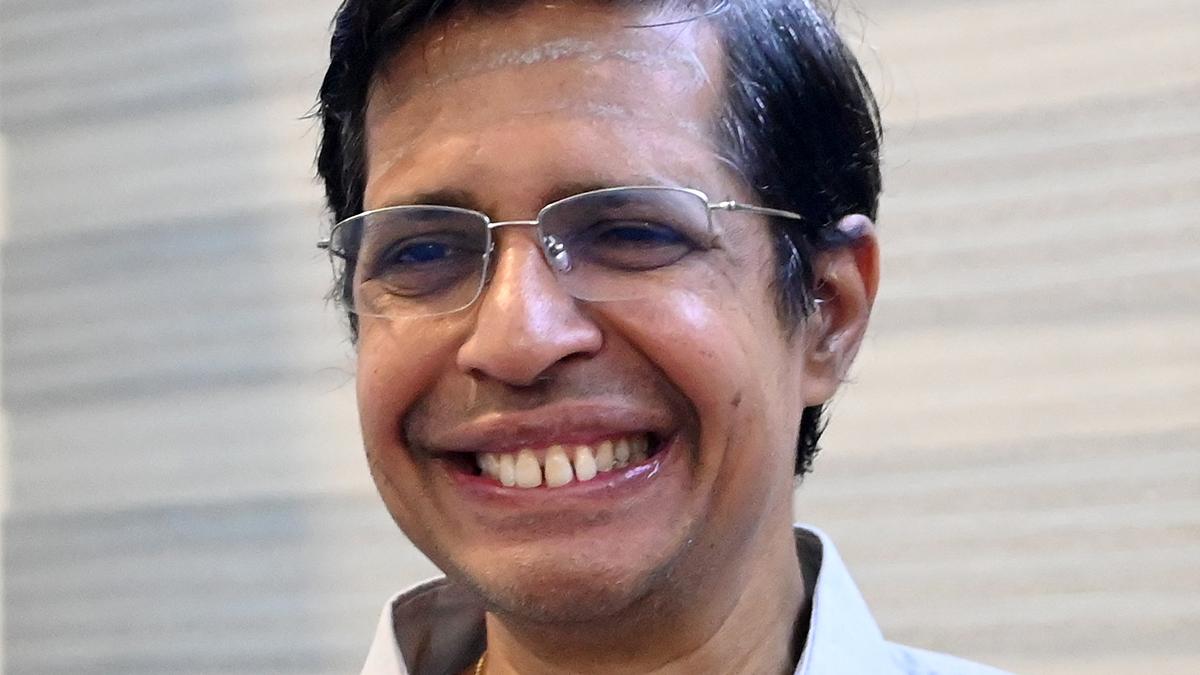
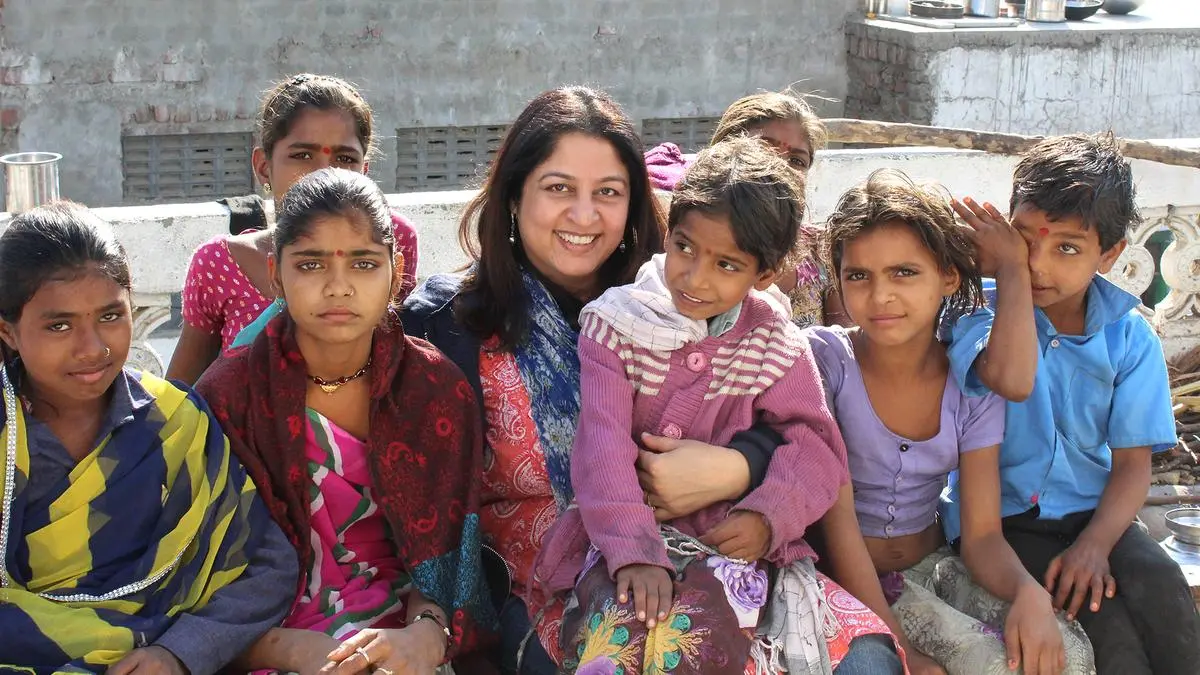
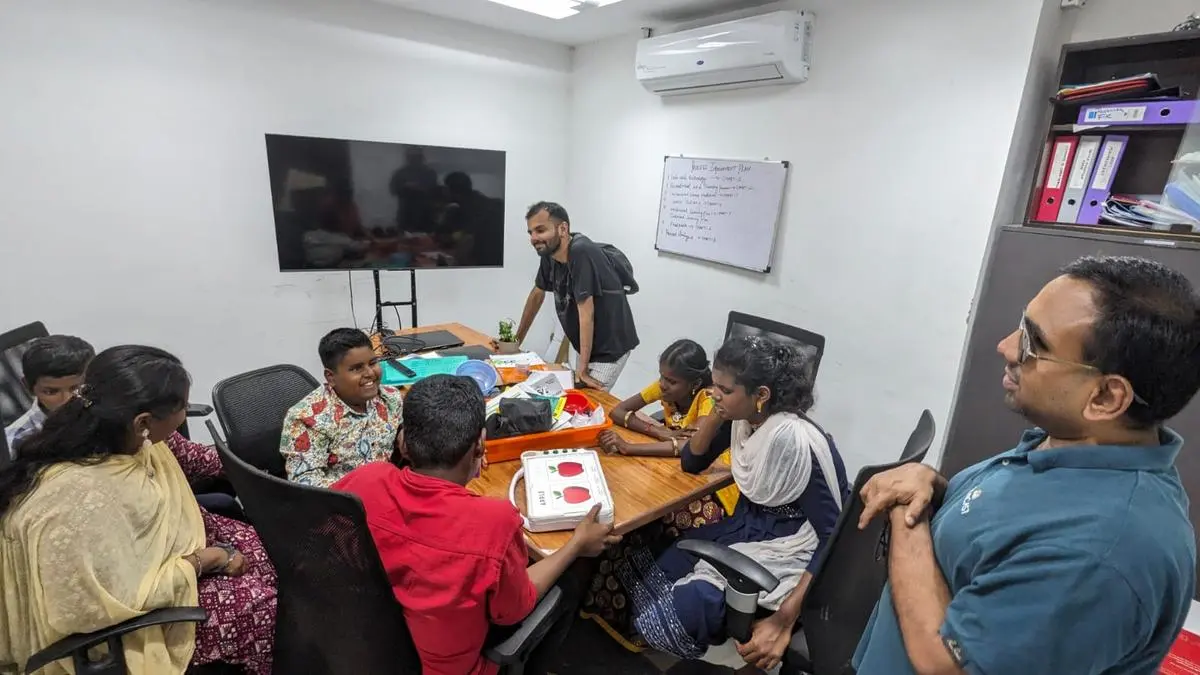
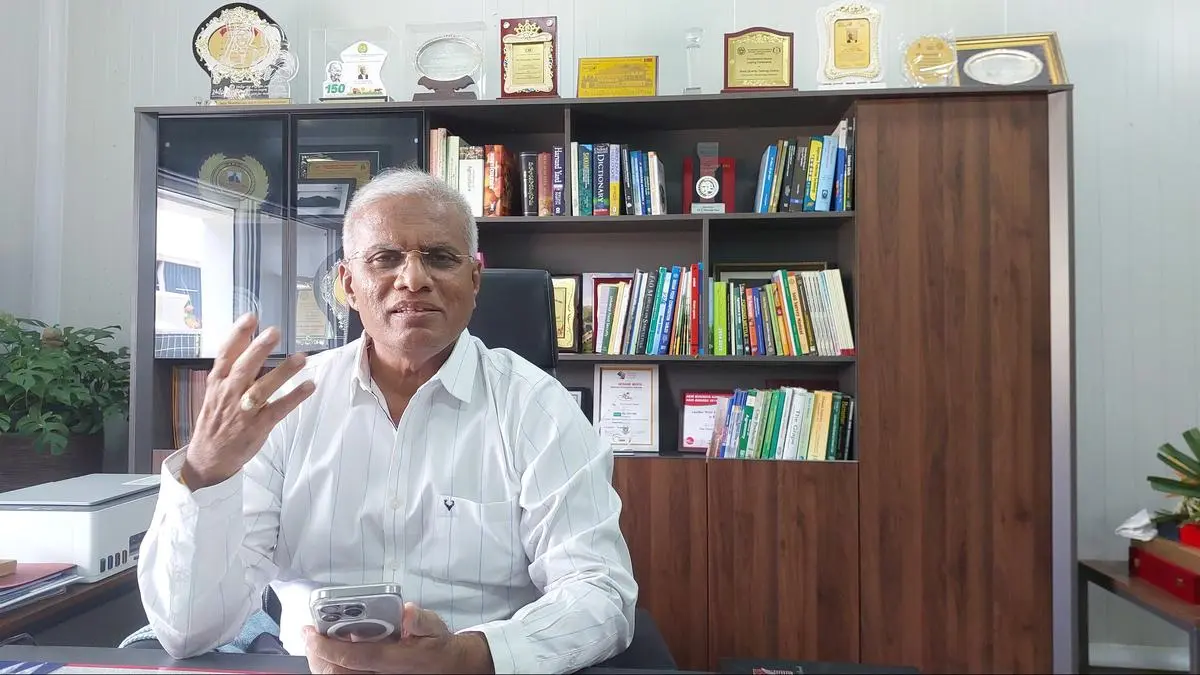
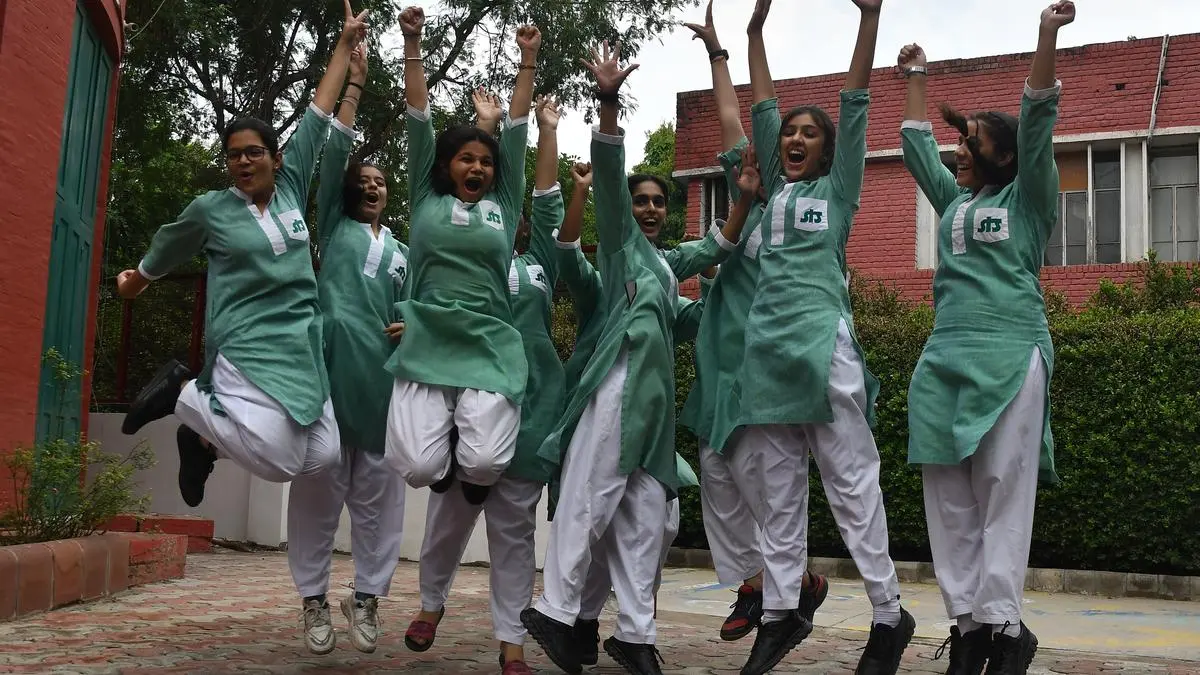
Kiran Bir Sethi, an Ahmedabad-based educationist — who won the BL Changemaker Award for social transformation in 2024 for her ‘Design for Change’ initiative — is currently focussed on not only expanding the global reach of her ingenious concept, but is also looking to host the first ever ‘I CAN Teachers’ Summit’ this November.

Design for Change works on a simple formula where children are asked to talk about an issue plaguing them or their surroundings, imagine a solution to that problem, act in a way to bring about a change and share this story of change with the world.

In this way, every idea or solution that the child brings to life not only breaks down barriers of conventional education but also proves that age is not a bar to usher in change.

Expanding network

Having floated an initiative in 2009 that goes beyond teaching and encouraging school-going students to solve everyday problems they face, the visionary founder of Riverside School in Ahmedabad, is now looking to expand the network of Design For Change (DFC) to 74 countries this year, thus reaching new communities and creating more young changemakers.

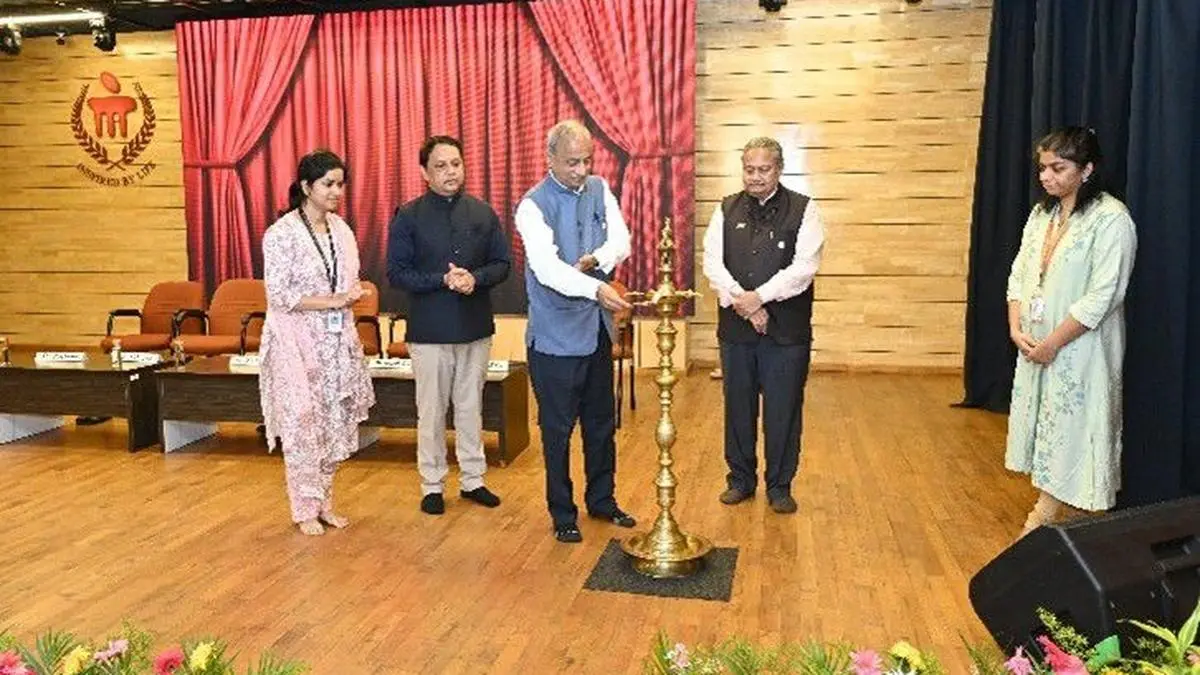
“This year, we are hosting the very first ‘I CAN Teachers’ Summit — a unique celebration of how teachers are using the FIDS (Feel, Imagine, Do and Share) process not just for service projects, but as a powerful pedagogical tool to foster critical thinking, agency, and active learning in classrooms. We are proud to collaborate with our Japan team as they lead preparations for the annual global Be The Change Celebration this November — a beautiful moment to showcase changemaker journeys from across the world and celebrate the impact of the DFC movement. These strategic areas reflect our shared vision of a world where every child believes in their ability to make a difference,” says Sethi.

Today, this concept has spread to more than 30,000 schools in 70-odd countries where 1.11 lakh teachers and 20 lakh children have participated.

“We have also compiled 15 innovations as our DFC Innovation playbook — practical, proven methods that expand the ways DFC is implemented across different contexts. We are redesigning our global resource platform to be a vibrant space where our partner educators can share the rich resources they have created, learn from one another, and collaborate to co-create new tools that deepen the DFC experience,” she added.

Published on September 16, 2025

HCL hosts campus connect session in Chennai

No Comments

IT major HCL hosted HCLTech Talks, its campus connect event at Vel Tech Rangarajan Dr. Sagunthala R&D Institute of Science and Technology, Chennai. 

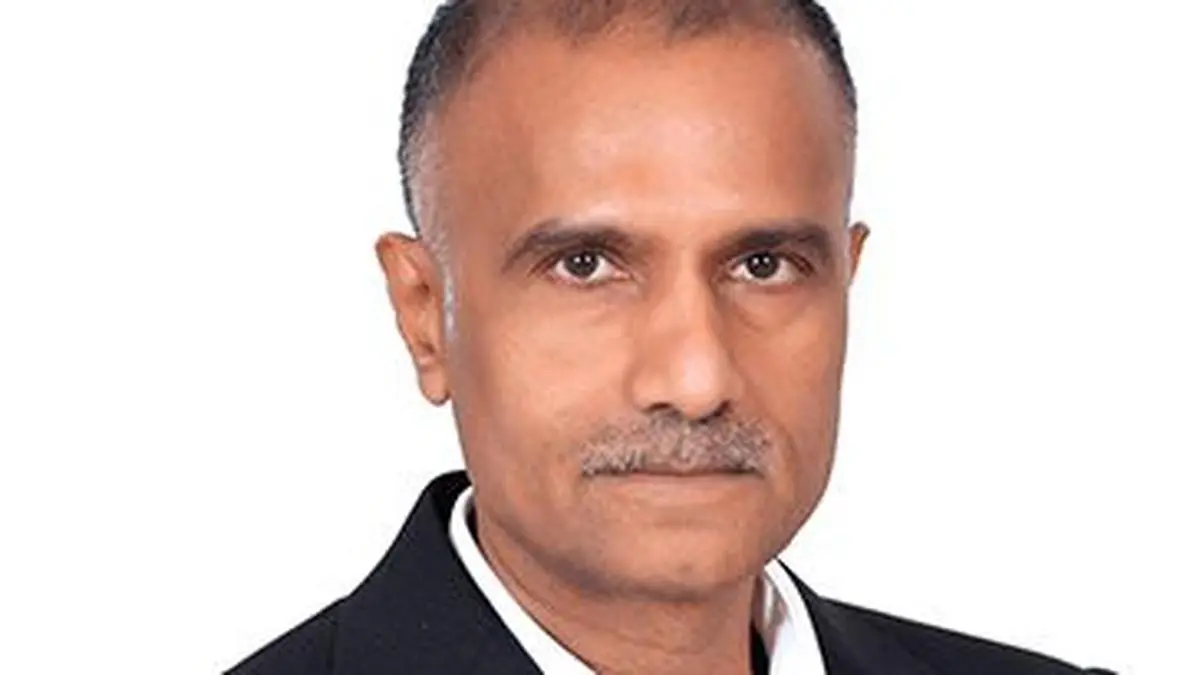
The session was conducted by Prakash Chinnusamy, Global Director – Engineering and R&D Services (ERS) at HCLTech, who spoke on ‘Engineering the Future: Innovations in Digital Products and Platforms.’

In his talk, Chinnusamy highlighted the evolving landscape of software-driven products, the impact of AI and cloud technologies in engineering, and how future engineers must embrace continuous innovation to thrive in global markets.

“In today’s rapidly evolving technology landscape, the ability to innovate and adapt is more essential than ever. Bridging the gap between academic learning and industry practice ensures that the next generation of engineers is prepared for the challenges of tomorrow. Initiatives like HCLTech Talks are vital for empowering students with the knowledge, skills and mindset they need to thrive in digital product engineering and drive transformational progress across industries,” he added. 

The event saw over 600 engineering students participate in a session exploring the future of product engineering and next-generation digital transformation.

Since its launch in January 2025, HCLTech Talks has reached over 7,000 students across India.  

Published on September 16, 2025

Snowflake, ICT Academy to train 2.5 lakh students, 1,000 educators in data and AI

No Comments

The programme aims to train and certify over 250 faculty annually on the SnowPro Associate certification and support more than 1,000 educators to integrate Snowflake concepts into their teaching

Snowflake, the AI Data Cloud company, has collaborated with ICT Academy to scale the Snowflake Academia Program in India, an initiative that will give educators and students direct access to data and AI technologies. Snowflake and ICT Academy aim to train over 1,000 educators and 2,50,000 students by providing hands-on experience and pathways to industry-recognised SnowPro certifications over the next three years.

This initiative builds on Snowflake’s global programme, One Million Minds + One Platform, focused on global AI upskilling. At the core of this initiative is faculty enablement, equipping educators with knowledge, curriculum, and free access to the Snowflake Platform, Snowflake technical foundations, and advanced courses such as data engineering and the latest AI-related programmes to train their students effectively.

ICT Academy, a not-for-profit society, is an initiative backed by the Centre, state governments, and industry leaders, and spans 1,500-plus academic institutions across 27 states. The collaboration with Snowflake is aligned with the ICT Academy’s Public-Private-Partnership (PPP) model, offering participation from higher education institutions, arts and science colleges, and polytechnic institutions across tier-1 and tier-2 cities.

The collaboration focuses on three key areas: building student data literacy through training and certification, empowering faculty via a train-the-trainer model and strengthening industry–academia engagement through events and hackathons.

The programme aims to train and certify over 250 faculty annually on the SnowPro Associate certification and support more than 1,000 educators to integrate Snowflake concepts into their teaching. Snowflake will provide faculty dedicated enablement sessions, a ready-to-teach curriculum, learning materials, tailored hands-on training, and the software required to train students.

Faculty will become proficient in demonstrating Snowflake concepts and embedding them in college courses, such as cloud computing, data warehousing, big data analytics, database management systems, machine learning, AI, and software engineering. They will also be able to access a global community of educators leveraging Snowflake in their curricula, fostering opportunities for connection and collaboration.

Students will gain direct access to the Snowflake AI Data Cloud for hands-on learning and project work, supported by a structured curriculum, official teaching resources, and cost-free platform credits. The Snowflake courses will be available to students enrolled in the third year of Computer Science, Engineering, or Management-related programmes. The new courses will be offered in multiple formats, allowing them to be integrated directly into the college curriculum, included as lessons within existing subjects, or provided as extra-curricular subjects.

“The collaboration with ICT Academy is a major step in shaping India’s data and AI future-ready workforce. By providing access to a relevant, up-to-date curriculum that includes ready-to-use modules, Snowflake is helping bridge the gap between academic theory and practical application. We are proud to work with the ICT Academy to enable educators and students to create a sustainable model for large-scale AI skilling in India. This collaboration will accelerate student career opportunities by allowing them to gain hands-on experience and graduate with a strong portfolio of projects, showcasing the industry-ready skills employers are looking for,” said Vijayant Rai, Managing Director, India, Snowflake.

The collaboration also fosters connections between academia and industry through round-tables, seminars, and industry events, providing students and educators opportunities to engage directly with technology leaders and employers.

Speaking on the collaboration, Srikanth. V, CEO, ICT Academy of Tamil Nadu, added, “Our collaboration with Snowflake is not just about introducing new courses, it’s about transforming the way data and AI are taught in India. By providing faculty with the latest tools and curriculum, we are creating a multiplier effect that will benefit students for years to come. This partnership will help bridge the urban–rural skills divide, enabling institutions across Tier-1 and Tier-2 cities to produce graduates who are industry-ready from Day One.”

Published on September 15, 2025

TA Pai Management Institute hosts CXO Talk Series

No Comments

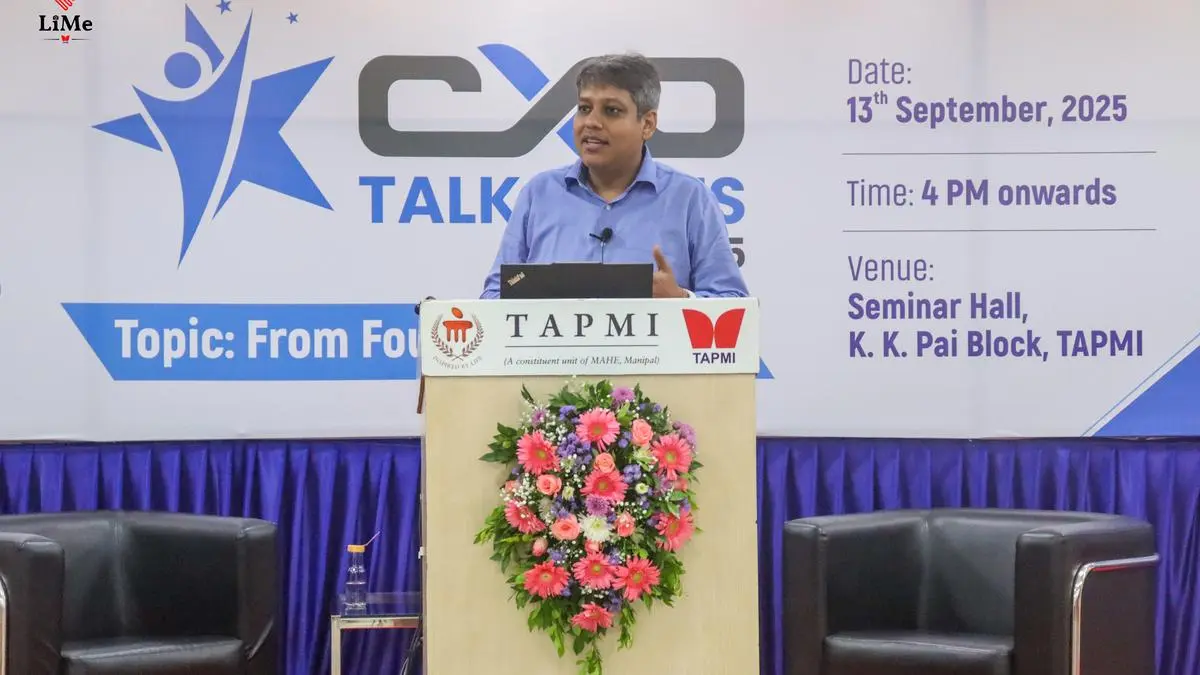
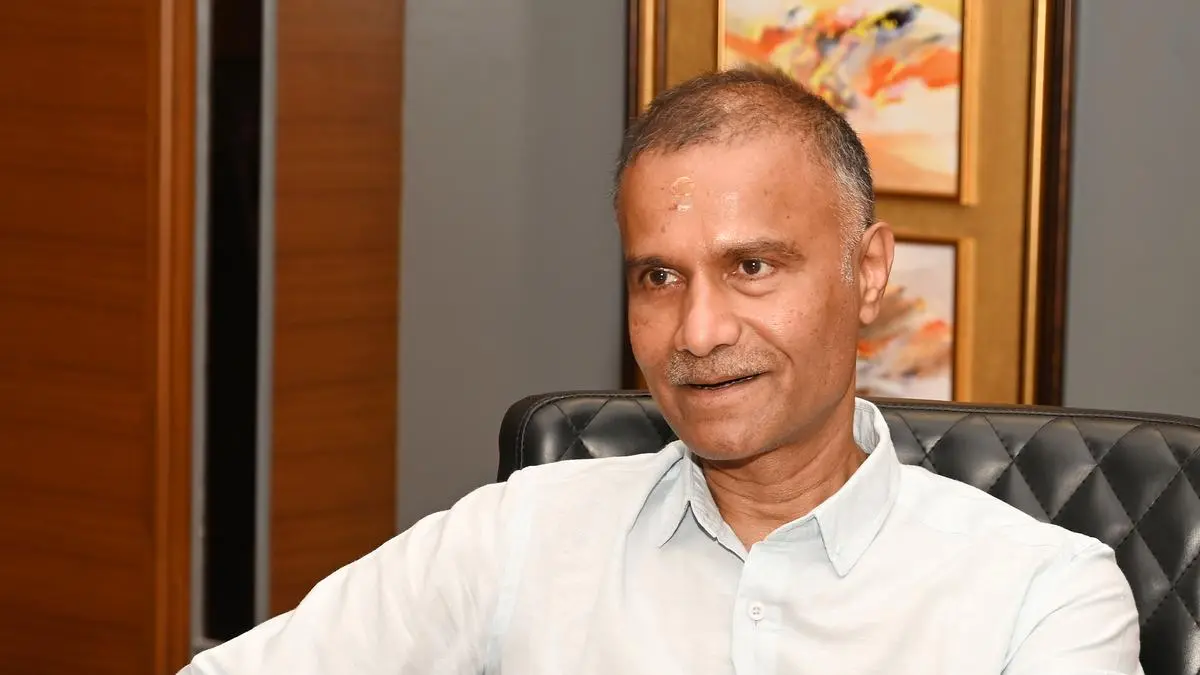
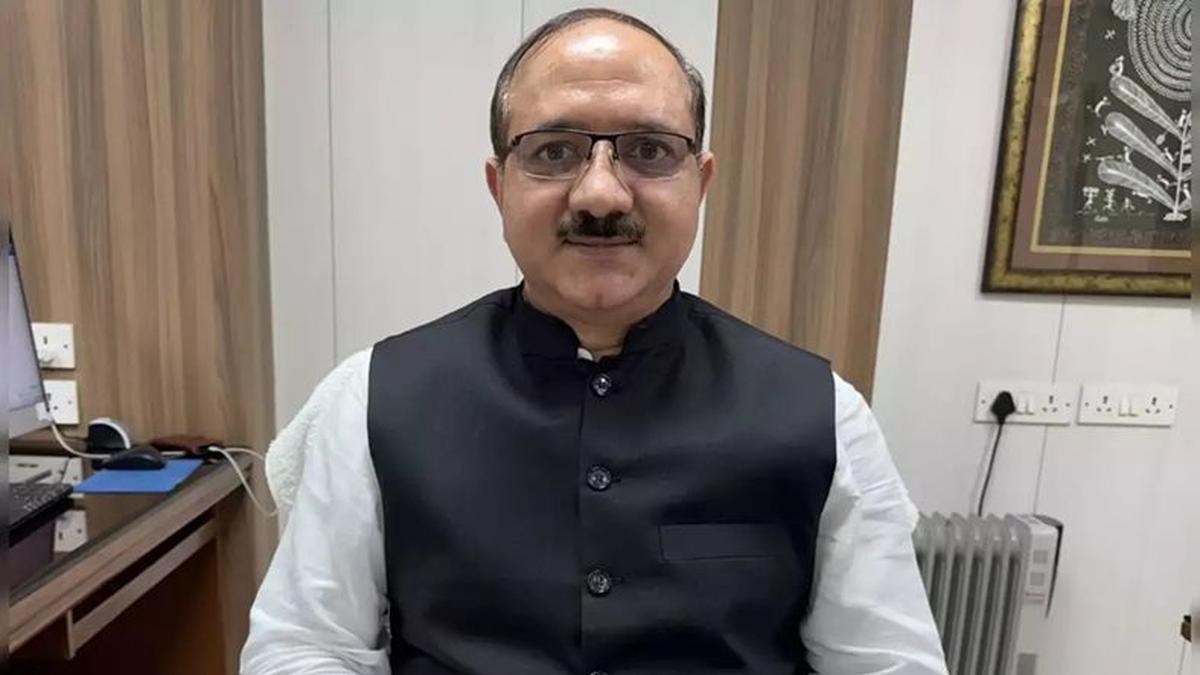
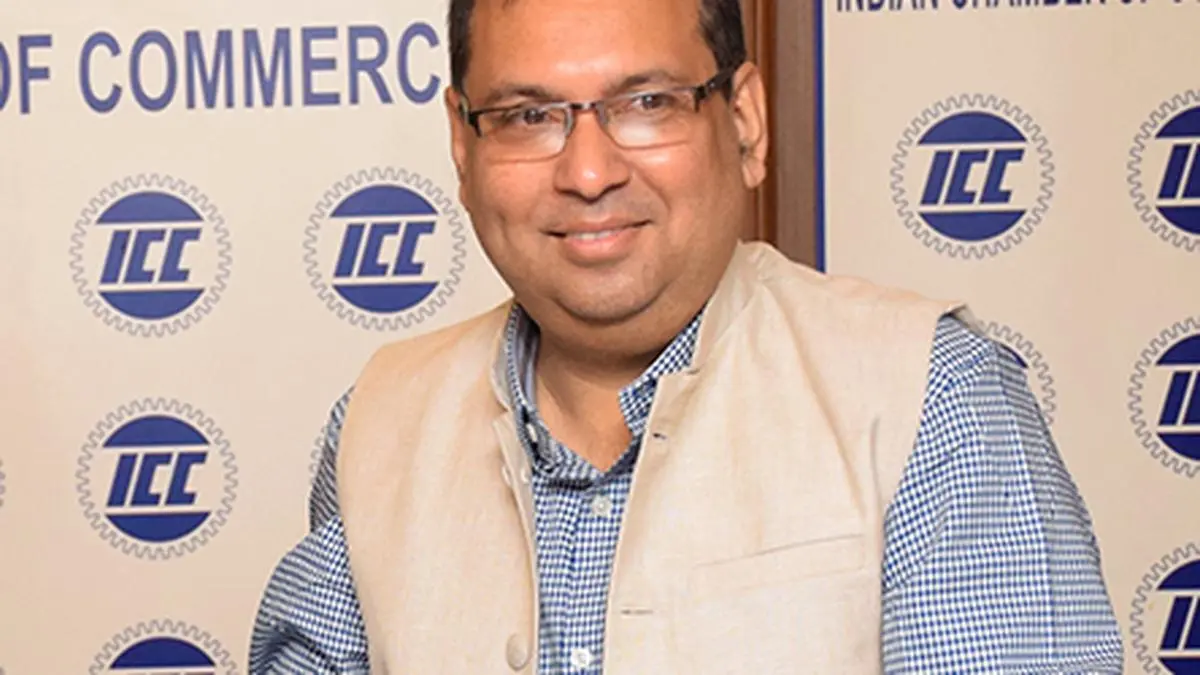
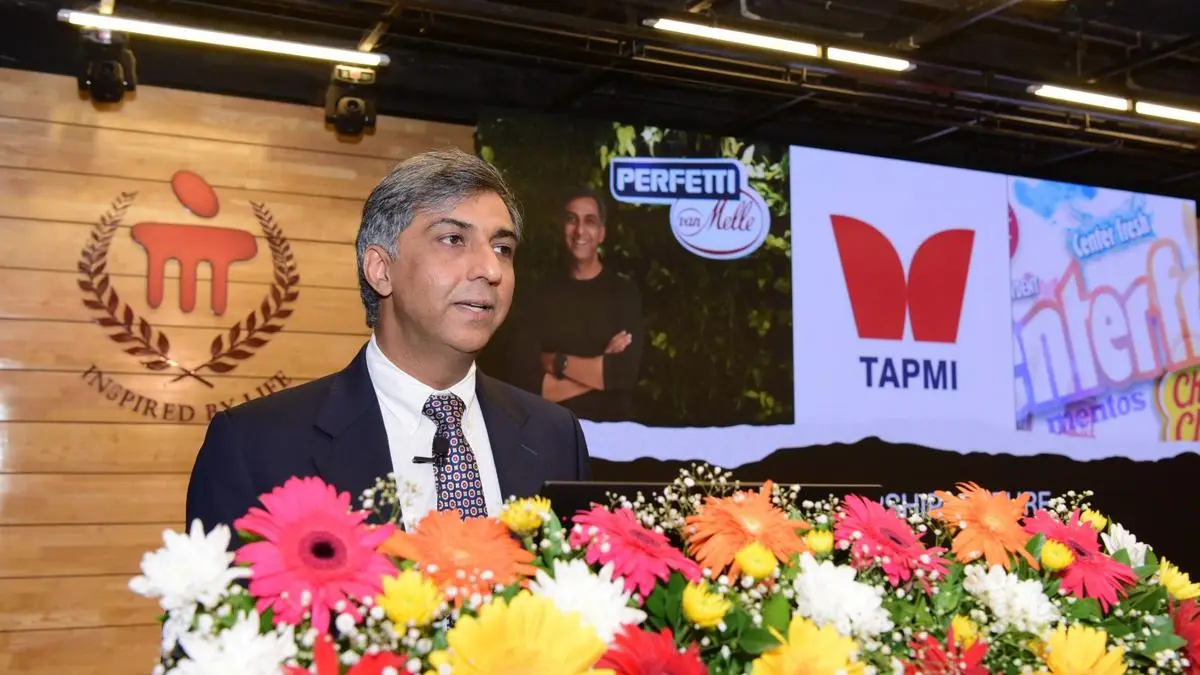
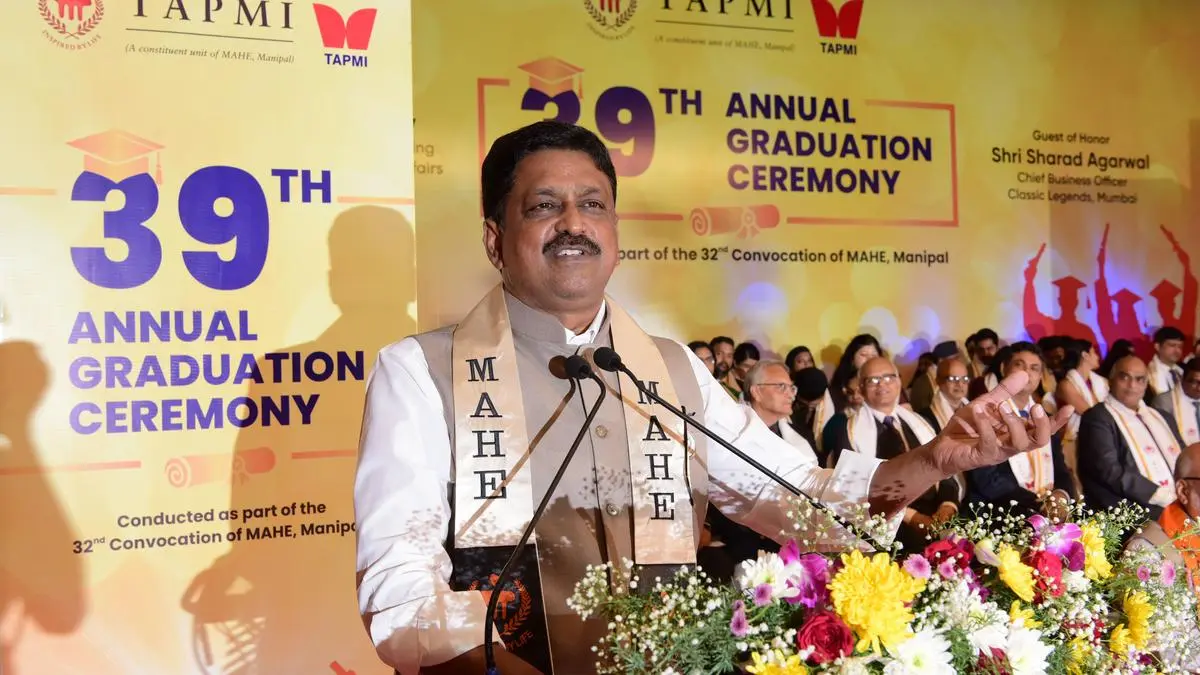
Sumit Khandelwal, CEO of Xoxoday

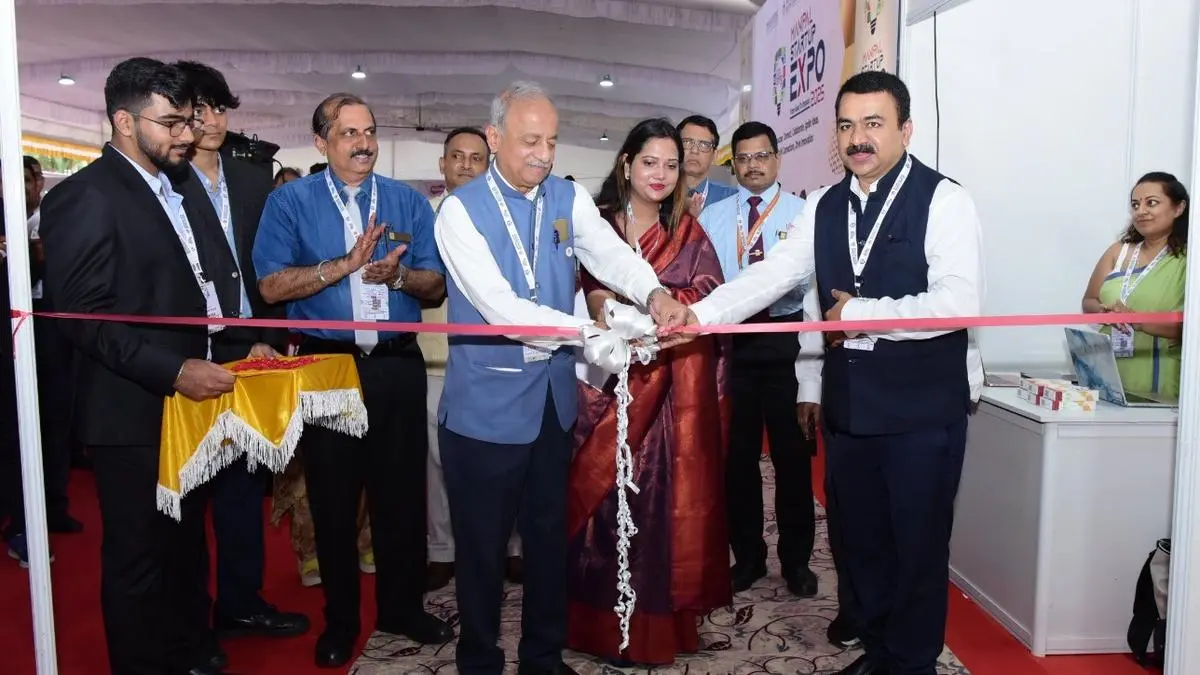
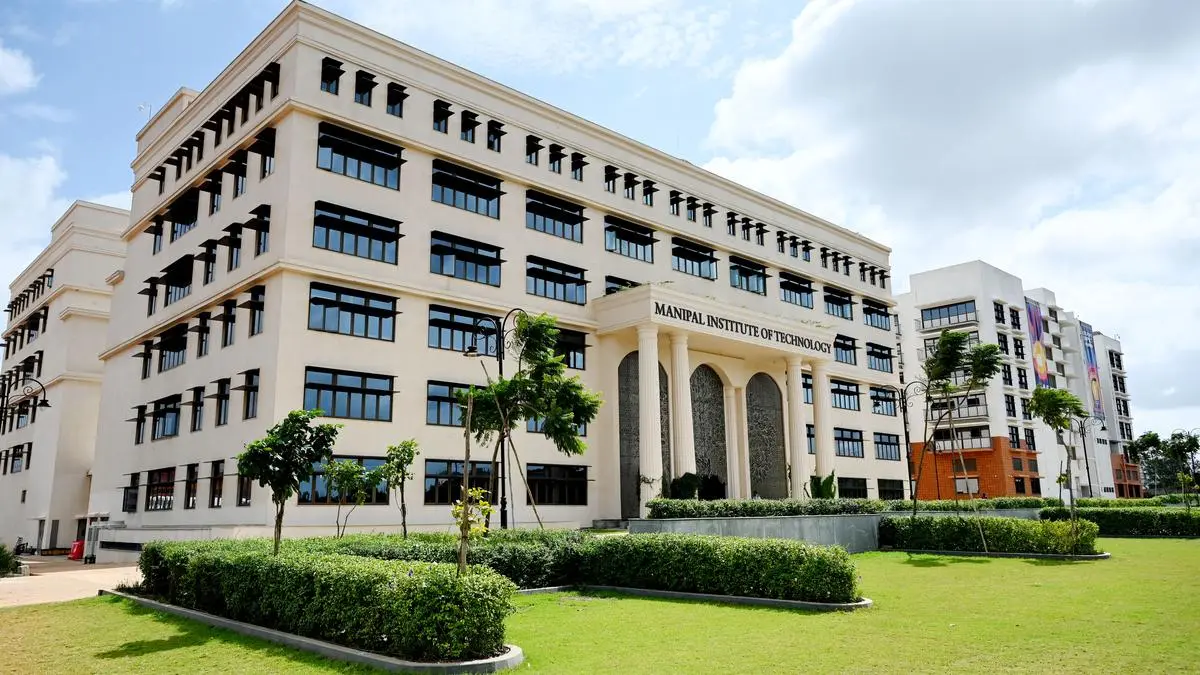
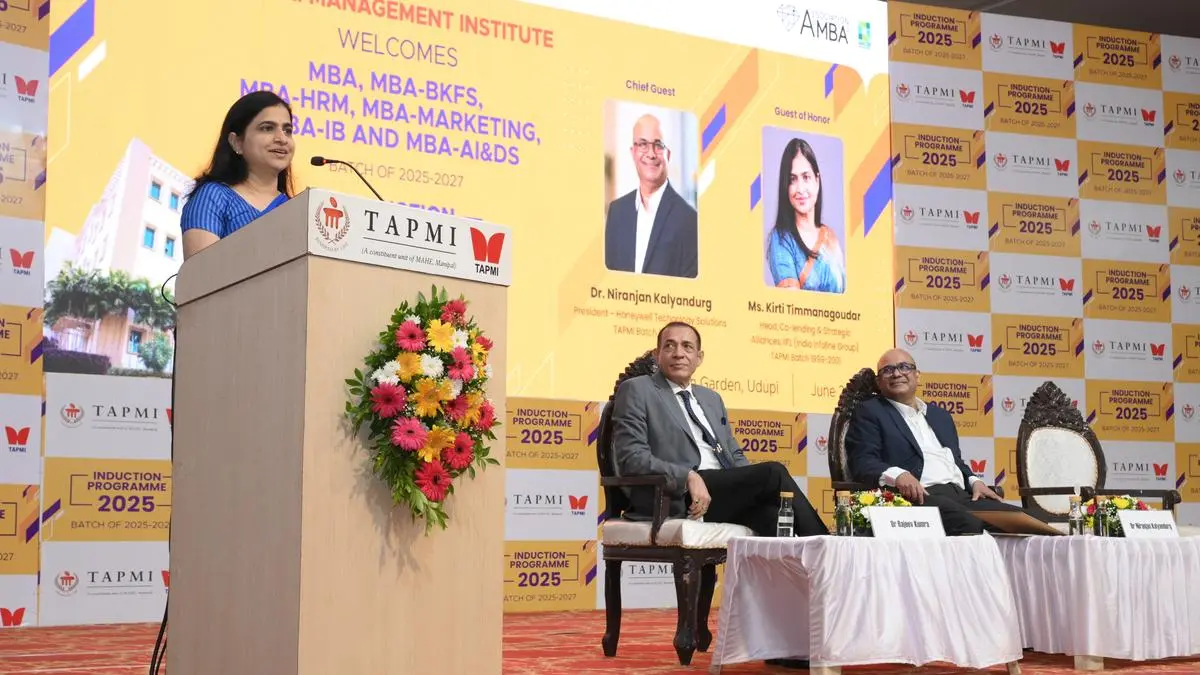
TA Pai Management Institute (TAPMI), Manipal, hosted the first CXO Talk Series 2025 in Manipal on Saturday.

Industry leaders interact with student participants, and offer insights into contemporary business challenges, leadership journeys, and emerging trends across sectors in the CXO Talk Series.

The series was opened by Rajeev Kumra, Director of TAPMI, and Gururaj Kidiyoor, Dean – Academics of TAPMI, with Sumit Khandelwal, CEO of Xoxoday and TAPMI alumnus from the 2007-09 batch, as the keynote speaker.

Khandelwal shared the challenges he faced — from early failures in his entrepreneurial ventures to initial struggles in the corporate world — and how these experiences shaped his resilience and discipline. He emphasized that these very setbacks became the foundation for building Xoxoday.

Rajeev Kumra said the CXO Talk series is in line with TAPMI’s vision to develop future-ready students by providing them access to leaders who have travelled this path before them.

“Mr Khandelwal’s journey is a convincing example of resilience, and innovation, and inspires our students to pursue their aspirations with conviction and clarity,” he said.

Published on September 15, 2025

NIRF credible alternative to foreign agencies’ rankings, need to boost it: BITS Pilani Group VC

No Comments

The Education Ministry’s National Institutional Ranking Framework has come a long way since its inception a decade ago and is offering a credible alternative to rankings by foreign private agencies, said BITS Pilani Group Vice Chancellor V Ramgopal Rao.

He, however, believes the National Institutional Ranking Framework (NIRF) ranking system still faces some challenges that need to be addressed.

“The big win is that NIRF is announced by the Government of India. It has that official sanctity. QS or Times Higher Education rankings are private agencies and keep the perception part so high because that is their business model, and you can hire them for those services,” Rao said.

“NIRF has come a long way in the last 10 years in terms of how it has evolved and how they have been able to strengthen some of these metrics. Having said that, there are still a lot of challenges,” he told PTI in an interview.

The BITS Pilani Group vice chancellor said he feels that with over 14,000 individual institutions participating in NIRF and being ranked by the Government of India, which is used for funding and other things, NIRF needs much more strengthening.

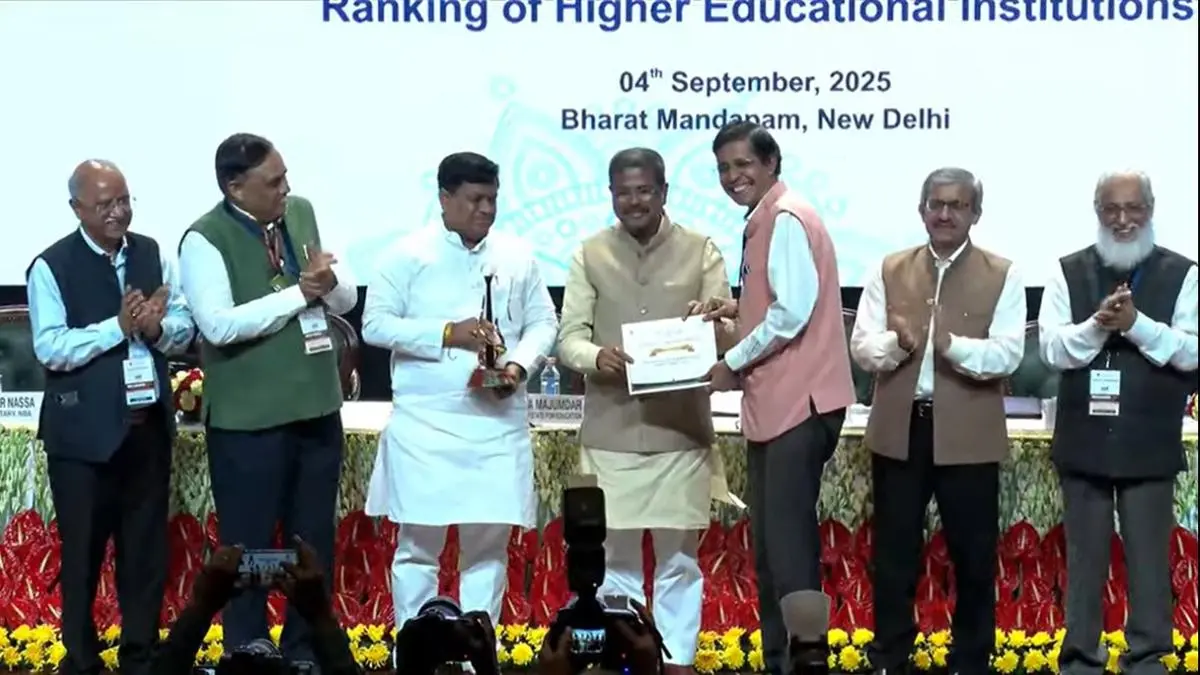
The 10th edition of NIRF was announced on September 4.

Birla Institute of Technology and Science (BITS), Pilani, entered the top 10 universities ranking for the first time, bagging the seventh spot. The institution has also improved its overall ranking from 26 to 23, and the ranking among engineering institutions has seen a big jump from 20th spot to 11th this year.

BITS is also ranked second among pharmacy institutions.

Rao, who was earlier the director of the Indian Institute of Technology (IIT)-Delhi, suggested that the metrics to evaluate research need certain changes to be able to accurately rate the institutions.

“The first thing is about the research… if you look at the research parameters, almost 21 per cent of the rankings are for the research, whether it is the number of papers or the citations.

“I saw very interesting trends recently in a scientific paper… the number of papers and citations, track one on one, meaning if you plot on one axis the number of papers and citations on the other axis, it’s a straight line,” he said.

Elaborating, Rao said it essentially means that those who are writing more papers are essentially citing themselves.

“Either their institutions are citing it or they are citing it themselves. There are a lot of self-checking problems which is happening because of that. And when a metric is tracking one-on-one, the citations, the volume of research, counting it twice, one for one day of publications….I think it is leading to a double-counting event,” he said.

Rao also called for audits if an institution shows a significant jump, as the ranking relies on self-reported data.

A lot of audits are needed. We need to ensure that randomly we audit the institutions which are showing significant improvements…that volatility is actually a big challenge in NIRF. Other than the top 20, there is a huge volatility across the remaining banks.

“If somebody has shown a significant jump, there has to be some data auditing at regular intervals. That will set a fear… The self-reported data, I believe, is a big concern because sometimes the results that come out of it are unexpected and do not reflect the reality on the ground,” he added.

The participation of Higher Education Institutions (HEIs) in the NIRF rankings has grown from 3,565 in 2016 to 14,163 in 2025. Concurrently, the number of categories and subject domains has expanded from four in 2016 to 17 in 2025.

The 10th edition of the rankings evaluated institutions of higher education in nine categories — overall, universities, colleges, research institutions, innovation, open universities, state public universities, skill universities and sustainable development goals (SDGs).

HEIs have also been ranked in eight subject domains — engineering, management, pharmacy, law, medical, architecture and planning, dental, and agriculture and allied Sectors.

A record number of 7,692 unique institutions responded and submitted 14,163 applications across various categories and subject domains, offering themselves for ranking in ‘Overall’, category-specific, or domain-specific rankings.

Published on September 14, 2025

Yara India, Dr Bhimrao Ambedkar University sign agreement for farmer awareness radio programme

No Comments

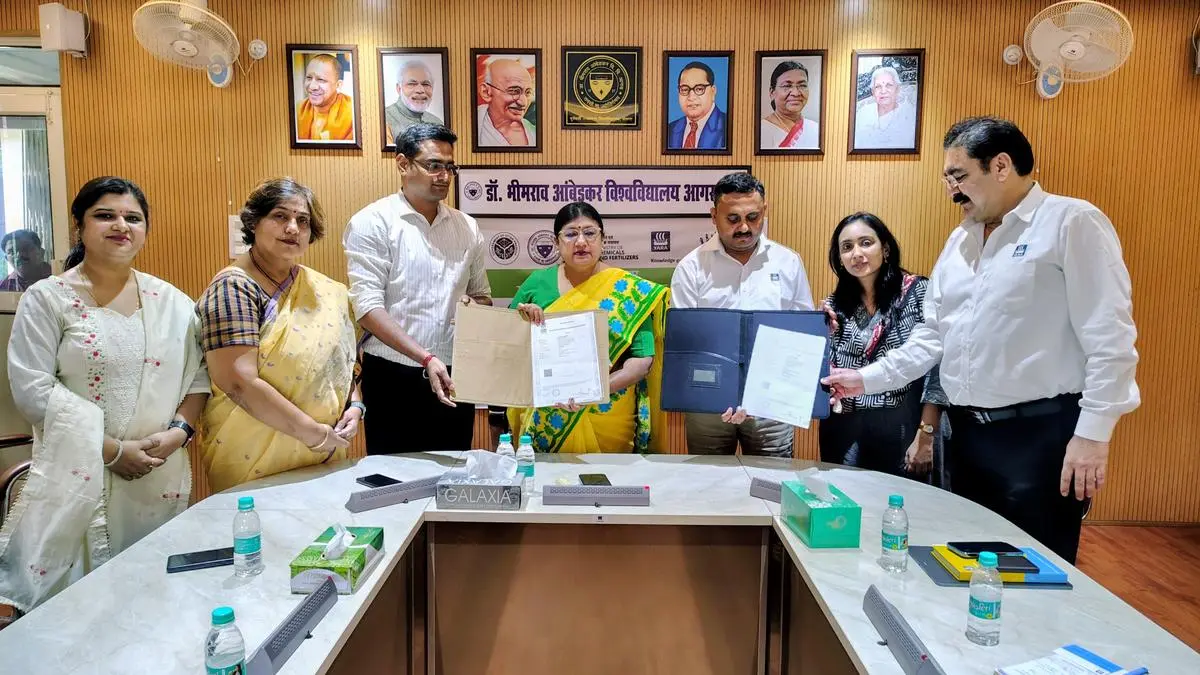
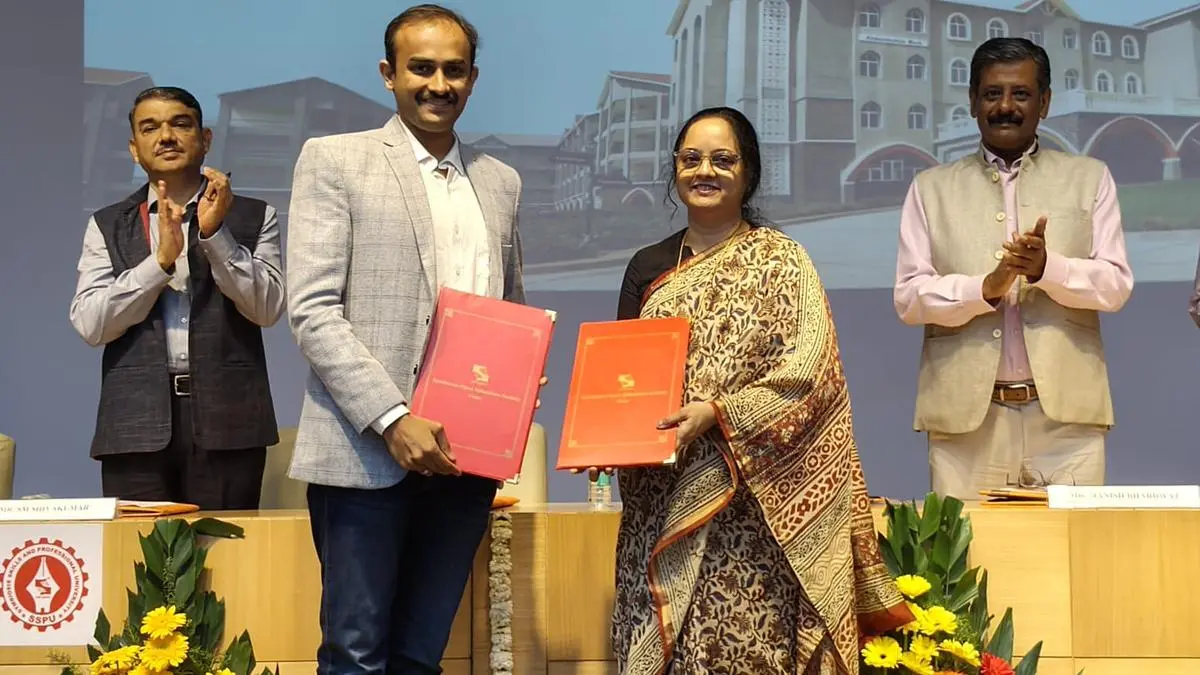
Yara India, Dr Bhimrao Ambedkar University ink pact for farmer awareness programmes.

Yara India, a subsidiary of Yara International, has signed a memorandum of understanding (MoU) with Dr Bhimrao Ambedkar University, Agra. The collaboration aims to launch a comprehensive farmer awareness programme focused on the balanced use of fertilisers, crop nutrition management, soil health and sustainable farming practices.

Through this initiative, Yara and the university seek to educate and empower the farming community via a series of dedicated radio broadcasts on the university’s community radio station.

The 12-month programme, commencing in September 2025 and running through August 2026, will feature 180 episodes, each 30 minutes in length, broadcast on University Community Radio (UCR) 90.4 Agra Ki Awaz.

The content will include scientific talks, interviews, panel discussions, success stories of progressive farmers and outreach segments, all designed to provide valuable information on balanced fertiliser use and good agricultural practices. All broadcasts will be delivered in Hindi.

Quoting Sanjiv Kanwar, Managing Director of Yara South Asia, a media statement said, “Beyond delivering quality products, we are investing in empowering farmers with critical knowledge through this awareness programme. This initiative will directly contribute to enhanced productivity, improved livelihoods, and the long-term well-being of the farming community.”

Ashu Rani, Vice-Chancellor of Dr Bhimrao Ambedkar University, said, “This collaboration will allow us to reach a wider audience of farmers and provide them with the knowledge they need to optimise their agricultural practices and improve their livelihoods.”

In addition to the radio broadcasts, the partnership will include a minimum of 10 outreach programmes, allowing for direct engagement with farmers.

Published on September 12, 2025

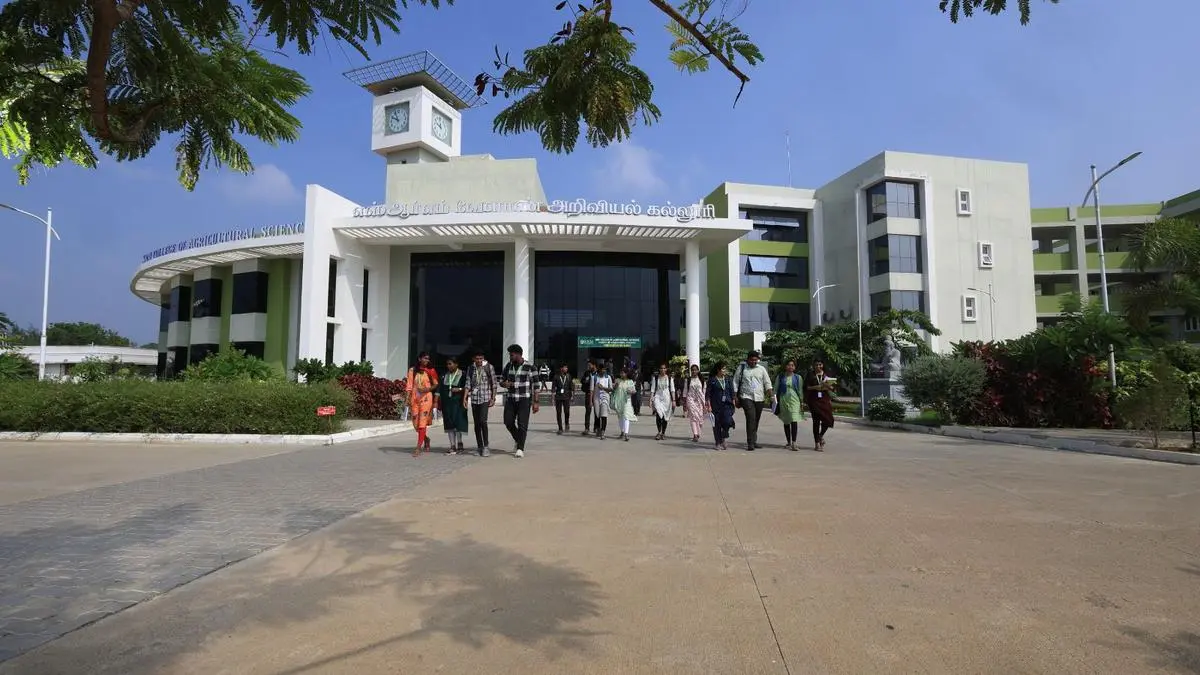
SRM College of Agricultural Sciences to launch 7 doctoral courses from next academic year

No Comments

SRM College of Agricultural Sciences, a unit of the SRM Institute of Science and Technology, plans to introduce seven Doctor of Philosophy (Ph.D) courses from the next academic year, said college dean M Jawaharlal.

This academic year, the college has launched Ph.D courses in agronomy, genetics and plant breeding, and fruit science. Next academic year, it will launch the doctoral courses in soil science, plant pathology, entomology, agricultural economics, agricultural extension education, vegetable science, and floriculture and landscaping.

“The Indian Council of Agricultural Research has given accreditation to our college. We provide hands-on training to the students. We also have tie-ups with universities abroad. All these help our students,” said the college dean. 

SRM College of Agricultural Sciences Dean M Jawaharlal

Offering honours course

Set up in 2018, the college introduced post-graduate courses in these 10 courses a couple of years ago. The Ph.D is timed in a way that once the students finish their post-graduation, they can look at the option of taking the Ph.D courses, said Jawaharlal.

The college, which is operating on a 400-acre campus at Baburayanpettai in Chengalpattu district – about 115 km from Chennai – since March 2021, offers graduate honours courses in agriculture and horticulture.

The college offers on-farm training to its students enrolled in graduate and postgraduate courses. In the graduate course, the students spend their last semester learning to manage farms or become entrepreneurs.

“We educate the students through hands-on training on field preparation, micro irrigation system, organic farming, integrated farming systems, dryland agriculture, smart farming and agro-meteorological observatory for experiential learning with a multi-disciplinary approach for a well-rounded education in the field of agriculture,” said Jawaharlal.

Research opportunities

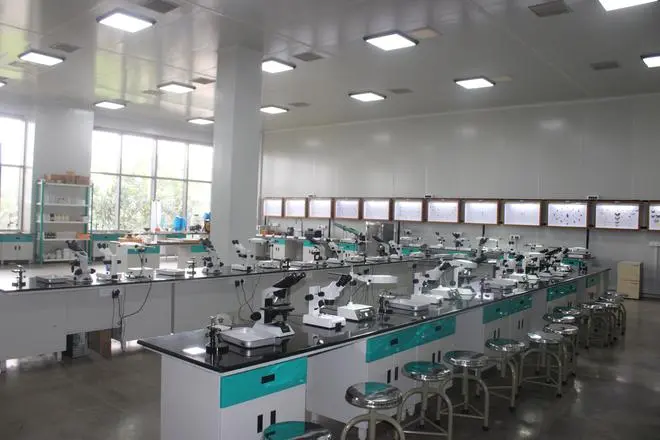
Post-graduate students are offered opportunities to do research in specialised fields.  The college has units to conduct practical classes and well-equipped laboratories to expose students on various aspects of agriculture.

For example, in agroforestry, students get training in identifying important tree species along with their seeds and seedlings, demonstrating the production of saplings and silviculture and agri-silviculture techniques.

Two batches of students travelled to Kenya to learn about tulips and cut flowers. The College of Agriculture Sciences has a collaboration with the agricultural college of Kansas State University and UK’s Cranfield University for students’ exchange. 

The university has over 800 students enrolled from Tamil Nadu, Kerala, Andhra Pradesh and Nepal. The other feature of the college’s graduate courses is that students have to undertake travel in their last semester and learn about crops in other parts of the country, said the dean.

The College of Agricultural Sciences has now begun to train people in urban farming at its headquarters in Kattankulathur, about 50 km from Chennai. “There has been a good response to this. We are even looking to enlighten children on farming,” said Jawaharlal.  

(The writer was at the campus on the invitation of the SRM College of Agricultural Sciences)

Published on September 12, 2025

SRM College of Agricultural Sciences to launch 7 doctoral courses from next academic year

No Comments

SRM College of Agricultural Sciences, a unit of the SRM Institute of Science and Technology, plans to introduce seven Doctor of Philosophy (Ph.D) courses from the next academic year, said college dean M Jawaharlal.

This academic year, the college has launched Ph.D courses in agronomy, genetics and plant breeding, and fruit science. Next academic year, it will launch the doctoral courses in soil science, plant pathology, entomology, agricultural economics, agricultural extension education, vegetable science, and floriculture and landscaping.

“The Indian Council of Agricultural Research has given accreditation to our college. We provide hands-on training to the students. We also have tie-ups with universities abroad. All these help our students,” said the college dean. 

Offering honours course

Set up in 2018, the college introduced post-graduate courses in these 10 courses a couple of years ago. The Ph.D is timed in a way that once the students finish their post-graduation, they can look at the option of taking the Ph.D courses, said Jawaharlal.

The college, which is operating on a 400-acre campus at Baburayanpettai in Chengalpattu district – about 115 km from Chennai – since March 2021, offers graduate honours courses in agriculture and horticulture.

The college offers on-farm training to its students enrolled in graduate and postgraduate courses. In the graduate course, the students spend their last semester learning to manage farms or become entrepreneurs.

“We educate the students through hands-on training on field preparation, micro irrigation system, organic farming, integrated farming systems, dryland agriculture, smart farming and agro-meteorological observatory for experiential learning with a multi-disciplinary approach for a well-rounded education in the field of agriculture,” said Jawaharlal.

Research opportunities

Post-graduate students are offered opportunities to do research in specialised fields.  The college has units to conduct practical classes and well-equipped laboratories to expose students on various aspects of agriculture.

For example, in agroforestry, students get training in identifying important tree species along with their seeds and seedlings, demonstrating the production of saplings and silviculture and agri-silviculture techniques.

Two batches of students travelled to Kenya to learn about tulips and cut flowers. The College of Agriculture Sciences has a collaboration with the agricultural college of Kansas State University and UK’s Cranfield University for students’ exchange. 

The university has over 800 students enrolled from Tamil Nadu, Kerala, Andhra Pradesh and Nepal. The other feature of the college’s graduate courses is that students have to undertake travel in their last semester and learn about crops in other parts of the country, said the dean.

The College of Agricultural Sciences has now begun to train people in urban farming at its headquarters in Kattankulathur, about 50 km from Chennai. “There has been a good response to this. We are even looking to enlighten children on farming,” said Jawaharlal.  

(The writer was at the campus on the invitation of the SRM College of Agricultural Sciences)

Published on September 12, 2025

CUSAT receives Indian patent for new energy harvesting technology

No Comments

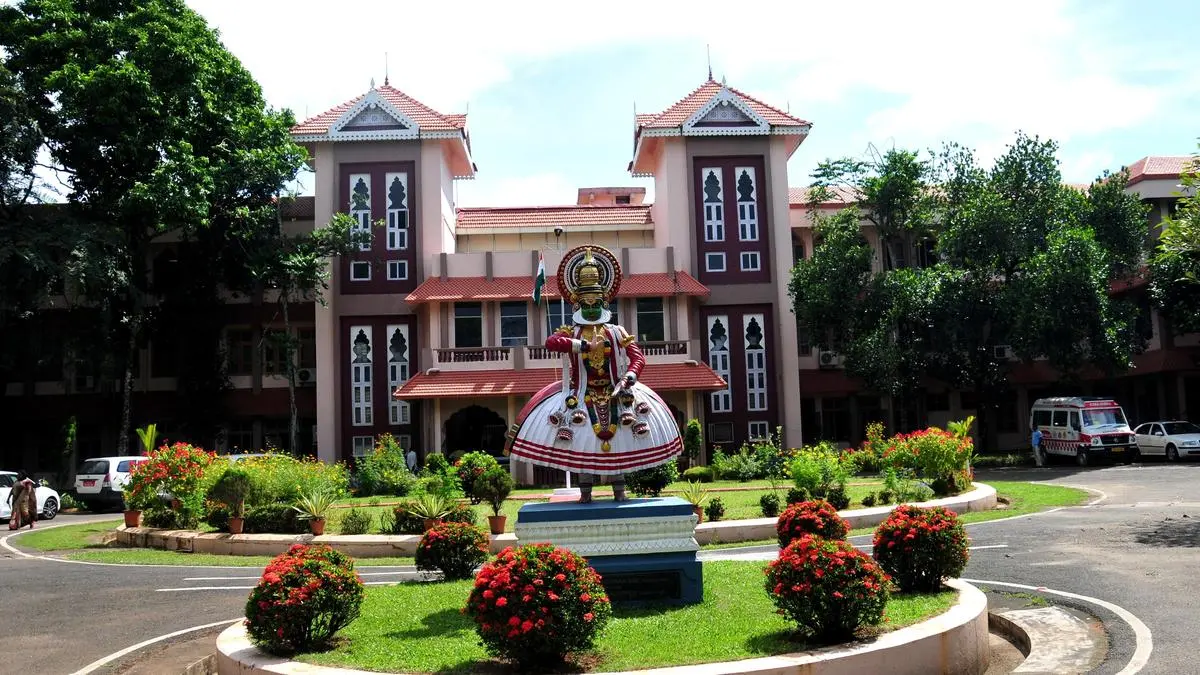
A view of Cochin University of Science and Technology (CUSAT) in Kochi, Kerala.
| Photo Credit:
VIPIN CHANDRAN

The Cochin University of Science and Technology (CUSAT) has received an Indian patent for development in energy harvesting technology.

According to a CUSAT official, the patent covers a triboelectric nanogenerator (TENG) based on a polydimethylsiloxane (PDMS), a composite that incorporates a graphene oxide–conducting polymer nanohybrid.

The patent application was facilitated by the IPR Facilitation Cell at the Inter University Centre for IPR Studies (IUCIPRS), CUSAT, a CUSAT statement said.

This breakthrough innovation is the result of research led by Dr Honey John, Director of the Inter University Centre for Nanomaterials and Devices (IUCND) and Professor at the Department of Polymer Science and Rubber Technology (PS&RT), CUSAT.

The research team includes Dr Divya Jose, former PhD scholar, PS&RT, Dr Saji Joseph K J, associate professor, International School of Photonics – ISP, Dr Jelmy EJ, post-doctoral fellow, IUCND, Dr Vijoy K V former PhD scholar, ISP, and Dr Manoj N Department of Applied Chemistry.

The patented technology introduces a novel material composition combining conducting polymer, graphene oxide, and PDMS, enabling highly efficient energy harvesting from ambient mechanical sources such as vibrations, wind, and human motion, a CUSAT official said.

This advancement is particularly significant for powering nanoelectronic devices by converting otherwise wasted mechanical energy into usable electrical power.

Applications of this technology include self-powered sensors, wearable electronics, smart textiles, health monitoring devices, and motion-sensing systems, making it a promising solution for sustainable and energy-efficient innovations in the field of flexible electronics, the statement added.

Published on September 11, 2025

Veranda Learning to demerge commerce vertical, forms JK Shah Commerce Education

No Comments

Suresh Kalpathi, ED and Chairman of Veranda Learning
| Photo Credit:
BIJOY GHOSH/businessline

The Board of listed education enterprise Veranda Learning Solutions have approved the formal demerger of its commerce vertical as part of the company’s ‘Veranda 2.0’ vision. The newly-created entity, J.K. Shah Commerce Education, will serve as the platform for all future operations of the commerce vertical. It will integrate Veranda’s commerce education brands—J.K. Shah classes, BB Virtuals, Navkar Digital Institute, Tapasya College of Commerce, and Logic School of Management.

As part of this vision, the commerce vertical is being positioned as a gateway to international career opportunities in finance, in addition to a platform for finance and accounting aspirants. It already provides globally recognised courses such as CPA (Certified Public Accountant) and CFA (Chartered Financial Analyst). The vertical is targeting significant revenue growth to surpass ₹1,000 crore revenue by FY30, Veranda said in a statement.

Vertical to focus on global finance careers with CPA, CFA

As a first step, Veranda Learning acquired the remaining 24% equity stake held by Prof. J.K. Shah in Veranda XL Learning Solutions, the principal company within the commerce portfolio. With this acquisition, Veranda XL has now become a wholly-owned subsidiary, simplifying the group structure.

Shareholders to get 1:1 shares in J.K. Shah Commerce Education

Upon completion of the demerger, each shareholder of Veranda Learning Solutions will receive one share in J.K. Shah Commerce Education, subject to regulatory and statutory clearances. The timeline for completion of the demerger and listing is approximately 12 months.

Move to unlock long-term value

Suresh Kalpathi, Executive Director and Chairman, Veranda Learning Solutions, said: “By creating J.K. Shah Commerce Education as an independent entity, we are unlocking long-term value for our shareholders, while empowering the vertical to pursue accelerated growth. The move will provide sharper focus, greater agility, and independent access to capital markets, thereby enhancing opportunities for students and stakeholders alike.”

“Importantly, Prof. J.K. Shah will continue to have an economic interest in the new entity, underscoring his long-term commitment to the business,” Veranda Learning said in a statement.

Published on September 11, 2025

PSG Institute of Management Foundation Day: businessline Editor inspires students on start-up culture

No Comments

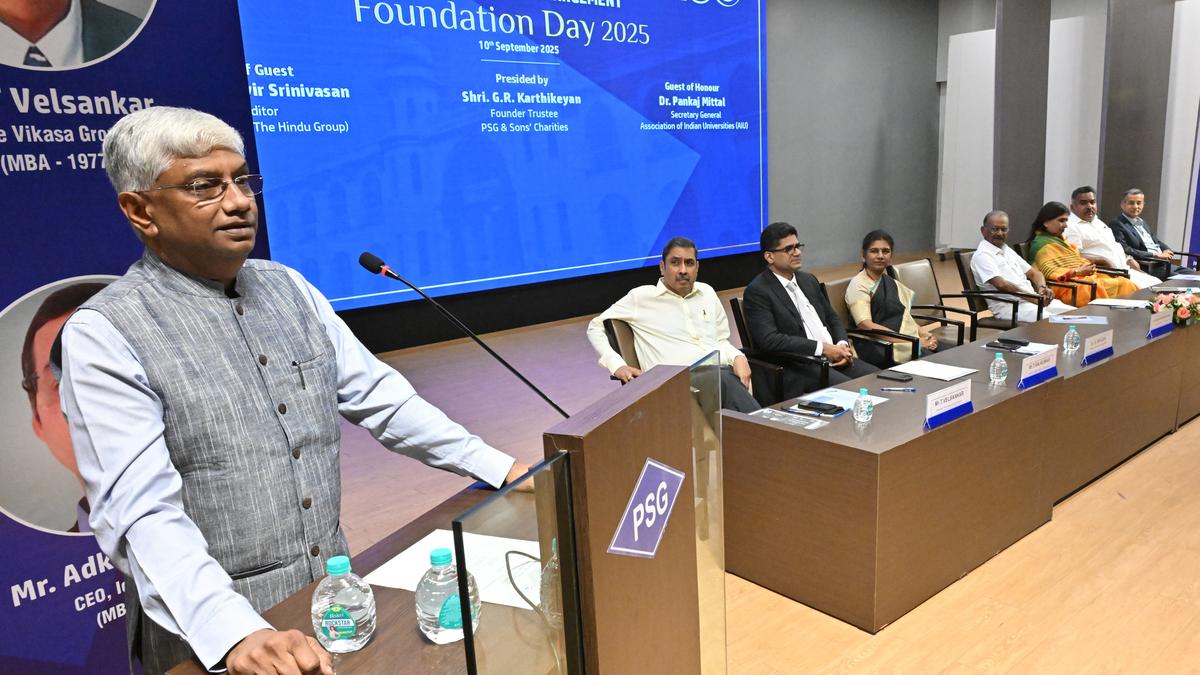
Raghuvir Srinivasan, Editor, businessline, addresses students at PSG Institute of Management’s Foundation Day event in Coimbatore on Wednesday.
| Photo Credit:
Siva Saravanan S / The Hindu.

“Students should focus on entrepreneurship, as it generates employment—a critical need in India, where a large number of graduates leave universities each year with limited job prospects,” said businessline Editor Raghuvir Srinivasan, in Coimbatore on Wednesday.

Addressing students of the PSG Institute of Management at its Foundation Day event, he said, “Every graduate today should consider starting a business, a charity, or a social initiative. Such ventures create substantial value—not just for the nation and its economy, but for the individual as well.”

Coimbatore hailed as India’s start-up capital

Highlighting Coimbatore’s entrepreneurial heritage, he said, “This city is ideally positioned to call itself the start-up capital of India. Every engineering and textile unit here began as a start-up, offering students exemplary models to emulate.”

Drawing parallels with the technological landscape four decades ago—when computers were new, markets were restricted, and opportunities were limited—he said that today’s open and dynamic market, propelled by technologies such as artificial intelligence (AI), offers abundant opportunities that students must capitalise.

Global trade fluctuations seen as chances for student innovation

On global trade concerns, he said, despite volatile policies such as Trump tariffs, commerce cannot come to a halt. Such fluctuations open new avenues for students to innovate and enter markets that were previously untapped.

T. Velsankar, Chairman of The Vikasa Group of Schools; Adka K. Sreesh, CEO of Ideal Stores; T. Rajkumar, Chairman of the CITI Standing Committee on Cotton and Director of Sakthi Group of Companies; and Stany Pothen, former Vice-Chairman of the Spices Board of India, and Chairman of the Cardamom Planters Federation, received the “Distinguished Alumni” award at the event.

Published on September 10, 2025

Coursera launches tailored learning solutions Skill Tracks

No Comments

Edtech firm Coursera, Inc. has launched Skill Tracks, a data-backed learning solution that guides learners from foundational knowledge to expert proficiency through verified skill paths.

“Backed by Career Graph, a Coursera tool that uses millions of labour market data points, third-party competency frameworks, and a proprietary skills taxonomy, Skill Tracks map the relationships between jobs, skills, and learning content, ensuring organisations can close skill gaps quickly,” a company statement said here on Wednesday.

The application is currently available for Software and Product, IT, Data, and GenAI courses, with more to follow.

“Each Skills Track offers a structured learning experience that clearly defines the critical skills and courses employees need at each role and experience level. The solution integrates expert content, hands-on practice, and skills verification, enabling employees to apply new skills immediately and drive measurable business outcomes faster,” it said.

Published on September 10, 2025

IIT Madras launches free ‘AI for Educators’ courses for K-12 teachers via SWAYAM Plus

No Comments

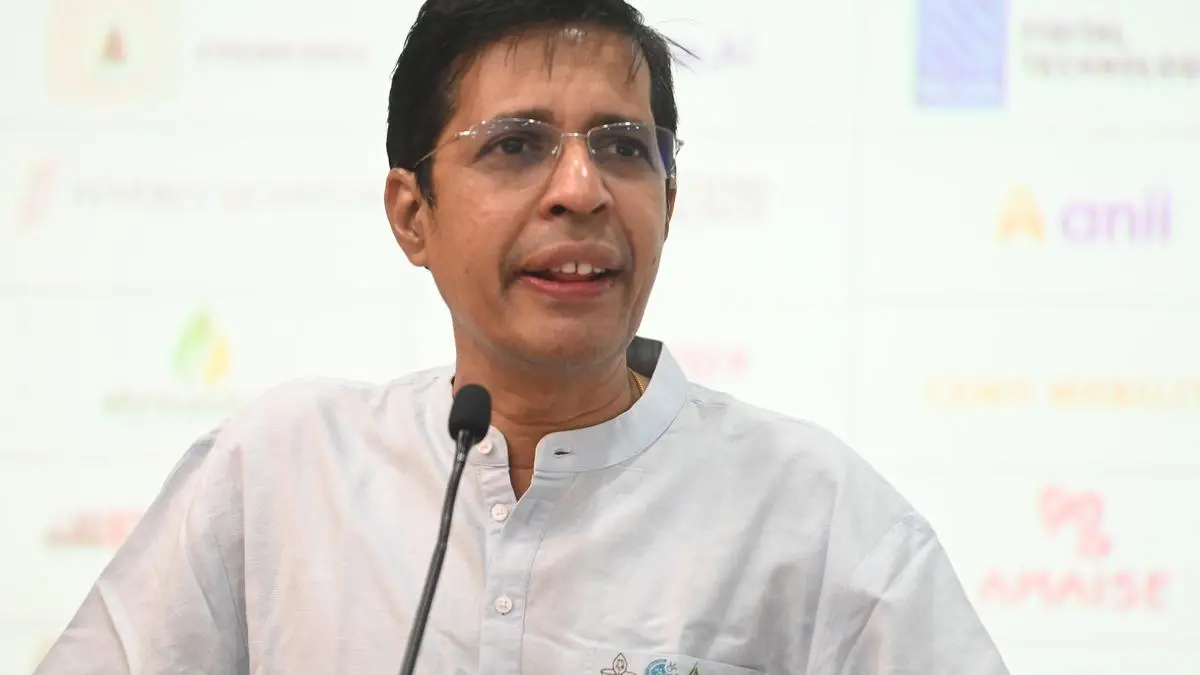
V. Kamakoti, Director, IIT Madras
| Photo Credit:
BIJOY GHOSH/businessline

Indian Institute of Technology Madras (IIT Madras) has announced that it is expanding its ‘AI For All’ courses to school teachers from kindergarten to Class XII (K-12) across India.

The  ‘AI for Educators’ course aims to make AI education accessible across disciplines and enable teachers to gain essential AI knowledge and practical tools. 

Courses free, online via SWAYAM Plus

The course will be offered online through SWAYAM Plus in partnership with IIT Madras Pravartak Technologies Foundation. They will have a duration between 25 and 45 hours and will be provided free of cost. 

The institute had earlier this year launched the ‘AI For All’ initiative with five courses (AI in Physics, AI in Chemistry, AI in Accounting, Cricket Analytics with AI, and AI/ML using Python).  

AI key to learning and nation-building

The course was launched by V. Kamakoti, Director, IIT Madras, at an event here on Tuesday. “Artificial intelligence is reshaping the future of learning, and K-12 teachers play a vital role in bringing this change into classrooms. By equipping them with AI skills, we are not only strengthening education but also contributing to nation-building,”  Kamakoti said. 

SWAYAM Plus offers 430+ online courses

SWAYAM Plus is an initiative of IIT Madras under the Ministry of Education, designed to provide learning opportunities to learners across India. The platform currently hosts over 430 online courses across 15 sectors, including Engineering, BFSI, Hospitality, and IT/ITeS. 

Published on September 9, 2025

Hyundai Motor India & IIT Madras launch Centre for Cancer Genomics research

No Comments

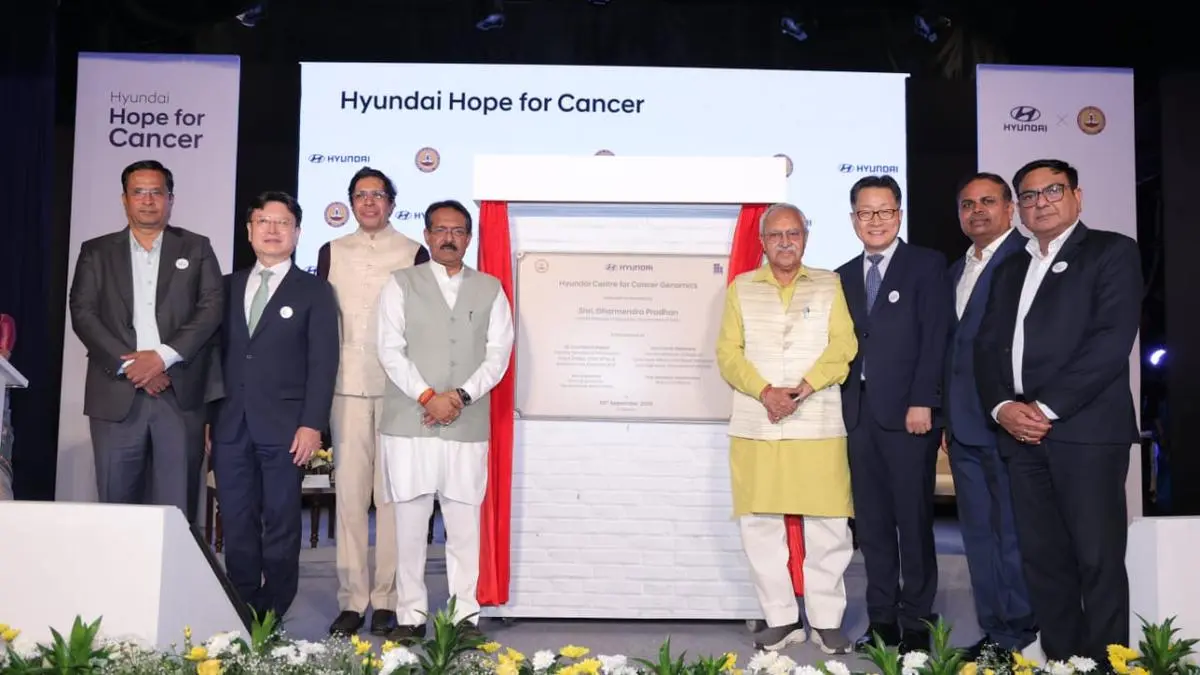
IIT Madras Director V Kamakoti (third from left) along with Unsoo Kim (third from right), MD, HMIL, along with Hyundai officials, IIT M representatives and government officials at the launch of ‘Hyundai Hope for Cancer’ programme in New Delhi on Wednesday.

Hyundai Motor India Foundation (HMIF), the CSR arm of Hyundai Motor India Limited (HMIL), in collaboration with the Indian Institute of Technology Madras (IIT Madras), on Wednesday launched ‘Hyundai Hope for Cancer’, an initiative dedicated to transforming paediatric cancer care in India.

As part of its multi-year commitment towards this cause, HMIF has allocated a social impact investment of ₹56 crore towards this project. The initiative involves the Hyundai Centre for Cancer Genomics, housed at IIT Madras’ main campus in Chennai. The centre features India’s first community-based Cancer Tissue Biobank, enabling advanced genomic research in paediatric leukaemia and lymphoma.

“By building an Indian childhood cancer genomic database, strengthening early detection and screening, and expanding access for underserved communities, the programme exemplifies ‘sabka prayas’ in action and reaffirms our commitment to equitable, technology-enabled healthcare,” Union Minister of Education Dharmendra Pradhan said in a statement.

Personalised treatment

The Centre will focus on genomic sequencing to identify genetic mutations, laying the foundation for a national paediatric cancer genome database and personalised treatment protocols. It will also serve as a hub for clinicians, researchers, pharmaceutical scientists, and global partners, contributing to international efforts such as the International Cancer Genome Consortium (ICGC) and WHO’s International Agency for Research on Cancer (IARC).

Unsoo Kim, Managing Director, HMIL, said, “’Hyundai Hope for Cancer’ is not just about building infrastructure – it’s about healing, resilience, and hope. Every child deserves the chance to live a healthier, brighter tomorrow.”

Prof. V Kamakoti, Director, IIT Madras, said, “This research centre will catalyse breakthrough studies in paediatric oncology, resulting in improved diagnostics and targeted treatments. We thank Hyundai for trusting us to spearhead this mission.”

With a total sum of ₹56 crore committed towards this initiative, HMIF has also established a dedicated ₹3-crore Cancer Care Fund to ensure equitable access to treatment for economically-disadvantaged patients.

Over the next four years, the Centre will conduct 225+ cancer awareness and screening camps across Tamil Nadu, Haryana, and Maharashtra, reaching out to 1.27 Lakh individuals and vaccinating 5,000+ girl children against HPV.

Published on September 3, 2025

Health Ministry to ease test licence, BA/BE study rules; pharma sector set to gain

No Comments

In a major regulatory reform aimed at promoting ease of doing business in the pharma and clinical research sectors, the Union Health Ministry is planning top amend the New Drugs and Clinical Trials (NDCT) Rules, 2019.

The most significant change proposed is the replacement of the current licensing system for test licences, with a simplified intimation and notification mechanism.

Under the new framework proposed, companies will no longer need to wait for approvals in most cases; instead, they can begin work after intimating the Central Licensing Authority.

Only a small set of high-risk category drugs will continue to require prior clearances.

Moreover, the statutory processing time for such applications will be halved, from the existing 90 days to 45 days. This gives drug developers faster access to testing permissions.

The amendments, notified in the Gazette of India on August 28 and now open for public comments, are expected to streamline procedures for test licences and applications related to Bioavailability/Bioequivalence (BA/BE) studies.

BA/BE study applications

The amendments also address regulatory requirements for BA/BE studies, which are critical in establishing therapeutic equivalence of generic drugs with their innovator counterparts.

For certain categories of studies, the existing licence requirement will be dispensed with.

These studies can now be initiated simply through intimation to the Central Licensing Authority, cutting down delays in study initiation.

Sources said, faster initiation of clinical research and streamlined compliance are expected to make India a more attractive destination for global drug developers. This will further strengthen the country’s position as a hub for pharmaceutical research and development.

Once implemented, the reforms are expected to give a fillip to India’s ₹4.5-lakh-crore pharma industry, which has been seeking faster approval mechanisms to reduce time-to-market for new drugs and generics.

Published on September 3, 2025

US judge rules Trump administration must restore $2.6 billion in Harvard research funding

No Comments

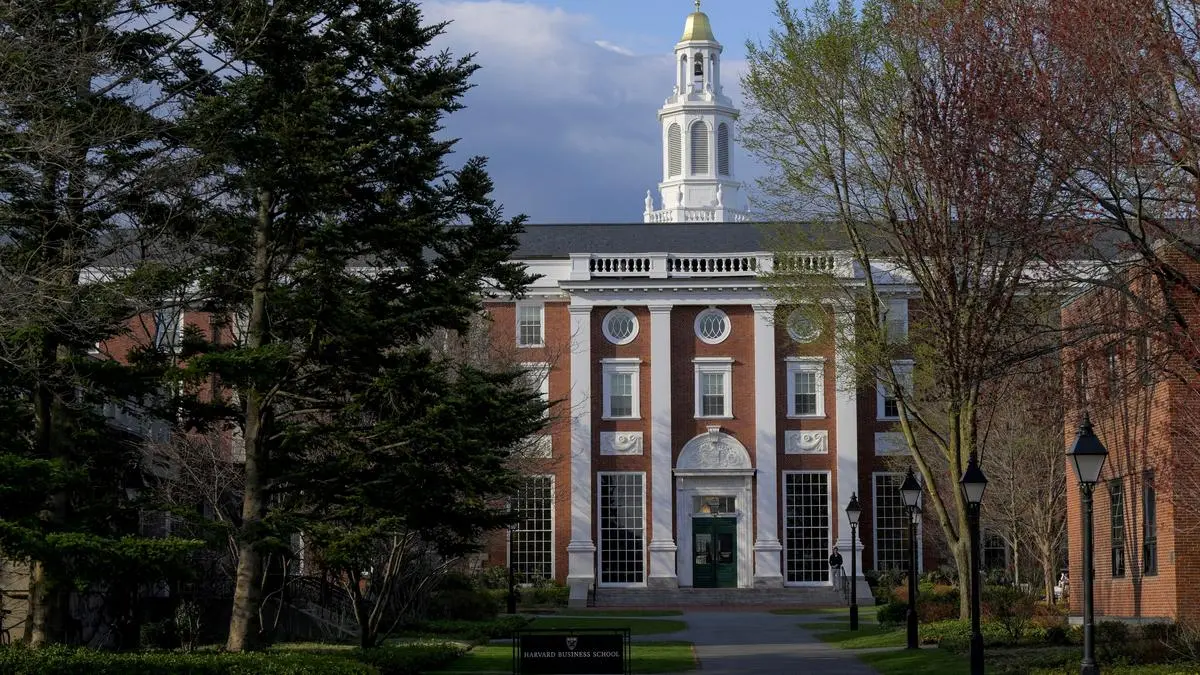
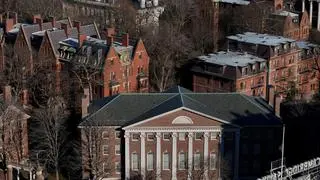
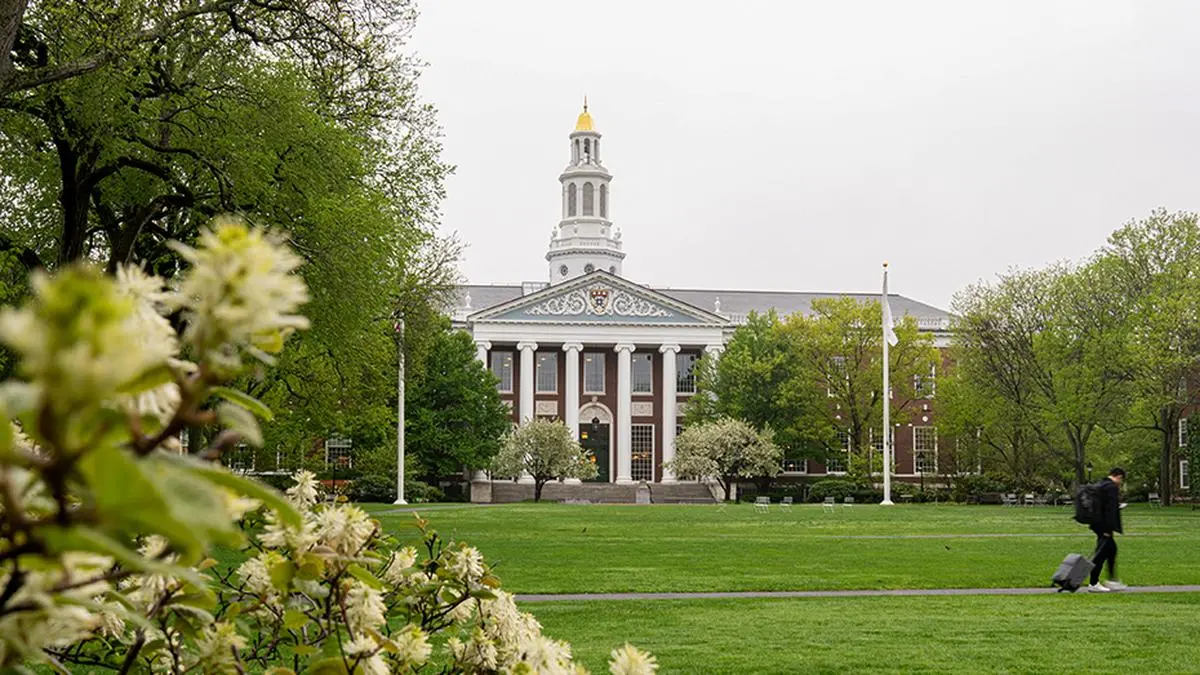
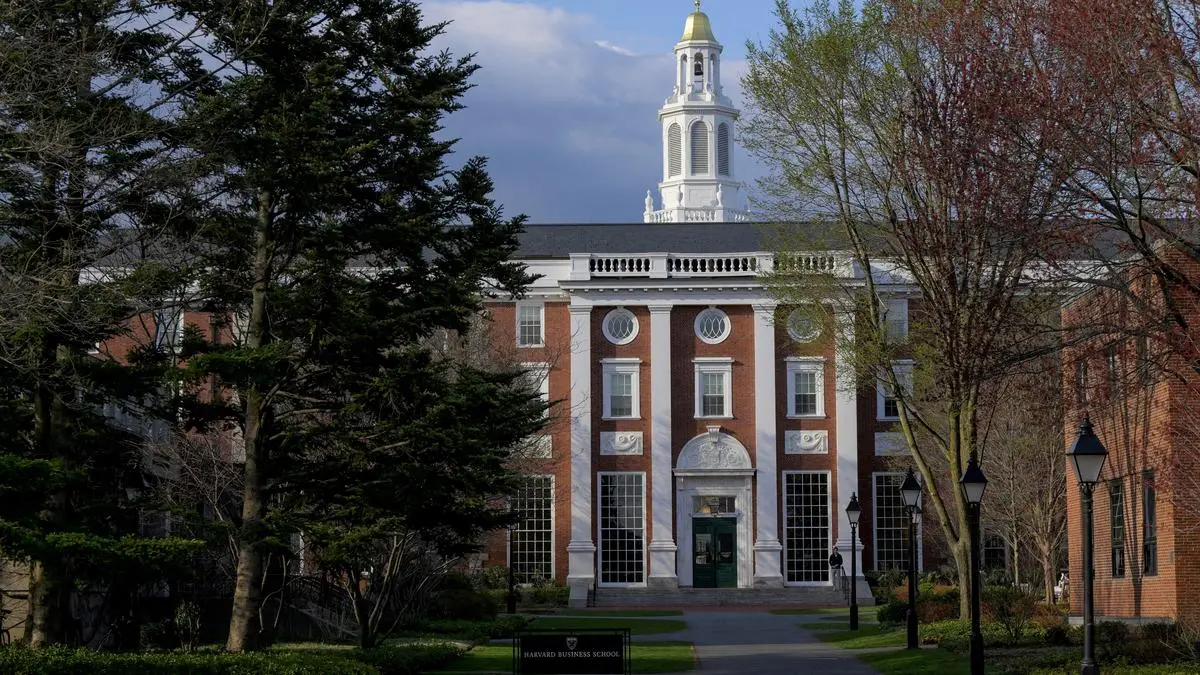
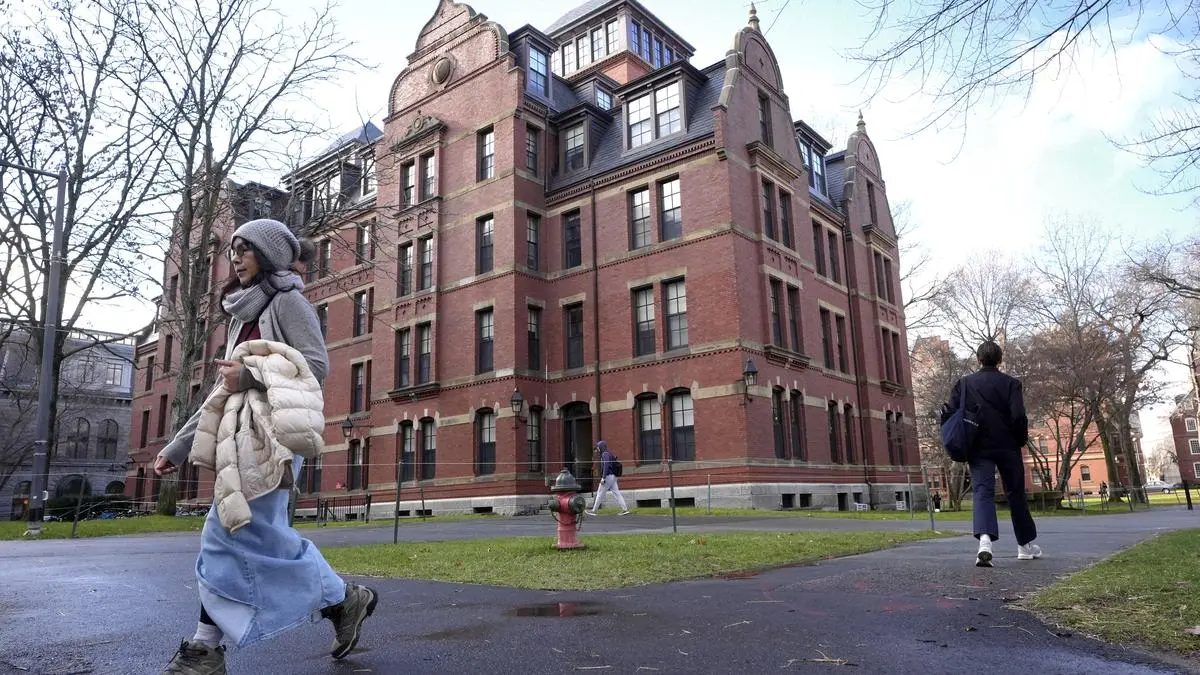
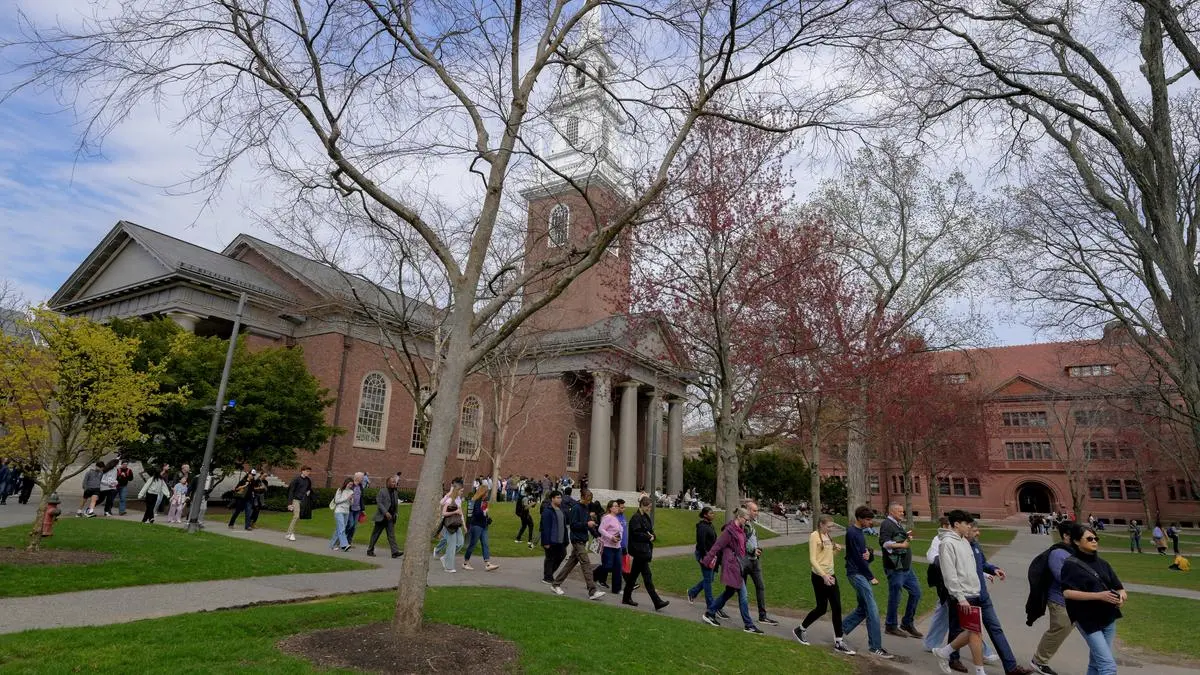
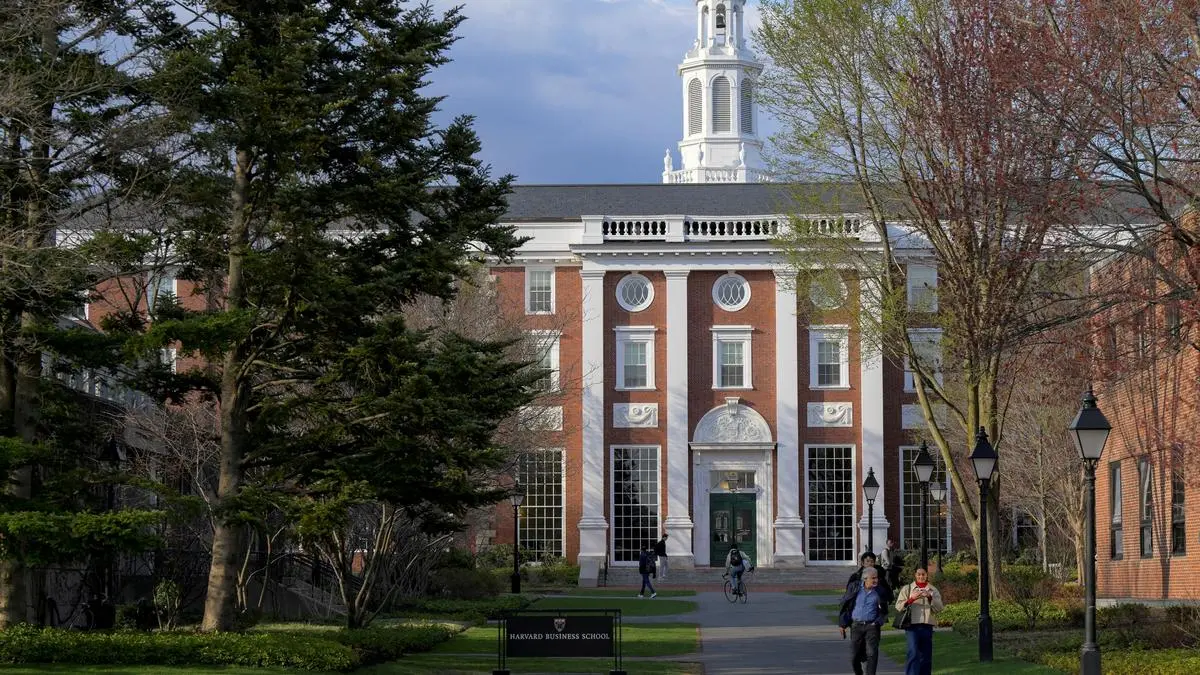
A federal judge in Boston has ordered the Trump administration to reverse its $2.6 billion cuts to Harvard University’s research funding, ruling the move was an unconstitutional act of retaliation.
| Photo Credit:
FAITH NINIVAGGI/Reuters

A federal judge in Boston on Wednesday ordered the Trump administration to reverse its cuts of more than $2.6 billion in research funding for Harvard University, delivering a significant victory to the Ivy League school in its battle with the White House.

US District Judge Allison Burroughs ruled the cuts amounted to illegal retaliation for Harvard’s rejection of the Trump administration’s demands for changes to Harvard’s governance and policies.

The government had tied the funding freezes to Harvard’s delays in dealing with antisemitism, but the judge said the university’s federally backed research had little connection to discrimination against Jews.

“A review of the administrative record makes it difficult to conclude anything other than that (the government) used antisemitism as a smokescreen for a targeted, ideologically-motivated assault on this country’s premier universities,” Burroughs wrote. The country must fight antisemitism, she wrote, but it also must protect the right to free speech.

The ruling reverses a series of funding freezes that later became outright cuts as the Trump administration escalated its fight with the nation’s wealthiest university. The administration also has sought to prevent the school from hosting foreign students and threatened to revoke its tax-exempt status in a clash watched widely across higher education.

White House to appeal ruling

The restoration of federal money would revive Harvard’s sprawling research operation and hundreds of projects that sustained cuts. But whether Harvard actually receives the federal money remains to be seen. The government plans an immediate appeal, White House spokeswoman Liz Huston said in a statement, calling Burroughs an “activist Obama-appointed judge.” “To any fair-minded observer, it is clear that Harvard University failed to protect their students from harassment and allowed discrimination to plague their campus for years,” Huston said. “Harvard does not have a constitutional right to taxpayer dollars.” Harvard President Alan Garber foreshadowed potential battles to come even as he said the ruling validates Harvard’s fight for academic freedom.

“Even as we acknowledge the important principles affirmed in today’s ruling, we will continue to assess the implications of the opinion, monitor further legal developments, and be mindful of the changing landscape in which we seek to fulfill our mission,” Garber wrote in a campus message.

Harvard’s research scientists said they had been watching the case closely but feared their funding would not be restored anytime soon.

“Many of us are worried that the federal government is going to appeal this decision or find other ways to obstruct the delivery of research dollars, despite the judge’s clear statement that the funding terminations were illegal,” said Rita Hamad, director of a center that researches the impact of social policies on health.

Beyond the courthouse, the Trump administration and Harvard officials have been discussing a potential agreement that would end investigations and allow the university to regain access to federal funding. President Donald Trump has said he wants Harvard to pay no less than $500 million, but no deal has materialized, even as the administration has struck agreements with Columbia and Brown.

Wednesday’s federal court ruling should embolden Harvard’s administration, said historian Kirsten Weld, president of Harvard’s chapter of the American Association of University Professors, which also prevailed in a lawsuit over the funding cuts. “We hope this decision makes clear to Harvard’s administration that bargaining the Harvard community’s rights away in a compromise with the government is unacceptable,” Weld said.

Harvard’s lawsuit accused the Trump administration of waging a retaliation campaign against the university after it rejected a series of demands in an April 11 letter from a federal antisemitism task force.

The letter demanded sweeping changes related to campus protests, academics and admissions. It was meant to address government accusations that the university had become a hotbed of liberalism and tolerated anti-Jewish harassment on campus.

Harvard President Alan Garber pledged to fight antisemitism. But, he said, no government “should dictate what private universities can teach, whom they can admit and hire, and which areas of study and inquiry they can pursue.” Trump officials moved to freeze $2.2 billion in research grants the same day Harvard rejected the administration’s demands. Education Secretary Linda McMahon declared in May that Harvard would no longer be eligible for new grants, and weeks later, the administration began canceling contracts with Harvard.

As Harvard fought the funding freeze in court, individual agencies began sending letters announcing that the frozen research grants were being terminated under a clause allowing grants to be scrapped if they no longer align with government policies. Harvard has moved to self-fund some of its research but warned it can’t absorb the full cost of the federal cuts.

The judge’s order reverses all of Harvard’s federal funding freezes and cuts since April 14, and it bars the government from future cuts that violate Harvard’s constitutional rights or run afoul of federal law.

Burroughs sided with the university’s argument that the cuts amounted to retaliation in violation of its First Amendment rights and that the government put unconstitutional conditions on Harvard’s federal money.

“As pertains to this case, it is important to recognize and remember that if speech can be curtailed in the name of the Jewish people today, then just as easily the speech of the Jews (and anyone else) can be curtailed when the political winds change direction,” the judge wrote.

Burroughs also agreed with Harvard’s claim that the government failed to follow steps prescribed by Congress to cut federal money under Title VI of the Higher Education Act, a federal law that forbids discrimination in education.

The Trump administration denied the cuts were made in retaliation, saying the grants were under review even before the April demand letter was sent. It argues the government has wide discretion to cancel contracts for policy reasons.

“It is the policy of the United States under the Trump Administration not to fund institutions that fail to adequately address antisemitism in their programs,” it said in court documents.

In a separate lawsuit filed by Harvard, Burroughs previously blocked the Trump administration’s efforts to prevent the school from hosting international students.

Published on September 4, 2025

New simulation framework enhances biomanufacturing with smarter microbial design

No Comments

COSMOS predicted that a co-culture of Shewanella oneidensis and Klebsiella pneumoniae produce 1,3-propanediol – a key chemical for plastics – more efficiently than either species alone.
| Photo Credit:
valiantsin suprunovich

Scientists at IIT Madras have developed a computational tool that could reshape how industries harness microbes for sustainable production. The system, called COSMOS (Community and Single Microbe Optimisation System), uses simulations to determine whether a single microbe or a carefully engineered community will yield better results for biomanufacturing.

COSMOS predicted that a co-culture of Shewanella oneidensis and Klebsiella pneumoniae produce 1,3-propanediol – a key chemical for plastics – more efficiently than either species alone. The prediction aligns with experimental results, demonstrating the system’s potential to guide real-world microbial design. The 1,3-propanediol (PDO) is a sought-after industrial chemical because it serves as a building block for high-performance plastics and fibres.

Its main use is in producing polytrimethylene terephthalate (PTT), a polyester valued in textiles, carpets, and engineering plastics for its strength, elasticity, and stain resistance. PDO also feeds into polyurethane foams, coatings, and adhesives, as well as cosmetics and solvents. Importantly, when produced from renewable feedstocks such as corn sugar or glycerol, PDO offers a sustainable alternative to petroleum-based glycols, aligning with the push for greener materials.

The stakes are high. Bioprocessing underpins the emerging bioeconomy, converting agricultural waste, wastewater, and other renewable resources into valuable outputs such as biofuels, pharmaceuticals, and bioplastics. Companies must constantly decide whether to rely on monocultures, which are simple to manage but prone to productivity limits, or communities, which can cooperate metabolically but require careful optimisation. COSMOS tackles this trade-off directly, offering a way to virtually “test-drive” microbial strategies, before investing in costly lab trials.

Not just a filter

The framework doesn’t only highlight when communities outperform monocultures, it also reveals cases where sticking with a single microbe is smarter. That insight could save businesses both time and money, avoiding unnecessary complexity when gains are marginal. By simulating different feedstocks, oxygen conditions, and inoculum ratios, COSMOS helps companies tailor processes to specific industrial contexts.

Biofuel producers could screen which microbes thrive on crop residues; pharmaceutical firms could design consortia for complex drug precursors; and materials companies could find the most efficient path to bioplastics. At a time when industries are under mounting pressure to decarbonise, the ability to optimise microbial manufacturing in silico offers both a scientific and competitive edge.

Though the model still relies on generalised parameters and cannot yet capture every strain-specific detail, its validation against lab data shows it can reliably capture performance trends. That makes COSMOS less a replacement for experiments than a powerful filter, one that narrows the field to the most promising candidates for industrial testing.

Published on September 5, 2025

Motilal Oswal Executive Centre opened at ISB, Hyderabad

No Comments

File picture: Motilal Oswal, Chairman, Motilal Oswal Foundation 
| Photo Credit:
jaishankar

 Deputy Chief Minister of Telangana, Bhatti Vikramarka Mallu, on Friday formally inaugurated the Motilal Oswal Executive Centre (MOEC) at the Indian School of Business campus here.

The Centre is expected to enhance ISB’s capacity to deliver world-class executive education, leadership programmes and bridge academia and industry. The opening of the Motilal Oswal Executive Centre follows the landmark ₹100-crore philanthropic contribution from the Motilal Oswal Foundation.

The centre, designed to be a hub for academic and professional excellence, will host executive education programmes, leadership summits, industry dialogues, and research collaborations.

Speaking at the inauguration ceremony, Mallu said MOEC was a gateway to learning, built through visionary philanthropy. He acknowledged the support of the Motilal Oswal Foundation, going beyond philanthropy as a statement of faith in knowledge, leadership, and collective progress.

Motilal Oswal, Chairman, Motilal Oswal Foundation said: “Our philosophy of ‘Learn, Earn and Return’ has always guided us. Education is the foundation upon which opportunities are built and futures are shaped. Through this centre at ISB, we hope to nurture future leaders who carry the spirit of enterprise and responsibility. This Executive Centre aims to empower generations with knowledge and values.”

Madan Pillutla, Dean, ISB, said: “The Motilal Oswal Executive Centre reflects our commitment to advancing business education and enhancing the learning experience for working professionals at ISB. This initiative demonstrates how partnerships between philanthropy and education can create platforms that shape future leaders for India and the world.”

Published on September 5, 2025

AVPL International launches skill-based diploma programmes for girls

No Comments

AVPL International has launched skill-based diploma programmes at Government Girls Polytechnic, Basti, and Government Girls Polytechnic, Mirzapur.

The programmes being introduced include Apparel Design and Fashion Technology, Computer Science and Engineering, Information Technology, and Fashion Design and Garment Technology.

A media statement said these courses are designed to provide students not only with academic knowledge but also with practical skills, industry exposure, and problem-solving abilities essential for today’s workplace.

Quoting Preet Sandhuu, Founder and Managing Director of AVPL International and Promoter of Startup Stairs, the statement said: “Our aim is to help young women step forward with confidence. These programmes will prepare them to excel in both creative and technical fields, while also encouraging them to think like problem-solvers and entrepreneurs. With this initiative, we want to ensure that every girl has the opportunity to turn her potential into success.”

Published on September 4, 2025

IIT-Madras emerges as top engineering college under NIRF ranking for 10th consecutive year

No Comments

V. Kamakoti, Director, IIT Madras, receiving NIRF 2025 Trophy in New Delhi on Thursday

Indian Institute of Technology Madras (IIT Madras) has retained its top position in the National Institutional Rankings Framework (NIRF) 2025.

The Institute has been ranked 1 in the ‘Engineering’ category for the 10th consecutive year in NIRF 2025 and in the ‘Overall’ category for the 7th consecutive year.

IISc Bengaluru, IIT Bombay, IIT Delhi and IIT Kanpur followed IIT-Madras, making up the top five in overall rankings.

In the ‘Research Institutions’ category, IIT-M retained its number 2 rank, behind only the Indian Institute of Science, Bangalore.

“Being a topper consistently is a result of a collective, cohesive and focused team effort. Thanking the Almighty for blessing us with such a wonderful team. Together, we pledge to put in our best efforts towards Viksit Bharat@2047,” V Kamakoti, Director, IIT Madras, said, in a statement.

IIT-M also secured the 1st rank in the ‘Innovations’ and ‘Sustainability Development Goals’ (SDG) category. These recognitions come at a time when the institute has launched its own School of Innovation and Entrepreneurship along with a School of Sustainability.

The results of 10th edition of NIRF India Ranking was announced on Thursday by Dharmendra Pradhan, Education Minister, Government of India.

“In 2014–15, India had less than 3.5 crore students in higher education; today, this number has crossed 4.5 crore. By 2030, our aim is to reach 9 crore students, and the National Education Policy provides multiple pathways to achieve this ambitious goal. Ranking and accreditation of institutions will be one of the cornerstones in ensuring quality and accountability in this journey,” the minister said.  

Published on September 4, 2025

IIMA retains top spot among management institutes in NIRF 2025 rankings 

No Comments

Retaining the top spot, the Indian Institute of Management Ahmedabad (IIMA) has been ranked as the best management institute for the sixth consecutive year in the National Institutional Ranking Framework (NIRF) India Rankings 2025 released by the Ministry of Education, Government of India, Thursday.

“At IIMA, we remain committed to nurturing management leaders and innovators who can address the challenges of a rapidly changing world. It is a matter of great pride for us to be recognised as the best management institute in India for the sixth consecutive year by the Ministry of Education’s NIRF 2025 rankings,” stated Professor Bharat Bhasker, Director, IIMA in an official release.

“This achievement also reflects the unwavering commitment of our faculty, students, and alumni towards academic excellence, impactful research, and meaningful contributions to society. Our strong focus on research and innovation continues to shape new ideas and solutions that influence both academia and industry, while reinforcing IIMA’s role as a thought leader in management education,” the statement added.

IIM-Bangalore and IIM-Kozhikode were ranked second and third respectively.

The NIRF provides a methodology to assess and rank higher education institutions across the country.

It is based on the following broad parameters for evaluation: ‘Teaching, Learning and Resources’, ‘Research and Professional Practices’, ‘Graduation Outcomes’, ‘Outreach and Inclusivity’, and ‘Perception’.

Since the launch of the rankings, IIMA has been placed at the top position in 2017, 2018, and then again from 2020 onwards, the institute added.

Published on September 4, 2025

Great Lakes Institute opens admissions for PGPM and PGPM-FBE programmes

No Comments

Chennai’s Great Lakes Institute of Management has opened admissions for its One-Year Post Graduate Programme in Management (PGPM) and Post Graduate Programme in Management – Family Business & Entrepreneurship (FBE) for the academic year 2026–27.

The PGPM, offered at both the institute’s Chennai and Gurgaon campuses, is designed for professionals with over years of work experience. The PGPM-FBE, offered exclusively at the Chennai campus, is a specialised edition of Great Lakes’ flagship one-year MBA programme designed for the next generation of family business owners and entrepreneurs. 

“We are excited to invite applications for the PGPM and PGPM-FBE for the academic year 2026–27. Both programmes are designed for distinct yet equally ambitious segments of aspiring leaders—seasoned professionals aiming to accelerate their corporate journeys, and next-generation entrepreneurs seeking to scale their ventures. Our goal is to deliver world-class learning experiences that blend academic rigor, industry relevance and a truly global perspective,” said Gautam Lakhamraju, COO & Admissions Director, Great Lakes Institute of Management.

Published on September 3, 2025

ISB offers certificate programme in Mastering Executive Presence

No Comments

The Indian School of Business (ISB) is offering a 15-week online ‘Certificate Programme in Mastering Executive Presence’, designed to empower seasoned leaders, senior professionals, entrepreneurs and those transitioning into new leadership roles.

The programme equips participants with the ability to project confidence, communicate with clarity, and inspire influence across diverse organisational contexts, addressing the growing need for impactful leadership in today’s fast-evolving business environment.

The programme will provide professionals with curated modules on personal branding, storytelling, negotiation, critical thinking and emotional intelligence. 

Delivered in a flexible online format, the programme combines self-paced learning with live virtual sessions by ISB faculty and industry experts. Participants will engage through pre-recorded faculty-led videos, interactive activities, social learning sessions and simulations such as an AI-powered negotiation bot, ensuring an applied and immersive learning journey.

“With this programme, ISB endeavours to advance leadership scholarship while equipping professionals to meet complex organisational demands with confidence and clarity,’‘ Sunill Sood, Executive Director, ISB Executive Education and Digital Learning said in a release.

The first cohort of the Certificate Programme in Mastering Executive Presence is scheduled to commence on October 12, 2025. 

Published on September 3, 2025

University of Hyderabad joins global collaboration to tackle single-use plastics in healthcare

No Comments

The Department of Anthropology at the University of Hyderabad will be participating in an international project  aimed at addressing the environmental and health impacts of single-use plastics in healthcare.

The “After the Single Use” project, funded by the Wellcome Trust with a £5.9 million Discovery Award, brings together a global team of researchers from eight countries to explore the cultural, social, and environmental dimensions of medical plastics and promote circular healthcare economies.

Led by Nanda Kishore Kannuri, Associate Professor in the Department of Anthropology, UoH, will receive a grant of £422,608 (approximately ₹5 crore) over a five-year period to contribute to this significant initiative. 

The project will examine the historical, local, and global factors that have shaped the current healthcare waste crisis, analyze the life cycles of disposable medical technologies, and collaborate with policymakers, activists, engineers, and designers to develop sustainable solutions.

“This collaboration represents a significant opportunity for the University of Hyderabad to contribute to a global initiative at the intersection of anthropology, environmental sustainability, and healthcare,” Nanda Kishore Kannuri. 

“We look forward to working with our international partners to develop innovative solutions that can be applied in diverse healthcare settings,’‘ he added. 

The “After the Single Use” project involves a global team of collaborators from the University of Edinburgh (UK), University of New South Wales (Australia), University of Geneva (Switzerland), University of Oslo (Norway), National Institute of Medical Research (Tanzania), CRCF (Senegal), PNG Institute of Medical Research (Papua New Guinea), and Johns Hopkins University (USA), as well as key NGO partners Health Care Without Harm and the Norwegian Bioart Arena.

Published on September 1, 2025

The great study abroad shift: Indians rethink the American dream

No Comments

Rising visa refusals, deportation scares and soaring costs are making many students to rethink 

For years, the US has been the ultimate dream for Indian students. But that dream is getting complicated.

Rising visa refusals, deportation scares and soaring costs are making many students rethink.

Shreya (name changed), a 25-year-old heading to Spain for her master’s in Sports Marketing, told, “The tension between the nations and the hate towards Indian students in the US is scary. I didn’t want to get caught in the crossfire. And let’s not forget the expense.”

Plan B destinations on the rise

Shreya is not alone. More Indian students are now considering “Plan B” study abroad options as the US tightens visa norms. A recent ruling has restricted the duration foreign students, professors and physicians can stay in the country without additional vetting.

Varun Singh, MD, XIPHIAS Immigration, explained, “The US still hosts a record number of international students, but consular refusals for F-1 visas have climbed sharply.”

According to US State Department data, global F-1 refusal rates touched 41 per cent in FY24 – up from 36 per cent in 2023 and just 15 per cent in 2014, the highest ever. Despite India becoming the top source of international students in 2023/24, F-1 issuances to Indians dropped 34 per cent, from 130,839 in FY23 to 86,110 in FY24.

Where students are going instead

The uncertainty has opened doors for other countries. “Although the US remains a leading study destination, students are spreading their options. Canada, France, the UK, New Zealand and Germany are getting popular for quicker visa processing, a friendly environment, affordable education, and rewarding post-study work opportunities,” shared Mamta Shekhawat, Founder, Gradding.com, a study abroad platform.

The UK issued 98,014 study visas to Indians in the year ending June 2025, nearly a quarter of all UK study visas, despite recent dependency rule changes. Germany, meanwhile, has seen a surge, with 59,419 Indian enrolments in Winter 2024/25, making India its largest source country.

Canada still attracts over 3 lakh Indians, though new caps on study permits and higher proof-of-funds have slowed approvals. Australia has tightened rules with its new “Genuine Student (GS)” test and shorter post-study work durations, tempering growth, as per XIPHIAS Immigration data.

Cost as a big driver

Money is another big driver. Although the US sets the standard for academic excellence, it remains the most expensive option for foreign students when combining tuition (ranging $25,000–$60,000 annually). By contrast, Canada and Australia are moderately priced, with tuition closer to $20,000–$35,000, and offer transparent pathways along with post-study work options. Germany stands out with free state universities and affordable living costs.

“Studying abroad has always been a huge investment, and the US sits at the top end of that scale,” said Sonal Kapoor, Global Chief Business Officer at Prodigy Finance.

Despite the hurdles, the US hasn’t lost its shine. Indian students still flock there for its reputation, cutting-edge research, and the optional practical training (OPT) programme, especially the STEM-OPT extension, which offers career-building opportunities.

But long-term prospects remain a concern. “Ambiguity around the H-1B visa and higher rejection rates make students apprehensive about stability. In contrast, Canada and the UK offer clearer residency pathways,” said Shekhawat.

Aman Singh, Co-Founder of GradRight, framed it differently, “US policies are meant to attract high-calibre international students. Those with weaker academic or professional credentials, often applying to lower-tier universities or hoping to ‘figure it out’ after arrival, are the ones facing greater difficulties.”

For now, the US remains aspirational. But as costs climb and policies tighten, Indian students are diversifying their bets, choosing destinations where the path feels less uncertain, and the dream, more achievable.

Published on August 29, 2025

Educate Girls receives 2025 Ramon Magsaysay award

No Comments

Safeena Husain, Founder, Educate Girls

Educate Girls was awarded “Changemaker: Social Transformation Award” for 2023 from Hindu Businessline. Since receiving the HBL Changemaker award, Educate Girls has continued its impactful work and made history. The organisation has become the first NGO dedicated to girls’ education to be listed on the Social Stock Exchange (SSE).

“Being the first Indian nonprofit to receive the Ramon Magsaysay Award is a historic moment for Educate Girls and for the country. This recognition places a global spotlight on India’s people-powered movement for girls’ education, one that began with a single girl in the remotest village and grew to reshape entire communities, challenging traditions and shifting mindsets” said Safeena Husain, Founder, Educate Girls.

She added, “ This Award honours our dedicated Team Balika volunteers, valued partners, passionate gender champions, and supporters, and acknowledges the millions of girls who reclaimed their right to education. As we work to reach 10 million learners in the next decade and share this blueprint beyond India, we carry forward a simple truth that when one girl is educated, she takes others with her, multiplying change across families, generations, and nations,”

Founded in 2007, Educate Girls has been working for nearly two decades to break cycles of poverty and illiteracy by empowering girls through education. It has worked across 30,000+ villages with the support of 55,000+ community volunteers, bringing over 2 million girls back to education and supporting over 2.4 million children in remedial learning. Educate Girls aims to impact over 10 million learners over the next decade, driving systemic change alongside government partnerships, while ensuring last-mile access for those girls and young women who are most at risk of being left behind. Educate Girls’ recognition highlights the global urgency of investing in girls’ education as a catalyst for social and economic transformation.

The Ramon Magsaysay Award celebrates greatness of spirit and transformative leadership across Asia. Awardees are chosen annually by the Ramon Magsaysay Award Foundation from nominations submitted through a confidential, global pool of experts, undergoing a rigorous and independent evaluation process. Educate Girls’ selection reflects the maturity, innovation and impact of India’s development sector, which has long been at the forefront of people-powered solutions to complex social challenges.

The 2025 Ramon Magsaysay Awardees will formally receive their medallions and certificates during the 67th Ramon Magsaysay Awards Presentation Ceremonies on 7 November 2025 at the Metropolitan Theatre in Manila, Philippines.

Published on August 31, 2025

Management jobs to increase with AI advent, B-schools need to prepare students: GIM Director

No Comments

The number of jobs in the management sector is going to rise with the advent of Artificial Intelligence (AI), but they will require a different skill set from the present prerequisites, according to Goa Institute of Management Director Ajit Parulekar.

Contrary to the popular concern about AI causing a reduction in job opportunities, the veteran business school academician said the challenge before management institutions is to prepare new graduates for the new set of jobs that are going to be created in the near future.

“As far as management is concerned, I do think that the number of jobs that are going to be created is going to go far up and outnumber the number of jobs that are getting kind of closed up.

“Having said that, it’s not the same set of people who will be able to fit in the roles. So the jobs lost will not be going to the same people as they may not have the skill set to be able to get the job,” he told PTI in an interview.

Parulekar said there would be organisations looking for talent, and they will have a lot of unfilled positions because they cannot find the right kind of skill set in candidates.

He said technology is playing a big role in management education.

“Whichever aspect of business you take within whichever sector, I think tech cycles are really the ones that are making a big difference.

“So, in big technology, you have two types of technologies — one is going to be sector-specific, which is something that doesn’t affect business schools as much. And then there is data analytics, IoT, blockchain, and the digital overall space that are making a difference.” Underlining that technologies change really fast, Parulekar said, “We started a big data analytics programme in 2018. Seven years later, we realise that we need a complete revamp.”

“You don’t need data scientists as much today as you required seven or eight years back… So, what is really needed is more managerial implications of analytics and of AI and machine learning and a variety of things like that,” he said.

Parulekar, who joined the Goa Institute of Management 25 years ago, said that while technology cuts across different disciplines and sectors, application to each is different.

“Marketing analytics is very different. Within marketing, retail analytics versus Google analytics is very different from healthcare analytics, from financial analytics, and HR analytics.

“The second part is bringing agility in students, and agility is a lifelong learning… And unless they have this ability to learn on the job, they are not going to be able to have long careers. That’s something that gets embedded into the programme and is a significant part from a pedagogical standpoint, experiential learning and autonomous learning,” he said.

Published on August 31, 2025

CUSAT, CSL sign MoU to establish Centre of Excellence in sustainable shipbuilding technology

No Comments

A view of the Cochin Shipyard
| Photo Credit:
MUSTAFAH KK

Cochin University of Science and Technology (CUSAT) and Cochin Shipyard Limited (CSL) have signed an MoU to establish a Centre of Excellence in Sustainable Shipbuilding Technology, officials said.

According to CUSAT authorities, CSL will provide ₹3.53 crore for the establishment of the centre at the university campus.

“Aimed at bridging the gap between the shipbuilding industry and academia, the Centre of Excellence (CoE) set up through CSL-CUSAT collaboration will focus on software development, skill development, upskilling, and digitisation,” the university said in a press release.

“The Centre will provide state-of-the-art computing facilities and advanced marine software for research in Naval Architecture, CFD, FEA, and related areas, thereby promoting innovation in ship design, shipbuilding, and advanced ship analysis,” the release added.

CSL Managing Director Madhu S Nair handed over the MoU to the university Vice Chancellor Dr M Junaid Bushiri at a function held here on Friday.

The MoU was signed by the varsity Registrar Dr Arun A U, the release said.

For the management and implementation of CSR funding, the Vice Chancellor nominated Dr Satheesh Babu P K, Associate Professor, Department of Ship Technology, as coordinator, and Assistant Professors Dr Manoj T Issac and Dr Rajesh P Nair as assistant coordinators.

CSL and CUSAT officials attended the ceremony, the release said.

Published on August 30, 2025

IIT-H inks agreement with Army Training Command to set up centre of excellence

No Comments

The Indian Institute of Technology Hyderabad (IITH) has signed a memorandum of understanding (MoU) with the Shimla-based Army Training Command to establish a Centre of Excellence (CoE) called VIGRAHA (Virtual, Intelligent, Ground-breaking Research in AR/VR and High-tech Applications for the Indian Army).

The agreement would help promote research and development in augmented reality (AR), virtual reality (VR), artificial intelligence (AI), robotics, unmanned systems, and other emerging technologies for the Army.

“This partnership exemplifies the synergy between academia and the armed forces in promoting innovation and advancing the nation’s technological capabilities. The CoE will help the country achieve self-reliance in Defence technologies,” IIT-H Director B.S. Murty said.

The MoU will work on creating joint academic programmes, research and development projects, and capacity-building exercises. It will also launch training and certification programmes in emerging technologies and internship opportunities for IIT-H students at the Army’s Simulator Development Division (SDD) in Secunderabad. 

Published on August 30, 2025

KMC Manipal launches Dept of AI in Healthcare

No Comments

Lt Gen MD Venkatesh, Vice Chancellor of MAHE, inaugurates the Department of AI in Healthcare at Kasturba Medical College in Manipal.

Kasturba Medical College (KMC), Manipal, a constituent unit of Manipal Academy of Higher Education (MAHE), has launched the Department of Artificial Intelligence (AI) in Healthcare.

Inaugurating the department, Lt Gen MD Venkatesh, Vice Chancellor of MAHE, said the future of healthcare is inextricably linked with technology.

“This department is not just a new academic unit; it is a statement of our commitment to leading healthcare revolution. It will require a collective, interdisciplinary effort to position MAHE as nation’s pioneer in translating AI research into real-world clinical practice,” he said.

Sharath K Rao, Pro Vice-Chancellor (Health Sciences), MAHE, said MAHE envisions a 360-degree implementation of AI across healthcare spectrum.

“This goes beyond diagnostics and treatment to fundamentally reshape medical education itself, fostering AI literacy in all our student community,” he said.

Anil K Bhat, Dean, KMC Manipal and Senior Advisor for the department, said Department of AI in Healthcare will advance research, education, and clinical applications by building interdisciplinary expertise by uniting medicine, engineering, and data science. It will translate AI research into real-world solutions for diagnosis, treatment, education, and public health; and train the next generation of healthcare-AI leaders in areas such as predictive analytics, medical imaging, personalised medicine, and decision support systems, he said.

The department aims to introduce MSc and Integrated MSc-PhD programmes in AI, alongside courses to upskill its faculty and students. “We will actively foster collaborative research and innovation projects with external partners and industry. Our ultimate focus will be on initiatives with direct societal impact, driving meaningful reforms in patient care and medical education,” he said.

Published on August 29, 2025

UIDAI urges schools to conduct Aadhaar biometric camps for children; 17 crore updates pending

No Comments

 UIDAI CEO Bhuvnesh Kumar

Unique Identification Authority of India (UIDAI) has called on schools across the country to ensure timely Aadhaar mandatory biometric updates for children in the age group of 5-15 years.

UIDAI CEO Bhuvnesh Kumar has written to Chief Secretaries of States and Union Territories, urging them to complete the pending mandatory biometric updates by organising camps in schools, an official release said on Wednesday.

“UIDAI has joined hands with the Department of School Education and Literacy, to provide the Mandatory Biometric Update (MBU) status pertaining to Aadhaar of school children on the Unified District Information System for Education Plus (UDISE+) application – a move that will facilitate MBU in Aadhaar for crores of students,” the release said.

Biometric updates mandatory at age 5 and 15

UIDAI emphasised that the timely completion of biometric updates in Aadhaar is essential for children at the age of five and once again at 15 years of age.

“It is crucial for maintaining the accuracy and reliability of biometric data of children in Aadhaar,” the release said.

Mandatory biometrics update is pending in case of nearly 17 crore Aadhaar numbers.

Non-update may affect exam, scheme authentication

Not updating the biometrics of the child may later lead to difficulties in carrying out authentication for receiving benefits under various government schemes, registering in competitive and university examinations, such as NEET, JEE, CUET, etc.

The UIDAI CEO has also apprised all the Chief Secretaries of states and UTs of the initiative and is seeking their support in conducting targeted MBU camps.

“It was thought that a camp approach through the schools could help in completing the pending MBUs,” Kumar wrote in his letter.

UDISE+ to give schools visibility on pending MBUs

The main question was how the schools would know which students had not done the biometric updates, he said, adding that the technology teams of UIDAI and the Department of School Education and Literacy teamed up to successfully implement a solution through the UDISE+ application.

“Now all the schools can have the visibility of the pending MBUs,” the UIDAI CEO wrote.

Published on August 27, 2025

Vantage Knowledge Academy launches chartered global investment banker certification in India

No Comments

Vantage Knowledge Academy, in collaboration with Investment Banker’s Foundation, has launched the Chartered Global Investment Banker certification program in India.

Vantage Knowledge Academy, a leading institution in financial education and professional training, has launched the “Chartered Global Investment Banker” certification program.

The CGIB certification is a comprehensive, three-level professional qualification tailored for aspiring and early-career investment banking professionals. Structured to be completed in about 18 months, the program is designed to offer a fast-track yet globally rigorous path to master investment banking.

Course moves from core principles to applied practice

The three levels of the course include Foundation, Strategy, and Applied. It is curated to provide progressive depth, beginning with core principles, advancing to strategic thinking and culminating in practical, real-world application.

Investment Banker’s Foundation is a registered Trust that has developed the “Chartered Global Investment Banker” program.

IBF signs MoU with Vantage as training partner

The Investment Banker’s Foundation has signed an MOU with Vantage Knowledge Academy Ltd as the Official Training partner.

Vantage will deliver the CGIB program through its online learning Management Platform, supported by a faculty team with extensive real-world investment banking experience.

Curriculum blends theory, case studies, and capstone project

The curriculum is designed to be globally relevant, integrating theoretical concepts with case studies, industry simulations and a capstone cross-border deal project to ensure practical readiness.

Training will be delivered online, offering candidates the flexibility to learn at their own pace while also benefiting from live expert-led sessions.

Coverage includes markets, M&A, valuation, regulation, insolvency

The CGIB program curriculum covers the full spectrum of investment banking, including financial markets, mergers and acquisitions, valuation, regulatory frameworks, insolvency, etc. Exams will be held twice a year—in June and December—with on-demand scheduling flexibility.

The program is open to both undergraduates and graduates from any academic background, besides working professionals looking to advance or transition into investment banking and related fields.

Rajesh Dedhia, Director of Vantage Knowledge Academy, stated that the CGIB program is the only comprehensive and detailed program of its kind in India.

It is designed to empower the next generation of finance professionals with not just academic knowledge, but also the practical insight and execution skills required in today’s complex global markets, he said.

Published on August 25, 2025

Engineering Admissions 2025: CS, AI/ML courses dominate despite IT slowdown concerns

No Comments

Engineering colleges across India continue to see strong demand for Computer Science and AI/ML-related courses despite concerns over an IT slowdown.

As engineering colleges conclude their admission sessions, the fear of a slowdown in IT has not deterred the preference for Computer Science (CS) courses over other streams. 

Speaking to businessline, educational institutions and analysts say that job placements and packages offered by the sector prompted more students to apply for CS and aligned courses in line with earlier years.

According to S. Sasikumar, Director of Admissions at Vellore Institute of Technology, the demand for CS has remained strong and continues to be high. “Speculation about an IT slowdown has had little impact, as IT companies continue to actively recruit students and application sales are at an all-time high,” he added. 

SRMIST sees surge in AI/ML, data science

K. S. Lakshmi, Director of Admissions at SRMIST, stated that CS courses remain popular and sought after, especially with specialisations in AI/ML and data science, which have seen increased interest compared to previous years. 

KN Subramanya, Principal of RV College of Engineering (RVCE), Bengaluru, shared that any course with an AI/ML specialisation has seen increased demand due to better job opportunities across various sectors. Currently, RVCE has an intake of 180 students for Computer Science and Engineering with an AI specialisation. 

Career consultant warns of overdependence on CS

However, Jayaprakash Gandhi, a career consultant, considers this trend a cause for concern.  

“Parents and students continue to flock towards CS, expecting better employment and pay packages; however students, especially from rural backgrounds, are unaware of the slowdown and go by the placement rates offered by the college,” he said. According to his analysis of TN counselling sessions, computer science and ECE were the most preferred fields, with 55 per cent of the seats filled by students opting for CS and IT-related courses. 

TN counselling data: CS, IT most popular

According to data from Tamil Nadu Engineering Admissions (TNEA), over 75 per cent of the available engineering seats in the state were filled after the final round of counselling, a 10 percentage point increase compared to the same time last year.

Kiran Kumar Ravulakollu, Dean of the School of Engineering & Technology at Telangana-based MNR University, stated that they have seen a 54% increase in intake in AI/ML and data science specialisations over the last year.  The parents have directed their wards towards the AI specialisations, he added. He believes that tech start-ups and MNCs continue to need freshers.

Core engineering fields see green shoots

However, there are also signs of green shoots in core engineering disciplines, especially those incorporating AI specialisations. Electronics and Communication Engineering, as well as Biotech, are in high demand among Core Students, VIT’s Sasikumar said. 

S.Vaidhyasubramaniam, Vice Chancellor, SASTRA, noted that CS has retained its popularity among students but some have gravitated towards ECE and mechanical streams. Electronics Engineering in VLSI Design and Technology has been particularly sought after, he added.

With Inputs from KV Kurmanath

Published on August 26, 2025

MAHE to invest ₹365 cr in research and development

No Comments

Lt Gen MD Venkatesh, Vice Chancellor of Manipal Academy of Higher Education, inaugurates Manipal Start-Up Expo 2025 in Manipal on Monday.

Manipal Academy of Higher Education (MAHE) is set to invest ₹365 crore in research and development this year, according to Lt Gen MD Venkatesh, Vice Chancellor of MAHE.

Participating in the inaugural of the Manipal Start-Up Expo 2025 in Manipal on Monday, he said: “At MAHE, the entire journey — from ideation to innovation, entrepreneurship, and the maturation of a startup ecosystem — is supported under one roof. We offer comprehensive validation trials, including clinical trials for implantable devices, reflecting our deep investment in cutting-edge research and translational outcomes.”

Emphasising MAHE’s role as a key consortium partner alongside IIT Delhi, IIT Madras, Philips, and Manipal Hospitals in an AI-driven initiative focused on cardiac disease prevention, treatment, and research, he said: “The era of organic growth is behind us. Today, we stand at the threshold of accelerated progress, and it is imperative that we all come together to drive this transformation forward.”

Apurva Shrivastava, Incubation Officer, Biotechnology Industry Research Assistance Council (BIRAC), said the Manipal Start-Up Expo exemplifies the kind of collaborative ecosystem that BIRAC strives to foster across India. MAHE’s comprehensive approach from research to commercialisation aligns perfectly with national mission to transform India into a global biotech hub, she said.

Manesh Thomas, CEO of Manipal-Government of Karnataka Bioincubator (M-GOKB), said: “Today’s expo has demonstrated the power of bringing together diverse stakeholders in one platform. The quality of innovations presented, the depth of discussions, and the enthusiasm of our student innovators reaffirm our belief that Karnataka, and particularly the Manipal ecosystem, is emerging as a significant contributor to India’s startup story. The partnerships formed today and the investment discussions initiated will have a lasting impact on our entrepreneurial landscape.”

There was a panel discussion exploring the transformative impact of AI across multiple sectors on the occasion. Industry experts, academicians, and thought leaders discussed about AI’s role in revolutionising healthcare delivery, business operations, educational methodologies, and research advancement.

More Like This

Union Home Minister Amit Shah
Vantage Knowledge Academy, in collaboration with Investment Banker’s Foundation, has launched the Chartered Global Investment Banker certification program in India.

Published on August 25, 2025

IIT Madras develops low-cost chip-based device for rapid antibiotic susceptibility testing

No Comments

The device can deliver results within three hours and is based on ‘Electrochemical Impedance Spectroscopy’
| Photo Credit:
Dr_Microbe

Researchers at the Indian Institute of Technology (IIT), Madras, have developed an innovative and affordable microfluidic device that can rapidly determine whether bacteria are resistant or susceptible to antibiotics, officials said.

Unlike many modern techniques that rely on costly metals, complex fabrication processes, or require highly-skilled technicians, this lab-on-chip device is based on screen-printed carbon electrodes embedded in a simple microfluidic chip.

This approach makes the device not only economical but also suitable for deployment in smaller clinics and rural healthcare centres.

According to S Pushpavanam, Y B G Varma Institute Chair Professor, Department of Chemical Engineering, IIT Madras, the device designed for speed, sensitivity and ease of use holds strong potential for early diagnosis and better treatment of bacterial infections, particularly in regions with limited access to advanced laboratory infrastructure.

The device can deliver results within three hours and is based on ‘Electrochemical Impedance Spectroscopy’.

Antimicrobial resistance (AMR) is one of the most pressing challenges facing global healthcare systems today.

The World Health Organization (WHO) has identified AMR as one of the top 10 threats to global health, and estimates suggest that nearly 4.95 million deaths worldwide in 2019 were associated with bacterial AMR.

“The burden is especially high in low and middle-income countries, where diagnostic facilities are limited and infections often go untreated or are improperly managed.

Antimicrobial Susceptibility Testing (AST) is an important method used to identify which antibiotics will work against a specific infection. It helps doctors choose the right treatment and avoid the misuse of antibiotics, which is a major cause of AMR.

“However, traditional AST methods, which involve growing bacterial cultures and observing their response to antibiotics, are labour-intensive and typically take 48 to 72 hours. This delay can lead to the use of broad-spectrum antibiotics as a stopgap, which in turn exacerbates the resistance problem,” Pushpavanam said.

To address these limitations, the IIT Madras team developed ε-µD — a cost-effective phenotypic testing device that uses electrochemical signals to assess bacterial growth and antibiotic susceptibility.

“This device meets several key criteria outlined by the WHO, including affordability, speed, ease of use and reliability. By addressing these priorities, ε-µD takes a significant step toward making antimicrobial susceptibility testing more accessible, especially in low-resource settings,” Pushpavanam said.

The research has been published in the prestigious Nature Scientific Reports, a peer-reviewed, open-access scientific mega journal published by Nature Portfolio (part of Springer Nature), covering all areas of natural sciences.

“An important aspect of our device is the use of a specially prepared nutrient solution that serves a dual purpose. It not only supports bacterial growth, which is essential for testing, but also enhances the sensitivity of the electrical signals we use for detection. As the bacteria grow, they cause measurable changes in the electrical properties of the solution, which our system can accurately track,” Pushpavanam said.

“This approach will make a real impact on patients in intensive care units, who may be suffering from complications due to bacterial infections. This will help the doctors prescribe the right treatment and can be life-saving.

“Currently, we are doing clinical validation in collaboration with the IITM Institute Hospital. After rigorous clinical validation, we are planning to commercialise this through our startup, Kaappon Analytics India Private Limited,” he added.

The researchers tested the device on two types of bacteria — gram-negative E coli and gram-positive B subtilis.

They used two antibiotics with different modes of action — ampicillin, which kills bacteria, and tetracycline, which prevents them from growing — to confirm the device’s ability to detect both kinds of responses.

Published on August 25, 2025

Psychology, nutrition, healthcare courses can’t be offered in distance learning, online mode: UGC

No Comments

The institutions have been directed not to admit any student in such programmes from the upcoming academic session
| Photo Credit:
lakshmiprasad S

The University Grants Commission (UGC) has directed all higher education institutions to stop offering programmes in healthcare and allied disciplines, including psychology and nutrition through Open and Distance Learning or online mode from the 2025 academic session, according to officials.

The ban applies to courses under the National Commission for Allied and Healthcare Professions (NCAHP) Act, 2021. These include psychology, microbiology, food and nutrition science, biotechnology, clinical nutrition and dietetics.

“No higher educational institutions (HEIs) shall be permitted to offer any allied and healthcare programmes covered in NCАНР Act, 2021, including psychology as specialisation under Open and Distance Learning and online mode, from the academic session July-August, 2025 and onwards. Any recognition already granted to HEIs for offering such programmes for the academic session July-August 2025 and onwards shall be withdrawn by the UGC,” UGC secretary Manish Joshi said.

“In the case of programmes with multiple specialisation such as Bachelor of Arts (English, Hindi, Punjabi, Economics, History, Mathematics, Public Administration, Philosophy, Political Science, Statistics, Human Rights and Duties, Sanskrit, Psychology, Geography, Sociology, Women Studies), then only those specialisation covered in NCAHP Act, 2021 shall be withdrawn,” he added.

The institutions have been directed not to admit any student in such programmes from the upcoming academic session.

The decision comes amid concerns over quality standards in professional training.

“The decision follows recommendations from the 24th Distance Education Bureau Working Group meeting held in April 2025 and was formalised during recent commission meeting,” Joshi said.

The higher education regulator prohibits the offering of professional and practical-based courses through distance learning and online modes. These include engineering, medicine, dental, pharmacy, nursing, architecture, physiotherapy, applied arts, paramedical disciplines, agriculture, horticulture, hotel management, catering technology, visual arts, and law, among others.

Published on August 24, 2025

IIT Bombay students chart Moon’s chemistry using Chandrayaan-2 data

No Comments

Students of Indian Institute of Technology Bombay (IIT Bombay) have successfully mapped the Moon’s surface chemistry using the data collected by Chandrayaan-2, it said on Saturday.

It was part of Indian Space Research Organisation’s (ISRO) U R Rao Satellite Centre (URSC) challenge given during the Inter-IIT Tech Meet, IIT Bombay said in a statement.

The Moon, with no atmosphere to protect it, is constantly hit by strong X-ray radiation from the Sun. When these X-rays hit the lunar surface, elements present there emit their own unique light, like a natural form of X-ray fluorescence.

This helps scientists identify what the Moon is made of.

Chandrayaan-2’s Large Area Soft X-ray Spectrometer (CLASS) uses this effect to scan the Moon from 100 km above, collecting data in wide strips during each orbit.

Over the years, CLASS has mapped almost the entire lunar surface, producing a rich dataset available on ISRO’s Pradan portal, but much of its scientific value had gone unexplored until now.

“It was simultaneously exhilarating and humbling to be working with data from ISRO’s flagship Chandrayaan mission. Every step felt like we were contributing to something monumental — a once-in-a-lifetime experience that connected us directly to India’s space exploration legacy,” said Ravi Kumar, the lead student from the winning team at the IIT Bombay.

“Our students applied advanced astrophysics and data analysis techniques to extract meaningful surface chemistry information from complex X-ray spectra. Their dedication to transforming competition results into publishable research exemplifies the best of scientific inquiry,” said Prof Varun Bhalerao, the IIT Bombay faculty member who guided the post-competition research.

IIT Bombay students have demonstrated that when given the opportunity, they consistently rise to meet the most challenging scientific problems,” said Prof Shireesh Kedare, Director, IIT Bombay.

“As we celebrate the second National Space Day, this achievement perfectly showcases how India’s young talent will drive our nation’s space program to new heights through innovation and excellence,” said IIT Bombay Deputy Director Prof Milind Atrey.

Published on August 23, 2025

From Bullock carts to Moon Landing: NCERT launches special modules on India’s space journey

No Comments

National Council of Educational Research and Training (NCERT) has released special modules on India’s space programme, tracing the country’s rise from carrying rockets on bicycles and bullock carts in the 1960s to emerging as one of the world’s most cost-efficient space powers with landmark missions such as Chandrayaan-3 and Aditya-L1.

The modules, India: A Rising Space Power, have been designed with photographs, diagrams and timelines to help students understand the country’s space journey.

It highlights how the Indian National Committee for Space Research (INCOSPAR), set up in 1962 under Vikram Sarabhai, grew into the Indian Space Research Organisation (ISRO), which went on to script achievements that have placed India among leading spacefaring nations.

“Our missions are low-cost and simple but high-tech and robust designs; self-reliant in most of its space programmes; these are synergetic and focused,” the module notes, summing up ISRO’s approach to space exploration.

The two modules– one catering to middle-stage students and the other to secondary students– pays tribute to India’s astronauts, Squadron Leader Rakesh Sharma, who became the first Indian to travel to space in 1984 on a Soviet mission, and Group Captain Shubhanshu Shukla, who in June 2025 became the first Indian to stay at the International Space Station (ISS).

It recalls the launch of Aryabhata in 1975, India’s first satellite, and the Satellite Instructional Television Experiment (SITE), which brought television to villages across India.

The early days are contrasted with present-day feats such as Chandrayaan-3’s historic south pole landing in 2023, which made India the first nation to touch down in that region of the Moon.

The module lists several landmark missions, including Chandrayaan-1, which discovered water molecules on the Moon; Mangalyaan (2013), which made India the first Asian country to reach Mars and the first globally to succeed on its maiden attempt; Chandrayaan-2 (2019), whose orbiter continues to provide crucial lunar data; and Aditya-L1 (2023), India’s first solar observatory at Lagrange Point-1 that is studying the Sun’s outer atmosphere and solar storms.

It also mentions the upcoming NASA-ISRO NISAR satellite, which is set to provide high-resolution data on Earth’s ecosystems, ice cover, and natural disasters, scanning the planet every 12 days.

The document also outlines India’s human spaceflight programme Gaganyaan, which aims to send a three-member crew to a 400 km low Earth orbit for three days.

It describes future projects such as Chandrayaan-4, a sample return mission from the Moon, and the planned Bharatiya Antariksh Station (BAS), approved in 2024, that will serve as India’s own space station for long-duration missions and microgravity research.

Alongside scientific milestones, the module stresses India’s emergence as a global space service provider. It notes that ISRO has carried out 131 spacecraft missions and 101 launch missions, including the launch of more than 430 foreign satellites from 35 countries, bolstering India’s reputation as a reliable and low-cost launch hub.

The NCERT module also highlights the role of India’s space applications in everyday life — from NavIC, India’s own navigation system recognised internationally for maritime use, to tele-education, telemedicine, disaster management and real-time information services.

“India’s space programme is not just about exploration of planets and stars, but about improving lives on Earth through applications in weather forecasting, agriculture, education and health,” it underlines.

The content also points to the future, noting that over 200 space startups are emerging in India, collaborating with ISRO and international agencies.

With this momentum, the government has set a target to capture eight per cent of the global space economy by 2035.

Published on August 23, 2025

AASSC, AVPL launch certified drone and aviation courses across 30 Indian cities

No Comments

The Aerospace and Aviation Sector Skill Council has partnered with AVPL International to introduce short-term, 30-hour certified micro-courses at 30 AeroVision Drone Labs nationwide. 
| Photo Credit:
PTI

The Aerospace and Aviation Sector Skill Council (AASSC) has signed a Memorandum of Understanding (MoU) with AVPL International to launch short-term micro-credential programmes aimed at preparing young people for jobs in the drone and aviation sectors.

A media statement stated that AVPL has already established 30 AeroVision Drone Labs in 30 Indian cities, with an investment of approximately ₹12 crore. These labs will now offer certified courses approved by AASSC, giving students a pathway into employment with drone manufacturers and service companies.

Courses cover AI drones, 3D printing

The courses will run for approximately 30 hours and cover topics such as AI-powered drones, data analytics, 3D printing, drone design, sensor applications, and hands-on operations. The fee is expected to range between ₹5,000 and ₹10,000.

Quoting Preet Sandhuu, Co-Founder and MD of AVPL International, the statement said India is rapidly emerging as a global hub for drone technology. Still, there is a huge shortage of skilled manpower. “Through these labs and micro-courses, we want to make students job-ready and bridge the education-to-employment gap. This step will help the industry grow faster and create meaningful opportunities for the youth,” Sandhuu said.

Sangharakshaka VP, CEO (officiating), AASSC, said: “Certification from AASSC gives the credibility to students’ skill through the Skills India Mission and develops inspiration among students to take up STEM-based higher education and career paths. AASSC also likes to inform students to be aware of training institutions who are not affiliated with AASSC and try to capitalise the growing interest of students in this sector.”

Published on August 21, 2025

Gautam Adani at IIT-KGP: India must fight for freedom of self-reliance in tech, energy, defence

No Comments

Adani Group Chairman Gautam Adani addresses students on the 75th foundation day of IIT-Kharagpur, in Kharagpur on Monday.
| Photo Credit:
@gautam_adani X/ANI Photo

Emphasising that India needs to fight for the freedom of self-reliance to be “truly free,” Adani Group Chairman Gautam Adani on Monday said that one disruption or sanction can freeze the country’s digital economy, while a single geopolitical incident can restrict economic growth.

“In 1947, we broke the chains on our land. Yet in the 21st century, a nation can be independent and still be bound by dependence. Just three days ago, we marked our 79th Independence Day, and it is clear we stand at a major inflection point. The world is moving from conventional wars to technology-driven wars of power, and our ability to prepare will decide our future,” Adani said during a keynote address at the platinum jubilee celebrations of the Indian Institute of Technology, Kharagpur.

Invisible wars

Adani said the wars that India has to fight today are often invisible. They are fought in server farms, and not in trenches. The weapons are algorithms, not guns. “The empires are not built on land — they are built in data centres. The armies are botnets, and not battalions,” he pointed out.

He added, “In terms of technology dependence, 90 per cent of our semiconductors are imported. One disruption or sanction can freeze our digital economy. In the case of energy vulnerability, we import 85 per cent of our oil. A single geopolitical incident can restrict our growth. When our data crosses India’s borders, every bit of this data becomes raw material for foreign algorithms, creates foreign wealth and strengthens foreign dominance.”

And, in the case of military dependence, many of India’s critical systems are imported, binding our national security to the political will and supply chains of other nations. “This is the freedom we must now fight for the freedom of self-reliance — the freedom of Atmanirbharta — if we are to be truly free,” said the billionaire industrialist.

Call to students

Adani Group Chairman Gautam Adani poses for a selfie with students during the 75th foundation day of IIT-Kharagpur, in Kharagpur on Monday.

Adani Group Chairman Gautam Adani poses for a selfie with students during the 75th foundation day of IIT-Kharagpur, in Kharagpur on Monday.
| Photo Credit: @gautam_adani X/ANI Photo

He exhorted India’s brightest engineering students to be the next generation of freedom fighters. “Your innovation, your software code, and your ideas are today’s weapons. You will decide whether India takes command of its destiny or surrenders it to others.”

Adani, who visited IIT Kharagpur for the first time, said the age of transformation now unfolding before us is unlike anything he has seen. And, the battlefield is not just about protecting the nation’s borders. It is about securing India’s technology leadership and ensuring that Indians can stay at the forefront of global innovation.

“It is about redesigning every business, reimagining every industry, and rewriting every rule of the game — so we lead and not just participate as low-cost players in the global race. Because, as we all know, in a world of robotics and AI, cost advantages will vanish overnight, and we can quickly lose our ability to compete,” he said, adding that the world has never seen an industrial and intelligence revolution of this scale.

Published on August 19, 2025

IIT M develops silicon photonics-based Quantum Random Number Generator

No Comments

V. Kamakoti, Director, IIT Madras, with Dinanath Soni, Director, Indrarka Quantum Technologies, at an event to ink a licensing agreement for QRNG technology
| Photo Credit:
SUPPLIED

The Indian Institute of Technology Madras (IIT Madras) has developed a silicon photonics-based high-speed Quantum Random Number Generator (QRNG). The institute has also signed an MoU with Indrarka Quantum Technologies to transfer the IP and for commercial deployment of the QRNG technology in a deal worth ₹1 crore.

The technology, developed at the institute’s Centre for Programmable Photonic Integrated Circuits and Systems (CPPICS), is expected to have critical applications in fields such as  defence, cryptographic algorithms, financial transactions, blockchain, and OTP generation. 

“Silicon photonics is an emerging area with a strong interface with Quantum Technologies. Random number generation is a critical building block for secure computing and communication. I am extremely excited that the CPPICS has developed this QRNG that could be readily deployed in the market,” said V Kamakoti, Director, IIT Madras. 

Meanwhile, a prototype version of the QRNG module was earlier delivered to the Young Scientist Laboratory – Quantum Technologies under the Defence Research and Development Organisation. The institute has also developed an advanced version of the QRNG module, which was deployed at the Society for Electronic Transactions and Security (SETS Chennai) for quantum security applications.

According to Dinanath Soni, Director, Indrarka Quantum Technologies, “We are committed to making this indigenous innovation accessible across critical sectors, establishing India as a global leader in quantum security and advancing our nation’s vision of technological self-reliance. 

Published on August 18, 2025

Tamil Nadu: CM Stalin to release State Education Policy amid NEP row

No Comments

Tamil Nadu Chief Minister MK Stalin
| Photo Credit:
Vikraman Maniraj _12222@Chennai

Tamil Nadu Chief Minister MK Stalin will release the State Education Policy (SEP) on Friday at the Anna Centenary Library Auditorium in Kotturpuram, Chennai. The SEP was drafted by a committee set up by the state government and chaired by retired High Court Judge Justice D Murugesan, who submitted the report in 2024. The policy has since been awaiting release and implementation.

The move comes after months of protests against the National Education Policy (NEP) promoted by the Centre. The DMK-led Tamil Nadu government has consistently opposed the NEP, calling it “against social justice” and an attempt to impose Hindi on the State. Tamil Nadu has refused to implement the NEP. In May, the state government filed a plea in the Supreme Court over the alleged withholding of about ₹2,200 crore in central funds, which it linked to its refusal to adopt the NEP.

The plea asks the court to declare that the NEP 2020 and the PM SHRI Schools Scheme are not binding on the State unless it formally agrees to them. The government argued that its funds under the Samagra Shiksha Scheme have been unlawfully tied to these central schemes, calling the move “unconstitutional, arbitrary, and illegal.” “The glaring reason for such non-disbursement is that the Defendant has linked the release of Samagra Shiksha Scheme funds with the implementation of ‘National Education Policy’ and ‘NEP exemplary PM SHRI Schools’ Scheme, despite the fact that this policy / scheme are separate schemes.

That the reason of such apparent linkage is the fact that the MoU pertaining to the PM SHRI Schools Scheme dictates for implementation of the NEP-2020 in the Plaintiff State (Tamil Nadu) in its entirety which is not agreeable to the Plaintiff State due to the vociferous opposition to the Clause 4.13 of the NEP-2020 which envisages three-language formula,” the plea stated.

Tamil Nadu is seeking the release of ₹2,291.30 crore from the Centre, plus 6 per cent annual interest on ₹2,151.59 crore from May 1 until full payment. The State also wants the court to direct the Centre to meet its obligations under the Right of Children to Free and Compulsory Education Act, 2009, by releasing its 60 per cent share of grants-in-aid on time before each academic year.

Published on August 8, 2025

“We will follow two-language policy”: MK Stalin releases State Education Policy, remains firm on opposition to NEP

No Comments

Tamil Nadu Chief Minister MK Stalin on Thursday said that the State Education Policy (SEP) has been curated while keeping in mind the “unique character” of the state and announced that the state will only follow a two-language policy.

“Through this education policy, we don’t want students just to mug up, but think and get educated. Physical education will be taught along with studies. Importantly, I want to say firmly that we will follow two two-language policy and it is our firm policy,” Stalin said while addressing the gathering at Anna Centenary Library Auditorium.

The Chief Minister informed that smart classes will be introduced under the newly released SEP. “We are going to make a change in education, our aim is to educate all. Nobody should be left out,” Stalin said while emphasising the need to teach rational thought in education.

“We will never allow anyone to stop education. We will not allow pirooku (reactionary thinking) in our education. Our state education policy aims to create samathuva kalvi (equality) and will be a pagutharivu kalvi (one with a rational thought). This will serve as a platform to compete with international standards of education,” Stalin asserted.

He said that his government aims for a 100 per cent admission of school students in higher education, which now stands at 75 per cent. “The government, based on the Dravidian model, needs all school students to join higher education. Mother feels happy to see her children study well. 75 per cent of school students joined higher education, and we target 100 per cent to join higher education,” the CM said.

“When you finish school and join college life, it will give a new experience. This will be a way for your career. This year, 901 students joined premier institutions,” Stalin added.This move comes after months of protests by the DMK led government against the National Education Policy (NEP) promoted by the Centre.

The DMK-led Tamil Nadu government has consistently opposed the NEP, calling it “against social justice” and an attempt to impose Hindi on the state. Tamil Nadu has refused to implement the NEP.

In May, the state government filed a plea in the Supreme Court over the alleged withholding of about ₹2,200 crore in central funds, which it linked to its refusal to adopt the NEP. The plea asks the court to declare that the NEP 2020 and the PM SHRI Schools Scheme are not binding on the state unless it formally agrees to them.

Published on August 8, 2025

Udhayanidhi Stalin demands education to be “brought back” under state list

No Comments

Tamil Nadu Deputy Chief Minister Udhayanidhi Stalin on Friday lauded the move by his DMK-led government to release the State Education Policy (SEP) amid opposition to the National Education Policy (NEP), demanding that education must be brought back to the State list. “Education was once in the state list, then changed to the concurrent list. It should be brought back to the state list again,” Stalin said while addressing the gathering at the Anna Centenary Library Auditorium.

Targeting the central government, the Deputy CM claimed that efforts were being made to “destroy” education in the state. “I feel proud today when our CM released the state education policy. This is an educational and knowledge festival today. TN is creating history now. Our Tamils were given education in the Sangam era, but it was denied in the middle. Not only then, but now too, efforts are made to destroy our education,” Stalin said.

Recalling Periyar’s opposition to the Kula Kalvi scheme (Modified Scheme of Elementary Education), the Deputy CM stated that the centre was attempting to implement the same allegedly controversial scheme that had faced protests under NEP. “Kuka Kalvi scheme (Modified Scheme of Elementary Education) was opposed by our leader Periyar, and protests were done, and then that scheme was dropped. Now, the Union government is trying to impose the Kuka Kalvi scheme through the NEP. It’s our CM who said firmly and boldly that we will not accept NEP and we will have our own SEP,” Stalin stated.

He praised CM MK Stalin for taking a firm stand against implementing the NEP and the three-language policy in Tamil Nadu. “The Union minister said you should implement a new education policy and triple language in our education, or else no funds will be released to the state. But our CM opposed it and stood firm on double language,” Udhayanidhi added. This move comes after months of protests against the National Education Policy (NEP) promoted by the Centre.

The DMK-led Tamil Nadu government has consistently opposed the NEP, calling it “against social justice” and an attempt to impose Hindi on the state. Tamil Nadu has refused to implement the NEP.

In May, the state government filed a plea in the Supreme Court over the alleged withholding of about ₹2,200 crore in central funds, which it linked to its refusal to adopt the NEP. The plea asks the court to declare that the NEP 2020 and the PM SHRI Schools Scheme are not binding on the state unless it formally agrees to them.The government argued that its funds under the Samagra Shiksha Scheme have been unlawfully tied to these central schemes, calling the move “unconstitutional, arbitrary, and illegal”.

Published on August 8, 2025

Satya Nadella, Shantanu, Banga, Watsa donate ₹300 cr for HPS

No Comments

 Satya Nadella, Microsoft Chief Executive Officer
| Photo Credit:
Max Cherney

It is payback time for Microsoft Chief Executive Officer Satya Nadella, Adobe CEO Shantanu Narayen, World Bank Group Chairman Ajay Banga, and Fairfax Financial Holdings Chairman Prem Watsa. 

The CXOs of top organisations have reportedly decided to donate ₹300 crore to their alma mater, Hyderabad Public School, to help it spruce up its infrastructure. 

“The four alumni of HPS have decided to donate ₹300 crore to the school for building a new facility at the school. When the file seeking conversion of the land was being processed, I have immediately cleared it,” Telangana Chief Minister A Revanth Reddy said.

Shantanu Narayen , CEO of Adobe Inc

Shantanu Narayen , CEO of Adobe Inc

Addressing a CREDAI (Confederation of Real Estate Developers’ Associations of India) expo here on Friday, he said the four leaders were on board to share their knowledge with the State. “They want to give back to the city where they studied,” he said.

A top official of the school, however, said that the amount was not as high as indicated (by the Chief Minister). “It, however, is decent money,” he told businessline, refusing to indicate the quantum of money that they promised to donate to the school.

New building

“The funds will be used to build a new building and renovate some of the classrooms,” he said.

As it entered the Centenary year two years ago, the school chalked out a ₹150-crore plan to elevate it into a Top-10 school globally by 2050.

The school boasts of illustrious alumni in various fields, including science, information technology, entertainment, and sports.  To achieve this Vision 2050, the school sought support from its distinguished alumni, some of whom visited the school during the Centenary year.

Published on August 15, 2025

Freshworks, Edunet Foundation launches zero cost tech training programme

No Comments

Launch of ACT programme by Freshworks
| Photo Credit:
Supplied

Chennai/US IT firm Freshworks has announced the launch of Academy for Careers in Tech (ACT)programme inHyderabad. The 18-month skilling programme aims to empower underserved youth from Telangana and Andhra Pradesh with industry-relevant technology skills. 

The programme, which will be implemented in partnership with Edunet Foundation, will be hosted at CMR Engineering College. The first batch will include 30 students from 1,000 applicants, says a release.

“The ACT Programme reflects Freshworks’ long-standing commitment to democratising tech education and creating pathways for under-represented communities. By partnering with Edunet and CMR Engineering College, we are equipping 30 students from rural and migrant backgrounds with industry-relevant skills through a 15-month intensive programme,” said Sreedhar Gade, Vice President of Engineering and Responsible AI at Freshworks.

Published on August 8, 2025

India emerging as global education hub amid stricter foreign admissions, visa challenges

No Comments

As global universities tighten their admission policies and visa challenges grow, India is rising as a global education hub, prompting many students to rethink their study-abroad plans, according to several top officials of educational institutions. Top officials of many eminent educational institutions said that initiatives such as e-Student and e-Student-X visas are making it easier for international learners to access Indian educational institutions.

Speaking on the trend, Amruta Ruikar, Head of International Admissions and Promotions, Symbiosis International University, said, “India is not just reforming education – we’re reimagining our role in the global academic community. With the National Education Policy (NEP) 2020 as our foundation, we’re opening pathways for joint degrees, credit transfers and cross-border collaborations.”

“Programs like Study in India, ICCR scholarships and GIAN reflect a clear intent: to make India a destination, not just a departure point, for quality education. New steps like the e-Student and e-Student-X visas are making it easier for international learners to access our institutions. But beyond policies, what truly sets us apart is our willingness to welcome, especially students from regions facing economic or political uncertainty,” she further added.

Experts further added that the Indian institutions are stepping in with an alternative that combines globally benchmarked curricula, interdisciplinary programs and rich international exposure. Dr Yajulu Medury, Vice Chancellor of Mahindra University, said, “If Indian higher education is to compete with the world’s best, we must go beyond traditional metrics and reimagine student experience. That means investing not just in infrastructure or curriculum, but in nurturing interdisciplinary thinking, global partnerships, and cultural agility. At Mahindra University, we’ve already partnered with prestigious institutions such as Virginia Tech, CentraleSupelec, and Babson College, among others.”

Going further, the education experts suggested that to continue this trend, India will need continuous structural reform in the education sector. “The scope for Indian universities to lead global academic innovation is growing, but it must be backed by continuous structural reform”, said Dr Kannan, Director, SRM Group of Institutions, Ramapuram and Tiruchirappalli.

“We need sustained public and private investments in digital learning, research and student life, alongside policies that support academic autonomy and international mobility. At SRMIST Trichy, we’ve signed MoUs with reputed bodies like the Officers Training Academy (OTA), ICAR-NRCB, and L&T EduTech, which promote joint research, faculty exchange and advanced skill development. Many Indian universities now hold Institution of Eminence (IoE) status, which includes structured partnerships with foreign universities, further strengthening India’s global education appeal”, he further added.

The experts highlighted that initiatives like the Study in India portal and financial aid for foreign students have simplified access while setting the tone for a more integrated and inclusive system. They said that by scaling up, raising academic excellence and building robust global partnerships, Indian universities are now emerging as strong contenders, giving tough competition to their global counterparts.

According to a recent report by rating agency ICRA, India’s higher education institutions are expected to record a revenue growth of 9-11 per cent in FY2026, driven by expanding seat capacities, rising enrolments and the introduction of new courses.

Published on August 10, 2025

CBSE to hold open book assessment for Class 9 from 2026-27

No Comments

The Central Board of Secondary Education (CBSE) will introduce open book assessments (OBAs) for Class 9 students from the 2026-27 academic session, the governing body decided at its meeting in June. According to the minutes, the NCFSE 2023 “underscores the need to transition from rote memorisation to competency-based learning, with OBAs serving as a catalyst for this shift.”

The strategy, approved by the curriculum committee and ratified by the governing body, proposes that OBAs be part of the three pen-paper tests conducted each term in languages, mathematics, science and social science. The decision draws on a pilot study that avoided additional reading materials and tested cross-cutting themes from the curriculum.

Student scores ranged from 12 per cent to 47 per cent, revealing “challenges in effectively utilising resources and grasping interdisciplinary concepts.” Despite this, the minutes note that “teachers expressed optimism about OBAs, noting their potential to foster critical thinking.”

To ensure quality, CBSE will develop standardised sample papers and provide structured guidance to help students navigate reference materials and apply knowledge contextually. The board expects the initiative to reduce exam stress, encourage real-world application of knowledge and strengthen conceptual understanding.

Published on August 11, 2025

Kerala Agri varsity to flag off exports from its new common incubation centre

No Comments

Agri food products getting ready to ship from the newly opened Common Incubation Centre of Kerala Agricultural Universtiy.

In a significant stride towards fostering agripreneurship and food innovation, Kerala Agricultural University has established the Common Incubation Centre at the KAU Raftaar Agri Business Incubator in Vellanikkara, Thrissur.

The facility, which is to be inaugurated on August 12, has been set up under the PM Formalisation of Micro Food Processing Enterprises (PMFME) scheme of the Ministry of Food Processing Industries in which the Ministry has given ₹2.75 crore.

P Rajeeve, State Industries Minister, will formally launch the centre and K Rajan, Revenue Minister, will deliver the presidential address.

Empowering start-ups

B Ashok, Vice Chancellor of Kerala Agricultural University, emphasised the role of the Common Incubation Centre in empowering early-stage agripreneurs and food start-ups. The new facility offers industry-grade infrastructure for processing, packaging, and scaling innovative agri-food products. “It reflects our broader mission to blend education with innovation, entrepreneurship, and hands-on learning—core tenets of the National Education Policy (NEP),” he said.

A major highlight of the inaugural event will be the flag-off of the first international agri-food export consignment from KAU ABI to GCC countries which comprises value-added products from fruits and vegetables, beverages, dry fruits developed by Nouka Enterprises using the incubation facilities.

KP Sudheer, Professor and Principal Investigator of the PMFME programme at KAU said the centre is a historic first for any university-based Agri Business Incubator in India. The centre is more than just an export but a landmark moment for university-led entrepreneurship and global trade integration. It exemplifies KAU’s commitment to connecting agriculture, innovation, and commerce, he added.

The initiative also aligns with the Kerala government’s vision to establish industrial parks in collaboration with academic institutions, positioning KAU as a pioneering model for integrated food systems and innovation-led enterprise development..

Published on August 11, 2025

New veterinary & animal husbandry college to be set up in North Gujarat

No Comments

The Union Government has approved the establishment of a new veterinary and animal husbandry college on a 23-acre campus at Himatnagar, in North Gujarat, taking the total number of veterinary colleges in the state to five.

The approval for the new college under Kamdhenu University was granted following an inspection and thorough review by the Veterinary Council of India (VCI), stated an official statement from the state government on Wednesday. Admissions for 80 seats in this new college will begin next month for the academic year 2025–26. Admissions will be based on NEET scores after completion of Class 12.

This will be the fifth veterinary college in the state after Anand, Navsari, Junagadh, and Dantiwada. The college will offer the Bachelor of Veterinary Science (BVSc) and Animal Husbandry degree program. Adequate staff appointments have already been completed, including One Principal, four Professors, Seven Associate Professors, 34 Assistant Professors, and 23 non-teaching staff.

Published on August 13, 2025

TAPMI hosts induction programme for IPM batch

No Comments

The Manipal-based TA Pai Management Institute (TAPMI) conducts the induction programme for the Integrated Programme in Management 2025–2030 batch in Manipal.

The Manipal-based TA Pai Management Institute (TAPMI), a constituent unit of Manipal Academy of Higher Education (MAHE), hosted the induction programme for the Integrated Programme in Management (IPM) 2025–2030 batch on August 9.

Welcoming the batch, Rajeev Kumra, Director of TAPMI, highlighted the institute’s reputation for academic rigour, discipline, and holistic development through academics, projects, competitions, sports, and cultural activities.

Emphasising hostel life as a training ground for leadership, teamwork, and resilience, he assured parents of a safe and nurturing environment and urged them to give their children space to grow. He encouraged students to seize every opportunity, build friendships, embrace challenges, and develop skills beyond academics to shape their careers and personal growth.

Lt Gen MD Venkatesh, Vice Chancellor of MAHE, spoke of TAPMI’s advantage as part of India’s leading multidisciplinary university, offering a five-year journey from school graduates to management professionals. He stressed the value of a diverse learning environment, global exposure, and cultural immersion.

Advising students to balance independence with responsibility, he urged them to avoid distractions, commit to lifelong learning, and cultivate curiosity, adaptability, and a readiness to make a positive difference.

Arjun Viswanathan, Managing Director at VAST Data, who was the chief guest on the occasion, reflected on his early days in Manipal and the resilience those experiences built. He noted that while the world is intense, unpredictable, and sometimes unfair, it is also full of opportunity. He urged students to stay honest with themselves, prioritise mental health, read deeply, understand people, and balance reflection with vision.

Published on August 11, 2025

IIT Madras launches free STEM training program for college faculty across India

No Comments

Indian Institute of Technology Madras

Indian Institute of Technology Madras’ Teaching Learning Centre (TLC) has announced the launch of a training programme on STEM (Physics, Chemistry, Mathematics) and Biotechnology for college faculty. The programme will be provided free of cost for faculty engaged in teaching undergraduate and postgraduate science courses.

Organised under the Malaviya Mission Teacher Training Programme (MMTTP), it will be provided in partnership with IIT-M incubated educational services company BodyBridge Education. The programme will focus on holistic faculty development, covering fundamental and advanced topics including practical lab sessions, new teaching methodologies, and exposure to frontier research. 

The training is planned to be conducted over a period of nine days, with each batch comprising 50 participants. It will be held at TLC Hall and Central Library in the IIT Madras Campus.

Published on August 11, 2025

IIT Madras launches School of Innovation and Entrepreneurship for deep tech start-ups

No Comments

IIT Madras is home to India’s largest deep-tech start-up ecosystem, with over 475 startups valued in excess of ₹50,000 crore.
| Photo Credit:
VELANKANNI RAJ B

Indian Institute of Technology Madras (IIT Madras) has launched its School of Innovation and Entrepreneurship for deep tech start-ups. It aims tomentor and back the next generation of deep tech start-up founders through structured curricular and academic support.

The school will offer a minor stream in entrepreneurship, an MS (Entrepreneurship) degree and also establish programmes contributing to translational research. It will also have a PhD programme and an ‘Entrepreneur-in-Residence’ (EIR) cohort to support returning professionals who want to pursue entrepreneurship as a career, says a release.

The school was inaugurated by V Kamakoti, Director, IIT Madras, and will be headed by Prabhu Rajagopal, Founding Head of the School of Innovation and Entrepreneurship. A faculty of the Department of Mechanical Engineering in IITM, Rajagopal has previously led both the maker-space Centre for Innovation and the pre-incubator Nirmaan, the release said.

“As we progress after having achieved 1.2 patents a day and exceeding 100 start-ups in the last financial year, it is now time to institutionalise our innovation and entrepreneurship efforts. We have already introduced, in the second year of the B.Tech programme, a course on Entrepreneurship and System Building. Now, we will also have a minor. The PhD programme is very interesting. This is going to be another USP of IIT Madras,” said Kamakoti.

The institute also aims to create IIT Madras-specific funding mechanisms at the initiation and scale-up stages for start-ups andwill also run ‘IP clinics’ to help students understand the notion of IP filing, he added.

Meanwhile, IIT Madras is home to India’s largest deep-tech start-up ecosystem, with over 475 startups valued in excess of ₹50,000 crore.These start-ups have cumulatively created more than 11,000 jobs, filed over 700 patents and have attracted ₹12,000 crore in investments, the release said.

Published on August 7, 2025

ISB launches user-friendly knowledge platform

No Comments

ISB Discover translates research studies into practical, jargon-free formats.
| Photo Credit:
NAGARA GOPAL

With an aim to provide widespread access to management research with contemporary and relevant insights, the Indian School of Business (ISB) has launched ‘ISB Discover’, a user-friendly knowledge platform. 

Building on its 25-year legacy as a research-driven institution, ISB Discover seeks to bridge the knowledge gap between academia and practice, providing policymakers, business leaders, journalists and students with actionable insights rooted in rigorous research conducted by its world-class faculty.

“With ISB Discover, we are not just making our faculty’s world-class research accessible, but also empowering leaders across business, government and society to turn knowledge into action,’‘ Madan Pillutla,Dean, ISB said on Thursday.

“By translating academic research into practical insights, this platform will help address real-world challenges, inform smarter policies and inspire innovative solutions for growth. As a research-driven institution, ISB remains committed to conducting and disseminating research that aids socio-economic progress,’‘ he added.

ISB Discover translates research studies into practical, jargon-free formats, empowering professionals to obtain deep understanding of industry and policy environment in India and abroad on topics ranging from financial inclusion, healthcare operations, transportation, corporate governance, behavioural science, public policy and more. The platform will offer content in a variety of easy-to-digest formats, such as articles, videos, podcasts and infographics.

ISB Discover is now live and can be accessed at: https://discover.isb.edu.

Published on August 7, 2025

Evo11ve.AI launches AI coach portal to boost academic outcomes for CBSE students

No Comments

Education technology company Evo11ve.AI launched the ‘Evo11ve AI Coach’, an online portal designed to benefit the student community, an official said on Saturday.

Targeted at students from classes 6 to 12 under the CBSE curriculum, the dedicated web portal aims to significantly improve grade averages and enhance academic outcomes, said Swapna Reddy, founder and CEO of the city-based Evo11ve.AI, in a statement.

“We strongly believe that with the right learning strategies and personalisation, children can learn anything. Our AI Coach has the potential to analyse and identify knowledge gaps and improve each student’s performance by 10–20 percentage points through sustained use,” Reddy added.

According to Reddy, the AI-driven solution enables intelligent, adaptive learning by understanding the level and context of each student. It can tailor learning paths to address gaps and support deeper understanding where necessary.

Citing a study which found that only 43 per cent of children aged 14 to 18 can solve a three-digit division problem and just 57.3 per cent can read English sentences, Reddy said that such issues can be addressed effectively with the right use of artificial intelligence.

“This unique web application provides a safe space for learners to ask questions, make mistakes without judgment and access unlimited opportunities for practice and assessment through customised sessions,” she added.

As a curtain-raiser to the launch, Evo11ve.AI recently conducted the ‘CreAltive 2025’ contest—a competition challenging CBSE students from classes 6 to 12 to harness the power of AI.

The event recognised the most creative and well-executed projects, with 350 students from over 35 schools participating. Eighteen students were named winners, the company added.

Published on August 2, 2025

Simandhar Education, Becker team up for CPA, CMA exam courses

No Comments

Simandhar Education has entered into an exclusive partnership with Becker Professional Education, a global player in accounting exam review and continuing professional education, to deliver Becker’s Certified Public Accountant (CPA) and Certified Management Accountant (CMA) Exam Review courses.

The US CPA and US CMA are globally respected accounting credentials, increasingly preferred by Indian learners aiming for international careers.

The US CPA program requires candidates to complete 120 credit hours to sit for the exam and 150 for licensure, qualifications commonly met by those with a B.Com plus CA Inter or Final. The four-part exam (AUD, FAR, REG and a discipline of choice) must be cleared within 18 months, followed by 1–2 years of supervised experience. Simandhar and Becker offer live and recorded classes, official textbooks and AI-led practice tools to support candidates.

The US CMA program requires a bachelor’s degree and two years of relevant work experience (which can be completed after the exam). It includes two exam parts covering financial planning, performance and analytics.

“This exclusive partnership is a major milestone in Simandhar’s journey to make global accounting education more accessible and outcome-driven for Indian professionals,” Sripal Jain, CA/US CPA & Co-Founder of Simandhar Education, said here on Saturday. 

Ed Clark, President, Becker said: “The partnership allows us to empower more students to achieve their professional goals with confidence through world-class resources and structured local support.’‘

Published on August 2, 2025

IARI to discontinue undergraduate course in ICAR’s research centres

No Comments

Agriculture Minister Shivraj Singh Chouhan
| Photo Credit:
ANI

The Indian Agricultural Research Institute (IARI), popularly known as the Pusa Institute, has discontinued its undergraduate course, which was launched two years ago under an academic hub model at various ICAR research institutions. However, 120 seats will be retained at IARI’s Assam and Jharkhand centers.

This decision comes after Agriculture Minister Shivraj Singh Chouhan publicly expressed dissatisfaction, stating that the undergraduate program was hampering high-level research. During the ICAR Annual General Meeting in June, Chouhan objected to IARI conducting undergraduate courses at ICAR institutions through the academic hub model. He questioned the approval of such a decision, emphasising that ICAR scientists’ primary role is research. The initiative to establish off-campus IARI centres was taken when Narendra Singh Tomar was the agriculture minister.

The IARI academic council approved Chouhan’s decision as ICAR President on July 16, and the communication was sent to all concerned centres on July 30, sources confirmed.

“The UG programs at IARI, New Delhi, across all four streams (Agriculture, Community Science, Agricultural Engineering, and Biotechnology), and at all academic hubs, except IARI-Assam and IARI-Jharkhand, shall be discontinued from the academic session 2025-26,” stated the communication from Joint Director P.K. Jain.

Only 120 undergraduate seats in the agriculture stream (60 seats each for IARI-Assam and IARI-Jharkhand campuses) will be offered for admission in 2025-26. However, the number of seats at these campuses may be adjusted in the future based on available faculty and facilities.

Furthermore, the academic council decided to allow these hub institutes to offer joint diploma and vocational courses in collaboration with IARI to utilise existing facilities.

Current undergraduate batches at these hubs will remain unaffected and will continue until all students complete their degrees. An IARI Director-appointed committee will periodically monitor the progress of academic programs at the hubs. The academic council also decided that IARI should request ICAR to allow tie-ups between the hubs and state agricultural universities for the ongoing undergraduate batches.

New Research Initiatives

According to the minutes of the July 16 meeting, IARI also decided to introduce “Student Research Partners (SRP)“ for postgraduate and Ph.D. research work starting from 2025-26.

Twenty per cent (or as decided by the Academic Council) of the total postgraduate and Ph.D. students at IARI will be allotted to SRPs to complete research work on mutually agreed problems.

“Students will be allotted discipline-wise in SRPs by the Board of Studies (BoS) across the 26 disciplines at IARI, New Delhi, and ICAR’s National Institute For Plant Biotechnology (NIPB), Indian Agricultural Statistics Research Institute (IASRI), and National Bureau of Plant Genetic Resources (NBPGR),” the document stated.

For Ph.D. students in SRPs, the Guide (Chair) will be from IARI, and the Co-guide (Co-chair) will be from the partnering institute, as per UGC guidelines. For M.Sc. students, the guide may be from the partner institute.

IARI has also been directed to include Ranchi-based Indian Institute of Agricultural Biotechnology (IIAB), Raipur-based National Institute of Abiotic Stress Management (NIASM) and Baramati-based National Institute of Biotic Stress Management (NIBSM) as the off campuses for academic purpose and take necessary steps as a temporary measure and the Directors of these institutes have been urged to pursue with ICAR and UGC for their recognition as Deemed to be Universities. The facilities available in these institutes should be utilised for offering Diploma, Certificate courses, in collaboration with IARI.

Published on August 1, 2025

UST ties up with BITS Pilani to drive industry-academia partnership

No Comments

Sanket Goel, Dean (R&I), BITS Pilani, with Alexander Varghese, COO, UST, at the signing of the MoU held at the UST campus in Thiruvananthapuram.

Leading digital transformation solutions company UST has signed a Memorandum of Understanding with BITS Pilani for multi-dimensional partnership with one of India’s reputed higher learning institutions to promote academia-industry collaboration.

The MoU will focus on advanced research and co-creation in photonics; quantum computing; VLSI; humanoid robotics; artificial intelligence; and med-tech, a company spokesman said. Patents, Proof-of-Concept projects, and market-ready products will be developed under shared guidance of UST’s engineering experts and BITS Pilani’s academic leadership.

Co-developing research

Among those present on the occasion MoU signing were Alexander Varghese, COO; Gilroy Mathew, Senior Vice-President and Global Head of Engineering; and Shilpa Menon, Centre Head, Thiruvananthapuram for UST. Sanket Goel, Dean (R&I), and Praloy Mondal, Programme Manager, CREST (Centre for Research Excellence in Semiconductor Technologies), represented BITS Pilani.

UST will co-develop research programmes aligned to pressing industry problems; provide technical mentorship; enable prototyping infrastructure; and support commercialisation of innovation outcomes. Areas of cooperation also include semiconductor testing; data-driven engineering; cloud computing; sustainable technologies; and AI-powered industrial solutions.

BITS Placement Cell

UST will additionally engage with the BITS Pilani Placement Cell to recruit emerging talent while participating in curriculum design and faculty development efforts. This partnership will leverage the BITS Pilani’s AI ecosystem to co-develop market-ready solutions, upskill talent, and advance India’s automotive and robotics sector.

Gilroy Mathew, Senior Vice President and Global Head of Engineering, UST, said this collaboration will offer a platform for students and faculty to engage in meaningful and industry-aligned innovation. “We believe this MoU will help nurture talent, exposing them to next-generation technologies and translating research into real-world outcomes,” Mathew added.

Real-world challenges

Sanket Goel, Dean (R&I) BITS Pilani, said this MoU is a significant step toward strengthening connection between academia and industry. “Collaborating with UST will give our students and faculty valuable exposure to real-world challenges and emerging technologies. This partnership will not only foster innovation but also enhance practical learning experience for our students, equipping them with skills needed to thrive in a rapidly evolving tech landscape.”

With deep expertise across semiconductor design; software-defined mobility; smart manufacturing; and immersive technologies, UST has been delivering AI-integrated solutions from chip to cloud., the company spokesman said. These capabilities will combine together to position the company as a global leader in delivering adaptive, next-generation engineering solutions.

More Like This

A view of the Mahabodhi Temple at Bodh Gaya in Bihar
The communications and home ministries have taken four to five major measures to deal with cyber crimes

Published on July 31, 2025

ISB launches executive programme in business management & leadership

No Comments

The Indian School of Business (ISB) has launched an Executive Programme in Business Management for mid-career professionals and emerging leaders.

Designed for managers, entrepreneurs, consultants and domain specialists across sectors, the programme blends the academic rigour of ISB’s globally renowned faculty with an application-focused learning model. 

“This programme empowers professionals to build a broad leadership toolkit — combining business acumen, analytical thinking and cross-functional collaboration — to navigate complexity and deliver impact in a global context,’‘ Sunill Sood, Executive Director, ISB Executive Education and Digital Learning said in a release on Thursday.  

The Executive Programme in Business Management is delivered in a blended format, featuring 31 weeks of online learning and a two-day immersive experience on the ISB campus in Hyderabad. 

Structured in six phases, the curriculum covers: analytical foundations, marketing, and operations, macroeconomics and strategy, leadership and change management, artificial intelligence, technology, and innovation and a capstone presentation. 

The first cohort of the Executive Programme in Business Management is scheduled to begin on September 28, 2025.  Upon completion, graduates will be awarded a programme certificate and access to an exclusive global network, city-level chapters, and continuous learning opportunities.

Published on July 31, 2025

ICAI signs MoUs with NSE IFSC, IVCA to boost investor awareness

No Comments

 ICAI President Charanjot Singh Nanda emphasized that the collaborations will drive economic transformation by improving financial governance, reporting, and investor empowerment.

Chartered accountants’ apex body ICAI on Wednesday inked initial pacts with NSE IFSC Ltd (NSE IX) and the Indian Venture and Alternate Capital Association (IVCA) as part of advancing investor education and professional development.

The Memorandum of Understanding (MoU) with NSE IX is aimed at fostering collaboration and promoting investor awareness, international investment, as well as professional development in the country’s capital market.

Under the partnership, the two entities will also have co-branded educational initiatives in emerging areas such as global investing, derivative instruments and financial innovation.

The Institute of Chartered Accountants of India’s (ICAI) MoU with IVCA will be mainly for the establishment of joint expert groups on alternative capital issues, as well as work towards standardisation of financial reporting frameworks with industry-led consultations, according to a release.

ICAI President Charanjot Singh Nanda said these collaborations mark a significant step forward in our shared vision for economic transformation through strengthened financial reporting, governance and investor empowerment.

The institute has more than 14.5 lakh members and students.

Published on July 30, 2025

Veranda Learning to demerge commerce vertical

No Comments

Suresh Kalpathi, Executive Director and Chairman, Veranda Learning Solutions
| Photo Credit:
cueapi

Chennai-based Veranda Learning has announced restructuring of its commerce vertical as part of its Veranda 2.0 vision. This move aims to unlock long-term value, enhance operational agility, and accelerate growth in one of India’s most competitive education domains. Veranda Learning will acquire the remaining 24 per cent equity stake held by Prof JK Shah in Veranda XL Learning Solutions Pvt Ltd, the principal company within the commerce portfolio. This transaction will result in Veranda XL becoming a wholly owned subsidiary, thereby simplifying the group structure and easing the path to demerger, says a release.

In line with the approved objectives of the Qualified Institutional Placement, a significant portion of the proceeds will be utilised to redeem the senior, secured, unlisted, redeemable, non-convertible debentures (NCDs) issued by the company’s subsidiary, Veranda XL Learning Solutions Private Limited (Veranda XL) to Ascertis Credit (Formerly Barings Private Equity Asia). This redemption will enable the repayment of a majority of the subsidiary’s existing debt. Post this transaction, the subsidiary, which forms part of the Commerce vertical—will be on the path to becoming debt-free, the release said.

The new entity will unify Veranda’s commerce education brands —J.K. Shah Classes, BB Virtuals, Navkar Digital Institute, Tapasya College of Commerce, and Logic School of Management— into a single powerhouse delivering CA, CS, CMA, and ACCA test preparation. With a legacy of mentoring thousands of CA rankers over the years, the vertical has built a trusted reputation across India.

The commerce vertical has shown immense promise, and we believe this move will enable it to fully realise its potential, said Suresh Kalpathi, Executive Director and Chairman, Veranda Learning Solutions.

The commerce vertical is targeting significant revenue growth, with a goal to surpass ₹1,000 crore by FY30, the release said.

Published on July 28, 2025

IIIT-Hyderabad launches SARAL AI to turn research papers into video presentations

No Comments

Designed to assist academicians, students, and analysts, the platform uses models like Gemini and Claude to summarise documents, and Sarvam’s Text-to-Speech engine to generate voiceovers.

A team of researchers at the International Institute of Information Technology (IIIT-Hyderabad) has developed an AI platform, SARAL AI, that can convert research papers into summarised video presentations.

The platform will be handy for academicians, students, researchers, and analysts who cull out information from research and academic papers to build PowerPoint presentations. Although a video-based presentation is also offered, it is still in its early stages, lacking images and animation. 

Inspired by NotebookLM, built with Generative AI

Prof. Ponnurangan Kumaraguru, who led the team, said that the slides are static. “There is a huge scope of enhancements, including images and videos. Production of posters, a common feature in the academic world, can also be a possibility,” he said.

He said Google’s NotebookLM, which helps in summarising documents and produces audio conversations, inspired the team in developing the product.  

The team also comprised Lakshmanan Natraj, Rahul Sundar, Imandi Sai Ganesh, Arihant Rastogi, and Vishnu Sathwik. “We wanted to create an application that would automatically take a research paper as its input and generate a 3-4 minute concise video based on slides in 11 Indian languages,” he said.

Customisable outputs based on paper structure

The platform utilises generative AI engines, such as Gemini and Claude, to generate the summaries. 

Kumaraguru said that once the script is in slide format, Sarvam’s Text-to-Speech engine is used to generate audio in the desired voice (male or female) and language.

The solution culls out relevant information to build slides around – Introduction, Methodology, Results, Discussion and a Conclusion, the typical index items in any research paper. The output allows the user to customise the bullet points in each slide. The users, then, can proceed to create a video and audio (with a voiceover).

What next

He said SARAL is one of the first tools developed under the domain name democratiseresearch.in. The team is considering a tool that can bridge the gap between the industry and the scientific community, facilitating the transfer of new knowledge and patents.

He stated that a platform would facilitate better technology transfer by bridging the gap between researchers who produce papers and an industry often unaware of these advancements.

The SARAL team has decided to organise hackathons and competitions around the concept of ‘democratisation of research’ to promote it.

Published on July 29, 2025

4 more foreign universities to set up campuses in India

No Comments

The University of Bristol, from the United Kingdom, will open a Mumbai campus
| Photo Credit:
CHINNAPONG

Four more top foreign universities, including Australia’s Victoria University and the UK’s University of Bristol, will establish campuses in India. Letters of Intent in this regard were handed over to the institutions during the inaugural session of the Akhil Bhartiya Shiksha Samagam 2025, held to mark the fifth anniversary of the National Education Policy (NEP) 2020 on Tuesday.

Union Education Minister Dharmendra Pradhan attended the event as the chief guest.

The four institutions include Western Sydney University and Victoria University, both of which will set up campuses in Greater Noida and Noida, respectively. Similarly, Australia’s La Trobe University will establish its presence in Bengaluru. The University of Bristol, from the United Kingdom, will open a Mumbai campus.

The move comes in line with a University Grants Commission (UGC) provision notified in 2023, which allows foreign universities ranked among the top 500 globally to set up campuses in India independently. The latest announcement brings the total number of foreign universities with established or proposed campuses in India to 13.

Western Sydney University, a leading public research university, plans to offer undergraduate degrees in business analytics and business marketing and postgraduate MBAs in innovation & entrepreneurship and in logistics & supply chain management. It already collaborates with Indian institutions including IISc, ICAR, AIIA and the Ministry of Jal Shakti.

Victoria University, which has a strong presence in vocational and higher education in Australia and abroad, is set to offer undergraduate courses in business, data science, and cybersecurity, along with postgraduate degrees in IT and management. The university is also a key partner in the India-Australia Sports Partnership and works with AVENU Learning on diploma pathways for Indian students.

La Trobe University, known for its research in smart cities, molecular sciences, and biotechnology, will offer undergraduate courses in business, computer science, and public health from its Bengaluru campus. It runs a Joint PhD Academy with IIT Kanpur and participates in the ASCRIN network with IIT Kanpur, BITS Pilani, and TISS.

Published on July 29, 2025

IIM-Calcutta Innovation Park partners with the UAE-India CEPA Council

No Comments

Subhrangshu Sanyal, CEO, IIM-Calcutta Innovation Park
| Photo Credit:
Debasish Bhaduri

IIM-Calcutta Innovation Park (IIMCIP) has partnered with the UAE-India CEPA Council (UICC) for identifying promising Indian startups and enabling them to enter the UAE market to scale up and expand globally.

A Memorandum of Understanding (MoU) was signed between IIMCIP and the UICC for formalising the strategic partnership to assist the startups to engage with the UAE’s ecosystem in order to unlock new avenues for international growth.

The UAE-India CEPA Council (UICC) is a dedicated bilateral platform established to advance trade, investment, and innovation under the UAE-India Comprehensive Economic Partnership Agreement. Under the CEPA Start-up Series, a flagship initiative of UICC, high-potential Indian startups will be promoted and supported.

“This initiative from the UAE embassy under the CEPA (Comprehensive Economic Partnership Agreement) is to build a bridge between the startup ecosystem in India and the UAE. It was just launched a month back, and as a first initiative, what they are doing there is trying to identify startups from India who would like to set up operations in the UAE. They will provide all support free of cost to set up businesses of these identified startups in the UAE. They will also provide handholding support so that they can get connected to markets,” IIM Calcutta Innovation Park CEO Subhrangshu Sanyal told businessline.

“This is a wonderful opportunity for Indian start-ups planning to expand to the UAE. If you enter there, then you can also access the European and African markets,” Sanyal said.

IIM-Calcutta Innovation Park (IIMCIP) is a not-for-profit company established under the aegis of IIM Calcutta to promote entrepreneurship and innovation. In order to support entrepreneurs in creating more jobs in the Eastern and Northeastern parts of the country, IIM Calcutta started this initiative in 2014.

“IIMCIP will help UICC identify some of the promising start-ups from our incubation portfolio who will be able to take advantage of this programme. We are working as an ecosystem partner, helping them identify the startups. We have discussed how we can do more programmes together to encourage more and more startups coming forward and taking advantage of this export market, or setting up a footprint in the foreign markets. We will also build awareness for doing it on a much larger scale,” Sanyal said, adding that market access is an essential part of scaling up for startups.

IIMCIP has so far mentored around 1500 startups overall and funded more than 130 of them.

Published on July 28, 2025

Sindhu Central University transit campus inaugurated in Ladakh, India’s first trans-Himalayan central university

No Comments

Inaugurated by IIT Madras Director V Kamakoti, the temporary campus will function until the permanent 110-acre facility in Khaltsi is ready in 36 months.

Sindhu Central University in Ladakh, the world’s highest university situated around 3,500 metres above sea level, now has a transit campus which will function as an academic centre till the construction of the permanent campus is completed, according to officials.

The transit campus of the university was inaugurated on Sunday by V Kamakoti, Director of the Indian Institute of Technology (IIT), Madras, and the Chair of the Executive Council of Sindhu Central University, paving the way for the establishment of Ladakh’s first central university.

According to university officials, this transit facility will function as a temporary academic centre until the construction of the permanent campus is completed. The main building, once ready, is expected to be operational within 36 working months.

A vision for high-altitude research

“India has often spoken about sustainable development through deep-sea research. With Sindhu Central University coming up at over 3,500 metres above sea level, we now have a rare opportunity to lead high-altitude research in atmospheric and climate science, environmental sustainability and renewable energy,” Kamakoti said.

He emphasised the academic potential of Ladakh’s geography and culture.

“This university is located in one of the highest regions in the world and is surrounded by the rich heritage of Buddhism. When Prime Minister Narendra Modi announced this university, it felt like a golden opportunity to bring focused scientific and cultural research to this region,” he said.

IIT Madras as mentor & research goals

IIT Madras is the mentor institute for Sindhu Central University.

“We (IIT Madras) have been working in the areas of atmospheric and climate science, environmental sustainability and renewable energy for some time now. We also have strong centres in physics and astronomy, which can support world-class research from this campus,” Kamakoti said.

“The university is in the process of signing MoUs with six Indian research and academic institutions. We hope that some truly out-of-the-box research will emerge from Sindhu Central University, work that will make Ladakh proud and contribute significantly to India’s scientific growth,” he added.

Medical infrastructure and curriculum design

As part of the broader academic vision, officials said the university also aims to provide cutting-edge medical infrastructure in collaboration with IIT Kanpur, making it relevant to the local community.

Sachin S Gunthe, faculty member at IIT Madras and Faculty Coordinator at Sindhu Central University, said, “We are working on designing a more organic and context-based academic curriculum for Ladakh. This region demands specialised courses and that is what we are trying to build.” Gunthe explained that the university has already launched programmes like MTech in Atmospheric and Climate Science and MA in Public Policy, both hosted at IIT Madras, and MTech in Energy Technology and Policy at IIT Kanpur.

“We are happy to share that a student who pursued an MTech degree through Sindhu Central University has secured a PhD opportunity at IIT Delhi. That’s the kind of academic quality and outcome we are striving for,” he added.

Foundation and location details

In February 2024, Prime Minister Narendra Modi digitally inaugurated and laid the foundation stones for various projects sanctioned at Centrally Funded Higher Educational Institutions under the Ministry of Education, including Sindhu Central University.

The university is named after the ancient river Sindhu and is also India’s first trans-Himalayan central university.

Its campus spanning 110 acres will be built in Khaltsi village, situated between Leh and Kargil.

Published on July 22, 2025

TAPMI’s Leadership Lecture explores key traits of effective leaders

No Comments

Nikhil Sharma, Managing Director of Perfetti Van Melle India, speaks at the 30th edition of Leadership Lecture Series at TA Pai Management Institute in Manipal. 

Nikhil Sharma, Managing Director of Perfetti Van Melle India and alumnus of the Manipal-based TA Pai Management Institute (TAPMI), has urged students to take up leadership roles even when the situation is unfamiliar or uncomfortable.

Delivering the 30th edition of TAPMI’s Leadership Lecture Series in Manipal recently, he highlighted vulnerability as a modern leadership trait — showcasing courage and authenticity, especially during difficult times.

He stressed on the importance of empathy over sympathy, particularly when leading teams, while referring to the value of understanding the ground realities the team faces.

He said communication is a very crucial aspect when it comes to leadership skills – not articulation-based but accessibility-based.

Encouraging the students to develop their own leadership style, Sharma said they should learn from mentors but not imitate blindly. They should also remember that while a consistent philosophy is important, not every decision must be identical — the intent behind actions is more crucial than precedent.

On team conflict, he said productive disagreement is a sign of a healthy team, but post-decision alignment is non-negotiable. He also spoke about overcoming self-doubt, trusting experts within teams, and the need to build environments where people are naturally inspired to perform.

The 30th edition of this series was inaugurated by Rajeev Kumra, Director of TAPMI. A media statement said this session is part of a larger initiative aligned with Manipal Academy of Higher Education’s (MAHE) declaration of 2025 as the ‘Year of Excellence in Industry-Academia Collaborations’. Carefully curated, these sessions aim to provide students with first-hand exposure to real-world leadership insights, strategic decision-making, and sustainable business practices, it said.

Published on July 23, 2025

Dakshina Kannada MP asks govt to set up maritime university in Mangaluru

No Comments

Dakshina Kannada MP, Capt Brijesh Chowta, submits a proposal to the Secretary of Ports and Shipping, TK Ramachandran, asking the government to establish a maritime university in Mangaluru. 

The Member of Parliament from Dakshina Kannada, Capt Brijesh Chowta, has urged the Union Ports and Shipping Ministry to establish a maritime university in Mangaluru.

Capt Chowta, who met the Secretary of Ports and Shipping, TK Ramachandran, in New Delhi on Tuesday, said the proposed university be named after Rani Abbakka as a tribute to the warrior queen who fought valiantly in safeguarding the coast of Bharat.

His proposal to the Ministry also seeks active participation of the New Mangalore Port Authority (NMPA), which is celebrating its golden jubilee this year, in commissioning a detailed project report (DPR).

Capt Chowta requested the Ministry to constitute an expert committee to develop the university framework, and to initiate inter-ministerial consultations for stakeholder alignment.

He said the proposed university should offer a wide range of programmes, including B Tech, B Sc, BBA, M Tech, MBA, M Sc, and diplomas, catering to the skill development, research, and policy innovation needs of India’s maritime advancement.

“The Rani Abbakka Maritime University will both pay homage to an iconic national figure as well as create a future-ready workforce trained in marine engineering, maritime law, port and terminal management, and maritime informatics,” he said.

Establishment of the university aligns with Prime Minister’s maritime ‘Amrit Kaal’ vision and the nation’s strategic goal to emerge as a global maritime hub. Drawing attention to Mangaluru’s geographic advantages, historical significance, and proximity to major ports and educational institutions, Capt Chowta said it would hence make it an ideal location for such an institution.

He assured his full support to the Ministry in facilitating coordination with local and state-level authorities to advance the proposal.

Published on July 23, 2025

IIT Madras-incubated Plenome raises ₹6.5 crore in seed funding

No Comments

Plenome is also pioneering a novel pay-per-use model for conducting remote elections in large organisations, using its Blockchain-based ‘BlockVote’ software.

IIT Madras-incubated start-up Plenome Technologies, which develops tech for safe storage and retrieval of datasets, has raised a seed funding of ₹6.5 Crore from Indian and global investors.

Founded by IIT Madras faculty Prof. Prabhu Rajagopal, Plenome develops Distributed Ledger Technologies (DLTs), popularly known as ‘Blockchain’, based solutions for applications in safety-critical fields such as healthcare information systems, voting and digital database management in large-scale user-generated dashboards.

The other co-founders are IIT Madras MS (Entrepreneurship) student Vijayaraja Rathinasamy, an embedded systems expert, and IIT Madras Graduate Anirudh Varna, a blockchain expert.

The lead investor is Ovington Capital Partners, a Luxembourg-based investment firm. AADI, an UAE-based firm and Manish Gandhi, an investor in startups such as ePlane and CynLr also invested.

The Blockchain-AI solutions firm is now looking to expand into global markets with this funding to enable data transfers in sensitive industries like healthcare and voting.

Plenome said in a statement that its BlockTrack ‘OraganEase solution’ for managing sensitive organ donation databases is already being deployed in trial runs in partnership with the apex body for organ transplants at a South Indian State. Plenome is also pioneering a novel pay-per-use model for conducting remote elections in large organisations, using its Blockchain-based ‘BlockVote’ software. This software was already successfully deployed for IIT Madras Student Elections. Additionally, Plenome is conducting trial runs of ‘Ashwin’, a suite of AI-powered electronic data capture, record maintenance and insight generation platforms in healthcare space.

More Like This

GK Reddy, Union Minister of Coal and Mines
Chief Minister Nara Chandrababu Naidu releases Green Hydrogen Declaration on Monday

Published on July 22, 2025

Hyundai partners with IIM Tiruchirappalli and MDI Gurgaon on leadership development

No Comments

Hyundai partners with IIM-T to launch ARISE Core Talent Program

Hyundai Motor India Limited (HMIL) has launched its ARISE Core Talent Program in partnership with Indian Institute of Management Tiruchirappalli (IIM-T) and Management Development Institute (MDI) Gurgaon.

This leadership development initiative aims to nurture and upskill potential high-performing HMIL employees for future leadership roles

ARISE stands for Aspiring, Recognizing Individuals for Success and Excellence, and is designed to fast-track leadership readiness by combining academic excellence with business-aligned learning experiences. The programme has officially commenced, with employees actively engaged in Phase 1 across the campuses of IIM Tiruchirappalli and MDI Gurgaon. Structured as a two-phased initiative, the second phase is planned for rollout in Q3 FY2026, says a statement from Hyundai.

ARISE will help cultivate future-ready leaders at HMIL, reinforce its internal talent pool, and enhance employee retention and engagement, while upskilling them with strategic thinking, leadership practices, and a clear pathway for career growth, the release said.

Natwar Kadel, Vertical Head – Human Resources, HMIL, said, the partnership is a commitment to nurture talent with future-ready capabilities, strategic thinking, and a growth mindset.

More Like This

Madhu S Nair, CMD, Cochin Shipyard at Ushus Sangamam, showcasing startup innovations.

Published on July 22, 2025

BYJU’s founders to file $2.5 billion lawsuit against investors, lenders

No Comments

This comes at a time when BYJU’s founders are fighting a bitter legal battle with its investors and other parties.
| Photo Credit:
Dado Ruvic

Founders of embattled edtech major BYJU’s are preparing legal action to seek at least $2.5 billion in damages from investors and lenders they blame for harming their business and personal standing.

The lawsuit is against the parties who the founders say contributed to the downfall of Think & Learn, BYJU’s parent company, during a prolonged dispute over control of the start-up. Some claims have already been filed in Indian courts against Glas Trust, a former subsidiary that now seeks control over parts of the business.

“BYJU’s Founders reserve all rights to bring actions against those parties that have caused damage to them personally and their businesses, including Think & Learn. The conduct before the Courts by Alpha, Glas Trust and its counsel has been reprehensible and improper in our view. We reserve the right to use all legal means to obtain justice for BYJU’s founders. Claims have already been raised in India against Glas Trust, the former subsidiary of Think & Learn, that Glas Trust now claims to control and other parties. Additional Claims are being prepared against those parties in other jurisdictions. Such claims to be issued by all or some of BYJU’s founders are expected to request monetary damages of not less than $2.5 billion,” states J Michael McNutt, Senior Litigation Advisor, Lazareff Le Bars Eurl.

This comes at a time when the founders are fighting a bitter legal battle with its investors and other parties and are facing mounting financial pressures and regulatory scrutiny as disputes with investors intensify.

Byju Raveendran and Divya Gokulnath have vigorously disputed all claims made against them by the resolution professional (RP) of Think & Learn in the Corporate Insolvency Resolution Process (CIRP) procedure and by Glas Trust together with bankrupt former Delaware subsidiary of Think & Learn Alpha Inc.

In Indian courts, the founders are already contesting the commencement of the CIRP procedure of Think & Learn Private Limited, the standing of Glas Trust in those proceedings, the removal of the RP requested due to a conflict of interest, and other relevant complaints.

“There is no court order in any jurisdiction, including in India or the United States, ordering the payment by Byju or Mrs Divya Gokulnath of any amount to Think & Learn, or any entity related to Think & Learn, including but not limited to the bankrupt Delaware former subsidiary of Think & Learn Private Limited, Alpha Inc. now controlled by Glas Trust,” it said in a statement.

In a legal action in India, the founders said the same parties have abusively commenced the liquidation of several subsidiaries of Think & Learn Private Limited.

A former Delaware subsidiary of Think & Learn Private Limited, Alpha Inc. was placed into in February 2024 by the director appointed by Glas Trust after the lenders of a credit agreement took the shares of Alpha Inc. in 2023. BYJU’s founders have disputed those actions and the ability of Glas Trust to represent those lenders in proceedings in India and elsewhere.

Published on July 17, 2025

Shashi Tharoor launches Muthoot Business School in Kochi 

No Comments

David Tereladze, Dean International Relations, Muthoot Business School, Anand Agrawal, Founding Director and Dean – Academics, George Jacob Muthoot – Chairman, K. R Bijimon – ED and COO, George Alexander Muthoot – MD, George Muthoot Jacob, George M George – Deputy Managing Directors with Lok Sabha MP Shashi Tharoor

The Muthoot Group has announced the launch of Muthoot Business School (MBS) at Kochi.

The institution was launched by Lok Sabha MP Shashi Tharoor in the presence of Group leadership and academic dignitaries.

The launch of MBS is an extension of Muthoot Group’s founding vision: to empower lives by building institutions of trust. Rooted in this ethos, MBS has been conceptualised as a future-first management school with academic excellence, corporate relevance and global exposure, the company said in a release.

Shashi Tharoor lauded the Muthoot Group’s visionary step into education and called for business leaders who are ethical, empathetic, and globally minded. He praised MBS for blending academic excellence with real-world exposure through its Work-Integrated Learning model, Pre-PGDM internships, and focus on cutting-edge fields like AI and Blockchain. He noted that the institution is uniquely positioned to produce leaders equipped for an evolving global landscape.

Highlighting the shifting role of business in society, Tharoor emphasised that “today’s enterprises must prioritise values alongside value.” Citing Mahatma Gandhi’s caution against “commerce without morality,” he urged the corporate world to lead with conscience and sustainability. To the inaugural batch of students, he offered a powerful message: “You are not just being prepared for the market — you are being equipped to shape society.

George Alexander Muthoot, Managing Director, The Muthoot Group said, “From eight educational institutions and three hospitals — which includes an engineering college that has consistently ranked among the top three in Kerala, our journey has always been rooted in service and nation-building. Today, we take a bold new step forward. With the launch of our neo-tech Global Corporate Business School, we are not just creating another institution we are setting a vision into motion.

Through the global learning initiatives, MBS offers international exchange programs and summer immersions abroad, providing students with cross-border exposure and multicultural business insights. The academic framework is future-focused, with integrated coursework on emerging technologies like Blockchain, Artificial Intelligence (AI), and the Metaverse, ensuring students stay ahead in a rapidly evolving digital economy.

Published on July 20, 2025

CBSE directs affilated schools to put up Oil Board to promote healthy lifestyle among students

No Comments

This circular comes after the Health Ministry directed ministries, Central departments and institutions to put up such boards as part of its initiative to prevent and control non-communicable diseases
| Photo Credit:
SHIV KUMAR PUSHPAKAR

Post an advisory from the Health Ministry, the Central Board of Secondary Education (CBSE) has directed affiliated schools to display “Oil Boards” in common areas to promote healthy lifestyle among students. It had earlier also directed the affiliated schools to put up “Sugar boards”.

This circular comes after the Health Ministry directed ministries, Central departments and institutions to put up such boards as part of its initiative to prevent and control non-communicable diseases. While the matter had become a political hot-potato earlier this week, experts say this awareness generating messaging is in the right direction given India is facing significant challenges with rising obesity and diabetes.

The Oil Board prototype, designed by the Food Safety and Standards Authority of India, gives an indication regarding the amount of fat in commonly eaten snacks such as samosa, kachori, vadapav, burger, french fries and pizza among others. It also recommends that one should consume only 27-30 gms of fat per day. Similarly, the Sugar Boards give an indication about the amount of sugar in various products including chocolate, gulab jamun, soft drink, jalebi and flavoured juice among others.

In its circular dated July 15, CBSE noted that research points to a sharp rise in obesity among adults and children. It also added that the prevalence of childhood obesity is due to poor dietary habits and reduced physical activity. It said that all schools must sensitise their students and staff by displaying Oil Boards in common areas to raise awareness about harmful consumption, promote healthy meals and physical activities among others.

Behavioural nudge

Earlier, this week, the Ministry of Health and Family Welfare stressed that the general advisory is aimed to serve as a “behavioural nudge” and make people aware about hidden fats and excess sugar in all food products and “not specifically to any particular food product.” “These Boards are meant to serve as daily reminders on fighting obesity, the burden of which is sharply rising in the country. The Health Ministry Advisory does not direct Warning Labels on food products sold by vendors, and has not been selective towards Indian snacks. It does not target India’s rich street food culture,” it added.

The Ministry’s statement had come after some section of consumers raised concerns about unfair targeting of Indian snacks reacting to some media reports. West Bengal CM Mamata Banerjee in a post on X on Tuesday said, “Let us not interfere with people’s food habits.” Shiv Sena MP Milind Deora said the Parliamentary Subordinate Legislation Committee has unanimously advocated uniform regulations across all food categories, including alcohol, so Indian food isn’t unfairly targeted while MNCs continue to market Western junk unchecked.

Positive move

Politics aside, a large section of consumers, especially lower socio-economic groups, rely heavily on some of these commonly available street food products for sustenance. In the wake of this, branding experts believe cautioning consumers about the unhealthy effect of excessive consumption of oil and sugar content is a step in the right direction.

Angel investor and business strategist Lloyd Mathias said, “ As a country we are facing challenges of obesity and diabetes and need to raise awareness and reinforce this kind of messaging to alert consumers about the unhealthy effects of having snacks which have high oil content. I think what the Health Ministry is doing is a positive move.”

Published on July 17, 2025

IIM Bangalore to launch UG degrees in economics, data science from August 2026

No Comments

With an annual fee of ₹8.5 lakh and built-in financial aid, the initiative aims to make high-quality undergraduate education more accessible.
| Photo Credit:

The Indian Institute of Management Bangalore (IIMB) has announced the launch of two new full-time, four-year undergraduate degree programmes—BSc (Hons) in Economics and BSc (Hons) in Data Science, marking a significant expansion of its academic portfolio. Each programme will include minors in Business and either Economics or Data Science, respectively, and will be housed under IIMB’s newly formed School of Multidisciplinary Studies.

The UG programmes are set to begin in August 2026 at the upcoming Jigani campus, located about 27 km from the main campus.

“Our vision is to nurture critical thinkers and problem solvers capable of driving positive change,” said Prof. Rishikesha T Krishnan, Director, IIMB. “To actualize this vision, we believe it is important to engage young learners early… and equip them with analytical, contextual, and ethical perspectives.”

The full-time, four-year residential programmes have been designed to reflect the ideals of the National Education Policy (NEP), integrating economics, data science, communication, ethics, and philosophy with an application-driven orientation. It will also include two internship cycles, an international exchange term, and an optional three-year exit with a degree.

The move comes amid a broader institutional vision to contribute meaningfully to India’s undergraduate education landscape, especially in non-technical disciplines. “India is a young country with a large demographic dividend,” Prof. Krishnan noted. “The demand for high-quality, locally available education is rising.”

Applications for the inaugural cohort will open in September 2025, with an initial intake of 80 students. IIMB plans to gradually scale up the cohort to 640 by 2031. A faculty pool of 15 members will be drawn from IIMB and global institutions.

“This is a degree being offered by a management school,” said Prof. Mukta Kulkarni, Dean of Programmes. “Students will receive structured placement support. We have extensive industry and international connects, including over 100 institutional partnerships globally.”

The annual fee is set at ₹8.5 lakh, with 20% financial aid already built into the model. “Every deserving student will have the opportunity to access financial support,” Krishnan said.

Calling it an “inflection point” for IIMB, Prof. Sourav Mukherji, Dean of Alumni Relations, emphasised the importance of balancing IIMB’s postgraduate strengths with a recalibrated UG experience. Two additional UG programmes in Sustainability and Behavioural Sciences are planned for future launch.

Published on July 14, 2025

BITS Pilani to invest ₹2,319 cr in new campus, capacity expansion, edtech

No Comments

File Photo: BITS Pilani Institute Facade.
| Photo Credit:
HANDOUT_E_MAIL

Kumar Mangalam Birla, Chancellor of Birla Institute of Technology and Science (BITS) Pilani, has announced plans to set up a modern AI+ campus with an investment of ₹2,319 crore at Amaravati in Andhra Pradesh and modernise the existing campuses under Project Vistaar besides venturing in edtech space.

The new Amaravati campus built with an investment of ₹1,000 crore will support 3,000 students in Phase 1 and another 4,000 in the second phase adding advanced research centers, global collaboration zones and dedicated entrepreneurship hubs, built using sustainable, modular infrastructure for scalability and efficiency.

BITS Pilani will fund the entire project through its internal accruals.

BITS Pilani will fund the entire project through its internal accruals.

Addressing students at the BITS Pilani convocation, Birla said the campus at Amaravati will be one-of-a-kind next-generation innovation hub spread across 35 acres and will offer undergraduate twinning programs, cotutelle doctoral degrees with top global institutions besides master’s programs in AI and machine language, innovation and strategy.

Under Project Vistaar, he said BITS Pilani will invest Rs 1,319 crore to build capacity of scale with ambitious physical expansions in its history and introduce new academic blocks, research facilities, student hostels, faculty residences at the Pilani, Hyderabad and Goa campuses.

The investment will also include upgrading undergraduate laboratories to world standards. The student intake across campuses will increase from 18,700 to about 26,000 by academic year 2030–31.

Strategic development

This physical expansion is coupled with strategic development of new interdisciplinary programs aligned with future industry and global trends.

The Smart Campus Vision at Amaravati will integrate IoT systems, AI-powered services, immersive learning tools, and hybrid delivery infrastructure.

The institute will also unveil BITS Pilani Digital, a dedicated EdTech platform, in the next six months to shape the future of learning at the intersection of physical and digital education, he said.

Birla said the Amaravati campus is being built on the request from the Chief Minister Chandrababu Naidu and generous grant and sops offered by the state government.

Answering concern on brain drain, Prof V Ramgopal Rao, Vice Chancellor, BITS Pilani said it has been brain gain as far as the institute is concerned as 50 per cent of faculty appointed in last 3 years were from overseas and 75 per cent of the students passing out from BITS want to make it big in India.

To enhance diversity, he said the institute offers attractive scholarship for girls who ranks within the top-1000 ranking and the diversity is 40 per cent including PhDs but overall the level is 15 per cent, he said.

Last year, he said BITS received 2.41 lakh applications and admitted 3,500 students, he added.

Published on July 13, 2025

Proud of the role played by India’s indigenous defence technologies in Operation Sindoor: NSA Ajit Doval

No Comments

We are proud of the role played by indigenous technologies in Operation Sindoor, right from Brahmos, radars, integrated air control and command systems and other surveillance tech, India’s National Security Advisor Ajit Doval said in a rare public appearance on Friday.

Speaking at IIT Madras’ 62nd Convocation ceremony in Chennai, Doval explained that as part of Operation Sindoor India decided to have nine targets across Pakistan (not just border areas), and they were precise and “missed none.” The entire operation that night took 23 minutes, he added.

“Foreign press said Pakistan did that and this…But you show me one photograph, one image, which shows any damage to any Indian (structure), even a glass pane has not been broken,” he noted, speaking about world commentary after Sindoor.

He expressed his appreciation for the academia and private sector of the country crediting their efforts in making India self-reliant in various technologies. “The Chinese have taken 12 years and over $300 billion to develop 5G but we don’t have such time and money but wanted trusted sources for our communication systems. So we turned to our academia and private sector and within 2.5 years we were indigenous in 5G,” he said. “Today, everything related to our nation’s data security and communications is either made in India or comes from a trusted source,” he added.

The national security leader said Artificial Intelligence (AI) is going to change the world, and If India wants to lead the world, it must embrace and lead AI, quantum computing and space tech among others. He urged the graduating class to combine their growth and progress with that of India’s and contribute to its growth.

“When we complete 100 years of independence, you will be in the prime of your careers; India may then have a GDP of over 30 trillion, the Per capita income may be around $22,000 and we will have a working population of 1.1 billion,” he noted.

Dr. Padma Subrahmanyam, Padma Vibhushan awardee and legendary danseuse, was the Guest of Honour of the event. She noted that she was the only other woman, besides former PM Indira Gandhi, to offer the convocation address at the institute. She addressed the graduating class on the theme of ‘Panoramic view of Bharat culture.’

IIT-Madras director V Kamakoti said in his address that the institute will establish a semiconductor fabrication (Fab) facility in the coming months, which will serve as a hub for skill development training, design expertise and product development in collaboration with industry. “An Indian Army-IITM Research Centre, a dedicated Centre of Excellence is also being established to harness the potential of the Institute in various technology domains,” he added. 

Offering a report of IIT-Madras’ achievements in 2024-25, the director highlighted major milestones, including the institute surpassing the vision of ‘Startup Shatham’ . “IIT Madras Incubation Cell (IITMIC) has incubated as many as 103 new deep core-tech startups during 2024,” he said. IIT Madras has become the first IIT in the country to introduce ‘Fine Arts and Culture Excellence’ (FACE) Admission to Under-graduate Programs from the Academic year 2025-26, and in the current academic year, IIT Madras has also launched ‘Science Olympiad Excellence’ (ScOpE) admissions to undergraduate programs for students who excel in the National and International Olympiads.

IIT-M has retained the #1 position for the sixth year in a row for overall performance among all universities in India, number 1 position among Engineering Institutes for the ninth year since inception of NIRF rankings, he added. 

A total of 3,227 students graduated during the Convocation ceremony, which was held in the IIT Madras campus. As many as 3,661 Degrees (including Joint and Dual Degrees) were awarded to the students on the occasion. A total of 529 PhDs were also awarded, which included PhDs, Joint Degree Ph.Ds with foreign institutions and Dual Degree PhDs.

Published on July 11, 2025

IIT Madras’ Wadhwani School of Data Science & AI partners with Lloyds Technology Centre for AI & ML research

No Comments

Prof. B Ravindran (R), Head, Wadhwani School of Data Science and AI, IIT-M & Ms. Sirisha Voruganti, CEO & MD, Lloyds Technology Centre
| Photo Credit:
Special Arrangement

The Wadhwani School of Data Science and AI (WSAI) at IIT-Madras has partnered with Lloyds Technology Centre, a technology and data company, on research-based industrial projects and deep research projects.

A Memorandum of Understanding (MoU) was signed between the companies recently in the presence of Prof Balaraman Ravindran, Head, Wadhwani School of Data Science and AI, IIT Madras, and Sirisha Voruganti, CEO and Managing Director, Lloyds Technology Centre.

As part of the agreement, engineers from Lloyds Technology Centre will be sponsored for advanced certified training programs during the term of the collaboration. The key focus areas for these programs include Advanced Data Engineering and AI/ML

“We are focused on enabling and driving research in data science and AI across seven key disciplines. A year ago, we established a significant initiative aimed at fostering deep partnerships with major industries. Today, we are excited to begin our journey with the Lloyds Technology Centre, Balaraman Ravindran, Head, Wadhwani School of Data Science and AI, IIT Madras, said.

The partnership includes a training component, with a cohort of Lloyds’ scientists and engineers already being trained, he added. Further, the teams have also begun exploring specific AI challenges, particularly in areas like banking and finance.”

Sirisha Voruganti, CEO and Managing Director, Lloyds Technology Centre, said, “The vast potential to learn from data with the advancement in AI is immense. We are always striving to provide customers with faster, better and cheaper solutions. With a broad range of interests spanning pension, insurance, investments and more, we are very excited to delve down and collaborate with the researchers at the institute for building smarter predictive models. “

Published on July 9, 2025

TN govt, Hyundai and IIT Madras join hands on green hydrogen innovation

No Comments

TRB Rajaa, TN Industries Minister with Unsoo Kim, MD, Hyundai Motor India Ltd and V. Kamakoti, Director, IIT Madras at the unveiling ceremony of Hyundai HTWO Innovation Centre at Discovery – IIT Madras Satellite Campus, Thaiyur in Chennai.
| Photo Credit:
Bijoy Ghosh

Government, academia, and industry have united in a bid to help solve climate change problem with a focus on green hydrogen.

The Tamil Nadu government along with IIT Madras and Korean auto major Hyundai Motor India Ltd (HMIL) on Tuesday launched the design of the Hyundai HTWO Innovation Centre at the institute’s satellite campus in Thaiyur, near Chennai. This R&D hub will serve as a catalyst for innovation in the field of green hydrogen technology and its ecosystem. HTWO is a hydrogen fuel cell system brand of Hyundai.

This marks the next phase in HMIL’s ₹100 Crore commitment to pioneering green hydrogen innovation in India, and this funding is made by HMIL partially through Hyundai Motor India Foundation (HMIF) as part of its CSR initiatives, a statement said.

HMIL’s MD Unsoo Kim said, “Building on nearly three decades of progress, we are preparing to achieve RE100 [a renewable energy benchmark] at our Chennai plant by 2025, demonstrating our commitment to renewable energy and responsible operations,” he said. “The future of hydrogen has never been more promising…Today Hyundai marks a significant step forward in our shared journey toward a cleaner, more sustainable planet,” Kim said at the launch event.

“Globally, Hyundai has been working for over two decades to advance hydrogen technology, from fuel cell electric vehicles to large-scale hydrogen infrastructure. We have been at the forefront of the hydrogen momentum, achieving many firsts including the world’s first mass-produced FCEV,” he added.

Tamil Nadu Industries Minister TRB Rajaa said the collaboration is a crucial step towards indigenous hydrogen production. “Tamil Nadu is the automobile capital, the electronics capital and textiles capital because of the talent pool the State has, and due to the distributed growth, and our people embrace education,” he added. “I would like Tamil Nadu to become the R&D capital of not just India but of Asia. We should not go back to tech, which we have already conquered. We should leapfrog two or three generations ahead and look at problems then and try to find solutions for those now,” he added.

The minister said that Tamil Nadu will be one of the first states to export hydrogen with supply from Thoothukudi to Singapore-based Sembcorp, which in turn will be supplied to Japan.

IIT Madras Director, V Kamakoti said one of the first targets of this centre is to work on refuelling. “We should help hydrogen-powered vehicles from Chennai to Kanyakumari fuel at Chennai, Trichy and reach Kanyakumari. In return, the vehicle should refuel at Kanyakumari and Trichy and Chennai.”

More Like This

Union Minister of Petroleum and Natural Gas Hardeep Singh Puri during a roundtable with representatives of Offshore Energy Cluster, in Bergen on Monday.
Today, micro-credentials and short-term programmes offered in collaboration with major tech providers and service companies are gaining traction

Published on July 8, 2025

TN govt, Hyundai and IIT Madras join hands on green hydrogen innovation

No Comments

TRB Rajaa, TN Industries Minister with Unsoo Kim, MD, Hyundai Motor India Ltd and V. Kamakoti, Director, IIT Madras at the unveiling ceremony of Hyundai HTWO Innovation Centre at Discovery – IIT Madras Satellite Campus, Thaiyur in Chennai.
| Photo Credit:
Bijoy Ghosh

Government, academia, and industry have united in a bid to help solve climate change problem with a focus on green hydrogen.

The Tamil Nadu government along with IIT Madras and Korean auto major Hyundai Motor India Ltd (HMIL) on Tuesday launched the design of the Hyundai HTWO Innovation Centre at the institute’s satellite campus in Thaiyur, near Chennai. This R&D hub will serve as a catalyst for innovation in the field of green hydrogen technology and its ecosystem. HTWO is a hydrogen fuel cell system brand of Hyundai.

This marks the next phase in HMIL’s ₹100 Crore commitment to pioneering green hydrogen innovation in India, and this funding is made by HMIL partially through Hyundai Motor India Foundation (HMIF) as part of its CSR initiatives, a statement said.

HMIL’s MD Unsoo Kim said, “Building on nearly three decades of progress, we are preparing to achieve RE100 [a renewable energy benchmark] at our Chennai plant by 2025, demonstrating our commitment to renewable energy and responsible operations,” he said. “The future of hydrogen has never been more promising…Today Hyundai marks a significant step forward in our shared journey toward a cleaner, more sustainable planet,” Kim said at the launch event.

“Globally, Hyundai has been working for over two decades to advance hydrogen technology, from fuel cell electric vehicles to large-scale hydrogen infrastructure. We have been at the forefront of the hydrogen momentum, achieving many firsts including the world’s first mass-produced FCEV,” he added.

Tamil Nadu Industries Minister TRB Rajaa said the collaboration is a crucial step towards indigenous hydrogen production. “Tamil Nadu is the automobile capital, the electronics capital and textiles capital because of the talent pool the State has, and due to the distributed growth, and our people embrace education,” he added. “I would like Tamil Nadu to become the R&D capital of not just India but of Asia. We should not go back to tech, which we have already conquered. We should leapfrog two or three generations ahead and look at problems then and try to find solutions for those now,” he added.

The minister said that Tamil Nadu will be one of the first states to export hydrogen with supply from Thoothukudi to Singapore-based Sembcorp, which in turn will be supplied to Japan.

IIT Madras Director, V Kamakoti said one of the first targets of this centre is to work on refuelling. “We should help hydrogen-powered vehicles from Chennai to Kanyakumari fuel at Chennai, Trichy and reach Kanyakumari. In return, the vehicle should refuel at Kanyakumari and Trichy and Chennai.”

More Like This

Union Minister of Petroleum and Natural Gas Hardeep Singh Puri during a roundtable with representatives of Offshore Energy Cluster, in Bergen on Monday.
Today, micro-credentials and short-term programmes offered in collaboration with major tech providers and service companies are gaining traction

Published on July 8, 2025

Punjab govt to impart business, marketing skills to school students

No Comments

Punjab Education Minister Harjot Singh Bains on Saturday said skill education in business and marketing will be provided to all class 11 and 12 students in government schools from the next academic session under the Punjab Young Entrepreneurs scheme.

The move is aimed at encouraging students to set up their own start-ups, he asserted.

Addressing a gathering, Bains said under the ‘Business Blasters Expo-2025’, students are being encouraged to become job creators instead of job seekers, with the state government providing all kinds of assistance — both financial and technical — to all progressive-minded students.

Referring to the expo, Bains said students selected from government schools across Punjab presented their business ideas before industrialists, start-up founders and educationists, and all participating teams succeeded in getting financial assistance.

The minister said an investment of ₹17 lakh has been made to set up innovation labs, where students will now be able to develop their own products, even in collaboration with the IITs.

Highlighting the Punjab Young Entrepreneurs Scheme, he said the state government has started a new era of student entrepreneurship, and this began as a pilot project in 30 schools in the state, where students were asked to present and pitch their business ideas.

One shining example is of a girl student from a government school in Mullanpur Dakha, who created decorative flower pots that sold for 20 times their cost in Ludhiana.

He said the students showcased a variety of products like electrical cycles, natural beauty products, handmade dupattas, driving simulator, artwork framing, natural ingredients masalas, safety sticks, chocolates and herbal soaps.

AAP leader Manish Sisodia, citing a parliamentary report, said between 2014-15 and 2021-22, 22.05 crore youth applied for jobs, but only 7 lakh were employed. This stark gap underscores the urgency of programmes like business blasters, he said.

He said that under the business blasters programme, it is now mandatory for students to present at least one business idea as a subject-based project.

This ensures that every student will not only gain financial literacy and independence, but also learn the essentials of marketing and entrepreneurship, he said.

Published on July 6, 2025

Amit Shah lays foundation for ₹500 cr Tribhuvan Sahkari University in Gujarat

No Comments

Amit Shah performed a ritualistic pooja and unveiled a plaque
| Photo Credit:

While laying the foundation stone for Rs 500 crore Tribhuvan Sahkari University at Anand in Gujarat, Union Minister for Home and Cooperation Amit Shah said the university will “help eliminate allegations of ‘nepotism and increase transparency’ in issues relating to human resource recruitment in the cooperative sector.

“Earlier, we used to first hire people for the cooperative sector, and then train them. Now, after this university is built, provisions will be made to ensure that only those who have passed out from this university will get jobs. Due to this university, the allegations of nepotism in the cooperative sector will end. This will also bring in transparency,” said Shah after laying the foundation stone for the new university campus.

Shah said that students graduating will not only possess knowledge of technology, accounting, a scientific approach, and marketing, but will also instil the values of the cooperative movement, which is intended for the poor women, tribals, and dalits of the country. The Union minister also urged the Gujarat government to include “cooperatives” as a subject in the school curriculum.

Talking about the contributions of Tribhuvandas Patel in setting up milk cooperatives in Gujarat by giving a free hand to Dr Verghese Kurien, Shah said that due to Patel’s vision, the Indian cooperative dairy sector emerged successful and is able to stand with pride against the private dairies across the globe.

Published on July 5, 2025

Delta Electronics partners with TNSDC to establish Technical Centre of Excellence

No Comments

The CoE will offer 3- to 6-month training programmes, co-designed by Delta’s industrial experts and aligned with global certification standards.

Delta Electronics India, in collaboration with the Tamil Nadu Skill Development Corporation (TNSDC), formally signed a Memorandum of Understanding (MoU) to establish a Technical Centre of Excellence (CoE) in Krishnagiri, Tamil Nadu.

The MoU exchange took place at the launch event of the Naan Mudhalvan Finishing School (NMFS)initiative held at the Jawaharlal Nehru Indoor Stadium in Chennai.

This industry-academia collaboration is a key milestone in Delta’s long-term ESG and skill development vision, aimed at building an ecosystem of employable, skilled youth in Tier 2 and Tier 3 regions of India.

The new CoE, located in Krishnagiri district, will offer advanced training in Electronics System Design & Manufacturing (ESDM), PLC programming, industrial automation and robotics. The facility is equipped with Delta’s proprietary automation technology, smart classrooms and a real-time simulation zone to ensure immersive learning.

Benjamin Lin, President of Delta Electronics India, said, “As India moves rapidly toward becoming a global manufacturing hub, skilled talent will be the key differentiator. This CoE is a direct reflection of Delta’s belief in inclusive progress—bringing education, industry and innovation together.”

The CoE will offer 3- to 6-month training programmes, co-designed by Delta’s industrial experts and aligned with global certification standards. Focus is on employability and diversity, with an assurance of placement support and dedicated inclusion of women candidates and economically disadvantaged youth. The curriculum blends classroom learning with hands-on practical training on Delta’s industry-grade systems.

The CoE will operate under a no-cost model for trainees, with Delta providing training infrastructure, certified faculty and real-time factory exposure. The initiative also supports direct hiring pipelines, certification programmes and industry mentorship.

Published on July 3, 2025

SRMIST and Stellantis collaborate for EV innovation and talent development

No Comments

As part of this collaboration, Stellantis has provided two Citroen e-C3 EVs for real-time research and skill development, allowing students to gain hands-on experience in diagnostics, testing, and optimisation. 

SRMIST’s Centre for Electrical Mobility (CEM) and automaker Stellantis have collaborated for electric vehicle innovation. The collaboration leverages the advanced research environment cultivated within the CEM to accelerate innovation, skill development, and the transformation of conceptual breakthroughs into market-ready EV technologies.

An element of this collaboration has been Stellantis India’s provisioning of two Citroen e-C3 electric vehicles to the Centre. These EVs will serve as live research platforms, providing students and researchers with an immersive, hands-on experience in system testing, diagnostics, and performance optimisation. This initiative allows students to work on real-world vehicles, deepening their practical knowledge and accelerating the development of job-ready EV engineers, says a release.

The collaboration is strengthened by technical engagement and facility visits from Stellantis’ leadership. Together with SRMIST faculty, Stellantis experts have identified high-impact research trajectories and mapped out long-term collaboration strategies tailored to the future of electrical mobility. This includes knowledge-sharing sessions, workshops, and skill development programs to ensure that talent at SRMIST is aligned with the evolving requirements of the global automotive industry, the release said.

Both CEM and Stellantis are advancing the design, prototyping, and validation of electric vehicle technologies while aligning academic programs with industry needs. This partnership aims to develop skilled engineers and contribute to India’s transition toward sustainable mobility.

Published on July 2, 2025

Telangana CM asks Education dept to ensure 100 pass percentage in Intermediate Exams

No Comments

Telangana Chief Minister A Revanth Reddy has instructed the officials to take steps to ensure 100 per cent pass percentage in Intermediate examination.

In a review meeting with officials of the Education Department on Wednesday, the Chief Minister said even though a large number of students were passing the 10th Standard and joining the Intermediate, the same number of students were unable to pass in the Intermediate examination. 

He urged the officials to identify the challenges to achieve a good pass percentage of inter students. More attention should be paid to the enrolment of students in intermediate as well as their attendance, he added. 

Reddy suggested to the officials to seek the advice of the Education Commission, NGOs working in the education sector, and civil society. “We will discuss the improvement of intermediate education at all stages in the Legislative Assembly”, he said. 

Published on July 2, 2025

Amid geopolitical tensions, new-age Indian universities emerge as alternatives to foreign undergraduate education

No Comments

At a time when studying abroad is getting tougher, new-age private universities that position themselves on their global education system are emerging as an alternative for students who typically pursue a foreign undergraduate education. These institutions have also taken special efforts to capture attention of these students.

Universities such as Ashoka, Plaksha, and Masters Union are among private universities who have taken steps to make it easier for students with admits in foreign universities to apply to their institution and have also seen interest under such separate application tracks. Others such as FLAME University note increasing inquiries from students and parents who either face visa rejections or are apprehensive of going abroad.

Plaksha University extended its application deadline for students holding firm acceptance offers from global engineering universities.

Rajiv Khosla, VP – Ext Engagement, Plaksha University, said, “We introduced this initiative to accommodate exceptionally talented students who were considering alternative pathways despite already securing places at prestigious institutions abroad. We’re very pleased with the interest it generated, and the extended deadline has now closed.”

“At Plaksha, our curriculum is built on interdisciplinary learning and is supported by partnerships with renowned universities such as UC Berkeley,” he added.

Ashoka has specifically opened up a special admissions track for those holding US admissions and said that this was to support students and families seeking academic continuity and a world-class education, as they navigate increasing concerns around safety, visa delays, and shifting global policies.

Gurugram-based Masters’ Union, which offers undergraduate degrees in tech and business management, data science and other courses in partnership with other educational institutions, has allowed students with foreign admits to skip their entrance test and directly invites them for group discussion this year. “We opened this a week ago and we have seen around 30 applications in this timeline, and we can take up to 60-70 students in this track,” Swati Ganeti, Director of Undergraduate Programmes at Masters’ Union, said.

Though FLAME University has closed its admissions for the year and not extending it for such students, Anju Deoskar, director- admissions outreach, FLAME, says they are getting calls from students with foreign admits who now face visa rejection or are apprehensive of studying aboad. “In fact some of these requests and queries are also from second year students in the US,” she adds.

Further, universities with joint degree programmes, which involve two years in India and two in partner foreign universities are also seeing increased takers.

“At BITS, we are seeing good traction for our joint degree programmes wherein students do 2 years in India and 2 abroad. W have tie ups with universities in the US, Australia and France for that. It saves up to 40 per cent of tuition costs for the parents and also makes them comfortable to send their children abroad after two more years,” V Ramgopal Rao, vice chancellor BITS Pilani group of institutions, said.

Education experts said that while the new-age universities are not a substitute for students who have secured admissions in marquee US institutions, they are fast emerging as an alternative to global education.

Ramkumar Ramamoorthy, former Chairman and MD, Cognizant India, says that new-age private universities, especially those funded by corporate houses and collective philanthropy efforts, have reimagined higher education in India and are setting benchmarks in a very short period. “These universities have attracted some of the best faculty globally, established collaborative linkages with the best global institutions, and brought in inter-disciplinary thinking and immersive learning,” he added.

Published on July 1, 2025

Akira develops evidence-based learning ecosystem for dyslexic children

No Comments

Akira, The School of Dyslexia, has built a full-time, evidence-based learning ecosystem that meets the needs of children aged 6–10 both academically and emotionally.

Admission at Akira, part of St Andrews School under Calken Educational begins with a multi-layered screening process that includes initial school-based observations, followed by clinical and academic assessments to identify specific learning challenges such as dyslexia or ADHD (attention deficit hyperactivity disorder).

This is followed by a custom designed individualised Education Plan for every child, shaped by the approach of Ashish LW Emanuel, director, Calken Educational and AM Emanuel, Chairman of AE Group.

“We do not judge children by their academic grade. We assess where they actually are and build from that point,” says Alana Emanuel, Director of Akira based at Hyderabad. “Some Grade 3 children may read at UKG level—and that’s okay. The goal is progress, not comparison,” she said.

Classes at Akira are not divided by grade but by colour-coded learning levels—Blue, Orange, Purple, Yellow and Aqua to help remove stigma and create safe, emotionally equal classrooms.

As per Niharika Philomena Emanuel Lawrence, the teacher-student ratio of 1:5 enables deep engagement. Educators are trained in the Madras Dyslexia Association methodology, and lessons follow the VAKT model—Visual, Auditory, kinaesthetic and Tactile, which allow children to learn using all their senses.

Akira’s approach also integrates occupational therapy, daily brain gym exercises, phonemic awareness routines, and a non-threatening classroom environment that encourages expression without fear.

Education philanthropists Gaurang Manhar Mooney and Dina Gaurang Mooney, who support inclusive education initiatives through the Manhar Mooney Botswana foundation, have endorsed Akira’s mission.

Their cross-border advocacy has brought valuable insights and strengthened the vision of creating educational equity for all.

Published on June 30, 2025

Over 250 recruiters participate in placement drive at MIT Bengaluru

No Comments

Manipal Institute of Technology, Bengaluru campus

More than 250 recruiters participated in the placement drive at Bengaluru campus of Manipal Institute of Technology (MIT), which is a part of Manipal Academy of Higher Education (MAHE).

The highlight of the placement season was a ₹52 lakh per annum (LPA) package secured by Vijval Narayana, a B Tech student from the Electronics and Communication Engineering department.

Other high-value offers included ₹22 LPA for Pradyota Kirtikar (Computer Science); ₹18.6 LPA each for Himavarshini Beedala and Shreeya Khera (CSE – AI & Cyber Security); and ₹15 LPA for P Yasmeen Begum (Information Technology).

The placement season saw participation from more than 250 recruiters spanning sectors such as technology, consulting, healthcare, energy and finance. Some of the major companies included: Microsoft, Amazon, McKinsey & Company, Komprise, Optum, Saviynt, Shell, HPE, Infosys, TCS, Intel, Goldman Sachs, Philips, Unilever, Dell, Capgemini, Swiggy, LumiQ, BlackRock, Cognizant, and Siemens Healthineers.

Madhu Veeraraghavan, Pro Vice-Chancellor of MAHE Bengaluru, said: “At MAHE Bengaluru, we are always committed to extend beyond traditional education to foster industry-ready professionals. By aligning our curriculum with modern market demands and enhancing practical skills development, we ensure our students are always well-prepared for the competitive landscape. The impressive placement outcomes and handsome packages our students secure are a testament to this strategic approach.”

Iven Jose, Director of MIT Bengaluru, said: “At MIT Bengaluru, we create an exciting learning ecosystem shaped by innovation, industry immersion, and holistic development. Being in the centre of India’s and specifically Karnataka’s technology hub, our students have easy access to incredible companies, research institutes, and start-up ecosystems. Through advanced infrastructure, interdisciplinary working, and engaged faculty, we commit to our students working on real-world challenges and place importance on honing skills such as entrepreneurship, sustainability, and digital transformation.”

Published on June 27, 2025

For first time in 300-500 years, India is getting a little respect and appreciation in global arena: Narayana Murthy

No Comments

N R Narayana Murthy, Founder, Infosys
| Photo Credit:
SHAILENDRA BHOJAK

India is getting “a little respect and appreciation” in the global arena for the first time in the last 300-500 years, said N R Narayana Murthy, founder of Infosys, while addressing a gathering at Indian Institute of Management Ahmedabad (IIMA), Friday evening.

“For the first time in the history of the country — in the last 300-500 years — there is now a little respect and appreciation for India in the global arena. Your responsibility is to build on that and make that respect enduring,” Narayana Murthy said while addressing a gathering largely consisting of students from IIMA.

“To increase that respect you will have to ensure that the poorest child in the remotest village of India has decent access to education, healthcare, nutrition and hope that its own progeny will lead a better quality of life than that poor child is leading today,” he said adding that India’s GDP growing to $4 trillion and overtaking Japan is not as important as ensuring that future for the poorest child in India.

Talking about his past, Narayana Murthy said, “When I went to Paris, everybody was looking down on India. Today, thanks to a generation of Indians who have done some hard work, that has changed a little bit — not too much.” The Infosys founder also felt that in India individuals are glorified instead of focussing on institutional excellence. “The problem with our country is that while we glorify individuals — and rightly so — the focus on institutional excellence is not there. Therefore the task that India has is to focus on institutional strengthening, excellence and endurance,” he added.

Narayana Murthy was at IIMA to attend the maiden ceremony of Professor Jaswant G Krishnayya merit scholarship. The 20-year scholarship has been established by Narayana Murthy to support academic excellence at IIMA and honour Professor Krishnayya who is one of the founding faculty members of IIMA. This scholarship will be awarded annually to a second-year student from the flagship Post Graduate Programme in Management for achieving the highest CGPA at the end of the PGP first year.

The first scholarship was awarded to Viraj Modi, a student from the 2024-25 batch. The scholarship will fully cover the recipient’s annual tuition fee, hostel expenses, course material and mess charges for the duration of the two-year PGP programme.

Earlier in the day Narayana Murthy also visited Gujarat International Finance Tec-City (GIFT City) and held a detailed meeting with Hasmukh Adhia, Chairman of GIFT City, Tapan Ray, Managing Director and Group CEO of GIFT City and K Rajaraman, Chairman of the International Financial Services Centres Authority (IFSCA). He also interacted with students of Jamnabai Narsee School, Deakin University and the University of Wollongong at GIFT City.  

Published on June 28, 2025

Apollo MedSkills teams up with Uzbekistan’s Zarmed University

No Comments

To cater to Indian students who wish to pursue MBBS abroad, Apollo MedSkills, a division of Apollo Hospitals Group, has partnered with Zarmed University, Uzbekistan.

Through this collaboration which comes into effect from the current academic year of 2025-26, Apollo MedSkills will provide experienced Indian teaching faculty to teach MBBS courses in English medium to Indian students enrolled exclusively through ZAAP MBBS program at Zarmed University’s campuses in Samarkand and Bukhara in Uzbekistan

Zarmed University is a government-recognized private institution in Uzbekistan, offering state-of-the-art infrastructure. “This initiative marks the first-of-its-kind partnership between a reputable Indian medical education and skills development organisation and an overseas university designed to offer Indian students a learning experience on par with Indian medical colleges,’‘ Apollo MedSkills said in a release. 

Established in 2012, Apollo MedSkills operates 45 training centres across 25 states.

Published on June 27, 2025

Hear the world through Go-Karna

No Comments

Visually impaired children testing the device at Karna Vidya Foundation during a review session at IIT Madras Research Park
| Photo Credit:
Supplied

What if learning was not limited to sight but opened up through sound and touch? That’s the promise of Go-Karna – an assistive learning tool, being co-developed at IIT Madras Research Park in collaboration with Karna Vidya Foundation, for visually impaired students who need individual attention at schools.

Go Karna will help children learn through audio output, braille, and touch-and-feel elements. Initially, Go-Karna is designed to teach English for visually impaired students from Grades 1 to 3 . The device combines audio output and tactile feedback to make learning inclusive, engaging and effective, said R Jayasree, Head – Assistive Technology, IIT Madras Research Park.

V Subramaniam, Managing Trustee, Karna Vidya, said the initial investment is around ₹1.5 crore for the device and the books will be ongoing. “We are planning for English Level 1 covering Grade 1 to 3, Each book will have 26 cards, and we are planning to have 2600 words. We have tied up with a company called Tech-Plastics in Chennai for manufacturing the device,” he said.

The device, which is still in the pilot stage, will be given to government blind schools, aided schools, inclusive schools in the first year, the target price is ₹10,000 for open market, but will be given free to government students through CSR, he said.

The idea

Raghuraman lost his eyesight at the age of eight due to an illness. However, his inquisitive nature and determination helped him navigate through school and college despite the challenges. Today, he is a college professor. “I did everything possible – had someone read books to me, listened to audio tapes, paid close attention to my teachers, and put in immense effort just to read and understand my subjects,” he recalls.

Having experienced the challenges and struggles first-hand, he is now dedicated to helping visually impaired children learn to read and write using technology. Raghuraman met Venkatesh Chandrasekaran, a technocrat, from Karna Vidya Foundation to share his vision of an ideal device to help visually impaired children learn subjects in schools. Both collaborated on the concept, leading to the creation of “Go-Karna: The Reading Device,” an audio device integrated with tactile information. This will make learning much easier for children, helping them better understand concepts through sound and touch, said Raghuraman.

Published on June 23, 2025

GACM Technologies buys 30% in AI-drive EdTech company WEXL Edu

No Comments

GACM Technologies, a financial technology and consultancy company, has entered into a definitive agreement to acquire 30 per cent equity stake in WEXL Edu, an emerging AI-driven EdTech company.

The valuation of the deal is estimated at over ₹500 crore, positioning WEXL among the leading AI-EdTech data companies in India.

GACM Technologies aims to leverage WeXL’s existing dataset and platform to strategically transition into building an advanced AI agent framework that redefines educational experiences for students, teachers and schools with real-time learning feedback and cognitive assistance.

WEXL Edu focuses on scalable, personalised learning and assessment platforms with national-level implementation potential.

WEXL has also entered into formal engagements with NCERT and CBSE, including MoU planning for the Bharat English Test. Additionally it is in strategic discussions with CBSE for ₹200 crore tender-based deployment of its products across 30,000 schools.

The company has a portfolio of 5 registered patents, including AI-based subjective answer correction, offline AI learning systems and English proficiency assessments.

The company has an order book of Rs 30 crore including ₹25 crore from Delhi Government and ₹5 crore from the Tamil Nadu Government.

WEXL’s operating margins in secured projects exceed 80 per cent, and the company runs an extremely lean model with scalable digital delivery infrastructure.

The deal positions GACM to participate in the Digital India and NEP (National Education Policy) goals with embedded AI and data solutions for public sector education, said the company.

Published on June 25, 2025

Dubai-based Qubits Learning to expand its Indian presence

No Comments

Qubits Learning, a leading computer science and Artificial Intelligence education provider in the Middle East, is focussing on India to equip students with advanced learning tools.

The company, which is having its India headquarters in Hyderabad, has recently acquired the US-based Ellipsis Education so as to expand its presence in the American K-12 education market.

At present, the company has already reached 50+ schools and 50,000+ students in India and it plans to expand its Indian footprint in the coming years by adding more schools, equipping students with advanced learning tools and driving global educational innovation, said a press release.

Founded in 2021 by De Paul Kannamthanam and Unnikrishnan Cheruprappan, Qubits Learning serves over 300 schools and 300,000 students across 14 countries. The company’s digital learning platform delivers a comprehensive curriculum covering computational thinking programming, Artificial Intelligence, data science, cyber security and physical computing to students from Kindergarten through grade 12.

The acquisition represents a pivotal moment in our mission to deliver world-class computer science education, said De Paul Kannamthanam, founder and CEO of Qubits Learning.

Published on June 26, 2025

CBSE Introduces Dual Board Exam System for Class X Starting 2026

No Comments

The Central Board of Secondary Education (CBSE) will introduce a new system allowing Class 10 students to appear for board exams twice in an academic year, starting from 2026.

The decision, announced on Wednesday, aligns with the recommendations of the National Education Policy (NEP) 2020; and follows extensive consultations with stakeholders.

This shift aims to reduce the high-stakes nature of board exams and provide students with greater flexibility and opportunities to excel.

Under the new system, students will have the chance to appear for two board exams each academic year: a mandatory main examination in mid-February and an optional second examination in May.

The policy allows all students to take the first exam, with those who pass or secure a compartment result eligible to improve their scores in up to three main subjects—science, mathematics, social studies, or languages—during the second attempt, the Board said in a statement.

However, students failing in three or more subjects in the first exam will be categorized as “Essential Repeat” and must wait until the next year’s main exams, it has been clarified.

Special provisions cater to diverse needs. sports students can align their second exam with schedules that avoid clashing with events, while students from winter-bound schools may choose between the two exam dates.

Children with Special Needs (CWSN) will continue to receive accommodations in both exams. The internal assessment will be conducted only once, prior to the main exams, streamlining the process.

The curriculum for both exams will cover the full-year syllabus, with results declared in March for the first exam and June for the second.

Students can use their main exam results for Class XI admission if they opt out of the second attempt, with final passing certificates issued post-May results. Revaluation and verification options will be available only after the second exam’s outcome.

Published on June 25, 2025

KIIT debuts in QS World University Rankings 2026, ranks 9th among Indian private universities

No Comments

Kalinga Institute of Industrial Technology (KIIT), Bhubaneswar, has made an impressive debut in the QS World University Rankings 2026, emerging as the top private university in Odisha and ninth among all private universities in India.

Kalinga Institute of Industrial Technology, Bhubaneswar, has emerged as the number one private university in Odisha and the ninth among all private universities in India in its debut appearance in the QS World University Rankings 2026.

KIIT has also secured the 55th position among universities in South Asia in the QS Asia University Rankings, according to KIIT statement.

The QS World University Rankings 2026 evaluated over 1,500 top universities worldwide based on rigorous parameters. A total of 54 Indian universities have made it to the list, the highest-ever representation from the country.

This is a significant rise from 46 in 2025 and 45 in 2024, highlighting the growing recognition of India’s higher education sector at the international level.

India now ranks fourth globally regarding the number of universities featured, trailing only the United States, the United Kingdom, and China.

Among the 54 Indian institutions, eight made their debut in the rankings.

The latest edition of the rankings also underscores the dynamic shift in the Indian higher education landscape.

While premier institutions like the Indian Institutes of Technology continue to dominate the top spots, with IIT Delhi, IIT Bombay, and IIT Madras securing positions in the global top 200, the growing presence of private universities such as KIIT signals a broader transformation, said the statement.

Founded in 1992, KIIT has grown rapidly under visionary leadership, transforming into a multidisciplinary university that serves over 40,000 students across various fields of study, it said.

The university has made significant investments in research infrastructure, international partnerships, faculty development, and student services, it added.

The broader trends from the 2026 rankings also point to areas where Indian institutions need to focus more. While many universities showed improvement in academic reputation and research metrics, there was a general decline in the international student ratio. Additionally, faculty-student ratios remain a concern for many institutions. KIIT’s continued investment in faculty hiring and infrastructure places it in a relatively advantageous position to address these challenges and improve its standing in future rankings, said KIIT.

Published on June 25, 2025

TA Pai Management Institude welcomes 563 students to 2025-27 MBA batch

No Comments

Kirti Timmanagoudar, Head (Co-lending and Strategic Alliances) at IIFL (India Infoline Group) and alumna of TAPMI’s 1999–2001 batch, speaks at the induction programme for 2025-27 MBA batch of TAPMI.

Manipal-based TA Pai Management Institute (TAPMI) commenced the academic year for the batch 2025-27 with an induction programme on June 21. It welcomed the 43rd batch of MBA, 12th batch of MBA – Banking and Financial Services (BKFS), eighth batch of MBA – Human Resources (HRM), seventh batch of MBA- Marketing, fourth batch of MBA – International Business (IB) and first batch of MBA (Artificial Intelligence and Data Science) at the event. The batch comprises 563 students across MBA programmes.

Speaking on the occasion, Niranjan Kalyandurg, President, Honeywell Technology Solutions and alumnus of TAPMI’s 1989-91 batch, who was the chief guest on the occasion, said success in today’s world demands more than academic excellence.

Urging students to apply their learning practically, think across disciplines and develop a problem-solving mindset, he highlighted the importance of teamwork, strong communication skills and leveraging AI as a tool rather than a crutch.

Encouraging students to be fearless, work hard and embrace lifelong learning, he concluded by stressing the importance of ethics and values as essential guides through every challenge.

Kirti Timmanagoudar, Head (Co-lending and Strategic Alliances) at IIFL (India Infoline Group) and alumna of TAPMI’s 1999–2001 batch, who was the guest of honour, said TAPMI offers more than academics. It builds character and resilience.

Timmanagoudar encouraged students to embrace every opportunity, remain curious and focus on honing communication and collaboration skills. While acknowledging the importance of grades, she emphasised that adaptability, self-confidence and the ability to learn from both success and failure are what truly shape a career.

Welcoming the incoming batch, Rajeev Kumra, Director of TAPMI, reflected on the inspiring legacy of the institute’s founder, TA Pai. He highlighted the core values and strengths that have established TAPMI as one of India’s leading B-schools, known for academic excellence, industry relevance and a strong ethical foundation.

Vasanth Kamath, Chair – Admissions, presented the batch profile, showcasing the diversity and dynamism of the new cohort. The 500-plus strong batch comprises students from a wide range of educational backgrounds and represents 25 states and union territories across India. Notably, the incoming class reflects a near-equal gender ratio, with female students making up 49.91 per cent of the cohort.

Published on June 23, 2025

Trust helped IIT-K students get credit from canteen, juice vendor and shops, recalls RBI Guv Malhotra

No Comments

Sanjay Malhotra, RBI Governor
| Photo Credit:
SHASHANK PARADE

People do business with people they trust, said RBI Governor Sanjay Malhotra, who shared his first hand experience regarding trust at the convocation of Indian Institute of Technology, Kanpur (IIT-K).

“My last learning is from the student days in IIT, when we were always short of money and under debt. Food at the mess was as good as it can be. We relied heavily on the hostel canteen.

“A samosa at that time cost us 35 paise and a bottle of Thums Up 2 rupees and 25 paise. The canteen was managed by a person called Lala. Lala was loved by everyone. He would serve us till late in night and very generously gave us credit,” he said.

The Governor, who is a graduate in Computer Science and Engineering from IIT-K (1989 batch), underscored that even outside hostel, students got credit from the juice vendor, the shops in shopping centre, etc.

Trust factor & credit

“This may not be surprising. Lala knew us, recognising us as hostelers. Other vendors too recognised us as students from the campus.

“What was surprising though was that we got credit even from some shopkeepers in Kanpur, who did not know us at all. Why did these shopkeepers give credit to us? It is because of their trust in the IIT students,” Malhotra said.

The Governor observed that people do business with people they trust. He emphasised that trust is the foundation on which any relationship is built, whether it is marriage, friendship, or at workplace — between the CEO and the employees, or between a company and its consumers.

Trust & Leadership

Malhotra underscored that it is trust in a person that makes him a leader; it is trust which makes people follow a leader.

“Integrity and ethics are paramount to develop trust. It is not easy to gain trust. To earn trust, a leader must have the courage to take difficult decisions. He must act in the interest of the employees and other stakeholders.

“He must be willing to accept responsibility. He must lead by example. He must possess the humility to learn from his mistakes. He must be just, transparent and respectful. Trust takes time to build. But it is easy to lose trust,” he said.

The Governor observed that to be a successful person, a successful leader, graduating students, try to gain trust and having gained it, preserve trust.

Please don’t think you have arrived

Malhotra cautioned the young graduates that the moment they think they have arrived, they will stagnate. Further, the moment they believe they know everything, they will stop growing.

“Many of you would have got your dream jobs. Others, who plan to pursue further studies, would get them soon. With a degree from a prestigious institute and a good job in hand, please don’t think that you have arrived.

“This is just the beginning, only the first step. The degree has only laid a solid foundation and will take you thus far. You will need to build from here,” he said.

He impressed upon the students that they will need to learn when they change sectors, move across organisations within a sector, take up different roles within an organisation and even within the same role in an organisation.

“Technology is advancing at a lightning speed. What you learnt yesterday would be outdated tomorrow as new ideas and tools emerge daily,” Malhotra said.

Walking down memory lane, the Governor said: ”The steel trunk which carried my belongings to IIT and which my loving wife has preserved till date is still with me. I still have my Wilson tennis racket, with which I religiously played every evening at the clay courts on campus.

“IIT-K has a special place in my heart. This convocation ceremony is even more special as I did not attend our convocation ceremony; in fact, we did not have a proper convocation ceremony, perhaps the only batch not to have it. So, it’s an honour to be back here after 36 long years in a new and privileged role and be a part of the convocation ceremony today.”

Published on June 23, 2025

AI-based Early Warning System spots 1.68 lakh students at risk of dropping out from Gujarat govt’s primary schools

No Comments

Now an AI-based Early Warning System (EWS) for identifying students at risk of dropping out from schools, is in place in Gujarat. 

Currently, around one crore students are studying in government primary schools (Grades 1 to 8) in Gujarat. Among these, the EWS has so far identified nearly 1.68 lakh students — less than two percent — who are at potential risk of dropping out, Gujarat government stated in an official release, Monday. This EWS system identifies potential dropout students in advance, preventing them from leaving school and ensuring they complete their education.

The Government of Gujarat aims to reduce the school dropout ratio to nearly zero at the primary, secondary and higher education levels. In the year 2001-02, the dropout ratio of students from classes 1 to 8 in Gujarat stood at 37.22 per cent. This declined to 2.42 per cent by the year 2023-24. To ensure that these 1.68 lakh students identified by EWS continue their schooling, the concerned students and their parents will be invited to the Shala Praveshotsav — a state government initiative — where they will be sensitised about the importance of completing school education for the child’s development and progress.

The AI-based EWS built on a fully scientific approach, uses data such as age, gender, disability status, school performance, attendance and assessment records of every student studying in primary schools (Classes 1 to 8) to predict potential dropout cases in advance and issues alerts to take preventive actions. The system uses algorithms to identify patterns in the data to detect students at risk of dropping out. Major contributing factors for student dropouts include frequent absenteeism, poor academic performance, health issues or physical disabilities and behavioural problems. In addition, school-related information such as school type (government, aided, private, etc.), multigrade classrooms, school infrastructure and family-related data such as economic status, migration, family beliefs about education, number of children in the family and demographic factors are also used to identify potential dropout students.

After identifying the factors related to the potential dropout of students, discussions will be held with their parents to prevent the child from leaving school. School Management Committee meetings will address how to ensure the child completes their education and remains enrolled. When the new academic year begins, the School Management Committee will ensure that students identified as at-risk definitely get enrolled and attend school regularly.

Published on June 23, 2025

India sets up 24X7 control room as Israel-Iran conflict flares up

No Comments

An interceptor flies in the sky as missiles from Iran are fired to Israel, as seen from Tel Aviv, Israel, June 17, 2025
| Photo Credit:
Jamal Awad

With the Israel-Iran military conflict flaring up, the Ministry of External Affairs (MEA) has said that Indian students in Tehran have been moved out of the city for safety reasons through arrangements made by the Indian embassy.

“Other residents who are self sufficient in terms of transport have also been advised to move out of the city in view of the developing situation. Separately, some Indians have been facilitated to leave Iran through the border with Armenia,” per a statement issued by the MEA on Tuesday.

A 24×7 control room has been established in the MEA in view of the ongoing developments in Iran and Israel. The contact details of the control room are: 1800118797 (Toll-free); +91-11-23012113; +91-11-23014104; +91-11-23017905; +91-9968291988 (Whatsapp); [email protected]

The Indian embassy in Tehran, too, has set up a 24×7 emergency helpline with contact details: (for calls only) +98 9128109115; +98 9128109109; (for WhatsApp); +98 901044557; +98 9015993320; +91 8086871709; ⁠Bandar Abbas: +98 9177699036; ⁠Zahedan: +98 9396356649; [email protected] 

The MEA had earlier said that Indian embassies all across the region, were in touch with Indian community members and also guiding them on their safety and security.

Escalation in hostilities between Iran and Israel over the last two days has triggered worries of a wider conflict in the region that could severely affect the safety of people and hit the global economy.

Published on June 17, 2025

Cherrilearn and CodeCraft bring free digital learning to Kannada medium schools

No Comments

Shrinidhi RS, Founder of Cherrilearn, is seen at the launch of free digital learning tool for Kannada medium students at Uli village in Bantwal taluk of Dakshina Kannada district.

Cherrilearn, a Mangaluru-based impact-driven edu-tech startup, has partnered with CodeCraft Technologies, a software services company headquartered in Mangaluru, to provide free digital learning access to 1,000 students in government Kannada medium schools across Dakshina Kannada district for the academic year 2024-25.

The initiative was formally inaugurated earlier this month with the implementation of Cherrilearn in two government schools at Uli village in Bantwal taluk of Dakshina Kannada district, reaching 300 students in its first phase. The platform offers gamified, interactive, curriculum-aligned content in Kannada, designed for primary-grade students in rural areas, and is accessible even in low-bandwidth environments.

To ensure smooth implementation, Cherrilearn has signed a memorandum of understanding with the Department of Primary and Secondary Education, Dakshina Kannada, establishing a coordinated framework for deployment and monitoring in collaboration with school authorities.

Addressing media persons in Mangaluru on Friday, Shrinidhi RS, Founder of Cherrilearn, said this collaboration marks a significant step toward educational equity for rural learners. “We are committed to leveraging technology to empower students from underserved communities with the tools they need to succeed,” he said.

Cherrilearn aims to onboard 1 lakh students studying in government Kannada medium schools across Karnataka during the current academic year through similar CSR-backed partnerships, he said.

Jobin Joseph, Operations Lead at CodeCraft Technologies, said: “At CodeCraft, we believe access to quality education is not a privilege, but a right. Our partnership with Cherrilearn is a step toward bridging the digital divide and unlocking the potential of young learners in government Kannada medium schools.”

Shrinidhi has been honoured with ‘The Hindu businessline Young Changemaker Award 2023’.

Published on June 20, 2025

IIMA’s PGPX course sees highest enrolment of retired defence personnel in last 7 years

No Comments

Indian Institute of Management-Ahmedabad (IIMA), Ahmedabad, Gujarat.

Having served on INS Rajput — the lead ship of Rajput-class guided-missile destroyers of the Indian Navy — and INS Kiltan, an anti-submarine corvette, 31-year-old Lieutenant Commander Anurag Reddy is now walking the hallowed hallways of Indian Institute of Management-Ahmedabad (IIMA) trying to pick up business management skills that will help him “transition from the uniform to the boardroom.”

“The rationale behind joining the IIMA was to build a strong foundation which will help me transition into the world of business. The Navy does prepare you for the VUCA environment ( a military paradigm that stands for Volatility, Uncertainty, Complexity and Ambiguity), but the management education at IIMA will help arm me with the necessary skills for my journey ahead,” says Reddy who has enrolled in the new batch (2025-26) of One-Year Post Graduate Programme in Management for Executives (MBA-PGPX) at Indian Institute of Management-Ahmedabad (IIMA).

Of the total students of the 20th batch, eight students are from defence forces — the highest such enrolment since the year 2019-20 — including those from the Indian Navy and the Indian Air Force (IAF).

Like Reddy who served the Indian Navy for 10 years, his colleague Lieutenant Commander (retired) Arushi Verma, a mother to a 2-year-old, decided to pursue management education after a career spent largely in refitting Indian and foreign naval warships.

Verma who was a part of the commissioning-team of INS Vikrant — India’s first indigenously designed aircraft carrier — says, “I was an officer from Short Service Commission (SSC) and my tenure with the Indian Navy lasted 10 years. While I was refitting foreign ships, I handled teams of more than 300 personnel adhering to strict timelines and I believe my leadership skills and resilience will help me remain steadfast in the corporate world.”

The mean annual domestic salary (maximum earning potential) for the PGPX batch of 2023 stood above ₹36.41 lakh.

In the last seven years IT Solutions and Consulting have remained the preferred career choice for the students with defence backgrounds. When asked about the jump in remuneration that an ex-serviceman gets after passing through IIMA, Colonel Manish Kohli who passed out last year says, “These days defence forces pay you handsomely, but there is no doubt that the corporate sector gives you an edge as far as money is concerned.”

Kohli, who was a helicopter pilot with the Indian Army, now works with an American multinational pharmaceutical company. “Though an MBA helps you transition into the business world, it also gives you an exposure into technology. This helped me use data science in business,” he says.

A PGPX student from the new batch, Lieutenant Commander (retired) Rohan Bhuskute — who spearheaded the Indian Navy’s first indigenous helicopter production line under the Atmanirbhar Bharat initiative — outlines the factors that led him to pursue education in a B-school: “After my diplomatic assignment at Maldives I thought I could reapply my leadership qualities and experiences to solve business challenges. For transitioning from the uniform to the board room, it requires a new tool kit”.

Bhuskute who was the youngest officer selected for a diplomatic mission to the Maldives — where his exemplary service earned him commendations from both the Indian High Commission and the Maldives National Defence Force — eyes a consulting role in strategy and operations to back his experience from the Indian Navy.

Recently, 158 experienced professionals from diverse sectors joined the PGPX programme. With 110 (69.62 per cent) male students and 48 female students (30.38 per cent), the 2025-2026 batch of MBA-PGPX consists of the highest number of female candidates in the programme so far.

It comprises students from diverse sectors, including Advertising/Media, Aerospace and Aviation, Agriculture, Banking, Financial Services and Insurance, Consulting, Defence and Security, Energy and Utilities, among others.

Published on June 19, 2025

Professor M Satish Kumar appointed 1st dean of Queen’s University Belfast’s GIFT City campus

No Comments

A general view of the GIFT City (Gujarat International Finance Tec-City) in Gandhinagar, Gujarat.
| Photo Credit:
VIJAY SONEJI

Queen’s University Belfast (QUB) on Thursday announced the appointment of Professor M Satish Kumar as first Dean of its new campus in Gujarat International Finance Tec-City (GIFT City) in Gujarat.

Professor Kumar will take up the role in July 2025 and will be based in GIFT City, providing academic leadership across the faculties for the new campus, which will welcome its first cohort of students in early 2026, stated an official release.

Prior to this appointment, Professor Kumar was based in the School of Natural and Built Environment at QUB for over 25 years. He previously held the role as Director of Queen’s Academy India and of Internationalisation, playing a pivotal role in enhancing the University’s global presence in South Asia. 

“I am honoured to take on this pivotal role as we establish Queen’s University’s new international branch campus at GIFT City. This landmark development represents a significant step in our global engagement strategy – enabling us to extend Queen’s world-class education to new regions while forging deep, long-term partnerships with industry and academic stakeholders in India. Together, we aim to contribute meaningfully to the evolving transnational education and economic landscape of the region”, stated Professor Kumar.

Published on June 19, 2025

India evacuates students from Tehran as Iran-Israel conflict escalates

No Comments

Parents of Indian nationals studying in Iran speak to the media in Srinagar on Sunday, June 15, 2025, appealing to the government to evacuate the students amid the ongoing Israel-Iran conflict.
| Photo Credit:
PTI

Amid escalating conflict between Iran and Israel, the Ministry of External Affairs (MEA) on Tuesday said that Indian students in Tehran have been moved out of the city for reasons of safety. It stated that other Indians who can manage to leave the city on their own have been advised to move of the city in view of the developing situation.

In a press release, MEA stated, “Indian students in Tehran have been moved out of the city for reasons of safety, through arrangements made by the Embassy. Other residents who are self sufficient in terms of transport have also been advised to move out of the city in view of the developing situation.”

According to the statement, some Indians have been facilitated to leave Iran through the border with Iran and the embassy remains in touch with the community to extend all feasible assistance. The MEA stated, “The Embassy remains continuously in touch with the community with a view to extending all feasible assistance. Further advisories may be issued given the fluid situation.”

The conflict between Israel and Iran entered the fifth day on Tuesday, with both sides trading missile strikes. Civilians in key areas face waves of attacks. At least 224 people have been killed in Iran since the hostilities started while 24 people have been killed in Israel, CNN reported.

Meanwhile, Indian Embassy in Iran has asked all Indian nationals who are in Tehran and not in touch with the embassy to contact the Embassy of India in Tehran immediately and provide their location and contact numbers. In a post on X, Indian Embassy in Iran stated, “All Indian Nationals who are in Tehran and not in touch with the Embassy are requested to contact the Embassy of India in Tehran immediately and provide their Location and Contact numbers. Kindly contact: +989010144557; +989128109115; +989128109109” In another post on X, Indian Embassy stated, “All Indian Nationals and PIOs who can move out of Tehran using their own resources, are advised to move to a safe location outside the City.”

Earlier in the day, Ministry of External Affairs (MEA) official spokesperson Randhir Jaiswal said that a 24×7 Control Room has been established in MEA considering ongoing developments in Iran and Israel. Jaiswal stated, “A 24×7 Control Room has been established in Ministry of External Affairs in view of the ongoing developments in Iran and Israel. The contact details of the control room are as under: 1800118797 (Toll free) +91-11-23012113 +91-11-23014104 +91-11-23017905 +91-9968291988 (Whatsapp) [email protected].”

“In addition, the Embassy of India in Tehran, Iran has set up a 24×7 emergency helpline with contact details below For call only : 1. +98 9128109115, +98 9128109109 For WhatsApp: 2. +98 901044557, +98 9015993320, +91 8086871709. 3. Bandar Abbas: +98 9177699036 4. Zahedan: +98 9396356649 [email protected],” he added.

Last week, Israel launched a massive airstrike on Iranian military and nuclear sites, in a military operation, named “Operation Rising Lion,” in response to which Iran fired ballistic missiles at Israeli cities.

Israeli PM Benjamin Netanyahu said in a video statement posted on social media platform X, that Israel launched Operation Rising Lion, a targeted military operation to roll back the Iranian threat to Israel’s very survival,” adding that the mission would continue “for as many days as it takes to remove this threat.”

In response to Israel’s action, the Islamic Revolution Guard Corps (IRGC) has launched a large-scale drone and missile operation targeting Israeli fighter jet fuel production facilities and energy supply centres.

Published on June 17, 2025

Success of Telangana’s Young India Skill University will be dependent on its offerings

No Comments

To successfully establish its ambitious project of Young India Skill University to life, the Revanth Reddy-led Telangana government must ensure that its programmes stand apart from what is being offered in the universities of Hyderabad.

With the tech industry evolving rapidly, the job market has seen a rise in demand for employees who can keep pace with the pace.

However, many educational institutions struggle to adapt to these changes, constantly revising their syllabi and updating their teachings. Recognising this gap, the government started the Young India Skill University to address the issue head-on.

By maintaining strong ties with India’s leading companies, such as AIG hospitals, Lenskart, Dr.Reddys, Flipkart, TCSion and more, the university aims to equip its youth with the skills needed to thrive in the modern workforce.

The student community, however, is divided in its opinion on the success of this venture of the Telangana government.

Students from national educational institutes such as BITS Pilani, IIT Hyderabad, felt that their colleges prepare them for the corporate world, providing them with all the relevant skills as soon as they graduate. Whereas students of other universities differ in their experience, majority of the latter group are looking forward to the courses offered by the Young India Skill University.

“Whenever the university realises it’s syllabus is losing relevance, there’s an immediate focus on revamping the course outlines” says Sharanya Tammara, student of BITS Hyderabad.

The differences in these opinions each stem from a respective difference in the kind of universities they study in, with the satisfaction coming from students of tier 1 colleges and dissatisfaction stemming from colleges of other tiers.

“Few of the entry level jobs for tech students that focus heavily on coding, are now replaced by AI, making the job market less welcoming to freshly graduated students” comment students from general colleges.

Hyderabad career coaches said that the government will be addressing the utmost needs of the students by launching this university, some of them strongly advising on inculcating cross-functional skills within the students and some of them emphasising on strengthening their communication skills.

“In catalysing industry-academia synergy, it is important to impart experiential learning,” Shweta Ghosh, a HR in Hyderabad says.

(The writer is an intern with businessline)

Published on June 17, 2025

Kaveri University fuses tech and farming education

No Comments

Kaveri University Vice-Chancellor Prof. V Praveen Rao

Breaking new ground in Indian agricultural education, Kaveri University is marrying agricultural education with technology education, a blend that would suit the current requirements of the country’s primary sector.

The university, promoted by the founders of Kaveri Seed Company, aims to address pressing societal needs and industry demands by uniquely combining agriculture with cutting-edge technology, according to V Praveen Rao, Vice-Chancellor of Kaveri University.

Noting that while the Green Revolution in the 1960s was an “appropriate model at that point of time and delivered outcomes that were such that what was needed at that point of time,” he said a shift became necessary to the requirement of current needs of higher yields, better productivity and reduced cost of cultivation.

A dried and scientifically mounted butterfly exhibit. All the butterflies were collected on the campus.

A dried and scientifically mounted butterfly exhibit. All the butterflies were collected on the campus.

The modern imperative, according to Rao, is ‘regenerative agriculture’. He defined this as “an outcome-based agriculture result-oriented agriculture wherein the soil health is not only protected but improved and challenges like water scarcity, climate change, and biodiversity are addressed”. 

This new paradigm necessitates technology. Rao, who was the Vice-Chancellor of Prof. Jayashankar Telangana State Agriculture University (PJTSAU), emphasised, “without any dispute that technology has a role to play in a big way in agriculture today”. He specifically highlighted the importance of “Artificial intelligence, Internet of Things, machine learning and robotics, including drones”.

Recognising this, the university was conceived as a unique blend: “We need to establish a university that has these two unique combinations, which we don’t have today anywhere in the country.” Unlike older agricultural universities established on the land grant pattern or standalone technological universities, Kaveri University aims to bring these together.

Entomology lab at Kaveri University with high-end Binocular Stereo zoom microscopes and magnascopes

Entomology lab at Kaveri University with high-end Binocular Stereo zoom microscopes and magnascopes

Kaveri University, located at Gowraram near Hyderabad, positions itself as the “first private university in the country with an in-house academia-industry ecosystem” and the “first private university in the country where agriculture and technology go hand in hand.”

This integration is reflected in its diverse course offerings. The university began with a BSc Honours in Agriculture. New B.Tech Computer Science courses include foundational computer science and engineering, AI and ML, Automation and Robotics, Data Sciences, and Cyber Security.

A particularly unique offering will be ‘artificial intelligence in agriculture’ or ‘AI in agriculture’. Post-graduate programs include MSc Agriculture in Agronomy, Soil Science, Genetics and Plant Breeding, and Plant Pathology, with corresponding PhD programmes.

The current student intake is about 550 to 600 across various programmes. “We have a total outlay of ₹1,200 crore over the next six years. We already spent ₹350 crore on college buildings, hostels, laboratory infrastructure and experiential learning units,” Rao said.

He said the university forged alliances with institutes like Western Sydney University, Kansas State University, Franfour Institute (Berlin) for dual degree (2+2) programmes, skilling programmes and collaborative projects.

For digital farming solutions and skilling collaborations, it tied up with Netafim India and Tractor & Farm Equipment (TAFE). 

The university is developing its 100-acre campus, which will accommodate around 8,000 students at full scale in about six years.

“A key differentiator is the emphasis on practical, industry-aligned training. Students of the university will work with Kaveri Seeds and utilise existing facilities like their biotechnology lab and accredited testing lab,” he said.

The university has established a DGCA (Director General of Civil Aviation) approved drone training academy.

Published on June 16, 2025

5 foreign universities to set up campuses in Navi Mumbai; Mumbai Metropolitan Region to emerge as education hub, says CM

No Comments

File picture of Maharashtra Chief Minister Devendra Fadnavis
| Photo Credit:
SHASHANK PARADE

Five foreign universities will set up campuses on a 250-acre plot in Navi Mumbai to enable Mumbai Metropolitan Region to emerge as a global education hub, Maharashtra Chief Minister Devendra Fadnavis said on Saturday.

During the day, Letters of Intent (LoI) from the University Grants Commission (UGC) were handed over to Istituto Europeo di Design (IED) of Italy, University of Western Australia, University of York, University of Aberdeen and Illinois Tech of USA to set up campuses.

Addressing a press conference with Union Education Minister Dharmendra Pradhan, the CM said talk about collaborating with foreign universities has been on since 2004, but it was the National Education Policy (NEP) 2020 that was making this happen.

“Navi Mumbai is being transformed into EduCity. Ten universities will set up campuses on an over 250-acre area to provide world-class education. Accessibility and affordability are key problems our students who wish to avail of global education face. Foreign universities’ campuses will help our children get a global education at 25 per cent of the expenditure,” he said.

“A growing economy like India needs a global workforce. The decision to set up foreign campuses here will help achieve the goal and also save foreign exchange. Mumbai and its metropolitan region will emerge as a global education hub,” the CM added.

Speaking at the press conference, Pradhan said nine foreign universities are setting up campuses in the country, while six more are in the pipeline.

“We are focusing on quality foreign education,” the Union Minister added.

Fadnavis also informed that Gondwana University in Gadchiroli has tied up with the University of Western Australia, which is considered the best in mining.

Our mining destination is Gadchiroli, he said.

Hailing NEP 2020, Fadnavis said it was helping universities of the country tie up with global institutions and also open campuses abroad.

IIT Madras, IIT Delhi and Symbiosis have set up campuses in Africa, Abu Dhabi, and Dubai, he added.

Published on June 14, 2025

Five foreign universities get Letter of Intent to set up branch campuses in Mumbai

No Comments

Union Minister of Education Dharmendra Pradhan on Saturday handed over Letter of Intent (LoI) to five foreign universities to set up their branch campuses in Mumbai.

The five universities are — Chicago’s Illinois Tech, Scotland’s University of Aberdeen, UK’s University of York, University of Western Australia and Italy’s IED Instituto Europeo di Design.

“The historic city of Mumbai — is a city of dreams and resilience. It is also known for its intellect and spirit of enterprise. Mumbai EduCity being envisioned at Navi Mumbai will poise Mumbai to lead in the education sector and also situate it amongst global knowledge capitals.

“Mumbai EduCity is a bold statement towards shaping a global, future-ready education ecosystem and facilitating two-way movement of ideas, talent and trust in line with the ethos of NEP 2020,” Pradhan said.

“A massive stride towards internationalisation of India’s education, it reflects our journey from ‘resolution to realisation’ towards empowering youth with world-class education,” he added.

The education minister said that Mumbai EduCity is an attempt to “honour our civilisational spirit and reclaim our legacy” as a global seat of learning, innovation and wisdom.

“We are not just inviting foreign universities, we are co-creating ecosystems for driving innovation, entrepreneurship and research. I call upon the world to establish new models of global co-creation and for shaping future of education,” he said.

In 2023, the University Grants Commission had announced setting up and operation of campuses under the Foreign Higher Educational Institutions in India Regulations.

While the UK’s Southampton University is in the process of setting up its campus in India this year, two Australian universities — Deakin and Wollongong — already have campuses in the Gujarat International Finance Tec-City (GIFT City).

The Queen’s University Belfast and the Coventry University have also received approval for setting up campuses in the GIFT City.

Published on June 14, 2025

Rajasthan’s Mahesh Kumar tops NEET-UG, MP’s Utkarsh Awadhiya bags second rank

No Comments

Rajasthan’s Mahesh Kumar has topped the medical entrance exam NEET-UG, while Utkarsh Awadhiya from Madhya Pradhesh has bagged the second rank, the National Testing Agency (NTA) announced on Saturday.

More than 12.36 lakh candidates out of 22.09 lakh test takers qualified the exam. The number is down from last year’s 13.15 lakh qualifying candidates. However, the number of test takers was also higher last year at over 23.33 lakh.

Among the qualifying candidates this year, over 7.2 lakh are females and over 5.14 lakh males. While 529 qualifying candidates are foreign nationals, 405 are NRIs and 606 are OCI card holders.

Not a single candidate scored a perfect 720 in NEET-UG this year, a stark departure from last year when 17 students had achieved the maximum possible marks.

Maharashtra’s Krishang Joshi and Mrinal Kishore Jha from Delhi bagged the third and fourth ranks, respectively.

Among females, Delhi’s Avika Aggarwal emerged topper, bagging the fifth rank nationally.

The maximum qualifying candidates are from Uttar Pradesh (over 1.70 lakh), followed by Maharashtra (over 1.25 lakh) and Rajasthan (over 1.19 lakh).

States like Karnataka, Bihar, Tamil Nadu, and Kerala also recorded over 70,000 qualifiers each, while more than 40,000 students who qualified were from Delhi.

A total of 73 candidates have scored marks in the range of 651 to 686 out of 720, while 1,259 candidates have scored between 601 to 650. The majority of candidates fell in the 301–550 mark range, with more than 1.26 lakh scoring between 301 and 350 and over 3 lakh between 144 and 200 — the minimum qualifying range.

Mahesh Kumar who was enrolled in a coaching centre in Rajasthan’s Sikar said he used to score perfect marks in mock tests ahead of the exams.

“But after appearing for the exam, I knew I won’t score full marks, but I did not expect first rank,” he said.

Avika Aggarwal’s parents, who are doctors, said they prepared her well.

“They warned me about how demanding this path is, but I still chose it for myself. I knew what I was walking into and I worked hard to earn it,” Avika said.

At 17, Delhi has the most candidates in the top 100, followed by 14 from Rajasthan, 11 from Maharashtra, nine each from Gujarat and Punjab and seven from Karnataka (7).

Andhra Pradesh, Tamil Nadu, Telangana, and others also had strong representation in the top 100.

All top 10 candidates belong to the general category. In other categories, the highest-ranked Other Backward Class-Non Creamy Layer (OBC-NCL) candidate, Tanay from Rajasthan, secured 13th position while Haryana’s Kavish led the Economically Weaker Section (EWS) category with 35th rank.

Among Scheduled Caste (SC) candidates, Ayush Gautam from Uttar Pradesh topped with a 53rd rank, while Rajasthan’s Nishant Kumar Meena topped in the Scheduled Tribes (ST) category by securing the 197th position. Notably, seven of the top 10 ST rankers are from Rajasthan.

The qualifying cut-off range for the general and EWS categories dropped from 720–162 last year to 686–144 this year. For OBC, SC, and ST candidates, the cut-off fell from 161–127 to 143–113. A total of 5,64,611 OBC, 3,38,728 General, 1,68,873 SC, and 67,234 ST candidates have qualified.

“The NTA conducts the exam and declares result based on the eligibility criteria provided by the National Medical Council (NMC). The admitting authorities will now draw a merit list based on all-India rank for the MBBS and BDS seats available in their jurisdiction,” said Col B Vijay Kumar, Director (Exams), NTA.

The National Eligibility-cum-Entrance Test-Undergraduate (NEET-UG) is the largest entrance exam in the country in terms of the number of candidates appearing for the test.

The NTA conducts the NEET every year for admission into medical colleges. A total of 1,08,000 seats are available for the MBSS course — approximately 56,000 in government hospitals, and about 52,000 in private colleges.

Admissions to undergraduate courses in dentistry, Ayurveda, Unani and Siddha also utilise NEET results for admission.

NTA conducted NEET at 5,468 centres located at 552 cities in India and 14 cities in other countries on May 4. The cities outside India were Abu Dhabi, Dubai, Bangkok, Colombo, Doha, Kathmandu, Kuwait, Lagos, Kaula Lumpur, Manama, Muscat, Riyadh, Sharjah and Singapore.

The exam was conducted in 13 languages — Assamese, Bengali, English, Urdu, Gujarati, Hindi, Kannada, Malyalam, Marathi, Punjabi, Tamil, Telugu and Odia.

Over 18 lakh candidates had opted to appear for the exam in English, while over 2.28 lakh candidates appeared in Hindi.

The NTA had earlier this year announced that the crucial exam will continue to be conducted in pen and paper mode. The decision came after detailed deliberations between education and health ministries on whether to conduct the NEET-UG in pen and paper mode or online mode.

In the line of fire over alleged irregularities in NEET and PhD entrance NET, the Centre had in July last year set up a panel to ensure transparent, smooth and fair conduct of examinations by NTA.

According to the high-level panel headed by former ISRO Chief R Radhakrishnan, multi-stage testing for NEET-UG could be a viable possibility that needs to be followed up.

While NEET was last year plagued by several allegations of irregularities, including paper leaks, and litigation, UGC-NET was cancelled as the ministry received inputs that the integrity of the exam had been compromised. Both matters are being probed by the CBI.

Published on June 14, 2025

IIT-H, Central Sanskrit University sign pact

No Comments

The Indian Institute of Technology Hyderabad (IITH) and the Central Sanskrit University (CSU), New Delhi, have signed a Memorandum of Understanding (MoU) to promote mutual cooperation in the areas of Sanskrit, Indian Knowledge Systems (IKS), and technology-enabled research.

This collaboration will help preserve and advance Sanskrit and India’s rich traditional knowledge systems.

“It will promote academic collaboration in Sanskrit, IKS, linguistics, computational Sanskrit, Vedic sciences, philosophy, and allied disciplines. It will include exchange programmes for faculty, researchers, and students to facilitate shared learning and joint research initiatives,” a statement said here on Wednesday.

Published on June 12, 2025

IIT Madras students build solar-powered car to compete in global challenge

No Comments

Indian Institute of Technology, Madras (IIT Madras) students have designed, developed and built a solar-powered car that will now compete in a global challenge.

Called ‘Aagneya’, this car was developed by Team Agnirath from the Centre for Innovation (CFI), which is the largest student body in India. The car will compete in the Bridgestone World Solar Challenge 2025, a global innovation challenge in solar technology that features a 3,000-kilometre drive from Darwin to Adelaide in Australia.

The challenge is scheduled to be held from 24th to 31st August 2025. 

Held once every two years, the Bridgestone World Solar Challenge invites teams to drive with energy-efficient electric vehicle designed, engineered and built by them and powered through solar energy.

V. Kamakoti, Director, IIT Madras, unveiled the solar-powered vehicle at the campus on Friday, said that, “For this car to go to Australia, we need resources. We need to grow the Institute, all of your start-ups to flourish and we want all of you to give back to the Institute so that we can encourage more start-ups.”

Team Agnirath with IIT-M director V Kamakoti

Agnirath’s efforts began in 2021 with six passionate individuals and is now a multidisciplinary team of 38 students from diverse disciplines.

Sairam J, Business Module Lead, Team Agnirath and a third year Biological Science student, IIT Madras, said, “One of the most significant upgrades in Aagneya is a drastic weight reduction, which is made possible by transitioning entirely to a carbon fiber body, making it one of the largest hand layup processes ever performed by a student team in India. All these innovations result from over 15,000 hours of effort—spent brainstorming, prototyping, testing and refining. We are deeply grateful to all our sponsors, mentors and partners who helped bring Aagneya to life.”

Published on June 13, 2025

Singareni inks MoU with CSIR–IMMT for exploration and production of critical minerals

No Comments

Singareni Collieries Company Limited (SCCL) has entered into a Memorandum of Understanding (MoU) with the Council of Scientific and Industrial Research (CSIR)–Institute of Minerals and Materials Technology (IMMT), Odisha.

According to SCCL, the joint collaboration with CSIR–IMMT will facilitate exploration, production, and application of modern technologies in the detection and utilisation of critical minerals present in SCCL’s mining areas. 

CSIR–IMMT will offer complete technical support to SCCL’s proposed initiatives in this field and ensure the use of environmentally sustainable technologies during production processes, as outlined in the agreement.

N Balram, CMD of SCCL, said that, as part of the company’s business diversification and in line with the directives of the Central and State Governments, SCCL has decided to venture into the critical minerals domain. 

Balram also said that SCCL has initiated dialogue with Australia regarding REE production and might leverage IMMT’s expertise in that venture as well. 

Preliminary investigations by CSIR–IMMT have confirmed the presence of REEs in fly ash, coal, and interseam clay from SCCL’s existing operations. With these findings in place, SCCL is now ready to commence commercial production of critical minerals.

This collaboration not only strengthens SCCL’s diversification strategy but also aligns with India’s broader agenda of reducing import dependency and building domestic capacity in strategic minerals.

Published on June 13, 2025

72 Anna University students receive job offers from two Japanese companies

No Comments

Anna University’s Center for University Industry collaboration (CUIC) said on Thursday that 72 students from the University have got job offers from two Japanese companies – Thirdwave Corporation and Koganei Seiki Co., Ltd.

The annual salary package for the selected students is around ₹20 lakhs, a release from the University said.

Thirdwave recruited 62 students as Software Engineers in the AI Development Department. Before they start working in Japan from October 2025, the company plans to train the students in Japanese language, soft skills and technical aspects for three months in Chennai. During this training period, a training allowance (stipend) will also be paid, the release said.

Koganei hired ten students to work as Technical Engineers in the field of Production technology, machining and product inspection. Japanese Training is planned for all the students in Chennai for three months before they join in Japan, the release said.

The recruitment process began in November 2024 and more than 450 students applied. The selection consisted of several rigorous stages, including resume review, written exams, and technical interviews, all of which were directly carried out and coordinated by the CUIC team and Japanese companies.

Published on June 12, 2025

 IIM Bangalore secures Level 5 ‘Pioneering School’ status in 2025 from Positive Impact Rating

No Comments

This year’s PIR introduced a faculty survey alongside the existing student assessment, offering a dual-stakeholder perspective for the first time.
| Photo Credit:
MURALI KUMAR K

Indian Institute of Management Bangalore (IIMB) has secured a Level 5 ‘Pioneering School’ status in the 2025 edition of the Positive Impact Rating (PIR), with a score of 9.3 out of 10, surpassing the global average of 7.8.

The sixth edition of PIR saw participation from 86 business schools across 28 countries. Commenting on the achievement, Rishikesha T Krishnan, Director, IIMB, said, “Over the last decade, IIMB has steadily deepened its engagement with the principles of sustainable, responsible business. Our efforts have been deliberate and in close alignment with the Institute’s mission to create value for business, government, and society. It is encouraging to see that these efforts are recognised through consistent leadership across all impact dimensions.”

This year’s PIR introduced a faculty survey alongside the existing student assessment, offering a dual-stakeholder perspective for the first time. This comparative approach enabled a deeper understanding of how students and faculty perceive their institution’s commitment to creating societal value.

Governed by a Swiss association, the PIR was initiated by a coalition of business school experts, and is endorsed by organisations such as WWF, Oxfam International, and the UN Global Compact Switzerland. It receives funding support from VIVA Idea and the Institute for Business Sustainability (IBS).

Published on June 10, 2025

New B.Tech in Defence Technology programme launched at Symbiosis 

No Comments

Dr. Swati Mujumdar, Pro-Chancellor of Symbiosis Skills and Professional University and other dignitaries.

Symbiosis Skills and Professional University (SSPU), Pune, has launched ‘B.Tech in Defence Technology’ programme which was recently formally inaugurated.

“Defence technology plays a vital role in achieving the vision of Atmanirbhar Bharat (Self-Reliant India). The entire nation has witnessed the strategic importance of DRDO-developed systems such as missiles like Akash and BrahMos, radar systems, and drones. Students should aim not just for a successful career, but for active participation in nation-building,” said Manish Bhardwaj, Technical Advisor to the Chairman of the Defence Research and Development Organisation (DRDO) after launching the programme.

The event was presided over by Dr. Swati Mujumdar, Pro-Chancellor of Symbiosis Skills and Professional University.

Other distinguished guests included Mr. Sushil Kumar, Global Head and Vice President of Tata Technologies; S.M. Vaidya, former Business Head and Vice President of Godrej Aerospace; Shirish Deshmukh, Director of DEMA (DIMA Manufacturing Association);  Varun Khandare, MD of SRGF and member of the Defence Committee, MCCIA; and Harsh Gune, also from the MCCIA Defence Committee.

 Dr. Swati Mujumdar, signed Memoranda of Understanding (MoUs) with two companies — Vasundhara Geo Technologies, represented by Advait Kulkarni, and DSA Electro and Design, represented by Director Ashok Subhedar.

“This newly launched programme will give students a fresh direction in their careers. Symbiosis Skills and Professional University is the first skill-based university in the country, and for the past eight years, we have been training students with skills aligned to industry requirements. We currently have partnerships with over 250 companies,” she said.

Manish Bhardwaj stated, “The Sindhur incident made it clear to the nation how crucial the role of DRDO is. However, there is still a significant need for skilled human resources in this sector. For the purpose of nation-building, more research and innovation must be carried out in the field of defence technology. As times change, companies, academic institutions, and researchers must collaborate and take greater responsibility for the nation’s development.”

Major General Vinay Handa, while speaking about the programme and the rising graph of the Indian armed forces, highlighted that both private and public sector companies are collaborating in this area.

Published on June 9, 2025

MAHE organises Panorama 2025, an in-person event for online courses

No Comments

Rohini Srivathsa, Chief Technology Officer, Microsoft India and South Asia, addresses online learners at Panorama 2025, organised by Manipal Academy of Higher Education in Manipal.

Manipal Academy of Higher Education (MAHE), an Institution of Eminence deemed to be university, organised Panorama 2025, an in-person immersion event for its online degree and certificate learners in Manipal recently. Nearly 200 learners from across the country attended the event. Learners were registered in courses, including MBA, MCA, MSc in Data Science, MSc in Business Analytics, PGCP in Logistics and Supply Chain, and PGCP in Business Analytics.

Addressing the gathering, Lt Gen MD Venkatesh, Vice Chancellor of MAHE, said: “You are a part of 10,000-plus online learners and 50,000-plus on-campus learners in MAHE overseas and within the country. We appreciate the choice of selecting MAHE for your upskilling, reskilling, and advancement of your academic qualification.”

Manojkumar Nagasampige, Director, Directorate of Online Education, MAHE, said Panorama 2025 is meant to be an enriching experience through discussions, engagement and cultural acts.

Rohini Srivathsa, Chief Technology Officer, Microsoft India and South Asia, said the online medium opens the ‘panorama’ in a limitless way. What today’s technologies and the online world provide is without limits. The access to information to knowledge, and insights is forever.

Giridhar Kini, Registrar of MAHE, and Ambrish Sinha, CEO of UNext Learning Pvt Ltd, also spoke on the occasion.

MAHE Online Alumni Portal was launched on the occasion. The event also featured a panel discussion on ‘AI in education: Reimagining teaching, learning, and leadership’.

Published on June 9, 2025

IIT Madras holds convocation of BS Programme

No Comments

V Kamakoti (second from right), Director, IIT Madras, presents certificate to a student during the IIT-M BS Degree Convocation held on Sunday

Indian Institute of Technology, Madras (IIT-Madras) conducted the convocation for its BS degree programmes on Sunday. This included the first batch of students graduating from the institute’s four-year BS degree.

Over 38,000 students from across India and even abroad are pursuing this programme with more than half the students pursuing it in parallel with another undergraduate programme, a release said.

IIT Madras offers four-year BS programmes in Data Science and Applications and in Electronic Systems to provide education to all, irrespective of age, educational background or location. The programmes are carefully designed to impart industry-relevant skills through rigorous coursework, hands-on training and projects, the release said.

Keeping in mind the high demand for a skilled and knowledgeable workforce, the programmes have been designed in consultation with industry leaders. Its graduates will have strong fundamentals and industry-ready skills, ensuring high employability.

V Kamakoti, Director, IIT Madras, said that 867 students are graduating with either a 3-year BSc degree or a 4-year BS degree. Out of these 867 students, close to 150 have a family income of less than ₹1 lakh per annum and another 100 students, less than ₹5 lakh per annum. Further, 365 students are graduating with a diploma, he adds. The topper in the BS Data Science courseis an MBBS Doctor from AIIMS Delhi, who is planning to pursue MTech in Data Science and AI at IIT Madras, the director said.

The content in BS programmes is delivered online, whereas the quizzes and exams are conducted in person at exam centres across India and abroad. 

Aravind Krishnan, Managing Director and Head, South East Asia Private Equity, Blackstone, and chief guest for the event, said that through this hybrid programme, IIT Madras has opened the doors of data science to a much wider talent pool, setting a global example in accessible, future-ready education.

Published on June 8, 2025

Trump announces travel ban affecting a dozen countries, set to go into effect on Monday

No Comments

Trump revives travel ban, restricting entry from 12 countries for national security
| Photo Credit:
REUTERS

President Donald Trump is resurrecting the travel ban policy from his first term, signing a proclamation Wednesday night preventing people from a dozen countries from entering the United States.

The countries include Afghanistan, Burma, Chad, Republic of the Congo, Equatorial Guinea, Eritrea, Haiti, Iran, Libya, Somalia, Sudan and Yemen.

In addition to the ban, which takes effect at 12:01 a.m. Monday, there will be heightened restrictions on visitors from Burundi, Cuba, Laos, Sierra Leone, Togo, Turkmenistan and Venezuela.

“I must act to protect the national security and national interest of the United States and its people,” Trump said in his proclamation.

The list results from a January 20 executive order Trump issued requiring the departments of State and Homeland Security and the Director of National Intelligence to compile a report on “hostile attitudes” toward the US and whether entry from certain countries represented a national security risk.

During his first term, Trump issued an executive order in January 2017 banning travel to the US by citizens of seven predominantly Muslim countries — Iraq, Syria, Iran, Sudan, Libya, Somalia and Yemen.

It was one of the most chaotic and confusing moments of his young presidency. Travellers from those nations were either barred from getting on their flights to the US or detained at US airports after they landed. They included students and faculty as well as business people, tourists and people visiting friends and family.

The order, often referred to as the “Muslim ban” or the “travel ban,” was retooled amid legal challenges, until a version was upheld by the Supreme Court in 2018.

The ban affected various categories of travellers and immigrants from Iran, Somalia, Yemen, Syria and Libya, plus North Koreans and some Venezuelan government officials and their families.

Trump and others have defended the initial ban on national security grounds, arguing it was aimed at protecting the country and not founded on anti-Muslim bias. However, the president had called for an explicit ban on Muslims during his first campaign for the White House.

Published on June 5, 2025

Andhra Pradesh, NVIDIA to launch India’s first AI university; IBM, TCS partner on quantum project

No Comments

Andhra Pradesh Chief Minister N Chandrababu Naidu announced the initiative, aimed at building a robust AI ecosystem through education, research, and innovation.
| Photo Credit:
THE HINDU

Global chip major NVIDIA will collaborate with the Andhra Pradesh Government to set up the country’s first AI University.

“Plans are underway to establish India’s first AI University in collaboration with NVIDIA for shaping the infrastructure and research capabilities. From education and skilling to research and innovation, this initiative will lay the foundation for a Swarna Andhra Pradesh,” Andhra Pradesh Chief Minister N Chandrababu Naidu has said.

“We have entered into a memorandum of understanding with NVIDIA to build a strong and inclusive AI ecosystem in the State,” he said in a post on ‘X’ (formerly Twitter.

With support from NVIDIA for curriculum and training, 10,000 engineering students will receive skill training over the next two years, while 500 AI startups from AP will gain access to its Inception Program for global exposure and key resources.

Quantum tech tie-up

This is the second major tie-up the State has forged with a tech major. In May, it announced a tripartite agreement with IBM and Tata Consultancy Services to anchor a project in the State’s upcoming Quantum Valley Tech Park at Amaravati. 

With its IBM Quantum System Two installation, with a 156-qubit Heron quantum processor, IBM will set up an anchor project. When installed, it would be the largest quantum computer in India. TCS will work with IBM to support the development of algorithms and applications that will help the Indian industry and academia solve some of the nation’s most challenging problems.

Published on June 7, 2025

Mukesh Ambani pledges ₹151 crore grant to alma mater ICT Mumbai

No Comments

 Ambani spoke fondly of his mentor Prof Sharma, crediting him as a quiet architect of India’s economic reforms and a guiding force in his life.
| Photo Credit:

Mukesh Ambani, Chairman and Managing Director, Reliance Industries announced an unconditional grant of Rs 151 crore to the Institute of Chemical Technology, Mumbai, from where he graduated in the 1970s.

Ambani spent over three hours on Friday at the institute (ICT), which back then was called the University Department of Chemical Technology (UDCT). He was there to attend the function to publish Professor MM Sharma’s biography titled ‘Divine Scientist’.

He also reminisced how the first lecture he attended at UDCT by Professor Sharma motivated him and how Prof. Sharma later played a role of quiet architect of India’s economic reforms.

Prof. Sharma impressed upon the policymakers that the only way for India to grow was to unshackle Indian industry from license-permit-raj which will allow Indian players to build scale, reduce dependence on imports and compete globally.

“Like my father Dhirubhai Ambani, he had a burning desire to change Indian industry from scarcity to global leadership,” said Ambani.

He further added, “These two bold visionaries believed that science and technology, in alliance with private entrepreneurship, would open the floodgates of prosperity.”

Crediting the rise of Indian chemical industry to Prof Sharma’s efforts, Ambani in his speech also referred him as ‘a Rashtra Guru – a Guru of Bharat’.

When speaking of ‘Guru Dakshina’, Ambani announced the unconditional grant of Rs 151 crore to ICT according to the instructions of Prof. Sharma.

“When he tells us something, we just listen. We don’t think. He told me ‘Mukesh you have to do something big for ICT, and I am very pleased to announce that for Prof Sharma,” Ambani said while referring to the grant.

Published on June 7, 2025

SC grants NBE extension, NEET-PG 2025 now on August 3

No Comments

The Supreme Court on Friday granted the National Board of Examination an extension to conduct the NEET-PG exam on August 3, 2025. 
| Photo Credit:
Sushil Kumar Verma

The Supreme Court on Friday granted extension to the National Board of Examination (NBE) for holding the NEET-PG examination on August 3, 2025. The exam was initially scheduled to be held on June 15 this year.

A bench of Justices Prashant Kumar Mishra and Augustine George Masih clarified that no further extension will be granted to NBE in this regard.

“We are satisfied that the prayer for extension of time is bona fide. Accordingly, the time allowed by our dated May 30, for holding the examination is extended”, the Court said in its order.

On May 30, the Supreme Court ordered that the NEET PG examination be held only in a single shift. Subsequently, the NBE moved an application in the top court seeking an extension of time to reschedule the examination on a later date, as fresh arrangements would have to be made to comply with the single-shift order.

The bench had rejected the decision of NBE to hold the exam in two shifts, saying it creates “arbitrariness”. The bench had also stated that it will be open for NBE to apply for extension of time if they find that the arrangements can’t be done by 15 June, the scheduled date of the exam.

During the hearing today, counsels appearing for the NBE and the Centre stated that fresh steps need to be taken to make arrangements for holding the exam in a single shift.

“The total strength of candidates appearing for the exam is two lakhs 50 thousand, and there are only 450 centres. So we need to ensure that more centres are made available and security parameters are put in place,” the counsel argued.

He further argued that time is needed for giving opportunities to the candidates to choose centres according to their locations, now that the examination is being held in a single shift.

After hearing the submissions, the Court allowed the NBE to conduct the examination on an extended time of August 3.

Published on June 6, 2025

Replicating the IIT model: TN takes steps to establish University Research Parks in Coimbatore and Madurai

No Comments

The Tamil Nadu government wants to replicate the successful collaborative and mentorship model of IIT Madras Research Park by setting up University Research Parks (URPs) in state universities in Coimbatore and Madurai.

These parks will be set up as a collaborative ecosystem that brings together academia, industry, startups and government to foster innovation, research and entrepreneurship development. They will serve as a bridge between academic research and commercialisation of successful research outcomes, creating a conducive environment for the exchange of knowledge, transfer of technology and the development of entrepreneurial ventures, as per Tamil Nadu Industrial Development Corporation (TIDCO).

As a first measure, TIDCO has invited proposals under the URP initiative from industry-academia teams to turn ideas into impact. It could be future-focused solutions, from electric vehicles and textiles to AgriTech and DeepTech. Selected projects will be eligible for funding, TIDCO said. The timeline of launch was not specified.

The TN government in its 2022-23 Budget announced the establishment of five URPs in Coimbatore, Madurai, Trichy, Tirunelveli and Karaikudi.

University-based research parks like Stanford Research Park (US), Cambridge Science Park (UK), The Research Park at the University of Illinois (US) and others abroad along with India’s own IIT Madras Research Park (Chennai) are widely recognised for their contribution to technological progress through research and innovation and TIDCO aims to replicate this in other cities of TN.

URPs will be a place to create an environment for collaboration leading to Innovations; to establish collaborative space where researchers, industry professionals and entrepreneurs can work together. This shared environment facilitates the exchange of ideas, promotes interdisciplinary research and accelerates the development of innovative solutions, the government agency said.

Commenting on such URPs, V. Kamakoti, Director, IIT Madras, told businessline that both Coimbatore and Madurai are hotspots for innovation and entrepreneurship. “Whatever experience IIT Madras has gained in the last 15 years in running the IITMRP, we will share with the State government. We will put our best efforts for these URPs to make them successful and become very vibrant and democratising the opportunities given to young innovators and entrepreneurs. Anything and everything for Tamil Nadu from IIT Madras.”

The URPs will also facilitate the transfer of technology from academia to industry. By providing a platform for collaboration, researchers work closely with industry partners, leading to transfer of technology and commercialisation of research outcomes. It will play a nodal role in fostering entrepreneurship by providing support services to startup ventures. This includes access to funding, mentorship programs and shared infrastructure, creating an ecosystem that encourages the transformation of research findings into viable new businesses, said TIDCO.

“While it is a good initiative, it is too early to comment,” said an education expert.

Published on June 6, 2025

Mangaluru’s St Aloysius to offer B Com in Investment Management

No Comments

St Aloysius and Vinith D’Costa & Associates sign an MoU in Mangaluru on 4 June 2025.

The Mangaluru-based St Aloysius (deemed-to-be university) will offer B Com (Investment Management) degree programme from the academic year 2025-26.

In this regard, St Aloysius signed a memorandum of understanding (MoU) with Vinith D’Costa & Associates, Mangaluru, to offer the programme.

With this programme, the university intends to spread investment awareness among students and also prepare the graduates for careers in investment advice, consultancy and jobs in investment banking and insurance firms.

Praveen Martis, Vice Chancellor of St Aloysius, and Vinith D’Costa, Founder and Managing Director of VD & Associates, signed and exchanged the MoU at the university premises on Wednesday. Manuel Tauro, Dean of School of Commerce, Finance and Accountancy, St Aloysius, and Roshan D’Souza, Chair, International Collaboration, St Aloysius, were present on the occasion.

Published on June 5, 2025

Trump moves to block US entry for foreign students planning to study at Harvard University

No Comments

FILE PHOTO: People walk on the campus of Harvard University in Cambridge, Massachusetts, U.S., April 15, 2025.
| Photo Credit:
FAITH NINIVAGGI

US President Donald Trump is moving to block nearly all foreign students from entering the country to attend Harvard University, his latest attempt to choke the Ivy League school from an international pipeline that accounts for a quarter of the student body.

In an executive order signed Wednesday, Trump declared that it would jeopardise national security to allow Harvard to continue hosting foreign students on its campus in Cambridge, Massachusetts.

“I have determined that the entry of the class of foreign nationals described above is detrimental to the interests of the US because, in my judgment, Harvard’s conduct has rendered it an unsuitable destination for foreign students and researchers,” Trump wrote in the order.

It’s a further escalation in the White House’s fight with the nation’s oldest and wealthiest university. A federal court in Boston blocked the Department of Homeland Security from barring international students at Harvard last week. Trump’s order invokes a different legal authority.

Trump invoked a broad federal law that gives the president authority to block foreigners whose entry would be “detrimental to the interests of the United States.” On Wednesday, he cited the same authority when announcing that citizens of 12 countries would be banned from visiting the U.S. and those from seven others would face restrictions. Trump’s Harvard order cites several other laws, too, including one barring foreigners associated with terrorist organisations.

In a statement Wednesday night, Harvard said it will “continue to protect its international students.” “This is yet another illegal retaliatory step taken by the Administration in violation of Harvard’s First Amendment rights,” university officials said.

It stems from Harvard’s refusal to submit to a series of demands made by the federal government. It has escalated recently after the Department of Homeland Security said Harvard refused to provide records related to misconduct by foreign students.

Harvard says it has complied with the request, but the government said the school’s response was insufficient.

The dispute has been building for months after the Trump administration demanded a series of policy and governance changes at Harvard, calling it a hotbed of liberalism and accusing it of tolerating anti-Jewish harassment. Harvard defied the demands, saying they encroached on the university’s autonomy and represented a threat to the freedom of all US universities.

Trump officials have repeatedly raised the stakes and sought new fronts to pressure Harvard, cutting more than $2.6 billion in research grants and moving to end all federal contracts with the university. The latest threat has targeted Harvard’s roughly 7,000 international students, who account for half the enrollment at some Harvard graduate schools.

“Admission to the United States to study at an elite’ American university is a privilege, not a right,” Attorney General Pam Bondi said in a post on X. “This Department of Justice will vigorously defend the President’s proclamation suspending the entry of new foreign students at Harvard University based on national security concerns.”

Rep. Pramila Jayapal, D-Wash., called the measure ridiculous and said it has nothing to do with national security.

“It’s a thinly veiled revenge ploy in Trump’s personal feud with Harvard, and continued authoritarian overreach against free speech,” Jayapal said on the social media site X.

The order applies to all students attempting to enter the United States to attend Harvard after the date of the executive order. It provides a loophole to allow students whose entry would “benefit the national interest,” as determined by federal officials.

Trump’s order alleges that Harvard provided data on misconduct by only three students in response to the Homeland Security request, and it lacked the detail to gauge if federal action was needed. Trump concluded that Harvard is either “not fully reporting its disciplinary records for foreign students or is not seriously policing its foreign students.” “These actions and failures directly undermine the Federal Government’s ability to ensure that foreign nationals admitted on student or exchange visitor visas remain in compliance with Federal law,” the order said.

For foreign students already at Harvard, Secretary of State Marco Rubio will determine if visas should be revoked, Trump wrote.

The order is scheduled to last six months. Within 90 days, the administration will determine if it should be renewed, the order said.

A State Department cable sent last week to US embassies and consulates said federal officials will begin reviewing the social media accounts of visa applicants who plan to attend, work at or visit Harvard University for any signs of antisemitism.

In a court filing last week, Harvard officials said the Trump administration’s efforts to stop Harvard from enrolling international students have created an environment of “profound fear, concern, and confusion.” Countless international students have asked about transferring from the university, Harvard immigration services director Maureen Martin said in the filing.

Published on June 5, 2025

Remittances for education declines as Indian students reassess costs and destinations

No Comments

In FY25, outward remittances under the Liberalised Remittance Scheme (LRS) for studying abroad fell 16 per cent to $2.91 billion compared with the previous year. Remittances for education have been steadily declining since the Covid peak of $5.16 billion recorded in FY22. This sustained drop reflects changing financial strategies, shifting destination preferences and a recalibrated approach by Indian families towards international education.

Overall remittances under the LRS were growing strongly between FY22 and FY24, but recorded a 7 per cent decline in FY25.

LRS is a scheme introduced by the Reserve Bank of India that allows resident individuals to remit up to $250,000 per financial year for permissible current or capital account transactions, including education, travel, investment and maintenance of relatives abroad.

Studying abroad

According to Akshay Chaturvedi, Founder and CEO, Leverage Edu, several converging factors are driving this decline. “There’s a clear shift in how Indian students are financing their education abroad, more are opting for local loans and scholarships in destination countries, which reduces the need for large upfront remittances.” He also pointed to increased strategic planning by families in response to rupee volatility and visa delays in key countries like the US and Canada.

The shift is also reflected in destination trends. In 2024, Indian student numbers in traditional education hubs like Canada, the US, and the UK declined significantly. Canada saw a dramatic fall from 233,532 students in 2023 to 137,608 in 2024. Meanwhile, countries such as Germany, Russia and Bangladesh reported increasing Indian student inflows.

“Indian students today are far more outcome-oriented, they’re looking closely at affordability, post-study work pathways and long-term visa clarity… This isn’t a rejection of traditional destinations, but a reflection of how the idea of ‘value’ in global education is being redefined,” Chaturvedi added.

Going forward

Despite improvements in domestic higher education, experts believe that the aspiration to study abroad remains robust. Studying abroad is no longer viewed solely as an academic pursuit but as a pathway to global exposure, multicultural networks and long-term immigration opportunities. While domestic education options are improving in quality, they are not replacing international education, instead, they are contributing to a more competitive and thoughtful decision-making process for students and families.

Interestingly, while education-related remittances decline, other categories under LRS, such as travel ($16.96 billion), investments in equity/debt ($1.70 billion) and property purchases ($322 billion) have seen a surge.

“The focus has shifted to investment…There is increased focus on diversification of investment across geographies and asset classes,” pointed out Riaz Thingna, Partner, Grant Thornton Bharat.

Published on May 27, 2025

Infosys founder Narayana Murthy establishes 20-year inflation-adjusted scholarship at IIM Ahmedabad 

No Comments

File picture of Infosys founder N.R. Narayana Murthy
| Photo Credit:
Swapan Mahapatra

Narayana Murthy has signed a Memorandum of Understanding (MoU) with the Indian Institute of Management Ahmedabad (IIMA) to establish an inflation-adjusted, full-fee scholarship. The Infosys founder committed to funding the scholarship for a period of 20 years, with the aggregate payout estimated at ₹12 crore over that duration.

This will cover the recipient’s annual tuition fee, hostel expenses, course material and mess charges for the two-year Post Graduate Programme (PGP) at IIMA.

Named the ‘Professor Jaswant G Krishnayya Merit Scholarship,’ it will be awarded annually to a student who achieves the highest CGPA in the first year of the PGP program.

Speaking at the event, he said, “I am pleased to establish this scholarship at IIMA in honour of Professor Jaswant G Krishnayya’s enduring legacy and significant contributions to IIMA. This scholarship also serves as a testament to Professor Krishnayya’s pivotal role in shaping my early life and career. It is my hope that this scholarship will inspire students to strive for excellence and make a positive impact on the world.”

The IIMA Endowment Fund (IIMAEF), which is the Institute’s unified fundraising and philanthropic arm for all donations from alumni as well as corporate and CSR partners, played a facilitative role in this partnership. The initiative is in continuation of IIMAEF’s broader vision to solidify IIMA’s prominence in thought leadership, research and academic excellence globally, ensuring that financial constraints do not stand in the way of academic potential.

Prof. Bharat Bhasker, Director, IIMA, added, “This generous scholarship is a celebration of excellence, mentorship and impact. We are deeply grateful to Mr. Murthy for honouring Professor Krishnayya’s legacy in such a meaningful way. It reflects IIMA’s vision of enabling merit-based access to management education, while paying tribute to those who helped build this institute into what it is today.”

(With inputs from bl intern Nethra Sailesh)

Published on May 27, 2025

US warns Indian, international students of visa cancellation on skipping classes

No Comments

“Always adhere to the terms of your visa and maintain your student status to avoid any issues,” said the embassy.

The US on Tuesday cautioned the Indian and international students to ensure they adhere to terms of their visa to avoid cancellation and not skip classes or drop out without intimation to their institutions. This comes amidst growing uncertainty that international students are a facing at a time when the Trump government has been cracking down on illegal immigrants as well foreign nationals.

In a post on X, the US Embassy in India stated, “If you drop out, skip classes, or leave your program of study without informing your school, your student visa may be revoked, and you may lose eligibility for future US visas. Always adhere to the terms of your visa and maintain your student status to avoid any issues.”

Key deportation drives

This comes at a time when the US government has been carrying out major deportation drives targeting students and immigrants. Earlier this month, the Embassy had also in its post on X warned that if someone remains in the US beyond the authorised period of stay, they could face deportation as well as a permanent ban on travelling to the US in the future.

Recently, US Immigration and Customs Enforcement had issued warnings to international students on Optional Practical Training (OPT) visas, stating that failure to report employment within 90 days of starting OPT could lead to termination of their legal status and face potential deportation. Such students need to maintain their legal status in the Student and Exchange Visitor Information System , according to international reports.

As of April, about 682 Indian nationals have been deported from the US in 2025.

Recently, the Trump government barred Harvard University from enrolling international students. However, a federal judge granted temporary injunction to the University on the matter.

Published on May 27, 2025

Not just a branch: Liverpool University plans global base in India

No Comments

Tim Jones, Vice-Chancellor, University of Liverpool.
| Photo Credit:
Gareth Jones

UK’s Liverpool University plans its India campus to be more than just an extension of its home campus and looks to attract international students to the country, said Professor Tim Jones, Vice-Chancellor, University of Liverpool. “We’ll have a strong Indian feel to it, but we’re also going to ensure there’s a distinct Liverpool identity. We aim to attract not just Indian students but international ones as well.”

The university also plans to have a blend of nationalities among its faculty. “We’re very keen that the campus develops with an international outlook and flavour,” Jones added.

The University of Liverpool joins the growing list of global universities setting up campuses in India. The University of Southampton has announced the establishment of its campus in Gurugram, while the University of Wollongong is setting up in GIFT City. The University of San Diego is also looking to establish an off-campus centre in GIFT City with an investment of nearly $5–10 million, and is exploring alternative locations such as Hyderabad, Bengaluru, and Pune.

This expansion comes at a time when Indian student enrollment in UK universities has dipped by 3.9 per cent, with 1,66,310 students enrolled in the 2023–24 academic year, compared to 1,73,190 the previous year, according to ICEF Monitor. Indian students made up 26 per cent of non-EU enrolments in UK universities for the 2022–23 academic year, as per data from the Higher Education Statistics Agency (HESA).

Programmes offered

Liverpool’s initial set of programmes will include Business Management, Accounting and Finance, Computer Science, Biomedical Sciences, and Game Design — the latter being offered for the first time by a UK university campus in India. A broader portfolio of disciplines is expected to be added in subsequent phases. While Jones did not disclose details about the university’s location or fee structure, he noted that the campus will be established in August 2026, with teaching set to begin in September 2026.

Explaining the opportunity in India, Jones, said: “There’s a huge population of young people here, and I think the demand for higher education is strong — which is why the government has opened up access for international universities, to accelerate opportunities for young people to pursue university education.”

Welcoming the University’s entry into Karnataka, Hon’ble Chief Minister Shri Siddaramaiah said, “Karnataka has always been at the forefront of education and innovation. The University of Liverpool’s decision to set up its first foreign campus in Bengaluru reinforces our status as a global knowledge destination.

Karnataka CM Siddaramaiah and Industries Minister MB Patil and along with Liverpool University delegates

Karnataka CM Siddaramaiah and Industries Minister MB Patil and along with Liverpool University delegates

Adding to this, Minister for Large & Medium Industries and Infrastructure Development Shri M. B. Patil, stated, “This collaboration will drive deeper ties between academia and sectors like electronics, aerospace, and biotechnology—through joint research, internships, and curriculum design. It will also benefit MSMEs and startups by opening access to mentorship and innovation platforms.”

(With inputs from Rohan Das)

Published on May 27, 2025

KKR arranges $600 million financing for Manipal Education and Medical Group

No Comments

Ranjan Pai, Chairman of MEMG
| Photo Credit:
cueapi

Global investment firm KKR said it has arranged a $600 million financing for the diversified conglomerate Manipal Education and Medical Group (MEMG).

The investment, which marks KKR’s latest and largest credit investment in India, will enable the Manipal Group to accelerate its corporate expansion and growth objectives by providing flexible, structured capital matched to its long-term strategic needs, KKR and MEMG said in a statement.

The financing has been arranged by KKR Capital Markets and anchored by KKR’s private credit and insurance platforms to the Manipal Group (which has businesses across the healthcare, education, and health insurance sectors), it added.

Gaurav Trehan, Co-Head of KKR Asia Pacific and Head of Asia Private Equity, KKR, said, “We are pleased to deepen our relationship with the Manipal Group and Dr Ranjan Pai, who has established one of India’s pre-eminent and homegrown businesses, as they continue to deliver on their long-term vision.

“The Manipal Group has built a strong reputation over the decades as one of India’s healthcare and education leaders, and we look forward to supporting and contributing to their continued success.”

Ranjan Pai, Chairman of MEMG, said, “We are proud to welcome KKR as a strategic partner as we continue to build on Manipal’s legacy in healthcare and education.

“KKR’s longstanding India focus and flexible capital approach, as well as alignment with our long-term vision, present a strong fit for us.”

Published on June 2, 2025

ISB ranked among top 25 globally in FT’s Executive Education Custom Ranking 2025

No Comments

The Indian School of Business (ISB) Campus in Hyderabad
| Photo Credit:
NAGARA GOPAL

The Financial Times (FT) Executive Education Custom Ranking 2025 has ranked Indian School of Business (ISB) in the first place in Asia and and 23rd globally, up from the 26th position last year. 

ISB has also secured high global rankings across several key dimensions, including the second in ‘Future Use’, indicating client satisfaction and loyalty. Other rankings given were 12th in ‘Value for Money’; 22nd in ‘Programme Design’; 23rd in ‘International Clients’; 24th in ‘Aims Achieved’ and 25th in ‘Teaching Methods & Materials’. In the FT’s Open Ranking 2025, ISB has been ranked 73rd globally.

“The latest FT Executive Education Rankings reinforce our commitment to developing and delivering programmes that address the evolving and urgent needs of today’s industry. This recognition encourages us to continue designing world-class programmes that empower our participants to become catalysts of meaningful change,’‘ Sunill Sood, Executive Director, Executive Education, ISB said in a release on Monday.

Published on June 2, 2025

US halts student visa interviews globally amid tighter social media vetting

No Comments

In a sweeping move to tighten immigration controls, US Secretary of State Marco Rubio has ordered American embassies worldwide to halt scheduling new interviews for student and exchange visitor visas.
| Photo Credit:
Reuters/ELIZABETH FRANTZ

Secretary of State Marco Rubio ordered US embassies worldwide to stop scheduling interviews for student visas as the Trump administration weighs stricter vetting of applicants’ social-media profiles.

The directive, laid out in a cable sent to diplomats worldwide on Tuesday, marks the latest effort by the administration to restrict foreign students’ entry to American schools over claims that they might threaten US national security or promote antisemitism.

“Effective immediately, in preparation for an expansion of required social media screening and vetting, consular sections should not add any additional student or exchange visitor (F, M and J) visa appointment capacity until further guidance is issued,” Rubio wrote. He said that guidance is expected in the coming days.

The cable says interviews that have already been scheduled can go ahead. It was reported earlier by Politico.

The State Department and the Department of Homeland Security didn’t immediately respond to requests for comment. 

Rubio had foreshadowed further restrictions in March after plainclothes police arrested Tufts University doctoral student Rümeysa Öztürk outside her home. Öztürk, who helped write an op-ed supporting Gazans, was later freed on bail as she fights possible deportation.

“If you apply for a visa to enter the United States and be a student, and you tell us that the reason you are coming to the United States is not just because you want to write op-eds, but because you want to participate in movements that are involved in doing things like vandalizing universities, harassing students, taking over buildings, creating a ruckus—we’re not going to give you a visa,” Rubio said at the time. 

Tuesday’s move comes days after DHS sought to block Harvard University from enrolling international students last week — an effort that was swiftly halted by a federal judge on Friday. The administration is also moving to cancel all remaining federal contracts with Harvard, which total about $100 million, and Trump on Monday threatened to divert billions in grant dollars away from the university.

Last week on Fox Business, Kevin O’Leary, who teaches at Harvard Business School, recommended a vetting process for foreign students, while praising them for intellect and patriotism.

“These students are extraordinary individuals and they don’t hate America,” he said. “Why don’t we vet them first, check their backgrounds, clear them, and tell them, ‘You graduate Harvard, you’re an engineer or whatever, you stay here and you start a business here and you’ll get funded here and you’ll create jobs here because that’s why you came here in the first place.’”

More stories like this are available on bloomberg.com

More Like This

 The federal government has announced a freeze on over $2.2 billion in grants and contracts to Harvard University after the institution refused to comply with the Trump administration’s demands to curb campus activism.
 Federal investigations have intensified regarding allegations of anti-Jewish bias at various institutions, leading to political pressures and administrative changes.

Published on May 27, 2025

Demand for AI professionals in India projected to touch 1 million by 2026: Report

No Comments

India is poised to see a massive surge in demand for Artificial Intelligence (AI) professionals, with projections estimating the need for one million skilled individuals by 2026, according to the report — India’s AI Revolution: A Roadmap to Viksit Bharat — released by the Union Ministry of Electronics & IT.

As the country aspires to become a $23-35 trillion economy by 2047, higher education — particularly in engineering — is undergoing a fundamental transformation to meet the demands of a rapidly evolving job market shaped by AI, automation, and interdisciplinary innovation.

Engineering education is at the heart of this shift. According to the All-India Council for Technical Education (AICTE), the number of approved B. Tech seats for the 2024-25 academic year has risen to 14.9 lakh — a nearly 16 per cent increase over four years. This growth is largely driven by a more than 50 per cent rise in seats for Computer Science and allied streams such as AI/ML, Data Science, Cybersecurity, Cloud Computing, and Blockchain–mirroring strong industry demand.

India’s tech education landscape is increasingly embracing interdisciplinary and industry-integrated learning to nurture a new generation of engineers who can code, create, collaborate, and lead innovation. The transition from STEM (Science, Technology, Engineering, Mathematics) to STEAM, adding Arts to the mix, is gaining ground, blending technical knowledge with design thinking, communication, psychology, law, and business.

Recently, Symbiosis International (Deemed University) announced the launch of Symbiosis Artificial Intelligence Institute (SAII), an artificial intelligence (AI)-focused institute. According to the institute, SAII will integrate cutting-edge AI into academic programmes and research.

 Amruta Yeravdekar Ruikar, Head of International Admissions & Promotions, Symbiosis International University, said, ”By embracing AI, we are not just keeping pace with global innovation but also empowering our students to become responsible innovators and problem-solvers who will shape the future… Both B. Tech and BCA integrate AI in specialisations enforcing learning and development and preparing students for the future.”

The India Skills Report 2024 by Wheebox forecasts that India’s AI industry will reach $28.8 billion by 2025, with a CAGR of 45 per cent. The report highlights that the AI-skilled workforce has seen a 14-fold increase from 2016 to 2023, making India one of the top five fastest-growing AI talent hubs, alongside Singapore, Finland, Ireland, and Canada.

Dr Kathiravan Kannan, Director, SRM Group of Institutions, Ramapuram, Chennai and Tiruchirappalli, said, “The surge in demand for AI professionals’ stems from rapid technological progress. As AI reshapes productivity, operations, and innovation, preparing a future-ready workforce is imperative… .”

This interdisciplinary momentum is now a nationwide trend as institutions are increasingly embedding research-driven curricula, industry mentorship and global exposure into their programs. New focus areas like Extended Reality (XR), ethical AI, data visualisation, and digital manufacturing are becoming foundational to modern tech education.

According to Dr Yajulu Medury, Vice Chancellor, Mahindra University, “We see a growing need to foster an innovation ecosystem driven by AI, for today’s youth by providing experiential learning opportunities such as internships, global immersion programmes, and research initiatives….”

Published on June 1, 2025

Raghuram Rajan warns US risks future by curbing foreign students

No Comments

Former Reserve Bank of India governor Raghuram Rajan
| Photo Credit:
ELIZABETH FRANTZ

Former Reserve Bank of India Governor Raghuram Rajan warned about the long-term risks to the US economy if politics eroded the pipeline of international students to American universities. 

In an interview with Bloomberg TV Wednesday, Rajan cautioned that foreign student inflows have historically been a cornerstone of US innovation and economic leadership, but that current policies risk unravelling this advantage.

“The Sergey Brins of the world came as students and did wonders for the US economy,” Rajan said, pointing to one of the founders of Google. “To some extent, the problem is the universities haven’t made the case that they are so central to US growth, but also central to the distribution of that growth.”

Rajan, who is professor of finance at the University of Chicago Booth School of Business, warned that squeezing foreign students could impact job growth, noting that companies like Alphabet Inc.’s Google employ thousands, thanks in part to immigration-linked talent pipelines.

At the heart of Rajan’s concerns is the ongoing battle between the White House and universities — one that initially centered on elite schools such as Harvard University and Columbia University over antisemitism — but that’s morphed into a larger attack over the role of US higher education. On Tuesday, the Trump administration escalated that fight further by ordering US embassies worldwide to stop scheduling interviews for student visas as it weighs stricter vetting of applicants’ social-media profiles.

“It is not a great environment,” Rajan said, citing rising fears among academics and administrators over visa security and retaliation from the White House. “It’s an environment which is inhibiting the ultimate production that the universities contribute to the US economy.”

International students accounted for 5.9 per cent of the total US higher education population of almost 19 million. In the 2023-2024 school year, more than 1.1 million foreign students came to the US, with India sending the most, followed by China. 

The former central banker also drew a parallel between the decisions foreign students now face and the investment choices businesses make amid uncertainty. “If uncertainty increases, you tend to either postpone the investment or take it to a place where things are more certain,” he said. 

More stories like this are available on bloomberg.com

More Like This

Published on May 28, 2025

Bhagva to launch 60+ Centers of Excellence for Sanskrit education and pandit placement across India

No Comments

Jagriti Motwani, Founder and Promoter of Bhagva with Vinod Pandey, Principal of Sharda Devi Sanskrit Vidyapeeth and other dignitaries at MoU signing ceremony to establish 60 Centers of Excellence 

Bhagva, a global spiritual service and technology platform, plans to set up over 60 Centers of Excellence across India.

The centres aim to offer training programs designed to help institutions deliver top-tier, skill-oriented education while opening doors to global placement opportunities.

Bhagva has collaborated with four Sanskrit Mahavidyalayas, including Bhavan’s Shri Shankaracharya Sanskrit Mahavidyalaya and Sharda Devi Sanskrit Vidyapeeth in Delhi; Shrinath Veda Bhyas Sanskrit Mahavidyalaya, Aurangabad and Shree Ram Sanskrit College, Nashik. Initially the CoEs will be established in these colleges.

The MoU is facilitated by the International Mandir Prabhandhak Council, while Bhagva will train, coach and place over 7200 pandits till 2026.

Backed by $1 million in Pre-Series A funding, Bhagva will employ all certified Pandits in India and globally. Placement avenues include positions in leading temples, diaspora communities, spiritual resorts, and cultural tourism circuits.

Jagriti Motwani, Founder and promoter of Bhagva said the Centres of Excellence would work closely with Sanskrit mahavidyalas to help students build real-world skills, use modern tools, and find a renewed purpose in their journey and connection to today’s world.

The Centers will offer a variety of offline training programs, including a 7-day certification module under the Recognition of Prior Learning and 60-90-day upskilling courses.

These programs are tailored to enhance soft skills, digital literacy and service protocols, aligning with the evolving needs of contemporary religious and cultural services.

The training modules will include Purohit Training, which focuses on rituals, Vedic practices, and temple conduct.

Prof Dr Shashibala of Bhavan’s Shri Shankaracharya Sanskrit Mahavidyalaya said this is a rare and important initiative to bring back the country’s traditional knowledge with a modern touch.

“Together, we aim to create pathways for students to excel globally while preserving our heritage,” he added.

Published on May 31, 2025

Unacademy founders Munjal, Saini to exit operational roles; Airlearn spin-off in works

No Comments

Gaurav Munjal, co-founder of Unacademy
| Photo Credit:
cueapi

Unacademy is preparing for a significant leadership transition, with co-founders Gaurav Munjal and Roman Saini expected to exit day-to-day operations over the next few months, people familiar with the matter said.

The move comes as both founders look to carve out a separate path for Airlearn, the company’s language learning app, which is now set to be spun off into an independent entity.

Sources said Munjal formally informed the board of his decision to step away in March 2025. While he had been considering the move since last year, the board had urged him to remain until the company’s cash burn was brought under control.

“The board asked him to first reduce the company’s burn, so he stayed on till now,” said sources.

With the core business now operating at a significantly lower burn rate—reduced from over ₹1,000 crore annually to under ₹200 crore—Munjal is expected to proceed with his exit once the Airlearn demerger is finalised.

In the proposed structure, Munjal is likely to head Airlearn as a separate company. Discussions with investors and the board regarding the transition are currently in advanced stages.

As part of the succession plan, Sumit Jain, founder of Graphy and a key executive at Unacademy, will take charge of the company’s offline operations. Jain joined Unacademy in 2020 and rose to prominence after the departure of co-founder and former CTO Hemesh Singh, who moved into an advisory role. He was subsequently appointed to the board and named partner at Unacademy.

Meanwhile, a new leadership team is being assembled to oversee Unacademy’s core online business.

On the financial front, Unacademy’s revenue declined by 7.4 per cent in FY24 to ₹839 crore. However, the company made notable progress on the profitability front, with net losses narrowing by over 62 per cent to ₹631 crore.

The edtech firm claims it is now in a “default alive” state, with cash reserves of ₹1,250 crore. It also reported that business units such as Graphy and PrepLadder are generating positive monthly cash flows.

Munjal’s planned departure, coupled with the Airlearn spin-off, marks a strategic reset as Unacademy adapts to a more sustainable and focused growth trajectory.

Published on May 28, 2025

Changes in US visa rules, uncertainty push students to explore alternatives

No Comments

Experts believe that the US is undergoing a quiet recalibration of its immigration framework
| Photo Credit:
cueapi

Students planning to go abroad are closely monitoring updates to US visa regulations, which appear to change almost daily. The latest development, a temporary suspension of new student visa interview appointments has prompted many to explore alternative destinations like Ireland, Germany, and France.

In an official statement, the US government announced that it has paused scheduling new student visa interviews at its embassies and consulates worldwide. Existing appointments, however, will proceed as planned. The move is part of a broader review process aimed at implementing expanded social media screening for student and exchange visitor visa applicants. As a result, new applicants may face delays.

While the US and the UK have traditionally been top choices for Indian students, recent developments are influencing students to reassess their options. According to the U.S. Department of Commerce, international students accounted for 6 per cent of the total US higher education population and contributed over $50 billion to the US economy in 2023. India remains a significant contributor, sending 331,602 students to the US for higher education in the 2023–2024 academic year—a 23 per cent increase from the previous year, per the Open Doors Report.

noticeable shift

However, there is a noticeable shift in preferences as countries with more relaxed immigration policies attract greater attention. Ireland, for instance, has seen a 30–40 per cent increase in student applications and visa approvals in 2025. The UK has also experienced a rebound, hosting 185,000 Indian students in 2024 after a drop in 2022, according to Gaurav Batra, CEO of Infinite Group. Conversely, Canada witnessed a decline in study permit approvals, with only 96,015 permits issued to Indian students in early 2025, down from 121,070 in 2024, primarily due to stricter immigration rules.

Mamta Shekhawat, Founder of Gradding.com, noted that students are now factoring in long-term benefits when choosing study destinations. “Many students are now deferring US admissions and exploring countries like Australia, which offer better post-study opportunities and more family-friendly policies.”

Experts believe that the US is undergoing a quiet recalibration of its immigration framework.

“We’re witnessing a layered shift in how the US is reshaping its immigration policies — not through sweeping reforms, but via a series of calibrated changes,” said Varun Singh, Managing Director of XIPHIAS Immigration. “These shifts don’t just affect individual visa applicants. They’re nudging Indian families, students, and even employers to revaluate the US as a destination. While the US remains a top choice, it’s no longer the default,” he added.

Aman Singh, Co-Founder of GradRight, observed that these developments are notably affecting tier-3 and tier-4 US institutions, where the return on investment (ROI) and employability have always been key concerns. “Students applying to these universities are mostly deferring to the Spring 2026 intake or even next year. They still see the U.S. as the definitive destination for higher education, but are pausing to assess the situation.”

However, GradRight’s Singh added that there remains a small segment of students primarily focused on going abroad — irrespective of institution or country. “They’re indifferent to where they go and are increasingly open to destinations like the UK or Australia,” he said.

Published on May 29, 2025

Motilal Oswal Foundation commits ₹100 cr to ISB

No Comments

Indian School of Business (ISB) Campus in Hyderabad, India
| Photo Credit:
NAGARA GOPAL

The Motilal Oswal Foundation, the philanthropic arm of Motilal Oswal Financial Services, has committed ₹100 crore to the Indian School of Business (ISB) making it the single largest philanthropic support in the history of the school.

ISB will soon be inaugurating the Motilal Oswal Executive Centre at its Hyderabad campus, with support from this contribution. The Executive Centre, a state-of-the-art 1,91,532 Sq ft Ground + 2 storey building, will comprise lecture theatres, meeting rooms, office spaces, and a faculty lounge. Thus, the grant will support the school’s continued advancement as a global leader in business education.

“Through the Motilal Oswal Foundation, we help build and support institutions that embody excellence and inclusion. Having supported MO Knowledge Centres at IIT Bombay, IIM Mumbai and Plaksha University; where talent meets opportunities, resources, mentorship, and conducive environment, we are glad to help set up the Motilal Oswal Executive Centre at ISB,’‘ Motilal Oswal, Chairman, Motilal Oswal Foundation said.

Harish Manwani, Chairperson, ISB Executive Board, said, “We deeply appreciate Motilal Oswal Foundation’s generous contribution. This will further strengthen ISB’s role in producing top class business leaders and supporting India’s nation building efforts,’‘ according to a release.

Published on May 29, 2025

US will begin revoking visas of Chinese students: Marco Rubio

No Comments

US Secretary of State Marco Rubio announced aggressive visa restrictions targeting Chinese students, especially those with links to the Chinese Communist Party or studying in sensitive fields. 
| Photo Credit:
ELIZABETH FRANTZ/Reuters

Secretary of State Marco Rubio said on Wednesday the US will begin revoking the visas of some Chinese students, “including those with connections to the Chinese Communist Party or studying in critical fields”.

Rubio said in his announcement posted on X that the government will “aggressively” revoke visas for students from China, which is the second-largest country of origin for international students in the United States, behind only India.

In the 2023-2024 school year, more than 270,000 international students were from China, making up roughly a quarter of all foreign students in the United States.

On Tuesday, Rubio halted the scheduling of new visa interviews for international students as the department prepares guidelines for increased vetting of their activity on social media.

The announcements from the State Department added to the uncertainty for America’s international students, who have faced intensifying scrutiny from President Donald Trump’s administration.

University of Wisconsin-Oshkosh student Vladyslav Plyaka was planning to visit Poland to see his mother and renew his visa, but he doesn’t know when that will be possible now that visa appointments are suspended.

He also doesn’t feel safe leaving the US even when appointments resume.

“I don’t think I have enough trust in the system at this point,” said Plyaka, who came to the US from Ukraine as an exchange student in high school and stayed for college.

The announcement came days after the Trump administration moved to block Harvard University from enrolling any international students, a decision that has been put on hold by a federal judge, pending a lawsuit.

On Wednesday, Trump said that Harvard, whose current student population is made up of more than a quarter of international students, should limit that percentage to about 15 per cent.

“I want to make sure the foreign students are people that can love our country,” Trump told reporters in the Oval Office.

Earlier this year, the US Immigration and Customs Enforcement arrested and tried to deport students who had been involved in campus protests against the Israel-Hamas war.

The Trump administration abruptly terminated the legal status of thousands of international students before reversing itself and then expanding the grounds on which students can lose permission to study in the US.

International students see new reason for caution The uncertainty raised by the suspension of visa appointments will do further damage to the US reputation as a destination country, said Fanta Aw, CEO of NAFSA, an association that represents international educators.

Students generally commit to their programme of study in late spring, meaning now would be the peak time for students to schedule their visa interviews.

“International students and scholars are tremendous assets that contribute to US preeminence in innovation, research, and economic strength,” Aw said in a statement.

“Undermining their ability to study here is self-defeating.” At the University of Wisconsin-Madison, the climate of uncertainty led one international student to cancel a trip home to Vietnam this summer.

He emails the school’s international office frequently to make sure his legal status is secure.

“There’s just this constant unease. It’s quite stressful, really,” said the student, who spoke on condition of anonymity out of fear of being targeted.

The pause affects three categories of visas that cover university students, as well as high school exchange students and boarding school students.

The largest category, F-1 visas, includes students who are enrolling at full-time accredited schools.

Students participating in exchange programmes enter on J-1 visas, and those enrolling in vocational or non-academic programs enter on M-1 visas.

Around 1.1 million international students were in the United States last year — a source of essential revenue for tuition-driven colleges.

International students are not eligible for federal financial aid. Often, they pay full price.

Northeastern University, which has more than 20,000 international students, has set up “contingency plans” for those who hit visa delays, spokesperson Renata Nyul said without elaborating.

“This is a very dynamic situation, and we are closely monitoring the developments in real time to assess any potential impacts,” she said.

US plans more in-depth reviews of visa applicants’ social media Visa applicants have been required to provide social media handles to the State Department since 2019. The cable did not indicate what kind of additional scrutiny the new guidelines would cover, but suggested the new reviews may be more resource-intensive.

The additional vetting will deter students from coming to the U.S., said Jonathan Friedman of PEN America, a literary and free expression organisation.

“The details remain vague, but this policy risks upending the long-standing place of the US as a beacon for intellectual and cultural exchange with the world,” Friedman said.

The move to cut off international enrolment at Harvard stems from a dispute with the Department of Homeland Security, which has demanded that it provide information about foreign students that might implicate them in violence or protests that could lead to their deportation.

Harvard said it complied with the records request, but the agency said its response fell short.

Published on May 29, 2025

Trump to Harvard: Cap foreign students at 15%, reveal list of international enrollees

No Comments

Speaking from the Oval Office, Trump accused Harvard of “disrespecting the country” and warned that the university is “getting in deeper and deeper.”
| Photo Credit:
REUTERS/Leah Millis

President Donald Trump said on Wednesday that Harvard University should have a 15% cap on the number of foreign students it admits and that the Ivy League school needs to show the administration their current list of students from other countries.

“Harvard has got to behave themselves. Harvard is treating our country with great disrespect and all they’re doing is getting in deeper and deeper” Trump told reporters gathered in the Oval Office.

Published on May 28, 2025

Trump expands campus crackdown: UC system, Ivy Leagues face lawsuits over antisemitism

No Comments

CHP officers stand guard near an area showing messages of support for Israeli hostages in Gaza, amid clashes at a nearby pro-Palestinian encampment on the University of California, Los Angeles (UCLA) campus in Los Angeles, California, U.S., May 1, 2024. (A file photo)
| Photo Credit:
DAVID SWANSON/Reuters

President Donald Trump’s administration vowed to expand its probes on college campuses beyond Ivy League institutions to other schools — including the University of California system — as the White House’s targeting of higher education intensifies.

Leo Terrell, who leads the Justice Department’s antisemitism task force, said the UC system should expect “massive lawsuits,” adding that universities “on the East Coast, on the West Coast, in the Midwest” are also likely to see legal action. 

“We’re working on a full front of activity in the courtroom,” Terrell said Tuesday in a Fox News interview. “Trump is not going to be deterred.”

The civil-rights attorney, who also serves as a senior counsel at the Justice Department, spoke shortly after the government directed agencies to start cutting off remaining federal funds to Harvard University, which has become the focal point of Trump’s fight against antisemitism and left-leaning politics on university campuses. 

In the same interview, Terrell warned: “We are going to go after them where it hurts them financially.” He also specifically cited federal hate-crime charges and Title VII lawsuits, which focus on discrimination in hiring, as possible tools the administration could use. 

The administration has pointed to widespread protests at major universities against the war in Gaza to argue that universities have created a hostile atmosphere for Jewish students. 

As a public system, the California schools could be more susceptible to federal action on free-speech and civil-rights issues than private institutions like Harvard. 

The University of California at Los Angeles saw some of the largest demonstrations and the school’s former chancellor, Gene Block, was one of several university leaders called to testify before Congress over its handling of the protests.

The Trump administration has launched multiple investigations into the 10-campus system, targeting its admissions practices, foreign funding disclosures and campus climate. 

Federal agencies are reviewing whether UC Berkeley, UCLA and UC Irvine violated the Supreme Court’s 2023 affirmative action ruling, and are probing UC Berkeley’s financial ties to overseas donors. The Justice Department has opened a civil-rights probe into UC over allegations that it supported an “antisemitic hostile work environment to exist on its campuses” for professors, staff and other employees. 

UC Berkeley is also one of 60 US colleges and universities under investigation by the Department of Education over allegations of “antisemitic harassment and discrimination.” The system also includes six academic health centers and three national laboratories with 26,100 faculty, 47,700 academic positions and 192,400 staff members.

The Education Department released the list of universities in March that have been under investigation for antisemitism, including Yale University, Princeton University and Brown University. So far, Harvard and Columbia University have taken the brunt of the administration’s actions, with major research funding revoked. 

Those moves, along with the administration’s efforts to revoke the visas of international students, have embroiled schools and students into protracted legal battles with the government. At Harvard, the Department of Homeland Security sought a sweeping measure to revoke the college’s license to admit and retain enrollees from abroad.

The president said over the weekend that the federal government was seeking information about foreign students enrolled at Harvard and that he believed that there were too many students from outside the US attending the school.

“This is going to be a battle in the courtroom,” Terrell said. “If it goes all the way to the Supreme Court, Trump is going to do that. That’s why the Department of Justice, that’s why the task force is here.”

A federal judge has temporarily halted the administration’s effort to block foreign visas for Harvard students while the court considers Harvard’s lawsuit to block it. 

More stories like this are available on bloomberg.com

Published on May 27, 2025

Trump admin moves to cancel all federal contracts with Harvard in antisemitism crackdown

No Comments

The Trump administration is escalating its campaign against Harvard University, directing federal agencies to terminate or transition all non-critical contracts with the Ivy League school, potentially affecting over $100 million in funding.
| Photo Credit:
Mel Musto/Bloomberg

President Donald Trump’s administration is moving to cancel all remaining federal contracts with Harvard University, marking the latest escalation of its battle against the oldest and richest US school. 

Federal Acquisition Service Commissioner Josh Gruenbaum, in a letter seen by Bloomberg News, is directing federal agencies to review their contracts, terminate those that they deem not critical and transition to other vendors if necessary. The contracts are worth an estimated $100 million, according to a person with knowlege of the matter, who asked not to named discussing the administration’s moves. 

“The U.S. General Services Administration (GSA) is assisting all federal agencies in a review for termination or transition of their federal government contracts with Harvard University and affiliates,” the letter says. “This review aligns with the Administration’s directive that all federal contracted services steadfastly uphold and advance agency strategic priorities.”

The letter, first reported by the New York Times, asks agencies to report on their “actions or intended actions with respect to each referenced contract” by June 6.

Harvard didn’t immediately respond to a request for comment.

The Trump administration has already moved to freeze funding and block Harvard’s ability to enroll international students in an intensifying battle over what the president has cast as a failure by the university and other academic institutions to crack down on antisemitism, and part of a broader campaign against diversity efforts and left-wing bias.  

Administration officials are pressuring schools including Columbia, Cornell, Northwestern and other elite universities to institute broad policy changes, raising concerns over academic freedom, free speech and government interference. On Tuesday, Secretary of State Marco Rubio ordered US embassies worldwide to stop scheduling new interviews for student-visa applicants as the Trump administration weighs stricter vetting of social-media profiles, a move that will impact higher education across the country.

Harvard though has been front and center in the White House’s campaign, with the administration suspending more than $2.6 billion in federal research money and saying the school won’t be able to receive new funding. Trump has also repeatedly called for Harvard to lose its tax-exempt status, which would have significant financial implications, even with the school’s $53 billion endowment.

The government has sought a series of changes as a condition of continuing its financial relationship with the university. It has demanded the university remake its governance, transform admissions and faculty hiring — which the administration has called discriminatory — as well as stop admitting international students who officials say are hostile to American values. 

The letter alleges that Harvard has continued to “engage in race discrimination, including in its admissions process and in other areas of student life” and says that the government is “aware of recent events at Harvard University involving anti-Semitic action that suggest the institution has a disturbing lack of concern for the safety and wellbeing of Jewish students.”

Gruenbaum referred to alleged discrimination at the Harvard Law Review. A federal task force recently called out the Review’s award of a $65,000 fellowship to a protester who faced criminal charges for assaulting a Jewish student on campus, a decision that the government claims was “reviewed and approved” by a faculty committee. 

Harvard President Alan Garber, who’s Jewish, has apologized for Harvard’s handling of antisemitism on campus and acknowledged that he has experienced prejudice himself at the school. But he has also said the extent of the government’s demands show that “the intention is not to work with us to address antisemitism.” The university has sued the US government over the cuts to funding as well as the block on enrolling international students. The university last week won a temporary court order blocking the government from enforcing the foreign student ban.

“We needed to move quickly because the consequences of revocation of visas for our international students were dire,” Garber told the Harvard Gazette. There will be a court hearing this week where Harvard will seek to extend the restraining order, he said.

Homeland Security Secretary Kristi Noem has argued that Harvard’s responses to the government’s requests to provide information about misconduct by foreign students were insufficient.

To regain its program certification, Harvard was given 72 hours to provide six categories of information about foreign students over the past five years, including disciplinary records and video of those engaged in protests. Harvard still hasn’t turned over the requested information.

Trump on Monday also threatened to also divert billions in grant dollars away from the university.

“I am considering taking Three Billion Dollars of Grant Money away from a very antisemitic Harvard, and giving it to TRADE SCHOOLS all across our land,” Trump said in a post on social media. “What a great investment that would be for the USA, and so badly needed!!!”

More stories like this are available on bloomberg.com

Published on May 27, 2025

‘We stand with nation’: Jamia Millia Islamia also cuts ties with Turkish Institutions

No Comments

Jamia Millia Islamia
| Photo Credit:
ANI

Jamia Millia Islamia has suspended all Memorandum of Understanding (MoUs) with Turkish educational institutions, amid escalating calls across the country to boycott Turkey over its vocal support for Pakistan during the recent conflict. Speaking to ANI, Professor Saima Saeed, PRO of Jamia Millia Islamia, said, “We have suspended all MoUs with institutions affiliated with Turkey. Jamia stands with the nation and the Government of India.”

The development follows Jawaharlal Nehru University’s (JNU) suspension of its academic agreement with Inonu University in Malatya, Turkiye, citing national security concerns. JNU Vice Chancellor Santishree Dhulipudi Pandit also called out Turkey for supporting Pakistan, saying: “Turkey has openly backed Pakistan, and that cannot be ignored.”

The MoU, signed on February 3, 2025, with Inonu University in Malatya, Turkey, was meant to run till 2028.” JNU is fully subsidised by Indian citizens. If the Indian state is being undermined, how can we continue ties with a country like Turkey? As an academic and citizen, my security is at risk–and that of every Indian,” JNU VC has said.

India’s higher education institutions are not the only ones reacting. The wider public has also launched an informal boycott campaign against Turkey and Azerbaijan, both of which have been accused of supporting Pakistan diplomatically and militarily. Leading Indian travel platforms like MakeMyTrip and EaseMyTrip have reported a surge in cancellations of travel bookings to both countries.

Many users cited the nations’ “anti-India stance” and their support for Pakistan during the ongoing conflict as the reason. Public anger further intensified after it was revealed that Turkey had supplied advanced military technology, including drones, to Pakistan.

On the night of May 8, Indian defence forces intercepted and neutralised between 300 and 400 drones allegedly launched from Pakistan across a wide swath of Indian territory–from Leh in the north to Sir Creek in the south. Preliminary forensic investigations have confirmed that many of the drones were Turkish-made, reportedly the Asisguard Songar combat drone model.

Published on May 15, 2025

Mangaluru’s St Aloysius to offer law courses 

No Comments

Mangaluru-based St Aloysius (Deemed-to-be University) has received approval from the Bar Council of India to launch law programmes under its School of Law.

With the recent recognition granted under Section 7(1)(i) of the Advocates Act, 1961, by the Bar Council of India, St Aloysius has been officially authorised to confer degrees in law.

A media statement said the School of Law will offer two programmes: a three-year LLB (Honours) with an intake of 60 students, and a five-year integrated BBA LLB (Honours) with an intake of 60 students.

These programmes are approved for the academic years 2025–26 and 2026–27, and adhere strictly to the Rules of Legal Education, 2008, and all guidelines issued by the Bar Council of India, ensuring students receive the highest standards of legal education in India, the statement added.

Published on May 15, 2025

Tamil Nadu SSLC, Plus One pass percentage sees marginal increase

No Comments

Students looking at their SSLC public exam results in Thoothukudi, Tamil Nadu, 16 May, 2025
| Photo Credit:
RAJESH N

The Tamil Nadu secondary school leaving certificate (SSLC) exam and Higher Secondary Certificate Examination (Plus One) registered a pass percentage of 93.8 per cent and 92.09 per cent, as per the results announced on Friday by the Directorate of Government Examination.

Compared to the previous year, the Class X (SSLC) exam pass percentage was 2.55 per cent more this year while the Plus One (11th standard) registered a 0.4 per cent increase.

“This reflects the efforts and guidance provided by our Chief Minister M K Stalin. He is our headmaster,” Tamil Nadu School Education Minister Anbil Mahesh Poyyamozhi said.

He thanked the CM and the teachers for the increase in pass percentage and added that “the reason is because of the awareness on the state government schemes that encouraged school and higher education in the state.” A total of 8,71,239 students appeared in the Tenth standard public examination held in March and of them 8,17,261 passed.

A total of 4.17 lakh girls (out of 4.35 lakh who appeared in the exam) successfully cleared the exam registering a pass percentage of 95.88 per cent, while 4 lakh boys (out of 4.36 lakh) passed, registering 91.74 per cent.

Sivaganga (98.31 per cent), Virudhunagar (97.45), Thoothukudi (96.76), Kanyakumari (96.66) and Tiruchirappalli (with 96.61 per cent) were top five districts vis-a-vis the pass percentage in the state.

Of the 8.07 lakh students (including 3.82 lakh boys and 4.24 lakh girls) who appeared in the Plus One exam, 7.43 lakh students (including 3.39 lakh boys and 4.03 lakh girls) successfully cleared the exam.

Ariyalur (97.76 per cent), Erode (96.97), Virudhunagar (96.23 ), Coimbatore (95.77), and Thoothukudi (95.07) emerged as districts that accounted for the highest pass percentage.

More Like This

Thunderstorms (in red and yellow) seen firing away over parts of Bay of Bengal; over land across Telangana and Rayalaseema; and off Goa and Coastal Karnataka on Friday morning as pre-monsoon weather dictated regional weather.
Computer hardware & peripherals, which form 3.8 per cent of the electronic goods sector, posted a sharp 101% growth, doubling to $1.4 billion from $ 0.7 million.

Published on May 16, 2025

US Homeland Security blocks Harvard’s ability to enroll international students

No Comments

FILE PHOTO: A view of the Business School campus of Harvard University in Cambridge, Massachusetts, U.S.
| Photo Credit:
FAITH NINIVAGGI

U.S. President Donald Trump’s administration has revoked Harvard University’s ability to enroll international students, and will force existing students to transfer to other schools or lose their legal status, the Department of Homeland Security said on Thursday.

Homeland Security Secretary Kristi Noem ordered the department to terminate the Harvard University’s Student and Exchange Visitor Program (SEVP) certification, the department said in a statement.

Harvard called the action illegal.

The move comes after Harvard refused to provide information Noem had previously demanded about some foreign student visa holders who attend the university, the department said.

“This administration is holding Harvard accountable for fostering violence, antisemitism, and coordinating with the Chinese Communist Party on its campus,” Noem said. “It is a privilege, not a right, for universities to enroll foreign students and benefit from their higher tuition payments to help pad their multibillion-dollar endowments.”

Harvard said the move threatens serious harm to the university.

“The government’s action is unlawful. We are fully committed to maintaining Harvard’s ability to host international students and scholars, who hail from more than 140 countries and enrich the University – and this nation – immeasurably, the university said in a statement. “

The White House did not immediately respond to requests for comment.

The move marks a significant escalation of the Trump administration’s campaign against the elite Ivy League university in Cambridge, Massachusetts, which has emerged as one of Trump’s most prominent institutional targets.

The Republican president has undertaken an extraordinary effort to revamp private colleges and schools across the U.S. that he says foster anti-American, Marxist and “radical left” ideologies. He has criticised Harvard in particular for hiring prominent Democrats to teaching or leadership positions.

Published on May 23, 2025

Elite US universities hit with 21% endowment tax under new GOP spending bill

No Comments

 Under the new bill, only domestic students count in calculating tax liability, hitting schools with large international student bodies the hardest. Higher education leaders warn the change threatens both excellence and accessibility in American academia.
| Photo Credit:
Nicholas Pfosi/Reuters

The spending bill passed by the U.S. House increases a tax the richest private universities pay on their endowment investment gains, a move proponents say reins in “woke” schools but that critics say will wind up hurting the poorest students the most.

Tucked within U.S. President Donald Trump’s massive tax and spending bill the House narrowly passed on Thursday is a proposal to increase a tax that some universities pay on the investment returns of their endowments from 1.4% to as high as 21% for some of the most elite colleges in the country.

The measure, part of the bill headed to the Republican-controlled Senate, is considered another front in Trump’s attack on elite colleges that he says are overrun by left-wing extremist thought and are cradles of anti-American and antisemitic movements. On Thursday, the Trump administration revoked Harvard University’s ability to enroll foreign students, a move the university said was illegal.

Representative Jason Smith, a Republican of Missouri and chairman of the House Ways and Means Committee, said shortly after his committee passed the bill that “for too long, universities have received beneficial treatment from our tax code while disregarding the interest of taxpayers.” A fact sheet Smith put out states that the tax “holds woke, elite universities that operate more like major corporations and other tax-exempt entities accountable.”

Premier universities say the bulk of most endowments is attached to specific projects as mandated by donors. So if they are spending more money on taxes, they will not be able to make up for it from their endowments. Instead, they will spend less elsewhere.

Luisa Rapport, a spokesperson for Stanford University, said the proposed tax hike “will directly reduce financial aid for undergraduates, support for faculty and graduate students, and funding for research programs.”

Kimberly Allen, a spokesperson for MIT, said the proposal is “basically a tax on national research and student aid, and at MIT alone it would cut hundreds of millions of dollars from our budget each year.”

EXCELLENCE, ACCESS AT RISK

During Trump’s first term in office, the current 1.4% tax was levied on schools whose per student endowment was $500,000 or more – that is, the size of the endowment divided by the number of full-time students.

In 2023, 56 private schools paid that tax, and total receipts were about $380 million, according to the IRS.

Under the new proposal, schools with a per student endowment of $2 million or more would pay 21%. International students would not count in that denominator under the bill, meaning schools with large populations of foreign students, like many of the elite universities Trump has targeted, would be punished.

Schools with a per student endowment of $1.25 million to $2 million would be taxed 14%; schools with a per student endowment between $750,000 and $1.25 million would be taxed 7%; and those with endowments of $500,000 to $750,000 per student would be taxed 1.4%.

The American Council on Education, a higher education lobbying and advocacy organization with 1,600 members, has fought the endowment tax since it was first created. Steven Bloom, who specializes in tax issues and endowments at the council, said the new proposal “takes very bad tax policy passed in 2017 and makes it more expensive and more complicated.”

Phillip Levine, an economics professor at Wellesley College, estimates the new tax would cost elite universities like Harvard, Yale, Stanford, MIT and Princeton, between $400 million and $850 million a year each.

Levine said that despite having some of the highest tuition prices, elite Ivy League schools with large endowments are able to offer massive financial aid packages for kids from poorer backgrounds.

“These are institutions that can offer excellence and access for lower-income students,” Levine said. “Both of those are at risk in the presence of a large endowment tax.”

Laura Wirick, a managing principal at Meketa Investments, a consultancy firm that advises endowments on how to allocate money, said if the highest proposed tax rate of 21% goes through, it may push money away from elite schools as donors “might not donate funds because they might be best put to work with a tax-exempt institution.”

Published on May 23, 2025

Harvard slams federal ban on foreign students, seeks emergency court relief

No Comments

 The Department of Homeland Security accused Harvard of fostering an unsafe campus and demanded extensive student records, tying the decision to alleged antisemitic incidents and ties to China.
| Photo Credit:
FAITH NINIVAGGI/Reuters

Harvard University is challenging the Trump administration’s decision to bar the Ivy League school from enrolling foreign students, calling it unconstitutional retaliation for defying the White House’s political demands.

In a lawsuit filed Friday in federal court in Boston, Harvard said the government’s action violates the First Amendment and will have an “immediate and devastating effect for Harvard and more than 7,000 visa holders.” “With the stroke of a pen, the government has sought to erase a quarter of Harvard’s student body, international students who contribute significantly to the University and its mission,” Harvard said in its suit.

The school said it plans to file for a temporary restraining order to block the Department of Homeland Security from carrying out the move.

Harvard enrols almost 6,800 foreign students at its campus in Cambridge, Massachusetts. Most are graduate students and they come from more than 100 countries.

The department announced the action Thursday, accusing Harvard of creating an unsafe campus environment by allowing “anti-American, pro-terrorist agitators” to assault Jewish students on campus. It also accused Harvard of coordinating with the Chinese Communist Party, contending the school had hosted and trained members of a Chinese paramilitary group as recently as 2024.

Harvard President Alan Garber earlier this month said the university has made changes to its governance over the past year and a half, including a broad strategy to combat antisemitism. He said Harvard would not budge on its “its core, legally-protected principles” over fears of retaliation. Harvard has said it will respond at a later time to allegations first raised by House Republicans about coordination with the Chinese Communist Party.

The threat to Harvard’s international enrollment stems from an April 16 request from Homeland Security Secretary Kristi Noem, who demanded that Harvard provide information about foreign students that might implicate them in violence or protests that could lead to their deportation.

Noem said Harvard can regain its ability to host foreign students if it produces a trove of records on foreign students within 72 hours. Her updated request demands all records, including audio or video footage, of foreign students participating in protests or dangerous activity on campus.

The suit is separate from the university’s earlier one challenging more than $2 billion in federal cuts imposed by the Republican administration.

Published on May 23, 2025

University of Hyderabad secures ₹5-cr CSR grant from HAL

No Comments

 The University of Hyderabad (UoH) has received a grant of ₹5 crore from Hindustan Aeronautics Ltd (HAL) for the establishment of a Centre of Excellence (CoE) in Digital Twin Technology. The grant falls under HAL’s Corporate Social Responsibility (CSR) programme.

“We are thankful to HAL for this generous support to strengthen research and teaching at the University of Hyderabad. The upcoming Centre of Excellence will serve as a national resource for innovation and human resource development in digital twin technology,’‘ said B.J. Rao, Vice-Chancellor, UoH, in a release.

The proposal was conceptualised by UoH Professors Samrat Sabat and Siba Udgata, with key contributions from M. Ghanashyam Krishna. Sabat will lead the implementation of the project at the AI research Cluster under the IoE Interdisciplinary Centre.

The centre is envisioned to promote cutting-edge research, interdisciplinary collaboration, and capacity building in digital twin systems, which are increasingly crucial to sectors like aerospace, healthcare, manufacturing, and smart infrastructure.

Published on May 24, 2025

US court blocks ban on Harvard’s international student enrollment

No Comments

The restraining order offers temporary relief for Harvard’s international student community, safeguarding their ability to remain in the country while the case proceeds.
| Photo Credit:
FAITH NINIVAGGI/Reuters

A federal judge has blocked a Trump administration decision to revoke Harvard University’s ability to enrol international students.

The temporary restraining order stops the government from pulling Harvard’s certification in the Student and Exchange Visitor Program, which allows the school to host international students with visas to study in the US.

Harvard filed the lawsuit in US District Court in Massachusetts earlier Friday.

Published on May 23, 2025

How the Trump administration’s move will affect Harvard’s international students

No Comments

FILE PHOTO: People walk on the campus of Harvard University in Cambridge, Massachusetts, U.S., April 15, 2025.
| Photo Credit:
FAITH NINIVAGGI

US President Donald Trump’s administration escalated its standoff with Harvard University on Thursday, revoking the school’s ability to enrol international students.

The government told Harvard’s thousands of current foreign students that they must transfer to other schools or they will lose their legal permission to be in the US.

The move could significantly affect the university, which enrols nearly 6,800 international students, most of them in graduate programmes. Those students may now have to scramble to figure out their next steps.

The Department of Homeland Security took this latest step because Harvard refused to comply with requests to produce records about its foreign students, Homeland Security Secretary Kristi Noem said in a letter. Noem accused Harvard of “perpetuating an unsafe campus environment that is hostile to Jewish students, promotes pro-Hamas sympathies and employs racist diversity, equity and inclusion’ policies.’” Harvard said the action is unlawful and undermines the school’s research mission.

Here’s what to know about how this decision affects international students and what legal authority Noem has to take the step.

Does the government have authority over a private college’s enrollment?

The US government has authority over who comes into the country. The Department of Homeland Security oversees which colleges are part of the Student Exchange and Visitor Program, and on Thursday it said it would remove Harvard. The program gives colleges the ability to issue documentation to foreign students admitted to the schools. Then, the students apply to obtain visas to study in the US.

Will Harvard’s current international students be allowed to graduate?

Students who completed their degrees this semester will be allowed to graduate. Noem’s letter said the changes would take effect for the 2025-2026 school year. Harvard’s Class of 2025 is expected to graduate next week.

However, students who have yet to complete their degree need to transfer to another university, Noem said, or they’ll lose their legal permission to remain in the US.

Will admitted students be able to enroll at Harvard in the fall?

No, not unless the government changes its decision or a court steps in. For now, Noem said Harvard could restore its status as a host institution for foreign students if it complied with a list of demands within 72 hours. Those demands include requests for a range of records, such as disciplinary records for international students, plus audio and video recordings of protest activity.

Harvard previously declined to provide those records. The university said Thursday it was working to provide guidance to affected students.

How else has the Trump administration targeted Harvard?

Harvard’s battle with the Trump administration dates to early April. The storied institution became the first elite college to refuse to comply with the government’s demands to limit pro-Palestinian protests and eliminate diversity, equity and inclusion policies. That kicked off a series of escalating actions against Harvard. Various federal agencies, including DHS and the National Institutes of Health, have cut their grant funding to Harvard, significantly impacting research projects conducted by faculty. Harvard has sued the administration, seeking to end the grant freeze

The administration first threatened to revoke Harvard’s ability to host international students back in April. Trump also has said Harvard should lose its tax-exempt status. Doing so would strike at the school’s ability to fundraise, as wealthy donors often give to tax-exempt institutions to lower their own tax burdens.

Published on May 23, 2025

IIM Kozhikode terminates MoU with Sabancı University, Turkey 

No Comments

Debashis Chatterjee, Director of IIM Kozhikode
| Photo Credit:
Balakrishnan K 4279@Chennai

The Indian Institute of Management Kozhikode (IIMK) has officially announced the annulment of its Memorandum of Understanding (MoU) with Sabancı University, Turkey, with immediate effect, as a firm step in support of national interest.

The MoU, originally signed in September 2023 for a period of five years, had outlined academic collaboration in the area of student exchange. However, in light of recent developments and guided by national priorities, IIM Kozhikode has unilaterally decided to nullify the agreement and terminate all associated academic engagements.

The Institute has formally communicated this decision to Sabancı University and has requested the immediate removal of IIM Kozhikode’s name from all official records, websites and platforms affiliated with the Turkish university.

In a statement, Debashis Chatterjee, Director of IIM Kozhikode, said: “At IIM Kozhikode, we place utmost importance on aligning our global engagements with the national interest. The decision to annul the MoU with Sabancı University has been taken after careful consideration and is in keeping with our institutional responsibility to uphold the values and priorities of our nation. We remain committed to fostering international collaborations that reflect mutual respect, strategic alignment and shared national values.”

IIM Kozhikode reiterates its commitment to maintaining the highest standards of academic integrity and to engaging with global institutions that resonate with India’s strategic and educational values.

Published on May 20, 2025

Burlington English conducts nursing leadership conclave in Kochi

No Comments

Burlington English has unveiled Burlington English for Nurses, in a Nursing Leadership Conclave at Kochi. The launch event was marked by panel discussion on “Bridging Education, Employability and Excellence in Nursing,” which brought together renowned voices in healthcare education and workforce development.

Effective communication is critical to patient outcomes, with nurses playing a pivotal role in providing reassurance, relaying accurate information and ensuring clarity in clinical interactions. Burlington English for Nurses has been designed as a strategic bridge course to enhance the communication proficiency of student nurses. In response to the growing importance of communication prowess in clinical environments, the course equips learners with the confidence and clarity needed in both general and nursing-specific contexts, said a press release.

Amit Baveja, Managing Director of Burlington English India & South Asia, underscored the programme’s relevance in today’s healthcare context. “In today’s rapidly evolving healthcare landscape, effective communication is not just a soft skill—it is a life skill. After all, nurses are often the first point of contact for patients. They play a vital role in recording symptoms accurately and acting as a crucial bridge between patients and doctors. In such scenarios, clear and confident communication can make the difference between effective treatment and treatment that falls short, he said.

Quoting a study, he said 38.9 per cent of General Nursing and Midwifery students had poor English communication skills, 60.3 per cent demonstrated only average ability and just 0.7 per cent were found to be proficient. These gaps—rooted in limited vocabulary, weak grammar and lack of fluency—can severely hinder patient care, academic success and access to global career opportunities.

Published on May 20, 2025

Core engineering courses see renewed interest in current admissions season

No Comments

The ongoing admissions in engineering colleges are showing early signs of a shift in preferences among students and parents. Interest in traditional engineering disciplines such as mechanical, civil, chemical, and aerospace engineering, remains robust, with seats in these streams getting filled up as briskly as those in computer science.

A combination of factors are driving this openness to look beyond computer science. The integration of computing technologies across all engineering disciplines by incorporating minor courses on AI/ML into curriculum, students taking on a long-term to follow their passions, and the emergence of more job opportunities in core engineering steams are some of the key few drivers, academicians and students told businessline.

Students also feel that one needs to have a strong domain knowledge in whichever area they apply and many believe that external upskilling tools are better tuned to industry advancements than traditional college curricula.

Core comeback

Dr S Sasikumar, Director of Undergraduate and Postgraduate Admissions, Vellore Institute of Technology (VIT), said that while computer science courses are still sought out, this year, seats in core courses are also getting filled “at a pace on par with CS.”

VIT has concluded two phases of admissions and plans to close all phases by June. “Biotech, bio engineering, and health informatics are a few courses that are seeing high takers. Electronics and Communications Engineering, Mechanical and Civil too are seeing traction,” he said.

According to Sasikumar, a 2023 decision by the All India Council for Technical Education (AICTE) to allow all engineering branches to offer elective/minor courses in emerging areas such as AI, ML, Data Science and others, has contributed to this shift. For example, any civil engineering student can now do minor courses on AI/ML or data science. “This year, we are seeing these minor courses playing a role in bringing students to diverse streams,” he noted.

“There is a definite resurgence of the core engineering streams especially in terms of the availability and access to the disciplines has become more with the access to media and social media and news around these core engineering areas,” Dr Asif Rampurwala, Vice Principal of Vidyalankar Institute of Science & Technology (VISIT), said. However, he cautions that core engineering fields cannot absorb as many graduates as Information Technology.

IIT-Madras professor Mahesh Panchagnula says a correction is always inevitable whenever an educational trend is pushed to extremes. “Today the starting salaries look relatively more attractive for CS students, but in the long-term, those in core engineering also earn as much and the careers soar for those with depth in domain understanding,” he said.

The evolution of India’s infrastructure and sustainability sector is also driving some of this mindset change.

Rakesh Sreedharan, Head of Marketing and Admissions, Mahindra University, said, “We are observing a renewed enthusiasm for core engineering disciplines like Mechanical and Civil Engineering among our students at Mahindra University. This resurgence is a response to the evolving landscape of technology-enabled infrastructure and sustainability-driven projects.”

Today, students are making “conscious efforts to align with global priorities and best practices such as sustainable building, clean mobility, and advanced manufacturing,” he added.

Ambition drives change

VIT’s Sasikumar agrees. He credits the clarity and ambitions of the current generation of students for this change.

Take Aarav Kulkarni, an 18-year-old mechanical engineering student, who made his choice last year based on passion. “I picked mechanical because I wanted to build things — cars, turbines, maybe even work in the defence someday,” he says. “Everyone told me to go for computer science, but I knew that’s not where my interest lies.”

There are others, like Bengaluru-based Dhruv, who are choosing dual degree courses in Math and computation. “Though learning CS is important, I think companies are looking for candidates with a deeper knowledge in a specific field like finance, insurance or any other domain,” he says. He is also apprehensive about how updated colleges are today with AI advancements.

For some like Chennai-based Anil (name changed), Civil engineering is his first preference because it’s his passion but his parents insist that he should take computer science if he gets it.

…But, CS still reigns — for now

Prof Jawahar Doreswamy, Chancellor of PES University in Bengaluru, considers the lure of higher IT salaries as a diversion for interested in core engineering. The interest in computer science remains strong, with around 80 per cent of job offers still in CS-related fields, but core branches like mechanical, electrical, and electronics are seeing renewed enrolment, he said.

Prof (Dr) KN Subramanya, Principal, RV College of Engineering, Bengaluru, suggests that core engineering is set to make a comeback, with newer skill sets. “The placement outcomes in the core engineering sector are also evolving as such enterprises now seek candidates who bring digital tools as a superlayer to their domain expertise,” he adds.

Ramkumar Ramamoorthy, Partner at Catalincs and former CMD, Cognizant India, sees the growth of GCCs as a boost to this trend.

“The rapid growth of Indian companies across core sectors and global companies establishing their GCCs in India and scaling them, is creating potential opportunities for students across mechanical, industrial, electronics, bioengineering streams,” he said. “This broader canvas of opportunities is leading to students to opt for engineering courses beyond computer science and software engineering,” he said.

There are others who say that the market is yet to entirely reset towards core streams but meaningful changes will be seen in the next two years. Dr BN Chaudhari, Principal of Sardar Patel Institute of Technology, says that while students today are “more informed,” many still follow “herd mentality” leading to a rush for CS seats.

(With inputs from Rohan Das, an intern with businessline)

More Like This

Published on May 21, 2025

Tamil Nadu government moves SC against Centre for withholding funds

No Comments

The Tamil Nadu government has filed a petition before the Supreme Court against the Government of India for allegedly withholding funds after the state government decided not to implement the New Education Policy, 2020.

In the petition, the Tamil Nadu government has sought the release of more than 2000 crores under Samagira Sikha Scheme.

The state government has urged the SC to fix a timeframe and sought the recovery of the amount with a future interest at the rate of 6 per cent per annum on the principal sum.

The state government has also asked SC to declare Union Government’s action of withholding funds under the Samagra Shiksha Scheme to implement NEP as “unconstitutional, illegal, arbitrary and unreasonable.”

The state government, led by CM MK Stalin, has also asked the apex court for a declaration that the National Educational Policy, 2020 and the PM SHRI Schools Scheme are not binding on Tamil Nadu.

The DMK government also asked the SC to direct the defendant to continue to comply with and perform its statutory obligations of paying to the Plaintiff State grants in aid of revenues for implementation of obligations under The Right of Children to Free and Compulsory Education Act, 2010, including but not limited to paying the Defendant’s share of 60 per cent of expenditure in accordance with law before the commencement of every academic year and within the time frame.

Earlier, CM MK Stalin had announced that they would go before the Supreme Court to seek funds for the State. The Tamil Nadu government has accused the Central government of trying to push Hindi “sideways” through the NEP, despite the state’s longstanding resistance to such policies.

The government has strongly opposed implementing the NEP, raising concerns over the three-language formula and alleging that the Centre wants to “impose” Hindi.

Earlier, SC has dismissed a PIL seeking implementation of the three-language formula, proposed by the National Education Policy (NEP) 2020, in Tamil Nadu, Kerala and West Bengal. A bench headed by Justice JB Pardiwala refused to entertain the plea, saying the court cannot directly compel a state to adopt a policy like the National Education Policy 2020.

The top court in its order stated. “It (court) cannot directly compel a state to adopt a policy like the National Education Policy 2020. The court may, however, intervene if a state’s action or inaction related to the National Education Policy violates any fundamental rights. We do not propose to examine this issue in this writ petition. We believe that the petitioner has nothing to do with the cause he proposes to espouse. Although he may be from the state of Tamil Nadu, yet on his own admission, he is residing in New Delhi. In such circumstances, this petition stands dismissed.”

Published on May 21, 2025

Mirae Asset Financial Services partners with GrayQuest for education fee payments

No Comments

Mirae Asset Financial Services (MAFS), the NBFC subsidiary of the Mirae Asset Financial Group, has partnered with GrayQuest, a fintech player, to empower parent’s to pay the annual education fees of their child in monthly instalments, instead of quarterly or annual payments.

“Parents can now convert their child’s annual or term fees into up to 12 no-cost EMIs. Indian parents are estimated to spend up to 25 per cent of their annual income on their children’s education fees.

“This payment option will help families convert their large, lumpsum education fee payments into convenient, easy monthly payments,” MAFS and GrayQuest said in a joint statement.

This partnership allows the non-banking finance company (NBFC) to add school fee financing to its current product offerings such as loan against securities and personal loans and provides an additional avenue to grow the loan book & revenues, it added.

Krishna Kanhaiya, Chief Executive Officer, MAFS, said, “Education is one of the biggest and most important expenses for any parent today. We are happy to partner with GrayQuest to simplify this financial need with convenience and flexibility, and at no extra cost via this product.”

Rishab Mehta, founder & CEO, GrayQuest, said: “This partnership will accelerate our mission to enhance accessibility, affordability and convenience in education fee payments for millions of parents across the country who aspire for the best quality of education for their children.“

Published on May 20, 2025

CBSE orders ‘sugar boards’ in schools amid rising childhood diabetes cases

No Comments

In a proactive health initiative, the CBSE has directed all affiliated schools to establish “sugar boards” aimed at monitoring and curbing excessive sugar consumption among students. 
| Photo Credit:
K. Ananthan/THE HINDU

The CBSE has directed affiliated schools to establish “sugar boards” to monitor and reduce sugar intake of children, according to officials.

The Central Board of Secondary Education (CBSE) has noted that there has been a significant increase in Type 2 diabetes among children, a condition once primarily seen in adults, over the past decade.

“This alarming trend is largely attributed to high sugar intake, often due to the easy availability of sugary snacks, beverages and processed foods within school environments. The excessive consumption of sugar not only increases the risk of diabetes but also contributes to obesity, dental problems and other metabolic disorders, ultimately impacting children’s long-term health and academic performance,” the CBSE said in a letter to school principals.

Studies indicate that sugar constitutes 13 per cent of daily calorie intake for children aged four to 10 years, and 15 per cent for those aged 11 to 18 years, substantially exceeding the recommended limit of 5 per cent.

“The proliferation of sugary snacks, beverages, and processed foods, often readily available in school environments, contributes significantly to this excessive intake,” it said.

The National Commission for Protection of Child Rights (NCPCR) is a statutory body formed under Section (3) of the Commission for Protection of Child Rights (CPCR) Act, 2005 (No 4 of 2006), to ensure that rights of the children are protected especially those who are most vulnerable and marginalised.

The schools have been asked to establish “sugar boards” where information is displayed to educate students about the risks of excessive sugar intake.

“These boards should provide essential information, including the recommended daily sugar intake, the sugar content in commonly consumed foods (unhealthy meals such as junk food, cold drinks, etc.), health risks associated with high sugar consumption, and healthier dietary alternatives. This will educate students about informed food choices and promote long-term health benefits among students,” it said.

Schools have also been asked to organise awareness seminars and workshops in this regard.

“A brief report and few photographs may be uploaded by the schools before July 15,” the board said.

More Like This

Published on May 17, 2025

BYJU’s founder Byju Raveendran denies ‘fugitive’ tag, calls it malicious media narrative

No Comments

Byju Raveendran, the founder and the Chief Executive Officer of BYJU’s
| Photo Credit:

Byju Raveendran, the founder and the Chief Executive Officer (CEO) of embattled ed-tech company BYJU’s has denied the allegations of being a “fugitive,” attributing these claims to a “fake narrative” and a “malicious media campaign,” adding that these narratives were created to take control of the company.

In an exclusive interview with ANI, Raveendran accused US-based “lenders” of tarnishing the company’s reputation which led to the downfall of all stakeholders and investors. He further alleged that they tried to create “prejudice” in the Indian courts for calling Raveendran and his brother “fugitive.”

“These are narratives which they have created in trying to take control of the company. Unfortunately, in a company which is built on the founders’ name, or where the founder played an important role in the early years, they miss the fact that if you tarnish the founders name, it’ll have a huge impact in the company’s valuation. Even they overplayed that game to such an extent that has hurt everyone, all stakeholders, investors, including themselves. That’s a game played wrong and by a few vulture lenders who were based out of US. This is exactly what was created, used to create prejudice in Indian courts by calling us fugitives, by calling me and my brother is having lookout notices,” Raveendran told ANI.

Raveendran has publicly acknowledged the company’s dramatic decline and vowed to rebuild, despite facing lawsuits, financial turmoil, and investor disputes. Byju’s, once valued at $22 billion, has experienced a significant decline due to financial problems, regulatory issues, and legal battles.

The BYJU’s founder also spoke about the investigations conducted by the Enforcement Directorate (ED) saying that the inquiry was around the company and there was nothing personal in it.

He said, “Now, we were freely traveling to India as and when required, keeping Dubai as a base for international expansion. These are all wrong narratives or fake narratives. There is no truth in this. The only truth here is the fact that there was an ED enquiry which was around the company, nothing personal over there. That investigation is closed and it’s adjudication stage.”

Speaking on the lookout notices issued by the ED against him, Raveendran attributed it to the “wrong media narratives” implying that ED never makes such things public because that ‘defeats’ the purpose.

He further pointed out that there was never a chargesheet or a Prevention of Money Laundering (PMLA) case against him rather there were only summons to which he cooperated. “I have been traveling to India like even after the ED inquiry started. First of all, if ED puts out a lookout notice, they will never make that public because that defeats the purpose. It’s a wrong media narrative around the ED investigation, it was never personal. It was on the think and learn transactions, which was other than a few misses on the filing timelines, there was never a PMLA. There was never a charge sheet. There were summons, I went and met, we cooperated. Investigation is closed. So, the whole narrative was blown out of proportion,” the BYJU’s founder said.

Further clarifying the allegations of being declared a “fugitive,” Raveendran stated that this was just a part of a “malicious media campaign,” as this word was used just “verbally” and didn’t had any mention in the official documents.

He said, “Our entire wealth, entire company was built out of India. All our wealth which we created was made in India, taxes were paid in India, invested back in India. We have nothing outside India. This is created by a few vested interests. If you see this fugitive word, they only use verbally. None of the filings, none of the court filings, none of the affidavits, you will never find any of this. This is just part of a malicious media campaign. None of the documents will have this word.”

Published on May 17, 2025

‘Broke, not broken’: Byju Raveendran on BYJU’s collapse and the road ahead

No Comments

Byju Raveendran, the founder of BYJU’S, reflects on the company’s meteoric rise and subsequent decline, attributing its challenges to the greed of a few US lenders and strategic missteps, such as taking a term loan despite having ample equity options.
| Photo Credit:
CHRISTOPHER PIKE/Bloomberg

Byju Raveendran, founder of India’s once-celebrated edtech giant BYJU’S, has for the first time opened up about the company’s rapid rise and descent and what he calls a lost opportunity for India.

Raveendran said he had a vision to create a million teaching jobs–a mission he believes was derailed by “the greed of a few vulture lenders in the US.”In an interview with ANI, Raveendran said, “Two years back, we were sitting on thousands of crores. Today, we have nothing. After finishing that, we have raised a few hundred more crores from, because many good people have supported us in the last two years, and they have all been targeted.”

“They’ve all been individually, personally targeted by using this cover… Like a few individuals… Americans and some of the Indians who are in America… It’s about it’s a few hedge funds, like, literally two hedge funds,” he added.

Byju’s, once valued at USD 22 billion, has experienced a significant decline due to financial problems, regulatory issues, and legal battles. The founder and CEO of BYJU’S also acknowledged the strategic misstep and the company’s choice to raise a Rs 1 billion term loan despite having strong equity options, ultimately exposed the company to aggressive external pressures.

“The only mistake, which created all this, is that we shouldn’t have taken this, when we had enough equity options, we shouldn’t have taken this term loan at that time in 2021. Rs 1 billion because we had other options. We have raised 5 billion before that. So it’s not, we were not doing it out of desperation. Now it was all a collective decision,” he said.

Raveendran highlighted BYJU’S impact on young professionals, emphasising the guarantee of fixed salaries for fresh graduates.

“It’s a lost opportunity for India. My idea was to create a million teaching jobs. Now you can say, Oh, that’s such a big ambition. We were just starting. We were at its peak as a tool. We created almost 40,000 teaching jobs. And then there was one more thing. Like what mistake we made when we created 2.15 lakh jobs for fresh graduates… Which is just for the greed of a few random vulture lenders in the US. Today, all of us have suffered. And like no one wants to listen to this,” said Raveechandran.

Byju Raveendran also shared why he refuses to walk away from what he once built. He declared “Broke, not broken,” promising a comeback.

“That’s why I’m not giving up. The moment we come back in control — and 100 per cent it will happen, in whatever form or shape — we will rebuild,” Raveendran told ANI.

Admitting that the collapse of the company’s dominance took a psychological toll, he added, “Sometimes it’s a blessing in disguise. Things like this can create PTSD, but for those who are mission-driven, we will use it to create post-traumatic growth.

“Despite missteps, Raveendran said he remains steadfast. His belief in the mission of democratising education, he says, hasn’t changed — only the path forward has.

Byju’s co-founder and wife of Byju Raveechandran, Divya Gokulnath, also spoke to ANI. They shared a glimpse into the personal toll of the crisis — and the values that have kept her family grounded.

“If I have a circle of 10 people, Byju has a circle of 5. It’s that close. We don’t go out, we don’t party, we don’t network. For us, it’s always been about the company and our family,” she said.

“When things turned south, the people who mattered stayed with us. Our circle didn’t change. It kept us grounded even when we went so high,” she said.

Echoing the philosophy that shaped BYJU’S — the belief in education as a means of transformation — she spoke about parenting, values, and simplicity.

“Our parents invested in education and in raising good individuals. That’s what we want for our kids, too — not just academics, but an environment of love. That’s why our parents are with us, surrounding them with care and affection.

“On criticism and rumours of extravagance, Divya Gokulnath said, “All of this is untrue. We don’t own any luxury cars. We don’t own any luxury homes. Yesterday, my mother was telling me, Everywhere, you’re just taking things on rent like this,” she said.

Divya Gokulnath made it clear that what hurts most isn’t the financial setbacks — it’s the erosion of trust and the tarnishing of a mission she believes in deeply.

“Honestly, I don’t care about the money. It comes and goes. Lakshmi can come and go. But Saraswati — the Goddess of Knowledge — is always with us.”

“For me, it’s about the tarnishing. That’s what feels so unfair. Because it was never about what the country can do for us — it was always about what we can do for our country.”She recalled the early days when going global seemed like the easy route — and how the company chose otherwise.”

At a time when people were setting up companies abroad because it was more lucrative, we resisted. We said no — this will be a ‘Make in India’ story. Our products will be made here. Our services will be delivered from here. And we will show the world that education belongs to India,” she said.

“That pride in India’s educational legacy wasn’t just a slogan — it was a foundation. We’re a product made in India, made by Indians, proudly made for the world. A students-first company,” she stated.

Published on May 17, 2025

Veranda Learning to raise ₹500 crore via QIP

No Comments

 Suresh Kalpathi, Executive Director and Chairman of Veranda Learning

Veranda Learning Solutions Ltd, a Chennai-based enterprise offering end-to-end solutions in the education space, plans to raise additional funds via QIP. A substantial part of this will go towards closing the debt it raised from BPEA Investment Managers in March 2024.

The company, in an announcement to the exchanges on Saturday, said that it was raising funds by issuing equity shares having a face value of ₹10 each for an aggregate amount not exceeding ₹500 crore (inclusive of such premium to the market price permitted under applicable law) by way of QIP in one or more tranches.

An enabling resolution will be moved at an EGM to be held on June 10 to raise around ₹500 crore by way of qualified Institutions placement (QIP), Suresh Kalpathi, Executive Director and Chairman of Veranda Learning, told businessline. “We might not use all of it for debt closure; but substantial part of it will be for debt reduction,” he added.

Veranda raised funds from BPEA through the issuance of Non-Convertible Debt (NCDs). The funds were meant for further acquisitions and filling gaps in the Veranda ecosystem, and the company said that it expects to complete these acquisitions by the first half of FY25.

Veranda on Saturday also announced that its Board had approved the issue of equity shares to BB Publication, a private limited company engaged in providing online coaching and selling books online for professional courses related to Chartered Accountancy and Cost and Management Accountancy. This is for the acquisition of a 10.5 per cent stake in BB Publication, which had a consolidated turnover of ₹54 crore in FY24, the announcement said.

The acquisition will occur in tranches and is expected to be completed by March 31, 2031. In the first tranche, 51 per cent of BB Publication’s share capital will be acquired on or before June 30, 2025, the announcement said.

Published on May 17, 2025

IIT Bombay suspends ties with Turkish institutes due to geopolitical situation

No Comments

Representative image
| Photo Credit:
AmnajKhetsamtip

The Indian Institute of Technology (IIT) Bombay has suspended all agreements with Turkish universities, following Turkey’s support to Pakistan amid heightened tensions with India.

In a post on its official X handle, the institute said, “Due to the current geopolitical situation involving Turkey, IIT Bombay is processing suspension of its agreements with Turkish universities until further notice.”

The institute currently has a faculty exchange programme with some Turkish institutions.

The development has come following Turkey’s support to Pakistan during ‘Operation Sindoor’ and the subsequent escalation of conflict with India.

Earlier, IIT Roorkee formally cancelled a memorandum of understanding with Inonu University, Turkey.

“The Institute remains committed to fostering global collaborations that reflect its academic priorities and uphold national interest,” IIT Roorkee had posted on X.

Private institutes like Chandigarh University have also severed their academic collaborations with 23 Turkish and Azerbaijani universities over support for Pakistan during ‘Operation Sindoor’.

More Like This

SAMUEL RAJKUMAR

Published on May 18, 2025

IIM Calcutta to mentor women entrepreneurs in Telangana

No Comments

Fledgeling women entrepreneurs who would join the WE HUB accelerator would get mentorship and handholding from top-notch organisations in the country. The IIM Calcutta, one of the oldest management schools in the country, will mentor fledgeling women entrepreneurs who are part of the newly launched exclusive accelerator launched by WE HUB, a Telangana-promoted exclusive incubator for women.

The institute would offer deep insights and guidance to enhance business performance.

While the National Stock Exchange agreed to provide financial literacy, the Hyderabad Software Enterprises Association (HYSEA) would facilitate market access for products by connecting women entrepreneurs with its vast corporate membership network.

While Ag Hub would support women entrepreneurs in agri-businesses, particularly in millet-based food-processing ventures, HP Packaging would provide packaging, printing and branding solutions to help women-led enterprises enhance product quality and market appeal.

Sita Pallacholla, CEO of WE Hub Foundation, said that as many as 140 women-led MSMEs would receive acceleration support under the accelerator programme, which was launched by Chief Minister A Revanth Reddy on Saturday.

WE HUB signed 17 memoranda of understanding (MoUs) with organisations like National Stock Exchange, Hyderabad Software Enterprises  Association (HYSEA), IIM Calcutta, Ag Hub, RGKUT Basara, NIFT and HP.

Solar power

After giving women self-help groups (SHGs) the mandate to generate 1,000 MW solar power, the Telangana government is planning to give them another 1,000 MW.

Addressing a gathering after inaugurating the Women Acceleration and Grassroot Youth Innovation Programme of WE HUB, Telangana’s Chief Minister A Revanth Reddy said that the State requires 10,000 MW and the government would like to give the women SHGs an opportunity to produce 1,000 MW solar power.

Stating that the government spent ₹5,200 crore so far for the free bus service for women in the State-run buses, he wanted the women entrepreneurs to come forward to own buses and give them to the road transportation corporation on hire.

“The corporation takes a huge number of buses on hire to augment its fleet. You (women) can tap this opportunity,” he said.

He said women were good managers of finances. “Women received financial support worth ₹21,000 crore from SERP (Society for Elimination of Rural Poverty) and MEMPA (Mission for Elimination of Poverty in Municipal Areas). They repaid all of it with interest,” he said.

Sanjay Kumar, Special Chief Secretary, Information Technology Department, said that Mini WE HUBs would be launched in rural areas. He said 10 per cent of plots in all the five upcoming MSME (micro, small and medium enterprises) parks for women entrepreneurs.

Published on May 17, 2025

IIMK LIVE, Kudumbashree Mission launch ‘SmartShree’ to empower women-led micro enterprises 

No Comments

Snehil Kumar Singh, District Collector of Kozhikode inaugurates SmartShree initiative

The Indian Institute of Management Kozhikode’s business incubator, Laboratory for Innovation Venturing and Entrepreneurship (IIMK LIVE), in collaboration with the Kudumbashree Mission has launched SmartShree, an initiative aimed at supporting and scaling 150 micro-enterprise units led by Kudumbashree women entrepreneurs through structured capacity building, intensive mentorship, and institutional backing.

Snehil Kumar Singh, District Collector of Kozhikode, in his inaugural address emphasised “innovation is the need of the hour. We must move towards wealth creation through job creation. Initiatives like SmartShree are crucial for growing bigger and better through entrepreneurship.”

‘SmartShree’ represents a transformative collaboration between IIMK LIVE’s entrepreneurial ecosystem and Kudumbashree’s extensive grassroots network. The initiative is designed to catalyse sustainable growth, enhance local livelihoods, and foster a culture of innovation and entrepreneurship among women in Kerala.

Debashis Chatterjee, Director, IIM Kozhikode & Chairman, IIMK LIVE said, “Empowering women at the grassroots is not just economic reform—it is a societal transformation. SmartShree is an expression of IIM Kozhikode’s mission to democratise entrepreneurship and create a more inclusive future.”

The selection panel comprised experts from IIMK LIVE, IIM Kozhikode faculty, Kudumbashree representatives, and experienced industry professionals, ensuring a well-rounded assessment focused on entrepreneurial potential and social impact. The selected enterprises span diverse sectors, including manufacturing, services, and food processing.

P.C. Kavitha, District Mission Coordinator – Kudumbashree, highlighted the evolving role of Kudumbashree units in Kerala’s local economy and urged participants to leverage the comprehensive support offered by IIMK LIVE. “Scaling these enterprises is essential. The mentorship and training under SmartShree offer a unique opportunity.”

Published on May 17, 2025

IIT Madras develops new technology to treat wastewater from textile Industry

No Comments

Indian Institute of Technology Madras (IIT Madras) has developed and deployed an advanced new technology for efficiently processing wastewater from the textile industry.

The discharge from these industries not only affects the aesthetic value and water clarity but also reduces photosynthetic activity and poses toxic risks to humans, aquatic organisms, and other life forms. The technology was deployed at a plant in Tiruppur, and showed significant reduction in harmful compounds, says a release.

The collaborative project, supported by Indo-German Science and Technology Centre has achieved significant milestones in advancing wastewater treatment technology, the release said.

The project focuses on improving the techno-economic feasibility of Zero Liquid Discharge (ZLD) plants by developing an electrochemical-based methodology. The technology development was undertaken through comprehensive lab-scale studies using synthetic wastewater ranging from small volumes of 500 ml to larger volumes of 50 Litres for the Electrochemical Ozone oxidation system for the removal of organic dyes.

Led by Prof Indumathi M. Nambi of IIT Madras, the pilot project was implemented at Kunnakalpalayam Common Effluent Treatment Plant (CETP) in Tirupur district during 2023. It showed a significant reduction in harmful compounds in ECOOP-treated samples compared to chlorinated samples from the CETP. The pilot system has successfully achieved 96% colour removal and 60 per cent COD removal for dyebath effluent.

Based on the results obtained from the initial deployment, the research team scaled up the system to process 400 litres per day. These trials aim to optimise the system for real-world application, the release said.

The Advantages of this technology in comparison to existing technologies include segregation of dyebath effluent for colour removal which reduces 75% load on RO system; reduction in capital infrastructure cost for RO and reject Evaporators and hence lower carbon foot print and chlorine free colour removal process which avoids formation of carcinogenic chlorinated compounds, the release said.

Published on May 16, 2025

Minister Shivraj Singh Chouhan virtually inaugurates two new buildings of Horticulture College in Mizoram

No Comments

Union Minister for Agriculture & Farmers’ Welfare Shivraj Singh Chauhan virtually inaugurated the newly constructed Academic cum Administrative building of the College of Horticulture, Thenzawl, and the new PG girls hostel at the College of Veterinary Sciences & Animal Husbandry, Selesih, via video conference.

Mizoram Governor Gen. Dr. VK Singh joined the event online from his office, while Mizoram Chief Minister Lalduhoma attended the ceremony in person as the guest of honour at Thenzawl. Although unable to be physically present in Thenzawl, Union Minister Shivraj Singh Chauhan arranged a virtual inauguration for the new infrastructure and expressed his regret for not being able to attend due to unfavourable weather conditions in Guwahati and the surrounding areas.

His address was delivered during an online session in the afternoon. In his remarks, the Union Minister stated that Mizoram is a beautiful and geographically significant State, home to diverse communities. He highlighted that the State’s fertile land and favourable climatic conditions make it an ideal place for horticulture development, despite the challenges posed by its hilly terrain, deep valleys and the difficulty of large-scale farming due to limited flat land. Chauhan emphasized that these two colleges would continue to significantly benefit farmers and contribute to further development in Mizoram.

He noted that while 55 per cent of Mizoram’s land area is cultivable for horticulture, only about 10 per cent is currently under effective use. He underlined the vast scope for development through the promotion of FPOs, co-operatives, efficient supply chains and improved market access.

He also spoke about the need for Mizoram to tap into the global organic produce market, encouraging efforts in sustainable and organic horticulture practices. The Guest of Honour, Chief Minister Lalduhoma also delivered a speech. He noted that the two significant institutions under Central Agriculture University (CAU)–the College of Veterinary Sciences & Animal Husbandry, Selesih and the College of Horticulture, Thenzawl–are important assets to Mizoram, offering quality education not only to students from Mizoram and the North East but also to those from across India.

Anupam Mishra, Vice Chancellor of Central Agriculture University, Imphal, also addressed the gathering and discussed the development of the two colleges and the broader growth of the university. He expressed his gratitude to the Union Minister, Mizoram Governor, and the Chief Minister for their leadership and support.

Published on May 16, 2025

Azim Premji foundation announces scholarship for 2.5 lakh girl students

No Comments

Anurag Behar Chief Executive Officer, Azim Premji Foundation

Bengaluru-based non-profit Azim Premji Foundation announced the Azim Premji Scholarship to support 2.5 lakh girls pursuing higher education after school. The scholarship will provide financial support of ₹30,000 per year for girls who have completed class 10 and 12 schooling in government (public) schools.

The eligible candidates must have an admission in a bona-fide higher education institution (HEI) – in a degree or diploma program. List of ‘Bona-fide’ HEIs will include all government (public) HEIs and select private HEIs as well.

“Good school education is foundational for life, while higher education changes social and economic prospects in life. Despite the all-around progress India has made, girls continue to confront differential societal and financial hurdles at all levels of education. We are making a significant commitment to support girls to pursue higher education, which will help them gain greater control over their life’s trajectory,” noted Anurag Behar, Chief Executive Officer, Azim Premji Foundation.

The program will be available in 18 states of the country. The company plans to transfer the money directly to the girl’s bank account in two instalments every year.

The organisation piloted the scholarship in the 2024-25 academic year in Madhya Pradesh, and certain districts of Uttar Pradesh, Rajasthan, and Jharkhand. Over 25,000 girls have been given the scholarship in this pilot cycle.

The application process for the program will begin in September of 2025.

(Inputs from BL Intern Rohan Das)

Published on May 15, 2025

Trump administration cuts additional $450 million in federal grants to Harvard University

No Comments

The Trump administration has cut an additional $450 million in federal grants to Harvard University, intensifying its crackdown on what it calls “virtue signalling and discrimination” on elite campuses. 
| Photo Credit:
AP Photo/Steven Senne

President Donald Trump’s administration is cutting another $450 million in grants to Harvard University a day after the Ivy League school pushed back against government allegations that it’s a hotbed of liberalism and antisemitism.

In a letter to Harvard on Tuesday, a federal antisemitism task force said Harvard will lose grants from eight federal agencies in addition to $2.2 billion that was previously frozen by the Trump administration.

The letter said Harvard has become a “breeding ground for virtue signalling and discrimination” and faces a “steep, uphill battle” to reclaim its legacy as a place of academic excellence.

“There is a dark problem on Harvard’s campus, and by prioritizing appeasement over accountability, institutional leaders have forfeited the school’s claim to taxpayer support,” the letter said.

It was signed by officials at the Education Department, Health and Human Services and the General Services Administration.

Hours after the latest cuts Tuesday, Harvard filed a legal challenge to several sanctions imposed by the Trump administration in recent weeks. It was filed as an update to the university’s April lawsuit seeking to block the initial $2.2 billion freeze.

Harvard has faced escalating sanctions from the White House after becoming the first U.S. university to openly defy the government’s demands to limit pro-Palestinian activism and end diversity, equity and inclusion practices.

Trump, a Republican, has said he wants Harvard to lose its tax-exempt status, and the Department of Homeland Security has threatened to revoke the school’s eligibility to host foreign students.

Last week, the Education Department said Harvard will receive no new federal grants until it meets the government’s demands.

The Trump administration has demanded Harvard make broad leadership changes, revise its admissions policies and audit its faculty and student body to ensure the campus is home to many viewpoints.

The demands are part of a pressure campaign targeting several other high-profile universities. The administration has cut off money to colleges including Columbia University, the University of Pennsylvania and Cornell University, seeking compliance with Trump’s agenda.

In its amended lawsuit, Harvard said much of the funding that was initially frozen has now been terminated, apparently with no hope to restore it.

A May 6 letter from the National Institute of Health notified Harvard that grants were being cut over allegations of campus antisemitism. It said grants are typically suspended pending an opportunity to take corrective action, but “no corrective action is possible here,” according to the lawsuit.

Harvard later received similar letters from the Defense Department, Department of Energy, Department of Agriculture and other agencies, according to the suit. It’s seeking to have those cuts overturned.

Harvard President Alan Garber disputed the government’s allegations in a Monday letter, saying Harvard is nonpartisan and has taken steps to root out antisemitism on campus. He insisted that Harvard is in compliance with the law, calling the federal sanctions an “unlawful attempt to control fundamental aspects of our university’s operations.” The government’s letter on Tuesday said Harvard has repeatedly failed to address racial discrimination and antisemitism on campus. It cited the Supreme Court’s 2023 decision striking down Harvard’s use of race in the admissions process, along with a recent internal report at Harvard detailing cases of antisemitic harassment.

Published on May 14, 2025

CBSE 12th Results 2025: Girls outperform boys, with 88.39% passing rate

No Comments

Girls have once again outshone boys in the CBSE Class 12 board exams, with a pass percentage of 91.64%—over 5 percentage points higher than boys, who stood at 85.70%, according to Examination Controller Sanyam Bhardwaj. 
| Photo Credit:
SHIV KUMAR PUSHPAKAR/ The Hindu

 Girls outshined boys in CBSE class 12 board exams with over five percentage points, Examination Controller Sanyam Bhardwaj announced on Tuesday.

This year, 88.39 per cent candidates have cleared the exams, marginally up from last year’s pass percentage of 87.98 per cent.

While girls have achieved a pass percentage of 91.64 per cent, that of boys stood at 85.70 per cent. Transgender candidates have scored 100 per cent pass percentage against last year’s 50 per cent.

A total of 1,11,544 candidates have scored above 90 per cent marks while 24,867 candidates have scored above 95 per cent marks.

Over 1.29 lakh candidates have been placed in compartment.

A total of 16,92,794 candidates had appeared for the class 12 board exams.

Published on May 13, 2025

Mangaluru’s St Aloysius to start four full-time B.Tech programmes 

No Comments

Praveen Martis (second from left), Vice-Chancellor of St Aloysius, addressing a media conference in Mangaluru on Monday. 

The Mangaluru-based St Aloysius (deemed-to-be university) will launch four full-time B Tech programmes under its newly established School of Engineering from the academic year 2025-26.

Addressing media persons in Mangaluru on Monday, Rev Praveen Martis, Vice-Chancellor of St Aloysius, said All India Council for Technical Education (AICTE) has given approval to start four engineering programmes. They are: B Tech in Computer Science and Engineering, B Tech in Computer Science and Engineering (Artificial Intelligence and Machine Learning), B Tech in Information Science and Engineering, and B Tech in Electronics and Communication Engineering. The student intake for each programme is 60.

These programmes will be offered at the main campus of St Aloysius at Light House Hill in Mangaluru city.

Stating that the seven-storey engineering college building is nearing completion, he said this facility will house high tech laboratories, smart classrooms, innovation and research centres, and collaborative learning spaces.

The School of Engineering will be led by a team of highly qualified and experience faculty, committed to nurturing the next generation of engineers and technologists, he said, adding, curriculum of the B Tech programmes has been prepared in consultation with the industry partners.

St Aloysius is a heritage institution with 145 years of service in education sector.

Published on May 12, 2025

Dhanalakshmi Srinivasan Group acquires actor Vijayakanth’s engineering college

No Comments

Perambalur-based Dhanalakshmi Srinivasan Group is acquiring Shri Andal Alagar College of Engineering (SAACE), a private college in Chengalpattu founded by late actor and politician Vijayakanth. While the deal size is unknown, sources said it could be over ₹150 crore.

Recently the Tiruchi-based JJ College was acquired by Sowdambika institutions. Similarly, a leading college in Salem was acquired by a Coimbatore-based college. About two decades back, Jeppiar group acquired Maamalan and SRR institutions.

The trend of bigger colleges acquiring smaller ones will continue as the supply of such institutions is large in the state, and the smaller establishments find it difficult to run operations, sources said.

AICTE-approved Shri Andal Alagar College of Engineering (SAACE) offers a variety of courses at UG and PG levels. Courses are offered in specialisations such as Electrical Engineering, Electronics & Communication Engineering, Information Technology, Power Engineering, Aeronautical Engineering and others. It offers admissions to around 400 seats, according to information on the web.

Dhanalakshmi Srinivasan Educational Empire is one of the largest multicultural education hubs of South India. It offers educational courses from Arts & Science, Engineering to advanced research in Medical Sciences. It has campuses at Perambalur, Trichy and Chennai.

The main campus at Perambalur is spread over 450 acres housing the institutions and hostels, per information in the college website.

Tamil Nadu has one the highest number of colleges in the country. Under the Department of Collegiate Education, around 1,632 Arts and Science colleges are functioning, of which 172 are Government colleges, 161 aided colleges, and 1,299 self-financing colleges, as per Tamil Nadu’s Higher Education Department Policy Note for 2025-26.

The State is also home to 463 Engineering and Architecture Colleges of which 11 Government colleges, 20 Anna University colleges, three aided colleges and 429 Self-financing colleges.

There are nearly 1.50 lakh engineering seats available in Tamil Nadu every year.

Published on May 12, 2025

Nalanda Learning plans to raise ₹50 crore for skilling pre-school teachers

No Comments

Nalanda Learning, a technology-based education provider, is planning to raise ₹50 crore for imparting skills to pre-school teachers and caregivers, a company official said on Saturday.

The company is in talks with high-net-worth individuals (HNIs) for raising the money on a private placement basis, Chris Raybould, CEO of Nalanda Learning, said.

The funds will be raised in the current financial year, he said.

Raybould, an educator from Wales, said, “The National Education Policy (NEP) has mandated skill training for pre-school teachers and caregivers. There are nearly 84 lakh pre-school teachers and caregivers in the country today.”

The pre-school years comprise the nursery, junior KG and senior KG classes, according to the NEP, which is in force from the academic year 2025, Raybould said, adding that these classes are considered as the first three years of the foundation stage.

“The company is in advanced talks with HNIs to raise ₹50 crore on a private placement basis. The funds will be raised this financial year and utilised for imparting skill training purposes,” he said.

Nalanda Learning co-founder Tamal Mukherjee said that the skill training course will have a duration of 30 hours and be imparted online.

“In-service teachers can also take part in the skill training programme,” he said.

“Imparting skill training is an integral part of the NEP. The certificate awarding body is Management & Entrepreneurship and Professional Skills Council under the Ministry of Skill Development and Entrepreneurship,” he said.

“Plans are afoot for imparting pre-school skill training in some Gulf countries,” Mukherjee said.

Nalanda Learning also runs a chain of foundation schools under the Little Laureates brand.

Published on May 10, 2025

CA exams deferred due to security concerns rescheduled for May 16–24

No Comments

The exams, originally slated for May 9–14, were postponed earlier this week due to the deteriorating security situation in the country. 
| Photo Credit:
THULASI KAKKAT

The CA exams, which were postponed in view of security situation in the country, will now be conducted from May 16 to 24, the Institute of Chartered Accountants of India (ICAI) announced on Saturday night.

The exams were earlier scheduled from May 9 to 14, 2025.

The ICAI had earlier this week announced postponement of the exams.

“In view of the favourable developments in security situation in the country, it has been decided that CA Final, Intermediate and INTT-AT (PQC) examinations earlier scheduled to be conducted from May 9 to 14 will now be held from May 16 to 24,” the ICAI said in a notification.

Foreign Secretary Vikram Misri earlier announced that the directors general of military operations (DGMOs) of India and Pakistan have agreed to stop all firings and military action on land, air and sea with effect from 5 pm on Saturday.

The brief announcement by the foreign secretary came shortly after President Donald Trump said India and Pakistan have agreed to a “full and immediate ceasefire” after talks mediated by the US.

Published on May 10, 2025

Melstarr Aviations Tech inests ₹300 cr to flight training centre in Karnataka

No Comments

The upcoming FTO in Karnataka will focus on developing highly skilled aviation professionals by offering training on the latest-generation aircraft, immersive flight simulators, and globally benchmarked curriculum
| Photo Credit:
The Hindu

Melstarr Aviations Tech, a wholly owned subsidiary of Melstarr Information Technologies, has ventured into the aviation training sector with plans to establish a modern Flight Training Organization in Karnataka.

The company has committed an initial investment of ₹300 crore, marking one of the largest private sector initiatives in India’s pilot training industry.

Tarun Kashyap, Chief Operating Officer of MATPL, said the company has committed ₹100 crore in the first phase and investment scaling up over the next three years. He added that it is one of the most substantial investments by a private company in Indian aviation training.

The upcoming FTO in Karnataka will focus on developing highly skilled aviation professionals by offering training on the latest-generation aircraft, immersive flight simulators, and globally benchmarked curriculum. The facility is expected to generate 60–100 direct employment opportunities and will begin operations in a phased manner starting 2025.

The company signed a formal Memorandum of Understanding (MoU) with the Government of Karnataka in February, reinforcing a shared vision to enhance India’s aviation training ecosystem and reduce dependency on overseas training institutions.

MATPL’s FTOs are designed to serve aspiring individual pilots, airlines, corporate entities, and government agencies. The training programs will include Commercial Pilot License courses, recurrent training, and certification pathways aligned with DGCA and international standards.

Melstarr Aviations Tech aims to position India as a global hub for aviation education through strategic investments, technology integration and partnerships that drive innovation and operational excellence in flight training.

More Like This

Published on May 8, 2025

Indian Bank & IIT-Madras to hold Innovision Hackathon 2025

No Comments

Indian Bank, in partnership with IIT-Madras, awarded the winners of Innovision Hackathon 2025 .

This event is part of a larger initiative driven by the Department of Financial Services, Ministry of Finance, Government of India, which encourages public sector banks to organise hackathons in collaboration with premier institutions such as IITs and other universities. The hackathon’s objective is to promote innovation, support entrepreneurship and develop practical solutions in FinTech and Cyber security for the banking sector.

A total of 33 teams from IIT Madras participated in the Innovision Hackathon. Out of these, 21 teams were shortlisted, 12 in the FinTech category and 9 in the Cyber security category — based on the originality, relevance, and potential impact of their ideas.

These shortlisted teams were then assigned expert mentors from both Indian Bank and IIT Madras, who guided them through the process of turning their ideas into working models or prototypes that solve real-world banking challenges. The top three winners have been awarded with prize and memento.

Binod Kumar, MD & CEO, Indian Bank, Prof Kamakoti V, Director, IIT Madras, Kirti, Joint Director, DFS, MoF, GOI, Suvendu Pati, CGM, RBI, Mahesh Kumar Bajaj, ED, Indian Bank; Srinivasa Rao, Sr Advisor, Indian Banks’ Association; Anuj Kumar, MD, CAMS and Benjamin Ambrose, Chief Information Security Officer, NPCI, were among the dignitaries present at the event.

Published on May 8, 2025

Veranda Learning inducts next-gen with Abinaya Kalpathi’s appointment as AGM

No Comments

The Chennai-based Veranda Learning Solutions, an end-to-end solutions in the education sector, has inducted next generation into the company with Abinaya Kalpathi, younger daughter of the firm’s Executive Director and Chairman Suresh Kalpathi, appointed as AGM (Marketing).

She holds a bachelor’s degree from Imperial College London and a master’s degree from Queen’s University Belfast. In her new role, she will be playing a key role in driving brand strategy, digital outreach, and student engagement efforts across the company’s diverse portfolio, the release said.

The company also announced Saurani Pathan Mohasin Khan as its new Chief Financial Officer. He takes over from Saradha Govindarajan, who steps down to pursue personal interests and commitments. A Chartered Accountant and Company Secretary, Khan joined Veranda in 2022 and has since served as Deputy General Manager – Finance, the release said.

At 11.57 am, the company’s share price on the NSE was trading at ₹213.84, down by ₹7.09 (3.21 per cent).

Published on May 6, 2025

Cabinet clears ₹72,000 cr push to expand IIT infrastructure, upgrade ITIs nationwide

No Comments

The Union Cabinet has approved two major initiatives aimed at enhancing India’s higher education and vocational training infrastructure.
| Photo Credit:
NAGARA GOPAL/THE HINDU

The Union Cabinet on Wednesday approved two initiatives to boost infrastructure facilities at five new Indian Institutes of Technology (IITs) and to augment the capacity of Industrial Training Institutes (ITIs).

IITs

According to a government statement, the cost for expansion of the academic and infrastructure capacity of five new IITs has been pegged at ₹11,828.79 crore over a period of four years from 2025-26 to 2028-29. These five IITs are located in Tirupati (Andhra Pradesh), Palakkad (Kerala), Bhilai (Chhattisgarh), Jammu (UT of Jammu and Kashmir) and, Dharwad (Karnataka). The Cabinet also approved creation of 130 faculty posts at the level of professor in these IlTs.

Five new state-of-the-art research parks are also coming up to strengthen industry-academia linkage, the statement said.

“Student strength in these IITs will be increased by more than 6,500 in the next four years with enhancement of 1,364 students in first year, 1,738 students in second year, 1,767 students in third year and 1,707 students in fourth year across Under Graduate (UG), Post Graduate (PG) and PhD programmes put together,” the statement said.

Further, upon completion of construction, these five IITs shall be able to cater to 13,687 students, which is against the current student strength of 7,111, i.e., an increase of 6,576 students. “With this increase in the total number of seats, additional more than 6,500 students will now be able to fulfil their aspirations of studying in the most prestigious and sought-after educational institutions in the country,” it added.

With this increase in the total number of seats, more than 6,500 students will now be able to fulfil their aspirations of studying in the most prestigious and sought-after educational institutions in the country.  The announcement for their expansion was made in the Union Budget for 2025-26 by Finance Minister Nirmala Sitharaman. The academic session of IlTs at Palakkad and Tirupati started in 2015-16 and the remaining three in 2016-17 from their temporary campuses. These IITs are now functioning from their permanent campuses.

ITIs

In another decision, the government gave the nod to the National Scheme for Industrial Training Institute Upgradation and setting up of five National Centres of Excellence for Skilling with a total outlay of ₹60,000 crore.  “The scheme will focus on upgradation of 1,000 government ITIs in hub and spoke arrangement with industry-aligned revamped trades (courses) and Capacity Augmentation of five National Skill Training Institutes (NSTIs), including setting up of five National Centres of Excellence for Skilling in these institutes,” an official statement said.

It will be implemented as a centrally sponsored scheme as per the announcement made in Budget 2024-25 and Budget 2025-26 with an outlay of ₹60,000 crore. This includes a central share of ₹30,000 crore, a state share of ₹20,000 crore, and an industry share of ₹10,000 crore, with co-financing to the extent of 50 per cent of the central share by the Asian Development Bank and the World Bank, equally.

More Like This

Published on May 7, 2025

IISR hosts symposium in Omics in Plant Biology on May 20 in Kozhikode

No Comments

Indian Institute of Spices Research will host a national symposium on ‘Recent Trends in Omics in Plant Biology’ from May 20 to 22 in Kozhikode. The event is being organised by the institute’s Bioinformatics and Integrative Genomics Facility, with financial assistance from the Department of Biotechnology, Ministry of Science and Technology.

The symposium will bring together scientists, academicians, research scholars and industry representatives from across the country to deliberate on the rapidly evolving field of Omics technologies and their applications in plant science and agriculture.

It will feature plenary lectures by leading experts, technical paper presentations and panel discussions covering a spectrum of themes. These include genomics, transcriptomics, proteomics, metabolomics and bioinformatics. Sessions will also explore genome editing technologies, horti-informatics and the role of artificial intelligence and computational tools in advancing plant research and sustainable agriculture.

The event is open to scientists, faculty members, postgraduate and doctoral scholars and professionals from the agri-biotech and bioinformatics industry.

The institute is also organising a pre-symposium workshop on May 20 to provide hands on training in omics tools and data analysis techniques in transcriptomics, computational metagenomics, Genome wide association studies and machine learning.

For further information visit the official IISR website

Published on May 6, 2025

IIFT gets approval to set up off-campus centre at GIFT City

No Comments

The Union Ministry of Education has approved the establishment of an off-campus centre of the Indian Institute of Foreign Trade (IIFT), New Delhi at GIFT City in Gujarat . The centre will be established as per the UGC (Institutions Deemed to be Universities) Regulations, 2023 and will pave the way for training talents in the field of international business, as well as the institution’s flagship programme MBA (International Business).

The approval has been granted under Section 3 of the UGC Act, 1956, after IIFT successfully complied with the conditions set out in the Letter of Intent (LoI) issued in January 2025. This includes submitting a development roadmap for setting up a multidisciplinary institution with over 1,000 students, availability of qualified faculty, detailed academic programmes, planning for a permanent campus and construction of a state-of-the-art library, stated an official release.

The upcoming GIFT City complex will be located on the 16th and 17th floors of GIFT Tower 2 located in the domestic tariff area of the GIFT campus. It will offer IIFT’s flagship MBA (International Business) programme as well as specialised short-term training courses and research in international business and related fields. This initiative is in line with the goals of the National Education Policy (NEP) 2020, which aims to promote multidisciplinary education and expand access to high-quality education, the release added.

Published on May 6, 2025

Nainital school records zero pass percentage in class 10 state board exam

No Comments

A higher secondary school in Okhalkanda block of Nainital district has recorded zero pass percentage in the class 10 state board examination, prompting authorities to launch a probe.

The Government Higher Secondary School in Bhadrakot had just one class 10 student who appeared in the board examination and failed in all the subjects.

It has earned the unwanted distinction of being the only government school in the state with a zero pass percentage in the class 10 board exams, the results of which were declared on April 19.

When contacted, Nainital Chief Education Officer Govind Jaiswal said he will investigate the matter, and action will be taken accordingly.

The school had seven teachers teaching arts, mathematics, science, Hindi, English and social sciences. However, the arts teacher was transferred to another school recently.

Last year, a total of seven students were enrolled in the school from classes six to 10. Of these, there were two students each in classes six and seven and one student each in classes eight, nine and 10.

Published on May 5, 2025

Silicon photonics products indigenously developed at CoE-CPPICS IIT Madras launched

No Comments

S Krishnan, Secretary, Ministry of Electronics and Information Technology (MeitY), launches the silicon photonics products at IIT Madras, Chennai

Two silicon photonics products designed and developed indigenously at CoE-CPPICS at Indian Institute of Technology Madras (IIT Madras) were launched on Saturday by S Krishnan, Secretary, Ministry of Electronics and Information Technology (MeitY).

The centre built capacity in all verticals of silicon photonics product manufacturing eco-system through focused R&D and nurture Indian photonics industry for immediate needs in domestic and international markets, says a release.

CoE-CPPICS has developed a fibre array attachment tool in consultation with Izmo Microsystems to be seamlessly integrated with Izmo’s packaging facility for nextgen photonics chip packaging. The packaging facility at Izmo is now commercially available for miniaturised silicon photonics product development, says the release.

The centre also launched a high-speed silicon photonics QRNG (Quantum Random Number Generator). This module will be available commercially for potential customers through the CPPICS spin-off start-up LightOnChip Pvt Ltd. The key applications of QRNG are in IT security for military and defence, cryptographic algorithms, quantum key distribution (QKD), scientific modelling and simulations, financial transactions/ blockchain/ OTP and gaming applications, the release said.

Krishnan said the indigenously developed field-deployable silicon photonic-based QRNG module is a proud achievement for India. The product has been delivered to DRDO to help in advanced quantum cryptography.

More Like This

Pakistan’s Hatf-II (Abdali) missile takes off from an undisclosed location in a successful test on Tuesday. This was the first test of  the indigenously-developed short-range surface-to-surface missile. (A file photo)

Published on May 3, 2025

NEET probe: NMC cancels admission of 14 students, orders suspension of 26 more

No Comments

The National Medical Commission (NMC) has directed immediate suspension of 26 MBBS students found complicit in NEET-UG 2024 malpractices and cancelled admission of 14 students for the academic year 2024-25 for resorting to unfair means during the entrance exam, an official source said.

National Eligibility cum Entrance Test, or NEET, is a pan-India exam to taken by aspirants to get admission into the country’s medical colleges.

As part of the ongoing investigations by multiple agencies into the NEET-UG 2024 paper leak case, the National Testing Agency identified instances of unfair means and debarred 42 candidates for three years — 2024, 2025 and 2026 — from taking the NEET-UG.

It also debarred nine candidates for 2025 and 2026 sessions.

The candidature of 215 candidates who appeared in the NEET-UG 2024 exam has been put on hold pending an investigation, the source said.

The action against the students has been initiated based on the findings of the Central Bureau of Investigation which is investigating the cases.

“Given the severity of these violations and their potential to undermine the credibility of the medical education system, the National Medical Commission has issued directives to the concerned medical colleges and institutions to immediately suspend the 26 MBBS students found to be complicit,” the source said.

The Commission stressed a “zero-tolerance” policy towards academic fraud and said it was committed to taking all measures to uphold integrity, transparency and accountability in medical admissions.

The directive comes ahead of the NEET-UG 2025 scheduled for May 4.

Published on May 3, 2025

Designers can play a role in farm-to-shelf sustainable packaging, says BITS Design School Dean

No Comments

Designers can play a big role in making sustainable packaging from the farm to shelf, but convincing the consumer could be a problem, said Nandita Abraham, Dean, BITS Design School. 

“We make everything so that the consumer will buy it. Then, we tell the consumer you must be sustainable, and, therefore, this is the way. So it’s a very interesting design problem, and probably it’s something that designers can play a very big role in,” Abraham told businessline in an online interaction.

The design school, part of the 60-year-old BITS, was set up a year and a half ago, offering an honours degree in design. Its students are working with biomaterials, sustainability systems and projects of supply chain, including agriculture. The students will be going out into the communities this month to understand their thoughts on sustainability, packaging of water and other such systems, she said. 

Craft focused

“What makes it (design school) special is that it’s not craft-focused. So it’s not focused on just drawing or working with materials, but it’s around design thinking, collaboration, and we’re trying to develop disciplinary designers,” the dean said. 

Designers can play a role in understanding the consumer and communicating it back to the consumer. Designers also play a role in systems thinking. “So not just looking at the package, but looking at it overall. How does a product get from the farm to the store? What are the different points along the way? What temperatures are needed to go through? What kind of sorting does it need to go through? Who are the people who will touch it, or what are the different processes along the way?

“So, creating a system which can also have less waste and can also be more sustainable. So I think in systems, designers can also look at packaging in a way to see what is easier to handle, what is easier to open, what is less likely maybe to be thrown away, what can be used after using it for something else,” she said. 

Milk packet example

Pointing to milk packets, Abraham said the single plastic layer is used for many things at home. “So, designers play an innovative role in seeing what society adopts and how they can make behaviour change to use this packaging,” she said.  

Designers can work with farmers too, with the focus now on natural farming. Farmers, together with designers, could co-create something sustainable that communicates what they want, the design school dean said.

On eco-friendly packaging, she said a lot of research is going on, including the material. “For example, single-layer plastic, like in salt sold by some companies, is fully recyclable. But nobody wants to buy that. People are looking at other ways that can be used,” Abraham said. 

People are exploring bio-based materials. Seaweed, crustacean shells, and things such as milk casein are all being experimented with. “Also, seaweed casein layered with plastic is being experimented with,” she said. 

Keep products fresh

Primarily, consumers want the packaging to keep the product fresh. “I don’t know if we have found a particular product that solves all these problems. But there is a lot of work that’s going on in this area also in recycled paper or board, with a layer of plastic like the cups that we use to drink water,” said Abraham. 

Research is being done in nanotechnology and natural fibres too. Though jute, an agriculture produce, is sustainable, the availability is not ample, she said.  

One way to extend the shelf life of agricultural products, Abraham said packaging is important to increase the shelf life and keep the product fresh. “Design plays an important role in material development. So it is designers who have made these sandwiched packaging, 3 layers, 7 layer packaging that protect the produce, but also causes harm to the environment. So material development is really important,” she said.

Abraham said that packing has become important as plastics are being dumped, and they, in turn, are consumed by fish. “We eat fish and so it always continues to be about us and how we want to want to live,” she said. 

Understand climate change

Plastics in is are not a bad product. A single layer of single plastic can be melted and reused. It’s only when polyethylene, polyester, aluminium or multiple layers are used that it is difficult to recycle. It then turns into waste.

“Almost all consumers today understand that climate change is important. Most consumers want what they consume to be safe, and people are looking at organic and natural products. But do we have enough information about sustainable packaging? Probably no,” said Abraham. 

People are happy to use sustainable packaging, but it has to protect products against moisture, air and ultraviolet rays. There is a need always to have that magic plastic inside the packaging, but consumers struggle with that,” the dean said.

Published on May 3, 2025

UoH, Biosciences tie up – The Hindu BusinessLine

No Comments

The University of Hyderabad (UoH) has signed an agreement with Krismo Biosciences Private Limited to develop therapies for inflammatory diseases and serious infectious conditions.

“A key focus will be on the design of antibody-based therapies to effectively combat viral infections, including dengue, COVID-19 and influenza, as well as potent toxins produced by harmful bacteria responsible for debilitating conditions like gas gangrene,” Nooruddin Khan, Professor at the School of Life Sciences of UoH, said here in a statement on Saturday.

Published on May 3, 2025

Trump vows to strip Harvard of tax-exempt status amid crackdown on universities

No Comments

President Donald Trump announced plans Friday to revoke Harvard University’s tax-exempt status, intensifying his administration’s ongoing campaign against elite U.S. universities.
| Photo Credit:
REUTERS/Faith Ninivaggi

U.S. President Donald Trump on Friday said he planned to strip Harvard University of its tax-exempt status, the latest salvo against the Ivy League school amid a larger crackdown on elite U.S. universities.

“We are going to be taking away Harvard’s Tax Exempt Status. It’s what they deserve!” Trump said in a post on his social media platform, without specifying when he might take action.

Representatives for Harvard could not be immediately reached for comment on the president’s post.

Since taking office in January, Trump has targeted major U.S. universities by freezing federal funding, launching investigations, revoking student visas and making other demands, saying higher education has been gripped by antisemitic, anti-American, Marxist and “radical left” ideologies.

Harvard has pushed back, suing the administration over the halted U.S. research funding and other demands, and joining more than 200 university and college presidents in protesting Trump’s higher education policies.

More Like This

Published on May 2, 2025

Manipal Institute of Technology wins IMC Ramkrishna Bajaj award

No Comments

Manipal Institute of Technology receives ‘IMC Ramkrishna Bajaj National Quality Award Trophy 2024’ in the Education category.

The Manipal Institute of Technology (MIT), a constituent unit of the Manipal Academy of Higher Education (MAHE), has been awarded the ‘IMC Ramkrishna Bajaj National Quality Award Trophy 2024’ in the Education category.

Cdr Anil Rana, Director of MIT-Manipal, received the award on behalf of the institution at the 28th IMC Ramkrishna Bajaj National Quality Awards and IMC Juran Quality Medal Ceremony in Mumbai recently.

Cdr Anil Rana said this recognition stands as a testament to MIT-Manipal’s seven decades of commitment to academic and research excellence, holistic student development, environmental responsibility, safety, community engagement, and progressive human resource practices. With students representing all states of India, MIT-Manipal fosters a vibrant ecosystem of experiential and peer learning, supported by an inclusive and innovation-driven academic model.

“This journey of excellence began with the visionary leadership of Dr TMA Pai and has been carried forward with distinction by Dr Ramdas Pai and Dr Ranjan Pai. What truly sets us apart is the institutional ethos that champions creativity, curiosity, and entrepreneurial spirit. This accolade reaffirms our mission to shape responsible leaders and innovators for a dynamic and evolving world,” he said.

Published on May 2, 2025

NTA identifies 106 Telegram, 16 Instagram channels spreading ‘false’ information on NEET

No Comments

In a crackdown on fake claims about the NEET-UG, the National Testing Agency (NTA) has identified 106 Telegram and 16 Instagram channels involved in spreading false information, sources said on Thursday.

The NTA’s dedicated portal for receiving such concerns has flagged more than 1,500 claims of alleged paper leaks for the upcoming medical entrance exam.

In a decisive move to protect the integrity of the NEET (UG) 2025 examination process, the agency has initiated action on certain fraudulent Telegram and Instagram channels claiming to have access to the NEET (UG) 2025 question paper.

“Acting on inputs received through its recently-launched Suspicious Claims Reporting Portal, the NTA has identified 106 Telegram and 16 Instagram channels engaged in spreading misinformation and attempting to mislead students,” a source said.

“These cases have been formally escalated to the Indian Cyber Crime Coordination Centre (I4C) under the Ministry of Home Affairs for further legal and investigative action,” the source added.

The NTA has requested Telegram and Instagram to immediately take down these channels to prevent the spread of falsehood and unnecessary panic among the aspirants.

“Telegram and Instagram have been urged to share the details of the administrators and creators of these groups with law-enforcement agencies for prompt investigation and prosecution,” the source said.

The medical entrance exam is scheduled to be held on May 4.

The Ministry of Education (MoE) is conducting a series of meetings with district magistrates and superintendents of police from all States and Union territories to ensure that there are no lapses in the upcoming NEET-UG.

The ministry is implementing a comprehensive plan in response to last year’s alleged irregularities, including paper leaks, which raised concerns about the integrity of the exam.

Published on May 1, 2025

AI-powered English learning platform Stimuler raises $3.75 million led by Lightspeed, SWC Global

No Comments

This investment is earmarked for scaling its AI infrastructure, enhancing its technical team, and boosting user acquisition to ramp up monetisation in the coming year to year and a half.
| Photo Credit:

Stimuler, a voice-first AI tutor for ESL learners, has secured $3.75 million in Pre-Series A funding led by Lightspeed and SWC Global. The funding will be used to scale Stimuler’s in-house AI infrastructure, grow its technical team, and accelerate user acquisition, with an aim to increase monetisation in the next 12-18 months.

The funding also saw participation from other investors including MVP, Rebright, Force Ventures, GradCapital, and Operators Studio.

Founded in 2022, Stimuler is a voice-first AI tutor designed to help users with English as a second language improve their speaking skills. The platform leverages advanced speech analysis and AI-driven learning to transform how people learn and practice spoken English.

“At Stimuler, our goal is simple, to make fluent English speaking accessible to people worldwide. This funding allows us to deepen our investment in AI infrastructure, expand our reach across LATAM and SEA, and move closer to a top player in these key markets. We believe our India-to-the-world and voice-first approach positions us uniquely to address the unmet needs of a billion English learners,” said Akshay Akash, CEO of Stimuler.

The Varanasi-based company has raised $1.02 million in two rounds of funding and has 25 active competitors, ELSA Speak, BoldVoice, and Blue Canoe, according to data from tracxn.

Harsha Kumar, Partner, Lightspeed said, “Stimuler is solving a universal need – making spoken English proficiency more accessible with sharp execution and deep product insight. Akshay and his team are building a truly global company from India, with early traction across LATAM and SEA geographies validating both the opportunity as well as the approach. As voice AI transforms learning, I believe Stimuler has built a platform to lead the category for the next billion users. We are excited to back their journey.”

Lightspeed is a global multi-stage venture capital firm focused on accelerating disruptive innovations and trends in the Enterprise, Consumer, Health, and Fintech sectors. Lightspeed and its global team currently manage $25B in AUM across the U.S., Europe, India, Israel, and Southeast Asia.

(With inputs from BL intern Rohan Das)

Published on April 30, 2025

TAPMI adopts trimester system for MBA (International Business) programme

No Comments

Rajeev Kumra TAPMI Director
| Photo Credit:
AUDIO_VISUAL

The Manipal-based TA Pai Management Institute (TAPMI) has restructured its MBA (International Business) programme. Beginning with the 2025-27 batch, the programme will adopt a trimester-based academic calendar, replacing the existing semester structure.

A media statement said that this shift is part of an initiative to streamline the MBA (IB) programme with TAPMI’s other MBA offerings, fostering greater academic synergy and operational efficiency.

The revamped curriculum is designed to reflect contemporary global business needs with an increased focus on international trade and policy, foreign language proficiency, global finance and cross-cultural management, export-import operations and international compliance, and geopolitics and strategy.

By aligning with the trimester format used across TAPMI’s other MBA programmes, students will benefit from standardised academic cycles, shared learning experiences and improved opportunities for interdisciplinary collaboration.

One of the enhancements the trimester system provides is increased flexibility in curriculum development, timely updating and adoption of the most appropriate pedagogy, ensuring that the learning experience remains relevant, dynamic and aligned with evolving industry needs. This is aimed at strengthening the students’ domain expertise while also broadening their career prospects, the statement said.

Gururaj Kidiyoor, Dean (Academics), TAPMI, said the new trimester-based MBA (IB) programme creates a more flexible, globally competitive environment for our students. “By streamlining with our other programmes and expanding elective options, we are preparing students for broader and more diverse roles in international business,” he said.

Rajeev Kumra, TAPMI Director, said: “This strategic revamp ensures that our IB graduates are not only well-versed in foundational business principles but also agile, globally competent professionals ready to take on leadership roles in multinational organisations.”

Published on April 29, 2025

CK College of Engineering and Technology secures 10-Year UGC autonomous status

No Comments

Amudhavalli Ranganathan, Executive Director, CK Group of Educational Institutions, and Director, New Initiatives & E-Commerce, CavinKare Pvt. Ltd
| Photo Credit:
Supplied

CavinKare-patronised academic institution CK College of Engineering and Technology (CKCET) has been awarded Autonomous Status by the University Grants Commission (UGC) for 10 years from 2025 to 2035, a statement said on Monday.

Located in Cuddalore, Tamil Nadu, CKCET’s autonomy status will now help the institution to independently design curriculum, introduce industry-aligned courses, emerging technology modules, and implement flexible real-world pedagogy, the release said.

CKCET also announced upcoming collaborations with over 15 leading industry partners to provide students with real-world, hands-on learning experiences. In addition to this, the college is also set to launch a blended program with specializations in Artificial Intelligence (AI), preparing students for the evolving global job market.

Amudhavalli Ranganathan, Executive Director, CK Group of Educational Institutions, and Director, New Initiatives & E-Commerce, CavinKare Pvt. Ltd, said, “Our journey to autonomy reflects years of focused effort, innovation, and student-centric growth. With this momentum, we believe CKCET will not only continue to excel but also transform Cuddalore into a thriving educational hub, fostering talent and innovation for the future.”

Published on April 28, 2025

New NCERT textbooks: Mughals, Delhi Sultanate dropped; ‘sacred geography’, Maha Kumbh added

No Comments

The new textbooks released this week have been designed in line with the new National Education Policy (NEP) and the National Curriculum Framework for School Education (NCFSE) 2023.
| Photo Credit:
K MURALIKUMAR

All references to Mughals and Delhi Sultanate have been dropped from class 7 NCERT textbooks, while chapter on Indian dynasties, ‘sacred geography,’ references to Maha Kumbh, and government initiatives like Make in India and Beti Bachao, Beti padhao are among the new additions.

The new textbooks released this week have been designed in line with the new National Education Policy (NEP) and the National Curriculum Framework for School Education (NCFSE) 2023, which emphasise incorporating Indian traditions, philosophies, knowledge systems, and local context into school education.

When contacted, NCERT officials said these are only first part of the book and second part is expected in coming months. They, however, did not comment on whether the dropped portions will be retained in the second part of the book.

While NCERT had previously trimmed sections on the Mughals and Delhi Sultanate — including detailed account of dynasties like Tughlaqs, Khaljis, Mamluks, and Lodis and a two-page table on Mughal emperors’ achievements as part of its syllabus rationalisation during the Covid-19 pandemic in 2022–23, the new textbook has now removed all references to them.

The book now has all new chapters with no mention of Mughals and Delhi Sultanate throughout.

The Social Science textbook “Exploring Society: India and Beyond” has new chapters on ancient Indian dynasties like the Magadha, Mauryas, Shungas, and Sātavāhanas with a focus on “Indian ethos.”

Another new edition in the book is a chapter called “How the Land Becomes Sacred” that focuses on places considered sacred and pilgrimages across India and outside for religions like Islam, Christianity, Judaism, and Zoroastrianism, Hinduism, Buddhism and Sikhism.

The chapter introduces concepts like “sacred geography” detailing networks of such places as 12 jyotirlingas, the char dham yatra, and the “Shakti pithas.” The chapter also details such places as river confluences, mountains, and forests, which are revered.

The text includes a quote from Jawaharlal Nehru, who described India as a land of pilgrimages — from the icy peaks of Badrinath and Amarnath to the southern tip at Kanyakumari.

The textbook claims that while the varna-jati system initially provided societal stability, it later became rigid, particularly under British rule, leading to inequalities.

The Maha Kumbh mela held in Prayagraj earlier this year also finds mention in the book and states that how around 660 million people participated in it. There is no mention of the stampede in which 30 pilgrims died and several injured.

References to government initiatives like Make in India, Beti Bachao Beti Padhao and the Atal Tunnel, have been included in the new textbook.

The book also has a chapter on the Constitution of India, which mentions that there was a time when people were not allowed to fly the national flag at their homes.

“This changed in 2004 when a citizen felt it was his right to express pride in his country and challenged the rule in court. The Supreme Court agreed, saying that flying the flag is part of the Fundamental Right to Freedom of Expression. We can now fly the tricolour with pride, keeping in mind that it should never be dishonoured,” the chapter read.

In English textbook “Poorvi,” out of 15 stories, poems, and narrative pieces, nine are by Indian writers or feature content and characters that are Indian, including works by Rabindranath Tagore, APJ Abdul Kalam, and Ruskin Bond.

The earlier textbook called “Honeycomb” had 17 stories, poems, and other writings, including four by Indian writers.

The revamp of NCERT textbooks has been met with criticism from opposition parties which equate the revamp with “saffronisation.”

NCERT Director Dinesh Prasad Saklani had in an interview to PTI last year claimed, “teaching about riots can make young children negative citizens.”

Published on April 28, 2025

IIT-Madras Incubation Cell incubates over 100 deep tech start-ups in FY25

No Comments

V Kamakoti, Director, IIT-Madras
| Photo Credit:
Bijoy Ghosh

Indian Institute of Technology Madras (IIT-Madras) announced on Saturday that its Incubation Cell, for the first time, has incubated 104 deep tech start-ups in one financial year in 2024-25. This number was at 61 start-ups in 2023-24.

The achievement was through the collaborative efforts of IITM IC along with its sector-specific incubators – Pravartak, Bioincubator, HTIC MedTech, RTBI, and the School of Innovation and Entrepreneurship, IIT-M, the institute said. Around 50 per cent of these 104 start-ups were founded by faculty, staff, students and alumni of IIT-Madras, reflecting a strong innovation and entrepreneurship culture at the Institute.

Professor V Kamakoti, Director, IIT Madras, noted that the fact that these start-ups are all of deep tech in nature across robotics , space tech, UAV, biotech, assistive tech, and others, made it a bigger feat. “We want to achieve ‘Startup Shatam’ and incubate 100 start-ups every year. This way, I am sure that even an IPO every week is possible, so let’s dream to achieve it,” he said. He added that the current generation has ambitions beyond just getting jobs and only 60 per cent of a class generally seek jobs with others focused on entrepreneurship and other pursuits. 

IIT-Madras Director V. Kamakoti awarding emerging entrepreneurs part of the IIT-Madras Incubation Cell at an event on Saturday

IIT-Madras Director V. Kamakoti awarding emerging entrepreneurs part of the IIT-Madras Incubation Cell at an event on Saturday
| Photo Credit: Bijoy Ghosh

Dr. Tamaswati Ghosh, the CEO of IITM Incubation Cell, said that the achievement reflects the dedication of the IC team and the effectiveness of their strategic partnerships. “This milestone showcases the maturity of the IITM ecosystem, which provides deep-tech startups the confidence and resources to build, scale and thrive,” she added. Ghosh noted that they will also welcome start-ups from regions like East Africa, the Middle East, and Europe, going ahead. 

Systematic mechanisms

“This [reaching 100 start-ups] is largely thanks to the systematic mechanisms in the Institute for supporting a culture of translational research based on deep science and starting up, institutionalised through multiple organisations working in concert. In the coming year, we plan to strengthen the mentoring and go-to-market strategies as well as drive the emergence of ‘multinational’ start-ups, another vision articulated by our leadership,” Prabhu Rajagopal, Head, School of Innovation and Entrepreneurship, IIT Madras, said.

Over the last 12 years, IITMIC has incubated a total of 457 deep-tech start-ups, collectively valued at over ₹50,000 Crores (based on investments raised from VCs), with two unicorns and one company on the verge of an IPO.

Notable success stories of the incubator include Ather Energy, Uniphore, Medibuddy, Hyperverge, Stellapps (MooPay), Planys, Agnikul, GUVI, Detect, Galaxeye, and more. Further, the School of Innovation and Entrepreneurship, which houses IITM’s pre-incubator Nirmaan, hosts 129 pre-venture teams actively working on deep-tech themes.

Published on April 26, 2025

Zoho Schools of Learning expands with new campuses in Tharuvai and Kumbakonam 

No Comments

ZSL, which has a Chennai and Tenkasi centre currently, is now expanding to two new locations in Tamil Nadu–Tharuvai and Kumbakonam.  

Kumaresan M graduated from the Government Higher Secondary School in Pullukattuvalasai, a small village near Tirunelveli. As the son of a daily wage worker, he was not in a position to invest in conventional degree and hence joined Zoho’s Zoho Schools of Learning (ZSL) in 2015. Today he is a front-end developer at Zoho. “What might have been a future in local jobs transformed into a career at Zoho that has sustained me since 2016,” he says.

In the last 20 years , around 10 per cent of SaaS firm Zoho’s current workforce (2,000 people) are such high schoolers who found careers with Zoho without any degrees just by going through the 2-year programme at ZSL. ZSL, which has a Chennai and Tenkasi centre currently, is now expanding to two new locations in Tamil Nadu–Tharuvai and Kumbakonam.

ZSL started in 2005 with just six students and two teachers, as an alternative to college education. It provides a two-year training programme for high school graduates, which includes first year of classroom teaching and second year is internship at Zoho. The programme does not charge a fee but instead offers a stipend to the students.

Rajendran Dandapani, Director of Technology at Zoho and President of Zoho Schools of Learning

Rajendran Dandapani, Director of Technology at Zoho and President of Zoho Schools of Learning

“Right from our inception in 1996, we as a company do not believe in credentials and degrees. Real true learning is one that that sticks with you for a long time and is best learnt on the job. Tharuvai and Kumbakonam have been like feeder towns for our Chennai and Tenkasi campuses and we are now setting up new centres there,” Rajendran Dandapani, Director of Technology at Zoho and President of Zoho Schools of Learning, told businessline. Just about 1-2 per cent of ZSL graduates either choose to seek employment outside Zoho or don’t qualify for placement, he adds.

Software engineering

ZSL launched with one specialisation—School of Technology—to train for software engineering. The programme has expanded over the years to include a School of Design, School of Business, School of Graduate Studies, and School for Advanced Study. The Tharuvai campus will host the Technology and Business Schools while the Kumbakonam campus will start with Technology, with a batch of 15-20 students each.

Currently, the programme receives around 20,000 applications annually and Zoho picks candidates for a batch of around 220. This is done by way of an entrance test and also exam-less evaluation methodologies. The alumni of ZSL contribute in various roles at Zoho–from leadership positions to getting involved in deep-tech R&D projects and leading product development.

Dandapani says that ZSL’s expansion stems from the fact that the world of technology is changing much faster than we can imagine. While colleges cannot tweak curriculums at this pace, we have the flexibility to directly engage with the industry [Zoho] and only teach relevant skills, he adds.

Published on April 22, 2025

Govt should promote industry-academia collaboration: BITS Pilani V-C

No Comments

V Ramagopal Rao, Vice-Chancellor, BITS Pilani

Are Global Capability Centres (GCCs) in India are being held back to take decisions locally, at least from the perspective of collaborating with educational institutions? Prof V Ramagopal Rao, Vice-Chancellor of BITS Pilani says yes; GCCs in the country often require approval from their headquarters for funding and any major decisions, hindering local collaborations, he explained. 

“GCCs’ contract terms, such as insurance requirements, can be difficult for academic institutions in the country to meet,” he said.

In conversation with Nasscom President Rajesh Nambiar at the GCC Summit here on Tuesday, Rao flagged a few challenges that came in the way of building collaborations between GCCs and academic institutions.

“The R&D budgets of some GCCs are surprisingly low, even lower than their travel budgets. Only a small percentage of GCCs currently focus on defining and solving local problems independently,” he said.

He urged the government to step in to facilitate and incentivise collaborations between academia and industry, potentially through co-funding. “We need to move from transactional collaborations to sustained, large-scale partnerships,” he said, highlighting the significance of the endeavour.

Research integrity concerns

Flagging the issue of research integrity, which has become a concern in India, he said the country ranked third globally in both research publications and retractions.

“India produces more research papers per dollar spent than any other country. The competition for rankings incentivises practices like plagiarism and fake data generation, leading to retractions,” he said.

The government ranked its institutions based on self-submitted data. The current ranking system doesn’t adequately account for retractions or the verifiability of submitted data, he said.

Published on April 23, 2025

Hyundai launches centre of excellence for EV battery research at IIT Delhi

No Comments

Hyundai Motor Group and the Indian Institute of Technology (IITs) to collaborate on battery and electrification research at the Hyundai Centre of Excellence for future mobility technology

Hyundai Motor Group on Wednesday inaugurated the Hyundai Centre of Excellence (Hyundai CoE) for future mobility technology at the Indian Institute of Technology (IIT) Delhi.

The new centre aims to accelerate research and development in electrification and battery technologies, forming a key part of Hyundai’s long-term academic-industrial collaboration strategy.

The initiative begins with nine joint research projects, carried out in collaboration with several IITs, focusing on areas such as battery cells, battery management systems (BMS), energy density, safety, durability, and diagnostic technologies. It will also explore new materials and system components to drive innovation in battery design and performance.

“This initiative will help us develop technologies tailored to India while contributing to its economy and society,” said Heuiwon Yang, President and Head of the R&D Division at Hyundai Motor Group. “We’re excited to work with India’s brightest minds in battery innovation.”

The Group is also expanding its Future Technology Research Programme, which allows university faculty to propose research topics for evaluation and support. Originally limited to South Korean institutions and Korean faculty abroad, the programme now includes international researchers, starting with professors at IITs.

Currently, Hyundai is collaborating with around 30 professors from IIT Delhi, IIT Bombay, and IIT Madras. The Group plans to expand its academic network to 10 universities across India—including non-IIT institutions—by December 2025, with around 100 professors participating.

To further support this ecosystem, Hyundai is launching several initiatives, including technology exchange forums between Indian and Korean experts, global conferences on electric vehicle and battery technologies, and policy dialogue sessions involving government, academia, and industry stakeholders.

As Hyundai’s first academic-industrial collaboration model in a growth economy, the Hyundai CoE is set to become a hub for pioneering mobility solutions, fostering localized innovation to meet the evolving needs of the Indian market.

More Like This

Founded in 2022, Fabric is a data solutions firm specialising in the EV ecosystem
A significant part of this downsizing has been a cut in the offer for sale (OFS), with secondary sale forming only 12 percent of the public issue, said its investment bankers.

Published on April 23, 2025

Accenture acquires Hyderabad-headquartered deep tech education company TalentSprint

No Comments

Accenture has acquired the Hyderabad-headquartered TalentSprint, a deep tech education player, from NSE Academy, which is a wholly owned subsidiary of the National Stock Exchange of India Limited (NSE). TalentSprint’s team of approximately 210 professionals will join Accenture LearnVantage.

Accenture stated that its acquisition of TalentSprint complements its recent investments in Udacity and Award Solutions, and aligns with its $1 billion investment in LearnVantage over three years, announced in early 2024.

The acquisition is said to bolster Accenture LearnVantage’s ability to drive growth through key university certifications and boot camps, creating trained talent pools for enterprises and governments.

Founded in 2009, TalentSprint offers learning programs to emerging and experienced professionals in partnership with top academic institutions and leading enterprise technology providers. The company has also collaborated with academic institutions, including the Indian Institutes of Management (IIMs), Indian Institutes of Technology (IITs), International Institutes of Information Technology (IIITs), and global research institutions.

“TalentSprint’s end-to-end delivery capabilities of focused learning programs provide a competitive value proposition for learners and enterprises alike, making it a great fit for our expanding LearnVantage business,” said Kishore Durg, global lead of Accenture LearnVantage.

“The addition of TalentSprint further boosts our ability to meet our clients’ demand for training, helping their people gain the essential technology skills in emerging areas needed to reinvent their organizations and achieve greater business value.”

TalentSprint also has offices in Sunnyvale, California. Its programs span AI, data science, cybersecurity, chip design, semiconductor technologies, digital transformation, sustainability, leadership, and other areas of management.

“Since inception, our mission has been to equip learners with deep expertise for a disrupted world,” said Anurag Bansal, Managing Director and CEO of TalentSprint. “Joining forces with Accenture LearnVantage allows us to scale our impact, delivering cutting-edge technology and next-gen management programs that are valued and trusted by students, professionals, organizations, and governments alike.”

Published on April 23, 2025

Thousands of teachers continue protest in Kolkata overnight, demand releasing list of untainted candidates

No Comments

Kolkata, Apr 21 (ANI): Teachers, who lost their job following a Court verdict, stage a sit-in protest outside School Service Commission (SSC) office, demanding their jobs back, in Kolkata on Monday. (ANI Photo)
| Photo Credit:
ANI

Thousands of teachers, whose services were terminated as a result of a Supreme Court order, continued their protest by laying a siege to the West Bengal School Service Commission headquarters overnight, demanding that the commission has to publish a segregated list containing the names of those found to be “untainted” and were recruited on the basis of merit.

The agitating teachers launched the indefinite sit-in outside the Acharya Sadan, the WBSSC headquarters, in Kolkata on Monday night, after the commission failed to release the list of untainted candidates and 2016 SSC qualifiers.

The Supreme Court on April 3 upheld the Calcutta High Court’s ruling that annulled over 25,000 appointments of teachers and non-teaching staff made by the WBSSC, stating that the entire selection process had been “vitiated and tainted” beyond resolution.

The Calcutta High Court on April 22, 2024 ordered the cancellation of the recruitment of 25,753 teachers and non-teaching staff in government and aided schools across the State by WBSSC in 2016.

After a meeting with some of the teachers who lost their jobs, State Education Minister Bratya Basu had said that the list of “deserving and undeserving” candidates would be published in two weeks. The teachers were expecting that the WBSSC would publish the list on Monday evening.

But when the commission didn’t release the list of untainted candidates, thousands of teachers began the sit-in outside its office, shouting the slogan “we want justice”.

A section of junior doctors, who were involved in the protest after RG Kar rape and murder case, went to WBSSC office to show solidarity with the teachers. A huge contingent of the Rapid Action Force was deployed at midnight.

The Education Minister said late Monday that legal experts had advised the commission against publishing the segregated list of untainted and tainted candidates as it would fail legal scrutiny.

Basu urged the agitating teachers to wait till the State Government files a review petition with the Supreme Court. “Please wait for the Government to file a review petition with the Supreme Court. We have to follow the guidelines,” he added.

Published on April 22, 2025

ESIC plans 20 more medical colleges, aims to boost access for 3.72 crore workers

No Comments

Mansukh Mandaviya, Union Minister for Labour and Employment
| Photo Credit:
ANI

The Employees’ State Insurance Corporation (ESIC) has decided to open 20 more new medical colleges over the next two years, increasing the reach of affordable government medical care for 3.72 crore Corporation insured workers and their families.

The proposed 10 new medical colleges which are being explored for opening in 2025-26 would be in Pune (Maharashtra, Manesar (Haryana), Kollam (Kerala), Surat (Gujarat), Vishakhapatnam (Andhra Pradesh), Bhubaneshwar (Odisha), Asansol (West Bengal), Nagpur (Maharashtra), Kanpur (Uttar Pradesh) and Margaon (Goa), said Minister of Labour and Employment Mansukh Mandaviya on Tuesday.

With this initiative, which comes at a time when private health care is becoming unaffordable even for the middle class, the number of ESIC medical colleges will go up to 31, including 28 directly run by the Corporation and 3 with the states, said Ministry sources.

The ten proposed ESIC medical colleges are expected to start from next academic session in 2026 as the Corporation is still to get land in some locations and regulatory approvals for all, and raising infrastructure for each of them would take time, Ministry sources explained.

Each of the ten medical colleges would have 200 beds and offer 50 MBBS seats. The bed allocation and corresponding intake of MBBS students may increase depending on ESIC requirements in the identified districts.

40% MBBS seats reserved employees covered under ESI Act

The Union Minister said 40 per cent of the MBBS seats in each medical college would be reserved for the children of employees covered under the Employees’ State Insurance (ESI) Act. Only workers employed in factories, road transport, hotels, and restaurants who draw a salary of ₹21,000 per month or below are entitled to benefit from the scheme.

For 2026-27, we are planning to have another ten more medical colleges, Mandaviya also told reporters.

Meanwhile, from August this year, the 10 ESIC medical colleges will start functioning at Andheri (Maharashtra), Basaidarapur (Delhi), Guwahati-Beltola (Assam), Indore (Madhya Pradesh), Jaipur (Rajasthan), Ludhiana (Punjab), Naroda – Bapunagar (Gujarat), Noida & Varanasi (Uttar Pradesh) and Ranchi (Jharkhand).

The Minister said that as of April 21, 2025, 691 districts had been notified for the implementation of the ESI social security scheme, compared to 393 districts in the country in 2014.

Of the 691 notified districts, 592 are “fully notified,” 99 are partially notified, and 87 are non-notified. Overall, there are 778 districts.

The ESIC is formulating a policy to extend medical care through Primary Health Centres (PHCs) and Community Health Centres (CHCs) in non-implemented and partially implemented districts, ensuring access to ESIC benefits for deemed beneficiaries in these regions, as per the Ministry.

The Ministry stated that the ESIC is collaborating with Ayushman Bharat Pradhan Mantri Jan Arogya Yojana (AB-PMJAY) to offer comprehensive, cashless medical care to over 14.4 crore beneficiaries.

ESIC beneficiaries can get their treatment done at PMJAY empanelled hospitals.

Published on April 22, 2025

Harvard sues Trump administration over $2.2 billion research funding freeze

No Comments

Harvard President Alan Garber said the university would not submit to political pressure, citing First Amendment rights. 
| Photo Credit:
FAITH NINIVAGGI/Reuters

Harvard University announced Monday that it was suing the Trump administration to halt a freeze on more than USD 2.2 billion in grants after the institution said it would defy the Trump administration’s demands to limit activism on campus.

In a letter to Harvard earlier this month, the Trump administration had called for broad government and leadership reforms at the university as well as changes to its admissions policies. It also demanded that the university audit views of diversity on campus, and stop recognising some student clubs.

Harvard President Alan Garber said the university would not bend to the government’s demands. Hours later, the government froze billions of dollars in federal funding.

“The Government has not — and cannot — identify any rational connection between antisemitism concerns and the medical, scientific, technological, and other research it has frozen that aims to save American lives, foster American success, preserve American security, and maintain America’s position as a global leader in innovation,” the university wrote in its lawsuit.

“Nor has the Government acknowledged the significant consequences that the indefinite freeze of billions of dollars in federal research funding will have on Harvard’s research programs, the beneficiaries of that research, and the national interest in furthering American innovation and progress,” it added.

The Trump administration, in the April 11 letter, told Harvard to impose tougher discipline on protesters and to screen international students for those who are “hostile to the American values.” It also called for broad leadership reforms at the university, changes to admissions policies and the removal of college recognition for some student clubs. The government also demanded Harvard audit its faculty and student body to ensure wide viewpoints in every department and, if necessary, diversify by admitting additional students and hiring new faculty.

Last Monday, Harvard said it would not comply, citing the First Amendment. The following day, Trump took to his Truth Social platform, questioning whether the university should lose its tax-exempt status “if it keeps pushing political, ideological, and terrorist inspired/supporting Sickness?’” The Trump administration also threatened to block the university from enrolling international students.

The university frames the government’s demands as a threat not only to the Ivy League school but to the autonomy that the Supreme Court has long granted American universities.

For the Trump administration, Harvard presents the first major hurdle in its attempt to force change at universities that Republicans say have become hotbeds of liberalism and antisemitism.

The conflict is straining the longstanding relationship between the federal government and universities that use federal money to fuel scientific breakthroughs. Long seen as a benefit to the greater good, that money has become an easy source of leverage for the Trump administration.

“Today, we stand for the values that have made American higher education a beacon for the world,” Garber wrote Monday to the Harvard community.

“We stand for the truth that colleges and universities across the country can embrace and honor their legal obligations and best fulfill their essential role in society without improper government intrusion,” he wrote. “That is how we achieve academic excellence, safeguard open inquiry and freedom of speech, and conduct pioneering research—and how we advance the boundless exploration that propels our nation and its people into a better future.”

Published on April 22, 2025

NSDC and PDEU unveil CoE in Gandhinagar to boost skilling in future-tech sectors

No Comments

Aimed at ITI, diploma, and college students across Tier-1 to Tier-3 cities, the centre will provide hands-on training and access to advanced labs like the 45 MW Solar PV Manufacturing Line and the ATMP Semiconductor Packaging Line. 

Union Minister of State (Independent Charge) for Skill Development and Entrepreneurship Jayant Chaudhary on Monday launched a Centre of Excellence (CoE) – jointly set up by National Skill Development Corporation (NSDC) and Pandit Deendayal Energy University (PDEU) – at Gandhinagar in Gujarat.

The CoE will be equipped with advanced manufacturing capabilities labs that provide specialised training. It will offer over 40 online and hybrid courses in sectors such as semiconductor manufacturing, renewable and non-renewable energy, digital edge, smart manufacturing, and more. A Memorandum of Association (MoA) was signed earlier this month between NSDC and PDEU in this regard.

These courses will cater to ITI, Diploma, undergraduate, and postgraduate students. The curriculum is designed to equip learners from Tier-1, Tier-2 and Tier-3 institutes with hands-on experience in niche manufacturing skill sets across critical sectors, including energy, health, water and food. Ved Mani Tiwari, CEO of NSDC and MD of NSDC International, said, “At NSDC, our core mission is to make youth employable, and this collaboration will strengthen the skilling ecosystem. This collaboration will support the development of training infrastructure in smart manufacturing, along with Centres of Excellence focused on automotive, EV charging, renewable energy, and semiconductors. Training in the semiconductor domain is already underway, paving the way for youth to gain practical exposure in high-demand, future-oriented fields. Under the visionary leadership of Prime Minister Narendra Modi, the NSDC is placing a strong emphasis on global certification programmes that enable Indian students to access world-class skills and compete confidently in the international job market. We are dedicated to making India’s youth employable, entrepreneurial, and future-ready.

This CoE will serve as a hub for hands-on learning, R&D, and real-time industry engagement in semiconductors, advanced manufacturing, embedded systems, and VLSI design, directly addressing the talent needs of these sectors. It will be a crucible for developing specialised skills aligned with the national priorities of sustainable development and energy security. 

NSDC will play a key role in the smooth functioning of the CoE and the seamless delivery of programmes to students. It will periodically monitor project progress to ensure students receive quality training and are prepared for future job roles. PDEU will empower students with industry-standard manufacturing lines, including the “45 MW Solar PV Manufacturing Line” and the ATMP Semiconductor Packaging Line.

Published on April 21, 2025

IIFT to start course on trade negotiations soon: Commerce Secy

No Comments

Commerce Secretary Sunil Barthwal said that Abhijit Das-authored “Strategies in GATT and WTO Negotiations“ book can be a starting textbook in the Center for WTO Studies and IIFT
| Photo Credit:
OstapenkoOlena

The Commerce Ministry’s Indian Institute of Foreign Trade (IIFT) will “very” soon start a course on negotiations, as this is an important skill set required in areas like free trade agreements, a top government official said on Saturday.

Commerce Secretary Sunil Barthwal also said that Abhijit Das-authored “Strategies in GATT and WTO Negotiations” book can be a starting textbook in the Center for WTO Studies and IIFT.

While releasing Das’s book, he said there was previously no publication that provided a comprehensive perspective on trade negotiations.

“When we look at these issues in the Department of Commerce, we always felt that there is a need for a negotiation course, which IIFT will be starting very soon,” the secretary said.

With the increasing number of free trade agreements, negotiating skills are going to be key in the coming days as it involves officials from different departments. India is negotiating several agreements, including with the US, the UK, Oman, Australia, Peru and European Union (EU).

“…On a daily basis, I’m finding it very difficult to see that our negotiators, you know, can be as good as the negotiators, which are coming from the USTR office or from the European Commission’s office. They have served for 25 to 30 years in their job…They do only one job throughout their career…We really find that although our guys are knowledgeable, they are very dedicated, but perhaps, you know, there is a dearth of negotiating skills,” Barthwal said.

Talking about the book, he said, “If I give it to my negotiators, they will know from where to begin. So that is the beauty of this book.”

“We felt that there is a need for a good course curriculum on negotiations. And the negotiations, rightly pointed out, are not simply the multilateral negotiation, but also, many times the plurilateral negotiations…and the flavoUr of the day is the bilateral negotiations”.

Das has more than two decades of experience in international trade in various capacities, including five years in trade policy making in the Government of India and 12 years as the Head of the Centre for WTO Studies, New Delhi.

He has directly participated in many multilateral and FTA negotiations, including the WTO Doha Round.

Published on April 20, 2025

SSC introduces Aadhaar-based authentication for recruitment exams

No Comments

File photo: Candidates appearing for Staff Selection Commission examination
| Photo Credit:
ASHOK R

The Staff Selection Commission (SSC) has decided to implement Aadhaar-based biometric authentication in its all forthcoming examinations in order to verify candidates’ identity on a voluntary basis, officials said on Sunday.

They said the new measure will come into force for recruitment tests conducted from next month onwards.

The SSC is one of the largest recruitment agencies of the central government with its main mandate to conduct selections for non-gazetted posts in various central ministries and departments, among others.

“The Commission has decided to implement Aadhar Based Biometric Authentication in its forthcoming examinations. Accordingly, candidates will be able to authenticate themselves using Aadhaar at the time of online registration, while filling up online application form for the examinations and while appearing at the test centre to take examinations conducted by the Commission from May 2025 onwards,” a recent public notice issued by the recruitment body said.

Such Aadhaar authentication is voluntary and is intended as a measure to promote the ease of engaging with the examination process, the SSC said.

Aadhaar is a 12-digit number issued by the Unique Identification Authority of India (UIDAI) to all eligible citizens on the basis of biometric and demographic data.

The officials said that Aadhaar-based authentication will also help in ensuring that government jobs aspirants do not fake their identity or use other fraudulent means to take recruitment exams conducted by the Commission.

In a notification issued on September 12 last year, the Union Personnel Ministry had said that the SSC is allowed to perform Aadhaar authentication on voluntary basis.

The SSC shall adhere to all relevant provisions of the Aadhaar (Targeted Delivery of Financial and Other Subsidies, Benefits and Services) Act, 2016, “the rules and regulations made thereunder, and directions issued by the ‘Unique Identification Authority of India’,” it added.

The Commission conducts seven mandated all India open competitive examinations, including the Combined Graduate Level Examination (CGLE) besides three limited departmental competitive examinations.

The Personnel Ministry had on August 28 last year issued an identical notification, a first for any recruitment agency, to approve Aadhaar-based authentication by the Union Public Service Commission (UPSC).

Lakhs of candidates appear in government jobs recruitment tests conducted across the country by the SSC and UPSC.

The UPSC had last year also decided to use facial recognition and artificial intelligence-based CCTV surveillance systems to prevent cheating and impersonation in its various tests.

The UPSC conducts 14 major exams annually, including the prestigious civil services examination to select officers of the Indian Administrative Service (IAS), Indian Foreign Service (IFS) and Indian Police Service (IPS), besides a number of recruitment tests and interviews every year for induction to Group ‘A’ and Group ‘B’ posts of the central government.

Published on April 20, 2025

Effective communication skills help present complex ideas in simplest ways possible: Andhra Pradesh Finance Minister

No Comments

Payyavula Keshav, Andhra Pradesh Minister for Finance, Planning, Commercial Taxes and Legislative Affairs, speaks at the 39th annual graduation ceremony of TA Pai Management Institute (TAPMI) in Manipal.

Payyavula Keshav, Andhra Pradesh Minister for Finance, Planning, Commercial Taxes and Legislative Affairs, has said that effective communication skills enable a person to express his/her ideas, no matter how complex, in the simplest ways possible.

Keshav, who was the chief guest at the 39th annual graduation ceremony of TA Pai Management Institute (TAPMI), a business school under the Manipal Academy of Higher Education (MAHE), in Manipal, reminisced his days at Manipal as a student and advised the graduates to build their own professional and social networks, investing time and effort in cultivating these relationships.

Advocating the students on the importance of effective communication skills, he said: “In my own career, effective communication has played a very crucial role in helping me to stand out from my colleagues and opened up opportunities to lead the legislature and public sphere. It enables you to express your ideas no matter how complex, in the simplest ways possible. Communication is not merely about getting your viewpoint across. It’s about the opportunity to influence the other person, to see your point of view, to accept your point of view.”

Keshav is an alumnus from the 1985-87 batch of TAPMI.

Sharad Agarwal, Chief Business Officer, Classic Legends, Mumbai, who was the guest of honour, inspired the graduates by sharing his life lessons on transitioning into various leadership roles.

“You are now stepping into a world of endless possibilities, and you are now also a part of a very exclusive network of alumni who have gone on to achieve great things across sectors, across industries and across the globe. Believe in yourself. Capitalise on what you have today in your hand. Focus on your strength, focus where you can make a mark, in this clutter, in this disruptive word, what will make you stand out is your uniqueness,” he said.

Agarwal is an alumnus from the 1999-2001 batch of TAPMI.

Lt General MD Venkatesh, Vice-Chancellor of MAHE, presided over the convocation ceremony. Rajeev Kumra, Director of TAPMI, presented the institute report.

TA Pai young achiever awards were felicitated to gold medallists from the five MBA programmes. The award constituted ₹2.5 lakh cash prize, gold medal and certificate. Ishitha Chugh, MBA (Banking and Financial Services); Desai Chiraswi, MBA (International Business); Shrindhi S, MBA Core; Uppala Meena Srisha, MBA (Human Resources Management); and Pranav S, MBA (Marketing), were awarded based on academic merit.

Titan of the year award for the best overall graduate was felicitated to Apoorva Chandgothia, which included a cash prize of ₹1 lakh and certificate.

A total of 524 students in the 2023-25 batch graduated, with 347 students from Core MBA course, 59 students from MBA (Banking and Financial Services), 43 from MBA (Human Resources Management), 50 students from MBA (Marketing), and 25 students from MBA (International Business).

Published on April 14, 2025

International students sue Trump administration over sudden visa revocations

No Comments

In recent weeks, several international students have filed lawsuits against the Trump administration after having their visas revoked, claiming a violation of due process.

Several international students who have had their visas revoked in recent weeks have filed lawsuits against the Trump administration, arguing the government denied them due process when it suddenly took away their permission to be in the US.

The actions by the federal government to terminate students’ legal status have left hundreds of scholars at risk of detention and deportation. Their schools range from private universities like Harvard and Stanford to large public institutions like the University of Maryland and Ohio State University to some small liberal arts colleges.

In lawsuits against the Department of Homeland Security, students have argued the government lacked justification to cancel their visa or terminate their legal status.

Why is the government cancelling international students’ visas?

Visas can be canceled for a number of reasons, but colleges say some students are being singled out over infractions as minor as traffic violations, including some long in the past. In some cases, students say it’s unclear why they were targeted.

“The timing and uniformity of these terminations leave little question that DHS has adopted a nationwide policy, whether written or not, of mass termination of student (legal) status,” ACLU of Michigan attorneys wrote in a lawsuit on behalf of students at Wayne State University and the University of Michigan.

In New Hampshire, a federal judge last week issued a restraining order in the case of a Dartmouth College computer science student from China, Xiaotian Liu, who had his status terminated by the government. Attorneys have filed similar challenges in federal court in Georgia and California.

Homeland Security officials did not respond to a message seeking comment.

In some high-profile cases, including the detention of Columbia University activist Mahmoud Khalil, President Donald Trump’s administration has argued it should be allowed to deport noncitizens over involvement in pro-Palestinian activism. But in the vast majority of visa revocations, colleges say there is no indication affected students had a role in protests.

“What you’re seeing happening with international students is really a piece of the much greater scrutiny that the Trump administration is bringing to bear on immigrants of all different categories,” said Michelle Mittelstadt, director of public affairs at the Migration Policy Institute.

How do student visas work?

Students in other countries must meet a series of requirements to obtain a student visa, usually an F-1. After gaining admission to a school in the U.S., students go through an application and interview process at a U.S. embassy or consulate abroad.

Students on an F-1 visa must show they have enough financial support for their course of study in the U.S. They have to remain in good standing with their academic program and are generally limited in their ability to work off-campus during their academic program.

Entry visas are managed by the State Department. Once they’re in the U.S., international students’ legal status is overseen by the Student and Exchange Visitor Program under the Department of Homeland Security.

In recent weeks, leaders at many colleges learned the legal residency status of some of their international students had been terminated when college staff checked a database managed by Homeland Security. In the past, college officials say, legal statuses typically were updated after colleges told the government the students were no longer studying at the school.

More Like This

The Trump administration is seeking the deportation of Mahmoud Khalil, a Columbia University graduate student and legal US resident, citing foreign policy concerns over his pro-Palestinian activism.  (A file photo)

Published on April 15, 2025

Harvard finances at risk from threatened foreign student ban

No Comments

Pedestrians walk through Harvard Yard on the Harvard University campus in Cambridge, Massachusetts, US, on Wednesday, April 16, 2025. President Donald Trump escalated his administration’s fight with Harvard University by threatening its tax-exempt status after the school defied the government’s demands to change its policies in exchange for billions of dollars of federal funding.
| Photo Credit:
Sophie Park

The Trump administration’s threat to end foreign enrollment at Harvard University places in danger a key funding source for US schools and could prompt international students to seek degrees elsewhere.

Homeland Security Secretary Kristi Noem issued the threat Wednesday, saying “anti-American, pro-Hamas ideology” was “poisoning” the university. She demanded Harvard submit records of any violent or illegal activity by foreign students by April 30 or immediately lose certification under the federal government’s student visa program. 

“Harvard bending the knee to antisemitism — driven by its spineless leadership — fuels a cesspool of extremist riots and threatens our national security,” she said in a statement.

The warning came after weeks of escalating conflict between President Donald Trump and the nation’s elite universities, including threats to cut funding and revoke Harvard’s tax-exempt status. Federal officials have also detained and moved to deport some foreign students who have expressed support for Palestinians. 

The administration says it wants to combat antisemitism on campus, but Harvard says the government’s demands cross a red line into violating academic freedom. 

In response to Noem’s statement, Harvard said it would still not agree to those demands. “We will continue to comply with the law and expect the Administration to do the same,” a school spokesperson said. “If federal action is taken against a member of our community, we expect it will be based on clear evidence, follow established legal procedures, and respect the constitutional rights afforded to all individuals.”

More than 1 million foreign students attended US universities last year, often paying full tuition. At Harvard nearly 6,800 students – 27 per cent of the entire student body — come from other countries, up from 19.6 per cent in 2006, according to the university’s data. Elite schools see attracting the world’s brightest and most ambitious students as a core part of their mission, and the numbers have risen in recent years.

“The fear and uncertainty is definitely going to drive international families to ‘safer’ choices in other countries,” said Annalee Nissenholtz with Education Advisory Group, a college counseling firm. She recently advised a student from China to accept an offer for enrollment at University of Oxford instead of Georgia Institute of Technology.  

“It broke my heart,” Nissenholtz said. “This threat is going to have a horrible trickle-down effect. Everyone knows this is not going to stop with Harvard.”

For the students themselves, the timing of the threat could not be worse. In general, admitted students need to tell colleges by May 1 if they are coming for the next school year.

International students accounted for 5.9 per cent of the total US higher-education population of almost 19 million students in the 2023-2024 school year, according to a report funded by the State Department and produced by the Institute of International Education. The largest share came from India — about 332,000 — with 23 per cent growth from the previous year. China had led the list previously, but its student population declined by 4.2 per cent to more than 277,000.

More stories like this are available on bloomberg.com

©2025 Bloomberg L.P.

Published on April 18, 2025