Major League Soccer has dubbed the final match day of its regular season “Decision Day,” because that’s when the final places in the league’s 18-team playoff tournament are decided.
Only two of those spots remain unclaimed, but that hardly makes this Decision Day anticlimactic. LAFC and the Galaxy both go into their finales Saturday with a chance to finish first in the Western Conference and secure home-field advantage through the first three rounds of the postseason, greatly easing their paths to a possible MLS Cup appearance.
The Galaxy (19-7-7) top the standings with 64 points and will clinch their first conference title in 13 seasons with at least a draw in Houston. A loss, however, opens the door for LAFC (18-8-7), which can jump over its rival by beating San José at home and making up a two-score deficit in goal differential, the key tiebreaker.
“We don’t spend a whole lot of time discussing scenarios. For us, the important thing is doing what we can and focusing on that,” said LAFC’s Steve Cherundolo, who is bidding to become the first coach to take his team to three consecutive MLS Cup finals since New England’s Steve Nichol from 2005 to 2007.
The home-field advantage will make that task much easier since LAFC’s 10 home wins in MLS play trail only the Galaxy’s 13. On the road, LAFC is a mediocre 8-6-3.
The Galaxy’s home-road split is even more pronounced: Greg Vanney’s team hasn’t lost in 16 games at Dignity Health Sports Park but is 6-6-4 away. Still, that’s a far cry from last season when the team won just eight times, finishing 13th in the 14-team conference table.
“We changed the group quite a bit from last year. We brought in guys that make a difference,” midfielder Edwin Cerrillo said of a team that added eight starters since the beginning of the 2023 season.
Although the Galaxy go into Decision Day in the lead, they also face the bigger challenges. Not only will they be on the road, but they’ll also be facing a Houston team fighting for a favorable postseason seeding and be without suspended midfielder Marco Delgado and likely winger Joseph Paintsil (hamstring). Another midfielder, Marco Reus, will have limited playing time because of a hamstring injury.
“Here we are, with everything in front of us to play for,” Vanney said. “We want to go win this game to give ourselves the home field through as much of the playoffs as we can. We’re going there to get a result and try to solidify our position.”
LAFC will be playing at home against the worst team in the league, one that has conceded an MLS-record 75 goals. But the black and gold, who will be playing for the 99th time since the start of the 2023 season, will be looking inward, midfielder Timothy Tillman said.
“If we don’t do our job, then it doesn’t matter what the Galaxy does,” he said. “If we do a good job then everything’s in our hands.”
The only playoff berths unsettled heading into Decision Day are the final two spots in the Eastern Conference, currently occupied by D.C. United and Montreal. Both Philadelphia and Atlanta, which are three points back, can advance with wins if D.C. and Montreal lose.
The playoffs open Tuesday with wild-card games between the eighth- and ninth-place finishers in each conference. The first round, a best-of-three series, begins Oct. 25.
In a welcome announcement for businesses worldwide, Apple has announced to extend its Apple Business Connect programme. The latest update will enable companies to share information about their businesses, allowing them to be featured in Apple Maps, Siri, and various other locations across the operating system. Previously, the programme was exclusive to businesses with physical locations, but it has now been updated to include virtual, service-based, and online businesses as well.
Once devices are updated to iOS 18.2, the mail app will feature brand logos along with emails from participating businesses. Additionally, registered businesses will be able to add extra details, such as special offers or photos, and confirm the accuracy of the information. Businesses also have the option to sign up for Branded Mail before the company starts rolling out to users as part of iOS 18.2. This will allow users to easily recognise the emails among several unread messages.
If businesses choose to use Business Caller ID, Apple will display their information, including name, logo, and department, on the receiver’s iPhone’s screen. This feature is expected to be rolled out next year and will be useful in distinguishing between genuine callers and spam.
Additionally, Apple will introduce the Tap to Pay service, allowing businesses to display their logo while processing payments, rather than just displaying a category icon. It will be for the first time that businesses will showcase their custom artwork in the Tap to Pay interface when using an iPhone to undertake contactless payments.
Last year, Apple introduced Business Connect, which allowed businesses to claim listings in Maps, Wallet, Siri, and more. Notably, joining Apple Business Connect is totally free.
In other developments, Apple is also set to explore the smart home market. The initiative will reportedly begin with Apple introducing ‘Apple Intelligence’, which aims to enhance home automation by giving users control over apps, devices, and media.
Ananya Panday lately after her OTT hits Call Me Bae and CTRL unwinded and relaxed at an exhilarating, adventurous trip in Tanzania’s Ngorongoro Crater. She treated her fans to adrenaline-fueling pictures of her jungle safari where she got real up close to lions, elephants, and giraffes. The actor shared glimpses of the majestic grasslands, streams, and sunsets that can make any ardent nature and wildlife enthusiast put African safari at the top of their bucket list. It is mesmerising to see the wild animals in their true habitats.
Ananya Panday embarked on an African jungle safari and spotted elephants, lions, giraffes, and more. (Pexels)
Tanzania is truly every nature and animal lover’s paradise. The richness and the diversity of the landscape is what makes Tanzania so special. From wildlife safaris in national parks to seeing the wild beasts in the savannah to the breathtaking Mount Kilimanjaro and beautiful beaches, Tanzania has a lot to offer. Here are the top places to visit:
Mount Kilimanjaro National Park
The snow-capped colossal Mount Kilimanjaro is the highest peak in the African continent with a height of 5,895 meters. It was once an active volcano. This national park, also a UNESCO World Heritage Site draws adventurous trekkers who aspire to conquer this tall summit. Home to a wide variety of endangered animals, Mount Kilimanjaro National Park integrates both the dormant volcanic peak and large swaths of semi-arid lands, creating a unique ecosystem.
ALSO READ: Loved Priyanka Chopra’s travel album from Switzerland? 5 best places to visit
Serengeti National Park
Visit Serengeti National Park to witness The Great African Migration. It feels surreal to experience it in person. This is one of the largest animal migrations. The heart-thumping magnitude of the migration with over 1 million wildebeests, 400,000 zebras, and 300,000 gazelles feels like a goosebumps-worthy moment. The migration pattern is generally seasonal and depends on the rain.
Ngorongoro Conservation Area
Another UNESCO World Heritage Site, this large area is popular for being one of the best places to spot Africa’s “Big Five”—lion, leopard, elephant, buffalo, and rhino. These animals can often be spotted in a relatively short time. The area also includes the giant Ngorongoro Crater, a volcanic caldera. The crater is shaped like a large bowl-like depression, formed by the collapse of a volcano after an eruption. Over time, these large calderas often fill with rainwater, becoming beautiful lakes.
ALSO READ: Inspired by Sara Tendulkar’s aesthetic Istanbul trip? Check out these must-visit places in this Turkish city
Tarangire National Park
Tarangire National Park is at the off the beaten path, away from the popular northern Tanzania safari circuit. This national park is well known for its large, regal-looking elephant herds, which number approximately 2,500 African elephants. Humongous baobab trees with thick trunks rise from the grasslands. They are called the Tree of Life. The giant trees are succulent and can withhold up to 300 litres of water in the trunks.
Zanzibar
For a change of scenery from the wildlife safaris, venture off to the Zanzibar Archipelago, 15 miles from the Tanzania coast. The golden beaches with turquoise waters feel enthralling. It serves as a reminder of the uniqueness of Tanzania’s geography, which ranges from vast swaths of green grasslands, wet swamps, lakes to mountains and beaches.
ALSO READ: Inspired by Pooja Hegde’s tropical birthday vacation? 5 best places to visit in Sri Lanka
It’s been over 50 years since Queen recorded their self-titled debut album and became the world’s biggest band after The Beatles.
Now, as a newly remixed, remastered and expanded version of the aptly retitled Queen I is set to release on October 25, Sir Brian May and Roger Taylor have taken part in new interviews looking back at their early days together with Freddie Mercury and John Deacon.
In an official new YouTube video titled Queen The Greatest Special — The Story of Queen I (Part One), which you can view below, the multimillionaire rock stars recall being on the verge of poverty.
The drummer said: “It was tough in the beginning. We were very poor. It really was hand-to-mouth. What do you call a musician without a girlfriend? Homeless.”
Meanwhile, the guitarist shared how his father was shocked at the state of his son’s living space and was concerned that he wasn’t saving for the future.
Nevertheless, Queen’s big break came when they had a chance to record their debut album at De Lane Lea Studios by Wembley Arena. Reflecting on the late singer’s tenacious work ethic, Sir Brian said: “Freddie’s very elemental in those days and he’s got all the passion, all the belief, all the vision. But he doesn’t have the equipment, he doesn’t have the control of his voice at that point. As soon as he’s in the studio, he’s listening to his takes back, he’s like, “No I don’t like that, that’s no good. I can do better.” He’d go back in, work on it until it was the way he wanted it to be. And incredibly quickly he picked up the art of recording in a studio and getting the best out of himself.”
Once the record was cut, Freddie and Roger headed off around the UK banging on the doors of record companies.
Roger shared: “I remember getting on endless trains with Freddie, hawking the demo around to all the different record companies. We’d sit in their offices and they’d play the stuff, and they’re all kind of interested, but nobody actually took the bait. It was just a grind. I wouldn’t say it was soul-destroying because we were quite confident. We had a sort of innate, gentle arrogance. You know, we thought we were good and quite different. But, yeah, it could have been soul-destroying, but we didn’t let it get us down too much.”
Queen The Greatest Special – The Story of Queen 1 (Part Two) – will follow on November 1st.
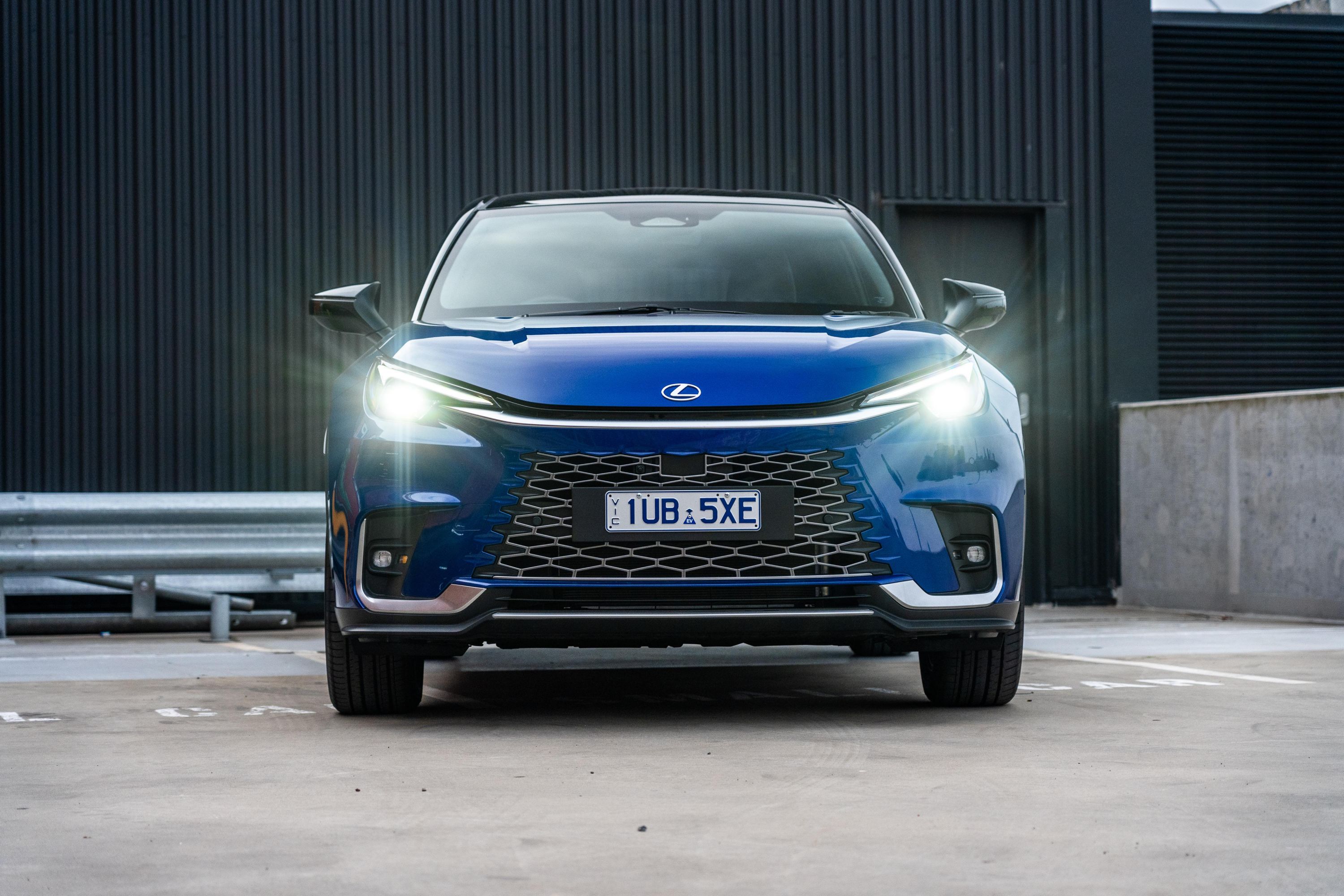
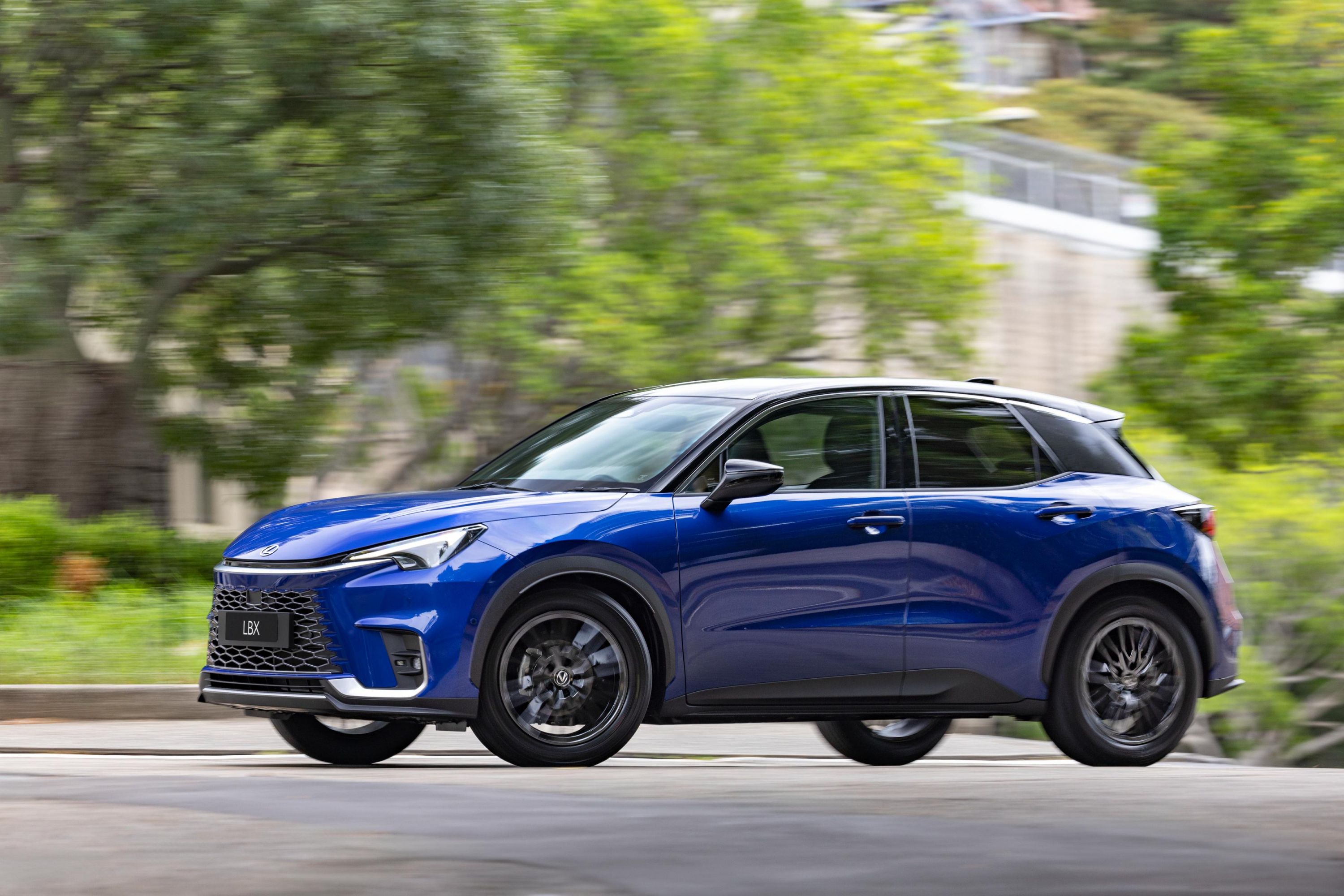
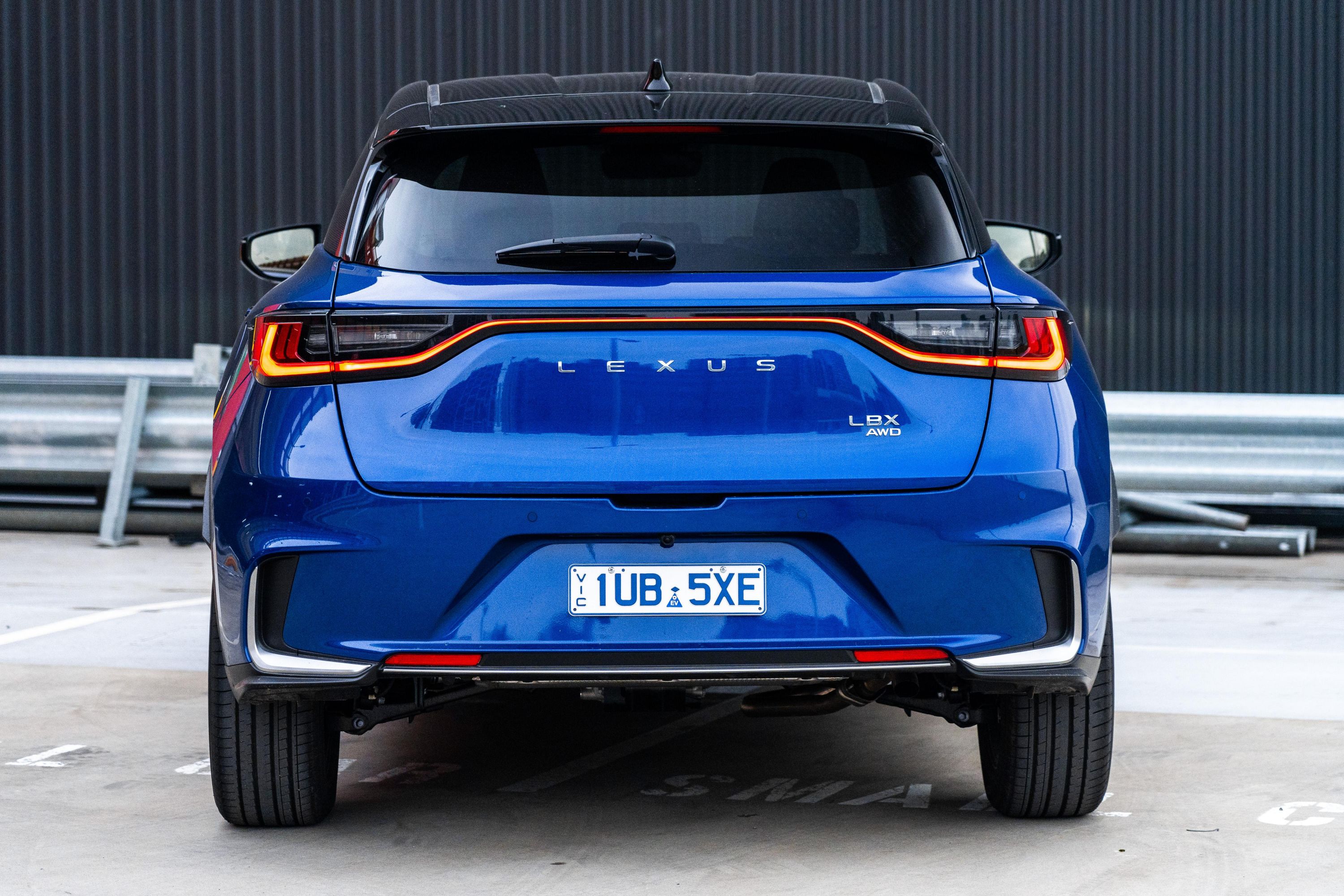
The pint-sized crossover with hybrid power and a sub-$50,000 starting price caters to modern sensibilities, but that doesn’t guarantee success for Lexus in a market that’s tightly contested and relatively unfamiliar to the Toyota-owned Japanese luxury brand.
Repurposing the platform and hybrid powertrains from the Toyota Yaris Cross is a good start, and it’s an eye-catching thing.
The LBX can’t just be a dressed up Toyota though, it has to be a Lexus.
WATCH: Paul’s video review of the LBX Luxury
That’s where the Sports Luxury AWD variant comes in. It tops the LBX range, and promises a premium experience.
Whether it’s worth the near-$10,000 upgrade over the base variant… well, let’s find out.
How does the Lexus LBX compare?
View a detailed breakdown of the Lexus LBX against similarly sized vehicles.
Lexus
LBX
How much does the Lexus LBX cost?
The LBX is the cheapest member of the Lexus range, with a starting price below $50,000 before on-road costs.
Model
Price before on-road costs
2025 Lexus LBX Luxury
$47,550
2025 Lexus LBX Sports Luxury
$52,990
2025 Lexus LBX Sports Luxury AWD
$56,990
To see how the Lexus LBX lines up against the competition, check out our comparison tool.
What is the Lexus LBX like on the inside?
The most expensive version of Lexus’ cheapest car feels premium inside, and it ought to at this price point.
It’s a sea of suede, leather and orange stitching with metallic accents, and most of the hard plastics found in the Yaris Cross sister car are hidden out of sight here.
The high-traffic touch points are especially plush, starting with the steering wheel.
Wrapped in soft leather, it sits comfortably in the hands and comes with heating for freezing Melbourne winter mornings.
The shifter also gets the leather treatment. Suede on the other hand covers the front of the dash, door cards, central tunnel, armrest, and seats.
It’s a matter of personal preference as to whether that’s an upgrade over the faux-leather found throughout the entry grade.
Does the change in materials add to the comfort of the pews? Possibly not, but it looks great and the seats are still well equipped for comfort.
Both front seats are fitted with three-stage heating, while the drivers chair scores eight-way power adjustability with two-way lumbar and memory.
Cars like this live or die by manufacturer attention to detail, and Lexus kicks a goal by fitting soft, inviting head restraints to all seats in the LBX.
An effort has also been made to top the dash with soft plastic rather than hard scratchy stuff, which is welcome.
The technology offered in the LBX is befitting of the Lexus badge. Most functions are accessed through a large central touchscreen that’s close to the driver, responsive, easy to navigate, and crisp in appearance.
You don’t get something like that in every city crossover, and definitely not in the Yaris Cross.
The system supports satellite navigation, wireless smartphone mirroring, and DAB+ digital radio, joining standard bluetooth, AM, and FM media options.
Wireless smartphone mirroring in particular is a handy inclusion, but I found it difficult to exit Apple CarPlay and access other features.
The digital instrument cluster is a little more rudimentary, with ill-disguised Toyota roots. It’s not hugely configurable, and the information is displayed in a plain way. That does have some benefits, however, such as improved readability, so the driver’s display screen gets a pass.
While we’re talking tech, electric door buttons instead of traditional handles are a fun quirk.
Storage space throughout the cabin is limited, but there are a few useful cubbies and you wouldn’t expect it to be plentiful in a car this size.
The front door bins are good for a water bottle, and drinks can also be stored in a pair of central holders.
There’s a large tray under the centre stack for mobile devices, and a deep armrest cubby for items a little bigger. A wireless phone charger is positioned under the infotainment screen so you’ll never run out of battery.
Neither will your passenger riding shotgun, as two USB-C ports are located in an albeit awkward position above the wireless charger. An additional USB-C and 12V outlet are also hidden under the centre console.
Glovebox space is at a premium, and there’s no sunglasses storage compartment.
Second-row passengers don’t get the same generous treatment as occupants riding up front.
The seats themselves are comfortable, but leg and headroom are both in short supply.
Adults over six-foot tall will likely graze the ceiling, and even shorter individuals will struggle to get comfortable on longer journeys. At least the seat backs are soft, so you won’t bruise your knees. It’s really a space best suited to children or luggage.
Second-row storage is also compromised. You do get small door bins, but there’s no centre armrest or cupholders. It’s a stuffy space at times, with dark upholstery and a lack of rear air vents.
Two USB-C outlets are included, so at least the second row can keep up with the technological demands of modern children.
Moving further back to the boot, the diminutive size of the LBX is again on display.
In keeping with its premium positioning, the LBX gets a powered tailgate as standard. Two-wheel drive models have 402L of cargo room, but the figure drops to just 315L for all-wheel drive examples, as tested here.
The boot floor in this flagship variant is noticeably higher, yet a challenging load lip remains, so it’s tougher to place heavy items in the boot. There’s also less space vertically than in two-wheel drive variants.
Other players in the segment offer more boot capacity and practicality. The Audi Q2, Peugeot 2008, Volkswagen T-Roc, and Hyundai Kona Hybrid have 405L, 434L, 392L, and 407L of boot space, respectively.
More luggage capacity is available in the LBX if you take advantage of the 60/40-split folding rear bench, although even then I wouldn’t call the cargo area generous.
Dimensions
Lexus LBX Sports Luxury AWD
Length
4190mm
Width
1825mm
Height
1560mm
Wheelbase
2580mm
Kerb weight
1415kg
Boot space (seats up)
315L
Boot space (seats folded)
994L (2WD variants)
What’s under the bonnet?
Front-wheel drive Lexus LBX variants are powered by a 1.5-litre three-cylinder petrol engine producing 67kW and 120Nm, as well as a single electric motor generator producing 69kW and 185Nm, fed by a nickel-metal hydride battery.
This is all mated to an electronic continuously variable transmission (e-CVT). Total system output is 100kW of power.
The LBX Sports Luxury AWD adds a small rear asynchronous electric motor that produces 4.7kW and 52Nm. The total system output is still 100kW.
Lexus claims the LBX 2WD variants can do the 0-100km/h sprint in 9.2 seconds, whereas the Sports Luxury AWD is said to complete the 0-100km/h dash in 9.6 seconds. Top speed for both is 170km/h.
To see how the Lexus LBX lines up against the competition, check out our comparison tool.
How does the Lexus LBX drive?
The Lexus LBX is a small crossover and for the most part it drives like one, though there are a couple of substantial upgrades that set it apart from its rivals. Refinement at city speeds is one of them.
One major drawcard of the hybrid powertrain in the LBX is that it gives the car an unmistakably Lexus quietness at low speeds, cruising in silence up to around 30km/h.
It’s a point of difference when compared to pure-combustion rivals like the Audi Q2, Volkswagen T-Roc, and Peugeot 2008, not that they’re excessively noisy cars around town.
Even when the three-cylinder engine kicks in, it’s not intrusive. As such, it’s easy to enjoy the premium sound system, or converse with passengers.
You won’t be bothered by urban road imperfections either. The LBX handles bumps and potholes with ease, feeling like a larger SUV in the process. There’s no bounce, and certainly no crashing over speed humps.
Light steering makes it easier to negotiate tight turns and lane changes when inconsiderate peak-hour commuters make your life more stressful than it needs to be.
The LBX ticks boxes in the cut-and-thrust of urban driving, but what about out on the open road? Unfortunately, that’s where cracks appear.
When the three-cylinder is required to step up and do some grunt work on the highway, it undermines the positive characteristics of the electric motor it’s meant to complement.
With just 100kW combined at your disposal, this little Lexus is far from quick. At half throttle it doesn’t have the shove to reach triple figure speeds in a timely manner, and when you press your right foot down a little further the engine makes a jarring racket.
It still struggles to make progress even at full throttle, so it’s best to plan overtaking manoeuvres in advance.
The volume and tone of the engine noise puts you straight back in the driver’s seat of a Yaris Cross, and that’s disappointing when you sign up for a luxurious experience.
The underpowered and raucous petrol engine also undermines the efficiency gains that a hybrid powertrain is meant to typically bring. But we did see an average fuel consumption of 5.0L/100km, which is still pretty good.
Once at cruising speed, things calm down again. The LBX feels settled at 100km/h, while the cabin is mostly protected from tyre and wind noise.
Luxury shown
I can’t say the same about some other light SUVs that feel well… light.
As you’d expect, adaptive cruise control comes as standard, which is perfect for highway cruising. What’s not so ideal is the over-sensitive nature of the driver monitoring system.
The big differentiator between this flagship and other variants in the LBX range is the all-wheel drive system. In order to have the privilege you need to fork out an additional $4000 over the Sports Luxury 2WD… that’s a significant price gap.
I would argue all-wheel drive isn’t a massive selling point in a car like this. As an urban runabout, front-wheel drive is perfectly adequate from a traction and handling standpoint, and it’s advantageous from an acceleration, fuel efficiency, and boot space perspective.
What do you get?
There are two different Lexus LBX trim levels offered locally. The entry-level Luxury can only be had with front-wheel drive, whereas the flagship Sports Luxury is available with either front- or all-wheel drive.
Lexus LBX Luxury 2WD highlights:
18-inch alloy wheels
Tyre repair kit
Automatic LED headlights
Adaptive high-beam
LED tail lights
LED front fog lights and cornering lights
Rain-sensing wipers
E-Latch door handles
Auto-dimming driver’s side mirror
Shark fin antenna
Rear spoiler
Front and rear air spats
Rear privacy glass
Power tailgate
12.3-inch digital instrument cluster
9.8-inch touchscreen infotainment system
Wireless Apple CarPlay and Android Auto
Connected satellite navigation
‘Hey Lexus’ natural voice recognition
DAB+ digital radio
Six-speaker Panasonic sound system
Five USB-C ports
Two 12V sockets
Wireless charger
Dual-zone climate control
Proximity entry and push-button start
NuLuxe leatherette-wrapped steering wheel
NuLuxe leatherette-wrapped shift-by-wire gear knob, door trim & ornamentation
‘Tsuyasumi’ centre console ornamentation
Single-colour ambient interior lighting
Auto-dimming rear-view mirror
Front and rear carpet floor mats
Black NuLuxe leatherette upholstery with red highlights
Heated front seats
Eight-way power driver’s seat with two-way lumbar and memory
LBX Sports Luxury 2WD adds:
Black 18-inch alloy wheels with 10 twin-spoke design
Rear pillar film ornamentation
Colour head-up display
Active Noise Control
Engine sound enhancement
13-speaker Mark Levinson premium sound system
Multi-colour ambient interior lighting
Genuine leather-accented shift knob
Genuine leather-accented steering wheel
Paddle shifters
Heated steering wheel
Haptic touch-sensitive controls
Ultrasuede door trim and ornamentation
Combination leather-accented and Ultrasuede upholstery with contrast orange stitching
LBX Sports Luxury AWD adds:
AWD logo
Rear induction asynchronous motor generator (4.7kW/52Nm)
Double wishbone trailing arm rear suspension (replaces torsion beam)
Is the Lexus LBX safe?
The Lexus LBX hasn’t been crash-tested by ANCAP or Euro NCAP at this stage.
Standard safety equipment:
8 airbags
Autonomous emergency braking (AEB)
Day/night pedestrian detection
Day/night cyclist detection
Day motorcycle detection
Junction assist
Rear AEB
Blind-spot monitoring
Rear cross-traffic alert
Safe exit assist
Driver monitor camera
Adaptive cruise control
Traffic sign recognition
Front and rear parking sensors
Surround-view camera
Tyre pressure monitoring
The LBX Sports Luxury adds a semi-autonomous parking assist.
All Lexus LBX variants also receive a three-year complimentary subscription to Lexus Connected Services. It offers customers real-time vehicle information, remote functionality, and emergency calling.
How much does the Lexus LBX cost to run?
The Lexus LBX is covered by a five-year, unlimited-kilometre warranty like the rest of the Lexus lineup.
Logbook services are required every 12 months or 15,000km, whichever comes first. The first five services are capped at $595 each.
A three-year complimentary Encore subscription is also provided at no extra cost. It includes roadside assistance, complimentary service loan car, Ampol fuel discounts, as well as exclusive lifestyle event offers.
Aftersales Program
Lexus LBX
Warranty
5 years, unlimited kilometres
Service intervals
12 months or 15,000km
Capped price servicing
Five years
Annual capped price service cost
$595
CarExpert’s Take on the Lexus LBX
The new LBX opens up the Lexus brand to a broader audience of new car buyers, and that can only be a good thing. However, the flagship Sports Luxury AWD is not the pick of the range.
The addition of all-wheel drive doesn’t markedly improve the driving experience, certainly not to the tune of a $4000 premium.
Upgrading from the Luxury to the Sports Luxury isn’t a no-brainer either, as it’s a matter of personal preference whether most of the additions count as upgrades.
Even base two-wheel drive examples don’t scream ‘pick me’.
The LBX is stylish, comfortable and well-equipped, but the three-cylinder engine doesn’t suit the character of the car and interior space is lacking.
At this price point there’s no shortage of alternatives. If you want European refinement in compact SUV packaging, have a look at the Audi Q2 or Peugeot 2008.
Set on hybrid power? You could also consider a Hyundai Kona Hybrid with all the fruit.
Interested in buying a Lexus LBX? Get in touch with one of CarExpert’s trusted dealers here
The highest claim size recorded last year for heart-related treatment was around ₹50 lakhs. (Representative image)
The data reveals significant shifts in the age demographics of individuals making heart-related insurance claims.
In the past five years, heart-related insurance claims have doubled, while the average claim size has surged by three times, according to data from Policybazaar. As hospitalisation costs continue to skyrocket, the financial strain on patients and families is becoming more severe, highlighting the urgent need for robust health insurance coverage and preventative care measures.
1. Increasing share of heart-related insurance claims
YEAR
SHARE OF HEALTH CLAIMS
CLAIM SIZE
2019-2020
9-12%
₹4-5 lacs
2020-2021
12-14%
₹5-7 lacs
2021-2022
15-16%
₹8-10 lacs
2022-2023
16-18%
₹10-12 lacs
2023-2024
18-20%
₹12-15 lacs
This consistent growth in both the share of heart-related treatments and claim size highlights the escalating burden of heart diseases on both individuals and the healthcare system, with more patients needing insurance support for expensive treatments.
The rising cost of heart-related treatments
TREATMENT
COST IN 2018-2019
COST IN 2023-2024
Coronary Artery Bypass Grafting (CABG)
₹2.1 – 4.2 lacs
₹3 – 6 lacs
Heart Valve Replacement
₹2.8 – 4.9 lacs
₹4.3 – 7.5 lacs
Pacemaker Implantation
₹4.9 – 7 lacs
₹7.2 – 10.3 lacs
Heart Transplant
₹21 – 35 lacs
₹31 – 52 lacs
The highest claim size recorded last year for heart-related treatment was around ₹50 lakhs, reflecting the substantial financial burden that advanced treatments like heart transplants can place on individuals.
Recently insurance company ACKO’s data also revealed that the largest claim related to heart disease – specifically for a cardiac procedure – filed in the past year exceeded ₹1.1 crore.
3. Age demographics of heart-related claimants
The Policybazaar data reveals significant shifts in the age demographics of individuals making heart-related insurance claims:
-Below 40: Approximately 15-20% of heart-related claims are now being made by younger individuals. The sharp rise in claims from those under 40 years old is largely due to lifestyle-related health problems, such as increased stress, poor diet, and lack of physical activity. In 2020, younger claimants accounted for 10-12% of total heart-related claims, but by 2022-23, this figure had risen to around 15-18%.
-Age 40-60: This age group remains the most affected, with 50-60% of heart-related insurance claims. Sedentary lifestyles, unhealthy diets, and high stress levels are key contributors to heart diseases in this demographic.
-Above 60: The share of claims from individuals above 60 stands at 30-35% of total heart-related claims. While this percentage is the second-highest, because of disease management programs by insurers and advanced preventive care, this number is slowly declining.
The gender split in heart-related claims
Men: Approximately 60-70% of heart-related claims are filed by men. They tend to have better insurance penetration, which means they are more likely to file claims for such conditions.
Women: Only 30-40% of heart-related claims come from women. Despite an increasing awareness of women’s risk of cardiovascular disease, their insurance penetration remains lower than men’s.
Regional variation in heart-related claims
REGION
SHARE OF CLAIMS
North India (Delhi, Punjab, Haryana)
20-25%
West India (Maharashtra, Gujarat)
15-18%
South India (Tamil Nadu, Karnataka)
15-20%
East India (West Bengal)
10-12%
-North India leads with 20-25% of heart-related insurance claims, driven by high pollution, and lifestyle-related health issues in major cities like Delhi.
-East India has the lowest share (10-12%), likely due to lower insurance penetration, though heart disease rates remain significant in urban areas like Kolkata.
Namit Singh Sengar
Namit writes on personal finance, economy and brands. Currently contributing to News18.com as a Senior Sub Editor in the business vertical. Prior to t…Read More
Mr. Buzz (@buzz), a partner at V3V Ventures, is making significant strides in the Telegram and Web3 ecosystem. As a renowned VC and CEO of Metaverse.sg, Mr. Buzz has acquired numerous blue-chip Telegram usernames, including @cryp, @startups, and the highly sought-after @trade. These acquisitions demonstrate his strategic vision for advancing digital communication and content-driven growth.
V3V Ventures, with Mr. Buzz as a key partner, is focused on investing in early-stage startups and innovative IT projects, particularly in the realms of cryptocurrencies, NFTs, and cutting-edge Web3 technologies. With investments totalling millions, including the acquisition of Metaverse.sg for $3 million, V3V Ventures aims to empower founders and provide crypto enthusiasts with the next big opportunities.
One of Mr. Buzz’s key moves is the acquisition of high-traffic Telegram channels, injecting over $5 million into the username market and securing assets like @ether, @trading, and @anime. The most valuable, @trade, was acquired for $1.25 million and quickly attracted millions of followers, establishing V3V Ventures as a prominent player in the growing Telegram ecosystem.
Mr. Buzz sees Telegram’s growth as a prime opportunity, especially with the platform sharing 50% of ad revenue. He believes that owning premium Telegram channels will be crucial for generating both content and revenue, positioning V3V Ventures as a leading platform for advertisers and content creators.
With a diversified portfolio, including investments in projects like BitLayer, CrossCurve, and upcoming Play-to-Earn games, Mr. Buzz and V3V Ventures are well-prepared to capitalize on the next phase of Web3 growth.
Does your marketing measurement and data have standards?
What does that even mean?
Well, it means you have a standard method for naming, storing, and tracking data across the organization, according to new research (registration required) from Claravine, a software provider, and research firm Advertiser Perceptions. This could include shared taxonomies for marketing data, measurement metrics, and even tracking codes.
Do you have that?
Probably not, according to the research.
However, 95% of those surveyed agree that standards are a must for moving forward and showing ROI for advertising and marketing. And most agencies (98%) and client marketers (81%) agree their company will fall behind competitors or lose market share over time without a data standards practice.
Yet, weirdly, the same research finds that these same advertisers report an average 33% increase in return on investment that is (or could be) seen from implementing data standards.
Wait. If they don’t have any data standards, how could they be so confident in the ROI to be gained from them?
We wanted to know more so we asked Robert Rose, CMI’s chief strategy advisor, for his take. Read on or watch this video:
Fascinating findings in new data standards research
When I talk to marketers in my workshops, training, and consulting, I talk a lot about setting standards — the definitions for everything that crosses the marketing and content operations threshold. So, I was particularly interested in The State of Marketing Data Standards report released this week by Claravine and Advertiser Perceptions.
It looks at the importance of setting standards and the challenges companies experience in setting them. A few of the findings were fascinating, if not a bit obvious.
For example, the researchers found that advertisers who had implemented a data standards strategy (34%) were significantly more likely to have a strong understanding of data standards than those who had not implemented a strategy (10%).
Well, that makes sense. If you haven’t implemented something, you’re less likely to really understand it. But wait a minute.
That 34% stands out. Does that mean that 66% of those who have a data standards strategy don’t have a strong understanding of the practice?
Though the research doesn’t clarify that, the results almost certainly indicate teams are implementing standards even though they don’t have a strong understanding of them.
Regardless of their understanding, marketers are apparently confident that having data standards will improve things — that’s reflected in the finding that marketers expect a 33% ROI after implementing a data standards strategy.
The impact of the strategy implementation was even higher across categories such as privacy compliance and brand safety and slightly less for areas such as the consumer experience, marketing campaigns, and productivity.
1 in 5 ads get delivered to the wrong consumer
Another finding buried in the research caught my eye. It unsurprisingly concludes that a key benefit of having data standards is confidence and greater visibility into performance. That’s especially important because roughly 23% of ad creative is served to the wrong consumer.
Let me say that again. According to these marketers, more than one in five ads end up in front of the wrong consumer.
Is that just the advertisers’ perception or an estimate? Or is it accurate but the fault of advertisers because they do not have or have faulty data categorization on ads? Or is it the fault of the advertising platforms that serve the ad to unspecified or incorrectly interpreted categories? And if it’s the latter, is that because the ad platforms don’t have data standards by which they manage the ad inventories?
The research doesn’t make the reasoning clear. However, the results make a business case front and center for ensuring that you have a data standard in place for your advertising.
This is the hardest part of standards
What’s my take?
Well, I’m fascinated but not surprised. I frequently tell clients one of the easiest ways to get immediate ROI from developing a content strategy is a set of content and communications standards for the company. You can’t do that by downloading a template from the internet. You can only do that when you come together as a marketing function and define them.
For example, what’s an e-book? What’s the definition of a white paper? What’s a blog post? What’s the standard name for the things marketing does? Is it a campaign? Is it an initiative? Is it a project? What’s the difference between a campaign and an initiative? What’s a theme? What’s a content pillar? What are the standard names of your personas?
From there, you move on to measurement. What’s your standard definition of a lead, an opportunity? What counts as a download? What’s a conversion?
Is it any wonder that marketing can feel so hard to measure? Yet, it’s really not. The hardest part of measurement is agreeing on the standards for measurement.
As Taiichi Ohno, the creator of the Toyota Production System, said decades ago, “Without standards, there can be no improvement.”
Or, as I have asked clients so many times, “How will you know if you’re successful if you haven’t agreed on what the standard of success looks like?”
In an interesting twist, this new research study unintentionally illuminates that as marketers, your approach to developing standards has to meet the teams where they are.
If you approach team-wide development of marketing, content, advertising, or data standards by using external definitions, you’ll instantly get caught up in a conversion about how they won’t work for your organization because you don’t understand how they apply.
But, if you sit down and collaborate to define what you need to standardize to have a shared vision of your objectives and goals, you will find them meaningful to your organization even if they differ from how the world sees them.
Just remember, the point of setting any standard is to be able to improve upon it. However, to improve anything, you first need to define what improvement means. In other words, you must define the standard or truth before accuracy means anything.
Then you’ve got a standard for setting standards, and that should be standard in your marketing.
Want more content marketing tips, insights, and examples? Subscribe to workday or weekly emails from CMI.
HANDPICKED RELATED CONTENT:
Cover image by Joseph Kalinowski/Content Marketing Institute
Other leading tech company CEOs, like Facebook boss Mark Zuckerberg, have spoken about the problem in recent months. But Cook’s comments were much more frank.
According to the Telegraph, he said made-up stories and hoaxes are “killing people’s minds.”
And he called the “fake news” plague “a big problem in a lot of the world.”
The term “fake news” was originally coined to describe online stories that are designed to deceive readers. Often times these stories are shared on Facebook and other social networking sites to generate profits for the creators. Other times the stories are essentially propaganda made up for political purposes.
These kinds of stories received widespread attention before and after the American election. Fictional stories with titles like “Pope Francis shocks world, endorses Donald Trump for president” won millions of clicks.
It can be very difficult for web surfers to tell the difference between legitimate news sources and fakes.
That’s where companies like Apple come in.
In the Telegraph interview — part of a multi-day European trip — Cook said “too many of us are just in the complain category right now and haven’t figured out what to do.”
He urged both technological and intellectual solutions.
“We need the modern version of a public-service announcement campaign. It can be done quickly if there is a will,” Cook told the newspaper.
What he described is music to the ears of media literacy advocates.
“It’s almost as if a new course is required for the modern kid, for the digital kid,” Cook said.
There are scattered efforts in some schools to teach media literacy, with a focus on digital skills, but it is by no means universal.
When asked if Apple would commit to funding a PSA campaign, an Apple spokesman said the company had no further comment on Cook’s interview.
The Apple CEO also suggested that tech companies can help weed out fake stories, though he added, “We must try to squeeze this without stepping on freedom of speech and of the press.”
Apple’s own Apple News app has been credited with being a relatively reliable place to find information.
And the app has a “report-a-concern function where users can flag fake news or hate speech.”
Facebook recently started working with fact-checkers to test “warning labels” that show up when users share made-up stories.
Cook, in the newspaper interview, expressed optimism that the “fake news” plague is a “short-term thing — I don’t believe that people want that at the end of the day.”
CNNMoney (New York) First published February 11, 2017: 8:00 PM ET
In PCB designs, the ability to dissipate heat is vital. Without it, the circuit board could overheat and cause malfunctions or even fail. However, when a circuit board is designed with effective thermal management in mind, it can handle the stresses of high-powered electronics and avoid overheating or other potential issues.
In a flexible PCB, the polyimide base offers a higher maximum temperature for reflow soldering than FR4. The conductive surface can also be improved by applying a thin coverlay that adds additional copper, allowing the board to transfer more heat. In addition, the material is lighter than FR4 and can be bent to tighter radii. As a result, the overall thickness of a flex circuit can be reduced. This allows for more components to be incorporated in the design and a greater surface area for heat dispersion.
Another benefit of a flexible pcb board is its durability. This is important for electronic products that undergo a lot of stress in transportation and handling. A flex circuit can withstand repeated bending and twisting that would damage a rigid PCB, which helps protect the device from damage and reduce manufacturing costs.
How does thermal management work in flexible PCB boards?
To help disperse heat evenly throughout the circuit board, the designer uses strategic component placement. This includes avoiding heat-generating components near the edge of the board and distributing the remaining power sources to prevent hot spots. In addition, the designer can use thermal vias to increase airflow and improve heat distribution. These are drilled holes that act as heat pipes and can be filled with low-resistance epoxy or covered with copper to enhance cooling.
The temperature of a circuit board can be affected by many factors, including proximity to heat-generating components and environmental conditions. In addition, prolonged exposure to excessive temperatures can degrade the materials in some traces and components. This can lead to signal interference, loss of stability and other problems.
Thermal management is essential in a multilayer flexible PCB board. This is because the material can handle a wide range of operating temperatures and conditions. It can also withstand the effects of vibration and shock. In fact, a flexible PCB can be used in consumer electronics like cell phones and tablets.
For example, consumers are relying on these devices to handle more and more data at higher speeds. As a result, the devices must be able to keep up with the demands of their applications and perform reliably. A flexible PCB can provide this reliability, as well as the flexibility and weight needed for consumer devices. The right PCB manufacturer can develop a multilayer flex circuit board that meets the needs of a diverse array of applications. To learn more, contact a company that specializes in flex PCB assembly. They can advise on the best options for your application and provide an efficient production process. Choosing a reliable partner can ensure that your product delivers the performance you need while addressing the thermal concerns of your industry. They can also offer a wide range of other services, including CAD/CAM, design engineering, etching, routing and more.
New Eye-Scanning Orb Revealed by Sam Altman’s World
New Eye-Scanning Orb Revealed by Sam Altman’s World
New Eye-Scanning Orb Revealed by Sam Altman’s World
All right, welcome everyone. We know many people flew in. So it’s like a really big deal for us that you’re here. This is a big day for us. Um We started working on this about five years ago and back then, we really believed that something like this should exist in an A I future that we all want to live in. And so not only do we think what we do is critical. We also think it’s very, very timely and that is why one of the main themes of today is about scale and how we can get all the products and services that we built to many, many more people in the next years. But before we talk about the extra products, we wanted to talk a little bit about why we are even here, why we started this? And what is top of mind for us? And with that Sam, why didn’t you talk a little bit about that? Great uh Nice to see all of you. So we started this a long time ago with a belief that at the time seemed very unusual uh which was the A I progress was about to go very rapid. And we thought that if A I happened, if, if A I fulfilled the dream, uh we still have a long way to go, but we’ve made a lot of progress since then. It was going to be the most powerful tool that humans had yet created. It would change the economy, it would change society in all sorts of ways. And the thing that we hoped for the most with A I and the things we wanted to build around A I is that A I would really accelerate people. This idea that A I was a tool that people would use, not an entity on its own and that people were going to be able to do things in the world that they just couldn’t have done before. And we started thinking about the infrastructure that society was going to need. If A I really started to happen, you know, what, what does it take to get to this great outcome for the world? We could imagine a world back then and even more now with lots of A I tools that let people do far more than they ever could before. Lots of A I agents off doing things. Uh And one thing we thought for sure is that the world was gonna need a new, a new layer of infrastructure um for this to be able to happen, that you wanted the ability to uh verify humanity. You wanted to know who the people were, you wanted to be able to provide great infrastructure for humans and agents to be sending resources back and forth and doing all sorts of things and communicating with each other. And we thought that maybe uh if there were a way to build a new network, that it would be a powerful step forward towards doing this. And so with that, we came up with a simple plan and that plan didn’t change much since then. And I don’t think it will change much going forward and it had four big steps. That’s it. The first one was about building a proof of human system that can be deployed globally. It is fully anonymous. Then second, use that infrastructure to launch a digital token by giving ownership in it to eventually every human and use that to get the the network to critical scale. Then third continues to scale and decentralize the network to then eventually among many other great things that we hope this network will do, use it to make the benefits of A I accessible to everyone. And so we, we did one, we developed world I which we think is that proof of human on internet scale. We launched a token last July, which brought us to step number two. And so currently we are at three. And that means that a big, big focus of what we do is the continuous scale and decentralization of the network. Currently, every two seconds, someone who joined the network. We are at 15 million total users, 7 million of which verified with an orb. And one other thing that we really care about is the density of the network because we think that makes it useful for developers and us to build products that are actually critical and useful to people. We are now at one out of seven in Santiago and Lisbon, just two examples and even one out of three of adults in Buenos Aires Argentina that are verified. And so while this is exciting and kind of something to be proud of from where we came from, this is of course, just the very beginning, just like truly the super early beginnings of what we are trying to do because the mission here is to truly bring the service to every human. And the first step of the plan talked about proof of human. And five years ago, this sounded like this abstract thing because Ellen turing actually don’t work. They just break for one reason or the other. You could think about using phone cameras, you could think about potentially using government I DS, maybe using face ID, none of those actually work. And given we really care about this problem and we think it’s critical to achieve our ultimate mission. We took it very serious and we came to this like super super painful realization very early in the project that we will likely have to distribute physical hardware around the world. And not only that we have to open it up. So many other companies, many other parties can join us in building these devices and probably like many different shapes, probably integrated into hardware devices that already exist or we already use. But this is very likely what will need to happen because the current infrastructure, the current systems that are out there just don’t work for that particular problem. And that’s why we built the orb which and secure as well as an anonymous way to solve the proof of human problem at global scale. And today we will talk about the next generation of the orbs something we’ve worked on really hard for quite a while and I’m really excited about. So here it is, here’s the new Orb. So besides being just incredibly beautiful, it was designed from the ground up with scale in mind, the entire software stack was completely rewritten for all orbs to enable verifications three times faster than before. The new ORB was designed with 30% fewer parts and it enables us to assemble them at twice the speed. Initially, we’re tripling the production capacity of the orb with plans to increase that even further with new assembly partners and locations around the world. We’re making progress towards the ultimate goal of decentralized orb manufacturing of the latest ORB is built with uh the NVIDIA Jetson architecture which has five times the A I performance over the previous generation. It’s capable of 100 trillion operations per second. So this enables the new orb to execute sophisticated A I models that prove humanness and operate entirely on device and even faster than before the new orb was built with more transparency and the ability to audit the code that’s running on it. It has a fully removable SD card that contains all the operating instructions. So anyone can compare those instructions on the SD card versus our published source code. But to provide access to every human, we need more orbs lots more orbs probably on the order of 1000 times more orbs than we have today. Not only more herbs, but more orbs in more places. And I wanna talk about a few ways. We’re gonna achieve that today. Firstly, we’ll continue to expand our operations into even more countries than we’re in today. I’m excited to share the flagship locations with you today. Also, these are premium verification experiences. We have staff there available to answer any questions people have. We’ve opened our first two flagship locations in Buenos Aires and Mexico City just a couple of weeks ago. This is our Mexico City location that opened just a few weeks back. I think they really look amazing. Next, we’re expanding access to orbs through self serve verifications. Think of these as orbs inside existing retail locations. So your neighborhood convenience store or local coffee shop, like you see behind me, these enable people to both discover the project through seeing an orb in a retail environment or specifically going to that retail store with the intent to verify with an orb. These partnerships are key to scaling the orb locations and getting more distributed in a region. They’re providing access to even more people than we do today. And if you don’t want to go find an orb, that’s ok. So starting today, we’re announcing a new feature called Orb on demand. This will enable anyone with the touch of a button to request an orb come to them much like a pizza you would have delivered to your apartment, you can push a button, it shows up at your door and that driver then leaves the food behind. And I’m incredibly excited to announce a brand new partnership with Rappy, the number one delivery service in Latin America. They’re integrating with our app and they’ll dispatch their existing delivery fleet to bring orbs to anyone who wants to verify whenever they want to. And lastly, I wanna talk about a new type of operator. We’re starting today called community operators. So anyone can rent or buy the new orb to verify anyone in their community. We’ll have a website up. You can place your preorder and starting in the spring of 2025 it’ll be delivered to you. In fact, I want all of you guys here today to be our first community operators. Everyone here will get an orb
You have reached your maximum number of articles. Log in or create an account FREE of charge to continue reading.
By entering your email and pushing continue, you are agreeing to Fox News’ Terms of Use and Privacy Policy, which includes our Notice of Financial Incentive.
Please enter a valid email address.
An Atlanta woman was taking her daily vitamins on vacation when she accidentally swallowed her diamond wedding ring.
Dannah McMichael, 39, and her husband, Randy McMichael, were on vacation in Phuket, Thailand, when the unthinkable happened.
“We went out for dinner and drinks and when I got back, I wanted to shower,” she told SWNS.
WOMAN SWALLOWS ENGAGEMENT RING IN HER SLEEP: ‘HOW? I DON’T KNOW, BUT I DID!’
The travel blogger said she was “beyond jet-lagged” after a long day of traveling and was preparing to shower when she took off her wedding ring and accidentally swallowed it with a handful of vitamins.
Dannah McMichael (pictured here) said she was severely jet-lagged when she accidentally swallowed her wedding ring. (SWNS)
“Without looking, I threw everything in my mouth and washed it down with water,” she said.
TEXAS WOMAN ACCIDENTALLY SWALLOWS PARTIAL DENTURES, HERE’S HOW A MEDICAL TEAM SAVED THE DAY
McMichael told Fox News Digital that she immediately started choking, but thought it was the magnesium pills that had gotten caught in her throat.
“When I started choking on the pills and noticed my ring was missing, I knew something was wrong,” she said.
X-ray images show the diamond wedding ring in McMichael’s body. (SWNS)
After looking around the hotel room for the missing ring, the couple joked about the possibility of McMichael swallowing it.
MAN SWALLOWS DENTURES WHILE EARING BOWL OF SOUP, UNDERGOES EMERGENCY SURGERY
After two days of searching, the pair went to a local clinic to get an X-ray scan.
“We couldn’t believe it,” McMichael said after seeing her wedding ring on the X-ray machine.
For more Health articles, visit www.foxnews.com/health
The woman said she couldn’t stop laughing — saying it was “the funniest thing [to] ever happen to me.”
Dannah McMichael and husband Randy McMichael are pictured on vacation. (SWNS)
McMichael said her husband was relieved, as he thought the massage therapist might have “swiped it” off his wife’s finger.
Doctors at the clinic told McMichael that she would pass the ring naturally — which she confirmed to Fox News Digital did happen.
CLICK HERE TO SIGN UP FOR OUR HEALTH NEWSLETTER
“I swallowed it Sunday and passed it Wednesday or Thursday,” she said, adding, “No pain at all.”
McMichael said she was relieved when it came out because she was worried about flushing it down the toilet.
Dannah McMichael, pictured here, accidentally swallowed her wedding ring while on vacation with her husband.(SWNS)
McMichael, who regularly shares her travel adventures on social media, joked after the occasion by posting a video of the X-ray and her ring soaking in disinfectant.
CLICK HERE TO GET THE FOX NEWS APP
She captioned the post, “Got my ring back. Wait, I never lost it. It was always with me.”
In a funny twist on parental life, a video shared on Instagram captures a candid moment that many can relate to — sneaking in a cheeky meal away from their kids. In the clip, we see a couple, armed with a massive burger each and what looks like a chocolate drink, relishing their secret feast. It seems as if they are trying to avoid the inevitable “Can I have a bite?” request from their kids. A text overlay on the video reads, “Secretly eating in the car before picking up the kids at school so we don’t have to share,” perfectly summarising their sneaky indulgence. With the caption stating, “Saving money,” this amusing scenario highlights how, in the world of parenting, a little covert dining can do no harm. After all, who can resist a guilt-free bite of bliss, even if it means risking a slightly delayed school pickup? Also Read:“This Is Healthy”: Video Of Banana Milkshake Langar Goes Viral. Internet Loves It
Watch the video here:
Although the video has enough traction, the comment section has ignited a debate on parenting. Some users criticised the parents for being “selfish,” while others felt that it’s essential for parents to take some time off parenting.
One person offered a humorous perspective, commenting, “Protecting their kids from fast food. Those are good parents.” Another chimed in, “Sometimes you have to take time for yourselves.”
A comment highlighted the importance of parents’ personal lives, stating, “People think parents can’t have a personal life and appreciate things without their children. You can be an awesome parent and take time for you and your partner without the kids, no problems. Parents are human too, they need to live.” Also Read: Viral Video Shows Vendor Selling Rasgullas With Bees Hovering Around Them
Another user wrote, “Kids always want what parents are eating, sometimes it’s nice just to enjoy food peacefully and not have to share.”
Some people did not approve of the idea of parents eating alone without their children. A user said, “To me, they are not good parents…should take the children too.” Another added, “I could never eat without giving some to my kids.”
Whether it’s a moment of cheeky indulgence or a necessary break from parenting duties, the balance between personal time and family responsibilities is indeed a delicate one.
<img src='https://news.cgtn.com/news/2024-10-17/China-calls-for-revitalizing-effectiveness-of-UNSC-resolutions-on-Gaza-1xM3OGjaU36/img/c1d8c96ba46b4287afdd89be464a0700/c1d8c96ba46b4287afdd89be464a0700.png' alt='China's permanent representative to the UN Fu Cong speaks at a UN Security Council emergency meeting on the humanitarian situation in the Gaza Strip at the UN headquarters in New York, October 16, 2024. /CFP'
The effectiveness of United Nations Security Council resolutions should be upheld and revitalized, China’s permanent representative to the UN said at the Security Council briefing on the situation in the Middle East, including the Palestinian question, on Wednesday.
The Security Council has adopted a number of resolutions regarding the situation in Gaza, explicitly calling for a ceasefire. “But none of them has been effectively implemented,” Fu Cong told the emergency meeting on the humanitarian situation in the Gaza Strip.
“This has dealt a serious blow to the credibility of the entire UN system,” Fu said, stressing that Council resolutions are binding for all states and must be implemented.
The ambassador said China supports the Council in using all the options in its toolbox to ensure the implementation of its resolutions, and every member has the responsibility to safeguard the effectiveness of Council resolutions.
“In this respect, we particularly hope that the United States will respond to the strong call of the international community and support further actions by the Council to bring about an immediate ceasefire,” he said, adding that according to reports, since last October, the United States has provided Israel with more than $17 billion worth of military aid.
“Under the current circumstances, does such a large-scale supply of weapons help realize the objectives of Security Council resolutions? This is a question that needs serious consideration,” he said.
The envoy also called for upholding and revitalizing the authority of international humanitarian law.
“Using starvation as a weapon of war is a serious war crime,” he emphasized, underscoring that humanitarian organizations are the lifeline for Gaza and it is intolerable to see them “face suppression, restriction, and even security threats.”
He urged Israel to fulfill its obligations under international humanitarian law, immediately lift the blockade and restrictions on humanitarian access to the entire Gaza, and cooperate fully with the United Nations and other humanitarian entities to facilitate and ensure the safety of humanitarian operations such as transportation of humanitarian supplies and polio vaccination.
UNRWA, the UN relief agency for Palestinians, is the backbone of humanitarian assistance in Gaza, and China firmly opposes any smearing and suppression of the agency, he said.
Partnership is expected to develop radioligand therapies based on lead-212 alpha-emitting isotopes, which offer the opportunity to destroy cancer cells with minimal damage to healthy tissue.
We might have moved away from the term ‘pussycat’ when referring to a feline, it went through the process of relating to cats, then relating to ladies, then becoming a 2000s girl band sensation!
But where did the terminology come from? We have a little 411 on this term so you can understand how it came to be what it is today.
Pussycat in Reference to Four-Legged Feline Friends
The term “pussy” might seem like a naughty word these days due to the offensive undertones. But did you know that it is a noun that actually means cat? The term “puss” was commonly used all the way back to the 1500s.
“Puss” comes from the Germanic root word for cat. So it quite literally translates to its intended purpose. How did the term evolve into pussycat? We don’t know. That’s just how language changes over time.
For example, it was argued in 1913 in Webster’s Revised Unabridged Dictionary that “pussy” was a version of “pursy”—meaning “short-winded” or “fat”. But traditionally speaking, this term was coined for cats. So, they are definitely the originators.
Pussycat in Slang
Pussycat is a very well known slang term. It began in the 17th century but rose in popularity in roughly the 1950s and is even still occasionally used today. Pussycat was simply a term used to describe young girls and women. Often, it signified modesty or gentleness.
However, there are other ways pussycat can be used—generally marking a sexually attractive woman back in the day. Men would use this term much like “doll” or “dame.”
Image Credit: Gunnar Rathbun, Shutterstock
Pop Bands
Don’t you wish your girlfriend was hot like me? The term Pussycat can easily be linked back to all the kids that grew up through the early 2000s. The Pussycat Dolls was a pop band of women whose songs will get stuck in your head in a New York minute. There was also the show Josie and the Pussycats that first aired in the 1970s about an all-girl rock band.
Other Animals
Interestingly enough, in both English and German, pussy was a word that also referred to rabbits or hares. In the 19th century, it was commonly referred to as anything that was soft or furry. Even the genus of tree called a pussy willow was named after its fluffiness.
Conclusion
Now you know a little more history on the term pussycat. While it was traditionally used for our furry feline friends for millennia, it has certainly taken on some interesting turns. This word has certainly made a mark on human history.
See Also:
Featured Image Credit: Ivanova Ksenia, Shutterstock
Godrej Properties reported bookings of ₹5,200 crore in Q2 of FY25, from the sale of 5.1 million square feet of residences, with strong demand coming from new project launches in the National Capital Region and the Mumbai Metropolitan region.
In the first half of the fiscal year the real estate developer’s bookings rose 89 per cent on year to ₹13,800 crore, which is around half of its booking guidance for the full year, and above its annual bookings in FY23. It sold 8,600 homes with a total area of 14 million square feet.
One of its projects in NCR, Godrej Vrikshya saw bookings of ₹1,500 crore in the quarter while a plotted development in MMR, Godrej Woodside Estate recorded bookings of over ₹600 crore.
Collections during the quarter were 68 per cent higher at ₹4,000 crore and in the half-year 62 per cent higher at ₹7,000 crore. With this the company has achieved 47 per cent of its annual guidance for collections in this fiscal year.
The company has added 8 new projects so far in FY25 with a total saleable area of 11 msf and booking potential of ₹12,650 crore. Of this Q2 accounted for 6 projects with a booking value of ₹9,650 crore. It has achieved 63 per cent of its annual booking guidance.
Its operating cash flows in the quarter was at ₹1,800 crore, up 120 per cent on year, while in the half-year, it was up three times at ₹2,800 crore.
Managing Director and CEO, Gaurav Pandey said that the project additions in the quarter ensured a robust pipeline of launches, “not just for the current year but for years to come.”
“We have also entered the market of Indore recently and are looking forward to our first launch in this city,” he said.
Pri kreiranju rubrike Index Shopping nastojimo izdvajati odlične proizvode koji se i nama sviđaju te odlične akcije i popuste. Ne objavljujemo proizvode koje i sami ne bismo kupili ili smatramo da njihova promocija nije u skladu s profesionalnim standardima. Neki proizvodi u rubrici Index Shopping mogu biti sponzorirani.
SEVERINA je još jednom oduševila svoje pratitelje modnim odabirom koji je podijelila na Instagramu, pozirajući ispred sarajevskog aerodroma.
Ovaj put odabrala je bezvremenski traper na traper stil, kombinirajući klasičnu traper košulju s dugačkom traper suknjom visokog struka. Cijeli outfit dodatno je podigla crnim kožnim čizmama na petu, a elegantan dojam upotpunila je crnom torbom luksuznog brenda Saint Laurent i modernim sunčanim naočalama.
“Prelijepa”
Njezini pratitelji nisu krili oduševljenje te su uslijedili brojni komplimenti. “Savršen outfit”, “Gori, Seve je apsolutni top”, “Divna Severina”, “Prelijepa”, “Kakav stajling”, “Predivna”, “Kakav stil. Zna li netko tko je njezin stilist?”
Severina je ovim modnim odabirom pokazala da jednostavni, ali pažljivo usklađeni komadi mogu ostaviti snažan dojam. Ujedno je potvrdila kako prati aktualne modne trendove, s obzirom na to da su traper na traper kombinacije ponovno vrlo popularne u 2024. godini.
Tekst se nastavlja ispod oglasa
Povratak trenda iz 70-ih i 90-ih
Dizajneri su ove godine vratili traper na traper u središte modne scene kombinacijama poput oversized jakni, suknji visokog struka i tamnijih nijansi trapera. Modne kuće poput Versacea i Tory Burcha kreiraju elegantne verzije ovog izgleda, prilagođene ležernim i formalnijim prilikama.
Ovaj stil bio je vrlo popularan 1970-ih i ponovno 1990-ih, kada su traper jakne i traper hlače bile nezaobilazna kombinacija. U 2024. traper trend se vratio u modernom ruhu, s naglaskom na opuštene krojeve i tamnije tonove, čime je dobio dodatnu notu sofisticiranosti.
U nastavku smo izdvojili komade kojima možete postići sličan izgled u kakvom je prošetala Severina.
*Klikom na pojedini modni komad bit ćete preusmjereni u trgovini
Znate li nešto više o temi ili želite prijaviti grešku u tekstu? Kliknite ovdje.
Ovo je .
Homepage nacije.
Imate važnu priču? Javite se na [email protected] ili klikom ovdje. Atraktivne fotografije i videe plaćamo.
Cooper Kupp was limited in practice again Thursday. If the Rams star receiver’s left ankle is fully recovered by this weekend, he could play Sunday against the Las Vegas Raiders at SoFi Stadium.
Coach Sean McVay is expected to update Kupp’s status Friday.
Offensive coordinator Mike LaFleur said Thursday that it was good to have Kupp back on the practice field.
“His energy, his presence, I know the guys feel it,” LaFleur said.
Kupp, the 2021 NFL offensive player of the year, went into this season having appeared to put behind the hamstring and ankle injuries that plagued him the previous two seasons. He caught 14 passes for 110 yards and a touchdown in the opener against the Detroit Lions before he was injured in a Week 2 rout by the Arizona Cardinals.
Kupp was sidelined the last three games — a victory over the San Francisco 49ers and defeats by the Chicago Bears and Green Bay Packers. The Rams are 1-4, so Kupp’s return could buoy a team attempting to avoid early elimination from playoff contention.
“There’s just a calming presence when a guy like Cooper Kupp’s on the field, right?” LaFleur said. “He’s been there. He’s done that. He’s played at a high level since he’s got in this league. So anytime he’s out on the field, we’re going to be a better offense.”
Instagram has rolled out a new feature which will allow creators to make a two-sided digital card, facilitating the smooth sharing of their profiles. The Meta-owned social media platform’s new feature enables creators to design cards which match their style, thanks to multiple customisable options based on their preferences. This feature follows the introduction of a song-on-profile feature that allows users to personalise their profile by adding a song that reflects their mood or personality.
According to Instagram, the new Profile Card will enable users to create a more animated and customised digital card, which can be shared with others. Along with a QR code linking to the profile, it will include options to add bio information, music describing the personality, and links to other pages, among other features. Users will also be able to change the background colours, as well as add a selfie or a custom emoji as the background.
One side of the card is shareable, while the other side will feature a QR code that can be scanned to visit the profile. This will ensure the quick sharing of profiles, enabling creators to collaborate seamlessly with brands. Previously, sharing profile cards was limited to QR codes; the new feature allows users to share music and other interests as well.
In order to share the profile cards, users are required to go to the profile section of Instagram and click on the Share Profile option. The profile card can be customised by tapping on the edit icon and adding the desired information. Along with sharing stories, Instagram profile cards can be shared on other platforms as well.
In other developments, Instagram recently introduced a new multi-audio tracks feature for Reels, allowing users to add up to 20 audio tracks to a single reel. This feature offers the option to pair the right tracks with the right clips, enabling more personalized content creation.
British Airways marks 100 years of flights between India and the UK with a special Indian menu which includes phaldari kofta and jackfruit biryani.
British Airways is celebrating 100 years of flights between India and the UK with a special tribute to Indian culture on its international routes. Until the end of November, passengers who will be traveling to the UK, US and Canada can experience an exclusive menu featuring traditional Indian dishes, from coconut rice to lamb curry. British Airways currently operates 56 flights per week from India to London Heathrow, with three daily flights from Mumbai, double daily services from Delhi, and daily flights from Chennai, Bengaluru and Hyderabad.
British Airways marks 100 years of flights between India and the UK with an Indian menu and local treats for everyone.(British Airways)
To enhance the dining experience, the airline has decided to expand its inflight entertainment by adding more than 100 Indian films. Passengers will be able to enjoy timeless classics like The Burning Train and Dil Chahta Hai.
British Airways has further introduced a special tea from its tea partner, Twinning, capturing the essence of India’s beloved masala chai with flavours of cardamom, cinnamon, and ginger.
Here’s what’s on the menu
A special menu has been created to make the inflight dining experience even better, featuring a variety of traditional Indian dishes made with real, authentic ingredients. Designed by British Airways own catering team, the menu offers something for everyone, including phaldari kofta with spiced vegetables, pomegranate seeds, and korma sauce; spiced grilled lamb with okra and Rogan josh sauce; and railway lamb curry with vegetables and basmati rice. Other options include zafrani chicken with coconut rice and saag makai, young jackfruit biryani, and a sweet bhapa doi dessert with mangoes, papaya, and passion fruit.
To continue celebrating local products, British Airways is also offering a single malt from Rajasthan, called Godawan, in its Club World (business class) cabin.
Get Latest Updates on…
See more
News / Trending / Bhindi, coconut rice and Dil Chahta Hai: British Airways offers a slice of India on flights to US, Canada
There are a ton of games leaving PlayStation Plus in November, including an absolute masterpiece courtesy of Rockstar Games.
Indeed, PlayStation Plus Extra subscribers only have a few weeks left to play the outstanding Red Dead Redemption 2 as part of their subscription.
The highest-rated game on PS4, Red Dead Redemption will be playable until the morning of November 19.
It will be joined by fellow high-profile Rockstar release Grand Theft Auto: San Andreas – The Definitive Edition, which is also leaving PlayStation Plus Extra next month.
And the bad news doesn’t end there, because the entire Kingdom Hearts franchise is being removed from the service.
This includes Kingdom Hearts HD 1.5 + 2.5 ReMIX, Kingdom Hearts HD 2.8 Final Chapter Prologue, Kingdom Hearts Melody of Memory and Kingdom Hearts 3.
One game that I would definitely recommend playing before it leaves PS Plus is What Remains of Edith Finch.
A reasonably short game that can easily be completed in one or two sittings, What Remains of Edith Finch is an emotional narrative adventure in which players explore an old house, discovering what caused the death of each family member.
Other games leaving PS Plus Extra include The Sims 4, Dragon’s Dogma Dark Arisen, Mobile Suit Gundam Extreme Vs. Maxi Boost ON, Superliminal, Eiyuden Chronicle Rising, Klonoa Phantasy Reverie Series and Teardown.
That’s on top of Chorus, Overcooked 2, Blasphemous and entertaining co-op game Moving Out.
That’s a lot of great games leaving, so you’d better hurry if you want to see the end credits.
The full list of PS Plus Extra games leaving the service on November 19 can be seen below…
Games leaving PS Plus Extra on November 19…
• Grand Theft Auto San Andreas The Definitive Edition
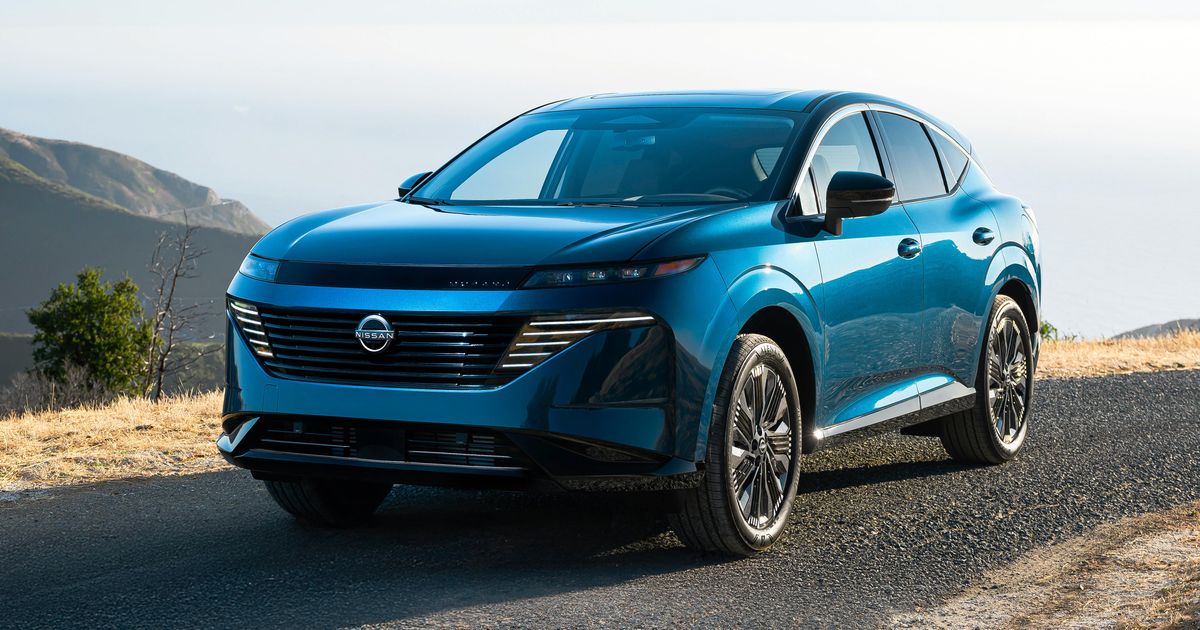
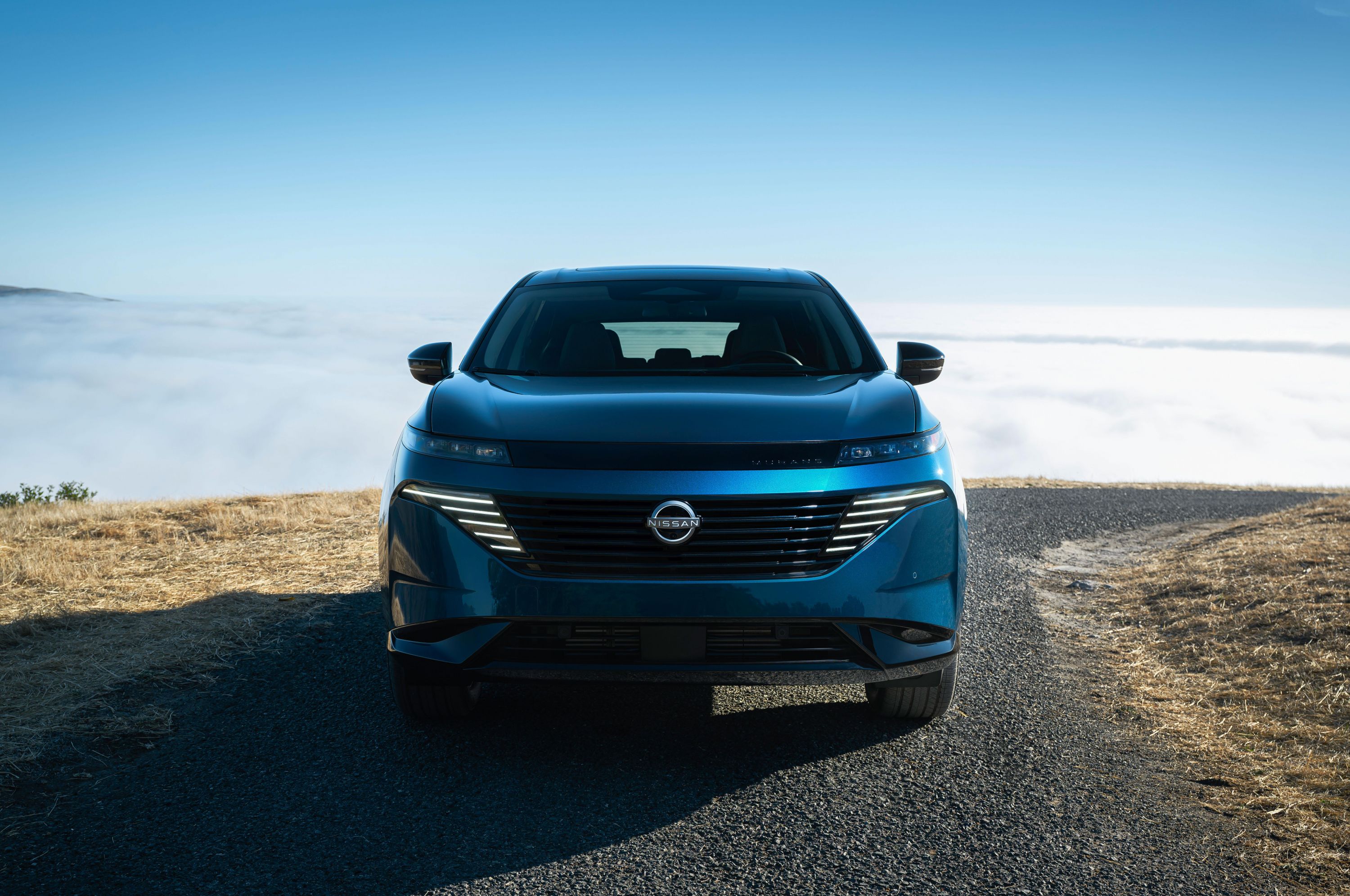
Nissan is set to add plug-in hybrid (PHEV) versions of its Rogue SUV in the United States, though it’s unclear whether we’ll see this technology in its X-Trail twin.
The Rogue and X-Trail are closely related, though the former is built in the US in left-hand drive only while Australian-market examples of the latter come from Japan.
As Nissan has yet to reveal a plug-in version of its Japanese-built X-Trail, that closes the door on a mid-sized PHEV SUV for the brand’s local lineup for now.
Automotive Newsreports Nissan will bring a pair of electrified Rogue models to the US in the next two years, as part of its plans to introduce 27 electrified models worldwide by 2030.
The Rogue PHEV will reportedly hit American showrooms in late 2025, followed by e-Power versions in early 2027.
100s of new car deals are available through CarExpert right now. Get the experts on your side and score a great deal. Browse now.
Nissan Rogue
No e-Power models are currently available in Nissan’s US lineup, which leaves the brand without any hybrids there; hybrid versions of the previous-generation Rogue and Pathfinder were offered there, however.
The upcoming Rogue PHEV will reportedly share powertrain technology with the Outlander PHEV from Alliance partner Mitsubishi.
The Outlander PHEV is sold in Australia and the US, and it features the same powertrain in both markets.
It uses a 2.4-litre four-cylinder petrol engine and a pair of electric motors, which are fed by a 20.0kWh lithium-ion battery.
Total system outputs are 185kW of power and 450Nm of torque, though a recently revealed update for the Outlander PHEV sees system power upped to 225kW.
Nissan X-Trail e-Power
In the US, the Rogue is currently sold with a 1.5-litre three-cylinder turbocharged petrol engine, which produces 150kW and 305Nm.
Nissan has yet to confirm whether Japanese-built X-Trail models will get a PHEV powertrain. Petrol Rogue examples are currently built at Nissan’s plant in the US state of Tennessee, though it’s likely production will move to Mississippi when the PHEV version arrives.
Automotive News reports Nissan’s Mississippi plant is currently undergoing a US$500 million (A$747 million) makeover to prepare it for the production of next-generation electric vehicles (EVs).
If there is an X-Trail PHEV coming, it’ll likely be a long time before we see it as the Japanese-built X-Trail launched considerably later than its Rogue counterpart.
The current-generation Rogue went on sale in the US in late 2020, while its X-Trail counterpart didn’t reach Australian showrooms until May 2022 and Japanese showrooms in July 2022.
MORE: Everything Nissan MORE: Nissan revises its plans for a EV, hybrid onslaught
Central Bank of India earned an interest income of Rs 8,203 crore during the quarter, compared to Rs 7,351 crore in the year-ago quarter.
Central Bank of India’s total income increases to Rs 9,849 crore during the September 2024 quarter, as against Rs 8,412 crore in the same period last year.
State-owned Central Bank of India on Thursday posted a 51 per cent jump in profit at Rs 913 crore in the second quarter ended September 2024. The lender had earned a net profit of Rs 605 crore in the same quarter a year ago.
Total income increased to Rs 9,849 crore during the quarter under review, as against Rs 8,412 crore in the same period last year, Central Bank of India said in a regulatory filing.
Net Interest Income increased to Rs 3,410 crore in the latest July-September quarter as compared to Rs 3,028 crore in the corresponding period a year ago.
The bank earned an interest income of Rs 8,203 crore during the quarter, compared to Rs 7,351 crore in the year-ago quarter.
Net Interest Margin (NIM) in the reporting quarter rose to 3.44 per cent from 3.29 per cent at the end of second quarter of previous fiscal.
Return on Assets (ROA) improved to 0.85 per cent, registering an improvement of 23 bps, over the corresponding quarter of last year.
The bank was able to reduce gross Non-Performing Assets (NPAs) to 4.59 per cent of the gross loans by the end of September 2024, from 4.62 per cent a year ago.
Similarly, net NPAs or bad loans came down to 0.69 per cent, from 1.64 per cent at the end of the second quarter of the previous fiscal.
Provision Coverage Ratio stood at 96.31 per cent, with an improvement of 377 bps year on year.
Total BASEL III Capital Adequacy Ratio improved to 16.27 per cent (with Common Equity Tier 1 ratio of 14.01 per cent), as on September 2024, as compared to 14.82 per cent at the end of second quarter of last fiscal.
(This story has not been edited by News18 staff and is published from a syndicated news agency feed – PTI)
Mohammad Haris
Haris is Deputy News Editor (Business) at news18.com. He writes on various issues related to markets, economy and companies. Having a decade of experi…Read More
Bitcoin (BTC), the world’s largest cryptocurrency by market cap appears bearish and may experience a notable price decline in the coming hours or days. On October 18, 2024, BTC hinted at a potential price correction as it formed a bearish candlestick pattern at a strong resistance level.
Bitcoin (BTC) Technical Analysis and Upcoming Levels
According to expert technical analysis, BTC is currently facing strong resistance at the upper boundary of a descending channel pattern. Since March 2024, BTC has reached this level more than six times, experiencing notable selling pressure and a price decline of over 20% each time.
Source: Trading View
However, the formation of a bearish engulfing candlestick pattern on the daily time frame suggests a similar price decline in the coming days
Besides this bearish outlook on the daily time frame, a closer look at the BTC chart on the four-hour timeframe shows that the world’s largest cryptocurrency is currently finding support at the $66,700 level. Additionally, BTC has been consolidating between $66,700 and $68,000 over the past two trading days.
Source: Trading View
Based on the recent price momentum, if BTC breaks the lower boundary of the consolidation zone and closes a daily candle below the $66,500 level, there is a strong possibility that the asset could decline by over 6% to reach the $62,500 level.
Bearish Sentiment Confirmed by On-Chain Metrics
BTC’s negative outlook is further supported by on-chain metrics. According to the on-chain analytics firm Coinglass, BTC’s Long/Short ratio currently stands at 0.968, indicating bearish sentiment among traders. Additionally, its future open interest has dropped by 3.43% over the last 24 hours and 1.85% over the past 24 hours.
Source: Coinglass
This decline in open interest suggests either the liquidation of traders’ long positions or traders exiting their positions, likely due to fear of a price crash.
Combining these on-chain metrics with the technical analysis, it appears that bears are currently dominating the asset and have the potential to trigger a massive price decline.
Current Price Momentum
At press time, BTC is trading near $66,920 and has experienced a price decline of over 1.8% in the past 24 hours. During the same period, its trading volume dropped by 21%, indicating lower participation from traders due to the current market sentiment.
First the treasury secretary pick advanced a step closer toward confirmation on Friday.
Then his latest movie claimed the top spot at the box office.
Mnuchin is an executive producer on Warner Bros.’ “The Lego Batman Movie,” which pulled in an estimated $55.6 million from U.S. audiences during its opening weekend.
CNN, like Warner Bros., is owned by Time Warner.
The kid-friendly spinoff of 2014’s “The Lego Movie” handily beat its raunchy competitor, Universal’s “Fifty Shades Darker.”
The sequel to 2015’s “Fifty Shades of Grey,” based on a best-selling series of romance novels, debuted at $46.8 million in the United States.
Related: Possible pick for Treasury secretary makes his film debut
Mnuchin is listed as a producer or executive producer on 34 films in recent years, including last summer’s “Suicide Squad,” which brought in $786 million worldwide.
He also produced “The Lego Ninjago Movie,” another Lego franchise spinoff that will hit screens this fall.
Mnuchin is widely expected to be serving as Treasury secretary by then.
Staying safe online and keeping your data out of the hands of the bad guys is vital, especially as we find ourselves using free Wi-Fi networks more and more. Whether you’re using a coffee shop’s Wi-Fi or you just don’t quite trust your ISP, a great VPN is one way of keeping prying eyes away from your information and browsing habits. If you’re looking to score the best VPN service at the best price, NordVPN is one option to consider. It’s one of our favorites and right now the company’s two-year plans are marked down by 74% with three free months included.
If you sign up for one of NordVPN’s two-year plans, you’ll be able to secure up to 10 devices at once. Prices start from just $2.99 per month but for those who want the best value, signing up for the Ultimate plan may be the best option. In addition to all of the features of the Plus plan, you’ll also get 1TB of encrypted cloud storage, as well as cyber protection benefits including identity theft recovery and extortion protection.
Hey, did you know? CNET Deals texts are free, easy and save you money.
Features offered as standard across all of the plans include secure, high-speed internet access via your new VPN, something that shouldn’t be downplayed. Running a VPN can often make browsing the web, enjoying online content and more much slower than it would normally be. That shouldn’t be the case here, thankfully.
There are also one-year VPN subscription deals available, but the discounts are not as large, so signing up for the longer subscription will likely be the better option for most people. It’s worth noting that NordVPN and Surfshark have merged, but have continued to operate autonomously so far. For other options, check out our roundup of the best VPN deals happening now.
Jojoba oil can contribute to several health benefits by topical applications to the skin and hair.
Many of the benefits jojoba oil could present are cosmetic ones, such as moisturizing dry, damaged skin and healing wounds, an expert told Fox News Digital.
Jojoba oil is created through the extraction of oil from the seeds of the fruit-bearing plant, Simmondsia chinensis.
JASMINE HERBS’ SURPRISING BENEFITS WHEN ADDED TO HEALTH ROUTINES IN THE FORM OF OIL, IN TEA AND MORE
“They take the seeds, which resemble dark coffee beans, and then they use either a cold press or a solvent extraction, and then you get an oil that’s like a light yellow color,” Jenna Volpe, a Texas-based registered dietitian and herbalist, told Fox News Digital in a phone call.
The topical application of jojoba oil to the skin or hair comes with health benefits, largely due to its anti-inflammatory and antioxidant properties.
Jojoba oil is primarily used for its health benefits related to the skin and hair.(iStock)
Read below to learn more about jojoba oil and its cosmetic benefits.
Jojoba oil is widely used for its skin and hair benefits when applied topically.
The oil is known for its anti-inflammatory and healing properties, which can help people with skin conditions such as eczema and psoriasis as well as clear acne.
THE HEALTH BENEFITS OF MATCHA, PACKED WITH ANTIOXIDANTS, MAY BE WORTH INCORPORATING INTO YOUR DIET
Indigenous tribes have used jojoba oil for centuries for these benefits and others, Volpe told Fox News Digital.
“They would use it for psoriasis, any kind of acne, skin disorders, any kind of scalp disorders, dry skin, irritated skin. They would take the oil and just apply a little bit topically,” Volpe said.
When applied to the skin, jojoba oil can be diluted, but it doesn’t have to be, said Volpe.
One of the many potential health benefits that comes with applying jojoba oil topically is that it can help to moisturize dry skin.(iStock)
Jojoba oil is one that is widely considered safe for sensitive skin, according to Volpe, who specifically recommends ones that are “cold pressed certified organic,” which she noted have more nutrients, antioxidants and are easier on sensitive skin.
Even so, it’s not a bad idea to do a patch test when trying any new product on your skin to ensure you don’t have an allergic reaction to it.
MAXIMIZE HAIR GROWTH WITH THESE OILS THAT CAN EASILY BE ADDED TO YOUR DAILY SELF-CARE ROUTINE
To conduct a patch test, dermatologists recommend applying the product to a specific spot on the skin twice daily for seven to 10 days, according to the American Academy of Dermatology Association’s website.
Ensure that no reaction formed, like itchy, red or swollen skin in that time frame, the American Academy of Dermatology Association notes.
Jojoba oil is one widely considered to be safe for the skin.(iStock)
Jojoba oil is one that can be used for its wound healing properties, Volpe told Fox News Digital.
Preliminary research has shown that jojoba oil can act to bind the skin cells back together after being separated by means of obtaining a scratch or a cut on the skin’s surface, according to Healthline.
CLICK HERE TO SIGN UP FOR OUR LIFESTYLE NEWSLETTER
The high concentration of vitamin E in jojoba oil could also play a part in its wound-healing capabilities, per the source.
“[Jojoba oil] has a lot of vitamins like vitamin E. It’s got vitamin A and vitamin D in it. It has different types of antioxidants that help to fight inflammation by neutralizing any kind of free radicals, which are substances that essentially cause cell damage,” Volpe said.
Jojoba oil is filled with vitamins, including vitamin E, A and D.(iStock)
In addition to being applied to the skin, jojoba oil is also commonly used in hair care routines.
“If you’re using it for, like, a scalp, just a few drops can be added to something. You can add it to a shampoo, or you could dilute it, but you don’t have to,” Volpe explained.
CLICK HERE TO GET THE FOX NEWS APP
The vitamins and minerals in jojoba oil can be nourishing for the hair, according to Healthline.
It can moisturize the hair thanks to its oily composition, per the outlet, and can be used to help treat dandruff.
Karwa Chauth, a significant festival for married women, falls on October 20 this year. As preparations for the day are in full swing, the markets are buzzing with activity. The festival involves fasting without water from sunrise to moonrise, during which married women pray for the well-being and long life of their husbands. The fast begins after Sargi, a pre-dawn meal at around 4 a.m., and continues until the evening when the fast is broken after offering Argh to the moon, followed by drinking water from the husband’s hands.
After such a long day of fasting, the family gathers to enjoy a celebratory feast. However, indulging in fried or spicy foods after being hungry for an entire day can sometimes lead to stomach issues. To help you enjoy a healthy yet delicious spread after breaking your fast, here are 5 recipes that are nutritious and easy to digest.
Also Read: When Is Karwa Chauth 2024? Check Out These 5 Classic Karwa Chauth Recipes
Here Are 5 Healthy Recipes for Karwa Chauth 2024
1. Dahi Wali Toor Dal
This simple yet flavorful dal is made with toor dal (pigeon peas), curd, tomatoes, and mild spices. The addition of curd not only enhances the taste but also helps soothe the stomach and reduces spiciness, making it easier to digest after a long day of fasting. Pair it with jeera rice for a wholesome meal.
Click for the recipe
2. Palak Paneer
A nutritious dish made with spinach (palak) and paneer, this recipe is a great source of protein and essential vitamins. Prepared with minimal spices, tomatoes, and onions, it provides a light but filling option. To keep it healthier, skip the extra butter, cream, or ghee. Serve it with whole wheat roti for a balanced meal.
Click for the recipe
3. Cucumber Raita
A refreshing side dish, cucumber raita is an excellent choice to cool the stomach after breaking your fast. The high water content in cucumber helps rehydrate your body and provides relief from any acidity or digestive discomfort. If you prefer, you can swap cucumber for lauki (bottle gourd) for a variation.
Click for the recipe
4. Methi Laccha Paratha
Made with fenugreek leaves (methi), this flavorful paratha is packed with nutrients. It makes for a healthy alternative to traditional pooris and is an excellent source of fibre and iron. Pair it with your favourite curry or sabzi for a satisfying dinner.
Click for the recipe
5. Achari Paneer Pulao
A one-pot wonder, Achari Paneer Pulao is a delightful, flavorful dish made with paneer and aromatic spices. Rich in protein and essential nutrients, this quick and easy recipe can be prepared in just 20 minutes, making it perfect for your Karwa Chauth meal.
Click for the recipe
Enjoy these healthy and delicious recipes as you celebrate Karwa Chauth 2024! Wishing you and your family a happy and prosperous festival!
The Israel Defense Forces (IDF) and the Israeli Security Agency (ISA) said in a joint statement on Thursday that they are investigating whether one of the three militants killed by the army in the Gaza Strip is Hamas leader Yahya Sinwar.
The Israeli military said the identity of the militants cannot be confirmed at this stage.
“In the building where the terrorists were eliminated, there were no signs of the presence of hostages in the area. The forces that are operating in the area are continuing to operate with the required caution,” the joint statement said without providing further details.
Sinwar, the chief architect of the October 7, 2023, attack on Israel that triggered the Gaza conflict, was named Hamas’ political bureau chief following the assassination of the group’s former leader, Ismail Haniyeh, in Tehran in August.
I’m Crystal. I work in the marketing department for Catster. You may have seen some of my posts on our social media and listened to some of my tales on our YouTube channel.
Growing up, we always had dogs. I considered myself to be a dog person! That was until I moved in with my fiance, had a place of my own, and met my soul cat, Ivy.
My fiance would have to leave town often for work, leaving me alone in a quiet house. One thing to know about me: I HATE being alone.
As we lived in a complex, it’d be unfair to have a dog in such a small space. The yard was teeny tiny, and with so many residents already complaining about other dogs in the complex, I had to look for other options to find companionship.
This was when I set my heart on adopting a cat. With so many beautiful kitties waiting for their forever homes in shelters, the most difficult part was convincing my fiance. I begged, I pleaded (I perhaps even cried) for weeks on end.
Eventually, he gave in. I already had so many adoption posters saved on social media, and I found it impossible to choose one. Why couldn’t I have all of them?
One day, I opened Facebook and saw this post:
I can’t explain it, but I knew this was meant to be my cat. I immediately called the number. The lady said that because this kitty has such a unique coat and is long-haired, there was a lot of interest already, but she would keep me updated.
Later that day, she gave me a call and let me know what I’d have to do in order for her to decide whether I was the best potential cat mom – I had to send through a video of our apartment, a pet approval document from our complex, and be prepared to pay an adoption fee of around $150. This would include her first vaccinations and spaying procedure.
Long story short, two days and a lot of preparation later, I was on the way to pick up my kitty after she had been spayed!
I knew I’d love her, of course, but I was so nervous. Would she love me? Would I be a good cat mom? Would she only be around when it was feeding time?
Just picked up!
All of those worries were put to bed pretty much immediately. She was friendly and affectionate and seemed truly grateful to have found a safe, loving home with us. Over time, with a lot of patience and reassurance (and treats), we built an amazing relationship.
2 snug love-bugs
The bond I have with my cat is unlike any other bond I’ve had with previous animals we’ve owned.
And yes, my fiance adores her – she stole his heart the moment he laid eyes on her and now accompanies him while he gets ready for work early in the mornings.
Fiance who ‘didn’t want a cat’
Of course, cat ownership doesn’t come without its own set of unique hurdles and challenges…
I’ll be sharing some more of my life with Ivy – the good, the bad, and the ugly – on Catster.com in the weeks to come!
The Confederation of Real Estate Developers’ Associations of India (CREDAI) has collaborated with the Indian Institute of Management Ahmedabad (IIMA) to launch the Real Estate Development Leadership (RED-L) Programme, which has been specially curated by IIMA for CREDAI members across India.
The MoU was signed by Shekhar Patel, President-Elect of CREDAI National and Professor Diptesh Ghosh, Dean Programme at IIMA, in the presence of Dhruv Patel CREDAI Ahmedabad President, stated an official release. The RED-L program, available only to senior management members of CREDAI-affiliated real estate firms nationwide, will equip participants with the strategic insights and skills needed to thrive in the rapidly evolving real estate sector.
CREDAI Ahmedabad will shortlist the applicants and will undergo an online interview with IIMA. The key eligibility criteria for applicants include being at least 30 years old, a graduate degree in any stream (preferred) and proficiency in English. The programme will be delivered over five modules spanning 4-5 days, spread over 5-6 months, using IIMA’s unique case-based pedagogy. It will offer a comprehensive deep-dive into real estate, blending leadership, financial expertise, marketing insights and global perspectives. Participants will explore everything from real estate economics and advanced financial tools like REITs and private equity to cutting-edge technologies such as AI, blockchain and tokenisation. With hands-on capstone projects and real-world applications, this program will equip the participants with the knowledge, skills and confidence to excel in the competitive real estate market.
Commenting on the collaboration, Dhruv Patel, President of CREDAI Ahmedabad, said, “This partnership with IIMA marks a new chapter in professional development for our members. Through the Real Estate Development Leadership Program, our members will be able to access world-class education and prepare themselves for the challenges of modern real estate. We are confident that the program will benefit not only the participants but also the real estate industry at large.”
Pri kreiranju rubrike Index Shopping nastojimo izdvajati odlične proizvode koji se i nama sviđaju te odlične akcije i popuste. Ne objavljujemo proizvode koje i sami ne bismo kupili ili smatramo da njihova promocija nije u skladu s profesionalnim standardima. Neki proizvodi u rubrici Index Shopping mogu biti sponzorirani.
ADIDASOVE tenisice za taekwondo su trenutno pravi hit u svijetu obuće. Ove stylish tenisice s tri pruge sve češće viđamo na ulicama i među poznatim osobama, a njihova popularnost neprestano raste, posebno na TikToku. Njihov retro, niskoprofilni dizajn odražava trenutne trendove, a čini se da su postale nova it cipela koju svi žele.
Imaju ravne potplate slične modelu adidas SL 72 i gornji dio od kože s prošivenim detaljima, a ono što ih izdvaja je to što nemaju vezice.
Tenisice su već stekle kultni status na TikToku
Glumica Ayo Edebiri i pjevačica Jennie iz Blackpinka često ih nose u svakodnevnim kombinacijama, a Bad Bunny je nedavno predstavio svoju verziju tenisica u suradnji s adidasom, čime je dodatno povećao interes za ovaj model.
Na TikToku tenisice su već stekle kultni status, s brojnim objavama koje uključuju recenzije, raspakiravanje i stiliziranje.
Tekst se nastavlja ispod oglasa
Kreatori na društvenim mrežama koriste ove tenisice za razne kombinacije, spajajući ih s različitim komadima odjeće, od sportskih do elegantnih. Na primjer, neki ih nose s čarapama s volanima za ženstveniji izgled, dok ih druge influencerice uparuju s midi suknjama i širokim hlačama.
Znate li nešto više o temi ili želite prijaviti grešku u tekstu? Kliknite ovdje.
Ovo je .
Homepage nacije.
Imate važnu priču? Javite se na [email protected] ili klikom ovdje. Atraktivne fotografije i videe plaćamo.
Miller Moss had delivered on more difficult throws than this one. Through six weeks, he’d made his share of poised plays in collapsing pockets and fired plenty of passes into seemingly impossible windows. But last Saturday, with USC just one completion away from completing a final, fourth-quarter drive, the Trojans quarterback dropped back into a clean pocket, spotted 6-foot-6 wideout Duce Robinson breaking inward … and sent the pass soaring over his head.
It was picked off, marking the second time in as many weeks Moss ended USC’s final, fourth-quarter drive with an interception. Penn State won in overtime, leaving the Trojans to ruminate on a third loss in four weeks.
“This one was especially excruciating,” Moss said, shell-shocked, from the postgame podium.
The sting of that final throw still lingered days later with a frustrated faction of the fan base who already were calling to replace Moss after consecutive losses. But as USC prepares to take on Maryland, one of the Big Ten’s worst pass defenses, the chanceof Lincoln Riley replacing his quarterback apparently is nil. The coach said as much Tuesday, when asked about his confidence in his Moss.
“Miller is our starter,” Riley said. “Miller has played a lot of really good ball. He’s put our team in position to win a lot of games. Some of the things he needs to do better, he owns it. I promise you, he wants it more than anybody with what he puts into it. He’s our leader. He’s our starter. There’s zero question about that.”
There’s also no arguing that Moss is coming off two especially inconsistent outings in which he’s completed fewer than 60% of his passes. Both Minnesota and Penn State boast strong pass defenses, ranking in the top 15 nationally in yards given up, but in both losses, Moss missed an uncharacteristic number of open receivers down the field.
The biggest of those misses came on that third-down interception. Asked what happened on the throw, Moss just said, “Six inches high.”
“He missed a few throws that he rarely, rarely, rarely misses,” Riley said. “He’s made some great ones. And honestly, some of the ones the other day, he made some really, really difficult throws. I mean, really difficult throws. I think settling in and really seeing his accuracy climb in the back half will be very important.”
Moss had no problem throwing it all over the field during the first two weeks as he piled up 607 yards and averaged nearly nine yards per attempt across wins against Louisiana State and Utah State. But in the four games since, USC is averaging fewer than six yards per attempt, which would rank in the bottom 10 nationally.
That’s unheard of for a team coached by Riley, who never has had an offense that averaged fewer than 8.5 yards per attempt. Then again, the same could be said for most of the metrics describing this offense at the midway point.
Riley, over seven previous seasons as a coach, never had an offense that finished outside of the top 10 in scoring. But through six games, the Trojans rank 52nd at 30.7 points per game.
Explosive plays, a hallmark of Riley’s offense, are down considerably too. USC ranks just 57th in plays of 20-plus yards, after finishing second and fourth the last two seasons.
Moss is just one piece of that puzzle, albeit a critical one. USC’s offensive line has gone through its share of growing pains, while its quartet of sophomore receivers, all of whom were expected to step up, have been inconsistent.
Zachariah Branch, one of the Trojans’ most dynamic weapons a year ago, has just nine catches for 60 yards over his last three games, while Ja’Kobi Lane has struggled to build on his breakout game against Wisconsin, tallying just four catches for 31 yards in the two weeks since.
“We still want to continue to get those guys opportunities because we’ve got some really good weapons out there,” Riley said. “They’ve all had some really bright moments. They’ve missed a couple that we wish we could have, whether we didn’t make the play on the ball or we missed the throw or we didn’t have the protection, we’ve left a couple out there that we need to go get here in the back half of the year.”
Capitalizing on those opportunities, like the one Moss missed in the fourth quarter Saturday, will be essential in the second half. Washington, the best pass defense in the nation by yards given up, awaits in two weeks, while Notre Dame, at the end of the year, ranks sixth. Nebraska and Rutgers are no slouches either, each giving up fewer than 190 passing yards per game.
That’s no easy task for a passing attack that’s struggled to keep pace with Riley’s past offenses. But Robinson has seen enough from Moss to know he’s the right quarterback to right the ship.
“I have complete trust in Miller,” Robinson said. “He’s been great, man. He’s going to continue to be the leader that he is.”
Huawei’s ultra-premium GT5 smartwatch is now available in India. The GT5 smartwatch is available in two variants – 46mm edition for men offered in three colour options – Blue, Brown and Black – and a 41mm edition for women available in five colours – White, Brown, Blue, Gold, and Black. According to the company, the smartwatch is equipped with Huawei’s proprietary TruSense technology for accurate health and fitness tracking, enhanced satellite-based GNSS tracking and a unique emotional wellbeing assistant.
Huawei GT5 smartwatch Price
The pricing of the Huawei GT5 smartwatch starts at Rs 18,999, with additional discounts of up to Rs 4,500 available through bank offers and coupons during the pre-booking period.
The smartwatch comes with prism straps and an ergonomic design. According to the company, the Huawei GT5 smartwatch has been crafted with high-quality materials.
The GT5 features a resolution of 466 x 466 pixels for both the male and female editions, with 352 PPI for the male and 326 PPI for the female edition. A standout feature of this smartwatch is its focus on emotional well-being, representing a significant advancement in wearable technology.
It includes more than 10,000 dials in total, with 11 new dynamic watch faces that adapt based on the user’s emotional state. The GT5 is also water-resistant up to 50 meters, making it perfect for aquatic activities.
“Fitness enthusiasts will benefit from pro-level sports tracking for activities such as golf, free diving, and trail running. With built-in offline maps, users can enjoy seamless wrist-based navigation featuring real-time maps and routes, making it ideal for outdoor adventures. The Stay Fit app enables easy tracking of calories and meals, complemented by over 100 workout modes and Activity Rings 2.0 for a comprehensive fitness tracking experience,” the company said in a release.
Additionally, the smartwatch features Huawei’s advanced TruSense system, delivering precise health monitoring. The proprietary Harmony app allows users to take screenshots directly from the watch, make Bluetooth calls and ensures compatibility with both iOS and Android devices.
In the crater of a semi-dormant volcano in southwest Colombia lies a sacred lake of startling green which used to draw a steady stream of garbage-tossing tourists before Indigenous leaders took back control. Ascending the Azufral volcano which rises to 4,070 meters (2.5 miles) in the western Colombian Andes is not for the faint-hearted. It’s also not for the uninvited. Only those who receive the nod from the governor of the local Indigenous Pastos community may pass.
Indigenous leaders reclaim sacred lake, curbing tourism in Colombia’s Azufral volcano(AFP photo)
“The spirits of the lake don’t like to be disturbed. We have to ask their permission,” Jorge Arevalo, a 41-year-old member of the lake’s Indigenous guard, said. A handful of guards accompanied AFP last month on a rare visit to the lake — a shimmering body of water three kilometers wide in ever-changing hues of emerald, olive and turquoise, surrounded by sandy beaches.
Before the two-hour ascension, the guards performed a ritual led by a taita (shaman) in praise of the cycle of life. Each member of the party then asked the spirits for permission to climb the volcano to contemplate the beauty of the lake and apologized for disturbing the flora, fauna and the tranquility of a site that is sacred to the Pastos. A prayer each to Pacha Mama — the Mother Earth goddess revered by Andean peoples — and the Virgin Mary, a sprinkle of perfume for “spiritual cleansing” and the climb began.
Not-so-hidden treasure
For a long time the Laguna Verde (Green Lake) was one of Colombia’s best-kept secrets, with the country’s El Tiempo daily in 2011 describing it as a hidden treasure. But once the secret was exposed, the lake was overrun with tourists. “There were up to 1,500 people per day, it was really invasive,” Diego Fernando Bolanos, head of tourism for Narino, told AFP.
Some tourists began roaring up the volcano by motorbike, fecal matter was found in the drinking water and some of the reserve’s tall espeletia plants, emblematic of the local paramo ecosystem, were trampled. In September 2017, the Pastos, who own the land, took the ultimate step to close off the lake and surrounding 7,503-hectare reserve in order to save it — a decision approved by local authorities in 2018. The cleanup took weeks. “There was rubbish everywhere,” Arevalo said with disgust.
Sustainable tourism
Seven years later, the reserve is pristine again, with no sign of human presence beyond the climbing path. The guard carries out regular patrols to ward off intruders. Those who fail to observe the ban generally get off with a warning. “I didn’t know it was forbidden,” Inga, a Dutch hiker in her forties who climbed the volcano and camped at the entrance to the reserve, told AFP.
“It’s beautiful up there. They’re right to close it,” she said. The Pastos’ management of the site is set to be spotlighted at the upcoming UN COP16 biodiversity conference in the Colombian city of Cali starting on Sunday. The European Union has invited the Indigenous guard to the summit for a discussion about sustainable tourism management.
“The Pastos are protecting a sacred site that is essential for their culture but also a high mountain ecosystem that is fundamental for the conservation of water and the cycle of the seasons in the Amazon region,” the EU ambassador to Colombia, Gilles Bertrand, told AFP. He added that the work helps preserve “the climate equilibrium of Europe and the whole world.”
Among the Pastos, and in the wider Narino department, one of Colombia’s poorest, some however are keen to see the lake reopen, as a potential money spinner. Bolanos, the area’s tourism chief, called for a more sustainable model. “The idea is to conduct a study on carrying capacity, so that only ten or twenty people can visit in a day,” he said. Arevalo said he was “not opposed” to the idea. “We’re opposed to uncontrolled tourism,” he said.
Tom Hardy has starred in many famous movies, from Inception and Mad Max: Fury Road to Venom and Dunkirk. However, one role that is often regarded as one of his best performances is lesser known.
In 2008, Hardy starred in the biographical prison drama Bronson, directed by Nicolas Winding Refn, who would later helm Ryan Gosling in Drive.
The movie gives a loose insight into the fascinating life of prisoner Michael Peterson, who adopted the boxing persona of Charles Bronson, after the American actor of the same name.
The notorious criminal, known as Britain’s most violent prisoner, was initially sentenced to seven years in jail for armed robbery in 1974 aged just 22.
However, due to his tendencies to take hostages and continued violence towards the guards, he’s spent most of his life in prison, often in solitary confinement.
Having spent most of the last 50 years behind bars, he continues to serve a life sentence to this day despite never having committed murder. More recently, he changed his name again to Charles Salvador in tribute to the artist Salvador Dalí and had his parole rejected once more in 2023.
Hardy found the part to be incredibly physically demanding. With only five weeks to prepare for the role, the actor reportedly gained 40 lbs to match Bronson’s physique. At the time, the prisoner said he did 2500 push-ups a day. Contrary to popular belief, Hardy has clarified that he did not do this many himself.
The movie received many nominations during awards season, including at the Sundance Film Festival. Bronson won Best Film at the Sydney Film Festival, while Hardy’s depiction of the notorious criminal won him Best Actor at the 2009 British Independent Film Awards.
Bronson himself was impressed by Hardy’s portrayal, telling The Times, “I honestly believe nobody on the planet could play me as Tom did. He is more like me than I am.”
Meanwhile, the late critic Roger Ebert said that the movie ‘takes on a fearsome purity, refusing to find reasons.’
Bronson is now streaming on Disney+ and Amazon Prime Video.
Remember the Nissan Murano? While it hasn’t been on sale in Australia for almost a decade, the third generation of the premium-ish crossover has been on sale in North America and China since 2014 — and it’s long awaited replacement had just been revealed.
The 2025 Nissan Murano is the fourth-instalment of the company’s five-seat family SUV that rivals the likes of the Jeep Grand Cherokee and Mazda CX-70 in the US. In its latest evolution, Nissan says it’s the third model in its Arc Business plan, following the redesigned Kicks crossover and Armada (Patrol) SUV.
Compared to the slinkier designs of older generations, the fourth-gen Murano debuts a new look that’s very obviously inspired by the Ariya electric SUV, which also inspired the redesigns of the aforementioned Kicks and Armada.
100s of new car deals are available through CarExpert right now. Get the experts on your side and score a great deal. Browse now.
Dubbed ‘energetic excellence’, the new design theme centres around a new horizontally slatted grille design with split headlight units, a full-width LED tail light bar and alloy wheels up to 21 inches in diameter. Two-tone paint is also available.
Inside the links to the Ariya continue, with dual 12.3-inch high-resolution displays sitting in one conjoined housing, featuring Nissan’s latest infotainment system with Google built-in – which includes Google Maps, and other apps downloadable from the tech giant’s online store.
Like the Ariya, there’s a line of capacitive buttons under the central air vents, partially hidden in the faux wood trim, to control the air-conditioning system.
Nissan also notes the availability of 64-colour ambient interior lighting, as well as an available 10-speaker Bose premium sound system.
The Murano is decked out with the company’s latest assistance and active safety systems including the ProPilot Assist semi-autonomous highway function; as well as two new features for the Murano in Invisible Hood View which uses the camera feeds to create a view that ‘sees through’ the bonnet, as well as the 3D Surround View Monitor parking camera system which offers eight virtual vantage points around the vehicle.
Under the bonnet of the new Murano is Nissan’s 2.0-litre VCT variable compression turbocharged four-cylinder petrol engine, which puts out 241 horsepower (180kW) and 260 lb-ft (352Nm) of torque.
That’s down 15kW from the 3.5-litre V6 of the outgoing car, but up 27Nm. Idle stop-start technology is now standard.
While some might mourn the demise of the VQ V6, those same folks will probably be cheering the fact the new Murano junks the old model’s continuously variable transmission (CVT) in favour a nine-speed automatic with paddle shifters.
Unlike some of its competitors, the new Murano isn’t available with hybrid or plug-in hybrid drivetrain. The lack of an electrified option has seen the Rogue (X-Trail to us) lose ground Stateside to the Toyota RAV4 and Honda CR-V.
Nissan will offer the Murano with both front-wheel drive and on-demand all-wheel drive, with the new generation also adopting frequency sensitive dampers and electric power steering for improved ride and handling.
The new Murano is 4900mm long, 1981mm wide, 1725mm tall, and rides on a 2824mm wheelbase, which makes it 13mm longer overall, 66mm wider and 36mm taller than the current car, although the wheelbase is unchanged.
As with its predecessor, the new fourth-generation Nissan Murano will be assembled at Nissan’s Smyrna plant in Tennessee, and will go on sale in the United States and Canada in early 2025.
Pricing for the new Murano will be released closer to showroom availability. Although the Murano is smaller, and features fewer seats than the Pathfinder, it sits above the more practical crossover in Nissan’s American model range.
The current third-generation Murano is priced from US$38,740 ($57,900), while the Pathfinder range begins at US$36,650 ($54,700). For those interested, Stateside the cheapest Ariya is US$39,590 ($59,100).
Would you want to see the Murano make a return to Australia? Share your thoughts in the comments.
The RBI says it has been sensitising companies through various channels on the need to use their regulatory freedom responsibly and ensure fair, reasonable and transparent pricing.
This action is based on material supervisory concerns observed in the Pricing Policy of these companies and the interest spread charged over their cost of funds, which are found to be excessive, according to the RBI.
The Reserve Bank of India (RBI) on Thursday banned Asirvad Micro Finance, Arohan Financial Services, DMI Finance, and Navi Finserv from sanctioning and disburing loans due to pricing concerns. The business restrictions on these non-banking financial companies (NBFCs) apply with effect from October 21, 2024.
Navi was founded by Flipkart co-founder Sachin Bansal after he quit the e-commerce company, while Asirvad is a subsidiary of Manappuram Finance.
“This action is based on material supervisory concerns observed in the Pricing Policy of these companies in terms of their Weighted Average Lending Rate (WALR) and the Interest Spread charged over their cost of funds, which are found to be excessive and not in adherence with the regulations,” the RBI said in a notification.
Over the last few months, the Reserve Bank has been sensitising the companies through various channels on the need to use their regulatory freedom responsibly and ensure fair, reasonable and transparent pricing, especially for small value loans. However, unfair and usurious practices continued to be seen during the course of onsite examinations as well as from the data collected and analysed offsite, the central bank said.
“In addition to usurious pricing, these NBFCs were variously found to be in non-adherence with the regulatory guidelines on assessment of household income and consideration of existing / proposed monthly repayment obligations in respect of their microfinance loans. Deviations were also observed in respect of Income Recognition & Asset Classification (IR&AC) norms resulting in evergreening of loans, conduct of gold loan portfolio, mandated disclosure requirements on interest rates and fees, outsourcing of core financial services, etc,” the RBI said.
These business restrictions have been made effective from the close of business on October 21, 2024 to facilitate closure of transactions in the pipeline, if any. These business restrictions do not preclude these companies from servicing their existing customers and carrying out collection and recovery processes in accordance with the extant regulatory guidelines, the RBI said.
These business restrictions will be reviewed upon receipt of confirmation from the companies regarding suitable remedial action having been taken to adhere to the regulatory guidelines at all times, more particularly their pricing policy, risk management processes, customer service and grievance redressal aspects, to the satisfaction of the Reserve Bank.
Mohammad Haris
Haris is Deputy News Editor (Business) at news18.com. He writes on various issues related to markets, economy and companies. Having a decade of experi…Read More
The XRP community is abuzz as Ashley Prosper, a prominent figure in the space, breaks down the confusion surrounding the Ripple vs. SEC appeal deadline. There are three key documents in circulation, each leading to differing interpretations on the timing of the SEC’s Form C submission.
First SEC created the confusion of appeal or no appeal now missing the deadline seems fishy and the scenario is intense now. Let’s understand the key documents to know the real scenario.
Document Breakdown and Confusion
Prosper clarifies the situation by discussing three separate documents:
Document 1 refers to the acknowledgment and notice of appearance form, which has a deadline of October 18 but is unrelated to Form C.
Document 2 outlines the docket entries for the appeal in the 2nd Circuit. Prosper points out that relying on the docket date would be misleading, as technical delays could unfairly extend the timeline.
Document 3, from the District Court docket, is the most critical. It shows that the notice of appeal was filed on October 2nd, meaning the deadline for Form C submission was October 16th.
Prosper concludes that based on the District Court’s filing date, the SEC missed its deadline.
Did the SEC Actually Missed Deadline?
In a follow-up post, Prosper reiterates that the 14-day count began on October 2nd, making October 16th the deadline. The SEC’s failure to meet this deadline has raised questions within the community. While some, like XRPizzazz, argue that this procedural misstep won’t lead to automatic dismissal, they acknowledge potential consequences like warnings or fines.
However, former SEC lawyer Marc Fagel explained that the 14-day deadline for filing may not be strict, and the court could extend it. He reassured the community that even if the SEC missed the deadline, it doesn’t mean they’re giving up on the appeal. The SEC’s notice of appeal, filed on October 2, aims to challenge a decision involving $125 million in penalties. The case was added to the Second Circuit Court’s docket on October 4, so the SEC still has time to file the necessary forms for the appeal.
Prosper adds that if the SEC needed more time, they should have filed for an extension. Without a valid technical issue, the missed deadline could present a significant procedural error for the SEC.
Also Read :
SEC Shake-Up Ahead? Donalds Predicts Gensler’s Exit Under Trump
,
Or There’s a Catch!
Fox Business journalist Eleanor Terrett clarified in an X post that, according to Ripple’s General Counsel and other lawyers, the SEC’s filing deadline was initially believed to be October 16.
Having said that, attorney Jeremy Hogan and Terrett revealed that the actual deadline is October 18 at 11:59 PM, since the appeal wasn’t docketed until October 4. This aligns with the legal practice where the 14-day deadline for an appeal typically starts from the docketed date, not the filing date.
So many views and no concrete answer is available at bay so we need to wait and watch what comes next! Stay tuned with us.
Those six simple words command attention. They create an expectation that an engagement-worthy experience is about to unfold.
Thoughtfully produced podcasts and videos can deliver on the promise of brand storytelling. But success is far from a given.
These efforts typically play in crowded, noisy spaces where it’s hard to get discovered. Without a compelling hook, your target audience might tune out or scroll by. And if you fail to tie the story to a real-world value, your business may not achieve a happy-ever-after outcome.
Many enterprise organizations struggle to implement advanced marketing tools and technologies. They must manage many moving parts and coach team members to minimize resistance and process friction.
To facilitate the smooth adoption and use of its new digital asset management (DAM) system, Bayer Crop Science set out to tell — and sell — a story of successfully streamlined content operations.
Example: How To Use Bayer’s Digital Asset Management System
The How To Use Bayer’s Digital Asset Management System video starts as a standard explainer on DAM systems and their benefits. But the sales pitch quickly cuts to a charmingly animated story. In it, “marketing warrior” Alex must navigate a maze of disconnected tools and file systems in search of the rights-free image she needs for a campaign.
Fantasy genre fans will recognize some characteristics of quest-based storytelling — heroes, magical incantations (i.e., marketing buzzwords), and an arrogant dragon that mocks Alex’s attempts to retrieve the asset with competitors’ tools.
And the video, a finalist for Best Topic-Specific Video at this year’s Content Marketing Awards, has one more plot twist for viewers: Before the final scene, it cuts to the narrator for a detailed online demo of Bayer’s DAM solution.
By jumping between factual insights and a fictional parable, Bayer skillfully blends message-driven education with engaging entertainment. It’s a great way to get viewers’ attention on the critical details while hooking their viewing interest until the video’s end.
Idea 2: Sustain engagement with serialized content
It takes more than a hit single to turn initial curiosity into enduring audience relationships.
To keep consumers coming back, consider an approach perfected by streaming TV platforms and popular podcasts: Create binge-worthy serialized entertainment.
Example: Murder in HR
Image provided by Caspian Studios via its Content Marketing Award submission.
Murder in HR isn’t another trendy true-crime podcast. It’s a clever, star-powered send-up of the genre, scripted to organically weave corporate wellness brand Gympass (now Wellhub) into an episodic thriller.
The plot centers on Jemma (voiced by actor Kate Mara) — an HR executive at a tech company who uses her people skills to investigate a death at a corporate retreat. As Jemma interrogates potential suspects, the audience learns about their use of the wellness services offered through Gympass. Customized ads aired during story breaks provided more information about Gympass benefits.
Teased out with a weekly release schedule, the podcast concludes when Jemma solves the crime. With the help of promotional activations across marketing, media, and sales, the show earned more than 1.1 million downloads and reached No. 1 on Apple’s list of top fictional podcasts. It also won the 2024 Content Marketing Award for Best Podcast.
Idea 3: Show the impact of your intentions
Telling a convincing story about results that won’t fully manifest for over 25 years presents challenges.
Marketers in construction and manufacturing have good reason to publicize their climate action initiatives that align with the goals of the Paris Agreement. However, consumers can struggle to grasp how the long-range plans relate to their lives.
Volvo Group used video to turn its communication priorities into a compellingly resonant story for its audience to understand what’s at stake.
Example: Dear Jackie
Volvo, the world’s leading manufacturer of industrial vehicles and construction equipment, promises to become a fossil-free company by 2050 — and help its customers do the same. The urgency of achieving those goals is as clear as the blue stream in its Content Marketing Award-winning video, Dear Jackie.
It starts with a young couple in 2023, eagerly awaiting the arrival of the titular baby girl, Jackie. Viewers get to see the baby’s life unfold as she transforms from a sonogram image into a thriving adult about to welcome her own child into the world.
In the accompanying voiceover, a narrator reads Volvo’s letter to Jackie’s future self, setting its climate-change ambitions against the milestones in Jackie’s life. The company pledges to make one-third of its fleet electric by the time she starts school and be fossil-free when she completes her education.
By illustrating how they’ll work together to shape “the world we want to live in,” Dear Jackie embodies Volvo Group’s commitment to doing the work today so tomorrow’s generation can reap the benefits.
Idea 4: Support personal and professional success
Great storytelling doesn’t just promote the value of your brand’s products and services. It inspires — and empowers — customers to achieve their goals. B2B storytelling typically supports professional success, but don’t overlook personal aspirations and interests, too.
Example: The Path To Owning It
Image via Provide (from its Content Marketing Awards entry materials).
Doctors and other health care providers receive medical training, but that doesn’t prepare them to run a practice. Sharpening the business acumen of current and aspiring medical practice owners is the goal of Provide — a health-care-focused division of Fifth Third Bank, N.A., and the purpose of its The Path to Owning It podcast.
Each episode offers guidance on financial and operational decision-making, such as choosing whether to build or buy a practice or hiring the right care team. While the goal is to ease the transition from caregiver to practice leader, the discussions aren’t all business. They also delve into more personally resonant concerns.
In one episode, veterinarian Sarah Baker, owner of Lane Veterinary, touches on the mental health struggles of veterinary practitioners and the need for more female representation in leadership. Inspiring health professionals to advocate for their own well-being as they care for their patients makes The Path To Owning It a B2B storytelling standout. It earned recognition from the Content Marketing Awards as a finalist for Best Podcast.
Idea 5: Express your unique voice and views
Marketers may be tempted to jump on the latest TikTok challenge or meme-friendly trend to capture audience attention. But playing follow the leader with your video budget is unlikely to help your brand stand out from the pack.
Instead, take your video conversations in distinctly different directions. Contradicting conventional wisdom or expressing opposing points of view may feel risky. But by bucking the status quo, you stand a better chance of making a lasting impact on like-minded consumers.
Example: Play It Safe
You may not be familiar with musician, actor, composer, and comedian Tim Minchin. But you should recognize the Sydney Opera House — the architectural landmark visually synonymous with his home country of Australia.
To celebrate the performing arts center’s 50th birthday, Australian agency The Monkeys (a subsidiary of Accenture Song Sydney) enlisted Tim to star in a four-minute musical ode.
Tim sarcastically sings the virtues of playing it safe and sticking with formulas to attract an audience. Yet, the accompanying sights and sounds of renowned artists, architects, and performers show that the opposite rings truer.
More than a birthday celebration of a building, the spot serves as an uplifting homage to the artists taking creative risks inside the structure. More importantly, the video proves that unique storytelling can amass a stronger following than calculated mediocrity.
The judges at this year’s Cannes Lions International Festival of Creativity certainly got the message. The mini film split Grand Prix honors with another inspiring effort that you’ll see in Idea 6.
Idea 6: Shift perspectives to change minds
While Play It Safe honors artists and their critically acclaimed achievements, its Cannes Lions Grand Prix co-honoree tells the story of a group whose talents have been overshadowed.
Example: La compil’ des Bleues
This video campaign, produced by Orange (a French telecommunications company), highlights the stunning athleticism exhibited by France’s men’s national soccer team.
Or does it?
The real story is cleverly revealed halfway through: The footage was digitally altered. All the remarkable plays shown were made by members of the women’s national soccer team.
While many deepfake videos are designed to deceive to damage someone’s reputation, Orange’s use of visual effects tools does the opposite: It challenges the common (mis)perception that women’s soccer is less exciting and view-worthy than games in the men’s league.
Did the ruse achieve its purpose? In a follow-up case study video released by Orange, the impressions left by the video (in the media and on viewers) are made clear: The most viral French video ever sparked a global conversation about the entertainment value of women’s professional sports and led to broader discussions about gender inequality.
Show, tell, and sing your brand’s value
Whether it’s a child-friendly fable, a crime-solving series, or a true-life tale of overcoming obstacles, audio and video storytelling captures attention and sustains engagement in a way few other content formats can achieve.
Register to attend Content Marketing World in San Diego. Use the code BLOG100 to save $100. Can’t attend in person this year? Check out the Digital Pass for access to on-demand session recordings from the live event through January 31, 2025.
HANDPICKED RELATED CONTENT:
Cover image by Joseph Kalinowski/Content Marketing Institute
To tackle Thailand’s mounting trash problem, one company is turning to the country’s plant life.
Universal Biopack makes packaging that it sells to restaurants and manufacturers. But rather than plastic, it uses a mixture of bamboo and cassava, crops that are widely found across the country.
After growing rapidly in recent decades, Thailand has become one of Asia’s biggest economies. But like many other countries in the region, it’s been slow to try to combat the millions of tons of trash produced each year.
“Waste management is a big problem everywhere,” said Universal Biopack’s managing director, Vara-Anong Vichakyothin.
Related: The company turning 4 billion plastic bottles into clothes
The company is using a technology devised at a Bangkok university to make its zero-waste packaging. It hopes it will eventually replace many of the Styrofoam boxes and plastic bags that end up in huge garbage dumps across Thailand and other Southeast Asian countries.
Its eco-friendly formula took five years to develop and is so adaptable it could end up being used to package things like furniture and even phones. The bamboo it uses comes from leftover scraps from the chopstick manufacturing process.
In the cities of Bangkok and Chiang Mai, where takeout drink containers and noodle packets line the sidewalks, the company supplies restaurants, organic farmers and other businesses in the food and drink industry.
But finding new clients can be tricky.
Takeout food vendors in Thailand want to keep costs down in a competitive business with thin margins. Asking them to spend more on packaging for environmental reasons is a tough sell.
“The local economy still does not support [this technology]” said Universal Biopack’s founder, Suthep Vichakyothin.
But that hasn’t stopping other companies from entering the sustainable packaging market in Thailand. Like Universal Biopack, they’re betting on growing environmental awareness eventually leading to an increase in demand.
To become more competitive, Suthep’s company is investing. It’s aiming to ramp up production by building a partially automated assembly line at its factory near Bangkok and doubling its staffing from 50 people to 100.
The goal is to increase monthly capacity from 300,000 units to one million.
Related: A startup that makes pencils that grow into vegetables
A lot of the demand comes from overseas. One of its customers uses the natural packaging for coconut water it exports.
Universal Biopack says it’s also getting interest in its products from other countries, particularly in Scandinavia.
CNNMoney (Hong Kong) First published February 12, 2017: 9:08 PM ET
Pop culture fans of all ages will gather at New York Comic Con, which kicks off on Thursday at the Javits Center. A fresh lineup of guest speakers, merchandise and surprise drops await attendees and cosplayers looking to snap photos with celebrities and immerse themselves in their favorite comics, TV shows, anime and movies.
Event organizer ReedPop’s Brien McDonald, vice president of content, recently gave CNET a preview of what to expect and some of the most exciting reveals to look forward to. As someone who’s deeply involved on the TV and film side of things for NYCC (and a fan himself), McDonald notes that studios like Netflix and Paramount have big things planned.
McDonald is personally excited about The Simpsons and Apple TV Plus appearing at the event for the first time. “Apple TV has staked out a really cool spot in the streaming space where they’re bringing prestige, high-quality TV series, and it’s not genre. But I think something like Shrinking, or Elsbeth or even something like Ghosts — it’s cool that studios and producers are bringing this to New York Comic Con because it shows that this event is deep into the pop culture now.” He also acknowledged that panels for genre programming such as Dune: Prophecy and The Penguin “will blow people’s minds.”
If you can’t attend in person, you can still catch the panels on the event’s Main and Empire stages. Viewers at home can livestream for free via ReedPop’s YouTube channel and NYCC’s social media accounts.
So, what exactly should TV and movie buffs check out? Be on the lookout for everything from animation to celebrations to guest panels and hot new trailers this year. Count on Max, Blumhouse, SpongeBob, Sony, Netflix and a ton of anime.
Paramount/Nickelodeon
Anime at New York Comic Con
McDonald said there will be a “big anime kickoff on Thursday.” Dragon Ball will host a panel that day for the new series, Dragon Ball Daima, on the Empire stage. The presentation lines up with the series’ 40th anniversary in November. Fairy Tail creator Hiro Mashima will hit the Main stage to discuss his series on Friday, and on Saturday, fans will get an exclusive preview of Overlord: The Sacred Kingdom.
One Piece fans should check out Friday’s panel on the Empire stage, where McDonald says they’ll have a “big presentation.” Viz Media, Crunchyroll and Toei Animation are hosting various presentations to share what’s going on with their latest projects, too.
And with Bleach celebrating its 20th anniversary, anime geeks will want to catch the panel for Bleach: Thousand-Year Blood War on Saturday at 12:45 p.m. ET. Fans will get treated to a peek at an upcoming episode and hear from voice actors Masakazu Morita and Noriaki Sugiyama.
Toei Animation/Shueisha/Bird Studio
Nickelodeon’s SpongeBob party
Did you hear that SpongeBob Squarepants hit a milestone this year? In honor of the show’s 25th anniversary, Nickelodeon will celebrate at NYCC with a dedicated booth. “If you’re a fan and you grew up with the series and you want to walk down Memory Lane, then see what’s ahead, definitely check in on that,” said McDonald.
The setup will include AR, 3D animation and large models of Bikini Bottom’s Krusty Kab and SpongeBob’s famous pineapple house. On Friday at 11 a.m., there will also be a panel for the show at the Empire stage, featuring voice actors Tom Kenny, Bill Fagerbakke, Rodger Bumpass, Mr. Lawrence, Clancy Brown and Carolyn Lawrence.
Can’t miss trailers galore from Sony, Netflix, Blumhouse and more
“We’re going to see so many new trailers,” said McDonald. Max will have a showing for Creature Commandos from DC and some other surprises for releases like Dune: Prophecy.
McDonald also hinted that Netflix will drop a trailer for The Electric State, a new film starring Millie Bobby Brown and Chris Pratt. Both actors are scheduled to be at the movie’s panel on Friday with the Russo Brothers. “There’s going to be a lot of sizzle around what they do in that panel. That’ll be an exciting one,” he shared.
Millie Bobby Brown, Chris Pratt and Ke Huy Quan in Netflix’s The Electric State.
Paul Abell/Netflix
You’ll also want to see the Sony panel featuring sneak peeks and talent from Venom: The Last Dance, Karate Kid: Legends and Kraven the Hunter. Could that mean appearances from Tom Hardy, Aaron Taylor-Johnson, Russell Crowe or Jackie Chan? Don’t miss the event on Friday at 7 p.m. on the Empire stage.
“If you’re brave enough and like the scary, Blumhouse is really bringing it,” McDonald said. “I know what’s in there. It’s big, it’s scary, it’s big names. That one’s going to be a lot of fun.” Jason Blum will be on deck to reveal what’s new and to celebrate 15 years of horror for BlumFest. Stream the panel on Friday at 2:30 p.m. from the Empire stage.
5 things fans don’t want to miss
I asked McDonald if there are five things he’d recommend for superfans to see, and he narrowed down some of the biggest highlights to put on your schedule:
Lord of the Rings: The War of the Rohirrim (Friday at 11 a.m., Main stage) — “I’m expecting that one to knock everybody’s socks off,” said McDonald.
BlumFest NYCC (Friday, 2:30 p.m., Empire stage)
The Simpsons (Saturday, 11:30 a.m. Main stage)
Star Trek Universe panel (Saturday, 2:30 p.m., Empire stage)
Outlander season 7, part 2 preview (Thursday, 6:30 p.m. on Empire stage)
Advice for first-time attendees
If you’re going to the convention in person as a first-timer, McDonald offered up a few tips. “The deal is — you have to plan, you have to make your panel reservations, even sketch out where you want to be and the time it takes to get there.” He adds, “Don’t show up willy-nilly,” trying to wing it. Keep these things in mind:
CNET will be attending NYCC 2024, so be sure to follow our latest coverage on the site and on all of our socials to get an insider’s look at some of the biggest exhibits and reveals.
Fox News’ Health newsletter brings you stories on the latest developments in health care, wellness, diseases, mental health and more.
TOP 3:
– A major health system in Florida delivered 67 babies during Hurricane Milton
– Nutritionist warns the presidential election could trigger emotional eating
– Whooping cough cases have increased more than 340% since last year
This week’s health newsletter includes the uptick in whooping cough cases, babies born during Hurricane Milton, and tips to curb emotional eating.(iStock; AdventHealth for Women)
DODGING CANCER – Dr. Nicole Saphier shares her top tips for preventing breast cancer. Continue reading…
SOBER OCTOBER – Here are the potential health benefits of going 30 days with alcohol. Continue reading…
‘SUCH A BLESSING’ – Cataract removal surgery saved a young boy in West Africa from going blind. Continue reading…
A 7-year-old boy in West Africa who was going blind can now see again, thanks to life-changing eye surgery provided by the Mercy Ships charity. (SWNS)
A recent food experience made me realise that our comfort zone is actually a risky space. You get so comfortable with the familiar, that you have no idea what amazing things you are missing out on. Case in point: my recent dining experience at Oh! Calcutta. A single dining experience at this restaurant brought me extremely close to the Bengali cuisine, a mind-blowing range of dishes I cannot fathom why I never explored. Oh! Calcutta introduced me not just to the impeccable Bengali cuisine, but also to the broad spectrum of the food from Calcutta (or Kolkata) with its conglomeration of cultures resulting in dishes that are unique, special and oh-so-delicious.
Oh! Calcutta’s founder Anjan Chatterjee hosted the 25th anniversary celebration of their restaurant and shared with us his vision of taking the regional food of Kolkata to the rest of the world. He also talked about the importance of the tiniest spices and local ingredients, all of which come together to make wonderful Bengali food.
The interior of Oh! Calcutta is humble yet elegant, two core values which are also reflected in each dish and the incredible service and hospitality of this restaurant. With soft Bengali music playing in the background and fragrant jasmine flowers arranged on the table, we began our feast with a glass of refreshing Aam Panna Shorbot.
For Starters, we ate the Jackfruit Tikki with goat cheese. The preparation was spectacular and it was hard to tell that it was a vegetarian dish. Next, we tried the Anglo-Indian Chicken Cutlet which was crispy on the outside and packed with flavours on the inside. The cutlet paired well with the Mustard Aioli Dip. A soft and melt-in-mouth item in the snacks was the Nawabi Mutton Gilawat with earthy notes of nutmeg. The Starters were served with Tomato chutney flavoured with mustard oil and panch phoron and a cooling Cucumber yoghurt dip.
Each item from the Starter menu came with a unique delicious flavour and texture.
Mustard dip, Tomato chutney, Yoghurt dip
My favourite Starter undoubtedly has got to be the fish – Aam Ada Grilled Bhetki which is flavoured with mango ginger, a ginger with the flavour of raw mango. Avoid the dip with this one, and you will be surprised to spot the lingering mango essence on your tongue when you bite into this dish.
Aam Ada Grilled Bhetki
The Main Course was like a comforting and delicious Bengali homecooked meal, cooked to perfection. With soft rice and crispy Petai Paratha, we enjoyed Kosha Mangsho which had tender mutton pieces in a thick, flavourful gravy. In chicken, we loved the Lebu Pata Diye Murgir Jhol, flavoured with Gondhoraj leaf which is similar to the Kaffir lime leaf. The Prawn Malai Curry stood out in the presentation, served inside a coconut and came with a sweet and delicious coconut-base gravy. You cannot skip fish while enjoying authentic Bengali food. We tried Doi Bhetki which had a creamy and mildly-spiced yogurt base.
Petai Paratha
Lebu Pata Diye Murgir Jhol and Prawn Malai Curry
Doi Bhetki
Some delicious vegetarian items in our main course included the comforting classic Cholar Dal, and one dish that truly stood out – the Koraishutir Dhokar Dalna. This dish featured fried dumplings made of green peas and chana dal, served in a delicately flavoured curry. It tasted fabulous and had a wonderful texture.
Along with the meal, we enjoyed the Gondhoraj Salad with lime zest and a sweet Pineapple Chutney which is enjoyed at the end of the meal.
After a hearty dinner, we freshened our hands by dipping into a lukewarm finger bowl, a simple tradition that I terribly miss at most Indian restaurants. Finally, we finished our delicious meal by enjoying the sweet, rich and delicious Chenar Malpua and Baked Rosogulla with thick caramelised milk.
Chenar Malpua and Baked Rosogulla
What: Oh! Calcutta
Where: Plot 4, Local Shopping Centre Masjid Moth, Greater Kailash II, New Delhi, Delhi 110048
<img src='https://news.cgtn.com/news/2024-10-16/Chinese-premier-calls-for-deepening-SCO-cooperation-1xKt8G0sI92/img/e269696195ea4e89a3a4d013d63ac7a1/e269696195ea4e89a3a4d013d63ac7a1.png' alt='A hashtag outside the media center near the venue of the 23rd Meeting of the Council of Heads of Government of Member States of the SCO in Islamabad, capital of Pakistan, October 16, 2024. /CFP'
Chinese Premier Li Qiang on Wednesday called for deepening and expanding cooperation within the Shanghai Cooperation Organization (SCO).
He also urged the SCO member states to strengthen strategic alignment, actively respond to major risks, and expand personnel exchanges.
Li made the remarks during the 23rd Meeting of the Council of Heads of Government of Member States of the SCO in Islamabad, the capital of Pakistan.
Lewis, the host of the 1990s MTV show “Hot Zone,” tried to fight her illness without undergoing a double mastectomy. She says she is responding well after resuming treatment.
Results from the Phase II/III Vibrance-MG study found that patients with generalized myasthenia gravis who were treated with nipocalimab plus standard-of-care achieved sustained disease control.
Godrej Properties Limited (GPL) has emerged as the highest bidder for three adjacent land plots totaling 6.54 acres in Sector 5-A, Kharghar, Mumbai Metropolitan Region, the company announced today. The land was auctioned through the City and Industrial Development Corporation of Maharashtra (CIDCO).
Also read: Godrej Properties acquires six land parcels in Jul-Sep to build projects worth ₹9,650 crore
The shares of Godrej Properties Limited (GPL) were trading at ₹3,181.85 up by ₹35.20 or 1.12 per cent on the NSE today at 11.20 am.
The developer plans to build a premium residential project with an estimated revenue potential of ₹3,500 crore. The development will offer approximately 2 million square feet of space featuring various apartment configurations.
The project site is strategically located near the Kharghar and CBD Belapur railway stations, with access to metro connectivity and the Sion-Panvel Expressway. The development will overlook the Kharghar hills and is situated close to healthcare facilities and educational institutions.
Gaurav Pandey, MD & CEO of Godrej Properties, stated that the Kharghar project aligns with the company’s strategy to strengthen its presence in key Indian real estate markets.
GPL has maintained a strong market position, emerging as India’s largest developer by residential sales value in FY 2024. The company has also received recognition for its sustainability initiatives, ranking first globally among listed residential developers in the Global Real Estate Sustainability Benchmark for three consecutive years from 2020 to 2022.
Pri kreiranju rubrike Index Shopping nastojimo izdvajati odlične proizvode koji se i nama sviđaju te odlične akcije i popuste. Ne objavljujemo proizvode koje i sami ne bismo kupili ili smatramo da njihova promocija nije u skladu s profesionalnim standardima. Neki proizvodi u rubrici Index Shopping mogu biti sponzorirani.
ADRIANA Ćaleta-Car ponovno je oduševila svojim modnim kombinacijama. Poznata po odličnom stilu, nedavno je na Instagramu objavila dvije prekrasne kombinacije u smeđoj boji, koje su odmah privukle pažnju njezinih pratitelja.
Ovaj look dobio je brojne pohvale na društvenim mrežama
Nakon što smo već pisali o njenim famoznim čizmama od brušene kože brenda The Attico, Adriana je ovaj put pokazala kako ih odlično nosi uz haljinu koja izgleda kao sako. Ova haljina u smeđoj boji ima poseban kroj – prednji dio izgleda kao sako, a leđa imaju dubok V-izrez.
Da bi upotpunila svoj stajling, odabrala je torbicu modne kuće Bottega Veneta. Ova kombinacija pokazuje kako se smeđa boja lako može kombinirati, a njezin izgled dobio je brojne pohvale na društvenim mrežama. “Brutalna, kao uvijek”, “O moj Bože”, neki su od komplimenata.
Prekrasna pripijena haljina
Osim prve kombinacije, Adriana je prošlog tjedna na Instagramu objavila i slike svog glamuroznog izgleda s vjenčanja na kojem je bila gošća. Nosila je predivnu haljinu u smeđoj boji – Fusion Long Sleeve Gathered Dress Mahogany, koju je dizajnirao australski dizajner Christopher Esber. Haljina je lijepo naglasila njezinu figuru, a uz to je nosila i zlatni nakit – naušnice, narukvice, prstenje i sat.
Tekst se nastavlja ispod oglasa
Kao završni detalj, Adriana je odabrala zlatnu torbicu u obliku školjke, koja se savršeno uklopila u njezin svečani outfit, te elegantne Versace cipele.
Ako vam se sviđaju ove kombinacije, pronašli smo slične povoljnije komade.
Znate li nešto više o temi ili želite prijaviti grešku u tekstu? Kliknite ovdje.
Ovo je .
Homepage nacije.
Imate važnu priču? Javite se na [email protected] ili klikom ovdje. Atraktivne fotografije i videe plaćamo.
As the Rams come out of their off week, they will play the struggling Las Vegas Raiders and the currently unbeaten Minnesota Vikings in the span of five days.
Will injured star receiver Cooper Kupp return against one or both?
That is perhaps the overarching question for the Rams as they attempt to rebound from a 1-4 start.
Kupp, 31, has been sidelined the last three games because of an ankle injury. On Wednesday, he did not practice but went through individual drills, increasing activity that began Monday. He was listed as limited on the Wednesday injury report.
Coach Sean McVay continued to say there was a “possibility” that Kupp would play against the Raiders on Sunday at SoFi Stadium.
“He’s trending in the right direction,” McVay said before practice, “but we’ll see exactly what that means as the week progresses.”
Without Kupp and injured receiver Puka Nacua, McVay has been hamstrung as a play-caller, and quarterback Matthew Stafford has been without two of the NFL’s most dynamic play-makers.
The Rams rank 18th in the NFL in scoring (24 points per game), 16th in offense (324 yards per game) and 12th in passing (226.6 yards per game).
Kupp, the 2021 NFL offensive player of the year, has been plagued by injuries for two-plus seasons.
In 2022, he played in only nine games before suffering a season-ending ankle injury. Last season, he suffered a hamstring injury during training camp that landed him on injured reserve for four games. When he returned, he struggled at times to play through an ankle injury.
Kupp appeared to be fully recovered going into this season. He caught 14 passes for 110 yards and a touchdown against the Detroit Lions in a season-opening overtime defeat but was injured in a Week 2 rout by the Arizona Cardinals.
The Rams’ Puka Nacua (17) is tackled by Lions linebacker Jack Campbell (46) in Week 1, when the receiver injured his knee and landed on the injured reserve list.
(NurPhoto / NurPhoto via Getty Images)
Nacua was already on injured reserve because of a knee injury suffered against the Lions. Although Kupp was not put on injured reserve, the Rams were hopeful both would return by the time the Rams came out of the off week.
While Kupp has returned to the field for work with trainers, McVay said Monday that Nacua remains “a ways away.”
So the Rams are evaluating whether Kupp can withstand the movement and contact required for a player who is instrumental as a pass-catcher and blocker.
“What we’ve got to dictate and determine is, ‘All right, is he going to be ready to play like Cooper Kupp’s capable of playing?’” McVay said.
Will the short turnaround before the “Thursday Night Football” game against the Vikings factor into whether he plays against the Raiders?
“You’re mindful of that,” McVay said, “but if he’s going to be ready to go then you want him to play.
“And if not, then we’re hopeful that [next] Thursday would be the day.”
If Kupp returns to practice this week he would have only two workouts to prepare for the Raiders.
McVay indicated that Kupp’s experience would prepare him for a role if he is physically capable. So the result of his work on the field Wednesday would provide another clue.
“If [Wednesday] gives us the confidence that, ‘All right, let’s move forward, let’s give him an uptick in terms of his progression, and there’s a value in terms of what he can provide on Sunday, than that would definitely be something that I would leave the door open for.”
Meantime, Stafford perseveres without his two top targets.
The 16th-year pro, who suffered back soreness after a 24-19 loss to the Green Bay Packers before the break, said he was feeling good.
“The bye week came at a decent time for me personally, and some other guys on our team too as far as physical health goes,” Stafford said. “So I feel better and fresh, like you do most bye weeks coming out of them.”
Stafford has played long enough not to lament the absence of injured play-making receivers.
With Kupp and Nacua sidelined, Demarcus Robinson, Tutu Atwell and rookie Jordan Whittington have filled starting roles.
So Stafford will patiently wait for Kupp’s return.
“He does everything for us,” Stafford said. “He blocks. He obviously is great in the pass game. He’s super intelligent, helps everybody around him be better.
“And whenever that happens, we’ll be obviously excited to have him back.”
Etc.
Offensive lineman Joe Noteboom, who is on injured reserve because of an ankle injury suffered in the season opener, will begin working on the field with trainers as the Rams open the 21-day window for his return. … Whittington (shoulder) was scheduled to be limited in practice Wednesday, McVay said.
Google’s next flagship smartphone, the Google Pixel 9 Pro, will go on sale on October 17. The device is expected to make waves in the already competitive flagship segment, especially following the launch of the iPhone 16 series in September. The variant with 16GB of RAM and 256GB of internal storage has been priced at Rs 1,09,990.
While the build-up to its launch has been intensifying in the past few months, leaks and rumours about the Google Pixel 9 Pro’s specifications have been surfacing on social media.
Google Pixel 9 Pro Specifications: Display, processor, and camera
The Google Pixel 9 Pro will sport a 6.3-inch 1.5K LTPO AMOLED display with a 120Hz refresh rate and a peak brightness of 3000 nits. The smartphone is set to ensure smooth multimedia experience with premium features. The display will be protected by Gorilla Glass Victus 2. Powered by the Tensor G4 chipset, the device will boast an advanced triple camera setup, consisting of a 50MP primary lens, a 48MP ultra-wide-angle lens, and a 48MP telephoto lens. For selfies, there will be a 42MP camera will be included.
Google Pixel 9 Pro Specifications: Software
The smartphone will run on Android 14 and is slated to receive at least seven years of Android updates, including Pixel Drops and security patches.
Google Pixel 9 Pro Specifications: Sturdy build with significant upgrades
The Google Pixel 9 Pro will feature a durable build and powerful hardware. With the enhancements mentioned above, the device is poised to strengthen its position among other flagship competitors.
Earlier in August, Google unveiled its Pixel 9 series, which includes the Pixel 9, Pixel 9 Pro, and the premium Pixel 9 Pro XL. While Pixel 9 and Pro XL were made available immediately, Pixel 9 Pro will hit the market almost two months later in October.
Hong Kong will loosen mortgage rules and cut an alcohol tax in a series of measures seeking to support the flagging real estate sector and boost spending, as China’s slowdown weighs on the city’s economy.
Your next luxury trip to Hong Kong just got cheaper! Here’s how (Photo by Pexels)
Chief Executive John Lee said he will raise the amount of loans homebuyers are allowed to borrow for some properties and broaden a residency-by-investment program. The city’s leader also announced a drastic cut to a tax on liquor, looking to boost a services sector struggling with declined tourism and weak spending.
“We must maintain our development momentum and self-renewal, and that we must embrace changes while staying principled, innovative and flexible in meeting challenges and opportunities,” Lee said in his annual policy address Wednesday.
Lee set his sights on boosting the economy after cementing Beijing’s authority over the former British colony with a national security law, a move Western governments criticized for muzzling open discussion in the Asia finance hub.
The city’s economy has grown in the first six months within the official forecast range of 2.5% to 3.5% thanks to strong exports, although falling real estate prices and sluggish consumption have weighed on sentiment.
China’s slowdown and geopolitical uncertainties also cast a cloud on Hong Kong’s growth outlook, although the recent stimulus bonanza by Beijing, alongside the US Federal Reserve’s interest-rate cuts, may provide some relief.
A focus of Lee’s speech was the ailing property sector, with home prices hovering near a 2016 low. The Hang Seng Properties Index rose as much as 3%.
A broadened investment migration program will include homes valued at $HK50 million or above as part of the required HK$30 million ($3.86 million) investment. Previously excluded, such property purchases would fulfill a third of that requirement.
The loan-to-value ratio for all homes will be set at 70%, he said. The ratio is presently capped below that threshold for homes above HK$30 million and 60% for those valued above HK$35 million.
A wave of bankruptcies points to eroding business finances. Retail sales and tourist arrivals remain below levels before the pandemic, a period that saw the city’s image take a hit from draconian quarantine measures and a crackdown on the pro-democracy political opposition.
Hong Kong will lower the amount of tax it levies on spirits to help the services and food industry, Lee said. The duty for liquor with an import price above HK$200 will be lowered to 10% from 100%, with the lower rate applicable to the excess amount.
To support the real estate market, Lee’s administration has over the past year removed most home purchase curbs and cut property buying taxes. Prices picked up slightly earlier this year before continuing a decline to the lowest since 2016.
The expanded migration plan, called the Capital Investment Entrant Scheme, was relaunched last year as the semi-autonomous Chinese city sought to attract talent and capital in the face of fierce competition from peers including Singapore.
The initiative includes a mandatory HK$3 million investment into a portfolio run by the Hong Kong Investment Corp. to support local innovation. The plan was expected to bring in HK$120 billion and 4,000 migrants annually, the government said in December.
Netflix’s latest true crime offering is mercifully snappy at a feature-length 94 minutes compared to the streamer’s usual eight-part miniseries fare, but it still proves the genre is skating on thin ice.
Consumers’ obsession with serial killers, sparked by David Fincher’s Zodiac and compounded by podcasts and documentaries galore, is smartly observed by first-time filmmaker Anna Kendrick, exploring a real-life instance of Rodney Alcala’s appearance on the popular game show The Dating Game. It’s a chilling parallel to how contemporary media has made strange bedfellows with these real and fictional killers, but Woman of the Hour is at its most effective outside of the TV studio.
The Pitch Perfect star leads the cast as Cheryl Bradshaw, a real aspiring actress who landed a spot on the show and ended up picking Alcala out of a line-up of three bachelors to go out with in 1978. Her narrative of chasing stardom is given a palpable sense of quiet dread as it plays out sliced with scenes of her date’s brutal killings of various young women.
While these sequences are truly blood-curdling, Kendrick’s segments feel more like interruptions to the narrative rather than the crux, as she clearly felt beholden to honour and flesh out Alcala’s victims beyond the corpses and screams that have historically been on display.
Cheryl deftly swerving well-trodden everyday sexism and microaggressions feels not insignificant but rather weightless compared to the urgently upsetting vignettes following a cold-blooded killer and his victims.
There’s some chilling commentary to be made about the lengths male sociopathy and artificial charisma will get them, but the first-time director’s care to flesh out the stories of slain women makes the game show skeleton feel more like a piece of trivia, a distraction to the real meat of the story.
An admittedly chilling encounter with the deranged stalker in a car park wrapping up Cheryl’s story is rather pedestrian compared to the film’s most compelling throughline, young newcomer Autumn Best as teenage runaway Amy (based on Monique Hoyt), who briefly falls under Alcala’s spell.
Best is a clear star in the making – although she has no scenes opposite Kendrick, she arrives as Woman of the Hour’s most self-assured cast member, wryly holding her own with Daniel Zovatto’s eerily soft-spoken Alcala. Perhaps intentionally, Kendrick is simply her usual peppy self and delivers a serviceable leading turn, focusing her efforts on directing a magnetic performance from Best.
It’s here that “victimhood” is at its most challenged and confronted, a portraiture of society’s most cast aside encountering pure evil and emerging virtuous and trusting, resourceful yet complicated. Broadway star Kathryn Gallagher delivers a similarly showstopping performance as an endearing woman who makes the simple mistake of asking Alcala’s help to move her furniture.
Scenes back in the studio therefore feel rather frustrating, only serving to prove how alluring the serial killer can be, with yet another distracting aside with Nicolette Robinson’s Laura, who had a previous encounter with Alcala, struggling to hold the authorities and TV producers’ feet to the fire.
It’s timely and vital, sure, but seems to serve mainly as a justification to deliver contemporaneous themes and ideas on a platform still at the whims of crime buffs demanding grisly kills and scares.
Thus, this framework only serves to demonstrate the limitations of the true crime drama rather than move it forward. If we really need a hook or gimmick to justify recreating the heinous crimes committed by monstrous men, should they really be shown at all?
Yes, certain moments make for gripping and, by its climax, cathartic viewing, but Woman of the Hour feels destined to be lost in the already endless back-catalogue of modern serial killer biopics and (hopefully) Kendrick’s stronger future endeavours.
Woman of the Hour will be released Friday, October 18 on Netflix.
The peak body for new car dealers in Australia is calling on the Australian Government to scrap the Luxury Car Tax (LCT) instead of simply changing how it applies to fuel-efficient vehicles.
The call comes amid the consultation period for the Treasury Laws Amendment (Fairer for Families and Farmers) Bill 2024: Luxury Car Tax, seeking feedback on the proposed legislation.
Under current LCT legislation, vehicles above the defined threshold attract a tax of 33 per cent on the amount above this price.
No change has been proposed to the rate of taxation, but rather the definition of what a fuel-efficient vehicle is under the scheme.
The Treasury has proposed updating of the definition of a fuel-efficient car from one with a maximum fuel consumption of 7.0L/100km to one with a rating of just 3.5L/100km, with the aim of spurring the take-up of fuel-efficient and electric vehicles (EVs).
100s of new car deals are available through CarExpert right now. Get the experts on your side and score a great deal. Browse now.
“Tightening the definition aims to ensure only electric vehicles or vehicles that are at least partially electrified, such as plug-in electric hybrids, will receive the concessional fuel-efficient threshold for LCT,” the Government says in its draft explanatory materials, noting the current definition has been in effect since 2008.
It’s proposing the change to come into effect for any vehicles imported on or after July 1, 2025.
It also says it “seeks to align these indexation rates [for the two different LCT thresholds] to ensure that the LCT thresholds will grow at the same pace, ensuring the concessional LCT treatment for fuel-efficient vehicles is maintained”.
But the Australian Automotive Dealer Association has called for the 1999-vintage Luxury Car Tax to be scrapped entirely… or for a nominal threshold of $100,000 to be introduced and for low-emissions vehicles to be exempted from the tax.
“We believe any changes being considered to the LCT should form part of a wider root and branch review of Australia’s automotive taxation regime,” AADA CEO James Voortman said in the body’s submission.
“The rate of change occurring in the sector means that the current system of automotive taxation is no longer fit for purpose.
“The AADA has long called for the abolition of the LCT which discourages the uptake of the world’s safest, cleanest and most efficient vehicles.
“Several independent reviews and inquiries have recommended its abolition and dealers, consumer groups, manufacturers and even Australia’s trading partners are united in their opposition to the LCT.”
The AADA says the new definition of a “fuel-efficient vehicle” will discourage the uptake of fuel-efficient vehicles, and is inconsistent with the Australian Government’s New Vehicle Efficiency Standard (NVES) that’s coming into effect in 2025.
For the 2024-25 financial year, the LCT threshold for fuel-efficient vehicles is $91,387, while the threshold for all other vehicles is $80,567, which means the proposed changes may see various vehicles cop price hikes.
Currently, models between those two price points with fuel economy of more than 3.5L/100km but less than 7.0L/100km include hybrid-powered Lexus NX and RX and Toyota Kluger models, as well as diesel-powered Audi Q5 and Mazda CX-90 SUVs.
The AADA argues that by applying a higher threshold to hybrid models, buyers may instead move to petrol or diesel vehicles – an outcome diametrically opposed to what the Government is seeking.
“Specifically favouring or targeting specific vehicle technologies is completely inconsistent with the NVES which the Government has repeatedly stated is a technology neutral policy measure,” the AADA says in its submission.
“The AADA believes hybrid technology will be absolutely crucial in helping manufacturers to meet their NVES compliance obligations alongside a suite of vehicle technologies.”
The peak body’s preferred outcome would be for the LCT to be scrapped entirely, but it has outlined changes it would be open to beyond the aforementioned higher target and exemption for low-emissions vehicles.
“AADA strongly believes that the LCT should be abolished,” it says in its submission.
“If the LCT is to be retained, it should at a minimum be reformed by raising the threshold to target truly luxury vehicles; exempting low emissions vehicles; and excluding accessories from the calculation of whether a vehicle hits the threshold for paying the LCT.”
It argues the LCT forces some four-wheel drive owners to source aftermarket safety or work-related accessories after they purchase their vehicle, potentially leading to the fitment of less safe, non-genuine parts.
It’s calling for the alignment of indexation for the two LCT thresholds, noting the fuel-efficient vehicle threshold has increased by just over 21 per cent since 2008 while the other threshold has been increased by over 40 per cent.
The AADA argues the LCT is a “poorly structured tax” that’s a “hurdle to good relations with our trading partners”, and that it disproportionately affects European brands.
It also questions why it exists when luxury products such as yachts, private jets and jewellery attract no such charge.
“Federal taxes on new cars, such as the [five per cent import tariffs for vehicles coming from countries Australia doesn’t have a free-trade agreement with] and the LCT highlighted above disadvantage consumers seeking to buy new cars which deliver greater safety as well as environmental and fuel efficiency benefits,” the AADA says.
“These legacy taxes were introduced in an era when Australia still manufactured passenger cars and maintaining them only disadvantages consumers and local businesses.”
Bajaj Auto Q2 Results: Its revenue during July-September 2024 jumps 22 per cent to Rs 13,127 crore, compared with Rs 10,777 crore in the year-ago period.
Automobile major Bajaj Auto on Wednesday reported a 9 per cent rise in its standalone net profit to Rs 2,005 crore for the second quarter ended September 30. It is below analysts’ expectations. Its revenue during July-September 2024 jumped 22 per cent to Rs 13,127 crore, compared with Rs 10,777 crore in the year-ago period.
However, on a consolidated basis, Bajaj Auto’s profit after tax declined 31 per cent year on year to 1,385 crore for the second quarter ended September 30, 2024.
Bajaj Auto’s standalone revenue from operations jumped 22 per cent YoY to over Rs 13,000 crore. The portfolio comprising of electric and CNG vehicles across both the 2W and 3W portfolio, now contributes a significant 40 per cent of total domestic revenues.
“Balance Sheet remains healthy with surplus cash of Rs 16,392 crores, after having invested Rs 1.200 crores behind strategic growth enablers (primarily capital infusion into Bajaj Auto Credit Ltd. and EV capex) and distributing Rs 2.233 crores as dividend in H1 FY25,” Bajaj Auto said in a regulatory filing.
Shares of Bajaj Auto on Wednesday rose 0.88 per cent to close at Rs 11,622.5 apiece on the BSE.
Bajaj Auto said it sold 12,21,504 units in the second quarter, up 16 per cent as compared with 10,53,953 units in the year-ago period. The company said its board has approved additional investment in the equity share capital of Bajaj Brazil, a wholly-owned subsidiary of the company.
The board approved an investment of up to USD 10 million in a phased manner.
Mohammad Haris
Haris is Deputy News Editor (Business) at news18.com. He writes on various issues related to markets, economy and companies. Having a decade of experi…Read More
The popular Solana-based meme coin Bonk (BONK) is making waves in the cryptocurrency landscape with its impressive performance. On October 16, 2024, the meme coin led the crypto market and outperformed top cryptocurrencies like Bitcoin (BTC), Ethereum (ETH), Solana (SOL), and many others.
BONK’s Current Price Momentum
According to the CoinMarketCap data, BONK is trading near $0.000025 and has experienced a price surge of over 15% in the past 24 hours. During the same period, its trading volume jumped by 35%, indicating heightened participation from traders and investors.
BONK Technical Analysis and Upcoming Levels
While analyzing the daily chart, BONK appears bullish and is poised to rally significantly in the coming days. On September 27, 2024, the meme coin broke its crucial resistance level and closed its daily candle above that level and the 200-day Exponential Moving Average (EMA). Since then, BONK has been consolidating between $0.000024 and $0.000019 levels.
Source: Trading View
With the recent price surge, BONK broke out of its consolidation zone and currently, there is no resistance level posing a hurdle to its upward rally. If BONK closes a daily candle above $0.0000248, there is a strong possibility the meme could soar by 30% to reach the $0.0000335 level in the coming days.
However, BONK’s Relative Strength Index (RSI) is there in a range that suggests a potential upside rally ahead.
Bullish On-Chain Metrics
BONK’s positive outlook is further supported by on-chain metrics. According to the on-chain analytics firm Coinglass, BONK’s long/short ratio currently stands at 1.05, indicating bullish sentiment among traders.
Source: Coinglass
Additionally, its open interest has surged by 30% over the past 24 hours. This significant rise in open interest suggests that traders have likely built their positions following the breakout from the consolidation zone.
Apart from BONK, the largest and most popular meme coin, Dogecoin (DOGE), gained massive attention as it soared more than 10% over the last 24 hours. Meanwhile, other meme coins, including SHIB, PEPE, and WIF, experienced price surges of 4%, 3.8%, and 3.5%, respectively.
Verizon(VZ) is bringing back an unlimited data plan.
Starting Monday, Verizon customers can get unlimited data, talk and text for $80.
The company says the new introductory plan also includes up to 10 GB of mobile hotspot usage, as well as calling and texting to Mexico and Canada. It will also allow customers to stream unlimited HD video, thumbing its nose at T-Mobile’s controversial practice of lowering video quality for some of its unlimited data customers.
Although the new Verizon plan promises “fast LTE speeds,” those using a lot of data may suffer. The company said that after a customer uses 22 gb of data on a line during any billing cycle, it “may prioritize usage behind other customers in the event of network congestion.” That has become standard practice on all networks that offer unlimited data plans.
Related: T-Mobile and Sprint offer new ‘unlimited’ data plans — sort of
Verizon first eliminated its version of an unlimited usage plan in 2011, following similar decisions by other major wireless carriers.
But companies have been steadily reviving such plans.
Verizon first overhauled its data-usage plans last summer when it introduced a new “Safety Mode” plan. That technically gave customers access to unlimited data, but they were subjected to slow-as-molasses speeds after they went over their allotted data.
AT&T similarly eliminated overage fees for customers in September. Like Verizon, AT&T throttles customers speeds once they reach the data limit on their plans. The company brought back unlimited plans earlier last year, but it is only available for homes with both AT&T’s wireless phone service and either DirecTV or U-Verse TV.
Meanwhile, competitors T-Mobile(TMUS) and Sprint(S) made their own bids to attract customers looking for “unlimited data” plans.
Nearly all NYC subways get cell service
Last August, Sprint began offering a plan to give customers unlimited talk, text and high-speed data for $60 for the first line, $40 for the next, and $30 for each additional up to 10.
The T-Mobile plan, announced the same day as Sprint’s, charged $70 a month for the first line, the second at $50 and additional lines are only $20, up to eight lines.
CNNMoney (New York) First published February 12, 2017: 7:03 PM ET
Today’s top high-yield savings accounts offer APYs up to 5.30%.
Savings rates are falling after the Fed cut interest rates on Sept. 18.
Putting your extra funds in a savings account with a competitive yield can help you earn more money in interest.
The top high-yield savings accounts still earn up to 5.30% APY — more than 10 times the national average. And the sooner you open an HYSA, the greater your earning potential could be because these rates won’t stick around forever.
APYs have been slowly dropping since the Federal Reserve cut interest rates by 50 basis points on Sept. 18. Experts expect the Fed to cut rates at least once more before the year is out, though it’s likely to be by 0.25%, according to David Peters, a certified public accountant.
“I think that we are seeing enough signs of slowing inflation that you will see at least one more rate cut before the end of the year,” said Peters. “However, I would expect it to be more modest than the last one.”
That means you still have time to maximize your earnings. Read on to see CNET’s picks for the best high-yield savings account rates.
Today’s best savings rates
Here are some of the top savings account APYs available right now:
APYs as of Oct. 16, 2024, based on the banks we track at CNET.
Experts recommend comparing rates before opening a savings account to get the best APY possible. You can enter your information below to see CNET’s partners’ rates in your area.
How the Fed’s decisions affect savings rates
At the Fed’s September policy meeting, the central bank cut interest rates by 50 basis points – the first time it’s cut rates since March 2020. Whenever the Fed adjusts the federal funds rate, it affects borrowing costs and how fast your money can grow. For instance, when the Fed cuts rates, banks tend to decrease their interest rates, too.
“The Fed controls short-term interest rates, which directly influence the rates offered by banks on savings accounts,” said Justin Haywood, certified financial planner and president of Haywood Wealth Management. Depending on the bank, the changes can take several weeks or even months to take effect.
A single interest rate cut won’t immediately affect your wallet. You can still take advantage of APYs north of 5%, but the key is to act fast. Since savings rates are variable, banks can change the rate on your savings account at any time.
Here’s where savings rates stood at the start of this week compared to the start of last week:
Last week’s CNET average savings APY
This week’s CNET average savings APY
Weekly change
4.61%
4.58%
-0.65%
This week’s APY as of Oct. 14, 2024, based on the banks we track at CNET. *Weekly percentage increase/decrease from Oct. 7, 2024, to Oct. 14, 2024.
CNET Money brings financial insights, trends and news to your inbox every Wednesday.
By signing up, you will receive newsletters and promotional content and agree to our Terms of Use and acknowledge the data practices in our Privacy Policy. You may unsubscribe at any time.
Here’s all of the excitement headed to your inbox.
What to look for when choosing a savings account
It’s important to stash your extra cash in a savings account with a high APY, but don’t make that the only criteria on your search list. There are other factors you should consider when choosing the best savings account for your goals, including:
Minimum deposit requirements: Some HYSAs require a minimum amount to open an account, typically, from $25 to $100. Others don’t require anything.
ATM access: Not every bank offers cash deposits and withdrawals. If you need regular ATM access, check to see if your bank offers ATM fee reimbursements or a wide range of in-network ATMs, said Lanesha Mohip, founder of the Polished CFO and CNET expert review board member.
Fees: Look out for fees for monthly maintenance, withdrawals and paper statements, said Mohip. The charges can eat into your balance.
Accessibility: If you prefer in-person assistance, look for a bank with physical branches. If you’re comfortable managing your money digitally, consider an online bank.
Withdrawal limits: Some banks charge an excess withdrawal fee if you make more than six monthly withdrawals. If you think you may need to make more, consider a bank without this limit.
Federal deposit insurance: Make sure your bank or credit union is either insured with the FDIC or the NCUA. This way, your money is protected up to $250,000 per account holder, per category, if there’s a bank failure.
Customer service: Choose a bank that’s responsive and makes it easy to get help with your account if you need it. Read online customer reviews and contact the bank’s customer service to get a feel for working with the bank.
Methodology
CNET reviewed savings accounts at more than 50 traditional and online banks, credit unions and financial institutions with nationwide services. Each account received a score between one (lowest) and five (highest). The savings accounts listed here are all insured up to $250,000 per person, per account category, per institution, by the FDIC or NCUA.
CNET evaluates the best savings accounts using a set of established criteria that compares annual percentage yields, monthly fees, minimum deposits or balances and access to physical branches. None of the banks on our list charge monthly maintenance fees. An account will rank higher for offering any of the following perks:
Account bonuses
Automated savings features
Wealth management consulting/coaching services
Cash deposits
Extensive ATM networks and/or ATM rebates for out-of-network ATM use
A savings account may be rated lower if it doesn’t have an easy-to-navigate website or if it doesn’t offer helpful features like an ATM card. Accounts that impose restrictive residency requirements or fees for exceeding monthly transaction limits may also be rated lower.
Recommended Articles
Best High-Yield Savings Accounts for October 2024
Best High-Yield Savings Accounts for October 2024
This Is Why You Can’t Stick to Your Savings Goals
This Is Why You Can’t Stick to Your Savings Goals
Savings and CD Rates Have Peaked. Here’s How This Affects Your Money
Savings and CD Rates Have Peaked. Here’s How This Affects Your Money
The Magic of Compound Interest Is Helping Double My Savings in One Year
The Magic of Compound Interest Is Helping Double My Savings in One Year
Here’s How Much You’ll Earn if You Deposit $100 Into an HYSA Each Month
Here’s How Much You’ll Earn if You Deposit $100 Into an HYSA Each Month
The Fed Cut Rates. Will Saving Account and CD Rates Plummet?
The Fed Cut Rates. Will Saving Account and CD Rates Plummet?
You have reached your maximum number of articles. Log in or create an account FREE of charge to continue reading.
By entering your email and pushing continue, you are agreeing to Fox News’ Terms of Use and Privacy Policy, which includes our Notice of Financial Incentive.
Please enter a valid email address.
As the population continues to get older, more adults are becoming solo agers during their golden years.
“Solo agers have been shown to be as healthy and happy as other older adults and live just as long,” Sara Zeff Geber, PhD., an aging expert and author of “Essential Retirement Planning for Solo Agers,” told Fox News Digital.
Some of them, however, face unique challenges that can significantly impact their quality of life and well-being.
TO REDUCE DEMENTIA RISK, SENIORS SHOULD TAKE UP THIS OUTDOOR ACTIVITY, STUDY SUGGESTS
Below, experts offer advice on how to be a successful solo ager.
What is solo aging?
“My definition of a solo ager is someone who does not have family nearby who are able and willing to intervene in a crisis and who will be available to provide support as the solo ager requires it,” Geber said.
More adults are becoming solo agers, but they may face unique challenges.(iStock)
Some people become solo agers by choice — through opting not to have children, for example — or by circumstance, such as the death of a spouse or a child moving away, the expert added.
About 28% of people 65 and older — or 22 million older adults — live alone, according to 2023 data from the U.S. Census Bureau.
Among adults aged 50 or older, approximately 12% of them are considered “solo agers,” according to a 2021 AARP report.
“Solo agers have been shown to be as healthy and happy as other older adults and live just as long.”
“While the idea of aging without family support has always existed, especially in cases of widows or childless individuals, solo aging as a distinct concept with its own set of challenges and considerations has emerged more prominently in recent decades,” Bei Wu, PhD, vice dean for research at the NYU Rory Meyers College of Nursing, told Fox News Digital.
Solo agers are more likely to lack support from friends and family, which can make it difficult to access social, emotional and practical support.(iStock)
Different cultures also view autonomy differently as adults get older.
“In China, the ‘three no’ older adults — those with no children, no ability to work and no income — have faced significant challenges and garnered considerable attention in gerontological research,” said Wu, who has studied social isolation and aging.
HIT THE ROAD: NEW STUDY SUGGESTS TRAVEL COULD DELAY AGING, IMPROVE PHYSICAL AND MENTAL HEALTH
Solo agers are more likely to lack support from friends and family, which can make it difficult to access social, emotional and practical support, the expert added.
Not having a caregiver to provide assistance when the person is sick can also lead to delays in receiving necessary medical attention.
Not having a caregiver to provide assistance when the person is sick can lead to delays in receiving necessary medical attention.(iStock)
Only an estimated one-third of solo agers have someone to help manage their households or handle day-to-day expenses if they are unable to do so, according to the AARP report.
Solo agers also face increased financial vulnerability as they grow older, as they have fewer resources to manage health care, housing and daily living expenses, Wu noted.
Importance of planning ahead
“For solo agers, the key resources I suggest focus on three main areas: community engagement, financial and estate planning, and health care advocacy,” Ailene Gerhardt, a solo aging educator and patient advocate in Massachusetts, told Fox News Digital.
Among adults aged 50 or older, approximately 12% of them are considered “solo agers,” according to a 2021 AARP report.(iStock)
Gerhardt, who is also the founder of The Navigating Solo Network, a free resource library that aims to foster a sense of belonging for older adults, recommends developing two types of networks.
One should consist of professionals who can advocate for legal and medical needs. The other might contain friends and acquaintances who provide additional support.
DEMENTIA WARNING: DON’T EVER SAY THESE 16 THINGS TO LOVED ONES WITH THE DISEASE, EXPERTS ADVISE
“Solo agers should prioritize getting their plans in order, for every day and the long term, including reviewing what kind of care and support they want — and do not want — if they are unable to advocate for themselves,” Gerhardt advised.
That might mean filling out a will that specifies in detail how to distribute assets and having an advance directive, which details the person’s wishes for life-sustaining treatment if they are too ill to make the decision, the expert said.
“In China, the ‘three no’ older adults — those with no children, no ability to work and no income — have faced significant challenges,” an expert said.(iStock)
Approximately half of solo agers have an advance directive — and only 44% have shared it with their primary care doctor, according to AARP.
Part of creating an advance directive is designating a durable power of attorney (DPA), who can speak for the person in periods of illness or incapacitation.
AGING SPEEDS UP ‘MASSIVELY’ AT TWO POINTS IN ONE’S LIFETIME, STANFORD STUDY FINDS: ‘ABRUPT CHANGES’
Experts recommend choosing someone trustworthy who is a generation younger — mature enough to handle a serious end-of-life issue but young enough that they’re not yet experiencing the same aging issues.
Cultivating social connections
Those who place a high value on friendships often have better health and happiness, past research shows.
CLICK HERE TO GET THE FOX NEWS APP
Older adults who don’t cultivate friendships may be less likely to receive help from friends, which exposes them to more negative emotions triggered by changes in their lives, according to a previous study.
An organic way to foster social connections is to move to a neighborhood with an existing support structure, experts recommend.
An expert encourages solo agers to engage in local activities at senior centers, community organizations and churches as a means of staying active and socially connected.(iStock)
One example is Village to Village Network, a national organization that provides resources and support to help older adults age in their communities.
Members become part of a local “village” that offers support services and opportunities to make social connections.
CLICK HERE TO SIGN UP FOR OUR HEALTH NEWSLETTER
“These services range from social and educational programs to health and wellness activities, as well as practical support like transportation, home maintenance and technology coaching,” Barbara Sullivan, national director of the Village to Village Network in New Jersey, told Fox News Digital.
“By providing a variety of resources and services, they help foster a sense of belonging and independence.”
Technology can help solo agers foster connections with others.(Kurt “CyberGuy” Knutsson)
Technology can also help enable these connections, according to Wu, the NYU gerontologist.
“Video calls and social media platforms enable older adults to stay connected with family and friends, regardless of distance,” she told Fox News Digital.
For more Health articles, visit www.foxnews.com/health
Wu encourages solo agers to engage in local activities at senior centers, community organizations and churches as a means of staying active and socially connected.
The alpaca is a species of sheep that yields high-quality wool. It is known as the South American camelid mammal found in the foothills of the Himalayas, the Andes Mountains of Southern Peru, Western Bolivia, Ecuador and Northern Chile. But what if we told you that there is a cafe in Taiwan where you can enjoy a range of scrumptious foods while alpacas roam inside the premises freely? A video making rounds on Instagram features alpacas inside a cafe named David & Alpaca. In the clip, the furry animals are seen chewing food and walking from one table to another. Some are even seated on the porch. The note attached to the video reads, “This is your sign to visit this alpaca cafe on your next visit to Taiwan! Cuteness overload guaranteed!!”
The video has clocked 1 million views. Here’s how people reacted:
“I wanna visit this! Alpacas are cute,” commented an animal lover. Begging to differ, a person stated, “Ban this idiocy. This is no place for animals”
One wrote, “If I don’t want smelly dogs nearby in a restaurant, I’m not sure I would want one of those either. They are cute though.” A critic said, “I love them, but maybe not walking around hot pot and raw meat? Not very safe for anybody.” Also Read:This Japanese Bar Has Muscular Women Staff Who Slap, Kick, Lift Customers
The David & Alpaca cafe is located on Guotai St, Shilin District, Taipei City. The opening hours of the quaint cafe are from 11 am to 9 pm. A rustic setting with a contemporary vibe and beautiful paintings adorning the walls are simply click-worthy. Speaking about the dishes, you can enjoy hotpot with the lucky bear, beef, pork and a variety of seafood which are served with veggies.
Would you like to visit this cafe? Do let us know.
<img src='https://news.cgtn.com/news/2024-10-16/Xi-urges-Fujian-to-play-pioneering-role-in-China-s-modernization-drive-1xKAhEcKU3m/img/6ef91cf13e3f47d6b3170f6438483431/6ef91cf13e3f47d6b3170f6438483431.png' alt='Chinese President Xi Jinping inspects Zhangzhou City, southeast China's Fujian Province, October 15, 2024. /Xinhua'
President Xi Jinping has urged southeast China’s Fujian Province to play a pioneering role in the country’s modernization drive by staying committed to its development goals.
Xi, also general secretary of the Communist Party of China Central Committee and chairman of the Central Military Commission, made the remarks during an inspection tour in the coastal province on Tuesday and Wednesday.
In this part of her video interview, Amanda Powers-Han, Chief Marketing Officer, Greater Than One and Pharmaceutical Executive Advisory Board Member discusses how CMOs can leverage artificial intelligence and other advanced analytics tools to extract meaningful insights and optimize marketing strategies.
Micromitti Real Estate Ventures, a leading proptech company, plans to launch Real Estate Investment Trusts (REITs), AIF Category 2 Real Estate Funds and Private Equity investments, to provide a structured and high-return investment opportunity for individual investors.
Harnessing the synergy of technology, Indore-based Micromitti enables investors to stake a claim in prime real estate assets without the hefty price tag or the typical obligations that come with full-fledged property ownership.
With over ₹700 crore asset under management, Micromitti is well-positioned to lead investor groups across India, particularly those in Central India, who are looking to invest in premium real estate opportunities.
Also read: The Executive Centre invests ₹125 crore to add 275,000 sq ft across six cities
The company, which is in the process of filing papers with SEBI for launching new investment vehicle, plans to empower micro-investors looking to enter the premium real estate market at affordable prices.
Manoj Dhanotiya, CEO and founder, Micromitti, said the new investment vehicles to be launched will make sure that real estate investment is no longer confined to high net worth investors.
Using technology, he said the company will enable fractional ownership to provide flexibility and strong returns for retail investors.
As India’s PropTech market evolves, Micromitti is set to lead the charge, particularly in Central India, where it is attracting investors across and beyond borders of the country, said the company.
Also read: PVR Inox: Analysts optimistic on PVR Inox citing robust movie lineup in Q3
By offering these new vehicles for investment, the company is creating opportunities for all types of investors to participate in premium real estate, ensuring that wealth-building is no longer limited to a select few, it added.
Pri kreiranju rubrike Index Shopping nastojimo izdvajati odlične proizvode koji se i nama sviđaju te odlične akcije i popuste. Ne objavljujemo proizvode koje i sami ne bismo kupili ili smatramo da njihova promocija nije u skladu s profesionalnim standardima. Neki proizvodi u rubrici Index Shopping mogu biti sponzorirani.
STANLEY Quencher termo čaše postale su pravi globalni hit od svojeg lansiranja 2016. godine. Ove elegantne i izdržljive termosice, poznate po svojoj sposobnosti da, prema tvrdnjama proizvođača, održe napitke hladnima i do 48 sati, a tople do 7 sati, omiljene su među ljubiteljima aktivnog načina života.
>> Ova je čaša preživjela požar, a evo gdje ju možete kupiti
Njihova popularnost neprestano raste, a jedan od ključnih razloga je njihova funkcionalnost i praktičnost – dolaze s ručkom za lako nošenje i slamkom koja ih čini idealnim za korištenje u autu ili na putu.
Iako u globalnoj ponudi Stanley Quencher termo čaše dolaze u zapreminama od 0.41 litre do čak 1.89 litara, na europskom tržištu trenutačno su dostupni modeli od 0.8 litara i 1.2 litre. Najpopularniji je potonji model, koji pruža dovoljno kapaciteta za dugotrajnu hidrataciju tijekom cijelog dana, dok je manji model od 0.8 litara idealan za kraće aktivnosti izvan kuće.
Na TikToku su postale statusni simbol
Cijene Stanley Quencher termo čaše od 0.8 i 1.2 litre na europskom tržištu kreću se od 45 do 50 eura, ovisno o zapremini, prema podacima sa službene njemačke stranice brenda. Naravno, cijene mogu varirati ovisno o trgovcu. Ograničena izdanja, koja se brzo rasprodaju, često dosežu i znatno veće iznose.
>> Čaša koja je zaludjela TikTok stigla u Zaru kod nas i ekspresno se rasprodala
Tekst se nastavlja ispod oglasa
Na društvenim mrežama, posebno TikToku, ove termo čaše postale su gotovo statusni simbol pa nije neuobičajeno da ljudi satima čekaju ispred trgovina, a neki čak i noće kako bi ugrabili najnovije modele ili ograničene verzije.
Međutim, ako želite uštedjeti, dobra alternativa može se pronaći u mnogim trgovinama, uključujući i Interspar. Ovaj povoljan duplić zapremnine 1.2 litre, dostupan u crnoj i bijeloj boji, izgleda prilično kvalitetno, a prodaje se po cijeni od 18 eura, što je značajno povoljnije od originala.
Za one koji traže funkcionalnost i atraktivan dizajn po pristupačnijoj cijeni, ova alternativa svakako je vrijedna pažnje.
Marka sa 111-godišnjom tradicijom
Brend Stanley osnovan je 1913. godine kada je izumitelj William Stanley Jr. stvorio prvu potpuno čeličnu vakuumski izoliranu bocu. Njegova inovacija ubrzo je postala sinonim za izdržljivost i pouzdanost, posebno među ljubiteljima kampiranja i aktivnosti na otvorenom. Stanley proizvodi su dizajnirani da održe napitke hladnima ili toplima dulje vrijeme, što ih čini idealnim za sve avanture.
Stanley Quencher čaše, lansirane 2016. godine, danas su najprodavaniji proizvod brenda. Postale su iznimno popularne na društvenim mrežama poput TikToka, gdje su osvojile mlađu publiku zbog svog praktičnog dizajna i dugotrajne izolacije koja održava napitke hladnima i do 48 sati.
Znate li nešto više o temi ili želite prijaviti grešku u tekstu? Kliknite ovdje.
Ovo je .
Homepage nacije.
Imate važnu priču? Javite se na [email protected] ili klikom ovdje. Atraktivne fotografije i videe plaćamo.
Happening at Hart High is a sports anomaly for the record books. Within the varsity and junior varsity football programs are 10 sets of brothers.
“Isn’t that crazy?” said Kimme Frithsmith, mother of varsity starters Ryder and Matix Frithsmith.
That’s 10 families contributing 21 boys to playing football. The school’s principal, Jason d’Autremont, has three sons in the program. Talan is on varsity while Noah and Kaden are on the JV team.
First-year coach Jake Goossen inherited this improbable occurrence but perhaps it was part of his journey because his mother, Sandi, was one of 10 children and the founder of Ten Goose Boxing.
Many of the brothers carpool together to practices, so they have great excuses if anyone is late (call it the brotherly huddle to get their stories straight). Blame it on the brother who’s driving poorly or blame it on the brother whose alarm didn’t work. There are so many potential excuses when you have a brother on your side.
Three sets of brothers are playing on varsity. The Frithsmiths are the most unlikely. Ryder is the star center fielder for the Southern Section Division 2 championship baseball team. He decided to play football as a senior year after last playing in seventh grade. He’s a receiver and Matix, a sophomore, has started at three positions. Both have grade-point averages above 4.0 and never had been teammates.
“It’s so cool,” Kimme said. “It’s the first and only time they’ve been on a team together. It’s such a family atmosphere.”
Matix lobbied Ryder to come out for football, and now Ryder drives Matix to practices.
“I’ve always wanted to play football with him,” Matix said. “He didn’t play his first three years and I finally got him out. I’ve been enjoying it and loving it while it lasts. He’s always played in the backyard with me but always focused on baseball.”
The other sets of brothers on varsity are junior receiver Vince and freshman linebacker Matthew Charles and twin linemen Bryce and Grayson Rivera.
“I’m living in the same house with a teammate,” Vince said.
Star running back Zach Rogozik, who set a school record with seven touchdowns against Canyon Country Canyon, has brother Josh playing on the JV team.
The other sets of brothers are Jared and Juan Trujillo, Kameron and Travis Werner, William and Noah Jauregui, Zach and Trent Saldivar, and Timmy and Trey Tadler.
“It’s cool to see so many sets of brothers on the field,” Matix said.
Hart has had its share of outstanding brother combinations through the years, including from the Herrington, Bonds, Moore, Irwin, Ciccone, Norton, McKeon and Iacenda families.
Goossen, a Sherman Oaks Notre Dame graduate, remembers the brother combinations for the Knights, including from the Simic, Crist, Horton, Brewster and Vella families.
When families send one sibling after another through the same program, it shows trust in the experience. Of course, there’s no guarantee everyone will get along. Goossen remembers when his uncles were on the TV show “Family Feud.”
They lost.
“They couldn’t ever live it down,” he said.
For now, it’s brother helping brother and brother rooting for brother at Hart High.
Vivo has launched its new flagship collection, the X200 series, in China loaded with the updated MediaTek Dimensity 9400 chip with major upgrades in performance, enhanced battery, and camera abilities. This lineup consists of three handsets the Vivo X200, X200 Pro, and the X200 Pro Mini. According to reports, the Vivo X200 will be launched in India anytime this year. These new handsets include a wide range of enhancements ensuring a better user experience. Here we delve into the specifications, price, and features of these smartphones.
Vivo has placed the X200 series in such a way that it fits into multiple budget slabs. The 12GB RAM + 256GB memory option of Vivo X200 is being sold for CNY 4,299 or Rs 51,000. The 12GB + 512GB memory model is available for CNY 4,699 or Rs 55,700, while the 16GB RAM + 1TB memory version has been priced at CNY 5,499 equals Rs 65,200. The 12GB + 256GB model of X200 Pro is being sold for CNY 5,299 or about Rs 62,850. The 16GB + 512GB variant of this model is available in China for CNY 5,999, roughly Rs 71,000 and the 16GB + 1TB model is listed for CNY 6,499 or Rs 77,000.
The X200 boasts a 6.67-inch OLED display, while the X200 Pro sports a somewhat bigger 6.78-inch OLED display. Both devices are powered by the latest Dimensity 9400 chipset. The X200 and X200 Pro have up to 16GB of RAM and up to 1TB of internal memory respectively for plenty of storage space.
The Vivo X200 is packed with a triple-camera design having a 50-megapixel Sony IMX921 primary shooter with Optical Image Stabilization (OIS), a 50-megapixel ultra-wide lens, and a 50-megapixel telephoto shooter. While the X200 Pro boasts a 50-megapixel LYT-818 primary shooter, a robust 200-megapixel Zeiss APO telephoto shooter, and a 50-megapixel ultra-wide lens with the latest zoom abilities. Both phones have a 32-megapixel front camera. The X200 consists of a 5,800mAh battery while the X200 Pro is equipped with a 6,000mAh battery with 90W fast charging assistance.
The X200 Pro Mini boasts a 6.3-inch display and is run by Dimensity 9400 chipset. It sports a triple-camera network with a 50-megapixel LYT818 primary camera, a 50-megapixel periscope lens, and a 50-megapixel ultra-wide lens, with up to 100x digital zoom. Supported by a 5,700mAh battery, it has 90W wired and 50W wireless charging support.
The Grand Egyptian Museum will open 12 halls with exhibits about ancient Egypt in its main galleries starting this week in a trial run ahead of the still-unannounced official opening, officials said Tuesday
A picture shows ancient Egyptian colossal statues along the Grand Staircase at the Grand Egyptian Museum in Giza during the trial operation of the Grand Egyptian Museum. Grand Egyptian Museum’s long-awaited trial run starts: Here’s why you need to visit now (Photo by Khaled DESOUKI / AFP)
The museum, a mega-project near the famed Giza Pyramids which has cost well over $1 billion so far, will open the halls for 4,000 visitors per day starting Wednesday, said Al-Tayeb Abbas, assistant to the minister of antiquities.
The museum has been under construction for more than a decade, and an overall opening date has not yet been set, having been repeatedly delayed for various reasons, including the Covid-19 pandemic. Some sections have been open since 2022 for limited tours.
More than 100,000 artifacts of Egypt’s ancient treasures will be displayed in the world’s largest archaeological museum, according to the Egyptian state information website.
Abbas told the AP that the trial run starting Wednesday would help prepare for the full opening by identifying operational issues, including which parts of the museum might become overcrowded.
The displays across the 12 halls tap into issues related to society, religion, and doctrine in ancient Egypt, he added. The open-style halls have been classified by dynasty and historical order, and will showcase thousands of artifacts.
Eras that will be exhibited in the main galleries include the Third Intermediate Period (about 1070-664 B.C.), Late Period (664-332 B.C.), Graeco-Roman Period (332 B.C.-395 A.D.), New Kingdom (1550-1070 B.C.), Middle Kingdom (2030-1650 B.C.), and Old Kingdom (2649-2130 B.C.). One of the halls displays statues of “Elite of the King,” members of the royal family and high-ranking officials who worked in the army, priesthood, and the government.
Limited tours have been allowed in parts of the site since late 2022 to test visitors’ experience and the museum’s operational preparedness.
Aude Porcedde, a Canadian tourist who visited several sections, told the AP she was amazed by the museum, adding that Egyptian civilization is important for her and for the world to know more about.
“There is a lot of history and a lot of things we are not aware of, especially coming from the other side of the world, and seeing everything here and learning from the locals has been great,” said Costa Rican tourist Jorge Licano.
The grand staircase, six stories high and with a view of the pyramids, and the commercial area are open to the public, showcasing monuments and artifacts that include sarcophagi and statues. Other parts of the museum, including the King Tutankhamun treasure collection, are set to open at later dates.
All halls are equipped with advanced technology and feature multimedia presentations to explain the lives of the ancient Egyptians, including its kings, according to Eissa Zidan, director-general of preliminary restoration and antiquities transfer at the museum.
One of the halls will use virtual reality to explain the history of burial and its development throughout ancient Egypt.
“The museum is not only a place to display antiquities, but it also aims to attract children to learn about ancient Egyptian history … The museum is a gift to all the world,” Zidan told the AP.
Over the years, Tom Cruise has made some epic action movies, from Top Gun to Mission Impossible.
Just over two decades ago, the Hollywood actor who performs his own stunts starred in The Last Samurai.
The historical epic sees him play an American Army Captain who ends up in contact with samurai warriors during the wake of the Meiji Restoration in 19th-century Japan.
The film’s plot was inspired by Takamori’s 1877 Satsuma Rebellion, when disaffected samurai revolted against the new imperial government.
Cruise spent almost two years preparing for the role with sword training and Japanese language lessons.
Despite hybrids steadily gaining momentum in Australia in recent years, a lot of the mainstream brands have been quite late to the party – particularly in critical segments.
Note: This article is based off our most recent review of the Kia Sportage, as it has seen no major changes to pricing or specification since publication.
We have updated key details such as pricing and specifications with the most up to date information available.Read the latest price and specs article here for all the details.
WATCH: Paul”s video review of the 2024 Kia Sportage SX Hybrid
Take the top-selling mid-size SUV class for example; Toyota dominates with the RAV4 which is Australia’s favourite SUV, and the hybrid accounts for over 80 per cent of all RAV4 sales.
Still, competition in the segment has been limited to the GWM Haval H6 Hybrid, Subaru Forester Hybrid (more a mild-hybrid at that) and more recently the Honda CR-V and ZR-V e:HEVs; unless you count more expensive plug-in hybrids like the Mitsubishi Outlander and Cupra Formentor.
Now, Kia and Hyundai are finally coming to the table. Here on test we have the new Kia Sportage Hybrid, a critical new variant for the Korean brand that has been years in the making for Australia. It’s a car the CarExpert team receives enquires about to no end.
Hyundai has also committed to bringing the Tucson Hybrid as part of a mid-life facelift, though that’s not due to launch until June or July this year – so Kia has pipped its Korean parent in the race to bring hybrid to market.
It’s worth noting the Sportage Hybrid (HEV) will be supply limited at launch. Kia has locked in a monthly allocation of 300 units for the time being, which equates to about 20 per cent of the nameplate’s monthly volume in Australia.
Available in SX and GT-Line grades – but not S or SX+ trims – the Sportage HEV is also limited to front-wheel drive (FWD) only despite an all-wheel drive (AWD) option being available overseas and also offered by most rivals.
Should it be on your shopping list? Read on to find out.
How does the Kia Sportage compare?
View a detailed breakdown of the Kia Sportage against similarly sized vehicles.
Kia
Sportage
How much does the Kia Sportage Hybrid cost?
The Sportage HEV range opens at $45,950 plus on-road costs for the SX, which is the variant we tested.
GT-Line
Model
Price before on-road costs
S
Kia Sportage S 2.0 FWD 6MT
$32,995
Kia Sportage S 2.0 FWD 6AT
$34,995
Kia Sportage S 2.0D AWD 8AT
$40,395
SX
Kia Sportage SX 2.0 FWD 6MT
$35,550
Kia Sportage SX 2.0 FWD 6AT
$37,550
Kia Sportage SX 2.0D AWD 8AT
$42,950
Kia Sportage SX 1.6T HEV FWD 6AT
$45,950
SX+
Kia Sportage SX+ 2.0 FWD 6AT
$42,950
Kia Sportage SX+ 1.6T AWD 7DCT
$44,050
Kia Sportage SX+ 2.0D AWD 8AT
$47,450
GT-Line
Kia Sportage GT-Line 1.6T AWD 7DCT
$49,920
Kia Sportage GT-Line 2.0D AWD 8AT
$52,920
Kia Sportage GT-Line 1.6T HEV FWD 6AT
$55,420
To see how the Sportage lines up against its rivals, check out our comparison tool.
What is the Kia Sportage Hybrid like on the inside?
It’s a pretty familiar place if you’ve ever sat in a current-gen Sportage, if for a few small distinguishing features.
SX
You still get the swish 12.3-inch central touchscreen and funky touch control bar in the SX HEV much like petrol and diesel versions, as well as the ‘basic’ digital instrument cluster with clock radio-like tacho and speedo counters.
The main difference you’ll notice is the Sportage Hybrid picks up the rotary shift-by-wire selector in place of the traditional T-bar shifter you get in other lower-grade Sportages, much like the GT-Line models.
It’s otherwise very much the same. You don’t even see any distinguishing features in the instrument cluster bar an EV light when the vehicle is driving without the petrol engine running, and you get an additional widget in the 4.2-inch TFT supervision display which shows the energy flow between power sources.
The same can be said for the touchscreen, which offers high resolution and a snappy response like any other Sportage with this infotainment system. The differentiating factor is the additional ‘Hybrid’ sub-menu with energy flow graphics and hybrid-specific data.
It’s a shame there are no Kia Connect services or wireless smartphone mirroring, given this is slowly rolling out across Kia’s lineup; but it’s pretty logical to imagine these will be addressed with a forthcoming mid-life update, likely to launch in the next 12 months or so.
That’s not to say it doesn’t all work well. The native infotainment interface remains solid with its response and feature set good for the class. The digital instruments are very basic in the SX and the high-end 12.3-inch virtual cluster in the GT-Line looks nice but lacks the configurability of the VW Group stable.
I personally quite like the Sportage’s touch-capacitive control panel under the touchscreen, which does a convincing job at mimicking physical switchgear while also offering the ability to offer two main control panels in the one strip.
Unlike some other touch controls, these are pretty intuitive to use and save space in a way that won’t leave you pulling your hair out. That said, proper feedback like haptic vibrations would be nice, rather than beeps.
SX
Comfort up front is good in the cloth-trimmed SX we tested, with plenty of manual adjustment in the seat and steering wheel to find a comfortable driving position for my 6’1 frame.
The GT-Line features heated and ventilated front pews, which are also electrically adjustable with memory presets for the driver – quite posh. If you get cold hands in winter, the GT-Line HEV’s exclusive heated steering wheel is a nice touch too.
If you go for the SX there’s just blank buttons where those controls would be, and the lashings of piano black trim are fingerprint-prone given the high-traffic nature of the centre console. It otherwise presents quite nicely even in the lower specification.
Storage is pretty good too, with a lidded cubby under the infotainment system for your phone – though you may struggle to fit a plus-sized phone when plugged into Apple CarPlay or Android Auto – and there’s a modular centre console with two cupholders and extra storage space around them.
A deep bin under the padded centre armrest adds further storage volume, though the door pockets could be larger. The latter is a complaint I’ve leveraged at just about every Hyundai and Kia product on this latest large car platform.
SX
GT-Line
The second row is another Sportage highlight, with one of the most spacious rear benches in class.
Two adults will be more than happy in the rear, while the flat bench and floor means three will fit across without too much trouble for shorter journeys – I tried it with friends and got few complaints.
Amenities in the SX include a fold-down armrest with cupholders, directional air vents, map pockets behind both front seats, bottle holders in the doors, as well as your requisite top tether and ISOFIX points.
If you step up to the GT-Line, you add bag and jacket hooks behind the front headrests and on the seatbacks, as well as USB-A charge ports on the inner sides of each front seat. No extra zone of climate though…
SX
SX
Kia hasn’t detailed any discrepancies in the boot compared to other Sportage variants, meaning the HEV retains the spacious 543L boot (VDA) which expands to a big ol’ 1829 litres with the second row folded.
There’s still space to stow the cargo blind under the boot floor if you need to carry taller items, and the Sportage HEV still offers a space saver spare under the boot floor. While the RAV4 Hybrid also offers a space saver spare, a lot of electrified rivals are only fitted with tyre repair kits.
Dimensions
Kia Sportage Hybrid
Length
4660mm
Width
1865mm
Height
1665-1680mm
Wheelbase
2755mm
Cargo capacity
543-1829 litres
To see how the Sportage lines up against its rivals, check out our comparison tool.
What’s under the bonnet?
The Sportage Hybrid draws upon the same turbocharged drivetrain as the larger Sorento Hybrid.
Specifications
Kia Sportage HEV
Engine
1.6L 4cyl turbo
Engine power
132kW (5500rpm)
Engine torque
265Nm (1500-4500rpm)
Electric motor power
44kW
Electric motor torque
264Nm
Total system power
169kW
Total system torque
350Nm
Battery pack
1.49kWh
Driven wheels
Front-wheel drive
Weight
1738kg (kerb)
Fuel economy
4.9L/100km
Fuel economy (as tested)
6.5L/100km
Minimum fuel requirement
91 RON
CO2 emissions
110g/km
Emissions standard
Euro 5
Braked tow capacity
1650kg – braked
It’s worth noting our indicated fuel economy figure was achieved over 900km of mostly freeway and highway driving, including a return trip to Echuca over the Easter long weekend.
We did see in mid-5L/100km in shorter-term readouts with more city and urban driving thrown in – more representative of most people’s daily commutes.
To see how the Sportage lines up against its rivals, check out our comparison tool.
How does the Kia Sportage Hybrid drive?
If you already liked how the Sportage drives, the hybrid does little to change an already winning formula.
SX
With a more powerful electric motor and larger hybrid battery than rivals like the Toyota RAV4 and Subaru Forester, the Sportage has the capability to drive in electric mode more often, and for longer. That’s despite not actually having an EV Mode button like many other hybrid offerings do.
But while it has the capability to do this, it doesn’t always do this. This is likely what contributed to the consumption figure that was a bit higher than the claim, despite the Sportage often kicking into EV mode at speeds its Japanese rivals rarely would.
There were occasions I would accelerate from a standstill to 60-70km/h at reasonable pace without the petrol engine firing, and others where almost immediately after pressing the throttle the 1.6-litre turbo would turn on to assist. It seemed the Sportage HEV liked to keep its battery between 50 and 75 per cent charged where it could.
During my trip to Echuca the Sportage would also slip into EV mode at up to 110km/h an hour, and even maintain speed on slight inclines if it felt like it. That said, the fuel consumption readout would hover around 6.0-6.5L/100km at these higher speeds.
Kia’s approach to hybrid differs a little to the setups employed by rival manufacturers. The electric motor is mounted to the six-speed automatic transmission, as opposed to driving through a hybrid transmission module or e-CVT.
This means you can actually feel the Sportage shuffle through ratios regardless of whether you’re using the electric motor, petrol engine, or both at times. It’s perhaps less pronounced here than it is in the smaller Niro Hybrid, though it can feel a little odd on occasion when you feel the Sportage kick down while in EV mode.
Performance is actually quite strong, and the handover between e-power and the turbocharged petrol engine is pretty seamless as both power sources produce very similar peak torque levels – and the 1.6 T-GDI develops peak torque as low as 1500rpm.
While there’s minimal vibration or kickback when the petrol engine does fire to life, the turbo petrol motor does make its presence known with a distinctively buzzy note when running, and it generally will come in at high revs. It’ll quickly spin to 2000rpm when it first turns on, and often won’t shift up until about 3000rpm.
GT-Line
In fairness it’s not like a RAV4 Hybrid is any less coarse under load, neither the GWM Haval H6 HEV. But, in a time where all-electric rivals produce little-to-no noise at all times, it could be an area of improvement moving forward.
Call on all 169kW and 350Nm, and the Sportage HEV gets up and goes with gusto. I did a few overtakes on the country highways heading towards Echuca, and I noticed the Kia had a surprising amount of pep given its efficiency bent.
As a guide, the UK-spec Sportage HEV – which is slightly smaller than the Australian version – quotes an 8.4s 0-100km/h time which is matched by the UK-spec RAV4. That said, the RAV4’s weaker naturally aspirated petrol engine and less torquey electric motor don’t offer as strong a response at higher speeds.
It’s just a shame the Sportage HEV doesn’t have an extra gear or two. In sixth it’ll settle around 1800-2000rpm at 100-110km/h, which is fine but not quite as relaxed as some CVT-equipped hybrids nor its ICE siblings. If you’re touring more often than not, the Sportage 2.0D will be more relaxed and more economical.
SX
Like petrol and diesel models, the Sportage HEV gets a local ride and handling tune to optimise its performance on Australian roads, and it shows.
And, as we’ve found with the wider range, the Sportage strikes a very nice balance between overall comfort as well as handling precision, to the point where it’s one of the segment benchmarks.
The accurate steering tune means it goes where you point the wheel and also gives you a decent level of feedback, with a lighter weight to make lower speed manoeuvres a cinch.
As the speed climbs there’s a nice solidity about centre and there’s a nice big-car feel to the road holding which inspires confidence on patchy roads and in inclement weather. Benefits of being based on a larger platform rather than a smaller one, methinks…
GT-Line
As for assistance systems, it’s pretty much the same as previous reviews of the Sportage. Given Kia hasn’t subjected the Sportage to a mid-life update yet, it’s devoid of those infuriating speed limit warnings that are plaguing the latest Hyundai and Kia products.
The adaptive cruise control system works well, and you can use Lane Following Assist to facilitate semi-autonomous highway driving in lieu of the company’s rather impressive Highway Driving Assist that’s available abroad.
If the lane centring function is a little too much for you, there’s standard lane departure warning and lane keep assist functions to keep you within the lines, and Kia fits blind-spot and rear cross-traffic assists which will actively intervene to avoid a collision, rather than just sounding an audible warning.
What do you get?
The Sportage HEV is available in SX and GT-Line trim levels, and largely mirrors the specification of existing petrol and diesel equivalents.
Sportage SX HEV highlights:
18-inch alloy wheels
Auto LED reflector-type headlights
Auto high-beam
Rain-sensing wipers
Power-folding exterior mirrors
12.3-inch touchscreen infotainment system
Wired Apple CarPlay, Android Auto
Satellite navigation
‘Basic’ digital instrument cluster with 4.2-inch screen
6-speaker audio
Cloth upholstery
Leather-appointed steering wheel
Dual-zone climate control
Electronic parking brake with auto hold
Space-saver spare wheel
Dial-type shift-by-wire selector
Sportage GT-Line HEV adds:
LED projector-type headlights
Full LED tail lights
Leather upholstery
Keyless entry, start
Electrochromic rear-view mirror
Hands-free power tailgate
Wireless phone charger
64-colour ambient lighting
8-speaker Harman Kardon premium audio
12.3-inch digital instrument cluster
8-way power driver’s seat, 2-way power lumbar
8-way power passenger seat
Heated, ventilated front seats
Heated steering wheel
Panoramic sunroof
Rear privacy glass
Alloy sports pedals
Is the Kia Sportage Hybrid safe?
All versions of the Kia Sportage wear a five-star ANCAP safety rating, based on Euro NCAP testing from 2022.
Category
Kia Sportage
Adult occupant protection
87 per cent
Child occupant protection
87 per cent
Vulnerable road user protection
66 per cent
Safety assist
74 per cent
It’s worth noting the European-spec Sportage differs a bit from the vehicle sold in Australia and New Zealand, and ANCAP acknowledges that additional data supplied by Kia shows that equivalent performance can be expected for local versions.
Standard safety equipment includes:
Autonomous emergency braking (AEB)
Vehicle, Pedestrian, Cyclist detection
Junction assist
Blind-spot assist
Driver attention alert
Intelligent speed limit assist
Lane Following Assist (lane centring)
Lane keep assist
Parking sensors front, rear
Rear cross-traffic assist
Reversing camera
Safe Exit Warning
Tyre pressure monitoring
GT-Line adds:
Blind Spot View Monitor
Surround-view camera
Parking Collision Avoidance Assist – Reverse
How much does the Kia Sportage Hybrid cost to run?
Kia covers its lineup with a seven-year, unlimited-kilometre new car warranty. For electrified products like the Sportage HEV, high-voltage components like the on-board charger, electric motor and battery system are covered for seven years or 150,000 kilometres – whichever comes first.
Running costs
Kia Sportage Hybrid
Warranty
7 years, unlimited kilometres – vehicle 7 years or 150,000 kilometres – HEV components
Roadside assistance
Up to 8 years
Service intervals
12 months or 10,000km
Capped-price servicing
Up to 7 years
Total capped-price service cost
$4502 – 7 years
It appears the Sportage HEV is the priciest engine variant to service, and Kia continues to charge above average amounts for capped-price servicing.
For reference, Hyundai offers a five-year pre-paid service plan for the Santa Fe Hybrid which uses an identical drivetrain for $2295 – nearly $700 less than what Kia charges over the same period for the Sportage HEV.
To see how the Sportage lines up against its rivals, check out our comparison tool.
CarExpert’s Take on the Kia Sportage Hybrid
If it wasn’t handicapped by supply, I think the Sportage HEV could catapult the Korean SUV into contention for segment leadership on the VFACTS sales charts.
GT-Line
The latest Sportage has been widely praised for its combination of value, practicality and on-road refinement; and this new hybrid version only adds to that thanks to its frugal and in-vogue electrified drivetrain.
It may not be as outright efficient as a RAV4 Hybrid or even the GWM H6 Hybrid, but the Sportage HEV offers better driving performance, better infotainment technology and a more upmarket feel than both of its aforementioned rivals.
Areas for improvement? A price-leading variant below $40,000 would be nice to have, and the monthly cap of 300 units likely means it won’t be long until wait times blow out much like we saw with the larger Sorento Hybrid. It’s also very expensive to service over the long term, and buyers wanting all-paw traction need to look elsewhere.
Perhaps the Sportage’s biggest threat comes from within its own family tree, as the upcoming Hyundai Tucson Hybrid should be less affected by supply constraints and will offer a wider range of variants when it arrives mid-year – including the option of all-wheel drive.
The facelifted Tucson will also bring with it newer tech not currently offered by the Kia, including the excellent new ccNC infotainment interface, connected services, and the latest suite of Hyundai-Kia assistance systems. We’re betting that Hyundai will also regulate ongoing maintenance costs better than Kia, too.
Until then, though, the Kia Sportage HEV offers a great alternative to existing hybrid staples in Australia’s most competitive new vehicle segment, and also finally gives prospective Sportage owners an electrified option. I have no doubt that Kia Australia will sell every one it can get, if current market trends are a guide.
Interested in buying a Kia Sportage? Get in touch with one of CarExpert’s trusted dealers here
Exports during April-September this fiscal increased 1 per cent to $213.22 billion, and imports grew by 6.16 per cent to $350.66 billion. (Representative image)
The trade deficit, or the gap between imports and exports, was USD 20.8 billion during the same month last year. It soared to a 10-month high of USD 29.65 billion in August.
Snapping the two months slide, the country’s merchandise exports rose marginally by 0.5 per cent to USD 34.58 billion in September while trade deficit narrowed to USD 20.78 billion. According to official data released on Wednesday, imports increased by 1.6 per cent to USD 55.36 billion in September compared to USD 54.49 billion in the year-ago period.
The trade deficit, or the gap between imports and exports, was USD 20.8 billion during the same month last year. It soared to a 10-month high of USD 29.65 billion in August.
The outbound shipments had declined by 9.3 per cent in August and 1.2 per cent in July compared to the year-ago months.
Exports during April-September this fiscal increased by 1 per cent to USD 213.22 billion, and imports grew by 6.16 per cent to USD 350.66 billion. The trade deficit during the first half of the fiscal was USD 137.44 billion.
Commerce Secretary Sunil Barthwal told reporters here that exports both in September and during the first six months of this fiscal have recorded positive growth despite global uncertainties.
The important drivers of exports included engineering, chemicals, plastics, pharma, ready-made garments and electronics.
“We have done well despite global difficulties,” Barthwal said.
Gold imports edged up to USD 4.39 billion in September against USD 4.11 billion in the same month last year.
(This story has not been edited by News18 staff and is published from a syndicated news agency feed – PTI)
Mohammad Haris
Haris is Deputy News Editor (Business) at news18.com. He writes on various issues related to markets, economy and companies. Having a decade of experi…Read More
More people are starting to join the crypto space as traditional employment is slowly losing its shine. The regular 9-to-5 grind is replaced with buying promising tokens that could explode on the price charts. Three stand out, according to analysts: Solana (SOL), DTX Exchange (DTX), and Ripple (XRP).
While SOL and XRP are among the top 10 altcoins, DTX is a rising star. It is now in phase four of its presale and has already given early buyers a 300% return. Demand is so high that some experts hint this rookie could be the next 20x altcoin.
Solana (SOL) To Experience a Breakout Soon
Solana (SOL) is one of the best altcoins right now. CoinMarketCap shows that the Solana price jumped nearly 15% on the monthly chart. Currently, this altcoin is trading between $136 and $155. The Solana crypto is also sitting above its 10-day EMA of $148 and its 100-day EMA of $146. An uptrend may come for this token.
Even crypto analyst Curb thinks so. According to his X post, Solana (SOL) has seen a 230-day re-accumulation. Plus, this altcoin is seeing a massive bullish pennant continuation pattern. Therefore, all signs indicate a potential breakout soon for the Solana crypto. Experts in their Solana price prediction forecast a possible rise to $160 before October ends.
DTX Exchange (DTX) May Redefine Online Trading
DTX Exchange (DTX) is also making a name for itself as a promising altcoin. People are stacking up on it because they believe in what this project aims to do. DTX Exchange will close the divide between centralized and decentralized exchanges by launching a hybrid platform. This platform will combine their best features and stand out from the crowd.
Therefore, unlike Binance or Coinbase, which focus on crypto-only, DTX Exchange will support over 120K asset classes. These include CFDs, gold, cryptocurrencies, etc. Additionally, traders will be able to use up to 1000x leverage on them, which will increase their profit potential and reduce risk.
These features could make DTX Exchange a fan-favourite for millions of traders. Those looking to support it are now buying the DTX utility token. DTX is now in phase four of its presale and has a value of $0.08. However, this altcoin price will jump to $0.1 after phase five begins. Interest in it is high as DTX Exchange has already raised over $4.8M and may hit $5.5M before this weekend. Therefore, experts foresee a 20x surge after a Tier-1 CEX lists DTX soon.
Prominent Trader Remains Bullish for Ripple (XRP)
Ripple (XRP) is also an altcoin worth considering, according to some analysts. Over the past week alone, the price of Ripple increased by around 5%, as per CoinMarketCap. Crypto analyst The Moon also made a bullish Ripple price prediction. According to his X post, he says that the Ripple coin is holding strong and may regain its bullish momentum if Bitcoin (BTC) gets above $67K again. He foresees a potential surge to $0.68.
Furthermore, the Ripple (XRP) technicals are also showing good signs. The Ripple crypto trades above its 10-day EMA ($0.54) and its 200-day EMA ($0.54). With a 14-day RSI of 47 for this altcoin, its future looks bright. Experts forecast a value of $0.58 before this quarter ends.
What Lies Ahead for Solana (SOL), DTX Exchange (DTX) and Ripple (XRP)?
The crypto market is on the rise again thanks to Solana (SOL), DTX Exchange (DTX), and Ripple (XRP). As some analysts suggest, all of these altcoins could help you eliminate that 9-to-5 grind. However, one of them stands out—DTX Exchange. This altcoin has a smaller market cap than its peers, which means faster price growth with less money.
When Mo Sherifdeen joined Travel Oregon 19 years ago, he was the first person hired to work on the website.
His role as web manager involved uploading documents and images via FTP sites. In other words, he was a glorified pixel pusher (the digital version of a pencil pusher).
As the digital landscape expanded, so did the importance of content in tourism. So, in 2010, Oregon’s tourism agency united its content efforts into a cohesive, structured unit and put Mo in charge.
Travel Oregon Mo Sherifdeen B2C Content Marketer of the Year Finalist
“By the time we grew on social and added more channels to the mix, the one team made a lot of sense. We were luckily ahead of the curve,” he says.
The editorial goal of the content team is to be the trusted source for trip inspiration and information. To support that mission, the team publishes content to ignite a traveler’s desire to experience Oregon.
And it’s doing something (or many things) right: In 2024, Travel Oregon took top honors for Best Content Strategy in the Content Marketing Awards, and Mo earned recognition as a finalist for B2C Content Marketer of the Year.
Growing as a united team
Today, the one-team approach encompasses Travel Oregon’s marketing and sales staff. Now called the brand stewardship team, it’s charged with building brand awareness for Oregon globally and inspiring travel that uplifts Oregon communities.
About half of Travel Oregon works on the brand stewardship team. The other half works on the B2B side — focusing on the individual destinations and businesses that benefit from travel and tourism.
Together, the team balances Oregon’s economic, environmental, and social/cultural needs while working closely with the state’s tourism industry and residents.
The brand stewardship team includes a brand services group, which focuses on campaign execution and works with Travel Oregon’s ad, social, digital, and publishing agencies. It also supports the global sales team and the integrated marketing department, which Mo leads as the director of global integrated marketing and publishing.
Integrated marketing, also part of the brand stewardship team, includes these roles:
A managing editor who looks at what Travel Oregon says across its channels
A production editor who oversees social media and website production
A digital platforms manager who is responsible for website innovations
A listing manager who handles all list-related content, such as hiking trails and events, on TravelOregon.com and third-party sites
An information specialist who manages Travel Oregon’s listings on third-party sites, among other duties
An analyst who closely watches SEO, site speed, and UTMs to monitor performance vs. ad spend
A team coordinator who helps organize the work
“It’s a lot of collaboration,” Mo says.
Several agency partners support the team, and Mo stresses the importance of bringing them in at the concept stage rather than handing over a final campaign to execute.
“If they feel like a concept is not going to fly or is not something our community would respond to, then they flag it up front,” he explains.
Travel Oregon also avoids being the gatekeeper for the agencies. It encourages its ad, social, digital, and publishing agencies to work directly with each other.
“They’re empowered to pick up the phone and call each other and build that relationship,” Mo says. “They’re all singing from the same songbook and pitching us on the same idea.”
It works well partly because the agency partners have worked with Travel Oregon for so long: 30+ years in one case and six years in another.
Embarking on an equitable journey
That leadership support isn’t just about empowering the teams behind the scenes. It also extends to Travel Oregon’s strategic vision — driving equitable economic impact from tourism across the state and being welcoming to all.
That means promoting lesser-known tourist destinations and not marketing the places everybody goes to in the prime tourist season. It means attracting diverse audiences, such as the LGBTQ+ community or travelers with disabilities, and showcasing previously untold stories about the area’s first inhabitants.
“You can’t be welcoming to all if you’re not an accessible place,” Mo says. “We have a huge network, but ultimately, it’s limited to people who subscribe to us. So, we use influencers to broaden our reach into those communities,” Mo says.
That’s why they worked with Ravi Roth, the host of Ravi Around the World. An influencer in the LGBTQ+ community, Ravi was thrilled when Travel Oregon invited him to come in July because he’s overwhelmed with invitations in June – Pride Month.
“That’s just an example of trying to be mindful that people are here year-round. We can’t just think about them for Black History Month or Pride Month,” Mo says.
“We’re trying to make sure that we have equitable representation in our content so that it’s not just lip service,” Mo explains.
Travel Oregon also worked with Kelcie Miller, the Chronic Explorer, a disabled environmental scientist and social entrepreneur who explores the world.
Accessible travel also involves tourism related to the first Oregonians — the federally recognized tribes of Oregon.
Travel Oregon worked with a tribal editorial steering committee that guides the content work and recruits tribal writers and photographers to help execute it. It published two tribal guides to help travelers experience Indigenous culture in Oregon. It also created a Tribal Nations section under Places to Go on the Travel Oregon website that showcases the nine tribal nations in Oregon.
Each nation’s guide includes tips on visiting, short articles on places to see, and deeper long-form content. For example, in Keeping a Native Language and Culture Alive, author Riley Rice, a member of the Cow Creek Band of Umpqua Indians, tells the story of Warm Springs, weaving in the cultural traditions, tales of its people, and places to visit — from a museum to outdoor adventure spots.
Images and a video from Wahoo Films punctuate the wonderfully written long-form text:
“When it comes to work, we want to do it in a way that’s mindful and respectful,” Mo says.
Millions embrace Travel Oregon and boost economic impact
The welcoming strategy works, as Travel Oregon reported in its Content Marketing Awards submission:
TravelOregon.com, the content hub for both inspiration and nitty gritty logistical content, attracts 9 million page views and 4 million sessions a year.
Print guides serve up information for travelers on the ground. About 500,000 copies are printed and distributed. Digital versions are also available.
Its social channels’ content reached users’ feeds 41 million times in one year.
More than that, Travel Oregon’s content has a financial impact.
Visitors to the website are most likely to spend $1,000 or more a day on their trip. They also are more likely to have viewed an online destination travel guide, read a travel article on the site, and used the printed destination guide.
A 12-month analysis (done using pre- and post-surveys of website visitors about the site’s impact on their trip) showed a $48.9 million economic impact from the 25,255 incremental trips made by out-of-state website visitors who hadn’t committed to traveling to Oregon until after they visited the site.
The analysis also found a $6.2 million economic impact from 16,190 new visitor days — the time out-of-state website visitors extended their stay in Oregon. Seventy-three percent of out-of-state visitors increased their stay by an average of 2.2 days, and 36% of in-state visitors stayed an average of 1.9 days longer.
What makes the content strategy work
Many factors go into Travel Oregon’s success (a small but mighty team, support for thinking outside the travel box, collaborative agencies, etc.).
But Mo and the team also aim for more than engagement. Getting a like on an Instagram image of a beautiful Oregonian sunset is never the goal because inspiration without information is meaningless.
Yes, they want the photo to attract attention and pique curiosity so Travel Oregon can share practical information about the place, the people who live there, the best time to visit, etc.
But Mo says success boils down to one thing.
“Building trust and doing it consistently through inspirational educational content is huge,” he says.
Want more content marketing tips, insights, and examples? Subscribe to workday or weekly emails from CMI.
HANDPICKED RELATED CONTENT:
Cover image by Joseph Kalinowski/Content Marketing Institute
Indian Institute of Technology Madras (IIT Madras) is partnering with University of Tours, France, to offer a course on ‘Sustainable Bio-Manufacturing of high-value Phytochemicals’. This course is being offered through the ‘Global Initiative of Academic Networks’ program to promote collaboration with international universities.
The course deals with sustainable biomanufacturing of high-value plant-derived natural products using plant and microbial bio-factories, which can also conserve nature while fulfilling the increasing market demand for phytochemicals for various commercial applications.
The course is also open for those outside IIT Madras. Researchers, industry professionals, students (BTech, MTech, MSc, PhD) in plant biotechnology/bioprocess Engineering/biotechnology and faculty from recognized institutions can apply. Applicants are expected to have a basic knowledge of plant cell and microbial technology and fermentation
There will be 30 seats available for in-person participation. Registration for the course is open till November 22 and the course will be taught from December 2 to 14, says a release.
The course will address the need for fundamental research on the identification of biosynthetic pathways and modern approaches that allow their acceleration as well as new developments in plant biotechnology approaches of rationally integrating bioprocess and metabolic engineering principles to maximize the yield of high-value phytochemicals from plant and yeast cell biofactories for economic feasibility in these bioprocesses, the release said.
Also read: IIT Madras launches Quantitative Research Lab
Uber’s top rival in India has some unsolicited advice for the U.S. startup: Go local.
“They have a very cookie-cutter approach in terms of what the model is and how [to] force feed it into any geography,” Pranay Jivrajka, a top executive at Ola Cabs, said on the sidelines of CNN’s Asia Business Forum in Bangalore.
Jivrajka, who until recently served as Ola’s COO, said that Uber should ditch its one-size-fits-all approach and instead try to understand “local nuances” that would help it to identify services that “users and drivers actually want.”
Uber declined to comment on Jivrajka’s remarks.
Uber and Ola have for years waged a bitter battle for supremacy in India, a market with 1.3 billion potential customers. The country has taken on increased significance for Uber after a series of recent setbacks elsewhere in Asia.
The San Francisco-based company suspended its operations in Taiwan last week, six months after it sold its operations in China to local rival Didi Chuxing. Didi, which is taking the fight to Uber in key foreign markets, is one of Ola’s investors.
In India, Uber has often found itself playing catch-up with its Bangalore-based rival. Its most recent local product offering — allowing Indian users to book a car for an entire day — is already offered by Ola in 85 cities.
Ola also lets users book one of India’s ubiquitous three-wheeled auto rickshaws, a service Uber started but then discontinued in 2015.
“What has helped us is having an ear to the ground in terms of understanding what the users want,” said Jivrajka.
Related: Uber’s rivals are teaming up in Asia
Uber CEO Travis Kalanick insists that his company is not prepared to leave India.
“We are losing, but we see a path towards profitability,” Kalanick said during a December visit to Delhi. “We see ourselves being here in the long run.”
Related: Uber suspends its service in Taiwan as fines mount
India isn’t always a straightforward market for either company — tens of thousands of drivers representing both Uber and Ola went on strike in Delhi this week, demanding better pay and benefits. The Delhi government has offered to mediate the dispute.
Jivrajka did not comment on the protests, but said that Ola’s main focus remains bringing more drivers onto its platform.
“We need more drivers because the pace at which demand is increasing is way higher than the way supply is getting aggregated,” he said.
Related: Uber CEO drops out of Trump’s business advisory council
Jivrajka also had some advice for another Silicon Valley giant hoping to enter India: electric automaker Tesla.
“There are no rules on the Indian roads,” Jivrajka said. “One thing a lot of people say is that if you can drive in India, you can drive anywhere.”
— Manveena Suri contributed reporting
CNNMoney (Bangalore, India) First published February 13, 2017: 8:48 AM ET
A PCB that is designed to operate at high frequencies can experience a number of issues, one of which is crosstalk. This is caused by traces on adjacent layers that interact with each other, causing unwanted noise and degradation of the signal. To mitigate crosstalk, several techniques can be employed during the PCB layout process.
The first is to make sure that there are adequate ground connections to each rf circuit board component. This is done by adding multiple via holes and ensuring that the ground planes are sufficiently wide and free of gaps or discontinuities. The ground planes should also be placed adjacent to the RF components and traces.
Another way to minimize crosstalk is by spacing traces apart at least three times their width, measured center to center. This will help reduce the amount of electrical field that can be generated between traces and stop them from interfering with each other. This method is known as shielding and is essential for high-speed signals.
How can I reduce crosstalk on an RF circuit board?
In addition, it is a good idea to route RF traces as short as possible in order to reduce the resistance and inductance of the trace. This will also reduce the signal loss associated with the traces and in turn improve signal quality. It is also important to route traces directly to the ground plane rather than vias whenever possible in order to reduce the number of stubs that are created.
It is also a good idea to implement ground via stitching throughout the RF section of the board, which helps to ensure that there are no breaks in the ground return current paths and thus minimize parasitic inductance. This technique is particularly important for RF circuits, since the parasitic inductance can cause significant signal distortion and other problems.
To further minimize the effects of parasitic inductance, it is also a good idea to use the largest diameter via holes available that will accommodate the traces and components being used in the RF design. This will help to minimize the variation in inductance due to the use of different via hole sizes.
Finally, it is also a good idea to include power supply decoupling capacitors in the RF circuit board design. These capacitors will help to filter out noise that is carried into the RF circuit from the power supply, and will prevent this noise from affecting sensitive signals.
RF PCBs can be challenging to layout, especially when dealing with high-speed digital signals. However, by using the tips and tricks discussed above, it is possible to minimize crosstalk on RF circuit boards and ensure that high-speed digital signals remain accurate and free of interference. By taking the time to address these problems during the layout process, it is possible to create a high-performance RF PCB that will meet all of your application needs. For more information on this topic, or for additional questions regarding RF circuit board layout, feel free to contact us. We look forward to working with you!
CNET’s expert staff reviews and rates dozens of new products and services each month, building on more than a quarter century of expertise.
SodaStream
Most people know the benefits of drinking more water and less soda, but there’s nothing wrong with having some soda every now and then with a good meal or just to relax with. Making your own soda at home is not only a way to save you from making a trip to the store or buying more soda than you really want, but it’s also an eco-friendly option. With a worthy soda machine, you can have a drink just as good as the brand name stuff or even make a few tweaks to flavor it just how you like.
Not only is a soda maker a great way to get creative, but it can also save you a little money — something we can all be bubbly about. Soda makers work by adding carbonation to most drinks, letting you choose the flavor and the ingredients. When looking for a soda machine, it’s important to make sure it’s worthy of your precious kitchen counter space. That means it has to be space-saving, easy to use and actually make tasty soda.
To find the best, I took a total of eight soda makers to task, including three SodaStream models, Ninja’s fancy new at-home Thirsti machine and Aarke’s striking stainless steel carbonator, to find the best soda maker. Based on my testing, here are the four best soda makers to buy for yourself or that special someone who’s impossible to buy gifts for.
What’s the best soda maker overall?
After extensive testing (and one persistent case of hiccups), we’ve marked the SodaStream Terra as the best soda maker for 2024. During our testing, we found it consistently makes sparkling water with its simple manual pump; it’s cheaper to purchase, and it also offers an exchange program that makes getting carbonation canisters cheaper.
While there are more elegant options, the SodaStream Terra is probably the best soda water maker for most people.
SodaStream
Best soda makers to buy in 2024
The Terra is SodaStream’s entry-level model, but it works well and lands at the top of our list as the best soda water maker for most people. The Terra made consistently fizzy water with simple manual pumps. It’s very easy to operate and doesn’t take up much space on the counter.
The Terra model has one recent improvement over SodaStream’s previous models in that you can click the carbon dioxide canister into the back rather than having to load it from the bottom. This saves a step each time you change the canister. Speaking of canisters, SodaStream has an easy exchange program where you can drop off empty cartridges in exchange for full ones at about half price ($17).
If I had one complaint about this and some other SodaStreams, it’s that the plastic build is a tad flimsy. The Terra has the lowest price of any model on this list. The basic package is around $100 and includes a carbon dioxide cartridge and plastic carafe, The value bundle features three plastic bottles (1 liter), two carbon dioxide cartridges (60L) and two bottles of Bubly drops to flavor your water for $160. Read my full review of the SodaStream Terra.
If it’s more than just sparkling water you covet, Ninja’s souped-up Thirsti beverage system is the right pick. At its base price of $150, it’s more expensive than a standard SodaStream, but that’s because it does a whole lot more.
The Thirsti is the only electronic drink maker on this list. It adds carbon dioxide to your water with the best of them, but also has the option to impart flavors, caffeine, vitamins and other enhancements electronically in 6-,12-, 18- or 24-ounce servings.
Choose from more than 20 water drops to plug into the front of the drink maker — as many as two at a time — and the Thirsti will spit out fruity beverages, lemonade and flavored sparkling water in about 3 seconds. The beverages are all zero-calorie and some are sweetened with sucralose. If you don’t like the taste of that sugar substitute, you’ll want to stick to the “Splash” pods, which contain only essence.
The basic Thirsti package comes with the machine, a carbon dioxide canister and eight water drops to add some panache to your hydration routine. Read our Ninja Thirsti review.
If design and aesthetics are important to you, the Aarke is pretty clearly the best-looking soda water maker on the market. It’s built from metal, while most others are constructed from cheaper plastics. It also has something of a vintage malt shop appeal, and it’s slim, so you can slide it onto the counter without forfeiting much real estate. The Aarke III works well, although it releases carbon dioxide a bit less consistently than a SodaStream.
This is also the most expensive soda maker on our list at around $200, and that price doesn’t include a carbon dioxide canister. The good news is you can use SodaStream and Soda Sensei canisters with the Aarke and take advantage of their robust canister exchange programs. Read my full review of the Aarke here.
If you’re looking to transport yourself to an Italian piazza, a bottle of sparkling water poured from a shapely glass bottle could help. SodaStream’s Aqua Fizz has all the functions of the other models but an elevated design. The carafe that accompanies the starter package is glass and the base that holds them while in use is metal. It’s also quieter than other models since the bottles are encased completely while they’re being pumped with gas.
I don’t like the look of this model quite as much as the Aarke, but it’s a more affordable premium model, and the glass carafes, although smaller than the plastic versions, are nice to set on the table for dinner parties.
In testing to find the best soda water makers, it mostly came down to general performance, ease of use, and overall value. I made at least 10 full bottles of sparkling water using each, noting how proficiently and consistently a machine executed its most vital duty of imparting carbon dioxide into the water. I also carbonated other liquids — including fruit juice and wine — but found that there was no difference in performance based on the type of liquid being carbonated. If a machine carbonated water well, it did so across all liquids.
Some of the machines took more muscling and pumps of the lever to get carbon dioxide emitted into the bottles. Of the manual machines, the SodaStream models were the most consistent. With five unique settings, the Spärkel electric seltzer maker makes the most precise soda water.
The stylish Aarke III carbonator comes in five finishes and has a vintage malt shop look.
Aarke
I also took note of the sturdiness and build of each soda water maker. The Aarke III is by far the most stylish soda water maker and is built solidly out of stainless steel, with five finishes to choose from. Aesthetics are nice, but it’s also by far the priciest model, with an over $200 tag, which keeps it from being the best model for most people.
DrinkMate OmniFizz: This $120 sparkling water maker did a fine job carbonating water, wine and juice. I don’t have much negative to say about the machine other than that the hinge at the top that connects the bottle to the machine seems like it could loosen or break over time.
SodaStream Fizzi One Touch: The SodaStream Fizzi One Touch is an electronic sparkling water maker that typically retails for $130 but is currently on sale for $124. It works well and has three presets to get whatever level of carbonation you seek. This is another model I don’t have any major issues with, but I just don’t think it’s worth the extra $54 over its manual counterpart, the Terra when it is not on sale.
Sparkel: This unique carbonation system uses powder packets instead of carbon dioxide canisters to add fizz to water. It works well, but the machine base is bulkier than most and isn’t quite worth the $150 price.
Soda Sensei [Out of Stock]: This model looks nice, but it struggled a bit more than the SodaStream Terra to make consistently bubbly water.
Let’s use the rough estimate SodaStream gives of getting 60 liters out of each $17 cartridge if you use the exchange program. That breaks down to about 25 cents per liter. By comparison, the average cost for a 1-liter bottle of soda water is about 80 cents in a store.
If you were to go through six cartridges over a year ($102), plus the cost of the SodaStream Terra ($100), that would be $202 total and about 56 cents per liter, a significant savings over store-bought seltzer.
These calculations are based on drinking 360 liters per year, which is about 33 ounces of soda water per day, or a little less than three cans. The more carbonated water you drink and the longer you use your SodaStream, the more you’ll save versus paying for the canned stuff.
Definitely. A soda water maker such as SodaStream or the Aarke Carbonator has almost no negative environmental impact. If used instead of store-bought seltzer, these machines will take hundreds of cans and plastic bottles out of the waste management and recycling system every year. Standard carbon dioxide canisters are also reusable, which is why SodaStream will sell you a refill for half price if you return the empty canister.
Can you carbonate other beverages with a soda water maker?
Beyond making carbonated water, you can add fizz to just about any liquid with a soda water maker. Fruit juices, sparkling wine and beer that have gone flat (even flat soda) are just a few popular beverages to consider other than plain cold water. If you want fizzy milk, you can make that too.
New hope could be on the horizon for ALS patients in the form of a “breakthrough” drug, researchers say.
Neuvivo, a California biopharmaceutical company that develops therapies for neurodegenerative diseases, is seeking approval for a new medication for ALS (amyotrophic lateral sclerosis).
ALS is a progressive neurodegenerative disease that gradually impairs muscle function, eventually robbing the patient of the ability to walk, talk, eat and even breathe, per the ALS Association.
MOM WITH ALS SHARES MOTHER-SON WEDDING DANCE IN FLORIDA
This month, Neuvivo submitted a new drug application (NDA) to the U.S. Food and Drug Administration (FDA) for NP001 (sodium chlorite infusion).
New hope could be on the horizon for ALS patients in the form of a “breakthrough” drug, researchers say.(iStock)
The drug has been granted orphan drug and fast track designations by the FDA and is eligible for Accelerated Approval and Priority Review, which could shorten the time to a potential approval, according to a press release.
“If approved, NP001 would be the first immunotherapy for ALS, and the first ALS treatment shown to preserve lung function,” Matthew W. Davis, MD, chief medical officer of Neuvivo, told Fox News Digital.
An urgent need
There are currently no FDA-approved treatments for ALS that preserve breathing function or extend life by more than two or three months, the company noted.
The leading cause of death in patients with ALS is loss of lung function (respiratory failure).
MAN PARALYZED IN DIVING MISHAP HAS MEDICAL MIRACLE A YEAR AFTER AI-POWERED BRAIN IMPLANT
Approximately 30,000 adults in the U.S. are currently living with ALS, and one in 300 people will be diagnosed in their lifetime.
The average life expectancy after a patient is diagnosed with ALS is 18 months.
While existing drugs combat ALS through the nervous system, NP001 would be the first therapy that works by controlling inflammation in the immune system.(iStock)
“Half of the people living with ALS today will unfortunately not likely be living in three years,” Davis said.
Dr. Earnest Lee Murray, a board-certified neurologist at Jackson-Madison County General Hospital in Jackson, Tennessee, confirmed that current ALS treatments are “very limited” in their effectiveness.
A different kind of drug
While existing drugs combat ALS through the nervous system, NP001 — if approved — would be the first therapy that works by controlling inflammation in the immune system.
“NP001 would be indicated for all patients with ALS, although our data supports that patients with inflammation are likely to have significantly greater benefit,” Davis said.
“Half of the people living with ALS today will unfortunately not likely be living in three years.”
Murray, who is not affiliated with Neuvivo, noted that excessive inflammation has been a known factor in the progression of muscle weakness in ALS.
While initial studies of NP001 did not show any “statistically significant” improvement, the neurologist said, “reanalysis of the previous data looked at certain subgroups of patients with particularly high inflammatory markers.”
ALS is a progressive neurodegenerative disease that gradually impairs muscle function, eventually robbing the patient of the ability to walk, talk, eat and even breathe, per the ALS Association.(iStock)
“This data suggests that NP001 can slow progressive loss of muscle function, especially when it comes to a patient’s ability to breathe, by targeting a specific immune system cell called a macrophage,” Murray told Fox News Digital.
CLICK HERE TO GET THE FOX NEWS APP
“Halting the activation of macrophages oftentimes can have an effect on other immune cells, which will hopefully alter the progression of ALS.”
During the first month of treatment, NP001 is given as a 30-minute infusion each day for five consecutive days.(iStock)
During the first month of treatment, NP001 is given as a 30-minute infusion each day for five consecutive days, according to Davis.
Every month thereafter, the medication is given for three consecutive days in the same way.
CLICK HERE TO SIGN UP FOR OUR HEALTH NEWSLETTER
NP001 was “generally well-tolerated” in clinical trials, Davis said.
The most commonly reported side effect was pain, redness and swelling where the drug was infused, which were “generally transitory and mild.”
“This data suggests that NP001 can slow progressive loss of muscle function.”
Murray echoed that early studies have demonstrated that NP001 is safe and well-tolerated.
“I am cautiously optimistic that as NP001 moves though the FDA process of clinical trials, it will show true improvement in ALS patients and offer some hope to patients and families dealing with this devastating disease,” he said.
For more Health articles, visit www.foxnews.com/health
As the drug undergoes FDA review, Neuvivo will continue to post updates for patients and caregivers on its website, according to Davis.
Melissa Rudy is senior health editor and a member of the lifestyle team at Fox News Digital. Story tips can be sent to [email protected].
Attention, Bengali food lovers! There’s exciting news that’ll make your taste buds dance. The legendary 6 Ballygunge Place, known for serving authentic Bengali cuisine, has recently opened a new outlet in Malviya Nagar, New Delhi. Now, you don’t have to travel all the way to Bengal to enjoy their delightful menu! I had the chance to visit their new spot at Eldeco Centre and try out their exclusive ‘Grand Opening Menu’ – and trust me, it was a feast to remember. The restaurant’s cosy pastel interiors, mixed with traditional motifs, instantly transported us to Bengal, making the experience even more immersive. We kicked off with the Bhaja Masala Aloo Dum – potatoes tossed in tangy, spicy goodness, followed by the crispy Fish Fry with Kasundi, a true crowd-pleaser. One standout was the Chhana Motorshutir Chop, stuffed with cottage cheese and green peas. And let’s not forget the Posto Narkel Bora, a crispy blend of coconut and poppy seeds, that left us wanting more.
Photo Credit: 6 Ballygunge Place
For the main course, we had to try the Kosha Mangsho, a rich and spicy mutton curry paired with soft, pillowy lucchis. The mutton was incredibly tender, and we were hooked from the first bite. The Dhokar Dalna – flavourful lentil cakes in a tangy gravy – and the Begun Basanti were just as impressive. Every dish offered a burst of traditional Bengali flavours that left us wanting more, even though we were already stuffed!
Photo Credit: 6 Ballygunge Place
Though stuffed, we couldn’t miss dessert! The Baked Mihidana with Rabdi was a treat for both the eyes and palate, while the Chhanar Malpoa disappeared within minutes. But the showstopper? The Nolengurer Ice Cream – a delightful scoop that won our hearts instantly. If you’re a Bengali food enthusiast, make your way to 6 Ballygunge Place for a soul-satisfying meal that’ll take you straight to the streets of Kolkata.
What: 6 Ballygunge Place
Where: Eldeco Centre, Shivalik Colony, Malviya Nagar, New Delhi
When: 12:30 pm – 3:30 pm, 7 pm – 11 pm
Cost for Two: INR 2000 (approx.)
About Vaishali KapilaVaishali finds comfort in eating parathas and rajma chawal but is equally enthusiastic about exploring different cuisines. When she’s not eating or baking, you can often find her curled up on the couch watching her favourite TV show – FRIENDS.
Israel Defense Forces (IDF) said on Tuesday that it eliminated Khader Al-Abed Bahja, who was responsible for the area north of the Litani River in Hezbollah’s Aerial Unit.
In a statement, the IDF said Bahja was killed in an operation a few days ago.
“The IDF will continue to thwart terrorist activity and eliminate the commanders of Hezbollah’s Aerial Unit,” it said.
There has been no immediate confirmation from Hezbollah yet.
Dealing with the smell of cat pee in your house is off-putting for everyone who lives there, let alone any visitors who want to come by. Luckily, you do not have to live with the smell of cat pee or expose your friends and family to the smell either. There are a few quick and easy ways to get a cat pee smell out of your carpet. These tactics typically work on fabrics of most types and furniture too. Later, discuss why cats might urinate on the carpet and what we can do about that smell when they do.
The 4 Methods to Get Cat Pee Smells and Stains Out of Carpets
Once your cat pees on your carpet, you will be left trying to figure out how to get rid of the smell that is permeating throughout your home. Here are quick, easy, and surefire options to try.
1. The Quick & Easy Solution
There are commercial products you can try that should help you get rid of the cat pee smell in your home’s carpets. Some are sprays and others are powders. Most are designed to be vacuumed up, just like the DIY options. Try them with or instead of homemade options until you are satisfied with the results.
Our Favorite Enzyme Cleaner
The Hepper Advanced Bio-Enzyme Pet Stain & Odor Eliminator Sprayis our favorite enzyme cleaner out there. It permanently removes even the very worst kitty stains and smells, leaving your home fresh and clean!Click here to learn more about this amazing product and get yourself a bottle.
ADVANCED ENZYMATIC CLEANER – Penetrates the most stubborn smells and stains at the deepest molecular…
FOR ANY MESS, ON ANY SURFACE – This pet odor eliminator cleans your carpets, floors, furniture,…
FRESH, NATURAL ODOR – Our unique formulation doesn’t rely on dangerous or unpleasant chemical…
At Catster, we’ve admired Hepper for many years, and decided to take a controlling ownership interest so that we could benefit from the outstanding products of this cool cat company!
2. Baking Soda
Baking soda is cheap and easy to use as a cleaner and deodorizer. Just sprinkle a liberal amount of baking soda on the affected area of your rug, and wait 5-10 minutes for the soda to soak up the cat’s urine. Then, use a cat comb, a broom, or an old brush to lightly scrub the baking soda into your carpet.
Sprinkle more baking soda on the affected carpet area, then massage it with the same tool. Wait about 5 minutes, then vacuum up the pee-soaked baking soda. Your carpets should be smelling fresh and clean within just a few minutes.
Image Credit: NatureFriend, Pixabay
3. Apple Cider Vinegar
Apple cider vinegar works wonders when it comes to getting rid of odors. Its antibacterial and antimicrobial properties will quickly kill the cat urine smell that has permeated your carpets. Pour raw, unfiltered apple cider vinegar into a spray bottle, then spray the affected rug areas until the area looks damp. After about 10 minutes, soak the vinegar up with paper towels. Spray the affected areas again, wait another 10 minutes or so, then vacuum the area up.
4. Hydrogen Peroxide
Hydrogen peroxide will sterilize the pee spots on your carpets and help neutralize the odor of the urine. Spray or rub the hydrogen peroxide on the affected carpet areas, and wait until the spaces dry before vacuuming. You may need to repeat the process one or two more times to get rid of the pee smell entirely.
Image Credit: sulit.photos, Shutterstock
The 4 Possible Reasons Why Your Cat Might Be Urinating on Your Carpets
When your cat first starts urinating out of the litter box and on your carpets, you may not notice at first. However, as your cat’s urine decomposes, you are sure to start smelling the acidic aroma of cat urine permeating throughout your home. There are a few different reasons that your cat might be peeing outside of their litter box.
1. A Dirty Litter Box
You may think that weekly cleaning of your cat’s litter box is sufficient. But what if your cat does not? Chances are that they will pee on your carpet if they do not feel like their cat litter box is clean enough for them. Therefore, the first thing you should do when you notice that your cat is peeing on your carpets is to start cleaning their litter box more often.
Also, the placement of the litter box might be a problem. If you have recently moved the litter box to a new location, your cat might be protesting by peeing on the carpet. Moving the box back to its original location or improving conditions in the new location may help keep your cat from peeing on the carpet.
Image Credit by: SURKED, Shutterstock
2. Anxiety and Stress
Unfortunately, cats suffer from anxiety and stress just as we humans do. If your cat gets too anxious or stressed out, they may choose to forego the cat litter box and opt for the carpet instead when they must pee. A change in residence can make your cat urinate on all the carpets in your new home. A new pet moving into the home can make your cat want to “mark” their territory, which typically equates to peeing on the carpet.
Different schedules for the human family members, a change in season, and even the mood in the household can affect your cat’s anxiety and stress levels. Spending extra time with your cat during stressful changes and situations can help control their anxiety and stress. Also, providing your cat with a protected, quiet space to spend their time (like in a kennel in a closet) can help calm their insecurities and make them feel empowered to use their nearby litter box as opposed to your carpet.
3. Domination
If your cat feels like they are being forced to live with an “adversary” in their eyes, they may pee on your carpets to create dominance and show that they are the king or queen of the castle. To avoid this behavior, you should introduce new pets to the household slowly. Make sure that your cat is comfortable with the new pet and that they have a secure place that they can call their own without worry of the new pet taking over. Supervising a few short introductions until the pets are well acquainted is advisable.
Image Credit: Africa Studio, Shutterstock
4. Health Problems
Certain health problems may be to blame for your cat peeing on your carpets. Gallbladder stones could cause your cat to urinate wherever they happen to be when the urge arises. Pancreatic problems could also be the cause of carpet peeing. Arthritis can make it tough for older cats to go in their litter box, so they might choose the carpet instead.
Old age can bring about memory problems just like for humans, so senior cats may end up peeing on the carpet often. A veterinarian can help you resolve or at least address any health problems that are present in your cat so they are less likely to pee on your carpet.
Final Thoughts
There are many ways to combat your cat pee carpet problems. A little forethought and prevention can go a long way, of course. But if prevention is not possible, getting rid of the cat pee smell from your carpets can be. Which odor-elimination option do you plan to try first? Let us know in the comments section.
Transactions in the real estate sector in the third quarter of 2024 saw a steep sequential fall of 71 per cent and annual decline of 41 per cent at $452 million, dominated by private equity activity, according to Grant Thornton.
The decline was due to the absence of large value transactions, compared to the year ago quarter when just four deals accounted for 85 per cent of the total value. In terms of numbers, sequentially, there was a 5 per cent rise and 54 per cent on the year, the report said.
The deals being tracked included mergers and acquisitions and investments by private equity firms. If IPOs and QIPs are included, the overall activity will be at $1.4 billion.
An increase in activity was noticed during the fag end of the quarter, Grant Thornton said, indicating a potential revival in momentum for the fourth quarter.
The quarter’s deals were dominated by PE activity worth $401 million from 12 transactions. While there was a fall in PE activity from a quarter ago, the deal values were higher than seen in Q1 and a year-ago quarter.
One of the biggest transactions in the quarter was Singapore’s Keppel Corp acquiring One Paramount from RMZ Corp, in Chennai.
M&As worth $51 million were seen in the quarter. Domestic consolidations continued to dominate M&A activity, the report said, adding, “notably, there were three inbound deals in the property development space and two outbound deals in the student housing and online rental platform sectors.”
The real estate sector is seeing a shift in investments toward warehouses, logistics parks, and student rentals. An emerging trend is investments in real estate technology companies, such as the Lodha group, which made five acquisitions worth $40 million.
The commercial development segment contributed 60 per cent of the deals, amounting to $386 million.
Pri kreiranju rubrike Index Shopping nastojimo izdvajati odlične proizvode koji se i nama sviđaju te odlične akcije i popuste. Ne objavljujemo proizvode koje i sami ne bismo kupili ili smatramo da njihova promocija nije u skladu s profesionalnim standardima. Neki proizvodi u rubrici Index Shopping mogu biti sponzorirani.
FRANCUSKI brend Polène, osnovan 2016. u Parizu, brzo je stekao popularnost zahvaljujući torbama minimalističkog dizajna i vrhunske izrade. Pokrenuli su ga Antoine, Mathieu i Elsa Mothay, braća i sestra, s idejom stvaranja luksuznog brenda koji nudi jednostavnost i kvalitetu po pristupačnoj cijeni.
Godinama je Polène bio omiljen među mnogima, osobito na društvenim mrežama, zbog svog elegantnog dizajna i visokih standarda izrade. Torbu brenda prošetala je i Kate Middleton, a pojavile su se i u seriji Emily in Paris. No u posljednje vrijeme sve su glasniji komentari da je kvaliteta njihovih torbi opala, osobito u proteklih godinu dana.
“Ljuta sam”
Tiktokerica Allie Chen nedavno je objavila video sa svojom Polène torbom, koju ima pet mjeseci i nosila ju je svega desetak puta, ali se, prema njezinim riječima, već raspada. Konkretno, ručke su se potrgale, a torba je izgubila oblik. “Ljuta sam”, napisala je i navela da je kontaktirala brend.
“Torba košta 600 dolara”, dodala je i zaključila: “Ne mislim da vrijedi te novce.” Njezin video dosad je pregledan milijun puta i prikupio je mnoštvo komentara.
“Podignuli su cijene, a kvaliteta im je pala”, “Koristim svoju Polène torbu gotovo dvije godine, nosim u njoj sve i još uvijek izgleda kao nova”, “Nakon što su postali popularni, cijene su im porasle, a kvaliteta je pala. Starije kolekcije su bile bolje”, “Imala sam isti problem, i to nakon dva nošenja. Kontaktirala sam ih i popravili su je.”
Nije jedina koja se požalila na kvalitetu Polène torbi u posljednje vrijeme
Ova tiktokerica nije jedina koja je u posljednje vrijeme izrazila nezadovoljstvo kvalitetom torbi ovog brenda. Iako Polène torbe i dalje uživaju veliku popularnost i imaju brojne pobornike, sve više kupaca prijavljuje slične probleme sa svojim torbama, posebno nakon nedavnih kupnji.
Tako je jedna korisnica na Redditu pokrenula raspravu o istom problemu. Navodi da joj se remen potrgao na novoj torbi koju je imala manje od dva mjeseca. Obratila se korisničkoj službi, no ponudili su joj samo popravak, a ne povrat novca. Pitala je i druge jesu li se susreli s tim problemom.
Tekst se nastavlja ispod oglasa
“Već treća Polène torba s greškom koju sam primijetila u posljednje vrijeme”, “Polène ne samo da je povisio cijene već je kvaliteta značajno pala – sve zbog popularnosti koju su stekli na TikToku!”, “Kako se ovo uopće dogodi, baš razočaravajuće”, neki su od komentara na njezinu objavu.
“Pad kvalitete torbi Polène postao je poznat problem”
Na Redditu, u subkategoriji posvećenoj torbama, može se pronaći nekoliko objava u kojima korisnici preispituju kvalitetu Polène torbi, a većina ih je iz ove godine. Jedna korisnica izrazila je nezadovoljstvo torbom Polène koju je dobila na poklon za rođendan.
Nakon što ju je raspakirala, uočila je tri velike mrlje ljepila na prednjoj strani torbe. “Toliko sam se razočarala u kvalitetu”, napisala je dodavši da je kontaktirala korisničku podršku.
Javili su se i drugi korisnici sa sličnim iskustvima. “Također sam imala mrlje od ljepila na jednoj od svojih Polène torbi. Vrlo razočaravajuće. Kontaktirala sam ih i ponudili su mi zamjenu”, komentirala je jedna korisnica, dok je druga dodala: “Isto mi se dogodilo na mojoj Cyme torbi – velika mrlja na prednjoj strani, ali bila sam previše lijena da bih je vratila”, “Pad kvalitete torbi Polène postao je poznat problem.”
Čini se da se ove nekad popularne torbe, poznate po vrhunskoj kvaliteti, zaista suočavaju s padom standarda, što je razočaravajuće za mnoge kupce. Ipak, neki korisnici i dalje imaju pozitivna iskustva s Polène torbama, što sugerira da problemi možda nisu sveprisutni. Možemo se samo nadati da će brend poboljšati dosljednost u kvaliteti.
Znate li nešto više o temi ili želite prijaviti grešku u tekstu? Kliknite ovdje.
Ovo je .
Homepage nacije.
Imate važnu priču? Javite se na [email protected] ili klikom ovdje. Atraktivne fotografije i videe plaćamo.
An already thin USC defensive line will be without its most productive rusher the rest of the way, as defensive end Anthony Lucas suffered a season-ending injury in the loss to Penn State, Lincoln Riley said Tuesday.
Lucas underwent surgery Tuesday morning to repair what Riley deemed to be “a lower extremity” injury.
Lucas left last Saturday’s game early in the fourth quarter after slipping on a pass rush. Lucas rolled into Penn State quarterback Drew Allar on the play and was called for roughing the passer. But it was Lucas who remained sitting on the field, surrounded by trainers who appeared to be tending to his ankle.
The loss is a devastating blow to a USC defense that was already struggling to pressure opposing passers. Lucas led the Trojans with 12 pressures, four more than any other USC defender.
“Hate it for Anthony because he’s really improved and had a really strong impact on our defense,” Riley said. “But he’s in a good frame of mind, we’ll be excited to get him back next year and get him rolling and build on all the progress he made. And in the meantime, it’s gonna create an opportunity for some more guys to step up.”
The problem is very few of those options are proven. Sophomore Braylan Shelby is third on the team in pressures (seven) and the most experienced pass rusher whose role should presumably increase. But Riley also pointed to freshmen such as Kameryn Fountain and Lorenzo Cowan as potential beneficiaries of Lucas’ absence.
“You rely on the development that’s been going on behind the scenes and the guys that we’ve recruited,” Riley said. “Maybe there’s some guys you thought, well, maybe their role won’t be quite as much this year or maybe they redshirt, and now, all of a sudden they’re going to have that opportunity. All of us can point to our careers to guys who became phenomenal cornerstone type players of a program who got their first shot like this.”
While the proliferation of Artificial Intelligence (AI) is primarily for constructive purposes, instances have emerged where AI is being employed for malicious activities. One such instance is “spoofing”, intended to take unauthorised control of digital accounts, including Gmail, one of the world’s leading email services. For cybercriminals, Gmail has become an easy target, given its huge users of over 2.5 billion accounts. A new trick called the “super realistic AI scam call” is being used to trick users.
In a detailed blog post, Sam Mitrovic, an expert on security products and founder of CloudJoy stated how he was duped recently. Mitrovic received an email resembling an approval notification for his Gmail account recovery. After he rejected the “approval notification’, it was followed by a phone call with “Google Sydney” displayed as the caller ID.
In a week’s time, he received another Gmail recovery notification followed by a phone call. The call appeared to have come from a legitimate phone number listed on Google’s support page. The caller informed Mitrovic of “his account had been accessed from overseas, and that hackers had downloaded his personal data.”
Another email followed, notifying him of the issue in text format. Since the email came from Google domain, it was easy to be fooled. Mitrovic investigated further and discovered that it was a spoofing attempt to get access to his Gmail account.
It is to be noted that all it takes for hackers to take control of your account is a legitimate phone number similar to Google Workspace support, a convincing AI voice bot, and an email appearing to have come from the Google domain, which can be faked using a Salesforce CRM.
Follow the steps below to secure your Gmail account from getting hacked:
– Google generally does not make calls regarding your Gmail account. However, if your account is connected to a Google Business profile, the company will contact you via email first.
– You need to cross-verify the number if you receive a suspicious call by using platforms like Truecaller, and check whether the caller has been flagged as a ‘scam’.
– If you notice any suspicious activity regarding your Gmail account, click on your profile picture, navigate to “Manage your Google account”, and then click on “Data & Privacy” followed by “My Activity” to review your activities.
Pooja Hegde celebrated her birthday in a tropical style in Sri Lanka. The actor took to Instagram to share snippets of her birthday vacation, lounging amid the tranquil greenery of Sri Lanka’s Yala. Posing in a floral white co-ord set, she struck relaxed poses in the tropical settings.
Pooja Hegde celebrated her 34th birthday in Sri Lanka. (Instagram/@poojahegde & Pexels)
Sri Lanka, the pearl of the Indian Ocean, is teeming with rich biodiversity. Its tropical landscapes are steeped with mesmerising rainforests, beaches, and plantations of various kinds. The island nation is not solely renowned for its tropical escapades, it’s also culturally rich with a vibrant heritage. If you’re up for a tropical escapade with a side of culture, visit Sri Lanka for an adventurous vacation.
ALSO READ: Mouni Roy shares new pics of ‘unforgettable’ holiday: 5 reasons why Maldives is the perfect birthday vacay spot
Sinharaja
Sinharaja Forest Reserve is Sri Lanka’s largest low-land tropical forest and a UNESCO World Heritage site. The rainforest is home to a plethora of flora and fauna. Many trees in this area are considered rare, and they are a sight to behold. The reserve is also a hotspot of endemic animal and bird species, like the Sri Lanka wood pigeon, Indian Elephant, and Leopard.
Bentota
Bentota is a small coastal town with stunning beaches. Bentota Beach offers an idyllic beach experience, with coconut trees swaying and perfect spots for sunbathing. You can also embark on water sports like snorkelling or surfing. Bentota is home to several turtle sanctuaries where sea turtles are cared for and nurtured. Another highlight is the Lunuganga Garden, part of the 15-acre Lunuganga estate, which is truly breathtaking with its sprawling vistas of greenery and well-maintained gardens. Located by the banks of Dedduwa Lake, the garden is a vivid wonderland altogether.
ALSO READ: Himachal’s Dharamshala is a 2024 hotspot for global travellers. Here’s what’s drawing visitors to this Himalayan gem
Colombo
Sri Lanka’s capital city is a vibrant blend of urban life, fine dining, hospitality, cultural marvels, and the natural beauty of its beaches. Explore the city’s past through ancient artefacts at the Colombo Museum, unwind in the spiritual atmosphere of the Gangaramaya Buddhist temple with its colourful murals, and shop for local art and crafts in the bustling Pettah market.
Kandy
Listed as a UNESCO World Heritage Site, Kandy is a culturally rich and sacred city, renowned for the Temple of the Tooth, a significant Buddhist pilgrimage site. Nestled among mountains and centered around a serene lake, Kandy is home to several cultural landmarks, including the Temple of the Tooth, and numerous botanical gardens. The atmosphere near the lake is tranquil, with thick foliage providing a peaceful backdrop. There are also many tea plantations in this region.
Ella
Ella is a quaint hill station nestled amidst the central highlands of Sri Lanka, offering a serene escape into nature. Surrounded by lush tea and spice gardens, Ella is a paradise for those seeking tranquillity and breathtaking scenery. It is a complete nature escape with tea and spice gardens, waterfalls like Ravana Elle Falls, and panoramic views atop the mountains. The little Adam’s Peak also has a stunning viewpoint of Ella. There are several hiking trails. Nine Arches Bridge is a colonial-style bridge that is a must-visit. The views are immaculate from here.
ALSO READ:Ultimate guide to planning a trip to Bhutan for Indian tourists: Travel documents required and much more
Argos customers are rushing to buy Microsoft’s brand new Xbox Series S console, which is available to purchase today.
The new and improved Xbox Series S solves one of the original version’s biggest problems, launching with 1TB of SSD storage, instead of the paltry 512GB found in the older model.
This makes it idea for Xbox Game Pass subscribers, who can download and play more games without having to delete everything.
Despite coming with double the amount of internal storage, the new Xbox Series S only costs £299.99 from Argos.
However, according to the Argos website, the console is selling fast, so you may want to hurry to avoid missing out.
Just click the link below to pick up your own Xbox Series S with the new and improved 1TB of storage.
Argos customers can purchase the console and pick it up on the same day. The retailer also offers same-day and next-day delivery in most areas.
Elsewhere, Argos customers can also take advantage of deferred payment schemes such as Klarna, which means you can order today and pay next month, or split payments into three.
In addition to the 1TB SSD drive, the Xbox Series S comes with a matching controller worth around £59.99.
That’s on top of a HDMI 2.1 cable, which means you can play games at upwards of 120 frames-per-second on compatible television sets.
Microsoft has also launched two addition new Xbox consoles, including a Disc-less Xbox Series X in Robot White for £429.99.
There’s also a Microsoft Store exclusive Galaxy Black Xbox Series X, which comes with a massive 2TB SSD drive.
You can take a look at the Microsoft’s new range of Xbox consoles in the trailer below.
If you do purchase a new Xbox, then you absolutely must subscribe to Xbox Game Pass Ultimate.
Available for £14.99 a month, Xbox Game Pass Ultimate provides access to hundreds of games, including high-profile releases on day-one.
This includes Call of Duty Black Ops 6, which launches for all platforms on October 25.
Other games available with the Microsoft subscription service include Forza Motorsport 5, Starfield, Sea of Thieves and Doom Eternal.
That’s on top of the Halo games, the Gears of War series, and upcoming Xbox exclusives such as Indiana Jones and the Great Circle.
EVDirect, BYD’s local distributor, has confirmed the luxurious Denza brand will be launching in Australia during 2025.
At this stage the company hasn’t confirmed what its local model lineup will look like from launch. But Denza, which is now wholly owned by BYD, currently offers a wide range of plug-in hybrid (PHEV) and electric vehicles (EVs) in China.
Earlier this year it began producing right-hand drive vehicles for Hong Kong, which was the first region outside its mainland domestic market to offer Denza vehicles.
100s of new car deals are available through CarExpert right now. Get the experts on your side and score a great deal. Browse now.
Denza D9
The only Denza vehicle currently offered in Hong Kong is the D9 electric people mover, a rival to the likes of the Zeekr 009.
In China, there’s also a plug-in hybrid version of this people mover available, called the D9 DM-i.
Other Denza models either already on sale or very soon to be offered in China include the N7 and N8 mid-size SUVs, the N9 large SUV, the Z9 sedan, and the Z9 GT liftback.
All of these vehicles are available with all-electric or plug-in hybrid powertrains.
Denza D9 GT
Beyond Hong Kong and Australia, a European and UK launch for the Denza brand is also rumoured.
After the creation of a joint venture company between BYD and Mercedes-Benz (then Daimler) in 2010, the Denza brand was launched in 2012.
At the time, Denza was a 50:50 joint venture between BYD and Mercedes-Benz, but in 2021 the latter reduced its share in the company to 10 per cent.
Last month, however, Mercedes-Benz sold its remaining 10 per cent stake in Denza, now making it wholly owned by BYD.
MORE: Everything you need to know about Denza, a BYD and Mercedes-Benz experiment MORE: Mercedes-Benz exits joint venture with BYD
The Swiss industrialist has filed an urgent appeal with the United Nations Working Group on Arbitrary Detention, seeking international intervention in the matter. (Image: Insta/@vasundharaoswal)
Pankaj Oswal claimed that Vasundhara was interrogated under inappropriate conditions and held for over 90 hours without access to legal counsel or family.
Renowned Indian-origin industrialist Pankaj Oswal has claimed that his 26-year-old daughter has been illegally detained in Uganda. According to Oswal, his daughter has been detained without trial since October 1 due to “corporate and political manipulation”.
Pankaj claimed that his daughter, Vasundhara Oswal, the executive director of PRO Industries, has been fabricated under false charges by a former employee, who had stolen valuables and taken a loan of $200,000 with Oswal’s family as guarantors.
When the Oswal family refused to repay the loan, they allegedly faced false accusations aimed at evading the financial obligations. Despite the employee being apprehended in Tanzania, Vasundhara has been unjustly accused of kidnapping and attempted murder, according to her father.
The Swiss industrialist has filed an urgent appeal with the United Nations Working Group on Arbitrary Detention, seeking international intervention in the matter. He alleged that Vasundhara was interrogated under inappropriate conditions and held for over 90 hours without access to legal counsel or family. Despite a court order for her unconditional release, the police have reportedly slapped inadmissible charges to prevent her release on bail.
“Not letting her be in touch with her family and lawyers and also snatching her phone from her, causing her to have an anxiety attack, which they did not acknowledge. This all while she is still being unlawfully detained with no evidence against her,” the family said in a post on Vasundhara’s Instagram account.
Pankaj has also written an open letter to the President of Uganda, appealing for his intervention. In a further effort to secure his daughter’s release, Oswal has engaged renowned human rights lawyer Cherie Blair CBE, KC, whose office stated that Vasundhara’s treatment constitutes a breach of both domestic and international laws.
Vasundhara’s mother, Radhika Oswal, speaking to an EU reporter said, “This is every mother’s nightmare. My young daughter has been thrown into a foreign jail. She has been stripped of her basic human rights and her dignity. Vasundhara is an innocent bystander. All I want is her safety, and for her to be back in my arms.”
Pankaj Oswal is the son of industrialist Abhay Kumar Oswal, who was the founder of Oswal Agro Mills and Oswal Greentech. The Oswal Group Global has holdings in petrochemicals, real estate, fertilisers and mining.
The billionaire couple Pankaj and Radhika Oswal have lived in Switzerland for the past 10 years with their two daughters Vasundhara and Ridi after they shifted from Australia.
Shobhit Gupta
Shobhit Gupta is a sub-editor at News18.com and covers India and International news. He previously worked with Hindustan Times Digital (HTDS) and NDTV…Read More
Amid the ongoing price correction across the cryptocurrency market, Elon Musk’s Tesla has just moved a substantial amount of Bitcoin (BTC) to an unknown wallet. On October 16, 2024, the on-chain intelligence firm Arkham made a post on X (Previously Twitter) that the giant electric car manufacturer, Tesla had just moved 11,500 BTC worth $760 million.
Source: X (Previously Twitter)
Is Tesla Selling its BTC Holdings?
This significant BTC transfer has raised concerns about whether Tesla is selling its BTC holdings or what they plans to do next. However, this is the first time in the past two years that Tesla has moved its BTC holdings. According to the data, Tesla is the fourth-largest BTC holder following MicroStrategy, mining firm Marathon Digital, and Riot Platform.
Following this significant BTC transaction, Tesla hasn’t published any comments. However, despite this notable BTC transfer, asset prices remained stable and no major changes were witnessed on the exchanges nor was there any dumping from major whales.
BTC Current Price Momentum
At press time, BTC is trading near $66,880 and has experienced a modest price surge of over 1.35% in the past 24 hours. During the same period, its trading volume has increased by 20%, indicating higher participation from traders and investors.
Bitcoin Technical Analysis, Will Price Drop?
According to expert technical analysis, BTC is currently facing strong resistance at the upper boundary of a descending channel pattern. This is the sixth time the world’s largest cryptocurrency has reached this level since March 2024.
Source: Trading View
Historical data shows that whenever BTC reaches this level, it experiences notable selling pressure and a price decline of over 20%.
However, this time sentiment is quite different as we approach the presidential election in the United States. Data shows that in the last two elections, the crypto market experienced a notable rally in October ahead of the elections.
BTC’s Bearish On-Chain Metrics
Additionally, the on-chain analytics firm Coinglass indicates weak market sentiment among traders over the past four hours. According to the data, BTC’s long/short ratio currently stands at 0.89, reflecting bearish sentiment.
Source: Coinglass
Currently, 52.7% of top traders hold short positions, while 47.3% hold long positions.
Gurugram-based Lotus Harvestec, a one-stop solution for bulk storage and rice milling technology, has launched an online learning platform on rice milling and foodgrain bulk storage technology for working professionals.
“We launched this paid knowledge-sharing platform in March. Rice milling technology and bulk storage are rarely discussed and have great potential,” Munishwar Vasudeva, Managing Director, Lotus Harvestec, told businessline.
Working professional can get specific information from the written chapters and if they want to go beyond what is covered, they can book a video conference, said Vasudeva, a veteran in the sector who helped Bangladesh set up steel silos for rice storage.
With bulk storage of foodgrains transitioning from open storage to covered warehousing, it has resulted in capital-intensive steel silos being set up to store all kinds of free-flowing food grains. Prevention of storage losses has proved to be a great motivation, with the Indian government coming up with a master plan to store 60 million tonnes (mt), he said.
Since 2014, the Food Corporation of India (FCI), through Public Private Partnership, installed silos with 5 mt capacity. FCI now plans to aggressively tender for setting up more silos to meet the 60 mt target.
Knowledge vaccuum
However, Vasudeva said there is a vacuum in knowing the basic fundamentals of bulk storage operations. Hence, the knowledge-sharing platform has been envisaged to address bulk storage issues such as conceptualisation, engineering, installation, commissioning, operations, greenfield flat storage and brownfield flat storage.
With India making rapid strides in the global rice sector, milling processes have to be standardised to meet all kinds of quality standards demanded by buyers and buying nations.
In rice milling technology, the online knowledge platform deals with drying of paddy and rice, storage, milling instrumentation for optimal yields, enhancing paddy and parboiled rice age, saving paddy moisture during storage, paddy parboiling, value-addition techniques of all rice, besides rice husk.
Vasudeva said more details are available on the company’s website www.lotusharvestec.com.
Data published Monday by the oil cartel show its members have largely complied with an agreement to slash production.
The confirmation caps a remarkable year for OPEC, which was forced to devise a plan to boost prices after they fell to $26 per barrel in February 2016.
The price collapse — to levels not seen since 2003 — was caused by months of growing oversupply, slowing demand from China and a decision by Western powers to lift Iran’s nuclear sanctions.
Since then, the market has mounted a stunning turnaround, with crude prices doubling to trade at $53.50 per barrel.
Here’s how major oil producers worked together to push prices higher:
OPEC deal
OPEC agreed major production cuts in November, hoping to tame the global oil oversupply and support prices.
The news of the deal immediately boosted prices by 9%.
Investors cheered even more after several non-OPEC producers, including Russia, Mexico and Kazakhstan, joined the effort to restrain supply.
Crucially, the deal has stuck. The OPEC report published Monday showed that its members have — for the most part — fulfilled their pledges to slash production. The International Energy Agency agrees: It estimated OPEC compliance for January at 90%.
UAE energy minister Suhail Al Mazrouei told CNNMoney on Monday that the results were even better than he had expected.
The production cuts total 1.8 million barrels per day and are scheduled to run for six months.
Related: OPEC has pulled off one of its ‘deepest’ production cuts
Investors upbeat
The OPEC deal took months to negotiate, and investors really, really like it. The number of hedge funds and other institutional investors that are betting on higher prices hit a record in January, according to OPEC.
The widespread optimism is helping to fuel price increases.
Higher demand
The latest data from OPEC and the IEA show that global demand for oil was higher than expected in 2016, thanks to stronger economic growth, higher vehicle sales and colder than expected weather in the final quarter of the year.
Demand is set to grow further in 2017 to an average of 95.8 million barrels a day, compared 94.6 million barrels per day in 2016.
The IEA said that if OPEC sticks to its agreement, the global oil glut that has plagued markets for three years will finally disappear in 2017.
Saudi oil minister: I don’t lose sleep over shale
What’s next?
Despite the stunning growth, analysts caution that prices may not go much higher.
That’s because higher oil prices are likely to lure American shale producers back into the market. The total number of active oil rigs in the U.S. stood at 591 last week, according to data from Baker Hughes. That’s 152 more than a year ago.
U.S. crude stockpiles swelled in January to nearly 200 million barrels above their five-year average, according to the OPEC report.
“This vast increase in inventories is a result of a strong supply response from the U.S. shale producers, who were not involved in the OPEC agreement and who have instead been using the resultant price rally to increase output,” said Fiona Cincotta, an analyst at City Index.
More supply could once again put OPEC under pressure.
CNNMoney (London) First published February 13, 2017: 9:13 AM ET
Mobvoi’s new TicWatch Atlas takes a rugged approach to its latest WearOS smartwatch, while keeping the $350 starting price of the prior TicWatch Pro 5 models.
The Atlas smartwatch comes in a stainless steel model with a 1.43-inch AMOLED display. The watch’s new software features include a Heat Map for tracking one’s most active locations when exercising. The Atlas also adds a fall detection feature, which wasn’t available on prior TicWatch 5 smartwatches, for triggering an SOS alert to call 911 or an emergency contact in the event of a fall. Rival Android watches like the Google Pixel Watch and the Samsung Galaxy Watch series also have this feature, so it’s good to see Mobvoi’s watch reach parity by adding it.
TicWatch also notes that the Atlas is now able to display health tracking stats like heart rate, calories burned and one’s Vo2 Max on the watch’s secondary Ultra-low-power display before entering into the watch’s workout modes. That low power display is usually how TicWatch differentiates itself from other WearOS watches, by providing an option for showing essential data without having to fully power up the watch’s more power-intensive OLED display.
Mobvoi says that the Atlas should get about 90 hours of battery life when in Smart mode — where the watch alternates between the lower power display and the OLED display. Mobvoi also rates the watch for 45 days when it’s in Essential mode, where it primarily just uses that lower power display.
Plus special access to select articles and other premium content with your account – free of charge.
By entering your email and pushing continue, you are agreeing to Fox News’ Terms of Use and Privacy Policy, which includes our Notice of Financial Incentive.
Please enter a valid email address.
The upcoming presidential election could lead to a lot of unwanted – and sometimes unhealthy – snacking.
Emotional eating can be a byproduct of stressful times, including political events, sports playoffs and other happenings, according to various studies.
Recent research published in the journal Nutrients indicated that emotional eating is considered a “critical risk factor for recurrent weight gain.”
HEART ATTACKS MORE LIKELY DURING PRESIDENTIAL ELECTIONS AND OTHER STRESSFUL TIMES, STUDY SHOWS
The findings suggest a link between emotional eating and health factors such as obesity, depression, anxiety and stress.
Identifying healthier coping mechanisms for negative emotions can help prevent dangerous outcomes, the researchers concluded.
Studies suggest that emotional eating is more prevalent in women, an expert told Fox News Digital.(iStock)
In an interview with Fox News Digital, Los Angeles-based registered dietitian nutritionist Ilana Muhlstein said she often sees an uptick in emotional eating among her clients during stressful times.
ULTRA-PROCESSED FOODS MAKE UP 60% OF AMERICA’S DIET, WHO’S AT BIGGEST RISK
Having worked with private clients through three presidential election cycles, Muhlstein said there’s “always a spike in activity” before and after the election.
“People are watching the debates and watching the commentary on the couch, quickly eating their bag of chips or cookies, and it’s really destructive behavior,” she said.
A registered dietitian nutritionist confirmed that she sees an uptick in emotional eating among her clients during stressful times.(iStock)
Even during “nail-biting sports games,” people feel more inclined to mindlessly snack to “feel in control of the situation,” Muhlstein said.
“When we have these periods of unrest where it’s a situation of not knowing … that sense of limbo that can feel uneasy, people tend to confuse it with hunger,” she noted.
Emotional eating and weight loss
As a nutritionist, Muhlstein said emotional eating is one of the biggest factors she’s encountered with her clients who are struggling with their weight.
THESE 6 ‘HEALTHY’ FOODS WON’T HELP YOU LOST WEIGHT, NUTRITIONIST WARNS
“Until we get hold of the emotional eating, it’s really hard to lose the weight and even harder to keep it off,” she said.
Emotional eating is more prevalent in American culture than it is in other countries, according to Muhlstein, as many food companies have “pushed onto us … that food is going to be the thing that makes us feel better.”
Emotional eating is more prevalent in American culture than it is in other countries, said an expert. (iStock)
Indulging in not-so-healthy treats and sweets during happy occasions, like birthdays and other celebrations, doesn’t have the same negative long-term impact as eating to get through a negative situation.
“We want to have treats like cake or cookies to elevate a positive experience,” she said.
“If you have a slice [of cake] along with an overall healthy meal, you can still lose weight that week – you can still feel good in your body.”
LEAN, MEAN PROTEIN: HOW MUCH SHOULD YOU BE EATING? NUTRITIONIST REVEALS ANSWERS
“If you got laid off, or got divorced, or are fighting with a best friend, or are watching the news and feeling stressed out, and you’re sitting there eating cake in a very rushed, unhappy way – in order to give you this short-term emotional relief and a hit of dopamine – I find that is what triggers a long-term, unhealthy relationship with food,” Muhlstein said.
Potential for addiction
Emotional eaters tend to eat foods that are higher in sugar and other fattening ingredients, Muhlstein said, which can have addictive properties.
The part of the brain called the nucleus accumbens will “fire up” and release dopamine when consuming processed foods that contain a balance of sugar, salt, fat and other artificial flavorings, the expert cautioned.
2 SURPRISING FOODS FOR FALL THAT ARE DELICIOUS, HEALTHY AND EASY TO PREPARE
“We see in loads of research that there is a connection between eating ultra-processed foods and these feel-good chemicals in our body,” she said.
“When we’re eating things like cookies that have no fiber … or we’re having lots of candy that’s just sugar, syrups, flavorings and dyes, it never really fills us up and never satisfies us.”
Sweets should “elevate a positive experience” to prevent unhealthy habits and emotional eating, the expert advised.(iStock)
Guilt can worsen emotional eating, Muhlstein added, as many people “beat themselves up” after eating unhealthy foods.
Studies have shown that people who feel guilty when they overeat have higher instances of emotional eating and are more likely to continue eating poorly.
How to curb emotional eating
Muhlstein encouraged people to “lose the shame or guilt” and try to have a positive outlook in regard to eating habits.
CLICK HERE TO SIGN UP FOR OUR HEALTH NEWSLETTER
“If you’re constantly telling yourself, ‘I’m a stress eater, I’m a stress eater, I’m a stress eater,’ then the next time you get stressed, you will likely go to food,” she told Fox News Digital.
For more Health articles, visit www.foxnews.com/health
“If you tell yourself, ‘I’m so stressed, I really need a walk,’ or ‘When I’m stressed, I like to journal or do mindful practices like meditation or yoga,’ then you will slowly start to engage in those healthier stress management techniques.”
A simple way to prevent emotional eating is to keep high-sugar, high-fat, ultraprocessed foods out of the home.
A simple way to prevent emotional eating is to remove trigger foods from your home, experts recommend.(iStock)
“You want to set your environment up for success,” Muhlstein advised. “That way, when you are stressed, you don’t have those quick-fix foods that trigger you.”
CLICK HERE TO GET THE FOX NEWS APP
Muhlstein also recommended using healthier coping mechanisms in high-stress situations, such as exercising, deep breathing and drinking plenty of water.
If you thought enjoying a regular ice cream sundae was a treat, wait until you see this viral jaw-dropping parfait that is 120 cm tall. The sweet treat takes dessert to the next level, quite literally. In a video posted on Instagram, a vendor is seen crafting this towering masterpiece, and it looks no less than an edible work of art. The parfait is built inside a tall, clear cone-shaped vessel, where the ice cream magic begins. The vendor starts with a few scoops of chocolate ice cream and soon adds a pink scoop, likely strawberry, creating a base of irresistible flavours. But that is just the beginning. Also Read:Video Showing Making Of ‘Avocado Dessert’ Goes Viral, Internet Reacts
The vendor adds layers of crunchy cornflakes for texture, followed by more scoops of various ice cream flavours. The parfait is then decorated with slices of fruit, including kiwi and some square-shaped fruit pieces that add a refreshing burst of colour. As the layers increase, so does the creativity. Whipped cream, banana slices and another layer of cornflakes are added. The vendor, next, carefully places a flat biscuit on top and balances an ice cream cup filled with three more scoops on the very peak. She then lines the sides with ice cream cones, each filled with a different flavour. But it doesn’t stop there. The vendor adds a tall, swirly soft-serve cone, drizzles it with chocolate syrup, and aligns it with the ice cream cup. She finishes by decorating the dessert with strawberry pieces, cake slices, more cones and cherries, creating a jaw-dropping final masterpiece.
Once the parfait is complete, the vendor carefully serves it. But the real question is, how do you eat something this grand? The answer is simple. Piece by piece! Once complete, the parfait is carefully brought to a table where smaller plates are prepared, and the dish is divided into individual servings for customers to enjoy. Take a look here:
The video has gone viral and the internet wasted no time interacting in the comments section.
A user wrote, “When mom says u can order only one thing from the menu.”
Another commented, “That parfait was built to withstand an earthquake.”
Someone joked, “The first bite tastes like heaven, a few more may take you there.”
“The best are the people who make and the staff who deliver to the table,” a comment read.
What do you think of this parfait? Let us know in the comments below. Also Read:Anne Hathaway’s Rules For Dessert Go Viral, Internet Says, ‘Getting A Sign Made’
<img src='https://news.cgtn.com/news/2024-10-15/President-Xi-urges-developing-system-of-modern-military-theory-1xIOONE2q8o/img/d558cb7d23104848b267e1ec4aa5fba7/d558cb7d23104848b267e1ec4aa5fba7.png' alt='Chinese Navy's frigate Handan during a military exercise in China, June 1, 2024. /CFP
'
Chinese President Xi Jinping has urged efforts to comprehensively strengthen work related to military theory on the new journey in the new era and develop a system of modern military theory with Chinese characteristics.
Xi, also general secretary of the Communist Party of China Central Committee and chairman of the Central Military Commission, made the remarks in an instruction to a meeting on work related to military theory, which was held in Beijing from Monday to Tuesday.
With help from online tutorials, Facebook groups and in-person workshops, home improvement is becoming far more inclusive to people beyond straight men.
As the overall industry pipeline of allogeneic T-cell therapies expands, the onus on manufacturers and their partners to adeptly manage the complex cryogenic logistics process intensifies.
Shapoorji Pallonji Real Estate (SPRE) has entered into a joint venture with Kanodia’s real estate venture KREEVA to develop a luxury residential project in Gurugram, with an estimated revenue potential of ₹1,200 crore.
Sector 46 is a premium residential locality within Gurugram.
The project is spread across 1.74 acres and will have luxury apartments aimed at “discerning homebuyers” , the company said.
The project will offer a blend of modern design, superior construction quality, and the latest in amenities. This is the second project of the SP group’s real estate arm in Gurugram.
“This collaboration is in line with our vision of expanding our footprint in key markets across India, while delivering high-quality residential projects that cater to the evolving needs of homebuyers,” said Venkatesh Gopalakrishnan, Director, Group Promoter’s Office, MD & CEO, Shapoorji Pallonji Real Estate.
Kanodia Group’s co-founder Gautam Kanodia said by leveraging the combined strengths of both companies “we are confident about delivering an unparalleled, world-class living experience that sets a new standard for luxury in one of Gurugram’s most prestigious locations.”
The project offers seamless connectivity to major business hubs, healthcare facilities, educational institutions, and entertainment options in the NCR.
SPRE has a development potential of over 142 million square feet, with projects in Mumbai, Pune, Bengaluru, Gurugram, and Kolkata, with a variety of developments, from luxury apartments to aspirational homes for mid-income homebuyers.
Kanodia Group is a diversified group with interests in cement, hygiene, building solutions, media, and real estate.
Pri kreiranju rubrike Index Shopping nastojimo izdvajati odlične proizvode koji se i nama sviđaju te odlične akcije i popuste. Ne objavljujemo proizvode koje i sami ne bismo kupili ili smatramo da njihova promocija nije u skladu s profesionalnim standardima. Neki proizvodi u rubrici Index Shopping mogu biti sponzorirani.
APPLE planira održati novi događaj u listopadu, vjerojatno krajem mjeseca. Tijekom ovog događaja očekuje se predstavljanje četiri glavna proizvoda, koji bi trebali biti dostupni od 1. studenog.
M4 MacBook Pro
Iako su već otkriveni neki detalji o ovom računalu, još uvijek nije službeno pušteno u prodaju. Očekuje se da će Apple predstaviti novu liniju MacBook Pro modela od 14 i 16 inča, opremljenu M4, M4 Pro i M4 Max čipovima. Posebno se ističe osnovni model koji će po prvi put imati 16 GB RAM-a, dolaziti u Space Black boji i imati dodatni Thunderbolt priključak s desne strane.
M4 Mac mini
Najveći redizajn Mac mini računala u posljednjih 14 godina također se očekuje krajem mjeseca. Kako prenosi 9to5Mac, novi model bit će manji i prvi put će imati prednje priključke. Također, Mac mini će izgubiti podršku za USB-A, a bit će dostupan s M4 i M4 Pro čipovima, počevši s najmanje 16 GB RAM-a.
Tekst se nastavlja ispod oglasa
M4 iMac
Očekuju se i manja ažuriranja za iMac, koja će uključivati prelazak s M3 na M4 čip te povećanje RAM-a s 8 GB na 16 GB u osnovnom modelu.
Moguće je da ćemo vidjeti nova ažuriranja za Magic Keyboard, Magic Mouse i Magic Trackpad, koja će imati USB-C priključke, s obzirom na to da Apple mora prilagoditi svoje proizvode europskim propisima.
iPad mini 7
Na kraju, očekuje se i prvo osvježenje iPada mini u više od tri godine, s novim A18 čipsetom koji će podržavati Apple Intelligence. Očekuje se i novi zaslon koji će riješiti problem “jelly scrolling”, kao i podrška za Apple Pencil Pro te 128 GB osnovne memorije.
Znate li nešto više o temi ili želite prijaviti grešku u tekstu? Kliknite ovdje.
Ovo je .
Homepage nacije.
Imate važnu priču? Javite se na [email protected] ili klikom ovdje. Atraktivne fotografije i videe plaćamo.
If there was any doubt the national soccer team was under new management it faded Saturday when fans arriving at Q2 Stadium for Mauricio Pochettino’s first game as coach were handed a poster bearing his face, the same face that stared out from a red banner behind the south goal.
“It was a massive shock for me,” said Pochettino, U.S. Soccer’s $6 million man, who also received a rousing ovation/welcome from the near-sellout crowd.
For much of the game that followed, however, Pochettino’s team played very much like the one that won just once in its final five matches under his predecessor, Gregg Berhalter. This time it did just enough to win, getting a goal from Yunus Musah four minutes into the second half and another from Ricardo Pepi four minutes into stoppage time to beat Panama 2-0.
So while the arrival of a coach who has enjoyed success in three of Europe’s top five leagues has inspired hope and energy — to say nothing of posters and banners — it must also be tempered with the knowledge that change doesn’t happen overnight. It certainly didn’t happen Saturday.
“I didn’t feel too many changes,” Panamanian coach Thomas Christiansen said. “He will need time to adapt his ideas to the team.”
Time, however, is short. The World Cup is returning to the U.S. in less than two years and Pochettino is reportedly being paid $6 million — nearly double the record for an American soccer coach — to make the team competitive for that tournament. The win over Panama, he said, was “the first step to start to grow and be better.”
Pochettino took the USMNT job a month ago and said the goal of his first camp, which will end with Tuesday’s friendly against Mexico in Guadalajara, was to introduce himself and his staff to the players and to begin to implement a style of play. That’s why the coach scheduled individual meetings with each player and used training sessions to establish “a few principles, a few concepts.”
“We want to put our stamp on the team,” he said in a news conference that moved seamlessly from English to Spanish and back again.
Against Panama the new coach went with a new look, opening with a 4-2-3-1 formation that featured 22-year-old midfielders Gianluca Busio and Aiden Morris as a double pivot. And for the first 20 minutes it worked, with the U.S. dominating possession and creating three dangerous chances, yet failing to put a shot on goal.
But, Pochettino added, he won’t be a slave to any one approach. If his players can’t adapt to him, he’ll try to adapt to them.
“People sometimes say ‘that’s my philosophy, my idea and I’m going to die with my idea’,” he said. “No, I want to live. I want to be clever. Sometimes we need to find a different way to put our players in a comfortable zone.
“If a player doesn’t have the conditions to do something, why would you force him? It’s about creating the dynamic, the possibility.”
U.S. coach Mauricio Pochettino calls over Malik Tillman before putting the midfielder into Saturday’s game against Panama.
(Rodolfo Gonzalez / Associated Press)
That adaptation is likely to remain a work in progress, especially since Pochettino is missing more than half his probable starters — defenders Sergiño Dest, Chris Richards and Cameron Carter-Vickers, midfielder Tyler Adams, forwards Tim Weah and Folarin Balogun and attacker Gio Reyna — who were left off this month’s roster because of injury.
Christian Pulisic was present, however, and the new coach went out of his way to lavish praise the AC Milan forward, calling him “one of the best offensive players in the world.”
Pulisic, who assisted on the first goal Saturday, returned the compliment, saying he enjoyed his first week with the new staff.
“The training has been real intense and good,” said Pulisic, whose five goals ranks third in Serie A. “A lot of work and a long time on the pitch to kind of show how we want to play and get some ideas across.”
One idea Pochettino has emphasized since taking over the USMNT is confidence. Captain Tim Ream said Saturday that message has gotten through.
“He’s been speaking about confidence all week,” he said. ”When he tells guys to go and be themselves, you know it’s a sign that he has confidence in you.
“Knowing the caliber of manager that he is, the caliber of players that he’s that he’s managed, for him to come in and give guys that license to be themselves, it allows guys to express themselves more and more and more. And be confident doing that.”
Another theme is to believe, a term he used repeatedly in his introductory news conference last month.
“’Believe’ for me is a word that is so powerful,” he said then. “In football you need to believe that all is possible.
“We need to really believe in big things. Believe that we can win not only a game, we can win the World Cup. We want players that show up and think big.”
“The potential is there. The talent is there,” he added. “It’s only to create the best platform for them to express themselves.”
It’s a theme he returned to last week when he again talked about the challenge of preparing for the fast-approaching World Cup, one that has the potential to change the sport’s trajectory in the U.S.
“That is our responsibility. It is a massive, massive responsibility,” he said. “We need to build that confidence and trust that we can arrive in two years and be really competitive and feel proud about a sport that maybe wasn’t born here, but starts to belong here.”
The countdown clock for that mission is already ticking. And Saturday’s win over Panama was a positive first step.
⚽ You have read the latest installment of On Soccer with Kevin Baxter. The weekly column takes you behind the scenes and shines a spotlight on unique stories. Listen to Baxter on this week’s episode of the Corner of the Galaxy podcast.
Amazon’s festive season sale has kicked off offering several lucrative deals and offers on numerous electronic gadgets. Consumers can avail of many smart deals on iPhones during the sale. Although the previous deals made at least the last three generations of the iPhone available at significantly reduced prices, buyers can now purchase the iPhone 13, iPhone 14, and iPhone 15 at quite lower costs in Amazon’s festive season sale. As per the report, the iPhone 13 can be bought for as low as Rs 39,999 at present, whereas the iPhone 14 and iPhone 15 are available for effective costs of Rs 55,150 and Rs 65,150 respectively.
Unveiled in 2021, the iPhone 13 was originally priced at Rs 79,900. Nevertheless, customers can grab this premium handset at a reduced price of only Rs 43,999 on Amazon. Buyers can also avail of a few additional deals which will further reduce the cost of the iPhone 13 to as low as Rs 39,999. Such offers consist of a deal on payment via a SBI card which will provide an additional discount of Rs 2,500 and an old device exchange offer through which customers can avail of a bonus discount of Rs 3,500. These deals jointly will bring down the effective price of the iPhone 13 to Rs 39,999.
The iPhone 14 was released at the same cost as the iPhone 13 a year later. The two-year-old iPhone model is available on Amazon for as low as Rs 59,900, but buyers can use user multiple bank offers to receive a flat discount of Rs 4,750 on the listed price and purchase the high-end handset at a reduced cost of Rs 55,150.
Buyers can grab the one-year-old iPhone 15 for as low as Rs 65,150 during Amazon’s festive season sale. The phone was originally priced at Rs 79,900. While the iPhone 15 is available on Amazon for Rs 69,900, consumers can utilize several bank card offers to receive additional discounts along with exchange offers.
Interestingly, the e-commerce platform is also providing some discounts on the newly launched iPhone 16 as well. Although the new iPhone model is being sold at its launch price of Rs 79,900, people who want to own this premium handset can avail of a few bank offers and get extra discounts.
The week before Sam Aisbett opened Akuna in Ho Chi Minh City, Vietnam, in July 2023, he panicked. “I said, ‘What the hell am I doing? What an idiot,’” recalled the Australian chef in a recent video interview. There was no way his restaurant, with a menu price of 3.9 million dong ($160)—at least 20 times what stalls across the street were charging—could survive, he thought, even though he had a Michelin star under his belt.
Fine dining in Vietnam is the hottest travel trend this festive season. Here’s why (Photo by Twitter/FirexJourney)
But the risk paid off. Akuna flourished, and about a year later, the place bagged a star for Aisbett’s ingenious dishes created from Vietnamese ingredients. Shaved squid is served with local samphire, hearts of palm and squid dumplings, while uni is accompanied by fan shell clams and pickled durian.
Akuna’s opening is just one of the places on the burgeoning list of fine dining spots in Vietnam. The country is famous for its array of cheap and delectable noodles and skewers and sandwiches; now it’s gaining recognition among hungry travelers seeking luxury.
Last year the Michelin Guide arrived in Vietnam and awarded one star to four restaurants. Three more joined the list this year, including La Maison 1888 in Da Nang, a signal that Vietnam’s gourmet scene extends beyond its major cities. Of the seven starred restaurants, only one was French, despite the cuisine’s ties to fine dining and Vietnam’s colonial past. Three—Tam Vi, Anan Saigon and Gia—are categorized as Vietnamese. (Akuna is labeled “innovative.”)
Michelin’s entry into Vietnam comes as the country is expected to see a record 771 trillion dong ($31 billion) spending in travel and tourism spending this year, the World Travel & Tourism Council estimates. This represents about 7% of its economy and supports 1 in 9 jobs in a country of roughly 100 million people. Domestic travelers are expected to spend a historic high 435 trillion dong this year, the organization added, as the country’s economy and middle-class population grow.
Luxury travel is expanding faster than other segments of the industry, said Margaux Constantin, a partner at McKinsey & Co. who focuses on tourism, in a video interview. This includes aspirational travelers, who may not be rich but are willing to splurge on occasion, increasing demand for premium dining. Vietnam’s proximity to other countries with a rising middle class such as India has helped as well—the number of visitors from India has tripled since 2019, reaching 312,000 between January and August of this year, partially offsetting a fall in Chinese visitors.
Food plays a crucial role in drawing globetrotters, with fine dining experiences being the second most popular activity among tourists, according to a McKinsey survey of 877 US and UK travelers earlier this summer, right behind sightseeing-and-art experiences.
At least one luxury tour provider has turned its focus to gastronomy in Vietnam. Abercrombie & Kent selected Vietnam as the first destination for its food-focused tours, which began in May. Increasing demand for culinary experiences on previous tours prompted the decision, said Suzanne Teng, global group product director, in an e-mail. The release of a Michelin Guide for Vietnam last year provided a “marketable hook,” she said, enabling visitors to combine street food experiences with meals at the one-starred Anan Saigon and Gia. Higher-than-expected demand has led the company to double the Vietnam food trips to 12 in 2025.
When Peter Franklin first opened Anan Saigon in 2017, friends thought he was “trying to sell ice to the Eskimos,” he says. A tasting menu meal there costs 2.3 million dong; its success showed there’s a market for contemporary Vietnamese food. “Travelers now can enjoy both a delicious $1 street-style banh mi and Anan Saigon luxurious-dining $100 banh mi,” jokes Franklin.
Gia co-founder and owner Sam Tran, who spent years working in Melbourne before returning to hometown of Hanoi, said in a video interview that it’s important to recognize the country’s culinary scene extends beyond street food. “I saw the opportunity to elevate Vietnamese cuisine to a more refined setting,” she said.
Vietnam has a rich history of food prepared for royalty during its monarchy before World War II: Tran said it’s a source of inspiration for her. For instance, the Lang basil used in a jellyfish dish is sourced from Lang Thuong, a ward in Hanoi where herbs for the royal family were once grown, Tran said.
Chefs note that while their clientele used to be predominantly local, international visitors now make up half their customers.
For people in finance, the Michelin Guide offers recognizable names to host clients where “half the work is done,” said Khanh Vu, deputy managing director of Vietnam-focused investment firm VinaCapital, in a video interview. It showcases how much Vietnam has developed: “Now you’re not a frontier backwater anymore. You’re a real serious player in the world.”
Plus, even the country’s expensive restaurants feel like a relative bargain compared with the prices of high-end Vietnamese dining rooms in other parts of the world, thanks to low labor and rent costs. The one-star restaurants Le Pavillon in New York City and Nightbird in San Francisco cost about twice as much as Anan Saigon.
Still, competing with street vendors “is its own little beast,” says Aisbett. So is navigating Vietnam’s food supply chain, since there isn’t a sizable fine dining industry yet. “When you’re one restaurant trying to get things grown for you, it’s extremely hard,” he says.
The country’s fine dining scene is still nascent, compared with its Asian counterparts. Thailand has 35 Michelin-starred restaurants, while Singapore and Hong Kong have more than 50 each. Anan Saigon is the only Vietnamese restaurant on Asia’s 50 Best Restaurants list.
Still, it’s just a matter of time before Vietnam’s culinary scene catches up, says Tran. As the current generation of renowned chefs train their assistants, more restaurants will emerge and the industry will become more professionalized. “I want them, after a few years working with me, they can open their own restaurant. And they work in the right way. And,” she adds, “they do the right thing for Vietnamese cuisine.”
It’s been 30 years since Queen released new music for their final album Made in Heaven.
These were tracks that they worked on with retired bassist John Deacon alongside the posthumous vocals of Freddie Mercury.
In the three decades since, Sir Brian May and Roger Taylor have released solo content but only toured with Queen’s back catalogue.
However, that could be about to change as in recent years they’ve been recording with Adam Lambert “in secret”.
Now the band’s drummer has the latest and it’s all sounding very positive.
Speaking with Uncut, Roger said: “I think we might. Brian and myself were talking the other day, and we both said that if we feel we have some good material, why not? We can still play. We can still sing. So I don’t see why not.”
As for why they haven’t yet, the drummer told Express.co.uk in a previous interview: “We haven’t felt it was right to put it out. We didn’t think we hit the right kind of vibe.” Nevertheless, both he and the guitarist are open to the idea, if they can get it right in their eyes.
Last year Sir Brian told US Radio: “We have dabbled a little. It is just that you haven’t heard any of it. It would have to be something so special that we would feel we would want to launch it on the public”
Meanwhile, Adam Lambert acknowledged that singing on a Queen record when he’s not Freddie Mercury was a big deal. He added: “It’s a lot of pressure if you think about it. If they’re going to put something out that’s new, it’s got to be at a certain level. It has to be the right thing. And I’ve always said, ‘Is it appropriate for me to be doing new material?’ I feel like it scares me.”
If you told me this time last year I’d be excited about writing a review for an MG HS, I would have probably laughed in your face, yet here we are.
Just over four years after its predecessor’s local launch in early 2020, this previously dull, lumpy and tacky mid-size SUV has been revamped in second-generation guise, while still retaining a relatively affordable price point. Sure, a price increase of up to $7000 is nothing to sneeze at, but this car is so much better.
The MG HS is now essentially a rebadged version of the Chinese-market RX5 from fellow SAIC Motor brand Roewe. It bears a new design language in keeping with new MG models like the latest MG 3, MG 4 and ZS.
This mid-size SUV – MG’s direct competitor for the top-selling Toyota RAV4 – is larger than before, with the biggest increase being between the axles. This has allowed for more interior and boot space.
Under the bonnet there’s a reworked 1.5-litre four-cylinder turbo-petrol engine that produces more power and torque, plus there’s new wet seven-speed dual-clutch automatic transmission that’s claimed to reduce low-speed awkwardness.
Inside, there’s new setup including a wraparound display that houses a 12.3-inch digital instrument cluster and 12.3-inch touchscreen infotainment system.
MG has also packed in a more comprehensive suite of safety systems and driver assists. This car has ever-evolving competition in the hotly contented mid-size SUV segment. Is it up to the task?
How does the MG HS compare?
View a detailed breakdown of the MG HS against similarly sized vehicles.
MG
HS
How much does the MG HS cost?
Compared to the previous-generation model, the now flagship MG HS Essence is $7000 more expensive.
Model
Drive-away pricing
2025 MG HS Vibe
$33,990 (+$4000)
2025 MG HS Excite
$36,990 (+$5000)
2025 MG HS Essence
$40,990 (+$7000)
To see how the MG HS lines up against the competition, check out our comparison tool.
What is the MG HS like on the inside?
Now this is a BIG improvement over the old model… and this isn’t something I expected to say, especially about an MG.
Overall, the interior looks and feels more high-end, and that’s a big deal when this vehicle still competes at the budget end of the segment.
All of the high-touch points are soft, and even though there are harder finishes on the dash and door cards, it has fake stitching so it still looks fancy.
Hopping into the cabin is pretty easy thanks to the high ride height that’s synonymous with crossover SUVs. This is great if you’ve got poor mobility and can’t climb too far up or down into a vehicle.
Once you’re in, there are inoffensive-looking seats that in this flagship Essence variant are covered in faux leather. They’re surprisingly comfortable and offer enough support for long trips, unlike the seats in the old model.
The driver’s seat offers six ways of electric adjustment, plus four-way electric lumbar support and position memory, though like the previous-generation you’re unable to adjust the thigh support.
Thankfully, you don’t feel like you’re going to slide off the seat as much, but it would be nice to dial in more thigh support so long-legged people can feel more comfortable.
The front passenger seat also offers four ways of electric adjustment, which is pretty unique at this end of the segment.
Both front seats offer heating but you need to activate it using the touchscreen. This can be a bit of a hassle if you’re on the move as you need to enter the climate sub-menu from the home screen. It would be nice if there were shortcut buttons, especially while you’re using smartphone mirroring.
Ahead of the driver is a big, squared-off steering wheel that dominates the cabin. It looks cool and feels nice to touch, though for some it might be a little too large. The flat top and bottom can also be annoying when twirling the wheel.
The buttons and knobs on either side of the steering wheel don’t make immediate sense, though thankfully they’re a little more clearly labelled than in the MG 4. The left knob is dedicated for the adaptive cruise control, though it took me a considerable amount of time to remember the button with the steering wheel icon is the set button.
I do appreciate the configurable buttons on either side of the steering wheel as they can act as a shortcut to the vehicle settings. You can then swiftly turn off specific safety systems.
The use of piano-black trim on the steering wheel, however, is disappointing as after a week it was already grimy and gross-looking. It’s also prone to scratches when you clean it.
Behind the large steering wheel is the centrepiece of the HS interior – a wraparound display that houses the digital instrument cluster and touchscreen infotainment system. It’s by no means unique in terms of design and is clearly inspired by a number of other carmakers.
The digital instrument cluster measures in at a generous 12.3 inches and appears high-resolution. It can be configured in numerous ways, though none stand out as they’re all so minimalist. Disappointingly, there’s no traditional tachometer and speedometer dial option.
Moving across, the 12.3-inch touchscreen infotainment system looks large and befitting of a brand-new car at this price point. The interface is pretty simplistic and easy to navigate once you’re acquainted, though jumping from page to page can result in lag.
This is most noticeable when entering smartphone mirroring. There were occasions where I pressed the Apple CarPlay icon one, two, and sometimes three times before it actually opened properly.
Speaking of smartphone mirroring, the 2025 MG HS only offers wired connectivity of Apple CarPlay and Android Auto through a USB-A port. This is a little disappointing for a new-generation car, especially when wireless smartphone mirroring and USB-C connections are becoming more commonplace.
Despite only being wired, the connection with my iPhone 15 Pro Max was flawless during my week of testing, as it should be.
An annoyance when in smartphone mirroring mode is that there’s no easy way to change the climate controls. You need to click the home button under the touchscreen and then tap the screen to open the proper climate control sub-menu.
It’d be nice if there were shortcut buttons always on the screen to change these climate-related functions. Perhaps that’s something for a future software update.
It can be a hassle at first to change the climate controls but once you’ve become acquainted with the vehicle it becomes part of a routine. On the move, however, it requires you to take your eyes off the road for a longer period of time.
There’s built-in satellite navigation that’s handy to have when you don’t have phone service and need to find your way. Throughout my testing, however, I stuck with using Google Maps through smartphone mirroring.
On the centre tunnel there’s liberal use of piano-black material, which is disappointing because it looked great when I picked the car up, but became dusty almost immediately. It also gets scratched easily when wiped clean.
The leather-wrapped gear selector feels nice in the hand, and once you get to grips with its operation it’s easy to use.
Storage space up front is pretty standard with an adequate centre console box and glovebox. There’s also a wireless phone charger, sunglasses holder and two cupholders, as well as decent bottle holders in the door cards.
I like the panoramic glass sunroof on this flagship model as it helps brighten up the cabin. It’s also nice it opens to allow more air flow. One gripe, however, is that it rattled – I also experienced this in a previous-generation HS.
One thing I’ll mention before discussing the second row is this car’s eight-speaker sound system is surprisingly great. It’s unbranded but definitely punches above its weight.
The second row in the MG HS is arguably the place to be. There’s a surprising amount of space back there and there’s no noticeable downgrade in quality.
The second-row bench seat is comfortable and plush enough for people to get comfortable for long trips. At a leggy 182cm, I had plenty of leg, head, shoulder and feet space.
Thanks in part to the almost flat floor, which is rare in a internal combustion engined (ICE) vehicle, the middle seat isn’t impeded for space. Three people can fit across the bench seat with ease, though two people would be more comfortable on longer journeys.
In terms of second-row amenities there are rear centre console-mounted air vents and USB-A ports, as well as a fold-down armrest with cupholders.
There are also ISOFIX points on the two outboard seats, as well as top-tether points for all three second-row seats. This is pretty standard for mid-size SUVs.
Around the back the powered tailgate beeps obnoxiously when opening and closing. It’s not quite as loud as a Toyota, for example, but you may still get some looks in the carpark.
Once the tailgate is open the boot space is better than before, but it’s still not segment-leading. MG claims there’s 507L of boot capacity with the rear seats upright, and in practice it’s a usable and square space. And there’s no load lip, meaning items can be lifted into the boot easily.
Boot-related amenities are slim, including a cargo cover, small light, and netted section off to the left-hand side.
Under the boot floor is a space-saver spare wheel, which is nice to have if you have a puncture. It’s not quite as handy as a proper full-size spare, but is considerably better than a tyre repair kit.
Dimensions
MG HS
Length
4655mm
Width
1890mm
Height
1655mm
Wheelbase
2765mm
Cargo capacity
507 litres (5 seats) 1484 litres (2 seats)
To see how the MG HS lines up against the competition, check out our comparison tool.
What’s under the bonnet?
The 2025 MG HS is powered by a reworked 1.5-litre turbocharged four-cylinder petrol engine that produces 6kW and 25Nm more than the previous-generation model. There’s also a new seven-speed wet dual-clutch automatic transmission that replaces the old dry dual-clutch setup.
Specifications
MG HS Essence
Engine
1.5L 4cyl turbo
Power
125kW
Torque
275Nm
Transmission
7-speed DCT
Driven wheels
FWD
Weight
1599kg (tare)
Fuel economy (claimed)
6.9L/100km
Fuel economy (as tested)
8.3L/100km
Fuel tank capacity
55 litres
Fuel requirement
95 RON
CO2 emissions
156g/km
Braked tow capacity
1500kg
To see how the MG HS lines up against the competition, check out our comparison tool.
How does the MG HS drive?
Just like the interior, the way this new-generation MG HS drives is a massive improvement over the outgoing model.
When the 1.5-litre turbo-petrol engine switches on it idles away quietly – even when warming up – and never makes its presence too obvious in the cabin. After 30 seconds or so the engine idles down to a point where it’s almost imperceptible inside.
Setting off is where one of the biggest improvements is apparent. MG has fitted a new wet dual-clutch transmission (DCT) that helps to remove low-speed quibbles and hesitations that plagued the old model.
In practice, it’s a fantastic dual-clutch auto that operates much like a Volkswagen Group unit. I’d almost go as far to say that in some respects it’s better than some low-end VW DSG transmissions.
There’s no learning curve to smooth acceleration from a standstill, unlike with other DCTs. You can barely tell when gears are being changed, and it’s willing to drop down a gear if there’s a hill or you press the accelerator a bit harder.
This new DCT isn’t perfect, however. When reverse is selected and you’re on a decline, the car will sometimes roll forward before properly engaging the gear. This is a common complaint with DCT-equipped cars that can be fixed with having a more active hill-hold or auto-hold system.
Regardless, it can be scary or potentially dangerous if there’s a parked car or obstacle ahead of the vehicle.
The reworked turbo-petrol engine married to this DCT transmission also shines. It’s a peppy unit that produces more power and torque than before, though the gain isn’t noticeable from the seat of the pants.
If you listen closely you can actually hear the turbo spooling up when accelerating. This isn’t something you hear in a regular mid-size SUV.
It can sometimes feel the car is always in sport mode, but after a while you get used to how much throttle you need to apply. It’s great if you partake in the traffic light grand prix.
There is an actual sport mode but it doesn’t make the car feel any faster. Instead it just holds the gears longer and revs the engine out, which doesn’t feel or sound that great from the cabin.
Something to note is the entire new-generation MG HS range is only available with front-wheel drive. Despite this, I didn’t encounter any front-wheel slip in everyday urban driving, which is arguably where this car will spend most of its time.
One catch is there’s no engine idle stop/start system, so if you’re in stopped in heavy traffic or at the traffic lights the engine will stay running. For some this may be seen as a benefit, but ultimately it blows out the urban fuel consumption figure.
This is disappointing because the reworked turbo-petrol engine is incredibly efficient in the right circumstances. During one particular highway run I achieved an average fuel consumption of 5.9L/100km.
Around town, this car is very quiet. MG has done a great job of insulating the cabin because you can barely hear the petrol engine and there’s very little road noise.
The ride is also drastically improved compared to the previous-generation model. It’s still comfort-oriented, but nowhere near as overly soft. This means it doesn’t feel like it’s going to fall over itself in the bends.
The car can tackle pimply metropolitan roads without breaking a sweat, and large speed bumps don’t thwack into the cabin like in some vehicles.
Despite this, the new HS is still not the most dynamic vehicle ever, but it’s not pitched as one. The steering is light enough that it makes twirling the tiller from lock to lock a breeze.
As standard, the flagship MG HS Essence has front and rear parking sensors, plus a surround-view camera with a transparent chassis mode. This means there’s no excuse for scraped bumpers or wheels when parking.
During one trip, however, the surround-view camera system decided to not work at all. Instead, it brought up a BRAT green colour where the camera feeds normally go on the touchscreen.
Strangely, the system fixed itself after I turned the vehicle off, locked it and then returned later in the day.
Although the HS is great in the traffic light grand prix, it also shines out on the open road. There’s plenty of oomph to get up to highway speeds and enough in the tank to conduct overtakes without too much pre-planning.
The cabin is almost whisper-quiet at highway speeds, which is incredibly rare at this end of the mid-size SUV segment. There’s only a slight amount of road noise, but this is a common complaint.
On the safety front is where this appealing package starts to come undone.
First up, the adaptive cruise control loves to leave a generous gap between the car ahead, even on the closest distance setting. This means other cars will jump ahead of you and cause the car to stamp on the brakes.
There are better adaptive cruise control systems out there, but for this price point it’s fine. I’ve had similar gripes in this car’s rivals.
Building on that, the Intelligent Cruise Assist system that combines adaptive cruise control and lane centring is way too hands-on. Sometimes it can almost jerk the steering wheel out of your hand, and even on straight pieces of roads it bounces between the lane markings.
For this reason I preferred to stick with regular adaptive cruise control and take control of the steering myself. Thankfully, the regular lane-keep assist is good and only intervenes when you stray from the lane markings.
The blind-spot monitoring system does what it should for the most part but is sometimes a little too sensitive. There were instances where I was changing lanes and a car two lanes across caused the emergency lane-keeping assist to activate.
Unfortunately, the HS has now also joined the growing list of cars with annoying safety feature bings and bongs – namely for the driver attention monitoring and speed limit assist system.
Both of these safety features default to on every time you drive the car and to switch them off you need to dive into menus on the touchscreen. Thankfully you can configure a shortcut button on the steering wheel to take you directly to the vehicle setting’s menu, but there’s no way to turn them off for good.
If you’re looking at the road ahead, the driver attention monitor doesn’t chime, but it does when you look down at your speed on the digital instrument cluster or change something on the touchscreen. This can be really frustrating.
What’s more, the speed limit assist system has a more obnoxious bonging sound and is frequently incorrect.
As an example, I live on a street with a 50km/h limit, but the HS reckoned the limit was 70km/h. The system also showed school zone speed limits even when it wasn’t the time of day they’re active.
Thankfully, you can configure the speed limit assist system to still display the posted speed sign, even if it is frequently wrong, but not chime when you go above the limit in the settings.
What do you get?
There are currently three variants in the MG HS range – on test here is the flagship Essence.
MG HS Vibe highlights:
18-inch alloy wheels
Automatic LED headlights
LED daytime running lights
LED tail lights
Rear fog lights
Silver roof rails
Glass printed antenna
Rain-sensing wipers
Electronically adjustable heated side mirrors
Polyurethane steering wheel
Leather gear selector
Cloth upholstery
6-way powered driver’s seat
4-way manual passenger seat
12.3-inch digital instrument cluster
12.3-inch touchscreen infotainment display
Rear air-conditioning
6-speaker sound system
DAB+ digital radio
Wired Apple CarPlay and Android Auto
4 x USB ports (2 x front, 2 x rear)
Type-A to Type-C USB adaptor
Keyless entry with push-button start
Excite adds:
19-inch alloy wheels
Front fog lights
Navigation on cluster
PVC upholstery
Satellite navigation
12-month MG iSmart access
Essence adds:
Power-folding side mirrors with memory function
Rear privacy glass
Driver’s seat memory function
4-way powered passenger seat
Heated front seats
Automatic dual-zone air-conditioning
Power tailgate
8-speaker sound system
Panoramic sunroof
Sunglasses box
Wireless phone charger
Is the MG HS safe?
The new HS is yet to be tested by ANCAP or Euro NCAP, and is therefore unrated. MG has said it’s “confident” the new model will achieve a high safety rating once it has been assessed.
Standard safety features include:
7 airbags
Driver
Passenger
Side
Curtain
Far side
Front centre
Adaptive cruise control
Intelligent cruise assist
Traffic jam assist
Active Emergency Braking (AEB)
Blind-spot monitoring
Driver attention monitoring
Lane change assist
Lane keep assist
Lane departure warning system
Front and rear collision warning
Front and rear cross traffic alert
Rear parking sensors
Reversing camera
Tyre pressure monitoring
Excite and above add:
Front parking sensors
Surround-view camera with transparent chassis
How much does the MG HS cost to run?
As with all new MG models, the HS is covered by an “industry-leading” 10-year, 250,000-kilometre warranty. Roadside assistance is also offered for the duration of the warranty and is activated each time the vehicle is serviced within the MG network.
Running costs
MG HS
Warranty
10 years, 250,000km
Roadside assistance
10 years (service activated)
Service intervals
12 months or 15,000km
Capped-price servicing
10 years or 150,000km
Total capped-price service cost
$5741
To see how the MG HS lines up against the competition, check out our comparison tool.
CarExpert’s Take on the MG HS
This car really surprised me, and that’s something I didn’t expect to say about an MG.
If there was an award I could give out for the most improved car this year, it would definitely go to this new-generation HS.
The driving experience is well and truly up to par with more expensive German, Japanese and Korean rivals.
This new wet seven-speed dual-clutch automatic transmission is tuned impeccably and feels very Volkswagen-like, there’s plenty of sound deadening, plus the ride is no longer as floaty and soft as it used to be in previous-generation guise.
The interior has also taken what seems like a two-generation jump in terms of aesthetics and technology. The wraparound display for the instrument cluster and touchscreen looks like it could be straight out of a BMW or Kia, and even if some of the finishes are hard plastic, they look premium thanks to the faux stitching.
Things aren’t perfect however…
It’s frustrating MG has introduced safety features to this car that chime so incessantly they make you want to switch them off. Even worse, you need to switch them off every time you drive the car via a buried touchscreen menu.
It’s also disappointing the touchscreen infotainment system doesn’t appear to have enough computing power to jump from page to page without lag. This is meant to be the centrepiece of the car’s interior.
Despite my gripes, there’s a lot to like about the new-generation MG HS and you won’t be disappointed regardless of the trim level you opt for.
Interested in buying an MG HS? Get in touch with one of CarExpert’s trusted dealers here
JioBharat V3 and V4 offer 4G connectivity, along with access to a suite of Jio services such as JioTV, JioCinema, JioPay, JioChat, and more
Reliance Jio has announced two new JioBharat feature phones — V3 and V4 4G — at the Indian Mobile Congress 2024. JioBharat V3 and V4 are priced at Rs 1,099 and offer 4G connectivity, along with access to a suite of Jio services such as JioTV, JioCinema, JioPay, JioChat, and more.
JioBharat V3 and V4: Price and availability
Both the JioBharat V3 and V4 are priced at Rs 1,099, but require a monthly recharge plan of Rs 123, which enables unlimited voice calls and 14GB of data. The company stated that these new JioBharat models will be available soon at physical stores as well as on e-commerce platforms JioMart and Amazon India.
JioBharat V3 and JioBharat V4 4G recharge plan
Reliance Jio has also confirmed that both – JioBharat V3 and JioBharat V4 4G – phones will come with Rs 123 recharge plan, which offers unlimited calling and 14GB of data.
JioBharat V3 and JioBharat V4 4G: Features
Design: The JioBharat V3 features a style-centric design language, while the JioBharat V4 4G has a sleek and minimalistic design with a focus on practicality.
Jio Apps And UPI: The major highlight of both the phones is that they come with Jio apps and services pre-installed that include JioTV, JioCinema, JioPay for UPI payments, in-built sound box features and more.
Battery Life And Storage Capacity: The JioBharat V3 and V4 feature phones are powered by a 1000mAh battery and support expandable storage of up to 128GB. The company also stated that the phones support up to 23 Indian languages for wider accessibility.
Aparna Deb
Aparna Deb is a Subeditor and writes for the business vertical of News18.com. She has a nose for news that matters. She is inquisitive and curious abo…Read More
Cryptocurrency Market Overview: The crypto market has seen a positive shift over the past 24 hours, growing by 0.96% to reach a market cap of $2.27 trillion. Bitcoin dominance continues to strengthen, reaching 57%, while Ethereum maintains its 13.7% hold on the market. Meanwhile, the Fear & Greed Index remains neutral at 56, indicating a balanced sentiment among investors.
Bitcoin Price Steady as Market Awaits Breakout?
The BTC price continues its steady ascent, presently trading at $65,425.44, up by 0.86% over the last 24 hours. The leading cryptocurrency is displaying resilience as traders anticipate a potential breakout beyond its current resistance levels. 24-hour trading volumes have surged by 27.9%, reflecting renewed interest in BTC.
Curious about BTC’s future price targets? Our Bitcoin Price Prediction answers that and much more!
Altcoin Watch: Ripple Swell Event Sparks Interest in XRP
Ethereum has gained 2.15%, now priced at $2,587.64, while Solana is the day’s top-performing altcoin, surging by 5.77% to $152.70. XRP, however, slipped slightly by 0.22%, trading at $0.537. Despite the dip, excitement is building around Ripple’s upcoming Swell 2024 event, which could unveil new developments like the RLUSD stablecoin and advanced custody solutions.
Keen on the long-term price targets of ETH? Read our Ethereum Price Prediction
WLFI Soars as Launch Nears:
World Liberty Financial (WLFI), a Trump-backed project, has shot up by an impressive 162.45%, now priced at $0.000000001466. This surge comes as the coin prepares for its official launch, drawing attention from investors looking for potential quick gains.
Top Gainers and Losers:
Bitcoin Cash (BCH) has jumped 9.51% to $360.81, with MEW also posting solid gains, up by 8.34%. On the losing side, Bittensor (TAO) dropped by 5.93%, while MOG recorded the largest dip, falling by 11.40%.
Subscribe to us, for more daily updates on cryptocurrency market trends and analysis!
Pretend it’s late 2024. Oh, wait, it is. How time flies.
As you plan your marketing strategy for 2025, think about the team you’ll be part of or that you’ll build.
When considering your next hire or agency option, would you prefer someone with deep expertise in a specific niche or someone driven by curiosity to deeply understand the topic areas your company specializes in?
Your initial response might be, “It depends.” And that’s perfectly valid.
But I’ve noticed something troubling in recent years. Many B2B marketers who work for brands with highly specialized or technical topics aren’t trying to understand those subjects.
For example, I recently worked with a new CMO at an engineering-focused B2B technology company. When I asked how well the marketing team understands the solutions they sell, he told me he wasn’t sure. And he admitted he didn’t yet fully grasp them himself.
But here’s the thing: He was trying to learn. He dove into the industry, learning about the customers, the competition, and the technology.
Yet, he hadn’t brought his team along for the ride. The real kicker? When he offered them an opportunity to learn, almost no one took him up on it.
They didn’t care.
Does anyone care about what we do?
Over the years, buckets of tea have been spilled over how customers don’t care about our products. The jobs-to-be-done framework explains this perfectly: Customers focus on solving theirneeds, not on the products themselves. The adage often attributed to Theodore Levitt captures this well: “People don’t want to buy a quarter-inch drill. They want a quarter-inch hole.”
Some of CMI’s earliest posts about content marketing discuss how customers care about their needs, not yours. David Meerman Scott has been writing for the last decade about how no one cares about your product except you.
Lately, though, it seems marketers have stopped caring about their products. They’ve become more like special agents — laser-focused on optimizing their pieces of the customer journey without ever asking what real value the widget holds for the market. The product is just a prop in their mission, not the star of the show.
I recently asked a senior marketing director at one of the largest cloud infrastructure companies in the world to give me a primer on the space and the company’s competition. He replied, “Oh, I don’t know much about that. My job is to make sure leads get into the funnel. I could put you in touch with one of our subject matter experts.”
He wasn’t trying to be difficult. He didn’t consider having that depth of product knowledge essential.
Increasingly, I find B2B marketers view their efforts as an intellectual puzzle. Fitting together the internal and external pieces of the creative, process, data, and measurement is an intellectual challenge they must solve to level up (or stay) in the game. They lack emotion about and interest in the products or the industry they work in.
B2B marketing used to be a team sport
I don’t blame marketing practitioners. The reason many of them don’t seem to care has just as much to do with most companies’ lack of investment in fostering that curiosity as with their reluctance to dive deeper into learning.
Businesses often see content and marketing practitioners as replaceable chess pieces. Then they’re surprised when their practitioners feel like pawns — unmotivated, disengaged, and unwilling to learn the details of the game.
Maybe I’m longing for a version of marketing that no longer exists. I remember the passionate debates among marketing teams 15 or 20 years ago. Back then, B2B marketers were passionate about their industries. In highly technical companies, the marketing teams felt excited about what their companies did. Marketing leaders made sure of it — they ran training, brought in guest speakers, and provided journal subscriptions and continuous industry education to keep everyone engaged.
Product marketing would evangelize the innovative new features of the product to an excited sales-enablement team. Brand and demand-gen teams constantly learned the finer details of the industry; everyone became (at some level) a subject matter expert in the topic. Marketers attended retreats where they made fun of the competition and brainstormed ways to compete against them as if they were a rival sports team.
Marketing teams cared. Deeply.
But that brings us back to the question: Do we care? As you plan your marketing for 2025, would you prefer to work with people with specialized skills or the curiosity to become an expert? Does that difference matter?
I think it does.
B2B customers demand better
Caring about your company’s business topic should matter.
The findings in Marketing Week’s recent State of B2B Marketing report (subscription required) show why. According to the research, the most sought-after skill for B2B marketers is customer insight, with 54.4% of respondents placing it at the top. Close behind are commercial focus at 46.9% and creativity at 30.3%
Empathy ranked at the bottom.
At first glance, this seems at odds with the idea that caring about your company’s business topic matters. B2B marketers in this study seem to prioritize data-driven customer insights over emotional understanding of the topics and the customer experience.
Then I remembered this eye-opening article from B2B marketing expert Ardath Albee. She highlighted research that shows only 1% of C-level buyers believe the B2B marketing they encounter demonstrates a “meaningful understanding of human experience.” Essentially, none of them feel understood. There is no empathy.
When you compare Marketing Week’s findings with CMI’s latest B2B research, the picture becomes clearer.
The content-creation challenge B2B marketers cited most is “producing content that actually drives action.” Meanwhile, the top use for generative AI among B2B marketers is to “brainstorm new topics.”
Most tellingly, 88% of B2B marketers who see themselves as successful say the key to that success is “understanding the audience.”
When you put it all together, things start to make a bit more sense.
Today’s B2B marketing is as dry, beige, and bland as a bowl of unsweetened oats. We’ve data-driven all the emotion and empathy right out of our content. We don’t know what topics will resonate because we’ve stopped trying to understand them ourselves.
Instead, we rely on generative AI to tell us what to write about topics we barely grasp.
If successful B2B marketing should have a point of view, consistently generate emotion, and demonstrate an understanding of the human experience, shouldn’t our marketing teams have at least a little of the same?
Fighting inadvertent indifference
Again, I don’t blame content and marketing practitioners, though we are the only ones who can fix this. And I’m not suggesting “quiet quitting,” where people put in just enough effort to get by, is at play. I know many B2B marketers who go above and beyond, solving complex intellectual puzzles about topics they don’t care about at all.
The issue is that many don’t understand why it’s important to explore the details of their industry.
I call it “inadvertent indifference.” It’s a chicken-and-egg circumstance. Does it happen when companies no longer try to get marketing teams excited about the business’s topics? Or is it a lack of interest from the marketing employees? Is it both?
One mid-sized tech company gets its marketers engaged and interested by hosting a training program. It runs formal internal campaigns and provides all marketing teams with access to industry conferences.
When I was the CMO of a small but technical software company 20 years ago, enterprise web content management wasn’t the most exciting topic for me. I had just come out of the world of movies and TV.
However, I believed the marketing team needed curiosity, a willingness to learn, and industry knowledge to connect with our customers. We held regular sessions to help them (and me) understand the industry, the technology, and why competing in this space should be challenging, fun, and engaging. I immersed myself in learning everything I could about enterprise web content strategy and management. It turned out to be the foundation for the career I have today.
Interest, not fanaticism
You don’t need to build fanaticism around your brand. Nor do businesses have to build this into the DNA of the company. But, they should provide a thorough education about the space.
But I’m less concerned about brands’ efforts and more focused on content and marketing careers. I can’t imagine working for a company where I didn’t care — or at least try to care — about its business. That’s why I love my job now. I get a front-row seat to many industries and their key players.
I’ve also realized that I’m not as effective when I don’t care about the product or the industry. Marketing leaders should feel a greater responsibility to teach and inspire their teams to be as excited (and as connected) as possible about their business and marketing’s place in it.
You spend an inordinate amount of time trying to make customers care about what you do. But if the content and marketing teams don’t care at least as much as your customers do, you won’t succeed.
It’s your story. Tell it well.
Subscribe to workday or weekly CMI emails to get Rose-Colored Glasses in your inbox each week.
HANDPICKED RELATED CONTENT:
Cover image by Joseph Kalinowski/Content Marketing Institute
Nayanta University, backed by prominent industrialists and academics, is preparing to admit its first cohort of students in August 2025.
The university has secured a letter of intent and received cabinet approval from the Maharashtra government under the Maharashtra Private Universities Act, marking a significant step toward establishing its presence in India’s higher education landscape.
Nayanta aims to develop students with a blend of technological proficiency and a nuanced understanding of humanities and social sciences, according to a press release.
The university emphasizes creating well-rounded individuals who can engage with both rural and urban India, fostering critical thinking, cultural sensitivity, and social responsibility, it added.
Also read: The next wave of tech transformation in education
A key feature of Nayanta’s approach will be its need-blind admission policy, ensuring that no talented student is denied admission due to financial constraints.
The institution is committed to providing equitable access to quality education, supporting meritorious students through financial aid and scholarships.
Nayanta will initially offer undergraduate programs in arts and sciences, alongside a Master’s in public policy.
These programs aim to equip students with the interdisciplinary skills and knowledge required to address contemporary challenges in India and beyond.
“We are grateful to the Maharashtra Government and especially the leadership for their support and guidance throughout the initial university formation process. Nayanta will be an inclusive, holistic university with a high degree of industry integration. We believe Nayanta will further strengthen the educational ecosystem in Pune, Maharashtra, India and over time, overseas,” Naushad Forbes, one of the founders of the project.
“Nayanta has already signed an MOU with the Confederation of Indian Industries. This partnership will help us provide internships to every Nayanta student in the corporate, government and social sectors. Corporate partnerships will also ensure strong placement outcomes right from the first batch,” said Ranjan Banerjee, Professor and CEO, Nayanta Education Foundation.
He added, “Nayanta will provide a holistic multidisciplinary education which will enable every student to craft choices and careers which are suited to their unique strengths. A year-long foundation course will ensure that students select specializations after having in-depth exposure to multiple courses and career paths. Culturally, we will create an environment of psychological safety, with one-on-one faculty-student interaction outside the classroom embedded in the culture.”
Voters in Switzerland have shocked the political establishment by rejecting a reform plan that would have brought the country’s corporate tax system in line with international norms.
The tax reforms, which were widely supported by the business community, would have removed a set of special low-tax privileges that had encouraged many multinational companies to set up shop in Switzerland.
Experts say the future of Switzerland’s tax system is now unclear. The vote result could create headaches for firms that had been banking on their implementation, and deter companies who had been considering a move to the country.
“They do not know what [tax] measures will be available… That is not a very solid basis for making investment decisions,” Peter Uebelhart, head of tax at KPMG in Switzerland, said in a video statement.
Switzerland has come under intense pressure from G20 and OECD nations in recent years to clean up its tax system. The country runs the risk of being “blacklisted” by other nations if it doesn’t change its tax system by 2019.
Many voters rejected the tax reform package over fears it might reduce the amount of revenue collected by the government, according to Stefan Kuhn, head of corporate tax at KPMG in Switzerland. That might have lead to tax hikes on the middle class.
The current tax system gives preferential treatment to some companies with large foreign operations. International tax authorities say the rules amount to unfair corporate subsidies.
Martin Naville, head of the Swiss-American Chamber of Commerce, said it’s possible that voters didn’t understand the complexities of the reforms. The measures were rejected by 59% of voters.
“I think it’s a very bad day for Switzerland,” Naville said. “Clearly, the uncertainty and the credibility in the Swiss [system] has taken a massive hit.”
Related: How Europe’s elections could be hacked
Swiss authorities say they will move quickly to create a modified tax reform proposal. Naville said he hopes new rules are devised within the next few months.
“All stakeholders now have to take responsibility to develop an acceptable competitive tax system, and to regain credibility regarding the famed political stability which gave Switzerland such an advantageous position,” he said in a statement.
Naville hinted that potential tax reforms in the U.S. and U.K. could tempt Swiss-based companies to relocate, putting more pressure on Switzerland’s tax base.
CNNMoney (London) First published February 13, 2017: 10:10 AM ET
You spot a tiny bug hovering in your kitchen, and next thing you know, there are dozens or even hundreds of them.
Fruit flies are some of the most annoying pests to get rid of, especially once they’ve locked on to a food source in your home. And unfortunately, your living space is probably full of tasty treats, from fruits and veggies to sugary snacks.
CNET
With fruit flies, an ounce of prevention is worth a pound of cure. We asked Jody Green, an entomologist at the University of Nebraska-Lincoln, what causes fruit fly infestations and, more importantly, how to stop them or get rid of them once they start.
What causes fruit flies?
Beer, wine and soda are like a siren song for fruit flies.
Katie Teague/CNET
Fruit flies will normally hitch onto any overripe fruit that you bring home from the grocery store, or any bruised fruit, which tends to ripen and rot more quickly.
Once the flies get in your house, she said, they’ll lay eggs everywhere they can — in rotten fruit or any fermented substances, especially onions and potatoes. And as it gets warmer, their life cycles quicken. That’s how infestations happen.
Read more: Keep Bugs Out of Your Kitchen With These Common Houseplants
Thankfully, there are ways to kick fruit flies out of your kitchen and expel them from your home. Some steps can help prevent an infestation, while others can help eliminate one. So take a look below, and keep your place free of fruit flies.
What do fruit flies look like?
Once fruit flies descend on your kitchen, it’s tough to get them to leave.
David Watsky/CNET
Fruit flies are about an eighth of an inch long, have red eyes (though some species have darker eyes) and are light brown with dark rings around their abdomen. They also have two wings (many insects have four).
What sorts of foods and environments attract fruit flies?
Ripe produce and sugary foods are magnets for fruit flies.
Helin Loik-Tomson/Getty Images
The common name that entomologists give fruit flies is “vinegar flies.” That’s because they’re naturally attracted to fermented liquid, and when fruit rots, it also ferments.
But fruit flies don’t thrive only on rotten fruit or vinegar. They also love sugary substances like soda, wine and beer, and you can find them in the bottom of your trash bin or any wet place with a substantial food source.
“Substantial food source” may mean something different to you than to the small but mighty fruit fly, Green said. “It may not be the food you are wanting to eat, but fruit flies are so tiny it only takes a tiny microhabitat” — like the residual soda in a can in your recycling bin or leftover bits and crumbs in a takeout container in your garbage, Green explained. Those are prime spots for fruit flies to breed. Once the weather warms, it takes less time for fruit fly eggs to turn into babies.
How to stop stop a fruit fly infestation before it starts
Take the garbage out as often as possible during warm summer months.
Taylor Martin/CNET
To prevent fruit flies from taking over your kitchen, it all comes down to cleaning. Keeping your place as dry and free of food as possible prevents pests from continuing their life cycle.
Throw away garbage and take out recycling frequently. Clean out the bottom of bins when liquid accumulates, wipe down counters after you’re finished cooking, and keep your sink and garbage disposal free of old food, empty of dishes, and as dry as possible.
Storing fruits and vegetables in the fridge instead of on the counter will also make it harder for the fruit flies to find them. And since they’re attracted to rotting fruit, you should carefully pick your produce at the store to make sure you aren’t bringing any rotten or bruised pieces home, Green said.
She also added that you should recycle or compost cardboard boxes that hold produce as soon as possible, because fruit flies could be breeding in them. Any place that catches water or is moist, like a wet kitchen rag or the rug next to the sink, could become a breeding ground for fruit flies.
For more home tips, here are the best air purifiers for clean air and the best cordless vacuums.
FAQs
Can I get fruit flies without leaving out fruit?
Yes, you can get fruit flies even if you don’t leave fruits and vegetables outside of the fridge. Though fruit flies are attracted to fermented fruits and vegetables, they also love sugary substances. The flies will similarly swarm wine, beer, soda and other sugary liquids if you leave cups of them around the house.
How clean do I need to be to avoid a fruit fly infestation?
Fruit flies are able to subsist off very small amounts of food or drink — the scraps of a takeout box or the soda left at the bottom of a can, for instance. You’ll want to make sure you wash out any container before placing it in the trash can or recycling bin, especially in warmer months when fruit flies are breeding at a rapid pace.
You have reached your maximum number of articles. Log in or create an account FREE of charge to continue reading.
By entering your email and pushing continue, you are agreeing to Fox News’ Terms of Use and Privacy Policy, which includes our Notice of Financial Incentive.
Please enter a valid email address.
A rescue mission after Hurricane Helene brought four small puppies out of harm’s way.
Volunteers with the nonprofit Paws of War arrived to assist at some of the harder-hit sites in North Carolina after the hurricane swept through.
Niki Dawson, director of animal welfare and logistics for Paws of War, was one of the volunteers who provided relief for people and their animals.
HURRICANE FLOODING: 3 HEALTH WARNINGS ABOUT MOLD GROWING IN YOUR HOME
In an interview with Fox News Digital, Dawson shared that many people who evacuated took their pets with them.
The four rescued puppies, named Nova, Capone, Latte and Cosmo, are about 8 weeks old.(Paws of War)
But many people, especially in the smaller areas of North Carolina where flooding was extreme, were caught by surprise – and “few” pets and their owners survived, Dawson said.
“The animals we saw were actually with their family members,” she said. “So, it turned from a search and rescue operation to supply distribution for people who were sheltering in place, people who were in their homes that were uninhabitable, and they were just kind of stuck there.”
HURRICANE EFFECTS POSE ‘TREMENDOUS’ HEALTH HAZARDS FOR AMERICANS, DOCTOR WARNS
“We just tried to provide them with supplies for humans, supplies for the animals.”
That included one family in Asheville, North Carolina, who had rescued a dog eight weeks prior that delivered puppies the next day.
A mother dog in North Carolina protects her family, including puppies and humans.(Paws of War)
After the hurricane hit, Dawson reported that the family was “really struggling to provide for her” as well as her Shepherd-mix puppies.
“They were feeding her chicken and steak, and she was living on human food,” she said.
DEPLOYED SOLDIER PLEADS FOR THE RESCUE OF PUPPY FOUND OVERSEAS: ‘PART OF MY SOUL’
“And she was very, very thin and really not able to sustain all of these puppies, as well as herself, with this food that they were able to provide for her.”
The Paws of War volunteers were able to provide the family with gas, pet food and other supplies. They also made plans to take the four puppies at the request of the family.
The owners, who have a military family background, were “incredibly grateful” to have their puppies taken into good homes.(Paws of War)
Dawson explained to the family that the puppies would be taken to safety and re-homed with military veterans and first responders.
“They were so incredibly grateful,” she said. “[The owner’s] exact words were, ‘That tickles my heart,’ because his grandfather was a Vietnam veteran, and his dad was also a veteran.”
CLICK HERE TO SIGN UP FOR OUR HEALTH NEWSLETTER
“I think that really gave him a sense of comfort and even pride,” she added.
The puppies’ mother was very friendly with the volunteers, although they were told she was previously “very defensive” of strangers, Dawson shared.
“She ran right up to us and gave us kisses and let us pet her,” she said. “And the owner said she’s never done that to anyone before.”
“So we were kind of patting ourselves on the back, saying, ‘She knows we’re going to take great care of her puppies and give them a wonderful home.’”
For more Health articles, visit www.foxnews.com/health
Dawson described feeling “so grateful” that she and her team were able to help, as they continued to provide aid around the area.
CLICK HERE TO GET THE FOX NEWS APP
The volunteers plan to provide the same relief for animals and humans affected by Hurricane Milton.
When in Mumbai, there’s nothing quite like the experience of dining with a view of the coastline. Whether you do so from a rooftop bar or a local haunt right by the sea, there’s something undeniably precious about watching the waves and the horizon as you dig into delicious delight. Recently, Mumbai has got another seaside foodie spot and this comes with a proud legacy of its own from another proud Indian city. Apeejay Surrendra Park Hotels’ iconic bakery and confectionary brand from Kolkata, Flurys, launched its first tearoom in Mumbai. Located near the Gateway of India, this 100-seater establishment manages to be a cafe, bakery, restaurant, bar and more! We had the chance to visit the space and dig into some of the signature offerings. Read our full review below.
Photo Credit: Flurys
Flurys’ Mumbai tearoom has indoor and outdoor seating. It boasts an inviting atmosphere and a sense of heritage charm that suits its location on PJ Ramchandani Marg. The menu features its all-time favourite signature breakfasts including the legendary Flurys full English Breakfast, Egg Benedict, the famous Flurys Sandwiches, Rum Balls, Heritage Coupes and Sundaes, Chocolate & Strawberry Cube Pastries, Classic & Flurys Special Cocktails, and Heritage Coffees and more.
Photo Credit: Toshita Sahni
We started our feast with the House Cobb Salad, which had fresh, hearty portions of every ingredient. Among the appetisers, we tasted the Semolina-Crusted Chicken, which was crisp and satisfying. Flurys unsurprisingly has an expansive range of bread-based treats. Instead of a sandwich or a flatbread (both of which have several options), we decided to order one of the “Things on Toast”. While Flury’s Beans on Toast has been an iconic staple since the 70’s, the menu here also features other toppings. We chose the creamy garlic mushroom, which turned out to be unexpectedly indulgent (see picture). The massive slice of toasted bread was completely engulfed with the deliciously messy topping. It gave the dish a home-style vibe that we liked.
Photo Credit: Toshita Sahni
The mains impressed us even more. We opted for the simplest pasta: the whole wheat spaghetti with Traditional Napoli Sauce (vegetarian). It exuded comfort like a warm hug. The flavour of the basil, the tanginess of the tomato base and the bite of the pasta were beautifully balanced. The other main dish was also one we would return for: the Grilled Rosemary Marinated Chicken. Served on a thick bed of buttery mashed potatoes, surrounded by a flavourful jus, the succulent pieces were a pure delight.
Flurys has a wide range of beverages beyond their heritage hot tea selection. They have also introduced a few cocktails with interesting combinations. We enjoyed the Pin: 00001, an exhilarating gin-based concoction with passion fruit, basil, honey and lemon. Among the mocktails, we recommend the yummy sweet-and-sour notes of Farmers Farm (dragon fruit, orange pulp, lychee and orange juice) and the refreshing Caribbean Sea (Coconut Water, Pineapple Chunks, Ginger and Basil). Among the hot beverages, we loved the Hazelnut Mocha, which seemed to be the perfect drink to beat the monsoon blues.
Photo Credit: Flurys
For dessert, we savoured two Flurys classics: the Rum Ball and the Strawberry Cube Pastry. While the latter was a bit too sweet for our taste, the former was just scrumptious! There are many other sweet treats to choose from too.
Where: 26, PJ Ramchandani Marg, Apollo Bandar, near Gateway of India, Colaba, Mumbai- 400001
Chinese President Xi Jinping said on Monday that China is willing to work with Indonesia to jointly promote high-quality Belt and Road cooperation, ensure the sustainable operation of the Jakarta-Bandung High-Speed Railway, and create more highlights of cooperation to better benefit the people of both countries.
Xi made the remarks during a phone conversation with Indonesian President Joko Widodo.
During his 10 years as Indonesian president, Widodo has visited China eight times and met with Xi 12 times, which led the two countries to open a new chapter in jointly building a community with a shared future, as well as building a new pattern of all-round strategic cooperation, Xi said.
China highly appreciates Widodo’s important contribution to the China-Indonesia friendship, Xi said, adding it is believed that the new Indonesian government will continue its friendly policy towards China and push the building of a China-Indonesia community with a shared future to a higher level.
Noting that next year marks the 70th anniversary of the Bandung Conference, Xi said China is ready to work with Indonesia to carry forward the Five Principles of Peaceful Coexistence and the Bandung Spirit, strengthen solidarity and cooperation among Global South countries, safeguard the common interests of developing countries, and promote regional and global development, prosperity, and stability.
For his part, Widodo said that over the past decade, he has forged a deep friendship with President Xi, leading to significant achievements in the comprehensive strategic partnership and mutually beneficial cooperation between the two countries in various fields.
He expressed gratitude to China for contributing to Indonesia’s economic development, noting that the Jakarta-Bandung High-Speed Railway has become a model for Belt and Road cooperation between the two sides.
Widodo also expressed confidence that the Indonesia-China relationship will continue its strong momentum of growth under the leadership of Indonesia’s new government.
The Big Pharma commercialization playbook doesn’t work for emerging life sciences companies bootstrapping their way up. Exploring three strategies that could be the ingredients of a winning formula for startups.
Chennai’s suburbs are propelling the surge in the high-rise residential buildings. Locations such as Kelambakkam, Kundrathur and Mangadu are key residential hotspots fuelled by growing urbanisation spurred by industries like IT, automobiles and electronics.
The city’s residential market saw a healthy launch of around 6,000 residential units, a 19 per cent quarter-on-quarter growth and a 33 per cent year-on-year increase. Locations such as Katupakkam, Paranur and Madambakkam witnessed strong unit launches, according to a report by Cushman & Wakefield Research.
Strong momentum
Industry sources said that the suburbs will maintain strong momentum for new launches.
M Murali, Chairman and Managing Director, Shriram Properties Ltd, says that Chennai is witnessing good growth in residential and commercial real estate demand. The State Government is providing a strong push for industrial growth in the State, resulting in demand the residential units.
Echoing Murali, Bharat M Jain, Director of the Chennai-based Arihant Foundations & Housing, says that Chennai’s residential market continues to expand, driven by improved infrastructure and rising urban population.
The 33 per cent year-on-year increase in new launches, particularly in suburbs like Pallavaram and Kelambakkam, underscores the shift toward affordable, well-connected locations.
Saligramam has also seen strong traction, and with Arihant launching Melange, a premium project, last quarter, the need for quality living in this key area is being met. With demand growing in areas like Manapakkam and Mangadu, the outlook for further expansion in mid-segment and premium housing remains promising, he said.
Rohan Gigi George, Business Development Manager, Tofl Infrastructure Ltd, said developers remain cautious about launching ultra-luxury projects. Mid-end projects priced in the ₹40 Lakh to ₹80 Lakh bracket dominated the new supply in the last few quarters, accounting for almost 70 per cent of the share in H1 2024, compared to nearly 40 per cent in 2019.
Rising prices
Increasing input costs coupled with the improved demand, led to higher ticket prices across the segments. On the other hand, the share of affordable housing dropped sharply from 39 per cent in 2019 to just 1 per cent in H1 2024. The share of properties priced between ₹1.5 crore to ₹2.5 crore also increased to 9 per cent from 5 per cent during the same period mentioned above.
Developers focused on launching new projects, particularly in emerging suburban areas of Southern Chennai, addressing the increasing urbanisation and demand for modern housing solutions. Throughout the year, there was a steady increase in property values across diverse segments, reflecting ongoing demand from both end-users and investors.
Compared to 2023, absorption in West Chennai has increased to 28 per cent from 19 per cent, while in North Chennai from 6 per cent to 10 per cent. South Chennai saw demand marginally reducing from to 60 per cent from 74 per cent, he said.
After a long hiatus, the Vandalur to Oragadam road that leads to the automobile cluster is regaining traction, a lot of supply is projected in that corridor including Padappai, Varadharajapuram and Thirumudivakkam in the coming year, he said.
The metro line to Poonamallee and the Fintech City development are giving good prospects to areas like Manapakkam beyond the organic demand from IT parks in Porur (much more supply of IT coming soon), he said.
Pri kreiranju rubrike Index Shopping nastojimo izdvajati odlične proizvode koji se i nama sviđaju te odlične akcije i popuste. Ne objavljujemo proizvode koje i sami ne bismo kupili ili smatramo da njihova promocija nije u skladu s profesionalnim standardima. Neki proizvodi u rubrici Index Shopping mogu biti sponzorirani.
AKO STE imalo aktivni na društvenim mrežama, vjerojatno ste posljednjih godina svjedočili konstantnom bombardiranju reklamama za magnetni čistač prozora.
Obećanja o brzom, učinkovitom čišćenju i velikoj uštedi vremena zvučala su toliko primamljivo da nisam mogla odoljeti. Nakon što sam mjesecima viđala hvalospjeve i recenzije na društvenim mrežama, odlučila sam isprobati ovaj proizvod.
Svoj primjerak ovog popularnog čistača prozora pronašla sam na platformi Temu. Opis proizvoda zvučao je stvarno impresivno – navodili su da ima snažan magnet koji se teško odvaja, sigurnosnu vrpcu za dodatnu zaštitu te ergonomsku ručku koja olakšava držanje.
Uz sve te karakteristike, cijena od 8.54 eura izgledala je privlačno. Povrh toga, vidjela sam da proizvod ima dobre recenzije na platformi, što me dodatno ohrabrilo da ga naručim.
Magnet je na prvi dojam djelovao vrlo snažno
Kad sam otvorila paket, proizvod je izgledao baš kao na slikama. U kutiji nisam našla nikakve upute niti je pisalo za koju je debljinu prozora namijenjen. Magnet je na prvi pogled djelovao stvarno snažno, što mi je dalo nadu da će dobro raditi. Međutim, na mojim dvostrukim staklima, koja su malo deblja od 10 mm, nije funkcionirao.
Kad sam stavila čistač na staklo, mogao je stajati na mjestu, ali bi lagano klizio dolje. O bilo kakvom pokušaju čišćenja da i ne govorim – pri najmanjem pokretu čistač bi se odvojio od stakla. Dakle, ako mislite isprobati ovaj uređaj na prozorima debljim od 10 mm, mogu potvrditi da neće raditi.
Tekst se nastavlja ispod oglasa
Funkcionira li na kupaonskom staklu?
Ipak, isprobala sam čistač i na tanjem staklu u svojoj kupaonici, konkretno na staklu tuš kabine, koje je debljine oko 2-3 mm. Na tom staklu magnet se zaista pokazao jak. Odlično se držao i nisam imala problema s tim da mi klizi kao što je to bio slučaj na prozorima. Čak i kada sam ga povlačila, magnet nije popuštao.
Međutim, i dalje nije bilo lako upravljati njime. Često je zapinjao o staklo, pa sam morala malo jače povući kako bih ga pomaknula. Također, trebala sam paziti da ne povlačim prebrzo jer bi se mogao lako odvojiti od stakla. Iako je magnet dobro držao na tanjem staklu, još uvijek nisam bila potpuno zadovoljna rezultatima čišćenja.
Ako planirate kupiti ovakav magnetni čistač prozora, obavezno provjerite opis proizvoda (ako je dostupan). Neki prodavači ne pišu za koju debljinu stakla je čistač, a često je namijenjen za tanja stakla. Tako ćete izbjeći neugodna iznenađenja.
Smatram da ovakav čistač može biti koristan, osobito za teško dostupna mjesta, no moram priznati da mene nije pretjerano impresionirao. Klasične metode čišćenja prozora – sredstvom, krpom ili papirom – i dalje mi daju bolje rezultate.
Znate li nešto više o temi ili želite prijaviti grešku u tekstu? Kliknite ovdje.
Ovo je .
Homepage nacije.
Imate važnu priču? Javite se na [email protected] ili klikom ovdje. Atraktivne fotografije i videe plaćamo.
LeBron James had competed against Stephen Curry, fought against him and the Golden State Warriors for NBA titles over a defining chapter in the league’s history.
Until this summer, they had never really played together. After winning gold during the Paris Olympics — an experience that saw Team USA tested in the kind of ways competitors like James and Curry crave — perspectives evolved.
“It was everything and more. I was super excited to be able to finally team up with him in a win-or-die type atmosphere,” James said of the experience. “That’s what it was, being a part of the Olympics. It was everything that I dreamed of and aspired to want to be a part of that team, along with Steph. Great memories. Something that I’ll remember from my basketball career for the rest of my life, for sure.”
It’s a safe bet that the memories won’t affect the competition when the Lakers and the Warriors face off again, which will happen for the first time Tuesday during a preseason game in Las Vegas. But the success and images of James and Curry celebrating together have had people wondering if there’s a way the two could be co-workers again.
“I have no idea,” James said. “I have no idea.”
The likelihood of a Curry-James working relationship has to be considered incredibly low, considering the complications a trade would present should the two even try to force the issue, which no one has ever indicated is a thing that’s happened.
However, the time in Paris with Curry did more than just reinforce the things James has learned in the decade-plus of competition with the Warriors star.
“I think just when you’re around someone on a day-to-day basis, you’re able to be around them and you see how hard they work, you see how much they commit to the game, then that’s the appreciation and the respect right off top,” James said. “So, I understand what Steph has done for this game. I understand what he’s done for this organization, what he’s done for the community, people all over the world. Just by his approach to the game and how he is as a man. How he is as a family man. How he is as a husband, a dad, a son, all that stuff.
“So when you have that type of respect for somebody and then you get to be around them every day and you see the way they work and how they treat their craft, it’s a pretty cool thing. You’re able to just respect that and not take it for granted.”
LeBron James wants Bronny to speak for himself
The pressure and attention on Lakers rookie Bronny James through three games is different than it is on anyone else selected late in the second round, and for obvious reasons.
Through three games, it’d be a lie to say anything other than LeBron James’ son has struggled. He’s made only one of 11 shots from the field and has five turnovers to a single assist. The Lakers have been outscored by 40 points in Bronny James’ 35.6 minutes, tied for the second-worst plus/minus in the NBA this preseason.
Asked how his son was handling the struggles and adjustments, LeBron James didn’t answer.
“You got to ask him. That’s a grown man. Ask him how he’s handling it,” he said. “And then we go from there. But he’s a grown man. He’s a professional. He can handle all this pressure himself. But we know why — good or bad why — the attention is here.”
Lakers coach JJ Redick said he didn’t think Bronny James was playing nervously in the preseason games.
“For us, the thing we’ve talked with him is, like a lot of young players, you just have to be more consistent with your energy and effort every day,” Redick said. “Not to say it’s been bad, but like today had a great day of practice. We see flashes of that a lot. … I talked to him about the standard of who he is as a player, he’ll eventually build that standard and it will be apparent every game.”
Reaves ankle improving
Austin Reaves’ sore right ankle continues to improve, with the Lakers starting guard saying he could return to the court for some preseason action Tuesday if he continues to improve.
Reaves, who has been going through workouts with a brace on his ankle, said he began dealing with soreness after playing against the Phoenix Suns on Oct. 6 in Palm Desert. He didn’t play in the Lakers’ win in Milwaukee.
For Reaves, who didn’t miss a game last season despite spending the previous summer with Team USA, it was a welcome day off.
“Where I came from, my basketball coach was our strength coach and like other stuff. We didn’t really have all the resources that everyone has now. So even getting into the league my rookie year, I thought if you were in the training room, it meant you were hurt,” he said.
“So trying to grow out of that and getting into good habits of being in the training room every single day, just working on your body and making sure you’re in a good spot to continue to play and be there for your team. That’s the main thing. And like you said, anytime you can sit down, kick your feet up and relax, you need to do it. Because it’s a long year.”
Galaxy S25 Ultra Vs iPhone 16 Pro Max: As Apple makes inroads through its latest iPhone 16 series and Samsung braces for the Galaxy S25 Series launch, the clash of titans seems inevitable. Over the past few weeks, leaks and rumours regarding the features and specifications of Samsung’s next flagship series—including the Galaxy S25, Galaxy S25+, and the Galaxy S25 Ultra— have surfaced online. With Samsung expected to unveil its next series in January next year, let’s analyse how the Samsung Galaxy S25 Ultra could be a better pick than the iPhone 16 Pro Max.
Samsung Galaxy S25 Ultra vs. the iPhone 16 Pro Max: Performance and Artificial Intelligence (or Apple Intelligence)
Apple has announced its A18 Pro series chip with upgraded performance cores and neural engines. The chipset is a decent performer, but the device is yet to receive Apple Intelligence. Additionally, Apple seeks to make a gradual launch of AI features, which means a longer wait for Apple users. In contrast, the Samsung Galaxy S25 Ultra is likely to be launched with the Snapdragon 8 Gen 4 SoC and is slated to feature advanced AI features.
Samsung Galaxy S25 Ultra vs. the iPhone 16 Pro Max: Sleeker and lightweight profile
According to rumours, the Samsung Galaxy S25 Ultra will sport a similar 6.9-inch display as the iPhone 16 Pro Max. However, Samsung’s flagship is likely to feature a refreshed design, including curved edges, slimmer side rails, and thinner bezels, making it a lighter device compared to the iPhone 16 Pro Max.
Samsung Galaxy S25 Ultra vs. the iPhone 16 Pro Max: Camera Prowess
The margin between the camera capabilities of the devices is expected to be narrow, given the upgrades the iPhone 16 Pro Max has received. However, the Samsung Galaxy S25 Ultra is rumoured to come with a 200MP main camera with a 100MP Space Zoom functionality, offering a higher level of optical zoom. Additionally, the ultrawide camera is expected to be upgraded from 12MP to 50MP.
Tourists are flocking to Barcelona in ever increasing numbers, fueling anger among locals who complain that mass tourism is driving up housing prices and overwhelming public spaces in Spain’s second city. Known for its Belle Epoque architecture, museums and beaches, Barcelona receives an average of 170,000 visitors per day according to municipal figures, and tourism accounts for roughly 13.5 percent of the city’s gross domestic product.
Tourists are flocking to Barcelona in ever increasing numbers, fueling anger among locals who complain that mass tourism in driving up housing prices and overwhelming public spaces in Spain’s second city.(Photo by Josep LAGO / AFP)
At the same time, tourism is now the third most worrying problem for Barcelona’s 1.6 million residents according to a municipal survey, mirroring a trend seen in other tourism hotspots across Europe. “There is an excessive economic dependence on the tourist sector,” said Daniel Pardo of the Assembly of Neighbourhoods, adding he was disappointed that after the pandemic there has been an “aggressive” rebound in tourism in the city of around 1.6 million residents.
Thousands of people marched through the streets of Barcelona on Sunday to protest against the city’s tourism-centric economic model, as well as the America’s Cup sailing competition it is hosting this year. Graffiti reading “Tourist go home” in English has appeared in multiple spots across the city and in July some participants at a protest against overtourism sprayed people they identified as tourists with water pistols.
Politicians and business leaders condemned the action but Pardo downplayed it, calling it “anecdotal”. “Violence is being expelled from your neighbourhood, extreme labour exploitation, that even if you can stay in your neighbourhood you see how your environment is gradually disappearing,” he added.
‘Uncontrolled tourism’
Tenants of a building near Barcelona’s main train station are locked in a legal battle with the owner of property who wants to convert its 120 flats into short-term holiday rentals. More than 30 flats have already been converted, in what critics say is an example of how mass tourism contributes to a housing shortage and changes the nature of residential neighbourhoods.
“We have had cases of tourists throwing up on neighbours from one balcony to another. Noise problem because they hold parties, the smell of marijuana,” said Pamela Battigambe, a longtime resident of the building. She fears she will be forced to leave Barcelona where rents have jumped 68 percent over the last decade.
“We are not against tourism per se. We are against this form of uncontrolled tourism,” Battigambe said. Barcelona’s Socialist mayor, Jaume Collboni, announced in June that the city will scrap the licences of the roughly 10,000 flats currently approved as short-term rentals by the end of 2028 in a bid to rein in soaring housing costs.
Barcelona’s tourist flats association Apartur has called this a “disguised expropriation” and said it will seek one billion euros in compensation if the measure goes ahead. Barcelona deputy mayor Jordi Valls said the city is exploring other measures to better manage the tourism sector, such as reducing the number of cruise ships that can stop at the port, and is “trying to grow and develop other activities” to diversify the economy.
Traditional shops vanish
But with city hall also backing a planned expansion of Barcelona’s airport, critics charge the measures are not enough. “We are not tackling ‘overtourism’ from the point of view of degrowth or stopping tourism, but rather we are trying to disperse it over time and territory,” said University of Barcelona geography professor Anna Torres Delgado.
“We should start planning tourism development strategies not only by looking at economic indicators, but also at social and environmental ones.” The surge in tourism in Barcelona comes as Spain — the world’s most visited country after France — is on track this year to smash last year’s record for international tourist arrivals of 85.1 million.
Near Barcelona’s iconic Sagrada Familia basilica, Jordi Gimeno’s haberdashery is one of the few traditional shops left in the neighbourhood. “These shops have been closing down because restaurants and souvenir shops have moved in,” he said at the shop his grandmother opened in 1944.
“There are businesses that tourism is not interested in,” he added. Standing in front of the basilica, Dutch tourist Jolijn said “in Amsterdam we have the same problem”. “People live their lives differently now than before when there was not so much tourism,” she said.
Apex Legends developer Respawn is about to launch a brand new event in time for Halloween.
Coming to PlayStation, Xbox and PC, the Techno Terror Collection event has an October 15 release date and a 5pm BST UK launch time.
The event re-introduces the Trick N’ Treat Trios game mode, only this time with a slight twist.
As part of the Techno Terror event, Trick N’ Treat Trios features a new revival mechanic, while consuming sweets nets players EVO points, Ultimate charge, and 25 points of shield healing over time.
Likewise, players will be able to activate a Copycat Kit to gain access to an extra ability from a different Legend for the rest of the game.
As part of the event, Respawn is also temporarily transforming E-District into a “a corrupted, electrified labyrinth of horror, brought back to life by an ominous power”.
Respawn explains more: “Battle your way through the decaying heart of the Energy Bank, where towering high-rise is now overrun by cybernetic abominations.
“Engage in brutal combat within the Stadium, a once-vibrant arena now transformed into an infected city of conflict, its streets and alleys infested with digital horrors.
“New dangers hide around every corner and every encounter will test your resolve. Explore, survive, and uncover the secrets of this corrupted city, where the line between legend and reality has been obliterated.”
Needless to say, the Techo Terror Collection event will also feature a selection of new rewards.
Fans will be able to unlock 24 limited-time cosmetics as part of the event, including Legendary skins for Alter and Wattson.
According to Respawn, all 24 items can be unlocked with Apex Coins or Crafting Metals. Fans can also purchase Techno Terror Event Apex Packs for the duration of the event.
If you successfully manage to unlock all 24 items, you’ll receive Pathfinder’s Apex Mecha Prestige Skin, as well as the “A Blast from the Path” Finisher, and the “Block Party” Skydive Trail.
You can check out the Apex Legends Techno Terror update patch notes below…
Apex Legends Techno Terror update patch notes
MODES
• Tricks N’ Treats Trios
– October 15 to November 4, 2024
– Exclusively on E-District at Night
– Cyber Rev shell grenades
– Copycat Kits
– Consumable Candy: gives EVO points, Ult charge, and 25 points of shield healing over time
– Loot bin jump scares
– Revival respawn mechanic
MIXTAPE
• Halloween Gameplay
– Cyber Rev Shell Grenades added to all Loadouts
– Players automatically pick up candy that enemies drop when killed, rewarding them with Ult charge and 25 points of shield healing over time
The Australian importer of Subaru and Peugeot vehicles will bring Chinese brand Foton back to showrooms next year, with two utes confirmed for the local lineup.
In July, Inchcape announced it’d begin distributing Foton vehicles in Australia from the fourth quarter of 2024, joining its automotive portfolio of brands which includes Subaru, Peugeot and incoming Chinese electric vehicle firm Deepal.
However, those looking for a Foton ute will need to wait until 2025, with Inchcape now confirming it’ll bring the Tunland V7 and V9 to Australia in the first half of next year.
The two mid-sized dual-cab utes are the same under the skin, though they feature different exterior designs, with the Tunland V7 reminiscent of a Ford F-150, while the Tunland V9 looks more like a Ram 1500.
100s of new car deals are available through CarExpert right now. Get the experts on your side and score a great deal. Browse now.
Tunland V7 (left) and Tunland V9 (right)
In other right-hand drive markets where the Foton Tunland V7 and V9 are sold, such as South Africa, both utes are powered by 2.0-litre turbo-diesel engines, which feature 48-volt mild-hybrid assistance.
The two utes produce 120kW of power and 450Nm of torque, with their turbo-diesel engines mated to an eight-speed automatic transmission from ZF.
Some markets such as China – where the Tunland name is replaced with Mars – offer petrol engines capable of producing up to 284kW in the V7 and V9, while a plug-in hybrid (PHEV) version is reportedly under development.
When Inchcape announced it’d bring Foton utes to Australia in July, it said it would not only include a range of internal-combustion engines (ICEs) but also electrified options, hinting at the possibility of hybrid and even all-electric drivetrains becoming available.
Tunland V7
Foton claims the Tunland V7 and V9 can tow up to 3500kg braked.
There’s double wishbone suspension at the front and a multi-link setup at the rear.
Both utes share identical dimensions, despite wearing different exterior panels. They’re offered in two wheelbase options, with the 3355mm version measuring 5517mm long, 2000mm wide and 1905mm tall.
Tunland V7 and V9s that stretch 3505mm between the axles measure a sizeable 5797mm long and 2090mm wide.
For context, a Ford Ranger Wildtrak is 5370mm long, 1918mm wide, and 1886mm tall, and rides on a 3270mm wheelbase.
The pair ride on 18-inch wheels with chunky 265/70 profile all-terrain tyres.
Inside, there’s a 12.3-inch digital instrument cluster, 14.6-inch infotainment screen with Apple CarPlay and Android Auto connectivity, ‘racing style’ seats with heating, ventilation and 12-way power adjustment for the driver, plus automatic climate control.
Standard safety equipment includes at least six airbags and a ‘Level 2.5’ autonomous driving system.
Inchcape is expected to announce further details about the Foton utes such as pricing and specifications closer to the local launch.
It’ll be the first time Foton’s utes have been seen in local showrooms since 2019.
Between 2012 and 2019, Foton enlisted three different local importers, starting out with FAA Automotive Australia, then Ateco Automotive, and then finally a factory-backed operation before departing about five years ago because the original Tunland no longer met emissions regulations.
While Foton utes haven’t been available in Australia for several years, the Foton name has continued here with Foton Mobility… though it isn’t part of the Foton Group.
This Australian-owned company distributes electric buses and trucks, and announced earlier this year it would sell electric vans here from Chinese brand Asiastar.
MORE: China’s Foton returning to Australia with utes and vans MORE: 25 years of failures – The car brands that didn’t succeed in Australia, Part I (includes Foton) MORE: Eight Chinese cars that flopped in Australia
Reliance Retail Q2 financial results have been announced.
Reliance Retail expanded to 18,946 outlets spread across 79.4 million sq ft across the country by the end of the three months.
Reliance Industries Ltd reported its results for the quarter ended September 2024 on Monday, October 14. Reliance Retail reported a fall in revenue at ₹76,325 crore, down from ₹77,163 crore in the year-ago period. A CNBC-TV18 poll had estimated an 8% increase in revenue at ₹83,250 crore. The retail business of the Reliance group had reported a revenue of ₹77,630 crore in the previous quarter.
The earnings before interest, taxes, depreciation, and amortisation (EBITDA) came in at ₹5,861 crore, a 0.5% jump from the year-ago period. The EBITDA was in-line with the estimated ₹5,860 crore. In the previous quarter, the EBITDA came at ₹5,672 crore. EBITDA margin came at 7.7% for the September quarter.
Commenting on the results, Mukesh D. Ambani, Chairman and Managing Director, Reliance Industries Limited said: “The retail business continues to partner with renowned domestic as well as global players, expanding its basket of quality product offerings. The focus on strengthening our Retail operations will help us rapidly scale-up this business in the coming quarters and years and sustain our industry-leading growth momentum.”
The conglomerate’s retail arm recorded footfalls of 297 million, up 14.2% from the year-ago period. The company stated that the digital and new commerce channels contributed 17% of the total revenue. RRVL’s registered customer base grew to 327 million by the end of September 2024.
Reliance Retail expanded to 18,946 outlets spread across 79.4 million sq ft across the country by the end of the three months. The total transactions went up 8.9% as compared to the corresponding period a year ago to 343 million. Reliance’s network of consumer electronics stores crossed 650 outlets. The Digital India campaign boosted revenues by 60% year-on-year offering a wide product selection and attractive consumer deals.
Fashion and lifestyle categories witnessed an uptick during the quarter. The company leveraged regional festivals like Onam, Ganesh Chaturthi, and Pujo to enhance customer engagement and boost transactions. Reliance launched several new retail formats, including the youth-focused fashion brand Yousta, which crossed 50 stores in its first year of operation.
The e-commerce platform AJIO expanded its product catalogue by 25% and gained over 1.8 million new customers, including collaborations with brands like H&M, Timberland, and ASOS.
Reliance’s premium retail segment also witnessed growth, with Ajio Luxe increasing its product range by 28%. Reliance launched India’s first Armani Café, while Hamleys continued its international expansion. The jewellery business performed well aided by higher average bill values and the launch of nine new collections.
The grocery segment delivered another quarter of steady growth, with Smart Bazaar and Smart stores aiding business. Promotional events like the Full Paisa Vasool Sale and Independence Day sales drove significant traffic, according to the company. The confectioneries and snacks segment grew by 30% year-on-year, fruits by 26%, and apparel by 49%. The Metro format, part of the company’s New Commerce strategy, strengthened its engagement with traders and HoReCa (Hotels, Restaurants, and Cafés) segments.
JioMart’s non-grocery categories posted growth, with the average order value doubling from the preceding year. The seller base, on the other hand, expanded by 46%, and the product catalogue grew by 13%. Reliance’s consumer brands division reported a 250% year-on-year increase in revenue from general trade. New products and markets across various categories contributed to this growth.
On October 15, 2024, Ripple’s native token XRP broke out of its prolonged consolidation zone and is poised for a massive upside rally. For nearly two weeks, XRP had been trading within a narrow range. During this period, whales and institutions significantly acquired XRP tokens following the filing of its Spot Exchange Traded Fund (ETF) in the United States.
XRP Current Price Momentum
At press time, XRP is trading near $0.548 and has experienced a price surge of over 3.6% in the past 24 hours. During the same period, its trading volume increased by 90%, indicating heightened participation from traders and investors following the consolidation breakout.
XRP Technical Analysis and Upcoming Level
According to CoinPedia’s technical analysis, XRP appears bullish and is currently facing resistance at the 200-day Exponential Moving Average (EMA). Despite the breakout from the prolonged consolidation zone, XRP is likely to struggle until it breaches the 200 EMA and closes the daily candle above it.
Source: Trading View
Based on the recent price performance, if XRP closes a daily candle above the $0.5580 level, there is a strong possibility it could soar by 17% to reach the $0.65 level or higher if sentiment remains positive. XRP’s Relative Strength Index (RSI) is currently in the oversold area which suggests a potential price reversal in the coming days.
Bullish On-Chain Metrics
XRP’s bullish outlook is further supported by on-chain metrics. According to the on-chain analytics firm Coinglass, XRP’s Long/Short ratio currently stands at 1.039, indicating strong bullish sentiment among traders. Additionally, its future open interest has soared by 9.5% over the past 24 hours and 3.9% over the past four hours.
Source: Coinglass
This rising open interest suggests growing trader interest in XRP, with a potential bias toward long positions over short ones, as sentiment has quickly shifted following the breakout. Combining these bullish on-chain metrics with XRP’s technical analysis, it appears that bulls are currently dominating the assets and potentially triggering a significant upside rally in the coming days.
The Indian School of Business (ISB) has been ranked 40 globally in the recently released Financial Times (FT) Executive MBA (EMBA) Ranking 2024.
As part of the ranking, ISB was globally ranked eighth in Alumni Network, seventh in ‘Salary Today’, and 19 in ‘Percentage of Salary Increase’, among other parameters.
ISB is the only business school from India to be ranked in this year’s FT EMBA ranking.
“FT’s EMBA 2024 ranking reflects ISB’s global reputation for academic excellence, including our ability to select top talent and the world-class, research-backed teaching that our learners benefit from at the school,’‘ Deepa Mani, Deputy Dean, Academic Programmes and Digital Learning, ISB, said in a release.
Also read: ISB launches 20-month PGP for Young Leaders starting 2025
Alumni from the PGPMAX class of 2020 were surveyed for this year’s ranking.
ISB’s Post Graduate Programme in Management for Senior Executives (PGPMAX) is specially designed for experienced professionals, senior executives, and business owners with 10+ years of work experience.
The programme empowers participants with the knowledge, skills and tools required to create, lead, and grow businesses with impact, the release said.
Nordstrom. Neiman Marcus. TJ Maxx. And now, Sears and Kmart.
Sears Holdings, the company that owns retail stores Sears and Kmart, reportedly said this weekend that it would remove 31 Trump-branded items from its website.
Hanover told the news organization that items in the Trump Home line of furnishings were removed from the company’s website, although they could still be purchased through third-party vendors online. Neither store carried the items in their physical stores, he said.
Searches of the Sears and KMart websites did not turn up Trump Home products, except for those sold by third-party vendors.
In a statement Monday, spokesman Chris Brathwaite distanced Sears from any political controversy and reiterated that many Trump-branded products are still available through third-party sellers.
“In this case, certain products were removed from our websites that included a very small number of Trump products,” he said. “The headlines do not do justice to our business or this specific brand of products that we offer through our marketplace sellers.”
Brathwaite added that the company prefers to focus on its business and “leave the politics to others.”
Related: Is Ivanka Trump’s brand losing its bling?
The move makes Sears the latest to ditch products bearing the Trump name.
Earlier this month, Nordstrom(JWN) cited brand “performance,” not politics, as the reason why it decided to stop carrying Ivanka Trump’s clothing and accessories label.
President Trump knocked the department store on Twitter in retaliation. Nordstrom stock jumped 7% in the first two days following the tweet.
My daughter Ivanka has been treated so unfairly by @Nordstrom. She is a great person — always pushing me to do the right thing! Terrible!
Other stores have also sought to distance themselves from Ivanka Trump’s brand.
Neiman Marcus removed the brand landing page from its website, and declined to tell CNNMoney whether it intended to keep Ivanka Trump products in stores or resume online sales in the future.
TJX Companies(TJX), the company that owns TJ Maxx and Marshalls, also said that it had recently told workers not to highlight the first daughter’s brand in stores.
And retailer Belk said last week that it planned to pull Ivanka Trump’s products from its website, but would continue to offer the line in its flagship stores.
Ivanka Trump’s clothing and accessories line has taken a hit in recent months.
Online sales of her brand dipped 26% in January compared to a year earlier, according to Slice Intelligence, a retail analysis firm. Slice studied the brand’s sales on five online stores: Nordstrom, Amazon, Zappos, Macy’s and Bloomingdale’s.
Online sales of Ivanka’s brand had surged in late 2015, and last month’s numbers appear to be more of a “return to reality,” according to Taylor Stanton, Slice’s marketing and communications manager. The brand’s dip in performance was abnormal in light of an uptick in 2016 online sales in the apparel and accessories category, said Jack Beckwythe, a Slice analyst.
Related: Kellyanne Conway unrepentant for Ivanka Trump plug
The Ivanka Trump brand has defended its performance.
Rosemary Young, senior director of marketing at Ivanka Trump, told CNNMoney last week that the brand was growing and experienced “significant year-over-year revenue growth in 2016.”
“We believe that the strength of a brand is measured not only by the profits it generates, but the integrity it maintains,” Young said.
Retailers like Bloomingdale’s, Amazon(AMZN), Lord & Taylor, Macy’s(M) and Zappos all still carry Ivanka Trump products.
Ivanka Trump has taken a leave of absence from her namesake company since her father won the presidency. She has no formal role in the administration but is expected to have a voice on issues such as women’s empowerment and child care.
–CNNMoney’s Jackie Wattles contributed to this story.
CNNMoney (New York) First published February 12, 2017: 3:35 PM ET
You have reached your maximum number of articles. Log in or create an account FREE of charge to continue reading.
By entering your email and pushing continue, you are agreeing to Fox News’ Terms of Use and Privacy Policy, which includes our Notice of Financial Incentive.
Please enter a valid email address.
As prices for Ozempic have risen in recent months, many people may be seeking cheaper alternatives for managing diabetes or weight loss.
Some doctors, along with the U.S. Food and Drug Administration (FDA), are warning of the potential risks of using “knock-off brands” of semaglutides, which belong to the GLP-1 class of medications.
Dr. Brett Osborn, a Florida neurosurgeon and longevity doctor who has prescribed pharmaceutical-grade versions of these medications since 2019, said he is “concerned” by this trend.
OZEMPIC PUSH FOR SENIORS? SOME DOCTORS SAY MORE PEOPLE AGE 65 AND OVER SHOULD BE ON IT
“Due to the cost of brand-name Ozempic, more and more people are turning to cheaper knock-off versions, often found online or through non-regulated channels,” he told Fox News Digital.
As prices for Ozempic have risen in recent months, many people may be seeking cheaper alternatives for managing diabetes or weight loss.(REUTERS/Hollie Adams/File Photo)
“These knock-offs are synthesized in non-medical environments without the necessary quality assurance or quality control, making them inherently risky.”
There is the potential for these medications to be harmful when there’s no oversight of their source or production quality, Osborn warned.
OZEMPIC PATIENTS MAY FACE DANGEROUS RISKS DURING SURGERY
“When they’re made in unregulated environments, there’s no telling what you’re putting into your body.”
Dr. Sue Decotiis, MD, a weight-loss doctor in New York City, confirmed that some people are seeking low-cost alternatives, but noted that their potential dangers are becoming more widely known.
“This happened to one of my patients before he came to me,” she shared with Fox News Digital.
There is the potential for these medications to be harmful when there’s no oversight of their source or production quality, a doctor warned.(iStock)
“He got a medication from a pharmacy in Florida and then the drug just stopped working. Weeks later, the pharmacy shut down.”
Many of the illegitimate pharmacies that are not credited by their state’s local pharmacy board will “just disappear,” Decotiis said.
“You should only be using pharmaceutical-grade versions prescribed by a licensed doctor.”
The biggest risk is that the patient has no idea what’s in the medications, she warned, as disreputable providers could add fillers to the products.
Consider the source
Medications like Ozempic require “precision in manufacturing,” according to Osborn.
“You should only be using pharmaceutical-grade versions prescribed by a licensed doctor,” he said.
“The risk with these variants is too high, and there’s no regulation to ensure they are made properly.”
While some online platforms may be legal because a health care provider is writing the prescription, there could be other associated risks, a doctor warned.(iStock)
People should use caution when ordering any medication online, doctors agree.
“Unless you’re getting the medication from a licensed pharmacy with a valid prescription from a doctor, purchasing Ozempic or its knockoffs online is dangerous,” Osborn warned. “You can’t verify the product’s source, ingredients or safety.”
“I know of several nurse practitioners who stockpile Ozempic knock-offs and sell them on their Facebook pages,” he noted. “In essence, there is a massive black market for it.”
OZEMPIC, THE HAPPY DRUG? STUDY SUGGESTS WEIGHT-LOSS MEDICATIONS COULD REDUCE DEPRESSION, ANXIETY
While some online platforms may be legal because a health care provider is writing the prescription, there could be other associated risks, Decotiis noted.
“It may be that there isn’t any personalized care or any body composition being followed.”
Shortages of these unregulated medications are also common.
“This is problematic after paying upfront, as many patients never get the medication they thought they would get,” Decotiis said. “The buyer must be aware.”
One of the biggest red flags is if an online platform offers to directly send a medication, Decotiis noted.
‘DUAL-ACTION’ WEIGHT-LOSS PILL HELPS PEOPLE DROP 13% OF BODY WEIGHT IN THREE MONTHS IN EARLY TRIALS
“If you can buy it directly, it is an unlawful site,” she noted. “These sites get shut down daily — who knows what they are actually dispensing.”
Legitimate compound companies only work with physicians, Decotiis said, and do not communicate directly with patients.
Cost-saving options
If cost is a concern, there are safer alternatives than purchasing knock-off brands, experts say.
“Many pharmaceutical companies offer patient assistance programs — your doctor can guide you to those options,” Osborn said.
“There are other prescription medications that may be more affordable, but still safe and effective for lowering insulin levels and driving weight loss,” he added, a doctor said.(iStock)
“There are other prescription medications that may be more affordable, but still safe and effective for lowering insulin levels and driving weight loss,” he added.
One example is metformin, another time-tested diabetes medication.
Added Osborn, “Under no circumstances should you turn to unregulated alternatives just to save money.”
Decotiis acknowledged that it can be “very difficult” for many people to obtain Ozempic and similar medications.
“These drugs are expensive, and it’s hard for many people to get the care they need,” she said.
“Under no circumstances should you turn to unregulated alternatives just to save money.”
“For compounded products, you’re paying by ounce, while with big pharma, you’re paying for a monthly supply,” she went on.
“With the big pharma drugs, you’re paying more up front, but as it goes up in dose, it’s actually cheaper.”
Medications like Ozempic should only be prescribed by a physician licensed to write prescription, doctors advise.(iStock)
With compounded medications, a licensed pharmacist or physician combines, mixes or alters the ingredients to create a customized drug to meet a patient’s individual needs, but it is not FDA-approved, according to the agency.
“This means the agency does not review compounded drugs for safety, effectiveness or quality before they are marketed,” the FDA states on its website.
‘Safety first’
Osborn reiterated that medications like Ozempic should only be prescribed by a physician licensed to write prescriptions — “not a nurse practitioner via a telemedicine visit or a chiropractor.”
CLICK HERE TO GET THE FOX NEWS APP
“When used correctly, these medications are powerful tools, but can be dangerous in the wrong hands,” he said.
“Always consult a health care provider with the proper training and experience in using these medications. Safety first.”
CLICK HERE TO SIGN UP FOR OUR HEALTH NEWSLETTER
The FDA and the World Health Organization (WHO) have both investigated cases of counterfeit Ozempic products in recent months and years.
The FDA recommends that retail pharmacies only purchase authentic Ozempic through authorized distributors of Novo Nordisk, the company that makes Ozempic and Wegovy, and that patients only obtain Ozempic with a valid prescription through state-licensed pharmacies.(iStock)
“FDA is aware that some patients and health care professionals may look to unapproved versions of GLP-1 (glucagon-like peptide-1 receptor agonists) drugs, including semaglutide and tirzepatide, as an option for weight loss,” the agency wrote in a recent announcement on its website.
“This can be risky for patients, as unapproved versions do not undergo FDA’s review for safety, effectiveness and quality before they are marketed.”
For more Health articles, visit www.foxnews.com/health
The FDA recommends that retail pharmacies only purchase authentic Ozempic through authorized distributors of Novo Nordisk, the company that makes Ozempic and Wegovy, and that patients only obtain Ozempic with a valid prescription through state-licensed pharmacies.
Fox News Digital reached out to Novo Nordisk and the FDA for comment.
Diwali is the favourite festival of many Indians – LED lights strung across every building, homes full of sweets and a crisp air of upcoming winter enveloping all of us in a spirit of joy and celebration. What’s not to love about Diwali? Seize this festive spirit and play host to one of the most fabulous Diwali Card Party your guests will never forget. We are here to help you every step of the way – from decor to dessert and everything in between.
Party-Theme Outfits
Pick a theme for outfits and make sure all your guests stick to it. It can be as simple as Diwali ethnic outfits to perhaps some colour theme for the card party – red, white and black. You can also wear a shirt with hearts or cards to stand out as the host.
Festive Decor
A nice decoration is important for a Diwali party. Make sure you are done with the Diwali cleaning in your home before hosting the get-together. Next, place diyas and candles to get that Diwali vibe. You can also make a pyramid of playing cards (make sure to stick all cards in place) and set it at the centre table. Also Read:Diwali 2024: Date, Puja Timings, Rituals And Best Traditional Sweet Recipes
Cocktail O’ Clock!
No card party is complete without cocktails. Going with the festive vibe, you can serve Bloody Mary, Sangria, Whiskey Sour, Elderflower Martini and Margaritas. Feel free to customise the cocktail menu based on what your guests love the most.
Appetizers And Snacks
Finger food is perfect for a card party. Avoid serving anything complicated such as chicken wings that may require your guest to leave the cards to eat or get their hands dirty. Here are some snack ideas:
Vegetarian:
Rajma Kebab: These veg kebabs combine kidney beans and aromatic spices, which are deep-fried to a beautiful golden brown colour.
Potato Cheese Shots: Potatoes are a staple in every Indian kitchen and are always a popular choice. Potato cheese shots make for a delightful snack for people of all ages.
Fish Popcorn: The aroma and texture of this recipe will surely captivate the taste buds of your guests.
Baked Chicken Seekh: Enjoy chicken seekh kebabs that aren’t drenched in oil. With this simple baked chicken seekh recipe, your guests can savour kebabs completely guilt-free.
Keema Samosa: Instead of stuffing samosas with potatoes, fill them with juicy, spiced keema for a meaty, crispy snack.
Dinner
Once everyone is done playing, it will be time for dinner. You can play some nice background music for dinner. Make sure all crockery and cutlery are in place before guests move for the main course. Here are some ideas for the dinner menu:
Butter Chicken: Chicken fans love a good and flavourful Butter Chicken. Choose shredded chicken pieces so guests can enjoy this dish easily.
Rogan Josh: One of the most beloved Kashmiri dishes in Indian cuisine, this red-gravy mutton dish has mutton pieces cooked with hot and spicy Kashmiri spices.
Dal Makhani: Everyone loves dal makhani, a creamy dal full of butter and rich flavours.
Dum Paneer Kali Mirch: With its spicy and creamy profile, this paneer gravy dish will be loved by all your guests.
Malabar Parotta: Crispy and layered, Malabar parotta will add a delightful South Indian flair to your party menu.
Matar Pulao: Elevate plain rice with peas and spices to create a delicious pulao.
Desserts
Shahi Tukda: Transform fried bread pieces into a memorable dessert by generously coating them with rich layers of milk and nuts.
Phirni: Delight your guests by serving chilled Phirni in earthen cups, the perfect Indian dessert for a Diwali celebration.
Ice Cream: You can never go wrong with ice cream. Classics like vanilla, chocolate and mango are loved by everyone.
Say Goodbye With Gifts
Once done with desserts, do not forget to send your guests home with a special Diwali gift. You can never go wrong with a customised luxury food hamper and perhaps a pack of glossy cards as a token for the successful card party at your place. Happy Diwali!
A Chinese mainland spokesperson on Monday warned that attempts by separatists seeking “Taiwan independence” are doomed to fail.
Wu Qian, spokesperson for the Ministry of National Defense, made the remarks in response to a media query.
Noting that the drills conducted by the Eastern Theater Command of the Chinese People’s Liberation Army on Monday were aimed at cracking down on “Taiwan independence” separatists, Wu emphasized that the drills did not target Taiwan compatriots.
“We will continue to strive for peaceful reunification with the greatest sincerity and the utmost effort, but we will never promise to renounce the use of force and will not leave any room for ‘Taiwan independence,'” Wu said.
The command on Monday organized its troops of army, navy, air force and rocket force to conduct the drills in the Taiwan Straits and in areas to the north, south and east of the island of Taiwan.
Practical ways product teams can leverage the benefits of generative artificial intelligence as a strategic advantage in pharmaceutical and life sciences commercialization.
Hi, I’m Christopher! Read my introduction to learn more about me and my silly Russian Blue cat, Olga.
Before a friend gave me a Siamese cat several years ago, I knew little about them and had no idea how vocal they were. I met several people who thought they were meaner and more devious than other breeds, which isn’t accurate, but I don’t think they formed their opinions from their personal experiences.
Cartoon Animals
When they were kids, they probably watched Lady and the Tramp and didn’t appreciate how Am and Si treated the dogs. Movies and television programs influence us more than we would like to admit, and Disney, in particular, has had a profound impact on our understanding of animals.
The writers and producers have good intentions, and it’s not their fault that we make assumptions based on the actions of animated cats and dogs. Some blame 101 Dalmatians for an increase in overbreeding and deafness in Dalmatians, but the film didn’t contain subliminal messages encouraging everyone to adopt and mistreat a high-energy breed.
Making Siamese look like manipulative fiends or portraying Dalmatians as pets any family can own doesn’t bother me. Cartoonists and writers have an artistic license to exaggerate; they’re not bound by breed standards or veterinary evidence. However, I don’t like seeing live-action movies with cats drinking milk.
What can I do for you, Christopher? I’m trying to relax!
Milk and Hollywood Cats
Most cats are lactose intolerant, but characters who find or rescue cats usually give them milk even in today’s shows and films. I understand that it is a staple in most homes, and unprepared, new owners are unlikely to have cat food. Because of the fat and protein, cats generally like drinking milk until they get stomach aches or diarrhea.
Since most cats don’t get seriously ill from milk, it’s better for them to drink it in films than eat a loaf of garlic bread or a bowl of raisins. Olga isn’t interested in dairy products and would ignore a bowl of milk if she escaped and was rescued by a thoughtful neighbor. She can be affectionate and playful but also displays the stereotypical behavior of “evil cats” in the movies.
This isn’t the time to take my picture. Dinnertime is precious to me.
Olga’s Similarity to Church
If she were resurrected like Church in Pet Sematary, Olga would probably toss a dead mouse into my bathtub. Even though Church, played by seven cats, was a British Shorthair, he’s one of the few movie cats that slightly resembles Olga. When he hisses in the film, he reminds me of her. Olga only hisses at me when I return from a trip, and I feel honored that I’m the only one who has seen her scary side.
She likes hiding in the dark, surprising me with quick attacks, and hovering over me when I sleep late, just like the fictional felines in films. She makes the stereotypes seem more plausible but is more manipulative and violent than my Siamese cat. Although Olga would be an excellent horror film cat, she wouldn’t enjoy being around strange people or shooting a movie away from home.
Films and television shows have portrayed cats as evil, insane, playful, indifferent, and ignorant, which isn’t a problem, but I’m surprised by how many people believe what they see on a screen.
I heard it’s better to sleep with your front paws elevated.
This article is a part of Christopher and Olga’s series.
Bengaluru Airport City Ltd (BACL), a wholly ownedsubsidiary of Bangalore International Airport Ltd (BIAL), broke ground for its 2 million square feet (msft) Business Park aimed at establishing Bengaluru as a global hub for GCC. This initiative comes after the Karnataka Government introduced its new GCC policy which aims to create 3.5 lakh jobs and contribute $50 billion to the economy.
Located within the BIAL campus, the Business Park spans 17.7 acres and consists of four blocks, including business parks, an education and health district, R&D hubs, and multiple entertainment and hospitality options, each measuring 0.5 million sqft. The Airport city is expected to host a network of business parks comprising 52 per cent of its overall development.
“36 per cent of India’s GCC workforce driving growth across IT, biotechnology, automotive, and aerospace is based out Bengaluru. The Business Park marks the beginning of the creation of a community with ample networking opportunities, and top-notch amenities with advanced infrastructure,” said Rao Munukutla, Executive Director and CEO of BACL said.
Furthermore, the Airport City will include India’s first Concert Arena within an airport ecosystem and a Convention & Exhibition Centre, and plans to add 5,200 hotel rooms.
The airport handled 37.5 million passengers last year and is projected to expand its capacity to 90 million by 2030.
Pri kreiranju rubrike Index Shopping nastojimo izdvajati odlične proizvode koji se i nama sviđaju te odlične akcije i popuste. Ne objavljujemo proizvode koje i sami ne bismo kupili ili smatramo da njihova promocija nije u skladu s profesionalnim standardima. Neki proizvodi u rubrici Index Shopping mogu biti sponzorirani.
TIKTOKERICA Saffron Jackson (@safffronjackson1) bila je uzbuđena kada je kupila nove AirPods Max slušalice. Međutim, nakon samo dva sata korištenja shvatila je da su slušalice previše neudobne. Stoga je odlučila vratiti ih u trgovinu.
Mnogi su se složili s njom
Na svom TikToku je napisala: “Živiš i učiš… Trebala sam slušati TikTok.” Njezin video skupio je 147 tisuća lajkova i skoro 900 komentara, a mnogi su se gledatelji složili s njom. Jedan korisnik je rekao: “Stvarno su neudobne, boli me glava i muka mi je. Imam Sony slušalice koje su 100 puta bolje. Obožavam Apple, ali AirPods Max su jednostavno loše.”
Drugi su predložili Sony XM4 i Sony XM5 slušalice, rekavši: “Curo, Sony XM4 će ti promijeniti život!”, “Imam Sony XM5 i baš su udobne.” No, neki su branili AirPods Max, govoreći da su im najudobnije slušalice koje su ikad imali. “Toliko su udobne da čak zaboravim da ih imam na sebi”, napisala je jedna korisnica.
Tekst se nastavlja ispod oglasa
Saffron nije jedina koja se suočila s ovim problemom. Još jedan obožavatelj Appleovih proizvoda podijelio je na Redditu da razmišlja o prodaji svojih slušalica jer su mu izazvale migrene.
AirPods Max, predstavljene u prosincu 2020., izazvale su veliko uzbuđenje među ljubiteljima Applea zbog modernog dizajna i naprednih funkcija. Ipak, s cijenom od oko 640 eura, mnogi korisnici su se počeli žaliti na udobnost, ističući da su slušalice preteške i neudobne za duže korištenje.
Znate li nešto više o temi ili želite prijaviti grešku u tekstu? Kliknite ovdje.
Ovo je .
Homepage nacije.
Imate važnu priču? Javite se na [email protected] ili klikom ovdje. Atraktivne fotografije i videe plaćamo.
Samsung has announced the commencement of pre-reserve for its Galaxy Ring in India. The Galaxy Ring, which comes with several Galaxy AI features and sensors, adorns a titanium finish. Also, the ring has an IP68 rating for water and dust resistance.
The Galaxy Ring is rated 10ATM as it is built to withstand water depths of up to 100 meters.
Samsung Galaxy Ring Pre-Reserve
Customers can pre-reserve their Galaxy Ring by paying a token amount of Rs 1999 on the company’s official website, select retail stores, Amazon.in and Flipkart.com.
According to the company, those who will pre-reserve the Galaxy Ring during this period will receive a complimentary Wireless Charger Duo worth Rs 4,999 upon purchase.
“Ushering a new era in the wearable device portfolio, Galaxy Ring features technology that helps users understand their health and body mannerisms easily. Blending a sleek, timeless design with cutting-edge health tracking features, Galaxy Ring will be available in 9 different sizes, ranging from size 5 to size 13,” the company said in a release.
The ring weighs just 2.3 grams (for size 5) with a narrow 7.0 mm width. According to the company, the ring can offer up to 7 days of battery life.
Powered by Samsung’s innovative “Health AI,” Galaxy Ring will deliver personalized health experiences that track users’ energy levels, sleep stages, activity, heart rate, and stress levels. It allows users to set and forget, simplifying health tracking while providing personalized coaching and insights.
Galaxy Ring also integrates effortlessly with other devices in the Galaxy ecosystem, enhancing the connected experience for users. Galaxy Ring further offers features like 24/7 health tracking in synergy with Galaxy smartwatches, gesture controls, and Smart Find for added convenience.
Dharamshala District Tourism Officer Vinay Dhiman said on Sunday that the number of foreign tourists arriving in Dharamshala has increased this year.
Himachal’s Dharamshala is a 2024 hotspot for global travellers. Here’s what’s drawing visitors to this Himalayan gem (Photo by Unsplash)
Speaking to ANI, Vinay Dhiman said that the footfall of foreign tourists is increasing to pre-Covid levels giving a boost to the tourism industry.
“Kangra Valley in Himachal Pradesh attracts a large number of tourists due to various reasons. Foreigners visit Dharamshala mainly for the teachings of the Tibetan spiritual leader, the Dalai Lama. Some people go to Dharamshala for yoga wellness centres or to enjoy adventure sports like paragliding and trekking, some people come here for cricket, while some visit the city to enjoy nature’s beauty,” Dhiman said.
Dhiman said that there was a setback for the tourism industry worldwide during the Covid pandemic and the footfall has improved a lot in 2024 comparing that in 2020.
“In 2021, only 2,700 foreigners visited Kangra district, in 2022 the number increased to 6,500. There was a remarkable increase in 2023 with 16,222 foreign tourists and the data till August 24 is matching with the data of the previous year 2024. A total of 16,474 foreigners have been reported to visit here till August 2024 only,” he said while speaking to ANI.
Dhiman highlighted several attractions in Dharamshala which beckon tourists and expressed hope that there will be a 25 per cent increase in foreigner tourists comparing last year.
“A large number of foreigners visit Dharamshala due to the teachings of Dalai Lama in September. About three months still left and there are a few more events like the paragliding World Cup in Bir Billing and a Pre-World Cup in Narwana in Kangra so many foreigners including pilots come here for these events. Many people visit here for wellness or yoga centres. So we hope that there will be an increase of about 25 per cent in foreigner tourists as compared to the last year. Even Israeli tourists are not coming due to the war but still, the number of tourists is on a higher end,” he said.
Speaking to ANI, Mauli, an American tourist visiting Dharamshala said that he liked the culture in the region.
“I always wanted to come to India to see the culture and food the lifestyle here. Many people come here for spiritual reasons specifically for the Dalai Lama and it’s my first day here in McLeodganj and I would love to go for trekking here in the Himalayas,” Mauli said.
Another visitor from Russia highlighted the weather and views and said that he came “particularly for the teachings” of Dalai Lama.
“I came here, particularly for the teaching of the Dalai Lama. The weather is very suitable, good hotels and restaurants and it’s quite convenient for us here. The views are very beautiful,” the Russian tourist said. (ANI)
Elvis Presley died of a heart attack at just 42 when using the ensuite bathroom next to his elaborate bedroom.
Since that fateful day on August 16, 1977, the King of Rock and Roll’s private sanctuary has been perfectly preserved as he left it, on the request of his only child Lisa Marie Presley.
According to Graceland archivist Angie Marchese, it’s like he just got up and left, with a styrofoam cup sitting on a shelf and the last vinyl he played on the record player.
In the decades since, and before her untimely death at 54 last year, the icon’s daughter would often spend time alone or with family in his bedroom.
According to her posthumous memoir, when living in Nashville in the depth of addicton, Lisa Marie would to drive the 200 miles to Graceland just to sleep in her father’s bed.
Elvis’ granddaughter Riley Keough claims in her segments of From Here to the Great Unknown: “It seemed like the only place where she found any comfort… desparate to connect with her father…she would lie in his bed, lie on his floor. Anything to feel some comfort.”
Lisa Marie and her children would sometimes all sleep together in Elvis’ massive custom bed that was around 7 by 9, according to his cousin Billy Smith. But if they hadn’t vacated the room by the time tours began in the morning, they would be stuck upstairs until 5pm.
It turns out that staff members would bring the Presley family meals (usually McDonald) and they would just end up hanging out “trapped” in Elvis’ bedroom. But there was always plently to keep them occupied.
Priscilla Presley’s hairdryer is still there, so they’d sit under it and pretend they were in a salon. Meanwhile, Lisa Marie would obsessively go through mountains of Elvis’ spiritual books in an attempt to understand her father better.
Titles included Understanding Who You Are, Sacred Science of Numbers, How to Be Happy, Kahlil Gibran’s The Prophet and Ram Dass’ Be Here Now. There was also a ton of Bibles and Elvis would underline phases and write things like “Amen!’ next to them.
Riley believes her mother and grandfather shared a fundamentally broken feeling, one in which he was always searching to fix himself; seeking out some deeper meaning. Lisa Marie would desparately go line by line, reading into everything Elvis had underlined; “grasping at straws”. That was until security came up and brought them all sausage and biscuits.
Riley noted: “You can still feel him in that room, his spirit is imprinted in there.”
Aston Martin has become almost synonymous with James Bond, and 2024 marks 60 years since 007 first piloted the iconic DB5 in Goldfinger.
To celebrate, the British marque has revealed the DB12 Goldfinger Edition, which boasts a number of bespoke appointments courtesy of the Q by Aston Martin bespoke personalisation division.
It’s limited to just 60 units.
Key touches from the outset include Silver Birch exterior paint, synonymous with the DB5 in Goldfinger; 21-inch multi-spoke alloy wheels in a special silver finish with diamond treatment; black brake calipers; gold side strakes; and a special Aston Martin logo in silver with black enamel.
100s of new car deals are available through CarExpert right now. Get the experts on your side and score a great deal. Browse now.
Inside, the Sports Plus leather seats are finished “in the classic DB5 fluted style with an intricate Prince of Wales check perforation pattern”, which the brand says is a nod to “a classic James Bond suit”.
This pattern extends to the door inserts and headliner, in addition to the etching of the special treadplates and Goldfinger 60th anniversary logo.
But wait, there’s more! 18k gold-plated interior accents further elevate the cabin, including on the drive mode rotary dial and roller controls, as well as the notched gear selector which Aston Martin says takes design inspiration from the golden tracking device used by 007 in the film.
More gold is incorporated into the trim inlays, with gold metal fibres woven into the 2×2 twill gloss carbon fibre ornamentation. Finally, the ‘eight of hearts’ is embroidered into the drivers’ sun visor, which references the playing card seen in the last draw during the movie’s famous Miami pool scene.
There’s no ejector seat, though. Sorry.
Should you be lucky enough to get your hands on one of these exclusive commemorative grand tourers, the DB12 Goldfinger Edition also comes with a selection of special gifts, including a custom car cover and luxury key presentation box.
Aston Martin will also give new owners a Silver Birch Speedform model and a section of the iconic Furka Pass scene from Goldfinger in 35mm film.
Not enough? A 1/60 golden limited-edition Aston Martin magazine will also be gifted, with all of the aforementioned extras to be presented in a Globe-Trotter attaché case that replicates the vehicle’s Silver Birch exterior with Prince of Wales check interior.
Oh, and there’s a magnum of 2007 vintage Champagne Bollinger, individually numbered, with four exclusive Bollinger 007 glasses presented in a bespoke Globe-Trotter Air Cabin Case.
Underneath the commemorative edition bits, the DB12 retains its stonking 500kW/800Nm 4.0-litre bi-turbo V8.
Driving the rear wheels via an eight-speed automatic transmission, featuring a shorter final drive ratio over the outgoing DB11, the DB12 is capable of dashing from 0-100km/h in 3.6 seconds on its way to a 325km/h vmax.
Aston Martin hasn’t revealed pricing for the DB12 Goldfinger Edition, but we expect that it’ll command a pretty premium over the DB12 Coupe which starts from $455,000 plus on-road costs in Australia.
First deliveries will commence in the second quarter of 2025.
HCL Tech has fixed October 22 as the record date and October 30 as the payment date for interim dividend.
HCL Tech Q2 Interim Dividend: With the latest interim dividend, the total interim dividend for the fiscal year now stands at Rs 42 per share.
IT major HCL Technologies on Monday declared an interim dividend of Rs 12 per equity share for the financial year 2024-25. The company has fixed October 22 as the record date and October 30 as the payment date.
“The board of directors has declared an interim dividend of Rs 12 per equity share of Rs 2 each of the company for the financial year 2024-25. The record date of October 22, 2024, fixed for the payment of the aforesaid interim dividend has been confirmed by the board of directors. The payment date of the said interim dividend shall be October 30, 2024,” HCL Technologies said in a BSE filing.
With the latest interim dividend, the total interim dividend for the fiscal year now stands at Rs 42 per share. Earlier, HCL Tech had given an interim dividend of Rs 18 per share in May, and Rs 12 per share in July.
Meanwhile, the IT major on Monday reported a 11 per cent rise year-on-year in its net profit to Rs 4,235 crore, beating Street expectations, for the second quarter of FY25. The revenue from operations for India’s third-largest IT major during July-September 2024 rose 8.2 per cent to Rs 28,862 crore.
On a quarter-on-quarter basis, HCL Tech’s net profit slipeed by a marginal 0.5 per cent. However, its revenue grew about 3 per cent.
Mohammad Haris
Haris is Deputy News Editor (Business) at news18.com. He writes on various issues related to markets, economy and companies. Having a decade of experi…Read More
In case, you are looking for a cool and interesting way to earn a quick buck, Here’s a platform that pays you for filling out simple surveys. Toluna Group lets you take surveys for forming a database for market research.
Toluna is a worldwide survey technology provider and claims to be the “ World’s Largest social voting community” which has more than nine million survey takers.
In this review, you will get a detailed insight into Toluna, Let’s look into this review article now:
Overview
Name
Toluna
Owner
Frederic-Charles Petit
Founded Year
2000
Headquarters
Paris, France
Type
Online Surveys
Apps
iPhone & Android Devices
Support
Email, Phone
Website
www.toluna.com
What is Toluna?
Toluna is a community survey platform that offers online surveys in return for rewards. This is a Paris( France) based company, managed by the Toluna Group and a well known market research company preferred by brands around the world. With more than 9 million survey takers, for the people who want to make money by taking surveys, Toluna is a preferred option.
The users that register on Toluna and take up these surveys are known as “Toluna Influencers”. These surveys completed are used by the major brands to help them figure out their business plan. It is one of the world’s most popular survey sites which has a very strong subscriber base and an effective portfolio of clients.
With 16+ offices globally, Toluna team aims to provide better products and quality to the consumers. They do it by surveying for the brands and thus it helps in dealing with customer satisfaction and to improve their business plan.
How to Register on Toluna?
Toluna provides its membership to 49 countries. The number of surveys that are available depends on your location.
Step 1: You can fill up the registration form online and sign up for Toluna.
Step 2: After the Toluna login, you will be asked to verify your account by providing your personal details. Further, you are good to take the online surveys.
Toluna Influencers are paid in the form of points which can be redeemed further in the form of gift cards, vouchers, etc. There are two types of Toluna surveys available listed below:
Profile Surveys: These surveys take a short period of time to complete where you are rewarded with 100 points.
Longer Surveys: These surveys take a longer duration to complete typically about 10 to 30 minutes with much higher rewards
You can update your personal information by logging into your account. Select “Account” in the top right corner and then click the Edit option. You can also view your account activity such as credits purchased, surveys launched, and the current status of your subscription.
In cases where you forget your password, you can do it by Clicking the Sign in button at the top right side. Then click the “forgot your password” option and follow the instructions further which you will be able to retrieve your password.
How to make money in Toluna?
There are 8 ways to earn in Toluna which are as follows:
Toluna Surveys: They are the most effective way of earningToluna points. There are multiple surveys available online to complete at any point of time. Usually the majority of the surveys pay 1000-2000 points which lasts for about 20 minutes. 5500 Toluna points are roughly equivalent to 1 pound.
Completing Profile Surveys: You will find the “Profile Surveys” under the surveys option at the top of the screen. Each profile consists of 14 Surveys each and you will get 100points for each survey.
Participate in Polls: In this you will usually earn a points reward of 15 points per poll, usually takes seconds to complete
Post in the Toluna community: You can also earn points by posting your content in the Toluna Community. You may win up to 1000 points per post if your post gets qualified.
Participate in the Contest: Toluna offers launch contests to encourage the users to post more in the community. Inreturn they are rewarded with some points and other prizes.
Start your own contest: you will also be rewarded with points and prizes if you start your own contest.
Refer a friend to Toluna: you can share your referral link with your friends and you will get 500 bonus points for each friend upto 10 months
Play Toluna Games:You can also win points by playing games. You can win about 80-1000 points by spinning the wheel.
How to redeem points in Toluna?
There are 3 ways to redeem the points in Toluna which are listed below:
Rewards:It offers a variety of gift cards with an option to cashout by Paypal. The cheapest gift card costs around 30,000 points
Gifties: These are the tickets you can buy to win a range of rewards
Sweepstakes: You can also exchange your points to get a chance to join the monthly sweepstakes where you can buy branded items
You need to reach of minimum of 30,000 points which are listed below:
$10 gift card for Starbucks- 30,000 points
$10 gift card for Cheesecake factory- 30,000 points
$10 gift card for Redbox- 30,000 points
$10 gift card for JiffyLube- 30,000 points
$25 gift card for Restaurants.com-45,000 points
$25 gift card for Walmart- 45,000 points
$25 gift card for Fandango- 45,000 points
Toluna is it Legit or Scam?
As per the Toluna reviews, it has been found that Toluna is a legitimate business. Despite its long wait times, it has a noted record of paying its clients and further issuing them good rewards.
It is a company that offers to pay on each survey you take. It has been very popular and has become one of the people’s number one choices regarding online surveys. They also have a base of around 13 million users and is on a rapid expansion
Toluna also has an A+ rating in the Better Business Bureau(BBB) with only around 31 customer complaints. Further, it has a 3.8 rating on the Trustpilot with more than 2,100 Toluna reviews.
There are a lot more positive reviews compared to the criticism. It has great customer service for which it accounts as one of the legit organizations that pay people in response to the online surveys.
Conclusion
It is to be acknowledged that Toluna is a legitimate business which pays its users based on the surveys they take.It is one of the top rated companies with a trusted community of 1+ million members which make it highly recommended.
It is an honest way to make full time income on the internet by taking surveys. It has no hidden costs and in turn you will learn how to build a flourishing business online in Toluna. It also allows you to choose surveys in categories which you are interested in.
Thus finally it is advisable that Toluna is worth giving a try. You can take it as a fun experience and further you will enjoy it a lot. If you are looking to earn income by taking up online surveys, then Toluna is definitely on the top lists which are trusted.
FAQ
How much does it cost to join Toluna?
No, Signing up for Toluna is completely free. Sign up today and access its features free of cost
Does Toluna pay in cash?
Toluna Influencers are compensated in points, which can be exchanged for a variety of items such as gift cards, competition entries, or plain old cash.
How long do the surveys take to complete?
It is dependent on the targeting and the screening questions. The more of these questions you have, the longer your survey may take to complete.
How do I cash out my Toluna points?
You need to have at least 60000 points. Go to rewards, convert your points into cash through, 60000points=$20.
Is Toluna Survey Legit?
Toluna is a safe and reliable platform. It is not a scam, and millions of people from all over the world have taken their surveys for over ten years. However, your experience with the site may vary from that of other survey takers.
Toluna Ratings
User Review
1.1 (207 votes)
Pros
It is a very reputed company which is operating.
It is completely free to join and features are free to use
Modern and user-friendly interface
You can earn money by answering the surveys on the go while on the phone
Interesting Surveys
Get a consolation prize even if any disqualified
Cons
The disqualifications can be frustrating
There is a minimum cashout of $30 which is hard to reach
Some of its surveys take time to complete
Some users complain about the long wait times for payments or rewards
About 3.4 million Indian children go to class with uncorrected vision, every school day, says the International Agency for the Prevention of Blindness (IAPB).
Children with refractive errors – such as short or long-sightedness or astigmatism – are unable to see blackboards and books, learning much less than their peers, it pointed out, against the backdrop of mark World Sight Day.
Quantifying the benefit of being provided glasses, the IAPB said, “if a five-year-old is provided with glasses in primary school and continues to wear them until they are 18, they will earn, on average, 55.6 percent more lifetime income than if they never had their vision corrected.”
The gleanings are from recent research published by IAPB, a global alliance of organisations working towards the elimination of avoidable blindness and vision impairment, and the Seva Foundation, a non-profit health organization for preventing and treating blindness and other visual impairments.
“If these children were to get glasses, India would stand to gain nearly 1.2 million years of schooling every year, amounting to a future economic productivity boost of ₹156 billion. “
“These calculations are the sum of the individual learning loss for children with uncorrected refractive error, translated into a percentage reduction in the country’s projected GDP per capita,” said an IAPB note on the research findings.
“With this very first global estimate of actual learning losses associated with poor vision, we see just how much our children could gain by getting glasses when they need them. With India standing to gain 1.2 million schooling years, this is far beyond China and Brazil who come in second and third, standing to gain 730 and 310 million schooling years respectively.”
“As our report shows, correcting these children’s vision would translate directly into a substantial economic gain both for the individual and for the country as a whole,” said Brad Wong, Chief Economist, Seva Foundation.
Tesla is bringing its electric cars to the heart of the oil producing world.
The automaker announced Monday that its first official venture in the Middle East will be in the United Arab Emirates.
The first cars — the Model S and Model X — will hit the road this summer.
“Timing seems to be good to really make a significant debut in this region starting in Dubai,” Tesla(TSLA) CEO Elon Musk said at the World Government Summit in Dubai.
Tesla owners will have access to two existing supercharging stations in the UAE, and Telsa plans to open five more by the end of the year.
Despite sitting on huge oil and gas reserves, the UAE has ambitious plans to go green. Last month it said it will invest $163 billion to boost alternative energy use over the next three decades.
Related: Tesla reveals what it will charge for a charge
It’s the latest in a series of expansion announcements for Tesla. Last week, Musk hinted that Tesla may soon come to India.
Musk has also teased plans to build “heavy-duty trucks and high passenger-density urban transport” as well developing a ride-hailing network, which could be similar to Uber.
Speaking in Dubai, the entrepreneur expounded on the future of robotics.
“We will see autonomy and artificial intelligence advance tremendously,” Musk said. “In probably 10 years, it will be very unusual for cars to be built that are not fully autonomous.”
But he also warned of the “disruptive” nature of autonomous vehicles.
“That disruption I’m talking about will take place over about 20 years. Still, 20 years is a short period of time to have something like 12% to 15% of the workforce be unemployed.”
Musk said governments must pay close attention to artificial intelligence, create sustainable transport and be wary of mass unemployment.
“This will be a massive social challenge. Ultimately, we need to think about universal basic income. I don’t think we have a choice,” he said. “There will be fewer and fewer jobs that a robot cannot do better.”
— Seth Fiegerman contributed reporting.
CNNMoney (Dubai) First published February 13, 2017: 11:06 AM ET
Rigid flex boards are an important component in many applications and can deliver superior performance when they’re properly designed, manufactured and tested. However, they’re also susceptible to specific failure modes. By understanding these failure modes, manufacturers, engineers and designers can implement preventive measures to mitigate risks.
One of the most common rigid flex board failure modes is contamination. Whether it’s caused by a manufacturing error or environmental factors, contamination and corrosion can lead to circuit board degradation and poor performance. To prevent this, manufacturers should use strict quality control standards during fabrication and consider utilizing conformal coatings or encapsulation to provide a protective barrier.
Another potential cause of rigid flex failure is thermal stress. This can occur due to the difference in thermal expansion and contraction between the rigid and flexible sections of a rigid flex board. To minimize this stress, designers should ensure that the flex section has the proper bend radius and thickness and design the rigid section to have an adequate thickness.
What are the failure modes of rigid flex boards?
Mechanical stress can also result from the misalignment of components or incorrect assembly procedures. This can lead to a variety of issues, including thermal stress cracks and conductor fatigue. To avoid this, designers should ensure that traces and pads are not stacked in the flex or bendable portions of the rigid flex board, and that the copper foil is not plated too close to the edges of the flex portion.
Electrical overstress is another common rigid flex board failure mode. This can be caused by excessive current flow, high voltage or a combination of both. To reduce the likelihood of overstress, designers should make sure that they’re using appropriate power and signal levels for each circuit and that all connectors are properly soldered.
Flex circuit fatigue can also cause rigid flex PCB failure. This occurs when the repeated bending of a flex circuit causes cracks or breaks in the copper traces. To avoid this, designers should use a cross-hatched ground plane on the flex circuit and follow proper bending guidelines for the rigid and flex areas of the rigid flex board. By eliminating the need for connectors and cables, rigid-flex PCBs reduce the overall size and weight of the electronic system. This is particularly beneficial in applications like aerospace, automotive, and portable consumer electronics.
Despite their many advantages, rigid-flex PCBs do come with certain challenges. The manufacturing process is more complex and expensive compared to standard PCBs, requiring specialized equipment and expertise. Design considerations, such as bend radius, layer stacking, and material selection, are critical for ensuring optimal performance and longevity. Additionally, testing and inspection of rigid-flex boards can be more demanding due to their hybrid nature.
Although rigid-flex boards can be more expensive than traditional rigid or flexible PCBs, their unique structural features can offer significant benefits in a range of electronic applications. By avoiding the above-mentioned failure modes, designers can improve flex circuit reliability and extend their lifespan in the field.
Vacuuming is rarely fun, but when done correctly, it can make a massive difference in your home. Using a vacuum to suck up debris, dust and pet hair from your floors not only makes your house look better, it also improves your indoor air quality, since those microbes and dirt particles won’t get kicked up by foot traffic.
CNET
But if you’re like me, you may not have known that there is a correct and incorrect way to clean your floors. Even if you have the best vacuum on the market, using it the wrong way will prevent the tool from performing at its peak and your floors won’t be as clean as they could be.
We’ve done a lot of in-depth hands-on and lab testing to ensure we are recommending the best cordless, robot and budget vacuums on the market. As we all know, the best tool isn’t going to help much if we don’t use it properly. So, by combining the top vacuums with professional cleaning tips, you’re sure to have tidy floors in no time.
The right way to vacuum clean your home
Those short, quick, back-and-forth motions that the majority of people do when vacuuming isn’t sucking up all that dust, dirt and lint that is embedded into carpets and floors. The more efficient way to vacuum — and the way professional cleaners do it — is to go forward, in structured rows.
You’ll first start by vacuuming a row of your carpeting in one direction, wall-to-wall. This first pass should be against the nap of the carpet to make it fluff up and to make the deeply embedded dirt come up easier. A way to tell if you’re vacuuming against the nap correctly is if the carpet piles stick up or look a little darker.
Next, push the vacuum back over that strip you just vacuumed. This will lay the carpet back down flat and will suck up the rest of the dirt you missed on the first pass. Once you’re back to your starting place, vacuum another strip right next to the first, overlapping slightly. Keep repeating this routine until the whole room has been vacuumed thoroughly.
Once you’ve completed that step, go perpendicular: If you were vacuuming north to south the first time, vacuum east to west on this second pass. Yes, it’s extra work and maybe it even seems like overkill, but this method ensures you get every bit of dirt and debris, which will keep your carpet cleaner and looking newer for longer.
For more helpful vacuum info, explore the best Roomba alternatives to keep your floors clean and the best robot vacuum deals available now.
Breast cancer affects one in eight American women, with the number of diagnoses rising every year, statistics show.
Fox News medical contributor Dr. Nicole Saphier appeared on “Fox & Friends” on Sunday to discuss the rising risk — and specific foods that can help reduce it.
“The biggest risk factors for breast cancer are being a woman, aging and inheriting a genetic mutation,” Saphier said.
BREAST CANCER SIGNS, SYMPTOMS TO LOOK OUT FOR, PLUS WHEN TO SCHEDULE ROUTINE SCREENING
There are, however, many external factors that can increase the risk, she noted, including environmental toxins in foods and other products.
Fox News medical contributor Dr. Nicole Saphier appeared on “Fox & Friends” on Sunday to discuss the rising risk — and specific foods that can help reduce it.(Fox News)
“Western diets are full of ultraprocessed foods, and there are a lot of toxins in lotions and shampoos,” Saphier said.
“The things that we’re putting in our system and on our skin — it’s all affecting us.”
Lifestyle changes to reduce risk
While it’s not possible for women to get their breast cancer risk down to zero, there are some things they can do to reduce the likelihood of the disease, according to Saphier.
“Making small changes in our daily routines can lead to noticeable improvements in our health and well-being,” she told Fox News Digital.
BREAST CANCER DIAGNOSES SPIKING AMONG WOMEN UNDER 50, NEW REPORT REVEALS
“Whether it’s choosing a healthier snack, walking a bit more each day or getting a little extra sleep, these small steps add up over time and decrease our risk of cancer and other illnesses.”
The key is to strive for balance and moderation, she said.
“Making small changes in our daily routines can lead to noticeable improvements in our health and well-being.”
“You don’t need drastic changes to feel better; it’s about making mindful choices that fit your lifestyle,” Saphier said. “Little by little, those efforts can lead to a healthier, more energized you.”
In terms of specifically reducing breast cancer risk, one often overlooked lifestyle choice is breastfeeding, the doctor said.
Studies show that for every year that a woman breastfeeds, the risk of breast cancer is reduced by 4.3%.
In terms of specifically reducing breast cancer risk, one often overlooked lifestyle choice is breastfeeding, the doctor said.(iStock)
There is also a 7% decrease in risk each time a woman gives birth.
“Other things we can do are maintain healthy weights, not smoke, and [drink] alcohol in moderation,” Saphier said.
“Certain foods are also proven to decrease the risk of medical illness, specifically breast cancer.”
5 foods that can reduce breast cancer risk
Saphier recommends incorporating the following foods into your diet to help keep breast cancer at bay.
1. Spinach
Spinach’s big, leafy greens contain carotenoids, micronutrients that have been linked to a reduction in breast cancer risk.
Saphier recommended incorporating five specific foods to help keep breast cancer at bay.(Fox News)
“A huge study that looked at over 32,000 women over 20 years showed up to a 28% reduction in breast cancer in those who had a lot of spinach or these big, leafy greens in their diet,” Saphier said on “Fox & Friends.”
2. Garlic
Small studies have shown a decreased risk of breast cancer among those who regularly consume garlic, Saphier said.
Peer-reviewed research has shown that the active compounds in garlic could suppress the growth of cancer and kill cancer cells, although more studies are needed to confirm this.
3. Blueberries
Saphier shared that she eats two handfuls of blueberries every morning to get the benefits of the flavonoids and anthocyanins they contain.
“While you can’t get your risk down to zero, detecting it early gives you the best chance of survival.”
A recent study found that flavonoids could help to prevent breast cancer and improve the effectiveness of cancer treatments.
Antioxidants, which are found in red, blue and purple fruits and veggies, have also been linked to reduced breast cancer risk and recurrence.
CLICK HERE TO GET THE FOX NEWS APP
“In a big study of 75,000 women, [blueberries] were shown to decrease the risk of estrogen negative breast cancer — one of the most aggressive types,” Saphier said.
4. Salmon
“I don’t love the taste of fatty fish, but I make salmon about once a week for my family because of the known health benefits,” Saphier shared.
CLICK HERE TO SIGN UP FOR OUR HEALTH NEWSLETTER
She cited a “huge” study of 883,000 women, which found that those who regularly consumed fatty fish had a 14% decreased risk of breast cancer.
5. Turmeric
This common spice has been shown to decrease inflammation and reduce cancer risk, according to Saphier.
In a “huge” study of 883,000 women, those who regularly consumed fatty fish were found to have a 14% decreased risk of breast cancer.(iStock)
“It was also shown in a study with colorectal patients to improve survival when used in combination with traditional cancer treatments, and was also shown to decrease the side effects of cancer treatments,” she said.
“I try to cook with turmeric every single day.”
For more Health articles, visit www.foxnews.com/health
In addition to making healthy lifestyle choices to reduce risk, Saphier emphasized the importance of early detection in saving lives.
“While you can’t get your risk down to zero, detecting it early with your annual mammograms — or maybe ultrasound or MRI based on your risk — gives you the best chance of survival.”
Melissa Rudy is senior health editor and a member of the lifestyle team at Fox News Digital. Story tips can be sent to [email protected].
It was in Karaikudi in the heart of Chettinadu, in Southern Tamil Nadu that I attempted to describe a vadai or vada to my American friends who had tagged along with me for a food trail in the state. Sandwiched in the arid belt between Pudukottai and Ramanathapuram are the 70-odd villages and towns that make up Chettinadu. The easiest comparison for a vada is a doughnut. Just like a doughnut, the vada has a hole in the centre and it’s deep-fried. It’s also a breakfast staple in many parts of South India. But there are a couple of major differences. The most obvious difference is the batter. A typical medu (for soft) vada is crafted with urad dal while a doughnut uses flour dough. A vada is usually a savoury dish that’s eaten with sambar or chutney. At least that’s what we all think. That’s if you’ve not been to Chettinadu and have tried a special from the region called a kalkandu vadai or a sweet vadai. Also Read: Keerai Vadai: Elevate Your Tea Time With This Crispy South Indian Delight
Photo Credit: iStock
Weddings are an elaborate affair in the Chettinadu region. The culinary journey does not stop with breakfast and lunch. There’s an elaborate tea menu as the bride and groom leave for the groom’s house. Aadi Kumayam (Lentil and rice halwa) and the Rangoon Puttu are traditional favourites. And then there’s a dinner at the groom’s house to welcome the bride where a long list of heavy snacks, savouries and sweets are served. It was at one of these dinners that I first tried the Kalkandu vadai. Kalkandu refers to rock candy or mishri in Hindi. This unique twist to a vadai is made with powdered rock candy and sometimes served with rock candy for its unique textures and extra sugary appeal. This was an easier version of the vadai for my American friends to comprehend and draw parallels with a classic American doughnut. Except it’s not a dish that’s widely served across Tamil Nadu or South India. While it’s best known as a Chettinad Kalkandu vadai and served during special occasions and festivals, I discovered that it’s also possible to add crushed jaggery (instead of sugar candy) to the recipe.
Recipe – Sweet Vadai
Ingredients:
1 cup urad dal
1/4 cup crushed jaggery
1 cup sugar for making sugar syrup
A pinch of salt
1/2 tsp cardamom powder
Oil (for deep frying)
Water for the sugar syrup
Method:
Wash and soak the urad dal for about two hours.
Grind the dal to a coarse thick paste without adding water.
Add the crushed jaggery and grind until the batter gets fluffy.
Make single-string consistency syrup with sugar and water. Add cardamom powder to the syrup. Add a pinch of salt to balance the sweetness.
Make balls out of the batter (the size of a lemon). Flatten it and make a hole at the centre with a finger.
Drop slowly into hot oil and fry the vadai on both sides on a medium flame until golden brown.
Remove with a vadai strainer and dip them in the sugar syrup for about 3-5 minutes.
Remove the vadais from the syrup, transfer them to a plate and serve hot.
You could sprinkle some sugar candy (kalkandu/mishri) if you’d like.
You will notice that the recipe is similar to the traditional medu vadai (you can try this recipe at home too). Also Read: 5 Easy Tips To Make Irresistible Sooji Vada Every Time
Photo Credit: iStock
Recipe – Medu Vada/Ulundhu Vada
Ingredients:
1 cup whole urad dal
2 green chillies finely chopped
1/2 cup onion finely chopped
1/2 tbsp ginger finely chopped
1 tbsp black peppercorns
1/2 tbsp cumin seeds
One sprig of curry leaves finely chopped
A pinch of asafoetida
Salt (to taste)
Cold water (as required)
Oil for deep frying
Method:
Wash & soak urad dal for 2 hours.
Add urad dal in small quantities while grinding. Sprinkle cold water now at regular intervals as you grind the batter till it gets fluffy.
Transfer the batter to a bowl, and add the chopped onions, green chillies, ginger, black peppercorns, curry leaves, salt and asafoetida.
Stir well and keep aside.
Heat oil in a shallow pan for deep frying.
Moisten your hands and make a small balls of the batter with hole in the middle and drop it in oil.
Fry in medium flame till both sides turn crisp and golden brown.
Serve hot with chutney or sambar.
About Ashwin RajagopalanI am the proverbial slashie – a content architect, writer, speaker and cultural intelligence coach. School lunch boxes are usually the beginning of our culinary discoveries.That curiosity hasn’t waned. It’s only got stronger as I’ve explored culinary cultures, street food and fine dining restaurants across the world. I’ve discovered cultures and destinations through culinary motifs. I am equally passionate about writing on consumer tech and travel.
China and Vietnam on Sunday stressed the need to properly handle their differences through friendly consultation.
In his meeting with Vietnamese Prime Minister Pham Minh Chinh, Chinese Premier Li Qiang urged both sides to stick to friendly consultation, properly handle differences and expand maritime cooperation.
For his part, Pham Minh Chinh said the two sides should implement the high-level consensus of the two parties and two countries, properly manage differences through friendly consultation and jointly safeguard maritime peace and stability.
Purchase of affordable houses through resale could be impacted as interest subsidy under the new Pradhan Mantri Awas Yojana – Urban 2.0 (PMAY-U 2.0) will be provided only once for a property. Concomitantly, sale could be hit as buyers will not want to buy a property on which interest subsidy has already been availed.
According to PMAY-U 2.0, which is a flagship mission of the Indian government implemented by the Ministry of Housing and Urban Affairs (MoHUA), subsidy under the interest subsidy scheme ( ISS) will be provided only once for a property. If it is sold to someone else, the purchaser can’t benefit from ISS on this property. “PLIs (primary lending institutions) are to ensure that subsidy benefit is not taken by the previous owner by checking on the unified web portal, before initiating the claim of the current occupant,” per the ISS. PLIs include banks and housing finance companies.
A hassle
Housing finance experts say the clause “subsidy under the scheme will be provided only once for a property” is a big irritant and needs to be suitably amended so that resale market for affordable houses is not affected. They emphasised that the property-linkage clause to avail subsidy was not there in the earlier scheme.
Also read: CCPA directs Ola to provide refund options to consumers
Households belonging to economically weaker sections/low income groups and middle income groups segments in urban areas with an annual income of up to ₹3 lakh, ₹3-6 lakh and ₹6-9 lakh, respectively, are eligible to avail the benefit of ISS.
A maximum release of interest subsidy of ₹1.80 lakh (reduced from ₹2.67 lakh under the earlier scheme) will be provided to eligible beneficiaries having a loan tenure of more than five years. The subsidy for eligible home loan beneficiaries will be spread over five yearly instalments, lowering the incentive for borrowers to switch lenders early in the loan term.
In case a borrower has taken a housing loan from one PLI and later on switches to another PLI for balance transfer, such beneficiary will not be eligible to claim the benefit of interest subsidy again. If a person has not claimed interest subsidy from first PLI, he/she will not be eligible after balance transfer.
Pri kreiranju rubrike Index Shopping nastojimo izdvajati odlične proizvode koji se i nama sviđaju te odlične akcije i popuste. Ne objavljujemo proizvode koje i sami ne bismo kupili ili smatramo da njihova promocija nije u skladu s profesionalnim standardima. Neki proizvodi u rubrici Index Shopping mogu biti sponzorirani.
U ZAGREBU se trenutačno gradi u mnogim kvartovima. Prošetali smo nekima od njih, pregledali oglase, kontaktirali građevinske tvrtke i investitore te na jednom mjestu zabilježili pojedine projekte i njihove cijene. Razgovarali smo i s građanima kako bismo saznali njihova mišljenja o novogradnjama i zamolili ih da prokomentiraju cijene i kvartove.
Kao što smo spomenuli, gradi se diljem grada, od Jankomira i Svete Klare do Dubrave. Grade i veći, poznatiji investitori, kao i oni manji. Cijene su raznolike i kreću se od 2400 eura po kvadratu na periferiji do više od 8000 eura po kvadratu na atraktivnim lokacijama i u luksuznijim zgradama.
Najjeftiniji kvadrat je u Svetoj Klari i Botincu
Od većih i poznatijih investitora ističu se GIP Pionir, Domograd, Kamgrad, Gik Grupa, Mešić, Alfa stan, NN Bilić i Nivogradnja. Tu su i manji investitori, od kojih su neki poznati po gradnji uglavnom manjih zgrada.
Pionir trenutno gradi na tri lokacije u gradu. Najpovoljniji kvadrat im je u Španskom-sjever, u Ulici Vilima Korajca, koja već nekoliko godina izgleda poput gradilišta. Tamo Pionir gradi nekoliko zgrada, a prema dostupnim informacijama, rok useljenja za jednu zgradu je kraj studenog 2024., dok je za drugu planiran u svibnju 2025. Zgrade su veće, sa sedam katova i uvučenim katom, te svaka ima garaže. Većina stanova je već prodana.
Cijena kvadrata u Španskom iznosi 2690 eura, dok su jednosobni stanovi nešto skuplji i koštaju 2790 eura po kvadratu. Neki stanovi imaju i vrtove, koji se prodaju po cijeni od 690 eura po kvadratu. Cijene parkirnih mjesta variraju ovisno o tome jesu li unutarnja ili vanjska, a kreću se od 790 do 1080 eura.
Pionir gradi i na istoku grada, u naseljima Ferenščica i Borongaj. To su također veće zgrade sa sedam ili osam katova i garažama. Stanovi u sklopu stambene zgrade u bloku Ivekovićeva – Lovinčićeva – Ulica Branka Perice prodaju se po cijeni od 3060 eura po kvadratu, dok jednosobni stanovi koštaju 3260 eura po kvadratu. Cijene vrtova su iste kao u Španskom, a garažna parkirna mjesta koštaju od 910 do 1150 eura po kvadratu. Vanjska parkirna mjesta dostupna su za 890 eura po kvadratu.
Tekst se nastavlja ispod oglasa
Što se tiče Borongaja, cijena stanova je 2970 eura po kvadratu, a jednosobni stanovi su skuplji i koštaju 3180 eura po kvadratu. Parkirna garažna mjesta u podrumu su od 890 do 1130 eura po kvadratu, ovisno o etaži. Vanjska parkirna mjesta su 920 eura po kvadratu.
Planirani dovršeci zgrada na Ferenščici razlikuju se od zgrade do zgrade, pa je rok useljenja za jednu studeni 2024., a za druge dvije svibanj i lipanj 2025. Rok useljenja za zgrade koje se grade na Borongaju su prosinac 2024. odnosno srpanj 2025.
Domograd gradi zgradu u Španskom, a uvrstili smo je na popis unatoč tome što su svi stanovi već rasprodani iako su zasad iskopani samo temelji. Riječ je o stambeno-poslovnoj zgradi od ukupno osam katova i s garažnim prostorima. Završetak gradnje planiran je za proljeće 2026. godine. Stanovi su se prodavali po cijeni od 3100 eura po kvadratu za prvi kat, dok je svaki viši kat bio skuplji 50 eura po kvadratu.
Kamgrad gradi u zapadnom dijelu grada, u naselju Jankomir, u Lončarevoj ulici, blizu križanja sa Samoborskom cestom. Trenutno je u tijeku izgradnja manje stambene zgrade s tri kata, u kojoj se nalaze dvosobni, trosobni i četverosobni stanovi. Cijene po kvadratu kreću se od 3300 do 3450 eura, ovisno o katu. Planirani završetak gradnje je polovina 2026. godine.
Nivogradnja gradi zgradu od pet katova s garažom u Botincu, naselju u Novom Zagrebu. Cijena stanova varira od 2550 do 2740 eura po kvadratu, ovisno o katu. Također su dostupna parkirna mjesta, a ovisno o tome nalaze li se u podrumu ili su vanjska, cijene se kreću od 1380 do 3200 eura po kvadratu. Očekivani završetak gradnje je prosinac 2025.
Tekst se nastavlja ispod oglasa
Skuplje novogradnje u Trnju, na Trešnjevci i Črnomercu
Gik Grupa nedavno je najavila novi projekt u naselju Trešnjevka, u Rihtmanovoj ulici. Prema dostupnim informacijama, riječ je o luksuznijoj gradnji. Stambena zgrada imat će ukupno 36 stanova i 107 garažnih mjesta, a cijena kvadratnog metra stana kreće od 5800 do 6500 eura. Očekivani završetak gradnje prema službenoj stranici je ožujak 2026.
Mešić je već gotovo dovršio zgradu na Črnomercu, na Prilazu Baruna Filipovića, a još uvijek ima dostupnih stanova za kupnju. Zgrada ima sedam katova, a cijena stanova iznosi 4990 eura po kvadratu. Garaže koštaju 3742 eura po kvadratu, garažna parkirna mjesta 2495 eura po kvadratu, dok su spremišta po cijeni od 2495 eura po kvadratu.
Alfastanov projekt Franc na Trgu dr. Franje Tuđmana i Trgu Francuske Republike također spada u luksuzniju gradnju i jednu od skupljih u gradu. Zgrada ima 127 stanova, uključujući dvosobne, trosobne, četverosobne, peterosobne i penthouse stanove. Većina stanova je već prodana, no nekoliko ih je još dostupno za kupnju. Cijena kvadrata u prosjeku iznosi oko 8000 eura, no može varirati ovisno o specifičnom stanu.
Još jedna luksuzna novogradnja u Zagrebu smještena je na križanju Novakove ulice i Langova trga. Stambena zgrada imat će 21 stan te poslovni prostor u prizemlju, dok će parkirna mjesta biti smještena u podrumu. U prodaji je još nekoliko stanova, a cijene su od 8000 eura naviše po kvadratu, ovisno o površini i položaju stana. Završetak gradnje planiran je za prosinac 2025.
Luksuzan projekt niče i na križanju Strojarske ceste i Ulice grada Vukovara u Zagrebu – Avenue V. Cijene se kreću od 5600 eura do 7400 eura po kvadratu. Ova zgrada imat će 74 stana. Predviđen završetak gradnje je jesen 2026. godine.
Gore navedene, kao i pojedine druge novogradnje i njihove cijene u Zagrebu, prikazali smo u tablici ispod.
“Bolna točka”
Zamolili smo građane Zagreba da prokomentiraju cijene stanova. Neki su rekli da su previše porasle, dok je jedna sugovornica istaknula da joj je ta tema “bolna točka” jer je i sama u procesu kupnje stana.
“Cijene stanova u novogradnji su definitivno previsoke”, rekao nam je jedan Zagrepčanin uspoređujući ih s cijenama novogradnji u Italiji. Naime, kako kaže, njegovi su prijatelji nedavno kvadrat stana u Trstu platili 2900 eura.
Drugi Zagrepčanin smatra da su stanovi u novogradnji mnogima nedostižni: “Ne znam što mora prosječan čovjek raditi da si to može priuštiti.”
No neki smatraju da su pojedine cijene realne. “Ovisi o lokaciji”, istaknula je jedna gospođa. Jedna mlada Zagrepčanka rekla je da joj je “drago vidjeti da se cijene izjednačavaju s europskima”. “Nisu problem visoke cijene, nego su problem niske plaće”, dodala je.
Flanked by team medical personnel, Chargers coach Jim Harbaugh shuffled to the locker room as his offense took the field against the Denver Broncos.
Suffering from an undisclosed illness, he strode back onto the sideline midway through the first quarter and several plays later, after quarterback Justin Herbert laced a perfect third-down throw to Joshua Palmer to extend a Chargers drive, pointed to the field and pumped his fist.
It was as if nothing had happened.
With his coaches and teammates cycling in and out of the locker room, Herbert was the steady force of the Chargers’ 23-16 win over the Broncos on Sunday. The quarterback who was off to the slowest passing start of his career sparked the Chargers offense with 237 yards and a touchdown on 21-of-34 passing.
Jim Harbaugh said he was feeling irregular heartbeats at the beginning of the game. Got an IV and magnesium pill in locker room, talked to paramedics. He said he’s had similar episodes before, most recently in 2012 during a MNF game. He’s 2-0 with arrhythmias, he said. pic.twitter.com/H4FoDE3M59
The Chargers (3-2) stopped a two-game skid and won their first game in Denver since 2018, but gave up 16 fourth-quarter points as a rout turned into a near-embarrassment.
The Chargers needed to watch a late onside kick attempt swirl out of bounds to avoid disaster in a game they led by 23 points.
The Chargers led 20-0 at halftime, with 21-minute, 13-second time of possession that was not, in fact, a box score typo.
The Chargers’ J.K. Dobbins (27) looks for running room against the Denver Broncos. Dobbins ran for 96 yards and a score in 25 carries.
(David Zalubowski / Associated Press)
They methodically marched the ball down the field against the NFL’s second-stingiest scoring defense and pieced together a 20-play drive. The Chargers defense, the only unit allowing fewer points per game than Denver’s, asserted their will with two first-half takeaways.
Defensive back Elijah Molden started the game with an interception — his second of the season — on Denver’s first offensive drive. Harbaugh went to the locker room, however, as the Chargers went on offense.
Receivers Quentin Johnston (ankle) and Ladd McConkey (head) and offensive lineman Trey Pipkins (shoulder) were among the offensive players who cycled in and out of the injury tent during the first quarter.
Herbert, benefiting from a week of recovery for his sprained right ankle, didn’t miss a beat as the formerly run-heavy offense finally found a groove through the air.
Herbert had not attempted more than 27 passes in a game or thrown for 180 yards this season. He surpassed both marks in the first half.
Although thousands of fans already had filed out with the Chargers leading 23-0, the Broncos tried to mount a comeback in the fourth quarter. Rookie Bo Nix threw touchdowns on consecutive drives, grasping for any ounce of momentum as the Chargers went three-and-out on back-to-back possessions.
The first-half dominance descended into second-half indifference as the Chargers still have not scored a second-half touchdown since Week 1.
Mozilla Firefox Users Beware: Indian watchdog, the Computer Emergency Response Team (CERT-In), has issued a security advisory for the popular web browser, Mozilla Firefox. The warning calls for immediate action, as CERT-In has flagged major vulnerabilities in the browser and related software. These vulnerabilities make the browser prone to cyber-attacks, allowing cybercriminals to remotely exploit systems. The issues identified also affect its Extended Support Release (ESR) and Thunderbird email client.
Designated as advisory CIVN-2024-0317, the security note outlines vulnerabilities found in various Mozilla products. Particularly, the Mozilla Firefox versions prior to 131, Thunderbird versions earlier than 128.3 and 131, and Firefox ESR versions before 128.3 and 115.16 have been categorized as ‘high risk’.
One of the major concerns is that hackers can bypass security features and compromise content processes. This implies that malicious websites can breach the standard security standards, putting users at greater risk. Additionally, cross-origin vulnerabilities may allow harmful sites to bypass security restrictions, jeopardising users’ security.
In recent times, attackers have found ways to mislead users by disguising malicious downloads with deceptive filenames. Therefore, it becomes tricky to distinguish between safe and harmful sites. Clickjacking is another method hackers use to trick users into interacting with harmful interfaces with malicious motives. Specially crafted WebTransport requests can breach the security by triggering denial-of-service (DoS) attacks.
As the serious threats look, CERT-In has advised users to update their software immediately. Follow these steps to ensure safety of your device if you are running the latest Firefox or Thunderbird versions:
– Open the menu in Thunderbird or Mozilla Firefox.
– Go to the ‘Help’ section.
– Navigate to ‘About Firefox’ or ‘About Thunderbird’.
– A pop-up will prompt if an update is available.
– Check for any updates and allow them to install.
– After the software is updated, you see a green checkmark, which indicates that your software is updated.
Here are the top 10 places to visit for your Thanksgiving and Christmas holidays. Check out the best destinations from around the world.
The holiday season is approaching. With Thanksgiving and Christmas around the corner, people are already busy planning their year-end vacations. It is that time of the year when people take off to picturesque locations for their yearly vacations. From spending time with their families to catching up with their friends, this is the time to make new memories. According to Google, here are the top destinations and the best times to book flight tickets.
According to Google, here are the top destinations and the best times to book flight tickets. (Unsplash)
Thanksgiving: top 10 destinations
Orlando
2. Cancun
3. New York
4. Tokyo
5. London
6. Miami
7. Paris
8. Los Angeles
9. Las Vegas
10. Honolulu
Christmas and New Year’s Eve: top 10 destinations
Tokyo
2. Orlando
3. Cancun
4. Miami
5. New York
6. London
7. San Juan
8. Honolulu
9. Paris
10. Las Vegas
Take a note of best times to book flights
Domestic flights: According to Google, the best time to book domestic flights is 38 days before departure.
International flights: In case of international travel, earlier is better. It is best to book flights at least 101 days before the date of travel. Often the historical low-price range is within 50 days before departure.
ALSO READ: 5 essential travel tips for first-time visitors to India
Thanksgiving: According to Google, for travel during Thanksgiving, the best time to book flights is 45 days before departure date.
Christmas: It is advisable to plan a bit ahead in case of having travel plans during the Christmas. Flight prices have been observed to be lowest at least 58 days before departure.
Spring break: For travel during March or April, it is advised to boom flights at least 44 days before the departure date.
Summer vacation: For plans of summer vacations, flights should be booked at least 43 days before.
Trips to Europe: People traveling to Europe should book flights 94 days before departure.
Trips to Mexico or the Caribbean: 44 days before departure, flight prices have been observed to be lowest.
ALSO READ: Planning perfect summer getaway: Destination planning and essentials for memorable trip
Catch every big hit,…
See more
Catch every big hit, every wicket with Crick-it, a one stop destination for Live Scores, Match Stats, Quizzes, Polls & much more. Explore now!.
Catch your daily dose of Fashion, Taylor Swift, Health, Festivals, Travel, Relationship, Recipe and all the other Latest Lifestyle News on Hindustan Times Website and APPs.
News / Lifestyle / Travel / London to Tokyo: Top holiday destinations and the best time to book tickets, according to Google
It always surprises me the extent in which people seem love and adore the Persona games, so much so that Persona 5 actually appears twice in the list of the ten best PS4 games of all time! However, despite the fanfare, popularity and critical-acclaim, long-time Persona director Katsura Hashino decided to step away from the franchise in order to create a brand new role-playing series from scratch. So you can say goodbye to the schools, clubs and shopping malls of modern-day Japan and hello to something far more fantastical, as Metaphor: Refantazio comes to PlayStation, Xbox and PC.
The game takes place in more of a medieval fantasy setting compared to Persona, beginning with our hero and his fairy companion travelling to the capital in order to foil a nefarious plot.
What begins as a straightforward albeit compelling tale of conspiracy and political espionage soon takes an absolutely bats**t turn, leading to a global contest to crown the next king, and a much more personal mission to save the only surviving royal from a deadly curse.
The main story beats are delivered via impressive anime cutscenes that immediately grab your attention and keep you on the hook throughout. Curious players looking to find out more about the world are rewarded with additional information through general dialogue, side quests and even when shopping in towns and villages. With themes that include organised religion, racism and class, there’s more to Metaphor ReFantazio than first meets the eye, and it’s definitely worth delving a little deeper into the lore.
The melodramatic narrative, surreal events and high stakes action is perfectly encapsulated by the game’s incredible soundtrack, including a god-tier battle theme that you’ll never get out of your head.
Unsurprisingly given the developer, but the monsters (particularly the human bosses) are grotesque and unsettling in the best possible way. Towns, cities and dungeons also look good on a whole, although there is some repetition in the bigger dungeons.
As for the action itself, Metaphor ReFantazio is centred around a finely balanced time-management system that works in perfect harmony with all of the different gameplay elements.
Similar to Persona, players are given a set number of days to complete different tasks, whether that’s fetching an item, clearing out a dungeon, or eliminating a specific enemy. You’ll also have to complete a main mission that’s integral to the story.
While you can tackle these quests right away, it’s often more beneficial (and necessary) to break main missions down into smaller chunks, spending time levelling up, finding new gear and unlocking new fast-travel points. The latter is important, because the only way to completely heal magic and health is to use items which cost money, or to head back to base which wastes time.
You can make things easier by completing side quests, levelling up specific stats, unlocking new Archetypes (the game’s character class system), and by obtaining genuinely useful information about specific dungeons and enemies. Once again, however, this eats into your time.
With challenging combat, the inability to grind the same locations, and a limited selection of items, ten day missions can easily go down to the wire.
This creates a sense of tension and high stakes that you simply don’t find in other role-playing games. It’s such a fantastic system.
While the important stuff like the combat system, gameplay loop, characters, story and music are all excellent, Metaphor ReFantazio could make some quality of life changes to really make things hum.
I’m not totally enamoured with the Equipment and Item menus, which I feel could be a little clearer when it comes to comparing stats, displaying health, showing status effects, and each character’s equipped items.
With each major location made up of multiple different areas, not to mention the amount of back-tracking required for completing quests, map icons could also be more clearly labelled.
Ultimately, however, these flaws are very minor in the overall scheme of things.
The overall balance and blending together of its different gameplay systems makes for an incredibly powerful and ultra-addictive role-playing game that will keep you hooked for 100 hours or more.
Ford is recalling over 38,000 vehicles across its Everest and Transit Custom lines due to the risk of injury to someone who blocks a closing window with a body part.
“Due to a software issue, if a vehicle occupant places an obstruction such as a body part in the window space when the driver or passenger side windows are closing, the auto reverse function may not operate until significant pressure is applied,” the company says in its recall notice.
“If the driver or passenger side window auto reverse function does not operate as intended, it can increase the risk of serious injury to vehicle occupants.”
100s of new car deals are available through CarExpert right now. Get the experts on your side and score a great deal. Browse now.
A total of 38,423 Everest and Transit Custom vehicles are affected from 2022 to 2024
The Vehicle Identification Number (VIN) list is attached here
The summit offers a vital platform to strengthen the dynamic strategic partnership between Washington and New Delhi. (Representative image)
The day-long summit on October 14 also aims to bolster defence ties, promote clean energy and secure a free and open Indo-Pacific.
In a bid to enhance bilateral trade, supply chains, semiconductor investment, AI and next-gen technologies, the US-India Strategic Partnership Forum (USISPF) is set to host its annual ‘India Leadership Summit 2024′ in the national capital on Monday (October 14).
The summit follows on the heels of Prime Minister Narendra Modi’s successful recent visit to the US for the Quad Leaders’ Summit and the United Nations General Assembly (UNGA).
The day-long summit also aims to bolster defence ties, promote clean energy and secure a free and open Indo-Pacific.
“This is India’s century and I am excited about the possibilities that lie ahead as we work closely with Indian leaders to build a shared and prosperous future for both nations,” said John Chambers, Chairman of USISPF.
The summit offers a vital platform to strengthen the dynamic strategic partnership between Washington and New Delhi.
According to a USISPF statement, the summit will feature sessions with prominent leaders including Union Ministers Piyush Goyal, Dharmendra Pradhan and Jyotiraditya Scindia, among other key officials.
“This summit provides a unique platform for industry and government leaders from both countries to come together for meaningful dialogue. Our aim is to deepen economic ties and explore collaborative solutions that will strengthen the strategic partnership between Washington and New Delhi,” said Mukesh Aghi, President and CEO of USISPF.
The summit will delve into strategies for fortifying India’s manufacturing economy, as Washington and New Delhi collaborate on rebuilding and realigning global supply chains.
“The partnership between the United States and India has never been stronger. As two of the world’s leading democracies, we have the unique opportunity to co-create the next generation of technologies and fortify our bilateral ties across critical sectors such as digital transformation, clean energy, and defence,” said Chambers.
(This story has not been edited by News18 staff and is published from a syndicated news agency feed – IANS)
“Uptober” took a downturn following newly released inflation data, dragging Bitcoin (BTC) below $60,000. It is even worse for Ripple (XRP): the SEC recently filed an order to appeal a court’s final decision. Amidst this, market interest in DTX Exchange (DTX), a new hybrid exchange platform, is unchanged, with Solana (SOL) whales entering in droves.
This new blockchain-based project stands at the crossroads between TradFi and DeFi while combining the best features of centralized and decentralized exchanges. Besides its novelty, DTX’s significant upside potential also drives huge demand and interest.
DTX Exchange (DTX): Whales New Favorite
DTX Exchange (DTX) basks in the spotlight despite cautious sentiment in the broader crypto market. Following huge interest from Solana (SOL) whales, it crossed $4.1 million in funding, sparking discussion of it being Q4’s best presale.
Unsurprisingly, its astounding upside potential is one of its biggest attractions. As an emerging cryptocurrency, it has plenty of room for growth. Moreover, it presents a low entry at $0.08 per token in the 4th round—a budget-friendly coin. With a projected 65x rally after listing, it is one of the best cryptos to invest in, tipped to surpass top crypto coins like Ripple (XRP).
Further, its narrative is among the most bullish: a hybrid exchange platform. Unlike conventional exchange protocols, it will combine the best elements of centralized and decentralized exchanges, notably the intuitive user experience of CEX and DEX’s wallet-based trading and non-custodial storage. As it prepares to break into the $10 billion global trading market, it is a new DeFi project to watch out for.
Ripple (XRP): SEC’s Drama Continues
Ripple (XRP), a payment-based digital asset and a top-10 cryptocurrency, is one of the most popular names in the crypto space. It helps with cross-border payments, which has been a catalyst for growth since its launch. However, it has made headlines more because of its legal tussle with the US SEC than positive price actions.
The standoff started in 2020 after the regulator claimed Ripple (XRP) breached security law by selling XRP tokens to investors. After several back and forths, Judge Analisa Torres’s final judgment in August was a $125 million fine—a fraction of the SEC’s $2 billion claim.
While many thought this would be the end of the four-year legal battle, the SEC’s appeal was a turn that took many by surprise. As expected, the XRP price tumbled—a sharp decline from $0.66 to $0.53. However, an XRP price prediction hints at a comeback and many are optimistic it is a good crypto to buy at the current price.
Solana (SOL): US Inflation Data Dragged Down Price
Solana (SOL), a DeFi giant, is one of the biggest players in the crypto landscape. Hot on Ethereum’s heels, it facilitates the creation of decentralized apps (dApps) and hosts other cryptocurrencies. Moreover, Solana memecoins, one of the year’s biggest highlights, contributed to its ascent.
Its last big jump was driven by soaring interest in memecoins. During the March high, Solana (SOL) hit a year high of $200, outperforming most top altcoins. However, it plummeted following several market downturns and declining interest in memes.
The Solana price retested $138 following the newly released inflation data, which increased to 2.4%. While the initial reaction was bearish, a reversal is anticipated. It is tipped to resume its uptrend and next on its list will be flipping the $150 resistance—one of the altcoins to watch out for.
Conclusion
While the legal tussle between Ripple (XRP) and the SEC continues, Solana (SOL) whales have been doubling down on DTX Exchange (DTX). This new player, at the intersection of DEX and CEX, is the latest investor favorite, crossing $4 million in presale earlier this week. As it prepares to debut, it is a promising wave not to miss out on.
The iconic yellow-and-black books summarized all manner of literary works. They digested the plot and detailed the themes and symbolism. CliffsNotes referred to them as “study guides,” but many used them to get around reading the full-length version.
(Fun fact: CliffsNotes started in 1958 with a whole line of Shakespeare summaries and continues publishing today.)
Critics of CliffsNotes argue that the surface analysis loses many of the nuances and themes of the work. Teachers and others considered using CliffsNotes as cheating. But that wasn’t really what many students were thinking when they read the CliffsNotes the night before an assignment was due.
CliffsNotes came back in our mind with the latest conversations about NotebookLM from Google. It’s taking the business world by storm, so we asked Robert Rose, CMI’s chief strategy advisor, for his take. Read on or watch this video:
Is NotebookLM the 21st century CliffsNotes? Does a rose by any other name smell as sweet? What would NotebookLM ask if it could speak?
What’s up with Google’s AI app?
Like most things from Google, NotebookLM is still in “experimental mode.” Billing it as a notetaking app at its December 2023 U.S. launch, Google has added new features in the past 10 months and it has a growing fan base.
As it stands today, NotebookLM offers a way to talk to and get summaries of documents, videos, and audio files uploaded into its system. It does remind me of a much more sophisticated and advanced version of CliffsNotes.
Users can upload the document, or source, as Google calls it, then have NotebookLM summarize it, create a study guide, critique it, or answer questions about it in a chat-style interface. I’m blown away by how easy and natural it is to “talk to my documents.”
But the feature released in September that has everybody frothy is the Audio Overview. It outputs the document as a friendly podcast-style audio file. The AI hosts — an unnamed man and woman who sound young and energetic — give a casual back-and-forth overview. To put it into a professional sports metaphor, the male AI does the play-by-play commentating, and the female AI gives the color commentary and insight by asking questions or providing answers.
It’s impressive, especially as the technology adds one of my favorite new words — disfluencies — into their speech. The technology includes false starts, filler words, ums, ahhs, likes — all those natural language vocals that make the hosts sound more human. They really sound like two young people chatting about your source document and what it all means.
A few people have proclaimed that NotebookLM can automate business podcasts with these AI personalities. But is that really the best use case? Why would you value “someone” else doing it where the only creative input is the document you’re curating? It seems like a thin moat of differentiation and value.
Does NotebookLM produce something really different?
Is something different at play with NotebookLM that can add actual usefulness?
Based on my experimentations with it, the answer is yes. It fits with the broader themes about AI that I’ve discussed lately, and thus the most recent CliffsNotes metaphor.
I uploaded the big bucket of numbers from CMI’s 2025 B2B content marketing outlook that will be released next week. I asked it to write a summary. As you would expect, it gave a straightforward synopsis in about two pages of bullet points of the main topics and results. But it also wrote a section with key takeaways and actionable insights.
It seems impressive. However, after getting beyond the magnificent language assembly, I realized that the takeaways and insights aren’t insightful or wise. They simply highlight the results in a book-report-like format.
The key actions include “prioritize strategy and goal setting,” “embrace data-driven decision making,” and “invest in technology and training.” While all that sounds nice, it’s the equivalent of reading a report about the best practices for baking a cake and the key actions include “start with fresh ingredients,” “make sure you mix everything well,” and “ensure your oven is working.”
So, I asked NotebookLM for one key takeaway a marketer should get from reading this report. Well, it couldn’t give me just one, which makes sense, given it’s built to summarize. It gave me three, one of which was “top performing B2B marketers attribute their success to a deep understanding of their target audience and the creation of high-quality content.”
Again, that sounds impressive, but coming back to the cake-baking report analogy, it’s the equivalent of saying, “The best bakers attribute their success to the care they put into learning how to bake a cake and the creation of high-quality cakes.”
So, then I tried the audio feature since that’s the most exciting aspect of NotebookLM. I asked it to provide a podcast-style audio overview. The eight-minute overview was impressive. But again, it just delivered an overview of the results without any insights. The hosts made comments like, “Yeah, good quality content is hard to make,” and “Wow, B2B marketers are frustrated at the quality of their results.”
These results mimic what I see in all types of generative AI solutions because that’s what they’re built to do. It’s all plot and no story. Generative AI tools are fantastic at recognizing patterns, summarizing, structuring and providing the what-happened part of any story. It’s much like the 21st century version of CliffsNotes. The magic happens when a human combines their experience to look beyond the “what happened” and derive or assign meaning to it.
Is this The Road Not Taken?
I have two thoughts. The first is that NotebookLM’s value isn’t diminished by its summarizing emphasis; it reminds you of the tool’s potential value. If you want a literal summary of a document, it can be extremely helpful. If you want an eight-minute audio version summarizing a 50-page corporate earnings report, a research study, a technical document, source code, or almost anything else, it is truly valuable. It can act as a study guide when you don’t have time to consume the whole document.
But that first thought lives in tension with the second, and it’s the same caution CliffsNotes makes about its products. Valuable friction exists when you read, consume, and find the meaning in the work. You must recognize that it is better to read the original sometimes, so you can use your experience, empathy, creativity, and knowledge (largely your wisdom) to connect the unobvious dots in the work. That’s what often leads to valuable insights, and you may not find them unless you read the entire work.
One of my favorite poems is The Road Not Taken by Robert Frost. I asked NotebookLM for a summary, and it gave what CliffsNotes would have. Then, I asked for the major takeaway, and NotebookLM gave the same lesson that millions of speeches at graduation, hundreds of television commercials, and business books have concluded: “(T)aking the road less traveled can lead to a more unique and fulfilling life.”
Except that’s not what the poem is about. If you read the poem carefully, thoroughly, and multiple times, you realize that isn’t the point. The title is The Road Not Taken, not The Road I Took. The poem is about what the author didn’t do, not what he did. Frost says clearly the roads are largely identical and there is no difference between the two. Further, the author says in the future he’ll be telling this story with a sigh, meaning he’s not necessarily happy about the less traveled road or not taking the one more traveled. He leaves the reader with the ambiguous, “That has made all the difference.” The poem itself is a commentary that life choices are what you make of them. There is no right road to travel. The difference happens after you choose.
So, if you choose the NotebookLM road, don’t see it as a crutch to save you from the friction of making meaning from the complexities and complications of ideas. See it as a companion that can help you move more fluidly from idea to idea and spend the time on the ones that really matter.
That is your choice.
Want more content marketing tips, insights, and examples? Subscribe to workday or weekly emails from CMI.
HANDPICKED RELATED CONTENT:6 Ways to Elevate the Text-to-Audio Experience for Your Content
Cover image by Joseph Kalinowski/Content Marketing Institute
Verizon has brought back its unlimited data plan. That’s great if you’re a Verizon customer. But it is terrible news for its investors.
Verizon(VZ) stock fell nearly 1.5% in early trading Monday. It’s now down about 10% so far this year, making it the Dow’s worst performer of 2017.
Verizon’s move is a clear sign the company has to pull out all the stops to remain competitive with wireless rivals AT&T(T), Sprint(S) and T-Mobile(TMUS).
“In recent months, both T-Mobile and Sprint had some success taking additional share from Verizon by virtue of their unlimited offerings,” wrote Morgan Stanley analysts in a report Monday morning.
That may explain why shares of T-Mobile and Sprint, which is now controlled by Japanese tech conglomerate SoftBank, are both up this year while Verizon is down. T-Mobile and Sprint have also been perennially linked as possible merger partners.
But the new telecom price war isn’t the only problem for Verizon.
AT&T recently acquired satellite broadcast provider DirecTV, a move that makes Ma Bell more competitive against Verizon in the battle to control people’s living rooms. Verizon offers its own FiOS broadband TV service.
Related: Verizon brings back unlimited data plans
And AT&T is also making a much bigger bet on content, with plans to purchase CNN’s parent company Time Warner(TWX). Verizon already owns AOL and is looking to buy the core assets of Yahoo to bolster its own digital content offerings.
But the Yahoo(YHOO) deal could fall apart in the wake of revelations of massive data breaches at Yahoo over the past few years.
Yahoo recently said it hopes that the deal with Verizon will close in the second quarter of this year. It was originally supposed to be finalized by the first quarter.
However, in its latest earnings release, Verizon simply said that it “continues to work with Yahoo to assess the impact of data breaches” — not that it expected the deal to close anytime soon.
Verizon has a lot on its plate, which could be making investors nervous. In addition to the Yahoo deal, the company is also in the process of buying the fiber optic network of XO Communications. And it’s selling its data center business to Equinix(EQIX).
There also have been rumors in the past few weeks that Verizon might even consider buying cable provider Charter Communications(CHTR).
That may be more than Verizon can realistically handle right now. But nothing may be off the table for Verizon given how competitive the wireless world is these days.
Anything that could give Verizon a leg up on AT&T, Sprint and T-Mobile might be possible.
Related: Charter shares popped on report of possible Verizon takeover
Still, it’s worth noting that shares of AT&T are lower this year too, down about 5%. And Verizon and A&T have something in common that Sprint and T-Mobile lack — Verizon and AT&T pay gigantic dividends.
Companies that have big dividend yields haven’t fared as well since Donald Trump was elected. Investors are betting on a sizable stimulus package from him and the Republican Congress, which may be fueled in part by debt.
That’s caused bond yields to rise — and that makes shares of big dividend payers like Verizon a lot less attractive.
The Federal Reserve is expected to raise interest rates a few times this year too. That could push bond yields even higher.
So Verizon faces many big challenges that could hurt its stock this year.
That’s why Verizon, nicknamed Big Red because of its logo’s crimson hue, may see its stock in the red for the foreseeable future.
CNNMoney (New York) First published February 13, 2017: 11:27 AM ET
I have over a decade of experience covering food, kitchen gadgets and home tips. In the past year alone, I’ve tested dozens of air fryer recipes. What did I discover during that time? That this 10-minute air fryer salmon recipe is one of the easiest and most delicious meals you can make with the simple appliance.
Salmon made on the stovetop in a skillet is great, but you’re bound to end up with a greasy, fishy stovetop afterward. Broiling or baking salmon in the wall oven is another good option, but you’ll have to heat up that big lug of an appliance all for a few portions of fish. Really, it can be a total pain to have the seafood smell wafting around your kitchen for hours on end after you’re finished cooking.
Air fryer salmon has been a revelation for me, and the speedy, clean method has me eating more seafood than ever. An air fryer cooks fish fast, makes very little no mess and uses less energy than the big oven. The whole recipe can be completed in under 15 minutes, leaving you with a tasty medium-rare cut of salmon to pack in some protein when you’re in a rush.
As with most filets of fish, salmon does well with a blast of high heat to give the outer layer a crust without overcooking it through the middle. Air fryers are designed to do just that with super convection that blows hot air at rapid speeds using a powerful fan to inside a small cooking chamber.
Air fryers take only a couple of minutes to preheat, so if you’re making a quick weeknight meal for one or two, cooking salmon in the air fryer is an ace up your sleeve. Air fryers also cost less to run and use less energy than big ovens, and they don’t create an oily mess like searing salmon on the stovetop will.
A fresh filet and seasonings are all you need to make the perfect air fryer salmon dinner.
David Watsky/CNET
Making salmon in the air fryer takes about 10 minutes from start to finish. Here’s how to make a perfect fish filet every time.
For more, see our favorite places to order salmon online and the best air fryers we tested for 2024. If you’re wondering how these trendy and efficient countertop cookers work and which model is best, read my complete guide to air fryers.
Ingredients for the 10-minute air fryer salmon
1 tbsp olive oil
1 tsp soy sauce or tamari
1 tsp brown sugar
1 green onion, diced
Salmon filet
Salt and pepper to taste
Parchment paper (optional)
5 easy steps: The perfect 10-minute air fryer
Step 1: Preheat the air fryer to 380 degrees F on either “air fry” or “roast.”
Step 2: Whisk together olive oil, brown sugar, soy sauce and green onion.
Step 3: Pat the salmon filet dry and place it in the air fryer on top of parchment paper (paper optional).
Step 4: Pour soy sauce mixture over salmon and brush to coat completely.
Step 5: Close the basket and cook for about 8 minutes, checking with a fork or internal probe for doneness (cook a minute or two more if you prefer your salmon medium well or well done).
Just 8 minutes in the air fryer and you have perfectly medium rare salmon.
David Watsky/CNET
The air fryer is my go-to for roasted chicken, replacing my slow and dirty dish-heavy oven recipe. I recently learned to make juicy air fryer cheeseburgers and sizzle bacon in less than 10 minutes and without dirtying a skillet or sheet pan.
Air fryers are incredibly convenient and can do many of the same jobs that an oven can. They only take a couple of minutes to preheat, contain many of the cooking messes you’d otherwise have to spend time cleaning up and are overall more energy-efficient cooking appliances.
When you’re planning to cook meals with an air fryer, you need to make sure you have enough space inside of your appliance for the food you want to cook. Many air fryers can accommodate for a single person’s serving size, but you’ll likely have to run the air fryer multiple times to make enough food for your whole family.
A 7-year-old boy in West Africa who was going blind can now see again, thanks to life-changing eye surgery provided by the Mercy Ships charity.
Mamadou, whose last name was not provided, was born with bilateral cataracts, a condition in which cataracts develop in both eyes before birth or soon afterward.
When left untreated, the condition can lead to total blindness in some cases.
COVID LOCKDOWNS LED TO SPIKE IN KIDS’ VISION PROBLEMS, 1 IN 3 NOW NEARSIGHTED, STUDY FINDS
“We suspected that the cataracts were there already when Mamadou was born, but slowly they got worse,” Dr. Paul Rudalevicius, an eye surgeon who volunteers with Mercy Ships in Sierra Leone, told Fox News Digital.
Inherited cataracts and malnutrition are common causes of the condition, the doctor said.
A 7-year-old boy in West Africa who was going blind can now see again, thanks to life-changing eye surgery provided by the Mercy Ships charity.(SWNS)
Mamadou, who is from Waterloo, Sierra Leone, “wasn’t able to see much of anything,” according to Ella Hawthorne, an optometrist who also works with Mercy Ships in Sierra Leone.
“He could tell there was a light that was being turned on, but he couldn’t even really tell that a hand was being waved in front of his face,” she told Fox News Digital.
WOMAN WITH MUSCULAR DYSTROPHY COMPLETES 12 HALF-MARATHONS IN WHEELCHAIR FOR CHARITY: ‘WON’T LET IT DEFINE ME’
“He really couldn’t see the world around him very much.”
Mamadou’s mother, Salematu, recalled the poor treatment her son received due to his poor eyesight.
Mamadou is pictured before receiving treatment from the charity Mercy Ships. He struggled to walk because he would trip over objects, and he couldn’t see well enough to read or write.(SWNS)
“His friends always provoked him, and also laughed at him because of his condition,” she told Fox News Digital. “He was going to school, but could not see or write clearly.”
The boy was also having trouble walking and picking up objects, and was very sensitive to sunlight.
A life-changing surgery
Salematu tried several times over the years to get her son the surgery he needed, but local hospitals would not do it. Over time, his vision worsened.
Then Mercy Ships docked its hospital ship, the Global Mercy, in Freetown, Sierra Leone, to provide safe surgeries to residents for free — and Mamadou was selected.
“It was so wonderful to see him looking around and starting to perceive the world.”
Hawthorne recalled her first encounter with the boy.
AMERICAN DOCTOR, FUELED BY FAITH, BRINGS HEALTH AND HEALING TO RURAL SUDAN: ‘GOD IS IN CHARGE’
“Meeting Mamadou during patient selection here in Sierra Leone was just special,” she told SWNS.
“He is wonderful and quiet at first, but once you get to know him more, he comes out of his shell and engages you.”
After the surgery, doctors gave Mamadou a pair of UV sunglasses to wear as he got used to his new vision.(SWNS)
Time was of the essence for Mamadou’s surgery, Dr. Rudalevicius noted.
“If the cataracts are not removed soon enough, the brain can never learn to see.”
On Feb. 7, assisted by a team of medical volunteers, the doctor performed a small incision cataract surgery.
JOHNNY DEPP VISITS CHILDREN’S HOSPITAL DRESSED AS CAPTAIN JACK SPARROW IN ‘MAGICAL MOMENT’
Although the procedure took only two hours, it “represented the start of a new vision and future for Mamadou,” according to a Mercy Ships press release.
When the eye patches were removed the next day, it was a little confusing and overwhelming at first, Mercy Ships noted, which is a normal reaction in children.
Mamadou is pictured after receiving eye surgery from the charity Mercy Ships. Time was of the essence for Mamadou’s surgery, his doctor noted.(SWNS)
“He looked around, trying to understand new information and identify unexpected objects,” the release said.
“His brain was not yet used to processing such a high level of visual activity — but after seeing the crowd around him smile and wave, Mamadou quickly joined in, sharing his bright and endearing smile in return.”
CLICK HERE TO SIGN UP FOR OUR HEALTH NEWSLETTER
Doctors gave Mamadou a pair of UV sunglasses to wear as he got used to his new vision.
The boy began playing with toys, coloring and riding a toy motorcycle around the ward.
Mamadou receives surgical treatment from the charity Mercy Ships in October 2024.(SWNS)
“Being able to witness the patches being removed from his eyes was such an absolute blessing and a privilege,” Hawthorne told Fox News Digital.
“It was so wonderful to see him looking around and starting to perceive the world and being able to absorb some of the information around him.”
CLICK HERE TO GET THE FOX NEWS APP
“It was so special, and you could see the joy that had started to build up inside him. It was a really good reminder of why I’m here and the impact our work is having.”
‘Celebration of sight’
A month after Mamadou’s vision was restored, the boy and his mother returned to the ship for a “celebration of sight, a ceremony for patients who have received successful eye surgeries,” according to Mercy Ships.
Salematu shared her relief and happiness with the outcome.
“My son can see me!” she said. “My son can go back to the community and interact with other children!”
After the surgery, the boy began playing with toys, coloring and riding a toy motorcycle around the ward.(SWNS)
“Unlike before, Mamadou can now move around without jumping his steps or falling, even when the sun is out.”
For more Health articles, visit www.foxnews.com/health
Salematu hopes that her son will one day grow up to become a medical doctor and make a difference of his own, according to the release.
Dr. Rudalevicius added to Fox News Digital, “I hope that he will be able to attend school, to learn, to play with other children, and in the future maybe support his family.”
Melissa Rudy is senior health editor and a member of the lifestyle team at Fox News Digital. Story tips can be sent to [email protected].
Postpartum periods can be a complicated experience for many women. After childbirth, menstruation often takes a break as the body adjusts. This adjustment period allows new mothers to bond with their babies, but it also brings its own challenges, such as mood swings and cravings. When periods return, they can stir up a mix of emotions, often leading to strong cravings for sweets and comfort foods. Actress Rubina Dilaik, who welcomed twin daughters in November last year with her husband, Abhinav Shukla, knows this journey well. Recently, the actress shared an Instagram Reel that perfectly captures the essence of what many mothers experience during this transformative time. The video shows her gobbling up gulab jamuns, a beloved Indian sweet, while candidly expressing the emotional rollercoaster of motherhood. “POV: Periods are back, and now hormones throw sugary tantrums,” the overlay text reads. The actress wrote in the caption, “Postpartum hits differently on both physical and emotional levels. Sometimes you feel crazy, and sometimes crazily.” Also Read: Rubina Dilaik Relishes “Farm Fresh” Peaches – 5 Delicious Peach Recipes To Try
Watch the full video here:
The responses to Rubina’s video were varied. Singer Akriti Kakar commented, “Couldn’t agree more,” to which Rubina replied, “Khao to pachhtao, na khao toh bhi pachhtao,” translating to “If you eat, you regret, and if you don’t, you also regret.” While some viewers showered Rubina with love, others offered playful caution. One user commented, “Lots of love, Rubina,” while another advised, “Don’t get tempted.” One user shared, “It’s the same with me too… When my periods are about to start, the craving for sweets becomes so strong that I can’t resist eating them.” Rubina Dilaik, known for her love of food, recently shared a glimpse of her visit to her hometown in Himachal Pradesh, where she showcased her family’s home-grown produce. In an Instagram video, she proudly displayed a massive bottle gourd, along with bowls of taro leaves and okra, inviting her followers to appreciate the beauty of fresh, organic food. She also demonstrated how to prepare a traditional Himachali dish, “Patrore,” made with taro leaves coated in gram flour and spices. Read the full story here. Also Read: Rubina Dilaik’s Family Lunch Date Featured Delicious Pizza And Salad – See Pics
What do you think of Rubina Dilaik’s post-pregnancy post? Can you relate to it? Let us know in the comments below!
Chinese Premier Li Qiang said on Sunday that China is ready to work with Vietnam to firmly advance the building of a China-Vietnam community with a shared future, jointly meet external challenges and better achieve common development.
He made the remarks when meeting with Tran Thanh Man, chairman of the National Assembly of Vietnam, in Hanoi.
(Cover: File picture of national flags of Vietnam (L) and China. /CFP)
Hey there, Catsters! Today, we’re introducing the new Wednesday Cats of Catster, a rotating series featuring three amazing cat-and-owner pairs. Scroll down to read more about Crystal & Ivy, Isabel & Milly, and Wes & Raphael. And stay tuned next Wednesday for more of their fun adventures!
Crystal & Ivy
Hi Catsters, I’m Crystal. I work in the marketing department for Catster. You may have seen some of my posts on our social media and listened to some of my tales on our YouTube channel.
I’ve always considered myself to be a dog person. However, there is no longer any doubt that I am, in fact, a cat person!
Adopting my first cat opened my eyes in so many ways and taught me the true meaning of having a soul connection with an animal.
I can‘t imagine my life without my kitty, Ivy, and her daily antics. It’s been a rough ride, but a beautiful one, and she has enriched my life in so many ways.
As every cat parent knows, cat ownership doesn’t come without its own set of unique hurdles and challenges…
I’ll be sharing some more of my life with Ivy – the good, the bad, and the ugly – on Catster.com in the weeks to come!
Isabel & Milly the Tabby Cat
Milly helping me study for finals
Hey Catsters, Isabel here, you might recognize me from the Catster YouTube channel! I’m the marketing director here at Catster.com and I look forward to writing some fun and interesting cat-human interest stories every month!
I will be sharing some of my experiences as a lifelong cat lover and owner and what it’s like to be the cat mom of a sassy little tabby cat called Milly, who you also may have seen on the YouTube channel. Milly is the apple of my eye, the source of my happiness, and even though she can make me very mad sometimes, I love her with all my heart.
She’s a 6-year-old white/tabby cat that I rescued as a 4-week-old, unwanted kitten in a very small town where I studied. She was born in a bar of all places! We became best friends the moment we met, even though it took a while for her to trust me because she was feral, she knew I was there to save her.
Baby Milly doing yoga with me
Since then, we’ve had some wild adventures together. We moved from Johannesburg to Cape Town, she flew in a plane, lived on a golf course, became a YouTube star, and even got her own designer jacket (which she refuses to wear). I look forward to sharing our beautiful little life with all you Catsters!
You can read more about how I met and rescued Milly in my full introduction post coming soon!
Wes & Raphael the Russian Blue
What do you call a cat-obsessive who spends all day working on solutions for cats of the world, and all evening cuddling with a cat of his own? Well, a Catster of course!
Howdy reader, my name’s Wes. By day, I’m Director of Hepper (Catster’s sister ecommerce brand). By night (and sometimes by lunch), I am the loving protector of a fierce monster called Raphael the Russian Blue. Ok, fair enough…he’s really MY protector, and truly, the only monster he’d count as is one of the ‘cuddle’ variety.
At this early stage, there are two things you need to know about Raphael. First, he is without a doubt, the hungriest cat you’ve ever encountered. There are rumours (as yet unconfirmed) that he entered an eating contest in the summer of ‘23, and bankrupted the company that put it on. When asked for comment on the scandal, he was reported to have responded “meow”.
The second thing to know about Raphael is that the only thing he loves as much as a hearty meal is a fulsome cuddle. Raphael will get on board the snuggle train when we’re on the sofa, in bed, working at the desk. In fact, dear reader, I hope it won’t concern you too much to know that toilet time is often intercepted with a cuddle break if the door is left open. All cats have different personalities, of course, but it doesn’t stop me from telling myself during every cuddle that it means I can’t be doing THAT badly at looking after him.
I always think the most interesting part of pet ownership is that it is both intensely communal and utterly individual. We all have exactly the same experiences and totally different ones. If you’d like to share your journey with Raphael and me, to laugh at his shenanigans, and smile at how he reminds you of your own loved ones, read and comment along. We’ll be waiting for you!
Bengaluru-based Brigade Enterprises plans to construct a high-rise residential building complex at Perumbur in the heart of the city with an investment of ₹620 crore. It acquired the property from PVP Ventures, said sources.
The project will consist of five towers with a total of 1,368 dwelling units for a total built-up area of 3.38 lakh sq m. The total land area available for development is 59,531 sq m, said sources.
Brigade is also building a residential project in Velachery costing nearly ₹600 crore. It plans a high-rise group development at Raptakos, Brett & Company facility, which has been closed for many years. The site is sandwiched between the Phoenix Mall and Westside, said multiple sources.
Today, Perambur is one of the hottest places for new residential projects with all the major developers, including Baashyam, Casa Grand and SPR, having a presence.
Six projects
In Chennai, Brigade has 125 acres and 17 million sq ft of developable area. It has six projects in Chennai both delivered and under construction — Brigade Vantage (retail), WTC Chennai (office), Brigade Residences at WTC (residential), Holiday Inn (hospitality), Brigade Xanadu (residential) and Icon, which was recently launched, a mixed-use development, sources said.
Pri kreiranju rubrike Index Shopping nastojimo izdvajati odlične proizvode koji se i nama sviđaju te odlične akcije i popuste. Ne objavljujemo proizvode koje i sami ne bismo kupili ili smatramo da njihova promocija nije u skladu s profesionalnim standardima. Neki proizvodi u rubrici Index Shopping mogu biti sponzorirani.
BREND Bricks & Wood iz Los Angelesa početkom godine je objavio da ponovno surađuje s New Balanceom. Nakon brojnih najava, napokon su predstavili svoje nove tenisice – New Balance 1906U Echoes of a Butterfly.
Gornji dio je crne boje s detaljima u žutoj, zelenoj, mentol, narančastoj i ružičastoj boji. Na bočnoj peti u ružičastoj boji nalazi se oznaka brenda, a na jeziku je simbol leptira.
Tekst se nastavlja ispod oglasa
“Tenisice godine”
Obožavatelji su oduševljeni novim tenisicama, što se jasno vidi po komentarima na društvenim mrežama. “Izgledaju bolesno”, “Trebao bih štedjeti za nove New Balance tenisice”, “Jedva čekam”, “Top”, “Ovo je dobro”, “Tenisice godine”, neki su od njih.
Globalno lansiranje preko New Balancea i odabranih trgovina održat će se 18. listopada.
Znate li nešto više o temi ili želite prijaviti grešku u tekstu? Kliknite ovdje.
Ovo je .
Homepage nacije.
Imate važnu priču? Javite se na [email protected] ili klikom ovdje. Atraktivne fotografije i videe plaćamo.
Attached to the back of Jake Silverman’s shoulder pads is a back plate with wording printed in upper case letters, “I FEAR NO MAN.”
Every good linebacker follows the same commandment, because otherwise you’d never be able to play a position that requires sacrificing your body and opening your mind to disrupt plays, confront bigger linemen and make tackle after tackle even when exhausted.
That’s what the 6-foot-1, 215-pound senior from Torrance High has done for four years. He makes plays. Wherever the ball is headed, count on him to find it like a magnet attracted to a metal object.
“He’s instinctive,” coach Raymond Carter said. “That’s what he’s best at. He knows where the ball is. We put him where we believe he can dominate and create mismatches.”
Jake Silverman’s message on the back of his Torrance High football jersey.
(Eric Sondheimer / Los Angeles Times)
Committed to Nevada, Silverman is a true hometown hero.
“He’s a homegrown Torrance kid,” Carter said. “He’s been sticking it out.”
There’s a level of maturity, confidence and toughness that Silverman exudes when talking and playing. His mother died from cancer when he was 10, and he uses her memory as motivation each and every time he steps on a field.
“She was the nicest person,” he said. “She was a big sports fanatic and always said I’d do special things, and I wanted to make her proud.”
He doesn’t try to be ordinary in anything he does. He’s a two-time 110-meter hurdles champion in the Pioneer League and will also play baseball this season. Anyone who tells him to just focus on football 12 months a year in high school has no idea what they are talking about. He’s a newly turned 18-year-old who wants to have fun with his friends and classmates.
“I think it will better my football abilities,” he said. “I believe if you’re athletic enough, you should play as many sports as possible to show off your athleticism. My dad taught me to be an independent man.”
With Silverman playing defense and catching passes as a tight end, Torrance (6-1) started the season 5-0 before losing to Redondo Union. He had 14 tackles and three catches for 97 yards against Rio Hondo Prep; 14 tackles against Redondo Union; 15 tackles against West Torrance; 20 tackles and an 80-yard touchdown reception against Peninsula. He also has five touchdowns rushing, all inside the five-yard line.
His speed comes in handy trying to help teammates deal with running backs and blockers.
“I believe he’s one of the best players in the state,” Carter said. “He can play sideline to sideline.”
Silverman is the perfect example for “trusting the process” at his neighborhood school. He stayed for four years, has his college scholarship awaiting him and has made friends for life.
“My thing is loyalty,” he said. “Even if things weren’t working out, I wasn’t going to give up on the school.”
He’s the captain of the defense and a teenager to admire for his determination and old-school values.
“You have to be smart and nasty,” he said.
He represents Torrance to the best of his ability and is proud what he has accomplished.
In what comes as a concerning development for Android users, Qualcomm has confirmed that a cyberattack recently exploited a zero-day vulnerability in its chipsets. Discovered by security experts from Amnesty International’s Security Lab and Google’s Threat Analysis Group, the flaw impacts a wide range of chipsets used in various smartphones. Rather than launching a widespread attack, the attackers appear to have targeted specific individuals, raising questions regarding the identities of the individuals targeted and the motivations behind the attack.
In its security bulletin, Qualcomm revealed that at least 64 chipsets were impacted by the latest vulnerability. The affected chipsets include high-end processors like Snapdragon 888+ and Snapdragon 8 Gen 1. The vulnerability’s impact also extends to mid-range chipsets, including the Snapdragon 660 and 680, as well as various connectivity modules, encompassing the FastConnect 6700, 6800, 6900, and 7800, along with the Snapdragon X55 5G modem.
Notably, these chipsets are commonly integrated into devices manufactured by brands like OnePlus, Samsung, and Motorola. Furthermore, the iPhone 12 series also comes equipped with Snapdragon X55 modem. However, it has yet to be determined whether iPhone users were among those targeted.
To address the vulnerability, Qualcomm has shared a patch with different manufacturers, strongly suggesting them to implement the update at the earliest. Devices impacted by the attack may soon receive a software update. Users are advised to remain vigilant and update their devices with the latest software updates as soon as they become available.
In other related developments, MediaTek has launched its latest chipset, the Dimensity 9400. This chipset is claimed to be optimized for edge-AI applications, immersive gaming, incredible photography, and more. According to the company, the Dimensity offers a significant boost in performance with its second-generation All Big Core design built on Arm’s v9.2 CPU architecture, combined with the most advanced GPU and NPU for seamless performance in a superpower-efficient design.
After she was told her album had reached the Top 20, she literally jumped for joy at the news. For a hit record was one thing Rock Choir founder Caroline Redman Lusher had dreamt of ever since she was a ten-year-old.
After a promising singing career failed to deliver the inspiration she craved, Caroline began a new life as a music teacher at Farnborough Sixth Form College, where she set up a choir for the students.
With its repertoire of pop and rock songs it proved so popular it soon attracted 170 members. And parents and teachers began reporting back that not only had their children’s grades begun improving in other subjects, but they were also happier and more confident.
Caroline recalls: “Then one day one of the mums said to me, ‘Can’t you do one for us?’. The students’ choir was the highlight of my week and I loved the positive impact singing was having, so I agreed.”
She put up a poster in a local coffee shop and when 70 people turned up, Rock Choir was born. Very quickly there was a waiting list to join, so she set up identical choirs in nearby towns.
Her concept broke with the traditions of the classical choir – they would sing pop songs, there would be no audition and no requirement to read music. Word spread and she began training other musicians to lead choirs outside her area. Today there are 33,000 members in 400 towns up and down the country, from Cornwall to Aberdeen.
It’s been a long journey since she took up piano and violin lessons aged just four.
Fast forward a decade and we find her lying about her age to land a job singing in nightclubs – when she was just 14.
Then, after gaining a degree in music, she moved to London to follow her dream of pop stardom and a record deal.
Soon she was performing in top London hotels, including the Dorchester, Hyde Park Hotel and the Lanesborough, in front of stars from Tina Turner and Pavarotti, to Sarah, the Duchess of York and her daughters Princesses Beatrice and Eugenie.
Caroline recalls: “One afternoon I was performing during afternoon tea and two little girls came up – they wanted to play chopsticks. I didn’t realise who they were until Fergie came over and said, ‘I’m really sorry for bothering you!’.
“Tina Turner was in the hotel one night and she told the manager to tell me I had a great voice. And once OJ Simpson sat at the piano with me and sang a duet.”
Her brushes with the stars didn’t stop there.
“I’m a big fan of Sting and he was the only celebrity I entertained where I properly froze.
“We didn’t speak, but that night, after I finished, I was out on the steps of the hotel and felt two hands on my shoulders. It was Sting. He said, ‘Well done, great singing’.”
But despite the glamour, Caroline began to grow disillusioned with the lonely and darker side of her lounge singer lifestyle.
“Unfortunately, it could be seedy,” she says. “Most nights I was entertaining men and I’d be asked to sit and have dinner with them in my break. I’d find their keys left on the piano, jewellery gifts and even blank cheques. Nothing ever got out of hand, but I was uncomfortable many times.
“My dad came to see me one night and he sat at the bar.
“Bar stools were filled with men and a big ash tray sat in the middle of the piano.
“That was my clientele and I would be singing and breathing in all that cigar smoke.”
That night proved to be the final straw. Caroline quit her job, sold her London home and at the age of 26 moved to
Farnham in Surrey, closer to her parents. “It was a chap- ter closing,” she says. “I was embarrassed by what my dad witnessed. I’d developed asthma from all the cigar smoke and I didn’t feel like I was going anywhere.”
While the decision to become a music teacher signalled the start of a new era, she could have had no idea at the time that it would ultimately lead to the nationwide phenomenon that is the Rock Choir.
Its repertoire ranges from Fleetwood Mac, Queen and ELO to Ed Sheeran and Adele. “Popular music is my passion,” Caroline, 50, explains. “I want to inspire people to sing and to give them a voice when they may have lost their own. The simple act of singing can transform lives. It’s my life’s work to champion it.”
stars: With Russell Aled
Caroline has documented her journey in a heartfelt memoir Sing: The story of Rock Choir, featuring a foreword from Michael Ball, which is out on Tuesday.
Yet, despite the success, she refuses to rest on her laurels.
Eighty members led by Caroline sang at the BBC’s Proms in the Park, accompanied by the BBC Concert Orchestra, with a further 10,000 Rockies, as they are affectionately known, in the audience. Meanwhile 20,000 members sang at London’s O2 stadium and last month 350 Rockies performed at Althorp House in front of the Diana memorial, to mark the 25th anniversary of the charity set up in the name of the late Princess ofWales.
Caroline, who lives with her pilot husband Stuart and son Hamilton, four, smiles: “The moment I knew we’d become a household name was during an episode of Coronation Street, when Gail Platt was talking to Sally Webster about taking up a new hobby and she said, ‘You should join Rock Choir’.”
The choir released their first album in 201singers Watson and Jones and have two Guinness World Records – for the Largest Musical Act to Release an Album (signed) and for the Biggest Hit Act in the UK. Meanwhile, Caroline has gained four gold and platinum-certified sales awards from the British Phonographic Industry.
Sing: The Story of Rock Choir, Caroline Redman Lusher (Splendid, £12.99) is out on Tuesday. To order a copy: www.expressbookshop.com or call 020 3176 3832. Free UK P&P on online orders over £25.
The Mitsubishi Outlander Plug-in Hybrid EV (PHEV) may be the long-standing plug-in hybrid SUV favourite in Australia, but BYD’s new kid on the block is looking to take its crown.
Outlander PHEV
Sealion 6
There isn’t a lot to separate the Outlander PHEV and the BYD Sealion 6 on paper, which means it likely comes down to price on what people would prefer to have in their garage.
The Sealion 6 does work out to be cheaper, but BYD isn’t as established a name in Australia as Mitsubishi is. Nevertheless, the Chinese brand continues to grow its local sales every year.
It’s now the world’s largest electric vehicle (EV) manufacturer after having overtaken Tesla in recent years, and it’s the largest carmaker in China after Volkswagen was dethroned for the first time since 1986.
Considering a new PHEV SUV for your next car? Here’s how each option stacks up on paper.
MORE: Everything Mitsubishi Outlander • BYD Sealion 6
Pricing
There are multiple variants of each model, though the Mitsubishi Outlander PHEV is more expensive across the range.
Outlander PHEV
Sealion 6
Mitsubishi offers four variants of the Outlander PHEV: ES, Aspire, Exceed, Exceed Tourer, and GSR.
BYD’s Sealion 6 model range is instead sold in two variants: Dynamic and Premium AWD. The main differences are that all Outlander PHEVs offer all-wheel drive as standard and higher grades offer three rows of seating; while the Sealion 6 offers a choice between front- and all-wheel drive but is five-seat only.
For comparison, the non-PHEV Outlander lineup ranges in price from $37,740 before on-roads and $55,190 before on-roads.
MORE: Everything Mitsubishi Outlander • BYD Sealion 6
Drivetrains and Efficiency
Given both these cars offer PHEV drivetrains, this is where the biggest comparison lies.
Outlander PHEV
Sealion 6
In the case of the Mitsubishi, all Outlander PHEV variants use the same drivetrain configuration. The BYD, meanwhile, differs between front- and all-wheel drive configurations.
The BYD is also claimed to be more efficient than the Outlander while producing more power in all-wheel drive guise. According to NEDC figures – used here for consistency – the Outlander can travel further in EV mode than the equivalent Sealion 6.
It has a larger battery, and it’s marginally heavier in top-spec configuration too. A downside is carbon dioxide emissions are claimed to be slightly worse than the BYD.
MORE: Everything Mitsubishi Outlander • BYD Sealion 6
Dimensions
The Mitsubishi Outlander is larger than the Sealion 6, but there isn’t a huge difference.
Outlander PHEV
Sealion 6
As the Sealion 6 is only a five-seater, it’s best compared against the five-seat Outlander PHEV. Boot capacity differs greatly, with the Mitsubishi offering much more space in both seats-up and seats-folded configurations.
The seven-seat version is bigger still, and you still get nearly the same capacity with all seats in place as you do in the five-seat Sealion 6.
MORE: Everything Mitsubishi Outlander • BYD Sealion 6
Servicing and Warranty
The Mitsubishi Outlander is covered by a standard five-year, 100,000km warranty, along with an eight-year, 160,000km battery warranty – the former is extendable to 10 years/200,000km if you service within the brand’s network.
Outlander PHEV
Sealion 6
Logbook servicing is required every 12 months or 15,000km, whichever comes first. Mitsubishi also offers up to 10 years of capped-price servicing, with average annual pricing at $549 for a total of $5490.
EVDirect, BYD’s Australian distributor, covers the BYD range with a six-year, 150,000km vehicle warranty and an eight-year, 160,000km battery warranty.
BYD outlines service intervals of 12 months or 20,000km for the Sealion 6. Service pricing is outlined for the first 11 services, with an average annual cost of $413.55 and a total of $4549.
That means the BYD works out to be cheaper to service each year on average.
MORE: Everything Mitsubishi Outlander • BYD Sealion 6
Safety
Both cars wear a five-star ANCAP safety rating, scoring above 80 per cent each for adult occupant protection, child occupant protection, vulnerable road user protection, and safety assist.
Outlander PHEV
Sealion 6
The only discrepancy in those scores regards safety assist, in which the Sealion 6 scored 75 per cent.
The Outlander and the Sealion 6 have eight and seven airbags respectively, but both benefit from tech like adaptive cruise control, autonomous emergency braking, blind-spot monitoring, and traffic sign recognition.
Both also have lane-keep assist and rear cross-traffic alert, though the BYD gains front cross-traffic assist and high-beam assist.
The Outlander’s Exceed and Exceed Tourer variants gain Mitsubishi’s MI-PILOT assistant. This adds Traffic Jam Assist (adaptive cruise control that re-engages after a complete stop), lane-keep assist (using steering control assistance rather than wheel braking), and speed limit assist (adaptive cruise control that matches the Outlander to the indicated speed limit).
MORE: Everything Mitsubishi Outlander • BYD Sealion 6
Standard Equipment
There are some differences in standard features between the two cars, though it’s largely dependent on variant.
At the bottom of the range the Outlander PHEV rides on 18-inch wheels compared to the BYD’s 19-inch, though both have a 12.3-inch digital instrument cluster and wireless smartphone mirroring – though it’s only wireless Apple CarPlay in the Outlander.
The BYD has synthetic leather upholstery compared to Mitsubishi’s cloth, and you can only get leather in the Outlander by moving up to the Exceed variant. Powered seat adjustment is available from the Outlander Aspire, while all Sealion 6 variants have it as standard.
You also have to move towards the top of the Outlander PHEV to get the largest infotainment screen available (9.0-inch), all Sealion 6 variants come standard with a 15.6-inch rotating touchscreen display.
Both have DAB+ digital radio, satellite navigation, a wireless phone charge, dual-zone climate control, and keyless entry and start.
View a full breakdown of standard features for the Outlander PHEV here, while you can read about the Sealion 6 here.
MORE: Everything Mitsubishi Outlander • BYD Sealion 6
CarExpert’s Pick
James Wong: For Australian families looking to electrify their daily commute but perhaps cautious of going full EV, the two options here offer excellent electric driving range and family-friendly practicality.
Both offer relatively refined and comfortable drives, though the BYD’s ride can be a touch too soft over larger undulations and the Outlander’s big alloy wheels can jar over sharper imperfections on city roads.
The Outlander Plug-in Hybrid EV’s available seven seats puts it in a league of its own given the larger Kia Sorento PHEV is priced well into the $80,000 bracket, and it offers a range of variants and price points to cater to different budgets.
Mitsubishi’s plug-in SUV also offers a strong conditional warranty of up to 10 years, and can run on cheaper 91 RON regular unleaded on the odd occasion you have to visit the fuel station.
However, BYD’s Sealion 6 is a knockout when you do the value for money equation. Undercutting its Japanese rival by almost $10,000 in base form, it offers more EV range in its 2WD specification and more equipment as standard.
Unless you absolutely need the extra row of seating (which raises the base pricing to $69,290), I think the BYD Sealion 6 is the better bet for those wanting to make the move to a plug-in vehicle with the back up of an combustion engine.
Consumers may choose refund via bank account or coupon in grievance redressal Process
The Authority is headed by Chief Commissioner Nidhi Khare.
In a landmark decision, the Central Consumer Protection Authority (CCPA) has directed Ola, a leading online ride-hailing platform, to implement a mechanism allowing consumers to choose their preferred method of refund—either directly to their bank account or via coupon—during the grievance redressal process.
Additionally, Ola has been instructed to provide consumers with a bill or receipt, or invoice for all Auto rides booked through its platform, ensuring greater transparency and accountability in its services.
The Authority is headed by Chief Commissioner Nidhi Khare.
CCPA observed that whenever a consumer raised any grievance on the Ola app, as part of its no-question-asked refund policy, Ola only provided a coupon code that could be used for the next ride without providing a clear choice to the consumer to opt between a bank account refund or a coupon.
It was observed that this violates consumer rights and the no-question-asked refund policy cannot mean that the company incentivises people to simply use this facility for taking another ride, CCPA said.
Further, CCPA observed that if a consumer attempts to access an invoice for Auto rides booked on Ola, the app shows the message ‘Customer invoice for Auto rides will not be provided due to changes in Ola’s auto service T&Cs.’
CCPA said it was observed that not issuing bills or invoices or receipts for the goods sold or services rendered constitutes an ‘unfair trade practice’ under the Consumer Protection Act, 2019.
In addition to the above, CCPA’s intervention has led to the following consumer-centric changes in the Ola app –
Previously, no details of the grievance officer and nodal officer were prominently visible on the website. Now, name, phone number and e-mail of the grievance officer and nodal officer are mentioned, in support section of the website.
Permitted time of cancellation as per cancellation policy, now prominently displayed at the time of booking ride.
The amount of cancellation fee amount is now clearly mentioned on the ride booking page, so that the consumer is clearly aware of the amount which could be charged on cancelling the ride before she/he proceeds to cancel.
A new acceptance screen was added for drivers where address of both pickup and drop location is shown to drivers.
To avoid inconvenience and confusion, more reasons are added against which the consumer wishes to cancel the ride.
A list of components that constitute the total fare added is now publically available such as base fare, per km fare, pre-wait charges, etc.
Communications were issued to drivers to encourage taking digital payments and switching on AC.
Revised payment cycles for drivers so that they get payment swiftly.
As per information on the National Consumer Helpline (NCH), a total of 2,061 complaints have been registered against Ola from January 01, 2024, to October 09, 2024. The top categories of complaints include –
Higher fare charged from the consumer than what was shown at the time of booking the ride
Non-refund of the amount to the consumer
Driver asking for extra cash
The driver did not reach the correct location or dropped at an incorrect location
Through its regulatory intervention, the CCPA has been steadfast in ensuring that Ola adheres to the legal framework established to secure the rights of consumers. These measures aim to empower consumers, enhance trust, and improve service provider accountability, reflecting the CCPA’s commitment to ensuring a fair and secure experience for all consumers on e-commerce platforms, CCPA added.
The move comes as the CCPA increases scrutiny of digital platforms to protect consumer interests in the rapidly growing e-commerce and ride-hailing sectors.
Namit Singh Sengar
Namit writes on personal finance, economy and brands. Currently contributing to News18.com as a Senior Sub Editor in the business vertical. Prior to t…Read More
Cryptocurrencies are extraordinarily dynamic industries in which even minor mistakes can have extremely negative results. This week’s crypto hack news brings three rather important events, which demonstrate the weaknesses present in the sector.
A whale, overly enthusiastic about DeFi, lost $36 million through phishing, which led to the crashing of dETH prices. At the same time, an investor suffered from the token theft of $6m yet EIGEN Layer claimed its protocol was safe and did not experience such a loss. At last, U.S authorities decided to charge those involved in manipulating markets, arresting 18 individuals and firms including Gotbit Consulting.
Whale Loses $36M in Phishing Scam, Causing dETH to Fall
A whale was recently compromised and lost 15,079 fwDETH ($36 million) after affixing a poisonous signature to a phishing email. The hacker further transferred out the stolen tokens almost instantly which caused a very sharp decline in the dETH market. The token, typically pegged 1:1 with ETH, decreased by over 90% and touched the low, 0,06 ETH before coming back to the range of 0,27 ETH.
$6M Stolen in EIGEN Phishing Scam; No Protocol Flaw, Says EIGEN Layer
An investor lost around $6 million worth of tokens, EIGEN through a phishing attack. The attacker changed the receipt to a fake address of its own. However, EIGEN Layer was able to reassure that the grounds for the attack were not anchored in the platform’s on-chain and the investor’s email was the only compromised account.
FBI Sting Eliminates Market Manipulation With a Rip-Off
The US Deputy Attorney General has indicted 18 persons and crypto firms including Gotbit Consulting for fraud and market manipulation in which the FBI and the SEC joined the Department of Justice to arrest them and seize $2.4m in cash and cryptocurrencies.
The agencies employed a fake token, NexFundAI, to establish that the accused was involved in a common market manipulative vice of wash trading. It resulted in the arrest of several people, and it was the first time that the DOJ carried out a criminal investigation of manipulation in the crypto market.
User caution:
Signs and signatures should always be checked as there are also fake ones and as for links, they must not lead to something criminal to protect our assets. The crypto space has its inherent dangers but by learning how to identify them you will survive the next scam.
My neighbor was a math professor at a college in San Francisco. He once told me: “The longest distance between two points travels through a committee.”
His quote applies well to B2B sales. A Forrester survey found that 80% of respondents say at least three people are involved in the purchase process, and most of the other 20% say they buy in teams of two.
Caitlyn Wood, lead data scientist at IBM, says transitioning your B2B marketing strategy from targeting individuals to focusing on the account level is a must.
During her presentation at the Marketing Analytics & Data Science (MADS) conference, Caitlyn compares B2B buying to a family buying a house. Though the parents are the ultimate decision-makers, they aren’t the only voices in the process. “The teenage daughter might want a bigger bedroom, or maybe they want to live near a playground for the son, or maybe they want a nice fenced-in yard for the dog,” she explains.
In a B2B setting, the decision-makers and the other voices in the buying process have different needs. IT wants a product that complies with cybersecurity standards. Engineering wants an API to extend the product, and marketing wants the ability to have easy-to-create dashboards.
“In the typical lead-based (marketing) model, you’re looking at individual interactions with people, but in a B2B context, you really need to look at the full picture of what’s going on within an account, not just these little slices,” says Caitlyn, who creates data science models for sales and marketing at IBM.
Read on for her account-level methodology to renovate your B2B marketing strategy.
Follow a high-intensity account framework
When multiple people in an organization consume your content, you can quantify their interest in your products and services. Caitlyn looks for accounts with multiple marketing interactions in a 30-day period. You could use a month or longer, such as 90 or 120 days, depending on your sales cycle.
In the IBM sales pipeline, about 12% of accounts attain this multi-interaction status every quarter. About eight in 10 accounts involve two or more people, and 87% involve multiple product areas. These accounts are four times more likely to convert into an opportunity within 30 days.
“We want to learn from the accounts that are consuming our content rapidly and leading to conversion pretty quickly,” Caitlyn says. “These are the accounts that say, ‘I’ve looked at IBM, I really like what you’re doing, and I want to purchase from you.’”
With these high-intensity accounts identified, marketing can invite them to events and encourage them to sign up for free trials or demos. Sales can also prioritize follow-up interactions because these accounts are likely to convert quickly.
The framework also allows marketing to better understand the journey of the highly coveted customers. Caitlyn explains, “We can look at what are the most likely pathways for our accounts to get to high intensity. Are there sticking points in there? Can we fix those sticking points? Is this particular content resonating really well with the finance industry in Germany? Can we tweak this content to other industries or other geographies?”
Prioritize and highlight patterns for sales teams
Remember the family buying a house? A real estate agent would show them homes that met the needs of the parents and the wants of the children — a large second bedroom, a fenced-in yard, and a location near a playground.
In B2B, marketing and sales play the role of the real estate agent, delivering on the wants and needs of the multiple buyers in the process. Caitlyn says the journey might look like this:
In early January, the potential buyers looked at a research report.
Then, a few individuals at the organization did a free trial.
A C-suite member and others attended an event hosted by the seller.
In February, other individuals in the organization did another trial.
Given the surge in account activity, the marketing and sales teams would evaluate the interactions and tailor their follow-up conversations and activities accordingly.
“It’s not just one individual. It’s not just one trial,” Caitlyn explains. How do these products interact with each other? How do they mesh? What is this account really interested in looking at? And can we tailor our conversations to best match their needs?”
Use the data to optimize high-impact journey
Caitlyn’s study of the high-impact account data uncovered interesting patterns, which she used to improve the customer journey with IBM.
Over half (54%) of prospects whose first interaction with IBM is a trial followed by consumption of a research report are identified as high-intensity accounts. Yet only 26% of prospects who do just a trial are likely to become a high-intensity account. Similarly, prospects who received a research report within a week of a product demo were 3.2 times more likely to become a high-intensity account.
The data has shown Caitlyn that the research report provides important background and context to the product being tested or demonstrated. Prospects might think, “I’ve tried the product and the trial; I kind of get it, but then this research paper comes in and explains all of the benefits that I wasn’t really seeing within the trial itself.”
Use data science to find more high-intensity accounts
IBM doesn’t just use the data to maximize the current prospects’ journey; it analyzes data to find new accounts resembling those high-intensity accounts — also known as lookalike accounts.
It builds the strategy under the assumption that low-engagement accounts have not yet reached the content that will propel them into the high-intensity bucket. The blocks to accessing that content could be as simple as a broken link or the failure to follow up with a research report after a demo, Caitlyn explains.
To find lookalike accounts, IBM uses positive-unlabeled learning, a type of machine learning that uses positive accounts (i.e., high intensity), with unlabeled accounts. It analyzes the unlabeled accounts (usually low and medium intensity) to determine whether to label them as high intensity.
“We’re not trying to predict who will be high intensity yet, but who looks similar enough to our high-intensity accounts that we think they should behave similarly, and we can nudge them into continuing discussions with us,” Caitlyn explains.
The positive-unlabeled learning uses market activity, third-party industry data, geo/market data, and historical purchase data in the analysis. Caitlyn says it accurately identifies the lower-engagement accounts that can be nurtured into high intensity 93% of the time. These lookalike accounts also convert two times more than the average account.
Add account lessons into the system
After identifying the high-intensity and lookalike accounts, ensure that the account intelligence flows properly into the sales and marketing systems. Here’s a look at how IBM does it:
The high-intensity accounts flow to the sales rep to execute the Salesloft system’s inbound action at a cadence for the next-best actions, leading to the conversion.
The lookalike account triggers marketing actions that could prompt the outbound Salesloft cadence to drive additional activity or launch the nurture email stream through Marketo. This new activity could convert the lookalike account into a high-intensity account. Then, the new high-intensity account is funneled through that process.
Are you ready to focus on account-level insights?
If my neighbor transitioned from academia to B2B marketing, he’d say something like this: “The path from inquiry to close travels through a committee, so identify the constituencies on that committee and understand what’s important to them.”
In the old days, if the chief information security officer at a Fortune 500 company downloaded a white paper, the brand’s marketers used to jump up and down, thinking it was the opening play for a large sale.
But don’t get that excited about a C-suite download. That CISO might have her signature on the purchase order but likely has a committee of three to 10 or more influencers who collectively decide on a vendor and product offering. Like the parents buying a new home, the interests of the daughter, son, and dog are of high importance.
As the IBM journey shared by Caitlyn proves, it’s smart to transition from individual to account-level insights. Use the data gained from the pursuit of high-intensity accounts to identify new accounts likely to convert to high-intensity.
America and Canada have one of the world’s biggest trade relationships.
President Donald Trump met for the first time Monday with Canada’s Prime Minister Justin Trudeau.
“We have a very outstanding trade relationship with Canada,” Trump said at the news conference.
But the U.S.-Canada trade relationship over the years has not been as smooth as you might think. There have been trade wars, acts of retaliation, allegations of dumping and jobs lost.
“Our trading relationship obviously is strong…but the relationship has been rocky, despite the agreements we have in place,” says Stuart Trew, an editor at the Canadian Centre for Policy Alternatives, a research group in Ottawa, Canada’s capital.
Trump has often slammed Mexico and NAFTA, the trade agreement between the U.S., Mexico and Canada. But Canada is rarely mentioned.
Yet, there have been more NAFTA dispute claims against Canada — almost all by U.S. companies — than against Mexico. Even today, Canada has stiff tariffs against the United States and the two sides only recently resolved a bitter dispute over meat.
Most leaders and experts stress that trade ties between the two nations are strong and mostly positive. But Canada and America have had plenty of battles along the way.
Now Trump wants to renegotiate NAFTA, which will be on the top of the agenda for his meeting with Trudeau.
1. Canada gets in more NAFTA trouble than Mexico
Listening to Trump, you might think Mexico is the bad actor of NAFTA. But since NAFTA’s inception in 1994, there have been 39 complaints brought against Canada, almost all by U.S. companies.Known in the industry as the investor state dispute settlements, it allows companies to resolve cases under a special panel of NAFTA judges instead of local courts in Mexico, Canada, or the U.S.
There’s only been 23 complaints against Mexico. (By comparison, companies from both Mexico and Canada have filed a total of 21 complaints against the U.S.)
And increasingly, Canada is the target of American complaints. Since 2005, Canada has been hit with 70% of the NAFTA dispute claims, according to CCPA, a Canadian research firm.
2. The U.S. – Canada lumber battle
NAFTA isn’t the only sore area. In 2002, the U.S. slapped a roughly 30% tariff on Canadian lumber, alleging that Canada was “dumping” its wood on the U.S. market. Canada rejected the claim and argued the tariff cost its lumber companies 30,000 jobs.
“It was a very sour point in Canadian – American relations for quite a while,” says Tom Velk, an economics professor at McGill University in Montreal.
The dispute had its origins in the 1980s, when American lumber companies said their Canadian counterparts weren’t playing fair.
Whether Canada actually broke the rules is a matter of dispute.
Canadian officials deny that the government is subsidizing softwood lumber companies in Canada. American lumber companies still allege that it does, and a U.S. Commerce Department report found that Canada was providing subsidies to lumber companies in 2004. It didn’t say whether the subsidies were ongoing.
According to the allegations, Canada subsidized lumber companies because the government owns many of the lands where the wood comes from. That subsidy — on top of Canada’s huge lumber supply — allowed Canada to price its lumber below what U.S. companies can charge.
The World Trade Organization ultimately sided with Canada, denying America’s claim and the two sides came to an agreement in 2006 to end the tariff.
However, that agreement and its ensuing grace period expired in October, and the two sides are back at it again. The Obama and Trudeau administrations couldn’t reach a compromise before Obama left office and it remains a contentious trade issue with U.S. lumber companies calling once again for tariffs.
Related: ‘Without NAFTA’ we’d be out of business
3. Smoot-Hawley triggers U.S. – Canada trade war
Things got even worse during the Great Depression. In 1930, Congress wanted to protect U.S. jobs from global trade. So the U.S. slapped tariffs on all countries that shipped goods to America in an effort to shield workers.
It was called the Smoot-Hawley Act. Today, it is widely accepted that this law made the Great Depression worse than it was.
Canada was furious, and retaliated more than any other country against the U.S., sparking a trade war.
“Canada was so incensed that…they raised their own tariff on certain products to match the new U.S. tariff,” according to Doug Irwin, a Dartmouth Professor and author of “Peddling Protectionism: Smoot-Hawley and the Great Depression.”
For example, the U.S. increased a tariff on eggs from 8 cents to 10 cents (these are 1930s prices, after all). Canada retaliated by also increasing its tariff from 3 cents to 10 cents — a threefold increase.
Exports dwindled sharply: in 1929, the U.S. exported nearly 920,000 eggs to Canada. Three years later, it only shipped about 14,000 eggs, according to Irwin.
Related: Remember Smoot-Hawley: America’s last major trade war
4. Canada’s sky high tariffs on U.S. eggs, poultry, milk
Fast forward to today. Smoot-Hawley is long gone, but Canada continues to charge steep tariffs on U.S. imports of eggs, chicken and milk.
For instance, some tariffs on eggs are as high as 238% per dozen, according to Canada’s Agriculture Department. Some milk imports, depending on the fat content, are as high as 292%.
“They’re so onerous that you can’t bring it across. There’s no American eggs in Quebec,” says Velk.
According to Canada’s Embassy in the U.S., reality is much different. Its officials say that despite some stiff tariffs, Canada is one of the top export markets for American milk, poultry and eggs.
The U.S. does have tariffs on some goods coming from all countries, but they are not nearly as high as Canada’s.
Experts say these tariffs continue to irk some U.S. dairy and poultry farmers, some of whom are challenged to sell into the Canadian market. But they doubt much will change since the tariffs have been in place for decades now.
Related: Those Reagan tariffs Trump loves to talk about
5. COOLer heads and the future of NAFTA
Despite all these disputes, experts stress this trade relationship is still one of the best in the world.
In fact, the two countries are so interconnected now, when trade disputes erupt sometimes American companies will side with Canadian companies and against U.S. lawmakers.
For example, Canadian meat producers disputed a U.S. law that required them to label where the cattle was born, raised and slaughtered. Canadians said the law discriminated against its meat from being sold in the U.S. and took the case to the WTO.
The WTO sided with Canada, and last December, Congress repealed the country-of-origin-labeling law. American meat producers — whose business is intertwined with Canada — actually supported their counterparts in Canada, arguing the regulation was too burdensome.
As for Trump’s proposal of tearing up NAFTA, many American and Canadian experts say that it’s not worth it to renegotiate or end the agreement. The three countries that are part of the agreement are so enmeshed with each other that untangling all that integration would be detrimental to trade and economic growth.
–Editor’s note: This story was originally published on August 11, 2016. We have since updated it.
CNNMoney (New York) First published February 13, 2017: 11:11 AM ET
The best internet service provider in Houston is AT&T Fiber, thanks to its symmetrical download and upload speeds and high customer satisfaction scores. However, not all Houston addresses can access AT&T Fiber doesn’t, so Xfinity and Verizon 5G Home Internet are also quality options to consider if you’re outside of AT&T’s service area.
If you want the cheapest internet plans in Houston, there are some solid options, too. The cheapest ISP in Houston is tied between Xfinity and Astound Broadband, both offering $20-a-month plans. You may be better off choosing Astound’s service, which comes with a 300-megabit-per-second connection compared to Xfinity’s 150Mbps.
AT&T Fiber, Frontier Fiber and local internet provider Tachus Fiber offer the fastest internet speed in Houston. Each provider boasts 5 gigabits of symmetrical speed, costing $245, $140 and $180, respectively.
Houston internet providers compared
Provider
Internet technology
Monthly price range
Speed range
Monthly equipment costs
Data cap
Contract
CNET review score
Astound Broadband Read full review
Cable
$20-$55
300-1,500Mbps
Free modem, $5 for Whole-home Wi-Fi (optional)
None
None
7
AT&T Internet Air Read full review
Fixed wireless
$60
75-225Mbps
None
None
None
7.4
AT&T Fiber Read full review
Fiber
$55-$245
300-5,000Mbps
None
None
None
7.4
Brightspeed
DSL
$50
Up to 140Mbps (varies by location)
$15 modem (optional)
None
None
6.6
Frontier Communications Read full review
DSL, Fiber
$30-$100 ($40-$140 after 12 months)
500-5,000Mbps
None
None
None
6.3
Optimum Read full review
Cable
$40-$60
300-940Mbps
None
None
None
6.2
Spectrum Read full review
Cable
$50-$70
500-1,000Mbps
Free modem; $10 router (optional)
None
None
7.2
Tachus
Fiber
$65-$180
300-5,000Mbps
None
None
None
N/A
T-Mobile Home Internet Read full review
Fixed wireless
$50-$70 ($30 for eligible Go5G Plus and Magenta Max mobile customers with autopay)
72-245Mbps
None
None
None
7.4
Verizon 5G Home Internet Read full review
Fixed wireless
$60-$80 ($35-$45 with qualifying Verizon 5G mobile plans and autopay)
50-1,000Mbps
None
None
None
7.2
Xfinity Read full review
Cable
$20-$80
150-2,000Mbps
$15-$25 included in some plans
1.2TB on some plans
1 year on some plans
7
Show more (6 items)
Source: CNET analysis of provider data.
Other available internet providers in Houston
Beyond the three picks above, several other broadband choices exist in the Houston metro area. Some can be found only in small pockets of the city, while others are mainly located in the city suburbs. There are some compelling choices here, even though they’re not as widely available.
Astound Broadband: This cable internet provider, known regionally as Grande, offers some of Houston’s most competitive starting rates. Its starting price of $20 a month for a 300Mbps plan comes out to an affordable 6 cents per Mbps. By comparison, Xfinity’s cheaper $20 per month plan features download speeds of only 150Mbps and has a much higher cost per Mbps of 13 cents. The Astound 1500Mbps plan is also the cheapest in the city, starting at $55 monthly. The rub is that Astound’s price increases are some of the steepest in the industry.
Brightspeed: Somewhat similar to AT&T but without as deep a presence. You’ll want to research this because, depending on your location, you may be dealing with mostly DSL coverage for the Houston area (which can be as low as 20Mbps), or if you’re in the Kingwood area, you might see the company’s much more compelling fiber product.
Frontier Communications: Frontier has a scattered presence in the greater Houston area. You won’t find it downtown, but you can get its DSL and fiber-optic service in the northeast outskirts of Baytown, Beach City, Cove and Crosby. You’ll also find it in the southern portion of the metro area in League City and Sante Fe. If Frontier Fiber is available — it features symmetrical plans of 200Mbps, 500Mbps, 1Gbps, 2Gbps or 5Gbps speeds ranging from $40 to $140 per month for the first year — it’s a very appealing choice. If Frontier DSL is your only option, try other alternatives.
Kinetic by Windstream: This DSL and fiber provider is available in just a few small pockets within the Houston city limits. Most of that availability is in the southern suburb of Sugar Land. You’ll mostly deal with its DSL service rather than the faster fiber-optic plans.
Optimum: First off, I can imagine you might be confused. Suddenlink is the provider you’re probably familiar with in the Houston area. Its parent company, Altice USA, renamed it Optimum in 2022. In any case, Optimum service is scattered lightly throughout the metro area but has a heavier density north of the city in Conroe and Kingwood. This cable ISP is notable for its highly competitive starting rates, some of the most affordable in the area.
Spectrum: Charter Communications’ ISP has some of the more customer-friendly, straightforward terms you’ll find for cable internet service. There are no contracts, no data caps and a free modem rental included in your monthly price, ranging from $50 to $70. It also includes free access to Wi-Fi hotspots across the country. Spectrum service is limited in the city center of Houston. You can find coverage north of the city, mainly in Magnolia, Spring, Tomball and The Woodlands.
Tachus: This local ISP, founded in 2018, is notable for its community presence and commitment to building 100% fiber-to-the-home networks within the greater Houston metropolitan area. It’s now available to over 50,000 homes in Atascocita, Conroe, East Montgomery County, Kingwood, Magnolia, Oak Ridge County North and The Woodlands. There are five fiber plans, depending on what is available at your location, — 300Mbps, 600Mbps, 1Gbps, 2.5Gbps and 5Gbps — ranging from $65 to $180 a month, with no data caps and no contracts. A modem rental is included in the monthly price, but you’ll need to provide your own router or rent one for as low as $6 per month.
T-Mobile Home Internet: T-Mobile uses its 5G and 4G LTE networks to power its fixed wireless home internet product, which is available to over 50 million homes nationwide and approximately 94% of residents in the greater Houston area. Check your address on the T-Mobile site to see if you’re serviceable since not all who have T-Mobile cell service at home are eligible for the home internet service. In any case, it’s an intriguing offering that includes installation fees, taxes and equipment rental under its $55-a-month fee, with no data caps or contracts.
Getty Images
Cheap internet options in Houston
The average starting price for internet service in Houston is just over $46 a month, but a few providers offer plans cheaper than that.
How many members of your household use the internet?
Xfinity and Astound Broadband offer the lowest starting price in Houston. Xfinity’s Connect plan (150Mbps) has a promo price of $20 for the first two years and then $67 a month after that. It’s also widely available throughout the Houston metro area and the Bayou City burbs. Astound Broadband’s $20 plan grants download speeds up to 300Mbps, which is double the speed of Xfinity’s Connect plan and includes your equipment rental.
What’s the cheapest internet plan in Houston?
Provider
Starting monthly price
Max download speed
Monthly equipment fee
Astound Broadband 300 Read full review
$20
300Mbps
Free modem; $5 for Whole-home Wi-Fi (optional)
Xfinity Connect Read full review
$20
150Mbps
$15 modem (optional)
Optimum 300 Read full review
$40
300Mbps
None
Spectrum Internet Read full review
$50
300Mbps
Free modem; $10 router (optional)
Frontier Fiber 500 Read full review
$30 ($55 after 12 months)
500Mbps
None
Verizon 5G Home Internet Read full review
$60 ($35 with eligible mobile plan and autopay)
300Mbps
None
AT&T Fiber 300 Read full review
$55
300Mbps
None
T-Mobile Home Internet Read full review
$50 ($30 with eligible mobile plan and autopay)
245Mbps
None
Tachus 300
$65
300Mbps
None
Show more (4 items)
Source: CNET analysis of provider data.
How to find internet deals and promotions in Houston
The best internet deals and top promotions in Houston depend on what discounts are available during a given time. Most deals are short-lived, but we look frequently for the latest offers.
Houston internet providers, such as Xfinity, Astound Broadband, Spectrum and Optimum, may offer lower introductory pricing or streaming add-ons for a limited time. Many, including AT&T, Frontier and Verizon, run the same standard pricing year-round.
For a more extensive list of promos, check out our guide on the best internet deals.
How fast is Houston broadband?
Houston, we have a problem. Although it’s one of the top five most populated metros in the US, H-Town couldn’t crack the top 50 on Ookla’s list of the country’s fastest cities for broadband. (Disclosure: Ookla is owned by the same parent company as CNET, Ziff Davis.)
Per the speed-testing site’s most recent reporting, Houston managed to clock in at only No. 58. By contrast, its fellow Lone Star State cities of Austin, Corpus Christi, El Paso, Fort Worth and San Antonio all placed in the top 15. Other Texas towns that placed higher on the speed chart — adding insult to injury — include Arlington, Garland, Irving, Lubbock, Laredo and Plano. Some small consolation: Houston finished well ahead of Dallas, which was in the bottom 3.
Some Houstonians may have access to the splashy 5Gbps plans from AT&T and Frontier which cost $245 and $130 per month, respectively.
Fastest internet plans in Houston
Provider
Starting price
Max download speed
Max upload speed
Data cap
Connection type
Frontier Fiber 5 Gig Read full review
$100 ($140 after 12 months)
5,000Mbps
5,000Mbps
None
Fiber
AT&T Fiber 5000 Read full review
$245
5,000Mbps
5,000Mbps
None
Fiber
Tachus Fiber 5 Gig
$180
5,000Mbps
5,000Mbps
None
Fiber
Tachus Fiber 2.5 Gig
$110
2,500Mbps
2,500Mbps
None
Fiber
AT&T Fiber 2000 Read full review
$145
2,000Mbps
2,000Mbps
None
Fiber
Frontier Fiber 2 Gig Read full review
$70 ($110 after 12 months)
2,000Mbps
2,000Mbps
None
Fiber
Xfinity Gigabit X2 Read full review
$80
2,000Mbps
200Mbps
1.2TB
Cable
Astound 1500 Read full review
$55
1,500Mbps
1,000Mbps
None
Cable
Astound Broadband 1000 Read full review
$45
1,000Mbps
50Mbps
None
Cable
AT&T Fiber 1000 Read full review
$80
1,000Mbps
1,000Mbps
None
Fiber
Frontier Fiber 1 Gig Read full review
$50 ($75 after 12 months)
1,000Mbps
1,000Mbps
None
Fiber
Spectrum Internet Gig Read full review
$70
1,000Mbps
35Mbps
None
Cable
Tachus Gig
$90
1,000Mbps
1,000Mbps
None
Fiber
Xfinity Gigabit Read full review
$65
1,000Mbps
20Mbps
1.2TB if using own equipment; none if renting with Xfinity
Cable
Optimum Gig Read full review
$60
940Mbps
35Mbps
None
Cable
Show more (10 items)
Source: CNET analysis of provider data.
Internet providers in popular cities near Houston
See all results for internet providers in Texas.
What’s a good internet speed?
Most internet connection plans can now handle basic productivity and communication tasks. If you’re looking for an internet plan that can accommodate videoconferencing, streaming video or gaming, you’ll have a better experience with a more robust connection. Here’s an overview of the recommended minimum download speeds for various applications, according to the FCC. Note that these are only guidelines and that internet speed, service and performance vary by connection type, provider and address.
For more information, refer to our guide on how much internet speed you really need.
0 to 5Mbps allows you to tackle the basics: browsing the internet, sending and receiving email and streaming low-quality video.
5 to 40Mbps gives you higher-quality video streaming and videoconferencing.
40 to 100Mbps should give one user sufficient bandwidth to satisfy the demands of modern telecommuting, video streaming and online gaming.
100 to 500Mbps allows one to two users to simultaneously engage in high-bandwidth activities like videoconferencing, streaming and online gaming.
500 to 1,000Mbps allows three or more users to engage in high-bandwidth activities at the same time.
How CNET chose the best internet providers in Houston
Internet service providers are numerous and regional. Unlike the latest smartphone, laptop, router or kitchen tool, it’s impractical to personally test every ISP in a given city. What’s our approach? We start by researching the pricing, availability and speed information, drawing on our own historical ISP data, the provider sites and mapping information from the Federal Communications Commission at FCC.gov.
It doesn’t end there: We go to the FCC’s website to check our data and ensure we consider every ISP that provides service in an area. We also input local addresses on provider websites to find specific options for residents. We look at sources, including the American Customer Satisfaction Index and J.D. Power, to evaluate how happy customers are with an ISP’s service. ISP plans and prices are subject to frequent changes; all information provided is accurate as of publication.
Once we have this localized information, we ask three main questions:
Does the provider offer access to reasonably fast internet speeds?
Do customers get decent value for what they’re paying?
Are customers happy with their service?
While the answer to those questions is often layered and complex, the providers who come closest to “yes” on all three are the ones we recommend. When selecting the cheapest internet service, we look for the plans with the lowest monthly fee, although we also factor in things like price increases, equipment fees and contracts. Choosing the fastest internet service is relatively straightforward. We look at advertised upload and download speeds and consider real-world speed data from sources like Ookla and FCC reports.
To explore our process in more depth, visit our how we test ISPs page.
What’s the final word on Houston internet providers?
Houston offers several high-speed internet choices. You can get hooked up with home internet from fast fiber options, including AT&T, Frontier and local internet service provider Tachus. You could hop online via cable connections from Optimum and Spectrum. You could join the 5G home internet movement by trying Verizon 5G Home Internet or T-Mobile Home Internet.
Comcast’s cable internet offering of Xfinity has Houston covered with the most extensive availability across the metro area. As we say in our CNET home internet reviews, a fiber internet connection outperforms cable almost every time. If you can access a fiber provider in the area — including AT&T Fiber, Consolidated Communications, Frontier Fiber or Tachus — don’t hesitate to sign on the virtual dotted line.
Best internet providers in Houston FAQs
Which internet service provider has the most coverage in Houston?
More than a dozen different ISPs are in the greater Houston metro, including satellite internet providers like Hughesnet, Starlink and Viasat (all three are available to 100% of the area, according to the FCC). Besides those satellite providers, Xfinity covers the most extensive area. You can find Comcast’s cable service as far as Conroe to the north, East Bernard to the west, Baytown to the east, and Freeport and Galveston to the south.
Yes. You can find fiber internet throughout H-Town. Houston’s top fiber internet providers include AT&T Fiber, Frontier Fiber and Tachus Fiber. It should also be noted that a small percentage of Xfinity locations are also eligible for fiber service, but it first requires a site survey to ascertain if the address is serviceable.
What internet provider has the fastest speeds in Houston?
The fastest internet speed you can currently get in Houston is 5Gbps (5,000Mbps), provided by AT&T Fiber, Frontier Fiber and Tachus Fiber. Per Ookla’s latest findings, the provider with the fastest average download speeds in Houston is AT&T, with a median download speed of approximately 257Mbps.
You have reached your maximum number of articles. Log in or create an account FREE of charge to continue reading.
By entering your email and pushing continue, you are agreeing to Fox News’ Terms of Use and Privacy Policy, which includes our Notice of Financial Incentive.
Please enter a valid email address.
Diagnoses of ADHD (attention-deficit/hyperactivity disorder) are on the rise among adults in the U.S.
Approximately 15.5 million adults had an ADHD diagnosis in 2023, according to a new report from the Centers for Disease Control and Prevention (CDC).
That’s equivalent to around 6% of adults in the country, or one in 16.
Around half of these diagnoses didn’t come until adulthood.
ADHD AFFECTS 1 IN 9 KIDS IN US, NEW REPORT REVEALS: ‘SHAME AND STIGMA’
The agency gathered this data from the National Center for Health Statistics Rapid Surveys System between October and November 2023.
Approximately 15.5 million adults had an ADHD diagnosis in 2023, according to a new report from the CDC.(iStock)
The study also found that adults with ADHD were more likely to be 50 or younger (84.5% versus 51.2%) and more likely to be non-Hispanic White (70.4% versus 61.4%).
Those earning less than the federal poverty level were also more likely to be diagnosed (22.1% versus 12.3%), per the CDC.
ADHD IN MALES VERSUS FEMALES: WHAT YOU MUST KNOW ABOUT THE DIFFERENCES IN SYMPTOMS AND TREATMENTS
Around one-third of the adults with ADHD reported taking some type of stimulant medication, but more than 71% said the prescription was difficult to obtain.
Around half of diagnosed adults said they had ever used telehealth to receive treatment for ADHD.
The study did have some limitations, the CDC acknowledged.
Electronic devices and social media could contribute to the spike in diagnoses, a psychotherapist said.(Marina Demidiuk)
“First, self-reports of ADHD diagnosis might be subject to recall and reporting biases and were not validated against medical records,” the agency stated in the report.
“Second, surveys with commercial online panels have low response rates and might underrepresent certain subpopulations, increasing the potential for nonresponse bias.”
COVID LOCKDOWNS INCREASED ADHD RISK AMONG 10-YEAR-OLD CHILDREN, NEW STUDY FINDS
A third limitation is that the sociodemographic and geographic data were collected before the survey was administered, which “could have affected the demographic distribution for some variables, such as age, education, household income and metropolitan status,” the report stated.
A psychotherapist weighs in
Jonathan Alpert, a psychotherapist in Manhattan and Washington, D.C., said he has a new patient coming in each week with concerns about ADHD.
CLICK HERE TO GET THE FOX NEWS APP
“There certainly are those accurately diagnosed with ADHD and in need of medication — however, much like the GLP-1 phenomenon, there’s a shortage of medication because of all the people using it off-label or not truly in need of it,” he told Fox News Digital.
“The first line of treatment should be psychological and behavioral intervention.”
There are also many patients who don’t actually have the disorder, but have been self-diagnosed through online research, according to Alpert.
“This fits into a broader phenomenon in our nation where we have become too therapized, too diagnosed, and frankly, too dependent upon people like me,” he said.
CLICK HERE TO SIGN UP FOR OUR HEALTH NEWSLETTER
When it comes to the treatment of ADHD and other mental health disorders, Alpert says, “the first line of treatment should be psychological and behavioral intervention — not necessarily medications, as they are not without side effects.”
Around one-third of the adults with ADHD reported taking some type of stimulant medication, but more than 71% said the prescription was difficult to obtain. (iStock)
The psychotherapist also flagged electronic devices and social media as potentially contributing to the spike in diagnoses.
“The very nature of these is to provide stimulation through a device where the brain is continuously engaged — and, for many people, overly engaged,” Alpert cautioned.
For more Health articles, visit www.foxnews.com/health
“This leads to distractibility, disorganization and the inability to complete tasks, among other hallmark features of the diagnosis.”
“By making significant behavioral and lifestyle changes, one can start to minimize their symptoms and make improvements, thereby lessening their reliance on medication.”
With so many of us becoming health-conscious these days, it’s no surprise that we’re on the lookout for easy products that can help boost our immunity and energy levels. Enter vitamin-fortified drinks, which seem to be hitting the sweet spot! These “vitamin waters” are marketed as beverages packed with added vitamins and minerals that promise benefits beyond just hydration. You’ll find them in a bunch of flavours, claiming everything from improved energy to a superhero immune system. They usually contain vitamins like C, B3, B6, B12, and B5. But let’s take a closer look at whether these drinks live up to the hype.
1. Hydration:
First off, hydration is key! Just like regular water, vitamin waters help keep us hydrated, which is crucial for our overall health. Staying hydrated supports essential bodily functions like regulating our body temperature, aiding digestion, and transporting nutrients. Want a refreshing twist? Try infusing plain water with lemon, strawberries, or orange slices. You’ll stay hydrated in style! Also Read: 5 Signs You Have Vitamin B12 Deficiency (And How To Tackle It Naturally)
Photo Credit: iStock
2. Added Nutrients
Many vitamin waters come loaded with extra vitamins and minerals, like vitamin C, B vitamins and electrolytes such as potassium and sodium. While these nutrients are essential, most of us can get them from a balanced diet without needing supplements. Remember, taking vitamins when we’re not deficient doesn’t really help, and going overboard on certain ones, like vitamin A, can even be harmful. Usually, a well-rounded diet does the trick!
Photo Credit: iStock
3. Potential Benefits
Now, here’s where things get interesting. Some fans of vitamin waters claim that certain formulations can boost immunity, enhance athletic performance, or improve skin health. But the scientific evidence backing these claims is often a bit shaky. Whole foods provide a wider range of nutrients, and they work better together! For instance, pairing iron-rich foods with vitamin C can enhance absorption, giving your immune system a more effective boost.
4. Sugar Content
Let’s talk about sugar for a moment. A big concern with vitamin waters is their sugar content. Many flavoured options have added sugars or artificial sweeteners to make them taste better, which can lead to extra calorie intake and may negatively impact metabolic health if consumed too often. Some vitamin waters can pack up to 26g of sugar! If it’s fructose, you might still crave sweets, which can lead to overeating. Sugar-free options are out there, but if you’re after vitamin C, a good old orange gives you the same benefits along with electrolytes and fibre!
Photo Credit: iStock
5. Cost
One more thing to consider – cost. Vitamin waters can be more expensive than plain water or other drinks. When you think about it, most of the added vitamins and minerals probably won’t give you much more benefit than what you’d get from a balanced diet. So, is the cost worth it?
6. Dietary Supplements vs. Vitamin Water
It’s also important to understand the difference between vitamin waters and dietary supplements. Supplements are designed to provide concentrated doses of specific nutrients, while vitamin waters are more like a mix of vitamins, minerals, and other ingredients. Keep in mind that supplements cater to various health conditions, so they can be low in protein and high in calories or fat. As a rule of thumb, vitamin waters aren’t meant for anyone with health issues without consulting a healthcare provider. Also Read: From Vision To Immunity: The Crucial Functions Of Vitamin A In Your Body
Photo Credit: iStock
The Bottom Line:
Here’s my take: staying hydrated and getting the essential nutrients we need is vital for our health. However, vitamin waters might not offer much more than plain water and a balanced diet. Always read those labels, be mindful of sugar and calorie content, and watch out for those exaggerated health claims. If you’re unsure, chatting with a healthcare professional or registered dietitian can help you figure out what’s best for your nutritional needs. Cheers to your health!
Disclaimer: The opinions expressed within this article are the personal opinions of the author. NDTV is not responsible for the accuracy, completeness, suitability, or validity of any information in this article. All information is provided on an as-is basis. The information, facts or opinions appearing in the article do not reflect the views of NDTV and NDTV does not assume any responsibility or liability for the same.
<img src='https://news.cgtn.com/news/2024-10-12/China-Laos-issue-joint-statement-pledging-strengthened-cooperation-1xE0SHA5pDO/img/b68280c1ecab40e198eaab397ad52b01/b68280c1ecab40e198eaab397ad52b01.png' alt='The national flags of China and Laos. /CFP'
China and Laos agreed to strengthen mutually beneficial cooperation of higher quality in a joint statement issued on Saturday during Chinese Premier Li Qiang’s official visit to the Lao People’s Democratic Republic from October 11 to 12, at the invitation of its Prime Minister Sonexay Siphandone.
In the statement, China and Laos agreed to continue to strengthen practical cooperation under the framework of strategic alignment between China’s Belt and Road Initiative and Laos’ strategy to “convert the landlocked country into a land-linked hub” and to implement the outline of the cooperation plan for jointly building the Belt and Road between the two countries.
The two sides agreed to promote the operation, maintenance and development along the China-Laos Railway with high quality, actively push for the “juxtaposed border control” of the China-Laos Railway to achieve substantial progress as soon as possible, and strive for the standard gauge connection of China-Laos Railway and Thailand railway at an early date to promote the implementation of the China-Laos-Thailand Connectivity Development Corridor Outlook, said the statement.
China appreciates Laos’ interest in and intention to cooperate on Chinese commercial aircraft and welcomes Laos’ aviation enterprises to introduce these aircraft, it said.
The two countries will further strengthen trade exchange and increase the scale and level of trade. To this end, China and Laos will work together to implement the zero-tariff arrangement for 100 percent of Lao products exported to China, and push for more high-quality Lao agricultural and food exports to China, it added.
Microchipping is a common practice for pets in the UK and it helps ensure that lost or stolen cats are reunited with their owners sooner. Since June 2024, it has been a legal requirement for all cats to be microchipped by the time they reach 20 weeks of age. Non-compliance can lead to fines of up to £500.
Some breeders may chip their cats before selling them, but this isn’t always the case, and most new owners opt to have their cats chipped when they are being neutered as they will already be under anaesthetic. The procedure is minimally invasive, although it may cause some discomfort, and the chip should, except in very rare circumstances, last the lifetime of the cat.
The Importance of Microchipping
A microchip is placed directly underneath the cat’s skin, typically between the shoulder blades. If the cat gets lost, a vet, warden, or rescue centre, will be able to use a scanner to locate the chip and get a chip identifier. Details of the chip are registered on a central database and the person or group scanning the chip will be able to find contact details of the owner.
The primary benefit of having a cat microchipped is that lost cats are reunited with their owners. Rescues, shelters, and some other professionals have microchip scanners they can use to find owner details. In some cases, this means that owners who would not otherwise be found can be reunited with their lost cats, as cats do have a tendency to roam long distances if they escape or roam from their homes.
It can greatly reduce the amount of time that families are apart from their pets, and it also means that rescues and shelters do not need to care for the cats for long periods.
Since June 2024, it is now a legal requirement that all pet cats be microchipped. A cat must be chipped by the time it is 20 weeks old, and if a cat is found that isn’t microchipped, its owners could be fined up to £500 when they are reunited with the cat.
Image Credit: Lucky Business, Shutterstock
How Much Does Cat Chipping Cost?
The cost of chipping varies according to where you have it done, but it will usually cost between £20 and £30. The cat doesn’t require any anaesthetic and doesn’t need to stay at the vet’s, as the chip is applied by injecting it under the skin. As such, there are no other costs associated with the chipping procedure itself.
There may be minimal fees associated with updating the database of cat owner details, but these fees are typically only charged if you need to change owner details or address details. It is important that you keep those details up to date, however, including adding a recent phone number on which you can be called. The chip does not need removal and it should never need to be replaced, so there are no repeat costs either.
Some rescues will microchip any cats they take in that aren’t already chipped. They do this because it does help control the number of stray, feral, and lost cats. In these cases, the cost of microchipping is included in the adoption fee you pay.
Breeders do not typically chip their cats, although some may do so and, if your cat breeder does microchip your cat, this will again be included in the fee you pay. Some animal charities and organisations may offer free chipping. Again, this is done in the hope that it helps control the number of cats that get lost.
How Often Do You Need to Get a Cat Chipped?
A microchip does not need any power to operate, and the small device sits under the skin of the cat, which generally offers it protection. The chip will last for decades before it stops working, which means it will last the lifetime of your cat.
The cat should only need one microchip in its whole life, which means you don’t need to have it done again and won’t have to pay the fee again.
Image Credit: Lucky Business, Shutterstock
Is Chipping Painful?
Chipping a cat means injecting a small microchip under your cat’s skin. The needle is a little wider than a standard syringe because it needs to hold and deliver the microchip. As such, it can cause some discomfort during the procedure, and there may be some mild swelling and redness in the area after the chip has been inserted.
However, this discomfort is short-lived, and your cat should be fine after a minute or two. There are always some very minor risks associated with injections, so it is a good idea to keep an eye on your cat for a few hours after the procedure.
Where To Get Your Cat Chipped?
Although the procedure is simple, it does require inserting a microchip under your cat’s skin using a needle. The procedure is generally carried out by your vet, and many owners choose to have it done when a young cat is being neutered.
This way, the injection can be completed while the cat is under anaesthetic, minimising the discomfort. Speak to your local vet about having your cat microchipped.
What If Your Cat Gets Rehomed?
If you need to rehome your cat in the future, you will need to provide the new owner with details of the microchip. This includes the chip ID and the name of the database on which the cat is registered. The new owner will be able to speak to the company and change the details of the cat ownership, but the process will be easier with your involvement.
Image Credit: JW Design, Shutterstock
What If You Move?
Similarly, if you move property or you change your phone number, the database will need to be updated. It should always include up-to-date contact information so that a vet or other professional who scans your cat will be able to get in touch with you as quickly as possible.
There may be a small fee when you make changes to the cat’s details, but these shouldn’t be more than a few pounds, and some companies do not levy any charges at all.
Does Pet Insurance Cover Chipping?
Pet insurance does not typically cover chipping, although it might be considered a beneficial extra that is included with some policies. Insurance is usually used to pay for unexpected veterinary and recovery bills for cats that get ill or are involved in accidents, and not for preventive or care requirements.
Conclusion
It is a legal requirement that all pet cats in the UK are microchipped, and the procedure needs to be done by the time the cat is 20 weeks old. Failure to have a cat chipped can result in a fine of up to £500, but, worse still, it could also mean that you won’t be reunited with your cat if it goes missing, or it will take longer to get them home to you.
The procedure is mostly painless, takes a few minutes, and only needs to be completed once in the cat’s life. The cost is cheap, and while some companies do levy a small charge to change phone and address details, this isn’t always the case, so it is worth checking with the microchip database company you use.
Featured Image Credit: Ivonne Wierink, Shutterstock
Nyati Group, a leading player in Pune’s real estate sector, has made a significant leap by adopting Qubit’s next-generation 3D visualization and analytics tool, Navigo.
This strategic collaboration has enhanced Nyati Group’s real estate sales across its portfolio of premium properties, particularly in high-end projects. The move aligns with the Group’s vision of utilizing cutting-edge technology to improve the home-buying experience and boost operational efficiency in property sales.
Harish Shroff, Director of Sales and Marketing, Nyati Group, said, “Integrating Navigo into our sales process has been nothing short of transformative. It is as though we can teleport our clients into their future homes, even before they are ready.”
“After initial conversations and expectations set through brochures, Navigo takes over the entire client experience to take it to a whole new level. It offers an immersive experience, giving prospective buyers a real sense of how the project will unfold”
Also read: Allied Digital wins ₹430+ crore Pune Safe City Project, stock shoots up
Ajjay Parge, Co-Founder of Qubit, emphasized the transformative impact of Navigo on real estate buying and selling, “Navigo is redefining how customers engage with properties. We are not only assisting sellers in closing deals but crafting immersive experiences for buyers”
With Proptech investments tripling between 2022 and 2023, reaching $13.4 billion, the collaboration between Nyati Group and Qubit reflects the powerful synergy between real estate expertise and technological innovation.
Navigo has become a central tool for Nyati Group’s sales strategy, playing a key role in two upcoming high-end projects, enhancing the home-buying journey for customers and sellers alike, the company added in a statement.
Pri kreiranju rubrike Index Shopping nastojimo izdvajati odlične proizvode koji se i nama sviđaju te odlične akcije i popuste. Ne objavljujemo proizvode koje i sami ne bismo kupili ili smatramo da njihova promocija nije u skladu s profesionalnim standardima. Neki proizvodi u rubrici Index Shopping mogu biti sponzorirani.
MAJA Šuput ponovno je oduševila svoje obožavatelje, ali ovaj put u jednostavnijem, svakodnevnom izdanju. Poznata po glamuroznim kombinacijama, Maja je pokazala da može zablistati i u opuštenijim modnim izdanjima. Na fotografiji koju je objavila pozirala je u trapericama i elegantnoj košulji s prugicama.
I naravno, obožavatelji su odmah reagirali na njezinu objavu s komentarima poput: “Ma kako te uvijek srede”, “Uvijek predivna” i “Wow”.
Prugice su pravi modni klasik koji nikad ne izlazi iz mode
Ova košulja iz Zare prodaje se po pristupačnoj cijeni od samo 19.95 eura. Osim što izgleda odlično, košulja je i vrlo svestrana, što je čini savršenim komadom za svaku ženu. Prugice su pravi modni klasik koji nikad ne izlazi iz mode, a Maja je savršeno pokazala kako ih nositi.
Svaka žena treba imati košulju na prugice u svom ormaru jer se lako može kombinirati s raznim komadima odjeće. Bilo da je riječ o trapericama, suknjama ili kratkim hlačama, košulja na prugice uvijek unosi dašak svježine i stila. Osim toga, prugice daju osjećaj sofisticiranosti i bezvremenske elegancije, što ih čini idealnim izborom za razne prigode.
Znate li nešto više o temi ili želite prijaviti grešku u tekstu? Kliknite ovdje.
Ovo je .
Homepage nacije.
Imate važnu priču? Javite se na [email protected] ili klikom ovdje. Atraktivne fotografije i videe plaćamo.
The chances had been there all afternoon for USC as it tried to put No. 4 Penn State away. But once again Lincoln Riley’s Trojans tiptoed along the brink, playing fast and loose with their College Football Playoff hopes hanging in the balance, driving late in search of one last opportunity after a painstaking succession of missed ones.
So often have the Trojans found themselves in this position, within a few inches of redemption, within a few plays of a key win, only to watch it slip away. As USC took an early two-score lead Saturday, there was hope that it might not happen again.
But then the seconds ticked away faster than expected on a critical late drive, and a pass from Miller Moss sailed higher than expected, landing in the arms of a Penn State defender, and suddenly, in overtime, a desperate field-goal attempt sailed wide left.
The opportunities ran dry, and with them, USC’s playoff hopes largely slipped away. Penn State’s Ryan Barker kicked a 36-yard field goal to send USC to a 33-30 defeat, its third loss in four weeks.
It didn’t have to be this way, not after USC dominated the first half, rolling over Penn State with its run game. Its defense shut down Penn State’s vaunted run game all afternoon, holding the Nittany Lions to just 118 yards. Its struggling offensive line held together long enough to win.
Even after all the squandered opportunities, USC took over with less than three minutes to go and 75 yards to drive for a win. But as USC worked its way down the field, Riley lost control of the clock. With the Trojans running out of time, Moss threw one down the field, hoping to get into field-goal position. It was picked off.
It was a fitting encapsulation of an inconsistent day for USC’s quarterback. Moss threw for 220 yards and two touchdowns, but was never quite able to make the plays necessary to push USC to victory.
1
2
1.USC running back Quinten Joyner scores on a nine-yard pass from quarterback Miller Moss in the second quarter.2.USC safety Kamari Ramsey tackles Penn State tight end Tyler Warren outside the end zone in the first half.(Gina Ferazzi / Los Angeles Times)
Those appeared to be reserved for Woody Marks, USC’s running back, who burst out of the gates with a big first half, only for Riley to turn away from him in the second. Marks finished with 20 carries for 111 yards.
Penn State threw everything at USC’s defense, cycling all afternoon through strange formations and funky play designs. At one point, Penn State even snapped the ball with its tight end, who ran downfield and caught a double pass for a 32-yard touchdown.
That tight end, Tyler Warren, would account for 43% of Penn State’s total offense, torturing USC’s defense in a way that induced flashbacks of the Trojans’ trip to Utah in 2022, when current Buffalo Bills tight end Dalton Kincaid piled up 16 catches for 234 yards.
The Penn State passing attack would ultimately pull them back into the game, with Drew Allar throwing for 391 yards and two touchdowns.
Apple iPhone 17: The sale of Apple’s new lineup, the iPhone 16 series began on September 20, 2024. Many buyers are rushing to grab the latest iPhone. However, it might be a good decision to wait for the iPhone 17 as the iPhone 16 Series continues to feature the old design with a few minor upgrades. With the rumours of the iPhone 17 series launch in 2025 circulating, we have listed a few expected upgrades in the forthcoming Apple iPhone 17 series.
The conjectures are that the company will reform the collection with the forthcoming iPhone 17 series. Following the developments, the new iPhone 17 series is expected to be launched in September 2025.
The tech giant Apple is expected to introduce new software features in the iPhone 17 series to boot its overall performance, which might be a promising upgrade. With the iPhone 17 series, Apple is predicted to break free from its Plus models and introduce a slim model apparently known as the iPhone 17 Air.
The iPhone 17 series is predicted to incorporate a major upgrade to its camera layout. It might be upgraded from 12MP to 24MP and new software tools will also help boost its performance.
A few speculations hint that the forthcoming iPhone 17 Pro Max is expected to feature triple 48-megapixel shooters. Along with a bold design upgrade, the iPhone 17 Air might boast a high-powered camera located at the top-center of the iPhone’s rear.
The iPhone 17 series predicted to be unveiled next year is anticipated to have a size boost to a 6.27-inch display mimicking the 16 Pro model.
Next year’s iPhone 17 Pro models are predicted to be the first iPhones to include Apple’s custom-made Wi-Fi 7 chip that promises to offer multiple connectivity improvements.
The iPhone 17 Pro models might be available in a few new shades: Titanium Purple, Titanium Blue metallic, and Titanium Green. Furthermore, the iPhone 17 Air is speculated to have an enhanced performance thanks to the A19 chipset. It is expected to come with the 5G modem designed by Apple.