I vividly remember the first time I tried my hand at making rotis. All I had to do was knead the dough and roll it out – how difficult could it be? Well, turns out I was wrong. While I had seen my mother make rotis with utmost ease, mine turned out as hard as a frisbee (and yes, I burnt them too). Not to mention the masterpiece of a map I created instead of a perfectly round roti. Like me, I’m sure many of you have had similar experiences of creating food blunders in the kitchen. From spilling chai and burning rotis to making sticky rice, we’ve all been there, haven’t we? Below, I’ll be sharing five such common blunders that we’ve all made at least once. By the end of it, I’m sure you’ll be reminded of some equally hilarious incidents!
Here Are 5 Food Blunders Every Indian Can Relate To:
1. Burnt Rotis/Parathas
We’ve all been there. While making rotis and parathas may seem easy, the reality is quite the opposite. If you’re a beginner, you’ve likely struggled to get the perfect round shape or flip them properly on the tawa. Even if you’re a pro now, you must have had your fair share of blunders when you first started. Let’s just say it’s a mistake every desi is guilty of making. Also Read: Stench In Kitchen? Try These 7 Common Ingredients To Keep It Fresh
Photo Credit: iStock
2. Spilled Chai While Pouring It Into Cups
Chai is something most of us make daily – sometimes even multiple times a day. While the process of making chai is simple, pouring it into cups can be surprisingly tricky. You’ve probably held your breath, hoping to pour equal amounts into each cup, only to end up spilling it all over the kitchen counter instead. Sounds familiar?
Photo Credit: iStock
3. Added Too Much Or Too Little Salt To Dal/Sabzi
While cooking dal or sabzi, we’ve all second-guessed ourselves. Have I added enough salt? And if guests are coming over, the pressure is even higher. In an attempt to get the seasoning just right, you either go overboard with salt, making it unbearably salty, or add too little, leaving it bland and tasteless – both leading to a kitchen disaster.
Photo Credit: iStock
4. Overcooked Rice
Apart from rotis and parathas, rice is another staple in Indian households. While it’s simple to make, it can be tricky to determine when it’s perfectly cooked. To avoid undercooking it, you might have left it in the cooker for too long – only to end up with a mushy, sticky mess!
5. Milk Boiling Over
Another common food blunder we’ve all made is leaving milk to boil in a pan and forgetting about it. We assume it’ll take a while, so we get busy with other chores. But before we realise it, it’s too late. By the time we rush back to the kitchen, we’re greeted by a mini milk flood spilling over the counter and making a mess on the floor. Also Read: Healthy Or Unhealthy? How To Decode Food Labels Like A Pro
Photo Credit: iStock
6. Forgetting To Soak Rajma And Chana
Certain Indian dishes require advance preparation, like soaking rajma and chana overnight to cook them the next day. As simple as it sounds, many of us have forgotten to do this – only to realise it the next morning. And just like that, you have to give up your craving for rajma chawal or chana chawal and settle for something else instead.
How many of these food blunders have you committed? Is there any other we missed on this list? Share your experiences with us in the comments below!
<img src='https://news.cgtn.com/news/2025-03-01/Proposed-agenda-for-top-political-advisory-body-session-unveiled-1Bo4Odpxde0/img/aac77cf2743840f389247a48b78a4a07/aac77cf2743840f389247a48b78a4a07.png' alt='The Great Hall of the People in Beijing, China. /VCG'
The main agenda proposed for the upcoming third session of the 14th National Committee of the Chinese People’s Political Consultative Conference (CPPCC), China’s top political advisory body, was unveiled Saturday.
The third session of the 14th National Committee of the CPPCC will open on March 4 in Beijing, according to a decision made at a meeting of the Standing Committee of the CPPCC National Committee on Saturday.
The proposed agenda for the session includes hearing and deliberating a work report of the Standing Committee of the CPPCC National Committee and a report on how the proposals from political advisors have been handled since the previous session of the CPPCC National Committee.
Members of the CPPCC National Committee will sit in on the third session of the 14th National People’s Congress to hear and discuss documents including the government work report, according to the proposed agenda.
Residential sales and launches have seen a distinct downward trend in the second half of 2024 compared to the first half, and preliminary data indicates that the trend is continuing in 2025 as well.
Data also shows a softening of launch prices in some major real estate markets such as Mumbai, Navi Mumbai, and the National Capital Region, indicating that real estate developers could be selling at lower prices.
Home sales across top nine cities in the country fell 13 per cent in the second half of 2024 compared to the first half, data provided to businessline by PropEquity showed. Launches fell 27 per cent in the second half compared to the first half, the data showed.
A similar trend was exhibited by data from Anarock, according to which housing sales across top 7 cities fell 16.5 per cent in H2 of 2024 from H1 while supply fell 19 per cent.
The cities in the survey were Mumbai Metropolitan Region, National Capital Region, Bengaluru, Pune, Hyderabad, Chennai, Kolkata, Navi Mumbai, and Thane. The NCR was the only region that showed a growth in both sales and launches.
Usually the second half of the year is when home sales pick up as most of the festivals are bunched around that time and people consider festivals such as Navratri and Diwali as auspicious occasions to invest in a house. Builders also time their launches for this period.
While the data shows that during Navratri and Diwali weeks home registrations spiked, the overall trend indicates subdued demand.
Slowing sales, launches
Despite the data, market experts are reluctant to term this as a slowdown in the sector or indicative of a trend.
“The decline in residential sales and launches in the second half of 2024 (July–December) compared to the first half (January–June) should be viewed in the context of seasonal market patterns rather than as a definitive sign of a slowdown,” said Ram Naik, Co-Founder and CEO of The Guardian Real Estate Advisory.
“Past activity shows that real estate trends can be volatile with changes in external festivity based demand, legislative changes, or change in interest rates,” he added.
Real estate experts pointed to the healthy launch pipeline for the current year as an indicator of the expected demand for housing.
“Data trends indicate that there is a healthy pipeline of new supply by listed developers in 2025,” said Anuj Puri, Chairman Anarock Group. Of the total announced residential development of 253.16 million square feet over the next few years, just 23 per cent was launched in the first half of FY 2025, he said.
The residential segment is anticipated to exhibit positive growth in 2025 “driven by a combination of factors including consistent end-user demand, strong economic fundamentals and favourable home loan interest rates,” Puri said. One major driver of sales would be the luxury segment due to the rise in the number of high networth individuals, he explained.
Hyderabad, Kolkata, and Mumbai showed the most fall in sales while Pune, Chennai and Navi Mumbai accounted for the most fall in new launches.
Pri kreiranju rubrike Index Shopping nastojimo izdvajati odlične proizvode koji se i nama sviđaju te odlične akcije i popuste. Ne objavljujemo proizvode koje i sami ne bismo kupili ili smatramo da njihova promocija nije u skladu s profesionalnim standardima. Neki proizvodi u rubrici Index Shopping mogu biti sponzorirani.
GLUMCI Ian Somerhalder i Paul Wesley proslavili su se ulogama braće Salvatore u hit seriji Vampirski dnevnici. No njihova povezanost nije ostala samo na setu – dugogodišnje prijateljstvo i zajednički interes za industriju burbona doveli su do osnivanja vlastitog brenda Brother’s Bond Bourbon 2020. godine. Sada su svoju ponudu proširili i na čokoladne proizvode, lansirajući ograničeno izdanje čokoladnih pločica s dodatkom burbona, koje se mogu naručiti i u Hrvatsku.
Belgijska čokolada i pažljivo odabrane arome
Somerhalder i Wesley su kroz godine razvili prepoznatljiv brend, a posljednja novost iz njihove radionice donosi spoj čokolade i burbona. U suradnji s renomiranom tvrtkom AJ Chocolate House, kreirali su ekskluzivne čokoladne pločice koje sadrže malu količinu burbona, s naglaskom na vrhunske sastojke i bogatstvo okusa.
Ove čokoladne pločice dolaze u dvije varijante – mliječnoj i tamnoj, a svaka sadrži burbon u vrlo maloj količini, manjoj od 0.5% alkohola. Naglasak je stavljen na vrhunsku belgijsku couverture čokoladu, a pažljivo odabrane arome dodatno obogaćuju iskustvo uživanja.
Cijena nije mala
Iako su prvotno bile dostupne samo u SAD-u, čokoladne pločice Brother’s Bond sada se mogu naručiti diljem svijeta, uključujući i Hrvatsku, putem službene stranice AJ Chocolate House. Vijest je izazvala oduševljenje obožavatelja glumaca (i čokolade) na Instagramu.
“Odmah sam ih naručila, jedva čekam isprobati!”, “Hvala iz Španjolske!”, “Napokon!”, “Upravo sam naručila! Hvala vam puno što šaljete po cijeloj Europi, čak i u Hrvatsku. Jedva čekam isprobati!”, “Odlično, hvala iz Italije!”, “Najbolja čokolada ikad”, “Odlične vijesti”, pisali su ljudi ispod objave AJ Chocolate Housea na Instagramu, oduševljeni što su čokoladice sada dostupne i izvan SAD-a.
Čokoladice su pakirane u setove od šest komada, a dostupne su u sljedećim varijantama:
Mliječna čokolada (6 pločica)
Tamna čokolada (6 pločica)
Mješoviti set (3 mliječne i 3 tamne)
Cijena za jedan set iznosi 35.94 eura, dok je paket od tri seta dostupan po sniženoj cijeni od 80.87 eura.
Znate li nešto više o temi ili želite prijaviti grešku u tekstu? Kliknite ovdje.
Ovo je .
Homepage nacije.
Imate važnu priču? Javite se na [email protected] ili klikom ovdje. Atraktivne fotografije i videe plaćamo.
Los Alamitos’ full-court press helped produce 21 turnovers, and the Griffins held on for a 63-60 victory over Mira Costa in the Southern Section Division 1 basketball championship Saturday at Toyota Arena in Ontario.
Wesley Trevino, who led the Griffins with 15 points, made a basket with just over two minutes left for a 60-57 lead. Mira Costa had opportunities to get closer but couldn’t convert on open shots. Trent Minter had 14 points and 11 rebounds, Tyler Lopez 13 points and Samori Guyness finished with 10 points. Eneasi Piuleini led Mira Costa with 17 points.
“I’m proud of my team,” coach Nate Berger said in winning the Griffins’ first title since 2007 when he was a reserve player at Los Alamitos.
“Way better,” he said of winning a title this year compared to winning when he was a player. “I had nothing to do with that except being the 17th man.”
Fairmont Prep 64, Pacifica Christian 60: Oliver Jones went eight for eight at the free-throw line in the final seconds of regulation and overtime to deliver the 2AA championship for Fairmont Prep. David Abisogun had 20 points and 15 rebounds. EJ Spillman led Pacifica Christian with 29 points.
Aquinas 59, San Dimas 41: Malachi Jones finished with 17 points to lead Aquinas in the 3A championship game.
Corona Santiago 64, Ramona 49: Jordan De La Mora had 28 points for Santiago in the 4AA championship game.
Baseball
Corona 5, Summit 0: The No. 1-ranked Panthers received eight strikeouts and no walks in five innings from Seth Hernandez. Anthony Murphy, Joshua Sur and Billy Carlson hit home runs.
Cleveland 2, Legacy 1: Kaeden Riepl stuck out 10 in a complete-game performance.
El Dorado 6, Granada Hills 2: David Domingo and Jake Vanderzee hit home runs and Aiden McNaughton had two doubles and a single to lead El Dorado. Alex Schmidt homered for Granada Hills.
Mater Dei 1, Magnolia Heights 0: In Texas, the Monarchs improved to 6-0. Austin Gerken drove in the winning run on a sacrifice fly. Jackson Campbell threw five scoreless innings.
Santa Monica 9, Oakwood 3: Jackson Myrow had a home run and three RBIs for Santa Monica.
Sylmar 5, Chatsworth 0: Alex Martinez threw the shutout and also contributed two hits for the Spartans.
Hart 5, Mission Hills 2: Brady Werther had two RBIs for Hart.
Trabuco Hills 6, Whittier Christian 0: Jake Sweet threw six scoreless innings.
Softball
Norco 6, Los Alamitos 5: These two longtime softball powers battled it out, and Norco hung on despite a five-run rally from Los Alamitos in the fifth inning. Leighton Gray and Tamryn Shorter each hit home runs for Norco.
Granada Hills 2, La Palma Kennedy 1: Addison Moorman struck out seven and Anabella Ramirez had two hits for Granada Hills.
India is rapidly evolving into a global technology hub, and the country’s participation at the Mobile World Congress (MWC) 2025 is vital for accelerating innovation, said Union Minister for Communications Jyotiraditya Scindia on Saturday.
Scindia is expected to represent India at the MWC 2025 — one of the world’s largest and most influential technology and telecommunications events — scheduled from March 3-6, in Spain’s Barcelona. The Minister will also unveil the curtain raiser of India Mobile Congress 2025 and inaugurate the ‘Bharat Pavilion’ at the MWC.
“India is rapidly evolving into a global technology hub, and our engagement with international partners at events like the Mobile World Congress is vital for accelerating innovation and strengthening digital infrastructure,” Scindia said.
The India Mobile Congress is a platform that will highlight the country’s innovation ecosystem, and leading telecom companies and innovators will showcase their cutting-edge advancements and sustainable solutions.
The Bharat Pavilion will feature 38 Indian telecom equipment manufacturers showcasing their state-of-the-art products, both hardware and software.
During his visit, the Minister will also engage with global industry leaders, policymakers, and innovators to explore cutting-edge developments in 5G, AI(artificial intelligence),6G, Quantum, and next-generation mobile technologies.
The event will serve as a platform for discussing key trends shaping the mobile industry and will spotlight India’s digital ambitions.
“I look forward to exchanging ideas with global experts and discussing opportunities for collaboration in the mobile and telecommunications sector,” Scindia said.
India’s participation in Mobile World Congress 2025 in Barcelona is expected to bring together top executives, visionaries, and innovators from across the globe, offering a platform for strategic collaborations, knowledge exchange, and showcasing India’s technological leadership.
The Pokemon Company may have given fans a look at one of this year’s major first-party Nintendo Switch 2 games.
During the recent Pokemon Presents event, The Pokemon Company previewed upcoming adventure game Pokemon Legends: Z-A.
The game is scheduled to launch towards the end of 2025, which has led to speculation that it will be a cross-gen release for both the Nintendo Switch and Nintendo Switch 2.
It’s believed that while most Switch games will be playable on Switch 2 via backwards compatibility, upcoming first-party exclusives will be available separately for both platforms, complete with enhancements on Switch 2.
Pokemon Legends: Z-A and Metroid Prime 4 seem like the most obvious candidates for the cross-gen treatment.
Needless to say, all eyes were on the trailer for Pokemon Legends: Z-A during the recent Pokemon Presents event.
While we can all agree that the environments look better than the original Pokemon Legends, it’s unclear if the footage was captured on Switch 2 or the original Switch.
If the gameplay was captured on the Switch 2, then it’s fair to say that fans are underwhelmed by the lack of significant visual upgrades.
One fan on X writes: “It’s 2025 bro, what is this. This better not be Switch 2 graphics and instead be the regular Switch version.”
However, most fans believe the footage was taken from the original Switch, and are pleased with the improvements to the visuals.
“The Pokemon Presents had its issues, but the main part of the presentation was Pokemon ZA,” reads another tweet. “The game would HIGHLY benefit from a Switch 2 port. Not saying the game looks bad, it actually looks pretty good. What I’m saying is you can tell the game is running on outdated hardware.”
Another writes: “One more thing I noticed about za trailer, graphics still look kinda rough, hoping there’s a switch 2 trailer and it’s a cross gen thing and we see an upgrade there. But I also noticed the actual Pokémon designs are more cartoony and expressive than SV which I really like.”
You can take a look at the Pokemon Legends: Z-A trailer below.
Although BYD beat GWM to the punch by launching the Shark 6 as Australia’s first plug-in hybrid (PHEV) ute, the latter brand claims its forthcoming Cannon Alpha PHEV will be better in many ways.
Speaking with CarExpert, GWM Australia and New Zealand product specialist Tim Leong said the Cannon Alpha PHEV is more capable off-road and better-equipped from a towing perspective than the Shark 6.
“In my personal opinion, the biggest difference is really the off-road capability of these cars,” said Mr Leong.
Hundreds of new car deals are available through CarExpert right now. Get the experts on your side and score a great deal. Browse now.
“Having a real low-range gearbox and having this physical connection, front and rear diff lock as well.
“Having the four wheels actually rotating and mechanically locked at the same speed is vastly different to the wheels trying the motors, trying at the traction control, trying to control the speed.
“So that would be the key difference, and from my point of view as well, towing wise, this is why the Shark is having a bit of difficulty when towing up hills and stuff like that.
“As CarExpert’s video has shown, we are not going to have that issue, and these are the key differences why we are able to have better spec.
Overseas model shown
“I think it really … just depends on what the customer really wants. If they need that off-road capability and need that towing, then I’d say our vehicle is definitely the better choice.”
Recently appointed GWM Australia and New Zealand chief operating officer John Kett added the Cannon Alpha PHEV doesn’t compromise on what Australians want from a ute.
“We made a choice … and I think that’s the important part,” said Mr Kett.
“We’ve made a choice to replicate the functional needs of a ute that we know it to be with a PHEV, as opposed to try and innovate some solutions.
“So I think we should be very proud of that. I think it’s brave the decision that we made, which is in line with every decision we’re making at the moment.”
As recently reported, the GWM Cannon Alpha PHEV is due to launch in Australia in the second quarter of 2025 (April to June).
The company has confirmed it won’t deliver any examples to customers before the Fringe Benefits Tax (FBT) exemption for PHEVs lapses on April 1, 2025.
Pricing starts at $63,990 drive-away for the Cannon Alpha PHEV Lux, and extends to $68,990-drive-away for the Cannon Alpha PHEV Ultra.
It’ll rival the BYD Shark 6 – which is priced at $57,900 before on-road costs and has been on sale for months prior to the FBT exemption ending – as well as the upcoming Ford Ranger PHEV for which pricing has yet to be announced.
The Cannon Alpha PHEV matches the Ranger PHEV with a 3500kg braked towing capacity and beats the Shark 6’s 2500kg figure.
It also features front, rear and centre locking differentials, while the Shark 6 lacks any locking differentials.
Lastly, the Cannon Alpha PHEV has more claimed electric-only driving range (110km) than the Shark 6 (100km), according to China’s lenient NEDC testing.
India is among the first nations to make AI a priority, he pointed out while sharing his thoughts on the future of tech and AI in India and the role of public-private partnership
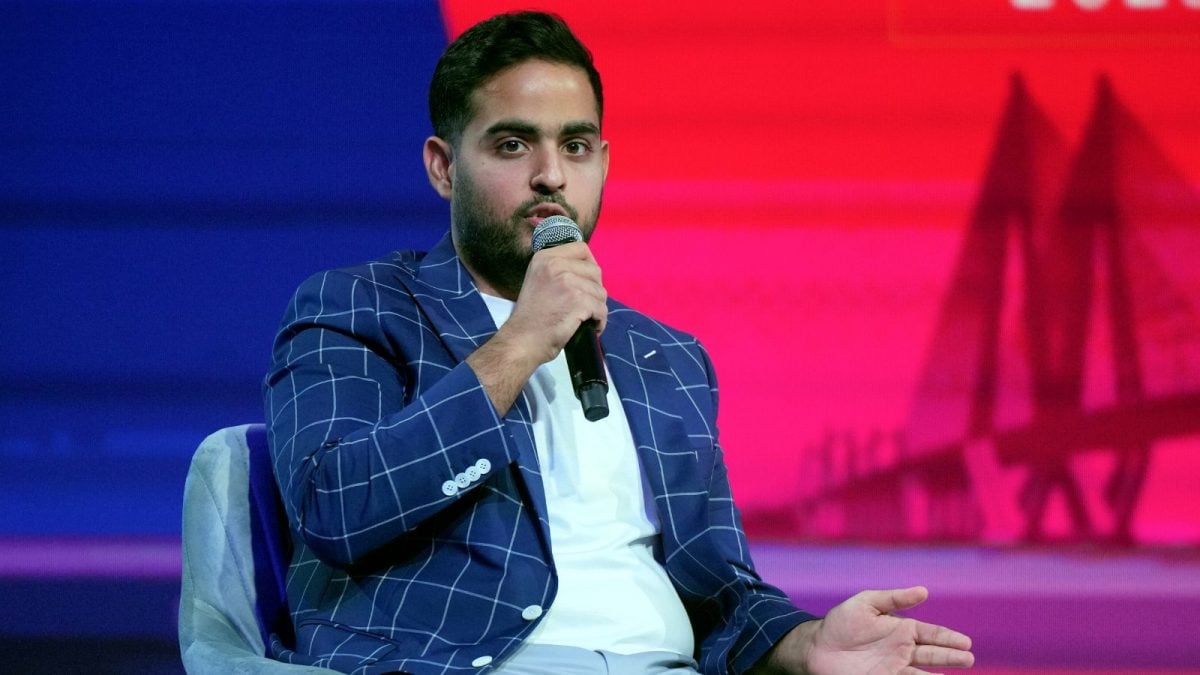
Chairman of Reliance Jio Infocomm Akash Ambani speaks during the Mumbai Tech Week event. (Pic/PTI)
Reliance Jio Infocomm Limited (RJIL) chairman Akash Ambani, while speaking at the Mumbai Tech Week 2025, shared his thoughts on the future of tech and AI in India and the role of public-private partnership while praising Prime Minister Narendra Modi’s vision.
“You know, I think we’re extremely lucky to be under the visionary leadership of our Prime Minister Narendra Modi on this. I think, you know, it is the biggest blessing of our country to have a leader like him leading this mission. Recently, you know, at Parliament he mentioned that AI does not only just start for artificial intelligence. It actually stands for Aspiring Indian,” he said during a fireside chat with Harsh Jain, co-founder & CEO, Dream Sports. “It’s not, not my quote, it’s our Prime Minister’s quote. So. And I think that is really the core mission that we should be. We should always look to aspire to greater heights. I think what he’s done with the AI mission of this country is exemplary.”
India is among the first nations to make AI a priority, he said. “And it’s not only for the country but, you know, it’s a place of collaboration that we can have with the world. Again, you know, I think he’s already set out the vision and we need to make sure that we go. And the one thing about this government is they work on a very, very fast basis. They want to. So it’s for the private industries to work at that pace, continue to, you know, innovate at, you know, very, very fast pace. Where they be at the infrastructure level, whether it be at, you know, the products and services layer that is going to be enabling,” he said.
News india What PM Modi Has Done With AI Mission Is Exemplary: Akash Ambani At Mumbai Tech Week 2025
The world of cryptocurrency is buzzing, with new players shaking things up in the space every day. Amid the hype, there are a few projects that stand out. Whether it’s the unique technology behind Qubetics or the scalability promises of Arbitrum (ARB), there’s something for everyone. But here’s the real kicker: What makes the best crypto to buy right now? That’s the million-dollar question, and it is diving in to explore it!
In recent months, the hype around blockchain technology has reached new heights. It’s not just about price swings or hype cycles anymore; people are genuinely starting to care about utility, innovation, and the potential to solve real-world problems. And that’s where coins like Qubetics, Celestia, and Arbitrum come into play. With each offering something unique, you’ll want to know how they stack up against each other and which one fits your future strategy best.
When it comes to crossing borders in digital finance, Qubetics ($TICS) has positioned itself to tackle real-world problems that its predecessors failed to address. With a focus on simplifying cross-border transactions, Qubetics is set to make waves by offering easy solutions for businesses, professionals, and individuals. Its ongoing presale and strong momentum show just how eager the market is for something different. Let’s see how Qubetics compares to Celestia and Arbitrum (ARB) and what makes it the best crypto to buy right now.
Qubetics: A Game Changer for Cross-Border Transactions
Qubetics ($TICS) is a name you’ll hear a lot about in the coming years. Why? Because this project has solved something many crypto enthusiasts have been waiting for: efficient cross-border transactions. In the current landscape, sending money across borders is often slow and expensive. That’s where Qubetics comes in, offering businesses and individuals the chance to send funds securely, quickly, and without high fees.
For many people, sending money internationally involves a third party that takes a cut. With Qubetics, users can complete transactions across borders with lower fees and faster processing times. Whether you’re a freelancer working with clients overseas or a company conducting global business, Qubetics has crafted a system that doesn’t just work for the current generation but scales for future needs as well.
To top it off, Qubetics is currently in its 23rd presale stage. The project has already sold more than 491 million tokens to over 21,600 holders, raising an impressive $14.2 million. Right now, you can get in on the ground floor at $0.0888 per $TICS token. And analysts predict that this token could see substantial growth, with the potential to hit $1 or more after the crypto presale ends. Imagine the ROI: 181.52% at $0.25, and an eye-watering 1026% if it hits $1! That’s the kind of opportunity that gets people excited about the best crypto to buy right now.
Celestia: The Layer-1 Revolution
Celestia might not be as well-known as some other crypto projects, but it’s certainly making waves with its innovative approach to scalability and blockchain infrastructure. Celestia isn’t just another layer-1 blockchain; it introduces a modular architecture that separates consensus and execution layers, enabling greater flexibility and scalability. This approach allows developers to build highly customizable blockchains without the complexities and limitations of traditional blockchain systems.
What does that mean for the best crypto to buy right now? It means Celestia could very well be the future backbone of decentralized applications (dApps) and blockchain networks. By offering a way for projects to have their own customizable chains while still benefiting from Celestia’s security and infrastructure, it lowers the barrier to entry for creating new decentralized projects.
Arbitrum (ARB): Scaling Ethereum with Optimism
Arbitrum has emerged as one of the most talked-about Layer-2 solutions for Ethereum, and for good reason. The project aims to scale Ethereum by providing a platform that handles transactions faster and cheaper than the Ethereum mainnet. Using a technology known as Optimistic Rollups, Arbitrum ensures that Ethereum’s security is maintained while transactions can be processed off-chain, easing congestion and reducing fees.
In terms of the best crypto to buy right now, Arbitrum holds strong potential due to its role in Ethereum’s scalability. As Ethereum continues to be one of the most widely used blockchains, Arbitrum provides a way to ease the network’s burdens while maintaining Ethereum’s robust security. This makes it an attractive option for anyone looking to buy crypto that has a real utility and potential for widespread adoption.
The Future of Cross-Border Transactions: How Qubetics is Leading the Way
Cross-border transactions have long been one of the most frustrating aspects of global finance. Traditional methods are slow, expensive, and prone to delays. However, blockchain technology has offered solutions, with Qubetics taking this to the next level. With its focus on making cross-border payments easier and more efficient, Qubetics is creating a space where businesses and individuals alike can transact without worrying about high fees or long wait times.
Qubetics is uniquely positioned to cater to the needs of businesses operating globally and professionals who work with clients from different parts of the world. The ability to send money across borders without the headache of traditional banking systems is invaluable. Whether it’s for freelancers receiving payments or large corporations making international deals, Qubetics’ blockchain solution promises to change how people view cross-border finance.
In the long run, this innovation will make it easier for anyone to access digital finance tools, regardless of their location. Qubetics isn’t just solving a problem—it’s building a solution that fits the needs of the future. With a presale that has already raised millions and the backing of an ever-growing community, $TICS tokens are definitely something to watch as they take the next big leap.
Conclusion: The Best Crypto to Buy Right Now
The landscape of crypto is full of opportunities, but finding the best crypto to buy right now requires careful consideration. While Celestia and Arbitrum bring important contributions to scalability and decentralization, Qubetics stands out for its ability to tackle real-world issues like cross-border transactions. As the presale continues to gain traction, Qubetics could very well be the next big thing in blockchain and digital finance.
If you’re looking to buy crypto with real-world utility and massive growth potential, Qubetics is an easy choice. It’s not just a token—it’s a solution that’s changing the way people think about global finance. Don’t miss out on this groundbreaking opportunity.
For More Information:
FAQs:
What makes Qubetics the best crypto to buy right now?
Qubetics is solving the issue of slow, expensive cross-border transactions with a unique blockchain solution, making it one of the best crypto projects to consider.
How does Arbitrum help Ethereum scale?
Arbitrum uses Optimistic Rollups to process Ethereum transactions off-chain, making it cheaper and faster while still maintaining Ethereum’s security.
What is Celestia’s modular blockchain architecture?
Celestia separates consensus and execution layers, offering customizable blockchain solutions that are scalable and flexible for developers.
What can $TICS tokens do in the future?
With analysts predicting a major ROI increase after the presale ends, $TICS tokens could be a major player in the future of blockchain technology.
How can Qubetics improve global finance?
Qubetics facilitates faster, cheaper, and more efficient cross-border transactions, offering a much-needed solution for businesses and individuals worldwide.
LEO1, an edu-fintech company backed by cricketer Rohit Sharma, has distributed ₹8 crore in education fee benefits through its Fee Reimbursement Model (FRM) during the 2024-25 calendar year. The program rewards timely and advance tuition payments with LEO1 Coins redeemable across over 200 merchant partners.
An additional ₹1.7 crore worth of LEO1 Coins were credited for in-app purchases. More than 55,000 students have redeemed 50 lakh Coins for items ranging from electronics to snacks, with approximately 20 lakh Coins used in January alone.
The company’s Prime Membership includes free consultations to help families make informed educational and financial decisions.
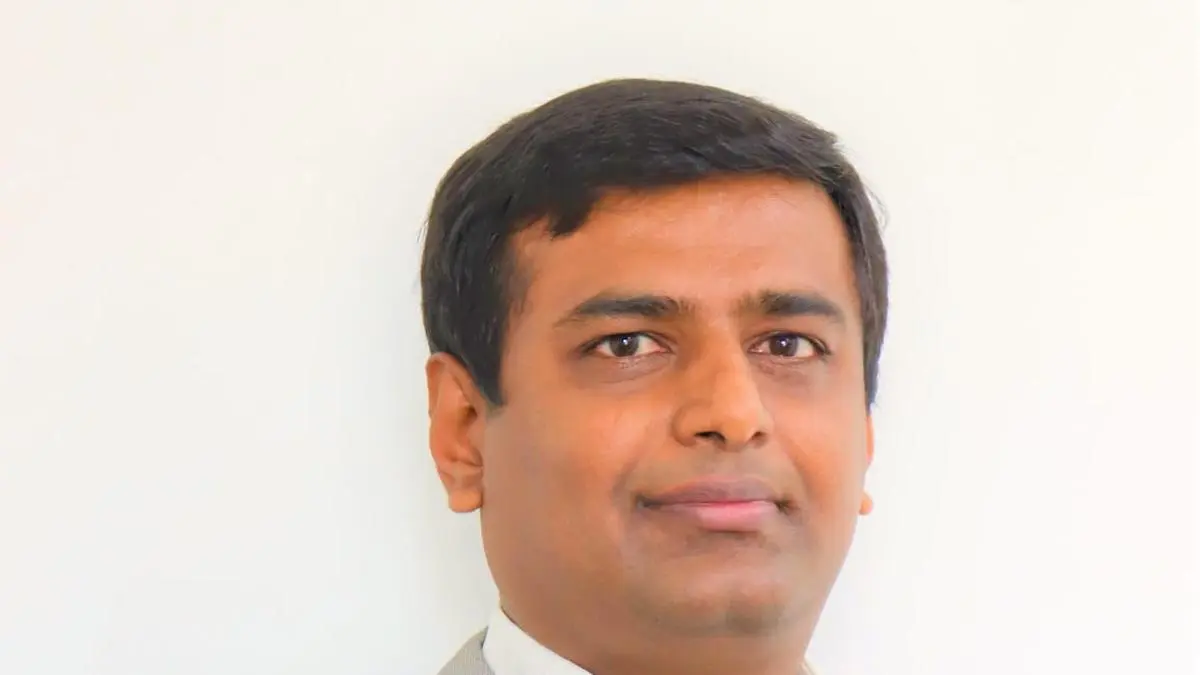
According to Rohit Gajbhiye, MD & Founder of LEO1, the model creates long-term financial value in education while addressing cash flow challenges for universities. The program has reportedly improved on-time payments for several major educational institutions in India.
LEO1’s system includes a numberless prepaid student ID that functions as a contactless payment card. Partner institutions include Narayana, SAGE, Jain, LNCT, and Geetanjali University.
The company plans to expand to 22 cities with the goal of impacting 1.5 million students across India.
Looking for the most recent Strands answer? Click here for our daily Strands hints, as well as our daily answers and hints for The New York Times Mini Crossword, Wordle, Connections and Connections: Sports Edition puzzles.
Today’s NYT Strands puzzle reminded me of watching Mister Rogers’ Neighborhood, where he opens the episodes by zipping up his sweater and changing into more comfortable shoes. If you need more hints and and the answers, read on.
I go into depth about the rules for Strands in this story.
If you’re looking for today’s Wordle, Connections and Mini Crossword answers, you can visit CNET’s NYT puzzle hints page.
Read more: NYT Connections Turns 1: These Are the 5 Toughest Puzzles So Far
Hint for today’s Strands puzzle
Today’s Strands theme is: Getting closure.
If that doesn’t help you, here’s a clue: Clothing attachments.
Clue words to unlock in-game hints
Your goal is to find hidden words that fit the puzzle’s theme. If you’re stuck, find any words you can. Every time you find three words of four letters or more, Strands will reveal one of the theme words. These are the words I used to get those hints, but any words of four or more letters that you find will work:
These are the answers that tie into the theme. The goal of the puzzle is to find them all, including the spangram, a theme word that reaches from one side of the puzzle to the other. When you’ve got all of them (I originally thought there were always eight but learned that the number can vary), every letter on the board will be used. Here are the nonspangram answers:
Clean beauty brand owner calls for higher safety standards
In an on-camera interview with Fox News Digital, TV personality and clean beauty brand owner Emily Austin expressed her excitement about the push for change with the MAHA movement, calling for U.S.-made products to meet EU standards.
Social media posts showcasing the use of red light therapy devices at home are sparking interest in this trendy skin treatment — but does it deliver on its promises?
While some studies have shown that the practice can have some health benefits, experts agree that more research is needed.
Dermatologists shared their expert perspectives about red light therapy with Fox News Digital.
What is red light therapy?
Red light therapy is a home-based photobiomodulation system that uses visible and/or near-infrared light to address skin concerns, Chris G. Adigun, MD, a board-certified dermatologist at Dermatology & Laser Center of Chapel Hill in Chapel Hill, North Carolina, told Fox News Digital.
10 WINTER SKINCARE PRODUCTS THAT CAN HELP YOU COMBAT DRY SKIN
In most cases, a light-emitting diode (LED) is used, incorporating a combination of wavelengths.
As red light therapy is growing in popularity, experts comment on the potential benefits.(iStock)
“What this means in everyday terms is that these wavelengths stimulate an increase in components that both maintain and improve skin quality and also decrease the agents in the skin that degrade skin quality,” Adigun said.
“It has utility in the treatment of acne and for skin rejuvenation purposes, making it popular for both young and older patients.”
Red light therapy can be an anti-inflammatory and can have calming effects on the skin, according to board-certified dermatologist Lauren Fine, MD, medical director of Fine Dermatology in Chicago, Illinois.
“It has utility in the treatment of acne and for skin rejuvenation purposes, making it popular for both young and older patients.”
In addition to its anti-inflammatory effects, red light therapy offers a variety of “pro-aging” benefits.
“It can help with collagen stimulation, minimize the appearance of fine lines and wrinkles with regular use, and improve skin quality,” Fine told Fox News Digital.
Another bonus: there is no downtime associated with use, the doctor said.
CLEAN BEAUTY BRAND OWNER CALLS FOR HIGHER SAFETY STANDARDS
At-home skincare devices are particularly popular on social media right now, Fine noted.
“These wavelengths stimulate an increase in components that both maintain and improve skin quality and also decrease the agents in the skin that degrade skin quality.”(iStock)
“Social media is having an enormous effect on the skincare market,” she said.
What to know before trying it
Red light therapy is available at some spas, gyms and clinics, but at-home units are becoming more popular.
For those who are thinking about buying a device to try red light therapy, Fine said there is “very little risk” overall.
PLASTIC SURGERY TRENDS TAKE A SURPRISING TURN AS DOCTORS SEE MORE PATIENTS ‘SIZING DOWN’
However, certain medications can make the skin photosensitive, which means it will be more sensitive or could have an unusual reaction to sources of light, according to the Skin Cancer Foundation.
Some of those medications include certain antibiotics, antifungals, antihistamines and diuretics, among others, according to the U.S. Food and Drug Administration.
CLICK HERE TO SIGN UP FOR OUR LIFESTYLE NEWSLETTER
Those who are sensitive to heat-related skin changes also may not be good candidates for red light therapy, Fine cautioned.
How to get started
It’s important to read and follow the directions of the red light therapy unit you’re using, experts emphasized.
It’s important to read and follow the directions of the red light therapy unit you’re using, experts emphasized.(iStock)
Proper use will help ensure the best results.
For more Health articles, visit www.foxnews.com/health
“The main factors in efficacy relate to the distance the device is from the skin — the closer, the better — and the duration of exposure, requiring at least 10 minutes,” Adigun told Fox News Digital.
CLICK HERE TO GET THE FOX NEWS APP
“That amount of time every day may not be realistic for most.”
Experts recommend consulting with a dermatologist before beginning at-home red light therapy.
Erica Lamberg is a contributing writer for Fox News Digital.
Kriti Sanon is a total foodie, and her Instagram is proof. Time and again, she has treated us to glimpses of her foodilicious diaries. Currently busy shooting Tere Ishk Mein, Kriti dropped a mouthwatering clip straight from the sets of the Aanand L. Rai directorial. Any guesses on what she was indulging in? Hint: a classic desi dessert. If you guessed jalebis, bingo! The actress shared a video of the crispy, syrupy treat on her Instagram Stories. Do not miss the track Jalebi Baby playing in the background.
In her caption, Kriti Sanon added a fun twist by using her film’s name. She wrote, “Jalebi ke ishk mein.” She also added, “You know you’re on Aanand L. Rai sir’s set when…” Well, now we all know his sets are a paradise for food lovers.
Also Read: All About Asma Khan: Indian-Origin Restaurateur Who Impressed King Charles With Her Biryani
Looks like Kriti Sanon loves to eat jalebis while working. In November last year, the actress shared some fun behind-the-scenes moments from her film Do Patti.
In one video, Kriti, all geared up in her costume, was ready for a paragliding scene. In between shots, she was happily munching on some jalebis. Her face clearly showed how much she was enjoying them. When someone asked what she was eating, Kriti said, “The best jalebi in the best weather.”
“Some BTS. Thank you, audience, for all the love! It’s because of you guys that Do Patti is trending at hashtag 1 in India and in the top 10 of global charts for the second consecutive week! Both Saumya and Shailee are elated,” read the side note. Click here for the full story.
Before that, Kriti Sanon was caught enjoying another foodie moment on the sets of Crew. In a BTS video, she was seen indulging in pizzas along with her co-star Kareena Kapoor. At one point, Kriti even joked, “So this is my eighth slice,” proving her love for the cheesy delight.
Producer Rhea Kapoor posted a video on Instagram with a LOL caption: “And they say heroines don’t eat! Pizza party with Kareena Kapoor and Kriti Sanon before Bebo had to lift our lamboo (a cute nickname for tall people), Kriti Sanon.” Here is the full story.
Kriti Sanon’s foodie moments make us crave delicious food.
<img src='https://news.cgtn.com/news/2025-03-01/How-did-China-lay-a-good-foundation-for-2025-economic-development–1BnOlAz4mti/img/39f3cff3d86a4722999f6c4da9eb470b/39f3cff3d86a4722999f6c4da9eb470b.png' alt='A view of Hangzhou, China, January 3, 2025. /VCG'
China’s economy has shown a remarkable surge since September last year, with multiple data, such as a strong GDP performance in the fourth quarter, indicating a robust start for 2025.
This momentum, extending through the Chinese New Year, was driven by a series of stimulus measures and top-tier policy designs that aimed at tackling the structural challenges within the Chinese economy and creating new engines for economic growth.
However, it unfolds against a backdrop of intensifying headwinds, as a shifting global landscape amplifies pressures on China’s economic stability.
As adverse impacts from the changing external environment intensify, China’s economic operation still faces difficulties and challenges, Chinese President Xi Jinping wrote in an article.
At the same time, the Chinese economy is underpinned by a stable foundation, abundant strengths, strong resilience and vast potential, and the supporting conditions and fundamental trend for long-term growth have not changed, according to the article, published on Qiushi Journal on Saturday.
Navigating these dual realities — balancing external risks with domestic opportunities — lies at the heart of China’s 2025 strategy, especially as this year not only marks the culmination of the 14th Five-Year Plan (2021–2025) — a strategic blueprint that has guided the nation’s efforts to achieve high-quality development, advance technological innovation, and foster sustainable economic reforms — but also sets the stage for the launch of the 15th Five-Year Plan (2026-2030), which will shape China’s next phase of growth amid evolving global and domestic challenges.
Harmonizing market efficiency with proactive governance
In his article, Xi stressed that it is essential to coordinate the relationship between an efficient market and a well-functioning government, and the government must act decisively when necessary while also knowing when to refrain from intervention.
China’s recent policy moves have exemplified this focus. In January, the National Development and Reform Commission (NDRC), China’s top economic planner, released a guideline for building a unified national market, aiming to encourage all localities and government departments to accelerate their integration into the unified national market and actively support its development.
This guideline is expected to help lower market transaction costs, create a favorable market environment for technological innovation and business development, and strengthen competitive advantages.
Such structural reforms align with a growing consensus among economists that China’s economic evolution hinges on fostering innovation and productivity over short-term fixes — a shift exemplified by the unified market initiative’s focus on systemic efficiency.
“Deregulating key industries, encouraging private sector participation and attracting foreign investment in high-tech and green energy sectors will be instrumental in driving this transformation,” Matteo Giovannini, a finance professional at the Industrial and Commercial Bank of China and a Non-Resident Associate Fellow at the Center for China and Globalization, wrote in an op-ed published on CGTN.
“Restoring confidence among private enterprises will also be critical, as these firms are key engines of job creation, technological advancement and economic dynamism.”
‘Resilient and adaptable’
Xi’s article on Qiushi also addressed other key points, including the relationship between total supply and demand to ensure smooth economic circulation, which to a large extent reflected the main tasks outlined by the tone-setting Central Economic Work Conference held in December last year.
Those tasks, apart from driving a dramatic rebound for the Chinese economy, also laid a positive foundation for its 2025 trajectory. Experts have pointed out the adaptability and resilience rooted in China’s economy, expressing optimism following the Central Economic Work Conference.
Amid current challenges facing the global economy, it is rare for an economy like China’s, which is already in a stage of high-quality development, to sustain an annual GDP growth that meets the target, said Michael Borchmann, former head of the European and International Affairs Department of the federal German state of Hesse.
Official data shows China’s GDP in 2024 increased by 5 percent from 2023, topping 134.9 trillion yuan ($18.77 trillion).
“This not only shows that the Chinese economy is extremely resilient and adaptable, but also reflects the steady expansion of domestic demand and the results of industrial transformation.” he said.
Godrej Properties Ltd (GPL) has sold residential inventory worth over ₹1,000 crore at its Godrej Evergreen Square project in Hinjewadi, Pune, the company announced today. The Mumbai-based developer sold 1,398 homes with a total area of approximately 1.23 million square feet.
The shares of Godrej Properties Ltd (GPL) were trading at ₹1,996.70 up by ₹9.65 or 0.49 per cent on the NSE today at 10.15 am.
Launched in November 2024, just four months after acquiring the land, Evergreen Square has become GPL’s most successful project launch in Pune to date in terms of both sales value and volume. The project has a developable potential of approximately 2.41 million square feet, with an estimated revenue potential of around ₹2,045 crore.
Also read: Nvidia gives ‘underwhelming’ report after two years of blowouts
Located in Hinjewadi, the project benefits from proximity to established infrastructure including schools, healthcare facilities, retail outlets, and entertainment venues. The area offers connectivity to major highways and will be served by a metro station just two minutes away from the development.
“This has now become the best-ever launch in Pune residential real estate,” said Gaurav Pandey, MD & CEO of Godrej Properties, in the company statement.
Also read: Jupiter Railwheel factory wins ₹255 crore contract from Braithwait & Co.
Godrej Properties, part of the 128-year-old Godrej Industries Group, was ranked as the largest developer in India by value of residential sales for FY 2024 and has received numerous industry recognitions for its sustainability practices.
Pri kreiranju rubrike Index Shopping nastojimo izdvajati odlične proizvode koji se i nama sviđaju te odlične akcije i popuste. Ne objavljujemo proizvode koje i sami ne bismo kupili ili smatramo da njihova promocija nije u skladu s profesionalnim standardima. Neki proizvodi u rubrici Index Shopping mogu biti sponzorirani.
PROIZVODI za njegu kože neprestano napreduju, a jedan od najnovijih hit proizvoda koji je osvojio beauty svijet napokon je stigao i kod nas. Reedle Shot 300 je booster serum s mikroiglicama koji potiče regeneraciju kože i pruža dubinsku njegu.
Što je Reedle Shot 300 i kako djeluje?
Reedle Shot 300 je serum namijenjen povremenoj upotrebi u večernjoj rutini, otprilike svaka tri dana. Njegova posebnost su mikroiglice, kojih ima čak 237.500. One nježno prodiru u površinski sloj kože i potiču njezinu regeneraciju, što može uzrokovati blagi osjećaj peckanja ili privremeno crvenilo. Takva reakcija je potpuno normalna i znak da serum djeluje.
Ono što ovaj serum čini posebnim jest njegova inovativna formula bogata Cicahyalon™ kompleksom. Ova moćna kombinacija sadrži ekstrakt Centella Asiatica, koji je poznat po umirujućem i regenerativnom djelovanju, te biljke koje dodatno potiču obnovu kože. Uz to, hijaluronska kiselina dubinski hidratizira, dok propolis štiti kožu i umiruje moguće iritacije.
Uz ove sastojke, Reedle Shot 300 sadrži i kompleks aminokiselina koji pomaže u održavanju prirodne vlažnosti kože te jača njezinu zaštitnu barijeru. Zahvaljujući ovim sastojcima, koža postaje otpornija, hidratizirana i zdravija.
Tekst se nastavlja ispod oglasa
Kako koristiti Reedle Shot 300?
Ovaj serum nanosi se nakon čišćenja lica. Kako bi se smanjila mogućnost iritacije, preporučuje se prvo nanijeti hidratantni tonik, a zatim hidratantnu kremu. Budući da sadrži mikroiglice, preporučuje se korištenje isključivo u večernjoj rutini, i to dva do tri puta tjedno, ovisno o toleranciji kože. Serum se ne smije koristiti na oštećenoj ili upaljenoj koži.
Patch test – zašto je važan?
Prije nego što ga nanesete na lice, važno je napraviti patch test. Najbolje je nanijeti manju količinu seruma na unutarnji pregib lakta i pratiti reakciju kože tijekom 12 do 24 sata. Ako ne dođe do neželjenih reakcija, serum se može sigurno koristiti na licu.
Reedle Shot 300 dostupan je u web trgovini Beauty Garden, gdje je trenutačno na sniženju i možete ga kupiti za 33.91 euro.
Znate li nešto više o temi ili želite prijaviti grešku u tekstu? Kliknite ovdje.
Ovo je .
Homepage nacije.
Imate važnu priču? Javite se na [email protected] ili klikom ovdje. Atraktivne fotografije i videe plaćamo.
It couldn’t have worked out any better for high school basketball fans in Southern California.
The Southern Section Open Division championships in boys’ and girls’ basketball will be played back to back on Saturday at Toyota Arena in Ontario with matchups that should be pleasing for fans.
First at 6:30 p.m. is the boys’ final matching Eastvale Roosevelt (31-2) and McDonald’s All-American Brayden Burries against Sherman Oaks Notre Dame (26-6) and junior standout Tyran Stokes. At 8:30 p.m., Ontario Christian (28-1) and sophomore All-American Kaleena Smith face two-time defending state champion Etiwanda (25-4).
Both games are rematches. Roosevelt defeated Notre Dame 76-58 on Dec. 21 in Las Vegas. Ontario Christian defeated Etiwanda 74-66 on Nov. 23 at Harvard-Westlake. All four teams are stronger and better prepared with players who weren’t available for the first meeting.
The winners will be the likely No. 1 seeds for the Southern California Regional playoffs that begin next week.
At 4:30 p.m. is the Division 1 boys final matching Los Alamitos against Mira Costa. Here’s a report on that game.
Global tech giant Google is building a digital agri-stack using satellite imagery and has started with a base layer that will help identify farm boundaries, a senior official said on Saturday.
Data and analysis of this base layer of the stack can be used in a slew of applications like bettering the subsidy payments, farm insurance or farm loans, Manish Gupta, a senior director at Google DeepMind said.
“.. We have built the first such model that using satellite imagery analysis can now start to identify field boundaries based on usage pattern start to identify what crops are being grown and so on,” Gupta said, speaking at the Mumbai Tech Week here.
The model has taken inspiration from UIDAI’s Aadhar, ascribing a unique ID to each farm and is intended to act as a base layer of the “digital agri stack”, he said.
Gupta said it is upon the startups and other agri-tech players to build solutions which will provide loan crop insurance and also subsidies using the data churned out by the platform.
Pointing out the relevance of such a platform, he said 40 per cent of the Indian population are agriculturists and the annual farm lending alone is a USD 550 billion opportunity with a lot of it cornered by the informal sector lenders.
The comments come at a time when the Indian banking system is trying to improve its agri-lending system. Largest lender SBI’s chairman C S Setty spoke this week about the bank mulling to use satellite imagery-based inputs for making its agri lending processes more efficient.
Meanwhile, Gupta also rued that the amount of content available in Indian languages is very limited and Google is trying address the same with its initiatives.
He said about 10 per cent of the overall 8 billion people speak Hindi, but the language accounts for only 0.1 per cent of the online content.
It has launched the “Vaani” project aimed at bridging this gap under which aspires to collect speech data in form of voice recordings from across all the over 700 districts.
The company has launched the first phase of the project under which it has collected 14,000 hours of audio data from 80 districts with people speaking in 59 languages, he said.
He also said that Indians under appreciate the relevance of artificial intelligence to expand the boundaries of science, and pointed to the work by DeepMind which led to a Nobel Prize in Chemistry.
Airbnb’s 2025 spring travel trends revealed two key trends emerging this season. First, solo travel is on the rise, with individuals specifically focused on soft travel or slower-paced trips that prioritise leisure and wellbeing. The second trend sees travellers taking the literal approach to soft travel by bringing their furry friends along for the adventure. Also read | ‘Sleep divorce’ is new travel trend: Why couples are choosing to ‘break up’ at bedtime while on vacation
Trending destinations this spring include vibrant cultural hubs and picturesque coastal towns, from Ubatuba, Brazil to Basel, Switzerland. (Representative picture: Freepik)
These trends highlight a shift towards more mindful, immersive, and comfortable travel experiences. As per the Airbnb report, there has been a 90 percent growth in solo searches for spring travel, and 17 nights is the average trip length for spring solo travellers.
Interstingly, there is a 40 percent increase in searches for trips with pets this spring by solo travelers. Moreover, trending destinations this spring include vibrant cultural hubs and picturesque coastal towns, from Ubatuba, Brazil to Basel, Switzerland.
Everything you need to know about soft travel trend
1. Prioritising comfort: Travelers are seeking comfortable, homey accommodations that feel like a warm hug.
2. Cosy amenities: Guests are looking for amenities like fireplaces, hot tubs, and plush bedding to enhance their relaxation experience.
3. Wellness-focused stays: Travellers are booking stays that offer wellness activities like yoga, meditation, and spa treatments.
Everything to know about slow travel trend
1. Immersive experiences: Travellers want to truly experience local cultures, trying new foods, drinks, and activities.
2. Off-the-beaten-path destinations: Guests are seeking unique, lesser-known destinations that offer authentic experiences.
3. Sustainable tourism: Travellers are prioritising eco-friendly accommodations, transportation, and activities to reduce their environmental impact.
Other trends
1. Family travel: Multigenerational family travel is on the rise, with grandparents, parents, and kids travelling together.
2. Pet-friendly stays: More travellers are bringing their furry friends along, seeking pet-friendly accommodations.
3. Digital detox: Some travellers are seeking digital detox experiences, where they can disconnect from technology and recharge.
Following news that Amazon MGM Studios now has the creative control of the James Bond film franchise, the outgoing producers will be honoured at the Oscars tomorrow evening.
EON Productions’ Barbara Broccoli and Michael G Wilson, who received Honorary Oscars at the Governors Awards, will get a special Bond themes tribute during the Academy Awards on Sunday in Hollywood.
Now speculation is mounting that Amazon MGM will announce Daniel Craig’s replacement during this segment, with odds of a surprise next Bond reveal now at just 7-1.
Cal Gildart of Ladbrokes said: “The musical tribute has been added to the Oscars to honour the series’ longtime producers.
“But with Amazon wanting to make a big splash after taking creative control of Bond, what better way to announce the next 007 than during Hollywood’s biggest night?!”
If that wasn’t enough, next Bond odds favourite Henry Cavill, Aaron Taylor-Johnson and James Norton have been leapfrogged by another star. The Gentleman’s Theo James has had his chances of taking up the Licence to Kill next slashed to 5-2. Meanwhile, just behind him are: James Norton 3-1, Aaron Taylor-Johnson 7-2, Harris Dickinson 4-1 and Henry Cavill 4-1.
The Oscars will be broadcast on ITV1 from 10:30pm on Sunday evening.
There are a lot of Ford Ranger Raptors on the road in Australia. While most of their time is spent as daily drivers, their capabilities extend well beyond that. In fact, they extend well beyond what most vehicles on the market are capable of.
We had the opportunity to join Ford on a curated drive program in the Middle East to sample not only the Ford Ranger Raptor we get in Australia, but also the OG, the F-150 Raptor, along with the Ranger Raptor’s twin, the Bronco Raptor.
Before we get to how that went, we were staggered to hear that one in every six Ford Rangers sold is a Ranger Raptor, which has no direct rival. It has exceeded even Ford’s lofty sales predictions and offers Ford a huge additional revenue stream from a product that already generates high-margin returns for the brand.
It all started for Ford with the F-150 Raptor 15 years ago. The original F-150 Raptor was built on Ford’s experimentation with earlier F-150s, like the SVT Lightning in the ’90s, to create a purpose-built, Baja-ready race truck.
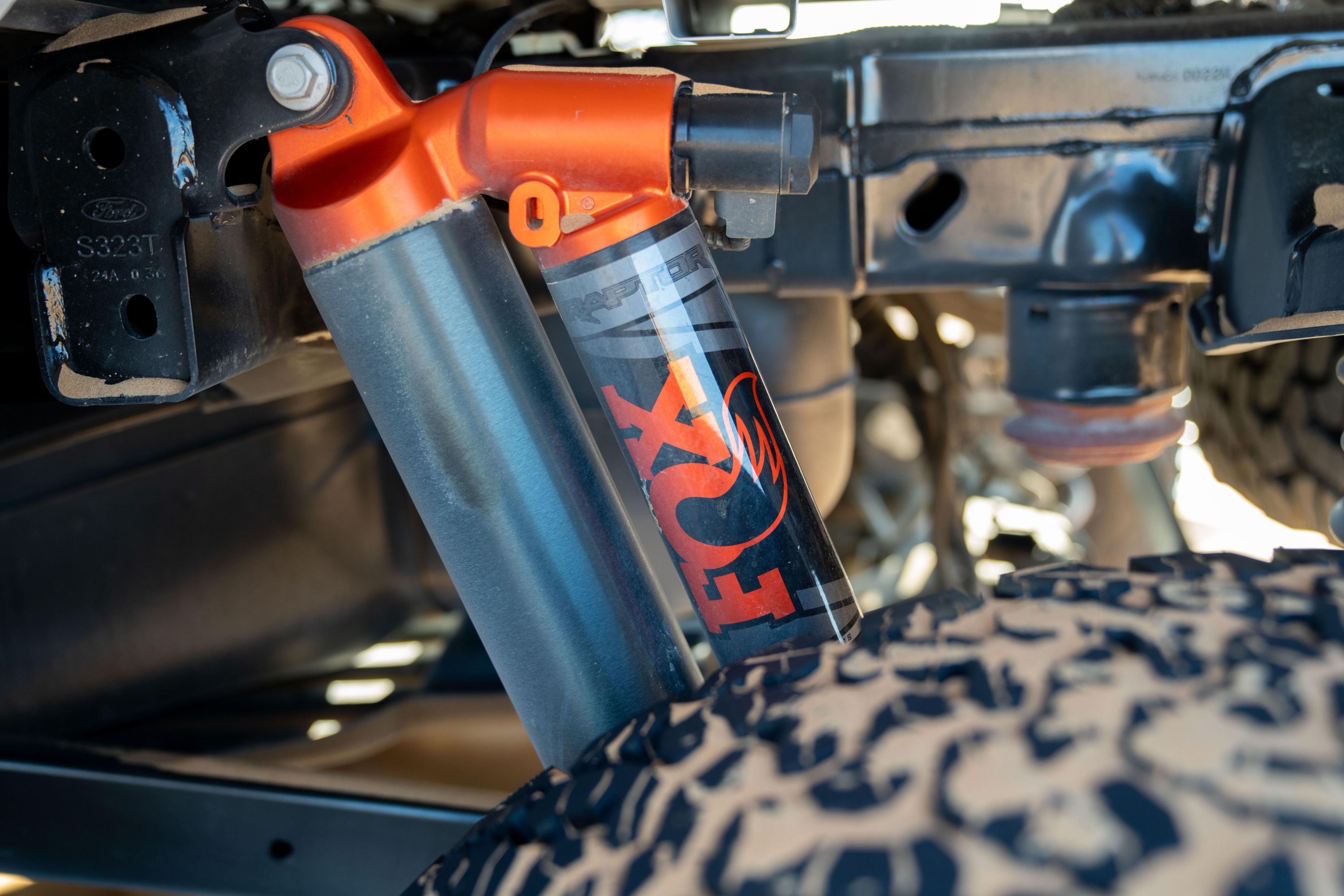
While today’s F-150 Raptor is lightyears ahead in terms of technology and performance, it builds on the same bones of the original with Fox shocks, a wider track, long travel upper and lower control arms and big power.
The Ranger Raptor also spawned the Bronco Raptor. It shares a platform with the Ranger but borrows front-end parts from the F-150 Raptor and sports much larger 37-inch tyres and a stupidly menacing wide track to make its intentions known.
The cool part about the Ranger Raptor and Bronco Raptor is that both were designed and engineered in Australia. Prior to working on these products, the Aussie team behind them had just wrapped up work on the last fast Falcons – the XR6 and XR8 Sprint. These are passionate motorsport fans that, funnily enough, had already been big into off-roading before being tapped to take on the challenge.
Ford Performance DNA in vehicles like the Ranger, Bronco and F-150 Raptor is all about sitting at the very edge of the off-road performance envelope. You’ll find BFGoodrich KO2 tyres on each of them that are terrible in the wet, but excellent off-road.
You’ll find big, meaty turbocharged petrol engines in each. They are heavy on fuel but deliver neck-snapping performance off-road. The DNA is all about no compromise in what the vehicle is purpose-built for, and in this instance, it’s driving very fast off-road.
Anyway, let’s go over what we had the chance to test. Across two days, we had access to Ranger Raptor, Bronco Raptor and F-150 Raptor, with each vehicle traversing a course suited to its core competency.
For the Ranger Raptor, it was all about fast technical sand driving with switchbacks and dune climbs. For the Bronco Raptor, it was all about rock climbing and traversing steep rocky terrain, while for the F-150 Raptor it was all about max speed and getting from A to B in the sand as fast as possible.
We set off in the Ranger Raptor first. Having owned one for two years, I genuinely enjoy driving it each time I hop in. Normally, I’ll get bored of test cars by the time our week with them is over.
So, knowing the car as well as I do, I was excited to explore its limits a little more. Dialled over to Baja mode, the Ranger Raptor engages 4H (see our detailed explainer on the difference between 4WD modes and where you should use them), holds gears for longer, puts the suspension and steering into Baja mode (along with the exhaust) and engages an anti-lag feature for sharper throttle response.
What I will never be able to properly explain in words – simply because you need to experience it yourself – is just how compliant and soft the suspension is when you start picking up the pace along rough sand and whoops.
The Fox shocks feature live-valve technology that enables precise electronic compression tuning. Ford also went to a lot of effort to tune the inner shims and control valves to manage effective fluid flow through the damper.
When you hit a bump at speed that causes the car to compress, unload and leave the ground, you expect the landing to be rough and unforgiving. Instead, it’s a soft and comfortable impact that leaves you feeling like you’ve landed on a cloud. The dampers can absorb a huge amount of that energy, so you don’t feel it through the body of the vehicle.
In comparison to the Bronco and F-150, the Ranger also feels nimble and darty through the dunes – something you’d never describe a mainstream Ranger as. Unlike the previous-gen turbo-diesel model, there’s also no waiting around for things to get moving – it gets on with it in a big way.
On wide, open sections of road, if you sink the boot in, it offers a nice torque split between front and rear. It’s not super rear-biased, but it gives you enough to push the tail out if you need to in 4H. The steering is also direct and precise enough to get a vibe for what’s going on.
Baja mode also offers added play in the ABS setting to allow a build-up of material under the front tyres. Typically, ABS tries to limit any locking of the wheels under heavy braking. It’s great during normal driving conditions on sealed surfaces, but off-road it extends its braking distance because the low-friction material constantly causes the vehicle to assume the brakes are locking.
This adjusted mode then permits longer periods of brakes locking. This allows a build-up of material on the leading edge of the tyre, which helps slow things down.
Next up was the Bronco Raptor.
We’ve been jumping up and down about why Ford doesn’t bring the Bronco Raptor to Australia. Currently, it’s only engineered for left-hand drive and only offered in left-hand drive markets. However, given that it shares a platform with Ranger, it’d seem a logical addition to the Raptor lineup in Australia.
One thing I never properly considered was the price. A quick search of the Ford US website for in-stock inventory and you find the asking price is around US$100,000. Even if you strip away economies of scale, shipping and market-specific costs, that would make the Bronco Raptor a circa-$170,000 vehicle before on-road costs in Australia. It’d be completely out of reach for most – and way too much of a stretch.
Just on the design before we get into the drive, it looks unbelievable in the metal. The track is so wide that the wheel-arch covers look like they’ve been fabricated for a vehicle that somebody has spent $30k on modifying.
It has huge, exposed recovery points, comprehensive underbody protection and enormous 37-inch tyres (the F-150 Raptor doesn’t even come standard with 37s). Also, the interior is surprisingly not what I expected.
Where the Ranger Raptor has a premium vibe befitting of its price tag, the Bronco Raptor feels even somewhat cheaper than the Ranger Raptor from a materials and fit-and-finish point of view. To think that it costs almost $100,000 more blows you away because it certainly doesn’t feel like it matches that price tag inside the car.
But that all changes when you drive it. Both the Ranger and Bronco Raptor share the same 3.0-litre turbocharged V6 petrol engine, but the Bronco’s outputs are slightly higher. It’s also louder as the exhaust sits directly beneath the cabin, injecting more of that tinny hollow exhaust sound into the car.
Just like Ranger, it has a number of driving modes and diff locks. While Ranger and Bronco both get front and rear diff locks, Bronco Raptor also picks up disconnecting sway bars.
Even though it’s built to be as capable as a Jeep Wrangler Rubicon, the Bronco makes do with independent front suspension (where the Wrangler uses a live front axle). That means that the steering feel is significantly better. It’s not quite as good as the Ranger, but it’s nowhere near as bad as the Jeep.
Our drive loop for the Bronco Raptor included some highway driving before peeling off toward rocky terrain for some slower, steeper climbing.
Despite packing a bit more power than the Ranger Raptor, the Bronco doesn’t feel as quick on the go. It’s heavier than the Raptor, and from an aerodynamic standpoint, it appears to catch more air as it drives, which slows it down a little further.
That stuff doesn’t count for much when you’re rock-crawling, though. We used the sway bar disconnect, along with low-range for this obstacle course, which involved steep descents, steep climbs and lower-speed tight turns.
While this wasn’t the most advanced course in the world, it highlighted how easily the Bronco Raptor is able to climb terrain. Most people don’t go too crazy when it comes to off-road driving, but the Bronco Raptor is an example of an off-roader that gives you everything you need without looking to the aftermarket. It also helps that you don’t need to fit more off-road goodies, and they don’t void your warranty.
What it compromises on-road (with things like wind noise and tyre noise), it makes up for it off-road with a host of standard four-wheel drive equipment.
Finally, we had a crack in F-150 Raptor. While it wasn’t the top-shelf Raptor R, and instead just the standard Raptor, trust me, there’s still more than enough engine for this truck.
While the Raptor R gets a supercharged V8, the standard Raptor makes do with a 3.5-litre turbocharged petrol V6. It makes more power than both the Ranger and Bronco Raptor. Most importantly, it comes with the biggest of the Fox shocks with live-valve technology on both compression and rebound for additional tuning variability.
While this was a fun little course with higher speeds, there was an awesome carved-out section of whoops to test the suspension’s full capabilities.
This section of whoops had us taking off from a standstill and accelerating to around 150km/h while going across continuous undulations with the throttle pinned. Despite its size, it felt supremely capable and well-composed over the suspension torture test.
The F-150 also has the most unique exhaust note of the three. It absolutely bellows and has a raspy snarl as it accelerates away in Baja mode.
Again, despite its size, it managed to carve up sand dunes with little fuss. Steep dune climbs were dispatched with a helping of throttle, while direction changes through the dunes required a bit more attention due to the vehicle’s size.
Naturally, the F-150’s cabin feels the most spacious by a long shot. The second row has a heap of room, while the width of the vehicle gives you more than enough space to stretch out.
It’s also expensive – again, part of the reason it’s not on sale in Australia. To make it economically viable post-conversion, it’d likely be a $200,000 proposition, which would be hard to justify given the volume numbers Ford would need for a return.
While you can’t compare the three, which should you buy if money is no object? Funnily enough, the cheapest one is the most versatile of the bunch. The Ford Ranger Raptor is (relatively) cost-effective, stupidly good in both low- and high-speed off-road driving, and arguably feels the most premium in terms of fit and finish and interior design.
Either way, if you did buy any of these, you’d be happy you made the right choice. There’s nothing else on the market that comes close to delivering this kind of capability in a factory-backed package as these three vehicles.
It’s so good that these types of vehicles still exist in the world. I’m also very jealous of some of the incredible off-road driving that can be done in the Middle East!
Click the images for the full gallery
MORE: Everything Ford Bronco MORE: Everything Ford F-150 MORE: Everything Ford Ranger
In a fireside chat on the sidelines of Mumbai Tech Week 2025, Akash Ambani discussed a host of issues ranging from Artificial Intelligence, lessons from his family, and maintaining work-life balance
Chairman of Reliance Jio Infocomm Akash Ambani speaks during the Mumbai Tech Week event. (Pic/PTI)
Reliance Jio Infocomm Limited (RJIL) Chairman Akash Ambani joined Dream 11 CEO Harsh Jain for a fireside chat on the sidelines of Mumbai Tech Week 2025 and discussed a host of issues ranging from Artificial Intelligence, lessons from his family, maintaining work-life balance, and the need for public-private partnership in furthering tech in the country.
Read the full chat between Ambani and Jain:
Harsh Jain: And so, let’s have another round of applause for the Chairman of Jio, Akash Ambani.
So, thanks Akash, for coming. You can see this room. It’s like, like I was joking this morning. It’s like a Mumbai local train. We have everyone here and everyone’s happy. Whether you’re standing, sitting, doesn’t matter. You’re just happy to be here and be part of this amazing moment where we are really getting Mumbai to shine on the tech ecosystem.
So, you know, first I wanted to start by asking you that, you know, let me first start by telling you a small history about myself when I started Dream11 in Mumbai and every VC would come to me. And this is with all our tech founders here we are, 65 unicorn silicon founders. They would come and say, yeah, you have to move to Bangalore. Why are you in Mumbai? How can you build a company in Mumbai? And they would say, you know, I would say Bangalore me kya hai? And they would say, Swiggy hai, Ola hai, Meesho hai, Flipkart hai, PhonePe hai, Cred hai. And I think you’re going to get where I’m going to. But I would say, mere paas Jio hai and that’s a mic drop moment. I’ll be like, bas ho gaya, end of discussion.
So, thank you for creating the wonder that is Jio for our country. And one other thing I’d love to thank the family for is creating this.. look, look around you. Jio Convention center is really one of the best gifts they could give to the city. So, thank you very much for that. Of course, I have to.
But you know, first I want to start by talking a little bit about the family and Isha, your twin, your better half of the twin side is here and you have Shloka who is the better half of your married life. And they’re both like way more intelligent than us. They’re definitely better looking than us. So, you have all this amazing family support. Now you have two beautiful kids. I love them. Let’s start with something soft and fun like how do you manage, you know, Jio, this amazing company and this work life balance between them.
Akash Ambani: Firstly, thank you very much for having me here. I don’t very often do public speaking and I’m grateful that Isha and Shloka have made all the trip here to give a little bit of confidence. So thank you to both of you for being here. I’m really happy to be here and supporting Mumbai Tech. As we all know that we want to be known as the Tech hub in the country. And if not only in the country, across the world. Coming to balance, you know, I’ve been very, very fortunate that I’ve grown up with a very close knit family as we were growing up. I mean, like Harsh mentioned, Isha and me, we came into this world together and since then we’ve become very, very close. As a family, we’ve always been there. So the first thing is about the values inside the family. And for us, the work was never looked at, the balancing part of life. It was always something which was the biggest part of our life.
Growing up, you know, we saw our parents, both my father and mother, you know, not only try to balance family and work, but make them both the biggest priorities of our life. And that’s something that I’ve continued to embody as we have now been working in Reliance for the last 10 years. So the question of balance really does not come of balancing family or work. Both are the biggest priorities of my life. And there’s one simple funda that I think we all need to embody which is, you know, your priorities of your life. And you know, as you grow older, your priorities change. But you want to make sure that your priorities are something that are very meaningful to make your life what you imagine it to be. And from our point of view, you know, my, my family and my work are the two biggest priorities of my life. Not only for this phase, but going forward also.
Harsh Jain: Yeah, that’s a great answer. Shloka, thumbs up. All right everybody, thumbs up from the wife. You know, talking about your dad, MDA, obviously. Mukesh Ambani for all of us is the inspiration for the whole country. Everyone looks up to him. You have a mom who actually runs larger companies than 99% of our business people in India. So you have this like super achieving family. How do you step into these shoes? These shoes are like very large shoes to fill. And how do you manage and what is your biggest inspiration?
Akash Ambani: You know, Harsh, biggest inspiration goes without doubt is the family that we’ve grown up with. We’ve all lived under one roof for now, 32 years of our lives. And the inspiration is not too far to find in both my parents. I, I deeply value the human beings that they are and the work that they do. But the inspiration really does not come from, you know, large items. Of course, the vision, the boldness, the ability to be very, very inspiring. It comes from the small things, you know, like for example, till date my father clears each and every email that is sent to him and he does it till 2am at night. And he’s working for the fourth decade of his working life. And that’s where the inspiration really comes from. My mom, very, very similarly, like we’ll be staring at the same thing. We share a joint passion for cricket and we’re watching the same TV. But the small little details that she notices is something that you can draw inspiration out of, and I think, out of and above everything, their dedication is the biggest inspiration for everyone around us who have grown up around them. And that’s really why we can say that the biggest inspirations because we can tell all of the small, nuanced things that make the difference. Working at 2am in the morning, clearing an email that is sent to him. And this year will be his 45th year working at Reliance is where you can find him.
Harsh Jain:
That’s amazing. You know, and I’ve personally seen this work ethic growing up. I think we’ve had first-hand experience into just seeing and being inspired by people who, you know from work is actually their life and how they manage it. But at the same time raise a great family and spend quality time there. So I fully agree. Now, you know, you stepped into these big shoes. You’ve now taken on the role of Chairman of Jio. It’s literally the forefront of technology of India. Every single person here is thankful for finally getting us 5G Internet at the best speeds possible while we travel. I get like 150 Mbps in my car, on my phone, which is just phenomenal. How do you feel about this responsibility?
Akash Ambani:
I’m gonna say something which is which I truly believe. Like, I think it’s a great honor to be Chairman. But I’ve never personally worked for titles and they don’t mean a lot to me personally in the sense when we were growing up, what we saw is a legacy being created. Started from my grandfather and extended by my father, my mother, now myself, Isha and Anant trying to continue to build that legacy. What is that legacy? That legacy is really beyond creating impact and creating impact for our country first, then for our company. That’s something that is something that we have to embody. Me and Isha, as we grew into these big shoes to fill, no doubt they’re big shoes to fill, but understanding that impact, creating that impact as we go on into the future, try to create our own businesses, try to create our own impact on society for the good of society and the good for India, and then what happens to the company is next. So it’s not really the Title that you think you should feel the responsibility for. You should feel the responsibility for creating that impact and actually helping millions and millions of Indians to thrive.
Harsh Jain: I think that’s a great answer. We all have to like focus on the impact we create. You know, we’re all very fortunate to be in a country where our domestic product itself can reach 800 million Indians thanks to Jio. And it’s a great time to be running a tech company and to have tech startups for all the entrepreneurs out there. So now let’s talk a bit about AI. You’re at the forefront of Jio, you’re leading it forward. But India is still seen as a laggard, right? We’re still seen as a laggard with tech. We’re always seen as like following, still following the west in terms of tech, in terms of AI. Is that true? How do we change this?
Akash Ambani: I feel the contrary, Harsh. Today, eight years on from launching Jio, we’ve become the biggest data consuming nation around the world. We’ve led that every, every single hour, average consumption per user is now significantly higher than anywhere else in the world, including China. So I think gone are the days that we should think about India from a tech laggard perspective. I think we have established that India is one of the forefront nations that can adopt technology and use technology for the benefit of the country.
In our estimation at Jio, I think AI is the biggest technology change that we have seen in our
lifetime till date. And in my view it is the engine that will empower India to grow at 10% or double digit growth numbers for the foreseeable future. So we continue to what we have to really do to do it. I think there are three fundamental blocks that we have to do to enable us in that AI
leadership movement. I think to continue to invest in AI infrastructure, AI data centers that are
completely ready, that can scale worldwide, scale for India at millions and millions of users. At
Jio we are already doing that. We recently announced in Jamnagar that we’re building our AI
data center which will be a gigawatt capacity data center but continuing to invest at the
infrastructure level.
The second and third thing actually go quite jointly is the research and development part of AI. And I think that now that we are very fortunate that Prime Minister Modi had laid out his, his vision about you know, powering this with the AI mission and all of that. We continue to invest on deep research and deep development come that comes from that research. And then finally I think the proof of the pudding is to invest in the right talent. Right? And what does it really mean to invest in the right talent is get the best of class and foster those engineers coming back, data scientists coming back today at Jio, we’ve already invested in our overall full stack AI team, which is led by data scientists, researchers and engineers to be a thousand plus.
The critical element in this, I feel is also to foster new ideas and push the boundaries of
development..right. It’s not too far away where we will have a groundbreaking idea that will have half a billion people on one platform coming out of India. And I think that’s really what I think will take us to have that AI leadership. I think we’ve already showcased to the world in connectivity that we can be the leaders of technology, not just be fast followers. I mean, you mentioned it in your opening note that not too long ago, I mean, back to 2015, which is just 10 years ago, Internet speeds were less than 1 MB in this country, whether it be on the mobile or at the home. But today, everyone continues to enjoy very high data speeds. And so I think from an AI point of view is these three critical items that we need to focus on.
Harsh Jain: I think that’s very clear and I think everyone here will agree at least. You know, even when we used to go abroad, travel abroad, study abroad, we used to see all these foreign nations with like way faster Internet. And I may be giving a little bit of my age away, but, you know, when we were growing up, we had that, you know, you used to literally dial in through a modem and 1 Mbps was like unbelievable speed. But then when we grew up and we saw speeds in America, we’d be like, what the hell? Why is our speed, you know, why is our Internet speed like this in India? And why is this like, apparently 3G giving me less than 1Mbps. And today I can say that when we travel, we laugh at the world. We literally were there and we are like, wait, you pay 60-70$ a month for crappy Internet? Boss, come to India, just try Jio for a while and then you’ll see what we have. So thank you for that. It’s been an amazing thing to see all of India benefit from this.
You know, you spoke about the public sector also and you spoke about jobs, you spoke about the thousands of engineers. First, let me ask you, a lot of people talk about AI and they say that it’s going to take jobs away. Do you think AI will get rid of a lot of jobs? Do you think we
need to be worried about the amount of jobs that will have to be removed because AI will replace
them.
Akash Ambani: I think at the event of any new technology, this has always been a big kind of shift that jobs are going to be taken away. I’m a firm believer that AI will transform jobs. Today we’ve seen AI take over our mundane tasks, our repetitive tasks. I have Isha and Shloka here that have founded a new preschool in Bombay called Little Nest. I was on the joke, I was, I was telling them that whilst you’re listening to me, please do not start talking about Little Nest. Just listen to me. But the, the one thing that they have also been able to do is, you know, really create the value for the student because of the repetitive mundane jobs like, you know, scheduling has been taken over with AI and we see that as a definite, you know, shift.
I mean if you just think about it, when the Internet was created, no industries were born. You
know, fintech was born, e-commerce was born, a creator economy was born. Imagine even our
generation, Harsh, you know, if you imagine that you can earn a full time living by just being a
content creator on YouTube or Instagram, you know, you have not imagined it. So I’m firmly of
the belief that AI will transform jobs and won’t replace jobs. We at Jio are already embracing it.
The main thing is we’ve seen these shifts happening over time, right? We’ve seen how Internet
can create these new industries, these new jobs, but we can prepare for it this time around. And
when I say we prepare for it is equip ourselves with the right tools, equip ourselves with the right insights to excel our impact, excel our businesses. At Jio, like a small example, today we monitor our network that now covers about 95% of the living population of India. Before, before that, you know, we had to do it across systems. Today we can proactively monitor and before even a customer has a bad experience, experience, we can predict it. And this is just not, you know,
something that is, this is again, instead of deeping/delving deep into the data, figuring out what
the consumer does, the patterns are being picked up by ML engineers, AI engineers to kind of
spend the time to actually solve the problem then finding out what the problem is. So that’s one
way that we prepared.
Harsh Jain: For it at this is already happening. You know, we are significantly actually working on AI. It’s just that maybe we don’t talk about it as much, but there is like rapid deployment of AI systems already.
Akash Ambani: Of course, I, I think, you know, that goes without saying. Our quickest way is to embrace and use AI in the best possible use cases across companies. I think there will be one. What we’re seeing right now is consumer led AI, you know, and but second is company led AI and I think we have to embrace that rather than that. I’m totally a believer in the thought that companies will have to embrace AI or their future is very, very bleak to be modest. But that’s something that we must do on a daily basis. In fact, some of our daily reviews include the scope of work that we have to implement company wide to reimagine some of our company functions. We spoke about our operation centers, the customer care, sales, data analytics. All of that we have to embrace as we build our companies.
Harsh Jain: I think AI is to stay and you can live under a rock or like just hide away from it, but it’s going to transform because it’s a horizontal, it’s not a vertical. It’s going to touch every single part. And I think you guys are doing a phenomenal job to be in front of the curve. But you know, you spoke about Little Nest and yeah, we’re going to keep talking about Little Nest. Even if they don’t talk about it, we’ll talk about it. But you know, at a broader level, education is one of the biggest use cases of AI globally. And is that deep tech that we are using to solve for problems like education in our country. Literacy is going to be a very big component of us getting to that $10,000 GDP per capita.
Akash Ambani: I think the, the question is right, I don’t think it’s only an AI problem to solve. I think it’s a deep tech problem to solve. And what do I mean by deep tech? You know, for us there are five layers that create a deep technology company. In this particular use case, the first thing to solve for in education is connectivity, which we pretty much solved in India. You know, today 1.5 million schools, they all have connectivity, you know, at that layer.
The second layer on top of that is compute. And not only data center compute, but edge compute. And you see us making advancements on that at Jio in all across the nation. After that comes the devices layer where we have to enable devices that can consume and actually deliver to the endpoint which in this case will be the student across, affordability, standpoints across.
So it may be a cloud PC laptop or a low cost laptop. It could be a smartphone tomorrow. It can
be AR glasses that we can use to deliver these devices across to enhance the experience that
we can actually deliver. On top of that comes the content layer where content not in the form of
videos but just educational content or anything. And then comes the intelligence layer. So these
five layers put together, you know, enable us to become solving big problems like education.
And I think there’s a hand in hand right it you cannot solve the education and the literacy problem only by technology. You have to work with institutions that have been created across India to, you know, have a teacher module, have a student module, have a administration module. And that’s really where we think that the future to solve all of these problems are. And finally the five layers that I spoke about, they need to create an absolutely seamless customer experience.
If they do not create a seamless customer experience that is easy to adopt, easy to have, then
it becomes very, very hard for us to solve large issues like the literacy rate and education in
India. We’re going to be doing that. We’re going to enable ourselves. The same similar thing
applies to large issues like agriculture. Similarly, you know, IoT devices, different type of content in those and the same thing for healthcare. So I think it’s a deep tech problem to solve with technology. You need to be sitting and understanding with the local infrastructure and institutions that have been created to solve this problem.
And I think at Jio we will be working at this to ensure that we can do the best scale to impact again the millions and millions of schools and students of India.
Harsh Jain: Yeah, I think that’s one of the biggest use cases and the most value addition that can be given to this country. And I know you do that actually in real life because personally I’ve seen that with like Little Nest, NMAJS, DAIS, the schools are the best in the country and that’s because they keep evolving and advancing because AI is going to be a part of our kids lives. They are going to have the whole world interact with us. Right. We already are seeing that. Imagine what they are going to have in 10 years from now. So it’s a, you know, we have to embrace it. Now, you know the government, you spoke about the public sector.. how do you see the government working with the private sector? Because the future of tech and AI in this country will only get achieved if we have a full collaboration between a public private partnership.
Akash Ambani: You know, I think we’re extremely lucky to be under the visionary leadership of our Prime minister Narendra Modi on this. I think, you know, it is the biggest blessing of our country to have a leader like him leading this mission. Recently, you know, at Parliament he mentioned that AI does not only just start for artificial intelligence. It actually stands for Aspiring Indian.
Harsh Jain: Aspiring Indian – I love it.
Akash Ambani: It’s not, not my quote, it’s our Prime Minister’s quote. So. And I think, and I think that is really the core mission that we should be. We should always look to aspire to greater heights. I think what he’s done with the AI mission of this country is exemplary. You know, we’re amongst the first nations to make AI a priority in, in the country. And it’s not only for the country but, but you know, it’s a place of collaboration that we can have with the world. Again, you know, I think he’s already set out the vision and we need to make sure that we go. And the one thing about this government is they work on a very, very fast basis. They want to. So it’s for the private industries to work at that pace, continue to, you know, innovate at, you know, very, very fast pace. Where they be at the infrastructure level, whether it be at, you know, the products and services layer that is going to be enabling.
Harsh Jain: The government is an enabler and the private companies have to actually push forward innovation and AI.
Akash Ambani: Absolutely, absolutely. And I think, you know, when it’s a national, you know, priority, that is, that is something that we’re very, very blessed to be.
Harsh Jain: Absolutely. The India AI mission is here today and we work from them already. So but you know, we still have like today we’re very proud to have Google, Amazon, Apple, Meta, most of which will spoke today already, some who are speaking tomorrow. Do you think that India also is going to have some platforms like this that are going to come out? Can Jio be one of those platforms?
Akash Ambani: No, I just think that we speak about Google and Meta, but some of the platforms that we’ve scaled, UPI, the JAM trinity, these are world class ecosystems that has been created in India today. UPI has not benefited only the consumers, but it’s created businesses to be enabled. On top of that, it’s made the ecosystem a very, very seamless ecosystem. So I think we need to start talking about India first innovations that we have done and done them really at world class standards.
The fact today that we’re exporting our UPI solution to other countries speaks volumes of itself. At Jio, we also imagine ourselves to be platform companies. One of our biggest growth missions of Jio and the way where we want to make impact is connecting each home. And in the home, we not only offer broadband connectivity but we offer our own OS which is a Tele OS that powers the large screen at the home. It is our vision to reach 100 million homes in the shortest amount of time possible. And I think we have now the technology and the demand to do so to enable that. But with that we’ll be opening ourselves up as a platform for developers to come on top of, have access to these homes, really reach all of those consumers. And then you have to deploy India First Solutions.
Right? If you don’t deploy India first solutions for India, it’s not a cookie cutter that we need to look and have inspiration from the west, but really look and say that what is the need of all of these Indians as a virtue of which we’ll now not be covering just the cities, but we’re covering pretty much all of India from a connectivity standpoint of homes and empowering them with this powerful TVOs of sorts that can reach into those. And once the scale comes of, you know, 100
million homes and each home will have multiple users, then we’ll be able to build really a platform that can sustain this growth for the Indian entrepreneurship and tech hub. So that’s one thing I think on the business side we’ll also build JioBrain so that you can have ML as a service where you don’t have to have particular expertise or have the costly infrastructure that comes with building an AI business that you can just tag on to JioBrain and we’ll launch that in the coming quarters as we perfect the use cases for that. But these are the two things of platforms that we will also enable. But I think it’s time that we start recognizing our initiatives that we’ve already, you know, in terms of ecosystems and platforms that are enabling, you know, multiple hundred millions of users in India.
Harsh Jain: Yeah, I think you’re absolutely right. Like things like UPI, we’ve now almost started to take it for granted. But when you travel also, you realize just how far behind the world is in terms of peer to peer money, you know, making quick payments, easy payments. India’s just leapfrogged entirely.
The way Jio took us from, you know, 3G, which wasn’t working properly, to like 5G, which is the
world’s best…in a few years we leapfrogged that entire technology wave. And I can tell you all
it’s a small secret between 5,000 of us. But you know, this is not just a vision, this is actually
something that, that Akash has running in his home. What you’re talking, what he’s talking about
here is like, you know, have any of you all seen Iron man movie with Jarvis. Right? That’s the
kind of stuff they already have and they’re working on to bring to our homes. You will have AI in
your homes which will, you know, the data is protected, you know, is completely localized and
help you with your tasks. It’ll help you with your home. It’ll help you with whatever you want. I
mean, it’s amazing the stuff you have. I can’t wait for all of our homes to have it. And the stuff
that you’re talking about, Jio Brain, the connected home, it’s coming, it’s a reality, so watch out for that.
You know, overall, I think Jio is doing some fantastic foundation work as well for
entrepreneurship. This will set up a platform for all these, you know, look around like these are
so many tech entrepreneurs and people and engineers who would love to get access. So are
you guys looking at it as a foundation work for entrepreneurship and what’s your vision for Jio?
Akash Ambani: You know, at the very core, Reliance was founded by an entrepreneur who returned to India in the middle of 1960s. That was my grandfather. So entrepreneurship is a culture at Reliance. That’s something that we’ve been able to establish. And what does it really mean that we don’t really follow hierarchy in terms of where ideas come from, but to have a very flat organization and evaluate an idea on the merit of the idea and the power of its execution and the impact that we can do.
I think at Jio, we bear the responsibility of launching products that can scale to millions and
millions of Indian at giving the best customer experience and at a very affordable rate. I think our latest example of Jio Hotstar is something like that. When it comes to platforms that drive
entrepreneurship. I just spoke about too, you’ll see us be very, very active in that space, building our platforms as we build out this infrastructure. I think also, you know, GPU as a service, that is something that we can think about, you know, and launch so that there’s a bedrock that people can create on top of similarly, you know, consumer applications. We have an application that we’ll be shortly launching, which is a cloud PC, which is a complete PC in your cloud that is accessible in each of your homes, but really be device agnostic.
Harsh Jain: Because no hardware except the screen.
Akash Ambani: Except the screen
Harsh Jain: Your own screen
Akash Ambani: Not our own screen, any screen that can power that. But you’ll. And you can build high compute AI applications on top of that. And what you can leverage is the reach that Jio is going to have. And that is a definite track. At Jio that we think through. And I think it’s our responsibility to create that impact. One at a consumer level that we will be doing with our direct products. But also the second is for businesses in India, startups in India and entrepreneurs at India.
Harsh Jain: Amazing. I think like this whole vision is like very crystal clear. I love the clarity with which you’re like executing it. And honestly, like, I’m sure all these people, we can’t wait to have this kind of tech at home. And I know Jio is going to give it an affordable cost. It’s not going to have maybe a 30% charge for our entrepreneurs on platforms. I won’t say who does that. And it, you know, keeping up with the Jio mentality of bringing affordable data to the masses. I’m sure you’ll carry that on.
Akash Ambani: Absolutely. I mean like I said, at Jio we bear the responsibility of launching, you know, products and services that can impact millions and million, hundreds of millions of Indians and that you’ll see from us. And you can’t really impact it if it’s not cost affordable. You know, Jio is a pan India company. We acquire customers from tier one cities to tier six cities. You know, top thousand towns of India is covered by Jio. That’s the connectivity impact that we’ve had. But even with our platforms, it’s something that we aim to do. Yeah, yeah.
Harsh Jain: That’s amazing. The last question I want to ask you is actually about Jio. Very few people know much about the Jio campus. There is this mammoth Jio campus in Mumbai. How many? What’s the size like? How many, how many people do you have there? How many?
Akash Ambani: Yeah, well, you know, our campus is right here in the city. With the new infrastructure in the city, it’s very easy to get to. It’s about a 40 minute drive from the location that you are at. We now host, the campus itself hosts about 25,000 people out of which Jio on its own host about 10 or 12,000 people that are living there.
And I think the impact of Jio is one, you know, we are going to be on the forefront of technology
and platforms and ecosystems that enable that. And that’s really our mission at Jio. And we can,
when not that old a company, I spoke about the entrepreneurship culture within Jio and to really
do that at a national scale is something that you can get, you know, working at, working at Jio.
And like I said, we are in our head, we are the world’s largest startup.
Harsh Jain: And that’s a struggling series, a kind of startup just…
Akash Ambani: Getting our rounds and just, you know, have to go to Bangalore to find a couple of bucks. But. But yeah, I mean, the national scale that Jio gives you, the impact that you can create on this nation and really that entrepreneurship mindset that is there is something that I’m very, very lucky to have witnessed every single day that I go office and like Harsh said, we have a wonderful campus. It sprawls across 500 acres. It’s kind of inspired. Isha did a lot of work to build that campus. It is, it is kind of inspired. Like a college campus. You know, there’s world class sporting facilities, you know, electric culture, hyper collaboration and meeting spots where you can connect, collaborate with each other. And that’s the kind of culture that we’ve tried to enable at Jio. And it’s right here in Mumbai. I open its doors for anyone who would like to visit our campus.
Harsh Jain: Wow. For real?
Akash Ambani: Yeah.
Harsh Jain: Okay, everyone here, you hear that? Like, you must check out Jio’s campus. It’s stunning. And can you believe we have. They have over 10,000 engineers working in Mumbai, right? This people ask, where are all the engineers now? You know where they are. They’re all at Jio, working on cutting edge data tech, deep tech, AI enabling what, 800 million online Indians to dream the impossible. So, yeah, good. I think that this has been phenomenal and thank you for being so open about it.
The vision for Jio, the vision for like pushing AI boundaries forward for our country, the complete encouragement that we all have that a – first of all, that if Jio thinks it’s a startup, we’re also, we’re all a little bit screwed. Okay. Because I don’t know what we’ll be. But, but jokes apart, it’s great to see that culture. That’s the culture that you want in, you know, your company is that despite being at your scale, you think, you know, nimble, you’re agile, you pivot, you change and adapt. And I think that’s what’s going to keep you ahead of the curve.
But before we end this, let’s have some fun. Okay? We’re in Mumbai, we’re in the land of coffee
with Karan and all of this. So we’re gonna play some rapid fire with Aakash. Just a few questions
to have some fun.
You with us, everyone? Yes. All right, for anyone that knows about, you know, Aakash and the
family’s working timing, I’m gonna start off with something fun with that.
Would you rather work 8am to 5pm or 5pm to 8am?
Akash Ambani: It’s a tough one…I think it’s more like 8am to less like 12 hours plus days. But now that I have, you know, two wonderful children at home, they draw me back. My. I’m very lucky to have a wife like Shloka who understands, you know, the working hours. But like I said, I don’t think about it in terms of timings and the amount of hours. It’s about the quality of work that you do on a daily basis. And I think one of the ‘growth is life’ is. I know it’s supposed to be rapid fire, but I feel very strongly about this answer. ‘Growth is life’ is a motto of Reliance, but it also applies to your personal life. So you have to grow with every single day that is passing. You know, go into areas that you’re uncomfortable with and grow from there.
Harsh Jain: Yeah, that’s a good question. But like, and I actually growth is life is literally like the one of the best lines I’ve actually heard. It’s such a simple thing, but it defines all of us, the whole universe.
All right, harder question. Arsenal or Mumbai Indians?
Akash Ambani: For everyone who doesn’t know, I’m also an Arsenal fan. Of course I am a Mumbai Indian.
Harsh Jain: See, you have to have one Arsenal fan in India. No.
Akash Ambani: So I think there are a bunch of us.
Harsh Jain: How are Manchester United?
Akash Ambani: It’s a… The answer from the heart is Mumbai Indians. But Arsenal was my. Arsenal was my why I became a fan of sport. Right. So they both have special places. But of course Mumbai Indians, it’s something that I live by every day. Try to create our legacy there.
Harsh Jain: All right, so now. But you have Mumbai Indians. You have MI Cape Town. You have MI New York. You have I think five. Now which Mumbai Indians is your favorite?
Akash Ambani: How can you choose between all your babies but the first baby. And you know, Mumbai Indians is the IPL team is at the forefront of every everything that we want to do and achieve. Hopefully we have a good season this year and take it from there.
Harsh Jain: You’ve got a great team. I’m sure this time is going to bring the World cup back home. It’s the most successful franchise. We’ll keep it up. Last couple of quick questions before we wrap up.
So NMA is Nita Mukesh Ambani and MD is Mukesh Dhirubhai Ambani. Meeting with NMA or meeting with MDA?
Akash Ambani: Depends on whose mood is better of the day. No, no, no. Both. Both are.
Harsh Jain: You have to pick one.
Akash Ambani: Cricket meetings with NMA and business meetings with MDA.
Harsh Jain: Okay, that’s good. That’s good. But NMA actually like, like, you’ll be shocked. I.. I do sports for a living and I can’t have a conversation about sports with your mom or you now. Also like, they come up with all these players. They know these players who are playing in Ranji debut and they’re playing in some county cricket in England. And it’s just, it’s actually amazing the deep research that they get into. Whenever they pick up anything, they’ll outdo any expert in the field.
And last question, since we have Shloka here also date night with Shloka or gaming night with
the boys.
Akash Ambani: The aspiration is for a gaming night with Shloka.
Harsh Jain: Great answer, great answer. All right, we’ll leave you with that. But first of all, Shloka, Isha, thank you so much for the support for being here. Isha, Jio Convention Center, the Jio campus, everything you’re building, the schools is just phenomenal. It’s the best in India. Even, even the hospitals are the best. So thank you. Mumbai loves you for that. And Akash, it’s been phenomenal. You should do this more often. Look at this. You’ve got like this thousands of people captivated with what’s going on.
Akash Ambani: I’m sure they’ve been very bored over the last 45 minutes or so.
Harsh Jain: But are you bored? Are you not entertained?
Akash Ambani: Like I said, my priorities, my work. So I am going to office and then coming back home to a wonderful family.
Harsh Jain: No, this was, this was honestly phenomenal for us to hear about. Jio is an inspiration for all the tech founders. It’s an inspiration of how to have larger clarity, macro level clarity and then jump into micro level execution for all of you all. We have so many students here, freshers, professionals. Please check out the Jio campus. It is unbelievable. It’s a distant number one choice for being, you know, an employer of choice. Dream 11 will be number two, shameless plug. But this has been phenomenal. Aakash, thank you so much for your time. Ladies and gentlemen, please can we have a round for Akash Ambani.
Akash Ambani: Thank you very much everyone.
News business Akash Ambani Shares Thoughts On Family, AI & Football At Mumbai Tech Week | Full Chat
February 2025 was brutal for crypto, with the market crashing by 20.57%. Bitcoin fell 17.5%, Ethereum plunged 32.2%, and XRP dropped 29.3%. Unlike the broader market, XRP took a hit on February 24 but staged a quick recovery the next day, showing resilience. Over the past 24 hours, it has jumped 8.4%, outpacing both Bitcoin and Ethereum. Meanwhile, this surge came after SEC’s recent case drops that raised hopes of Ripple vs SEC case dismissal. But if that made you think XRP will moon, think again. Analyst says this will not be the only factor.
The long-awaited conclusion of the SEC lawsuit against Ripple may bring regulatory clarity to XRP, but analysts warn that investors shouldn’t expect an immediate price explosion. According to a recent thread by All Things XRP, the real catalyst for XRP’s surge lies in Ripple’s next moves—adoption, partnerships, and real-world utility.
Once the legal chapter closes, XRP’s market activity is expected to go higher. Exchanges like Coinbase and Kraken could expand trading pairs, while Binance.US might reintroduce XRP to its platform. The resulting liquidity boost and renewed retail interest could provide the initial push for a price rally.
2/ Ripple’s been stacking wins quietly. 300+ financial institutions already on RippleNet. Now, unshackled from the SEC mess, they can go full throttle. What if they drop a bombshell—like all Japanese banks adopting the XRP Ledger by year-end, as SBI’s CEO hinted? Instant global…
Meanwhile, Ripple has already established partnerships with over 300 financial institutions through RippleNet, showcasing confidence in future adoption. With regulatory hurdles out of the way, major players like Standard Chartered, Santander, or even PayPal could integrate XRP for cross-border payments. This shift could lead to a massive spike in transaction volume.
Another key factor is Ripple’s newly launched RLUSD stablecoin. If Ripple strategically integrates RLUSD into DeFi platforms and pairs it with XRP, institutional investors could flood the network, attracted by the combination of stability and fast, low-cost transactions.
Also Read :
Why XRP Is Going Up Today & Analyst Price Predictions
,
Tokenization: The Real Game-Changer?
Moreover, the analyst noted that Ripple has long hinted at real-world asset (RWA) tokenization on the XRP Ledger. With the SEC case resolved, Ripple could accelerate plans to tokenize assets like gold, real estate, or carbon credits. If XRP becomes the transaction fuel for these trades, demand could skyrocket.
The Power of Sentiment and Strategic Moves
Ripple’s CEO, brad garlinghouse brad garlinghouseBrad Garlinghouse is the CEO of the financial technology company Ripple Labs, he is an extremely popular name across the global crypto landscape. He has previously served as the CEO of Hightail, a file-sharing service, and is also an active angel investor. He joined Ripple as COO in April 2015, answering to the CEO and prime supporter, Chris Larsen. He was elevated to CEO in December 2016. Initially, he worked at AOL and Yahoo! From 2003 to 2008, he filled in as Senior Vice President at Yahoo!, where he ran its Homepage, Flickr, Yahoo! Mail, and Yahoo! Courier divisions. While at Yahoo!, he wrote an inner update known as the “Peanut Butter Manifesto,” requiring the organization to zero in on its core business instead of extending itself excessively far, much like peanut butter.
Details:
Organization: RippleLocation: United StatesEducation: MBA from Harvard Business School and BA from The University of KansasSkills: Venture capital and Startups
Experience:
CEO at Ripplefrom from Jan 2017 – Present ·President and COO at Ripple logo from Apr 2015 – Dec 2016Board Member at Animoto from 2012 – Dec 2017Tonic Health, an R1 company logoBoard Member at Tonic Health from 2011-2016Board Member at Ancestry from 2013 – 2016CEO at Hightail from May 2012 – Sep 2014
FAQs
Who is Brad Garlinghouse?The CEO of Ripple, a financial technology business that specializes in blockchain technology and the cryptocurrency XRP, is Brad Garlinghouse. He has played a significant role in advancing cross-border payments using blockchain technology.What is Brad Garlinghouse’s role at Ripple?Garlinghouse is in charge of Ripple’s expansion and strategic direction in his capacity as CEO. Ripple has concentrated on using blockchain technology to enhance international payment networks under his direction.EntrepreneurInvestorChief Executive OfficerBoard Member is expected to use the company’s legal victory to generate a wave of positive momentum. From secret meetings with political leaders to major announcements, a well-executed PR strategy could further elevate XRP’s market position.
While the lawsuit’s resolution is a milestone, the real driver of XRP’s long-term price movement will be Ripple’s ability to deliver on its partnerships and technology. If adoption and scaling efforts materialize as expected, XRP could be in for a much bigger rally than just a legal win.
Never Miss a Beat in the Crypto World!
Stay ahead with breaking news, expert analysis, and real-time updates on the latest trends in Bitcoin, altcoins, DeFi, NFTs, and more.
A primary reason behind devastation brought about earthquakes is that many buildings, especially in high-seismic zones, are either old or not designed to withstand strong seismic forces.
One of the most effective techniques to protect them is base isolation, which reduces the impact of ground shaking by separating the structure from the moving earth.
Base isolators refer to flexible pads or bearings used to separate a building’s structure from its foundation. These range from rubber bearings, friction bearings, ball bearings and spring systems, which help reduce damage to buildings during earthquakes.
Options limited for now
However, traditional base isolators are highly expensive, making them inaccessible to many, especially in rural and economically weaker regions, where resources for earthquake-resistant construction are limited, explains Mohan SC, Associate Professor, Department of Civil Engineering and Associate Dean-Infrastructure and Planning, BITS Pilani, Hyderabad campus.
This challenge is met best through sustained efforts to make a ‘base isolation technology’ affordable for ordinary people, Mohan told businessline on the occasion of World Science Day. A research team by him at the Advanced Structural Engineering Lab, BITS-Pilani, Hyderabad campus, has developed low-cost base isolation solutions.
“The research is ongoing, with continuous efforts to refine and develop even more advanced and efficient base isolation designs. The ultimate goal is to make earthquake-resistant construction affordable and accessible, particularly for vulnerable communities where the cost of conventional isolation systems is prohibitive,” Mohan says.
Proposed technologies include a non-reinforced elastomeric isolator that uses locally available rubber material, an easy-to-manufacture solution. There is also a fibre-reinforced elastomeric isolator that integrates low-cost natural fibre sheets instead of expensive synthetic fibres. It reduces costs while ensuring durability. A third proposed technology is un-bonded mesh elastomeric layered isolator that utilises a steel mesh sandwiched between rubber layers, enhancing vertical stiffness and flexibility.
‘Shake table’ tests
Thee isolators were rigorously tested on real-life scaled building models using a ‘shake table,’ an advanced facility that simulates actual earthquake conditions. The shake table replicates real seismic ground motions, allowing researchers to assess how well buildings equipped with these isolators withstand earthquakes. Test results confirmed that these isolators can be effectively used for lightweight houses, significantly enhancing earthquake resilience by reducing structural damage, Mohan said.
If you bought eggs in the last few months, you probably saw some eye-watering prices. The national average for a dozen eggs rose from $4.15 in December to $4.95 by the end of January. The situation has gotten so dire that Waffle House and Denny’s have begun adding a surcharge for every egg they sell.
Why are egg prices so high? A major bird flu outbreak has led to millions of hens being culled, causing a severe egg shortage. As a result, prices have surged — more than doubling in some areas over the past six months.
The impact goes beyond higher costs; empty shelves are becoming more common, and some grocery stores are now limiting egg purchases.
If you have eggs in your fridge, make sure you use them while they’re fresh. You can find a substitute for eggs in many cases, even if you’re baking, but it can still be frustrating to go without this kitchen staple. We’ll explain the bird flu’s impact on egg supplies and discuss when you might start to see the price of eggs go down.
Read more: Raw Cat Food Linked to Bird Flu: A Vet Shares How to Protect Your Pets From the Virus
How is bird flu affecting the price of eggs?
The current spike in egg prices has been driven by a virulent strain of bird flu that caused the death of 20 million egg-laying chickens in the last quarter of 2024 alone.
While avian flu has been cited as the primary driver of skyrocketing egg prices, its actual impact on production has been minimal. Instead, dominant egg producers—particularly Cal-Maine Foods—have leveraged the crisis to raise prices, amass record profits, and consolidate market power. The slow recovery in flock size, despite historically high prices, further suggests coordinated efforts to restrict supply and sustain inflated prices.
At the moment, eggs aren’t exactly priced to move.
Getty Images
Whether or not the shortage has been exaggerated, customers seem willing to pay a premium for eggs, at least for now. According to one economist, this acceptance of higher prices means there is currently an increased demand for eggs.
“Some egg sellers may see this as an opportune time to set prices artificially high,” says David Anderson, a professor of economics and business at Centre College in Danville, Kentucky. “Beyond the actual hit to supply from the loss of hens to bird flu, the well-publicized egg shortages make consumers more tolerant of higher prices. This increased willingness to pay is effectively an increase in demand that allows producers to raise prices. Such behavior may sustain elevated egg prices in the short term.”
How can I find cheaper eggs?
If you’re looking for the lowest egg prices, there are online resources that can help. The website Pantry & Larder has a page called Eggspensive that tracks the price of a dozen eggs at Walmart stores nationwide.
Another price tracker, The Krazy Coupon Lady, compares prices from stores around the US and compiles a list of the supermarkets offering the cheapest eggs. The site has a separate section that lists weekly egg sales and coupon deals.
Price trackers like Pantry & Larder’s can show you where the cheapest eggs are available.
Pantry & Larder/Screenshot by CNET
When could egg prices start coming down?
There are too many unknown factors for experts to accurately predict when egg prices will drop. Severe winter weather has been one cause of the recent price spike, but it seems to be bird flu that’s causing the overall price increase. The most recent USDA Egg Market Overview report (PDF), published Feb. 28, shows that the average price for a dozen eggs in California was a whopping $9.53. California has been one of the states hit hardest by bird flu.
Even so, there are reasons to believe that prices will return to normal later this year. Anderson thinks it will depend on the bird flu’s trajectory, as well as replacing the hens that have been culled.
“If the bird flu outbreak does not become significantly worse, I expect that egg prices will take a downward path,” says Anderson. “Over time, destroyed hen populations will be replaced, new egg sources will appear in response to the high prices, and consumers with low-to-moderate preferences for egg products will adapt to substitutes, especially in the places with the highest egg prices. These increases in supply and decreases in demand will usher the prices lower.”
The USDA predicts that egg prices will decrease starting in the second quarter of 2025.
USDA
The USDA has projected that egg prices will start to return to normal by April. According to its monthly World Agricultural Supply and Demand Estimates report (PDF), the price will drop back down to $2.50 per dozen in the second quarter of 2025, and down to $2.10 in the third quarter. However, eggs are likely to remain expensive throughout the winter, and prices could still increase if bird flu cases continue to spread.
Why are eggs so expensive while chicken prices are low?
You may be wondering why the cost of chicken has barely changed, when egg prices have gone up so much. Shouldn’t bird flu affect both chicken and eggs equally?
The short answer is no: The birds that produce eggs aren’t the same ones raised for meat. Egg-laying chickens tend to be older and therefore more vulnerable to bird flu. They don’t start laying eggs until they’re 18 weeks old; if a flock of layers is wiped out, it takes at least six months to recover. Younger chickens raised for meat can still get bird flu, but they can be replaced after just seven weeks.
What happened in 2015 when bird flu made egg prices spike?
It’s not the first time bird flu has caused egg prices to rise dramatically. Back in late 2014 to June 2015, an earlier bird flu pandemic in the US caused the price of eggs to nearly double.
According to the USDA, more than 50 million chickens were killed by the bird flu or euthanized during those seven months, causing the price of a dozen grade A large eggs in the New York market to spike from $1.29 in April 2015 to $2.61 in August. That price didn’t revert back down to its former average until early 2016.
Bird flu is caused by avian influenza Type A viruses, which spread among waterfowl and can infect other wild birds, domestic poultry and other animals. Though bird flu rarely infects humans, the current outbreak is responsible for 69 human cases in the US and one death, as of this writing.
A Pennsylvania woman, 26, says she only vaped for one year before her lungs collapsed.
Petrea Mckeithen was 21 when she took up the habit, she told Fox News Digital during an on-camera interview. (See the video at the top of this article.)
“Everybody warned me about it, but I didn’t listen — I wish that I did,” she said.
SMOKING AND VAPING CAN HAVE THESE DETRIMENTAL EFFECTS ON FERTILITY, DOCTORS WARN
Mckeithen quickly became addicted to vaping, primarily due to the flavor.
“It’s really, seriously addicting,” she said. “You get addicted to the vape clouds and the flavors — it’s themed, it’s cool. It’s like a rebel type of thing, I guess you could say.”
Petrea Mckeithen (left), was 21 when she started vaping. A year later, she almost died when both of her lungs collapsed.(Petrea Mckeithen)
In September 2022, about a year later, she suddenly found that she couldn’t breathe.
“I had no prior health conditions,” she said. “The only thing that was going on with me in the months leading up to my lungs collapsing was that I was having breathing issues and thought maybe I was developing asthma.”
But it wasn’t asthma, her doctor said — it was her lungs giving out.
“Everybody warned me about it, but I didn’t listen.”
The condition, called pneumothorax, occurs when air gets inside the chest cavity and creates pressure against the lung, causing it to collapse partially or fully, according to Cleveland Clinic.
“Primary spontaneous pneumothorax, or collapsed lung, occurs when there is a hole in the lung through which oxygen escapes – this can be the result of injury or when air blisters on top of the lungs rupture and create tiny tears,” Dr. David Campbell, clinical director and program director at Recover Together Bend in Oregon, told Fox News Digital.
Pneumothorax occurs when air gets inside the chest cavity and creates pressure against the lung, causing it to collapse partially or fully.(Petrea Mckeithen)
Among vapers, the condition can be caused by “deep and forceful inhalations” that can stress the lungs, chemical irritants, or vaping with pre-existing lung conditions, according to the expert.
Johns Hopkins reports that they are seeing a rash of collapsed lungs in younger people, Campbell said — “and they report not smoking, but vaping.”
“They often strongly encourage them to discontinue vaping immediately if they want to avoid another lung collapse and surgery in the future,” he added.
MERCEDES OWNER GOES VIRAL USING VAPE TO TEST VEHICLE’S HIGH-TECH AIR FILTER
Signs of collapsed lungs include sharp chest or shoulder pain, shortness of breath and difficulty breathing, according to Campbell.
Lung issues are just one of the many health issues linked to vaping, he warned. The habit can also increase the risk of heart disease and stroke, as well as exposure to harmful heavy metals.
Beating the odds
Mckeithen was life-flighted to the hospital, where she was put in a medically induced coma and placed on extracorporeal membrane oxygenation (ECMO), which helps support heart and lung function.
During her 10-day coma, Mckeithen said she experienced intense nightmares that stick with her to this day.
Today, Mckeithen has an 18-month-old son, who she describes as “my whole world.”(Petrea Mckeithen)
“They don’t feel like dreams or nightmares — they feel like memories,” she told Fox News Digital. “Those nightmares were 10 days of me dying over and over in the most excruciating, painful ways.”
Doctors told Mckeithen’s family that she had just a 3% chance of survival — but against the odds, she pulled through.
HOW TO QUIT VAPING AS THE E-CIGARETTE FAD FIRES UP: 6 SMART STEPS TO TAKE
After getting out of ICU, Mckeithen underwent physical therapy and gradually improved — although she now lives with chronic asthma and “vaper’s lung,” a respiratory condition also known as EVALI (e-cigarette or vaping product use-associated lung injury).
“People think that because you’re blowing out clouds, it’s just going in and out,” said Mckeithen (not pictured). “But that liquid actually sits on your lungs and actually drowns them.”(iStock)
“I take medicine daily,” she said. “I have to be really careful about the environment — I check the air quality every day before I leave, and if it is below where I am comfortable with, I will not leave my home.”
Mckeithen’s lungs are particularly vulnerable to any type of respiratory infection.
“I have to be really careful about who I interact with, because you never know who is carrying a sickness,” she said.
CLICK HERE TO GET THE FOX NEWS APP
“If it gets to the point where it was before, where I start to not breathe very well, I have to be admitted to the hospital immediately.”
“It’s just something that I have to live with for the rest of my life.”
“My family has severe trauma from watching me fight for my life,” Mckeithen, pictured with her son, told Fox News Digital.(Petrea Mckeithen)
Today, Mckeithen has an 18-month-old son, who she describes as “my whole world.”
“My doctors were really concerned because I wasn’t supposed to get pregnant,” she said.
“They gave me options for abortion … but I wanted to pursue the pregnancy because I had always wanted to be a mother. It’s always been my dream.”
‘Not worth it’
After her near-death experience, Mckeithen’s mission is to raise awareness about the dangers of vaping, especially for younger people.
“It doesn’t matter if you’re underage, you can still get them — and it’s really terrifying,” she said.
“People think they’re safer for you than cigarettes. I thought that, and I was so wrong. It’s really scary.”
CLICK HERE TO SIGN UP FOR OUR HEALTH NEWSLETTER
When someone vapes, they are ingesting a liquid, Mckeithen said.
“People think that because you’re blowing out clouds, it’s just going in and out,” she said. “But that liquid actually sits on your lungs and actually drowns them.”
“Seeing teenagers vaping breaks my heart.”
Recently, Mckeithen said she approached a group of young teenagers when she saw them vaping in a store, sharing her experience as a cautionary tale.
“I showed them my pictures, and I was like, don’t do that,” she said. “I know it’s probably not my place, but they were really young and I just wanted to protect them. Seeing teenagers vaping breaks my heart.”
For more Health articles, visit www.foxnews.com/health
Overall, Mckeithen said, vaping is simply “not worth it.”
“It’s not cool, it’s not fun. At the end of the day, when I look back on it, my family has severe trauma from watching me fight for my life.”
Melissa Rudy is senior health editor and a member of the lifestyle team at Fox News Digital. Story tips can be sent to [email protected].
Peanut Butter Nutella Sandwich: Foodies, get ready for a dose of cuteness-overloaded in a video that has already taken the internet by storm. A video featuring a baby girl’s fun sandwich-making skills with adorable speech and expressions been making rounds on Instagram. The clip was shared by Sarah Dart, a digital creator and a mom to four, as per her IG bio. The video features her daughter Willow’s recipe for making a peanut butter-Nutella sandwich. “Peanut butter Nutella sandwiches for life,” read the side note. The doting mom hash-tagged the post with “kids in the kitchen”.
The video begins with Willow standing on her kitchen chair, stating, “This is how you make a sandwich. We need bread. Two pieces of bread. Put it on the plate. Step one – First, we do Nutella. Spread It on the sandwich.” The super energetic toddler continues, “Next, peanut butter. We do it on the other sandwich,” as she shows the bottle beside the second bread piece. Willow adds, “We put it together.”
Soon after her mother extends a butter-spreading knife to her, she says ‘Thanks,’ proving her good habits and discipline. Then, the baby girl uses all her energy to dig out some but adorably exclaims, ‘Ooh, hard’. Her expression was simply cute as a button. Finally, a wholesome amount of Nutella comes out, leaving Willow to smile brightly, which melted our hearts.
Also Read:This Baby’s Reaction To Peanut Butter And Banana Toast Will Melt Your Heart
The little girl then begins spreading the Nutella on the bread but realises, “This is harder, I need some backup.” Her mommy, who has been motivating her throughout, replies, “That’s me.” And oh boy, the little one adds, “This is called backup, and this is called bread.”
Sarah quips from one side, “Bread meet backup,” leaving her daughter to sing the three words in a rhythm.
Now came the most vital part of the recipe. Willow adds, “I’ll show you what connecting is.” She holds the two pieces of bread in her hands, and the video effects purely show the baby girl’s thoughts about them – nothing less than shining bright gold pieces. She sings ‘Connecting together’ while joining the two bread pieces and then, gorges on the scrumptious sandwiches.
The way she relishes the sandwiches resonated with their Instagram community, and they began flooding the comment section with their heartfelt reactions:
One user said, “Next time I make a sandwich, I’m going to treat the connecting of the two halves like a grand event like Willow does.”
Another user who was completely in love with the video, stated, “Finally a tutorial I can actually do!! Fantastic job with the demonstration Willow!!! She looks so grown up.”
Complimenting the mother, someone said, “Sarah, the effects are incredible! These videos only get better and they’re already amazing!”
“We are not moms, we are back ups. Willow has enlightened me,” said another mom who found this video exceptionally similar to her personal experience.
What do you think about the cute girl’s recipe for making the sandwiches? Share your reaction in the comments below.
Chinese President Xi Jinping met with Sergei Shoigu, secretary of the Russian Federation Security Council, at the Great Hall of the People in Beijing on Friday.
Property registrations in Mumbai in February at 11,932 units was down both on year as well as on month, the Maharashtra government data showed, with the month having fewer days.
In January, this year the city had registered 12,249 units and in February last year 12,055 units. Of the total property registrations over 80 per cent was accounted for by residences.
“Despite the moderation, the city recorded its second-best performance for the month of February on record in terms of property registration indicating a phase of stabilisation,” said property consultant Knight Frank.
“Notably, registrations have consistently remained above 10,000, significantly higher than pre-pandemic levels. This sustained activity reflects a healthy market, driven by positive homebuyer sentiment, steady economic conditions, and ongoing large-scale infrastructure development,” it added.
The State government earned ₹925.7 crore as stamp duty, slightly lower than the ₹994.5 crore earned in January, though higher than the ₹885 crore earned year ago.
The daily property registrations at 412 during the month under review saw a month-on-month rise of 4 per cent.
The propensity to buy higher priced houses was reflected in the data, that showed a 15 per cent rise in registrations of properties of ₹5 crore and above. Demand for those in the mid-segment, accounting for 56 per cent of the total, remained stable.
Sales of properties priced below ₹50 lakh saw a fall, highlighting the problems faced by buyers in the low-income segments.
Pri kreiranju rubrike Index Shopping nastojimo izdvajati odlične proizvode koji se i nama sviđaju te odlične akcije i popuste. Ne objavljujemo proizvode koje i sami ne bismo kupili ili smatramo da njihova promocija nije u skladu s profesionalnim standardima. Neki proizvodi u rubrici Index Shopping mogu biti sponzorirani.
KUPKE s mirišljavim kuglama trebale bi biti opuštajuće, pa i luksuzno iskustvo. No ponekad stvari pođu po zlu. Tiktokerica Xamoria (@amore) nije imala sreće i u svojoj je kuglici pronašla nešto za što vjeruje da je staklo. U videu koji je skupio preko 80.000 pregleda Xamoria drži Lush kuglicu za kupanje koja se tek malo otopila i u kojoj je vidljiv komadić oštrog predmeta.
“Tuži ih”
“Ljudi, ja sam u kadi. Stavila sam unutra kuglu za kupanje i osjetila kako me nešto bode”, rekla je pokazujući ružičastu bombicu. “I pogledala sam u vodu i zapitala se što to pluta u njoj. Zašto je staklo u mojoj kugli za kupanje?”
Mnogi su joj u komentarima iskazali podršku: “Kugle su im tako skupe, a ovako kontroliraju kvalitetu?”, “Obogatit ćeš se”, “Tuži ih, dobit ćeš puno novca”, “Ekstreman piling”, “Miriše na tužbu”, “Jednostavno. Nađi odvjetnika i riješi to”, “Ajme, ne”.
Drugi vjeruju kako u pitanju uopće nije staklo: “Staklo ne pluta”, “Možda je šećer, probaj ga zagristi”.
Tekst se nastavlja ispod oglasa
Jedna je osoba u komentarima rekla da joj se isto dogodilo i da je o tome obavijestila Lush: “Ovo se meni dogodilo! Poslala sam im e-mail. Rekli su da je to plastika iz kalupa i poslali su mi poklon-bon”.
“Želim da povuku proizvod”
Daily Dot je stupio u kontakt sa Xamoriom koja im je otkrila da nije 100% sigurna je li oštar predmet staklo i da je ovo iskustvo neće odvratiti od kupnje Lush proizvoda u budućnosti. Ipak, predmet smatra opasnim.
Otkrila je i da ju je Lush kontaktirao i ponudio poklon-bon, što je odbila.
“Rekli su mi da mi mogu ponuditi samo povrat novca za kuglicu za kupanje. Zatim su mi ponudili dodatnih 25 dolara uz povrat u obliku poklon kartice”, rekla je. “Rekla sam im da ne želim prihvatiti ništa od toga. Želim da povuku proizvod ili objave obavijest u vezi s ovim kako se nitko drugi ne bi ozlijedio”.
Znate li nešto više o temi ili želite prijaviti grešku u tekstu? Kliknite ovdje.
Ovo je .
Homepage nacije.
Imate važnu priču? Javite se na [email protected] ili klikom ovdje. Atraktivne fotografije i videe plaćamo.
WEST LAFAYETTE, Ind. — An arena known for noise was oddly quiet when a referee, unhappy with all the contact between the post players, reached his arm out to separate UCLA’s Tyler Bilodeau from Purdue’s Trey Kaufman-Renn.
Seizing upon the moment with his team needing a boost, Kaufman-Renn waved his arms to raise the decibel level inside Mackey Arena and the fans complied.
With one move after another, Kaufman-Renn provided all the more reason to rock the place.
He made a tough, contested baseline jump hook. Then another jump hook.
What had been a taut, back-and-forth battle was suddenly tilting heavily in the Boilermakers’ direction.
When Camden Heide added a three-pointer, No. 20 Purdue was ahead by nine points and well on the way to a 76-66 victory on Friday night that essentially ended the Bruins’ hopes of a top-four finish in the Big Ten and an accompanying double bye in the conference tournament.
Kaufman-Renn was a menace no matter who the Bruins assigned to defend him, finishing with 29 points on 11-for-15 shooting to help Purdue (20-9 overall, 12-6 Big Ten) end its four-game losing streak. He sparked the Boilermakers’ 12-0 run that transformed a one-point deficit into an 11-point lead with two free throws and his jump hooks.
Meanwhile, the Bruins kept shooting jump shots that were off the mark. UCLA missed six of seven shots before Aday Mara made a jump hook with 3:23 left and the Bruins went the final 2:33 without a field goal.
Bilodeau finished with 15 points and Sebastian Mack scored all 10 of his points in the first half for the Bruins (20-9, 11-7), who shot 48% to the Boilermakers’ 51.9%. UCLA outrebounded Purdue by eight but largely offset that margin by committing five more turnovers.
UCLA could not conjure any magic in its return to the spot on John R. Wooden Drive that sparked its 2021 run from the First Four to the Final Four, a statue of the “Indiana Rubber Man” outside the arena serving as a tribute to the former Boilermakers star.
But for a few minutes in the second half, it looked like the Bruins might have something special working here.
Having once trailed by 10 points and appearing on the verge of being blown out, UCLA took its first lead shortly after halftime. Dylan Andrews drove and passed to Bilodeau for a layup in which he was fouled, the resulting three-point play giving the Bruins a 42-40 advantage.
Kobe Johnson played a big part in the comeback, throwing a beautiful outlet pass to Eric Dailey Jr. for a dunk, rising for a three-pointer at the end of the shot clock and zipping a nice bounce pass to William Kyle III for another dunk.
The start couldn’t have gone any worse for Johnson or the Bruins.
On their first possession, Skyy Clark grabbed an offensive rebound before getting tied up for a turnover on the alternating possession. On their second possession, Johnson threw a bad pass that was stolen. On their third possession, a Clark pass was stolen. On their fourth possession, Johnson traveled.
Four UCLA possessions, four turnovers.
Purdue combined the extra possessions with some hot shooting to surge to a 29-19 lead. But a turning point came when UCLA’s Dailey, Bilodeau and Lazar Stefanovic each grabbed an offensive rebound on the same possession, leading to a Mack three-pointer.
The rebounding spree was emblematic of a first half in which the Bruins dominated in that department, outrebounding the Boilermakers, 20-7. UCLA’s winning big on the boards — the Bruins’ 10 offensive rebounds exceeded Purdue’s total — was all the more impressive given that Mara played only three minutes after getting beaten a couple of times on defense and playing a part in a busted pick and roll.
Mack earned a first bump from coach Mick Cronin at halftime after making all four of his shots on the way to 10 points. The Bruins were down only 37-35 after committing nine turnovers and allowing the Boilermakers to shoot 60%.
It would get better for UCLA before getting much, much worse.
OpenAI has released research preview of GPT‑4.5 — its largest and best model for chat yet — for ChatGPT Pro users and developers worldwide.
ChatGPT Pro users will be able to select GPT‑4.5 in the model picker on web, mobile and desktop.
“We will begin rolling out to Plus and Team users next week, then to Enterprise and Edu users the following week,” said the US-based OpenAI.
According to the Sam Altman-run company, GPT‑4.5 is a step forward in scaling up pre-training and post-training. By scaling unsupervised learning, GPT‑4.5 improves its ability to recognise patterns, draw connections, and generate creative insights without reasoning.
Early testing shows that interacting with GPT‑4.5 feels more natural.
“Its broader knowledge base, improved ability to follow user intent, and greater “EQ” make it useful for tasks like improving writing, programming, and solving practical problems. We also expect it to hallucinate less,” the company said in a blog post.
“We’re sharing GPT‑4.5 as a research preview to better understand its strengths and limitations. We’re still exploring what it’s capable of and are eager to see how people use it in ways we might not have expected,” it added.
GPT‑4.5 was trained on Microsoft Azure AI supercomputers. The result is a model that has broader knowledge and a deeper understanding of the world, leading to reduced hallucinations and more reliability across a wide range of topics, the company said.
GPT‑4.5 has access to the latest up-to-date information with search, supports file and image uploads, and can use canvas to work on writing and code. However, GPT‑4.5 does not currently support multimodal features like Voice Mode, video, and screensharing in ChatGPT. In the future, we will work to simplify the user experience so AI “just works” for you, according to OpenAI.
A 2027 release date for the PS6 is looking more and more likely following the latest PlayStation sales figures.
Not only are PlayStation hardware sales down, but PS5 Pro sales have also started to drop off after a strong launch period.
The alarming stats suggest Sony may need to hurry along the release of the PS6, which according to some reports, could launch as early as 2027.
In a series of posts on Bluesky, industry analyst Mat Piscatella confirmed that PS5 Pro sales are tracking below that of the PS4 Pro during the same period on sale.
“January video game hardware spending dropped 45% when compared to a year ago, to $205 million,” Piscatella posted. “This is the lowest January total for video game hardware spending since the $131 million reached in January 2020.
“Double-digit percentage declines compared to a year ago were seen across all major console platforms. PlayStation 5 hardware spending dipped by 38% year-on-year, with Xbox Series declining by 50% and Switch 53%.”
Asked specifically about PS5 Pro sales compared to sales of the PS4 Pro after three months, Piscatella replied: “PS5 Pro has fallen behind PS4 Pro’s pace.
“Digital SKUs accounted for 49% of PS5 HW units in Jan and 88% of XBS units.”
The PS5 Pro was initially said to be selling well, despite the hefty £699 price tag.
A big upgrade over the original PS5, the PS5 Pro makes a variety of improvements to visuals and performance.
The PS5 Pro console comes with Sony’s excellent DualSense controller, as well as a copy of Astro’s Playroom built-in to the device.
While the improvements to visuals and performance are the headline features, it’s worth remembering that the PS5 Pro also comes with a 2TB solid-state drive, which is twice the storage of the original PS5 at launch.
With games like Call of Duty potentially taking up a few hundred gigabytes of storage space, the bigger SSD is arguably worth the price alone.
Of course, it’s the improved specs that really makes the PS5 Pro worth purchasing, especially if you’re sick of choosing between graphics and performance.
The upcoming Lamborghini Temerario super sports car features a new twin-turbo V8 hybrid powertrain. But how does it work, and how does this new electrified powertrain compare with the V10 of the old Huracán?
Developed entirely at Lamborghini’s Sant’Agata Bolognese headquarters, the new engine is part of a hybrid powertrain that combines the twin-turbo V8 with three electric motors.
Together, the system produces a total power output of 677kW, enabling the Temerario to accelerate from 0 to 100km/h in a claimed 2.7 seconds, and on to a claimed top speed of 340km/h.
Hundreds of new car deals are available through CarExpert right now. Get the experts on your side and score a great deal. Browse now
The V8 engine on its own generates 588kW between 9000 and 9750rpm, and 730Nm of torque over 4000-7000rpm. One of the electric motors is positioned between the engine and the gearbox, helping provide additional torque at low speeds and during gear changes.
This setup helps maintain smooth, consistent power delivery, contributing to the engine’s ability to rev up to 10,000rpm, making the Temerario the only current series production supercar capable of reaching that engine speed.
To improve thermal efficiency and compactness, the twin turbochargers are placed within what Lamborghini calls the ‘hot V’ — the space between the cylinder banks. The engine also incorporates motorsport-inspired technologies, including a flat-plane crankshaft that promotes balanced firing across both cylinder banks and improves exhaust flow.
Titanium connecting rods reduce weight and rotational mass, while DLC (Diamond-Like Carbon) coated finger followers enhance durability. The valvetrain can handle engine speeds of up to 11,000rpm.
Comparison with the Huracán’s engine
The Temerario’s V8 hybrid powertrain significantly departs from the naturally aspirated 5.2-litre V10 used in the Huracán family, which ended production with the STO.
In the Huracán STO, the V10 produces 470kW at 8000rpm, and maximum torque of 565Nm at 6500rpm.
Huracán STO
Temerario
While the V10 offered linear power delivery and high-revving characteristics, the Temerario’s V8 added twin-turbocharging and hybrid assistance results in significantly higher power and torque figures. However, it will be nearly impossible to match the glorious sound generated by the outgoing 10-cylinder engine.
Despite the shift to forced induction, Lamborghini has aimed to retain some of the naturally aspirated characteristics of the V10, including progressive, linear power delivery rather than the more abrupt torque curves often associated with turbocharged engines.
The hybrid system, in particular, helps smooth out any gaps in power delivery, especially at lower engine speeds.
The Temerario’s engine, with its higher rev limit and greater output, reflects Lamborghini’s move toward electrified powertrains while still preserving some of the characteristics that defined its previous high-performance engines.
The new hybrid V8 is not intended to replace the Huracán STO’s V10 directly, but represents Lamborghini’s evolving approach to combining high performance, emissions reduction, and electrification to meet changing emission requirements around the world.
Personal loan growth slows down in the fortnight to January 24, 2025, mainly due to subdued credit offtake of vehicle loans and credit card outstanding, according to RBI data.
Among major industries, outstanding credit to ‘petroleum, coal products and nuclear fuels’, ‘basic metal and metal product’, ‘chemicals and chemical products’ and ‘all engineering’ recorded an accelerated growth, the RBI says. (News18 Hindi)
Personal loan growth slowed down to 14.2 per cent in the fortnight to January 24, 2025, mainly due to subdued credit offtake of vehicle loans and credit card outstanding, according to the Reserve Bank data. The RBI on Friday released data on sectoral deployment of bank credit for January 2025 collected from 41 select commercial banks, accounting for about 95 per cent of the total non-food credit deployed.
On a year-on-year (y-o-y) basis, non-food bank credit as of the fortnight ended January 24, 2025, grew at 12.5 per cent (a three-month high) as compared to 16.2 per cent for the corresponding fortnight of the previous year (January 26, 2024), the RBI said.
“Credit to personal loans segment registered a growth of 14.2 per cent (y-o-y) as on the fortnight ended January 24, 2025, as compared with 18.2 per cent a year ago, largely due to decline in growth rate in ‘other personal loans’, ‘vehicle loans’ and ‘credit card outstanding’ segments,” it said.
It further said that loan to agriculture and allied activities registered a growth of 12.2 per cent (y-o-y) as on the fortnight ended January 24, 2025 (20.0 per cent for the corresponding fortnight of the previous year).
Bank advances to industry recorded a growth of 8.2 per cent (y-o-y) as on the fortnight ended January 24, 2025, compared with 7.5 per cent for the corresponding fortnight of the previous year.
Among major industries, outstanding credit to ‘petroleum, coal products and nuclear fuels’, ‘basic metal and metal product’, ‘chemicals and chemical products’ and ‘all engineering’ recorded an accelerated growth, RBI said.
The data also showed that credit to agriculture and allied activities registered a growth of 12.2 per cent (y-o-y) as on the fortnight ended January 24, 2025 compared to 20 per cent.
(This story has not been edited by News18 staff and is published from a syndicated news agency feed – PTI)
Amid the ongoing bearish market sentiment, HBAR, the native token of Hedera, is poised for an impressive rally as it has broken out of a bullish price action pattern. On February 28, 2025, following the opening bell of the U.S. market, most assets began experiencing a price rebound.
HBAR Bullish Breakout
HBAR has witnessed an upside momentum of 7.5%, and with this price surge, the asset has reached a crucial resistance level of $0.20 and is poised for a breakout. Currently, HBAR is trading near $0.21 and has gained over 6.5% in the past 24 hours.
During the same period, its upside momentum has driven a surge in trader and investor participation, resulting in a 70% jump in trading volume.
HBAR Technical Analysis and Upcoming Level
According to expert technical analysis, HBAR appears bullish as it has broken out of a bullish double-bottom price action pattern formed on the four-hour timeframe. Based on historical price momentum, if the altcoin closes a four-hour candle above the $0.21 level, there is a strong possibility it could soar by 20% to reach $0.25 in the coming days.
Source: Trading View
Bullish On-Chain Metrics
Following the breakout, sentiment appears to be shifting toward the positive side. Traders are betting on the bullish side, while investors are accumulating tokens, as reported by the on-chain analytics firm Coinglass.
Data from spot inflow/outflow reveals that exchanges have witnessed an outflow of $2.50 million worth of HBAR in the past 24 hours, indicating potential accumulation, which could drive buying pressure and an upside rally.
Source: Coinglass
In addition to the bullish outlook of investors and long-term holders, intraday traders also seem to be increasing their bets on the bullish side, with bulls currently dominating the asset.
At press time, traders betting on the long side are over-leveraged at $0.1999, where they have built $3.10 million worth of long positions. Meanwhile, $2.18 is another over-leveraged level where traders betting on the short side have built $1.34 million worth of short positions.
Source: Coinglass
Combining these on-chain metrics with technical analysis, it appears that bulls are currently in control, and HBAR could soon skyrocket.
Union Education Minister Dharmendra Pradhan and Union Minister of State for Education Sukanta Majumdar hailed Tamil Nadu’s contribution to education, entrepreneurship, and innovation.
Addressing the inaugural session of ‘IInvenTiv 2025’ at IIT Madras virtually on Friday, Pradhan said that Tamil Nadu has always been a land of innovation, entrepreneurship, and excellence. The State has given India some of the brightest entrepreneurs, innovators, scientists, and researchers who have made significant contributions to nation-building, he said.
He extended his invitation to the international representatives and sought to strengthen research ties to foster global startup opportunities. As of 2025, India has emerged as the world’s third-largest startup ecosystem, with a combined valuation exceeding $354 million, the minister said.
Echoing a similar view, Majumdar said Tamil Nadu will remain a land of innovation and entrepreneurship and always play a crucial role in the country’s economic growth. Many industry leaders hail from this State and have built enterprises that have shaped India’s progress. Their contributions have been instrumental in making the country a global force in technology and industry.
With a vibrant startup ecosystem, Tamil Nadu’s industrial is a cornerstone of the nation’s ambition to become a global manufacturing and technological leader, he said.
For India to emerge as a global superpower, we must become a startup and product nation. Higher educational institutions are playing a pivotal role in achieving this vision by fostering innovation, nurturing startups, and enabling technology-driven solutions that align with the needs of an Atmanirbar Bharat. The Centre has made substantial investments in research and innovation, he said.
V Kamakoti, Director, IIT Madras, said, “Through IInventiv 2025, we are now bringing together a platform in which industry leaders can look at technology transfer, investors can look at avenues for funding and foster future collaboration”. Around 180 exhibits from 39 participating institutions are participating.
Maine offers a variety of solid internet choices, but for most households, Fidium Fiber stands out as the top provider. Fidium Fiber offers the fastest internet speeds (2,000 megabits per second for $85 a month), the cheapest internet plan (100Mbps for $25 a month) and the widest fiber internet availability among major internet providers in Maine. Plus, plans come with free equipment rental, unlimited data and no contract requirements.
In areas where Fidium Fiber is unavailable, GoNetspeed may offer fiber internet service. Otherwise, you’ll want to rely on cable internet from Spectrum and Xfinity, DSL from Consolidated Communications or a fixed wireless internet provider for broadband in your area. Some areas might also be eligible for T-Mobile’s internet plans.
The internet service provider you choose and its connection type make a big difference in speed, price and overall value. Here are the best internet providers to look for in Maine.
Best internet in Maine
Maine internet providers compared
Provider
Internet technology
Monthly price range
Speed range
Monthly equipment costs
Data cap
Contract
CNET review score
Consolidated Communications
DSL
$54-$74
10-100Mbps
$12 (included in the cost)
None
2 years
N/A
Fidium Fiber
Fiber
$25-$85
100-2,000Mbps
None
None
None
N/A
GoNetspeed
Fiber
$45-$75
500-2,000Mbps
None
None
None
N/A
Hughesnet Read full review
Satellite
$50-$65
50-100Mbps
$15 monthly or $300 purchase fee
Varies, 100-200GB
2 years
6
RedZone Wireless
Fixed wireless
$48
50Mbps
$8 (optional)
None
None
N/A
Spectrum Read full review
Cable
$50-$70
500-1,000Mbps
$10 (optional)
None
None
7.2
Starlink Read full review
Low orbit satellite
$120
20-220Mbps
$299 purchase fee
None
None
N/A
T-Mobile Home Internet Read full review
Fixed wireless
$50-$70 ($40-$50 with eligible mobile plans)
72-245Mbps
None
None
None
7.4
Trailrunner
Fixed wireless
$79
50Mbps
Varies
None
None
N/A
US Cellular
Fixed Wireless
$50
25-100Mbps
Varies
25GB, unlimited available
None
N/A
Viasat Read full review
Satellite
$120
25-50Mbps
$15 monthly or $299 upfront
Varies, 40-300GB
2 years
6.1
Xfinity Read full review
Cable
$35-$85
300-2,000Mbps
$15 (optional)
1.25TB or unlimited
None required
7
Show more (8 items)
Source: CNET analysis of provider data.
Other internet options in Maine
Consolidated Communications: The parent company of Fidium Fiber, Consolidated Communications, also offers DSL internet service throughout much of Maine. Maximum speeds are slower than what’s available from cable, fiber or possibly even fixed wireless service, so explore all your internet options before signing up with Consolidated Communications.
GoNetspeed: The second largest fiber internet provider in Maine, GoNetspeed offers symmetrical speeds ranging from 500 to 2,000Mbps, starting at $45 to $75 monthly. Service is primarily available in parts of Portland, Bangor, Biddeford and Brunswick.
Xfinity: Parts of southwestern Maine, including Sanford and Kittery, along with the greater Brunswick area from Bowdoin to Small Point, may be serviceable for Xfinity. Service is relatively inexpensive considering the speeds you get, but the equipment rental fee (optional), data cap and eventual, potentially steep, price increase may lower the overall value.
Fixed wireless internet: Aside from T-Mobile Home Internet, fixed wireless internet service is available in Maine from providers such as US Cellular, Redzone Wireless and Trailrunner. Speeds, pricing and service terms will vary by provider and location.
Satellite internet: Some areas in Maine have no practical broadband options other than satellite internet. Hughesnet and Viasat are popular choices, with Hughesnet being the cheaper service, while Viasat may offer faster speeds and more data. Starlink offers faster speeds and more data (unlimited) than Hughesnet and Viasat but does little to alleviate the high cost of satellite internet, and availability is somewhat limited.
Internet breakdown by city in Maine
It’s hard to cover the broadband options of a state like Maine and give individual cities the attention they deserve. That’s why we also compile lists of the best internet providers in cities across the US, including those in Maine. We tackle details such as internet connection types, maximum speeds, cheapest providers and more. Check back later if you don’t find the city you’re looking for below. We’re working to add more locations each week.
Getty Images
Cheap internet options in Maine
With service starting at $25 a month for speeds up to 100Mbps, Fidium Fiber has the cheapest home internet plan in Maine. Xfinity internet service starts at $30 a month and offers double the maximum download speed, up to 200Mbps, although upload speeds are slower and availability is limited in Maine.
How many members of your household use the internet?
Aside from Fidium Fiber and Xfinity, internet service in Maine starts around $50 a month or higher. Spectrum, T-Mobile Home Internet and GoNetspeed, for example, have starting prices of $50 to $55 a month.
What’s the cheapest internet plan in Maine?
Provider
Starting price
Max download speed
Monthly equipment fee
Fidium Fiber 100Mbps
$25
100Mbps
None
Xfinity Connect More Read full review
$35
300Mbps
$15 (optional)
Fidium Fiber 300Mbps
$45
300Mbps
None
GoNetSpeed 500Mbps
$45
300Mbps
None
Redzone Wireless
$48
50Mbps
$8 (optional)
Spectrum Internet Read full review
$50
500Mbps
Free modem, $10 router rental (optional)
T-Mobile Home Internet Read full review
$50 ($40 with eligible mobile plans)
245Mbps
None
US Cellular
$50
25-100Mbps
Varies
Show more (4 items)
Source: CNET analysis of provider data.
How to find internet deals and promotions in Maine
The best internet deals and top promotions in Maine depend on the discounts available during that period. Most deals are short-lived, but we look frequently for the latest offers.
Maine internet providers, such as Xfinity, may offer lower introductory pricing or special deals for a limited time. Many, including Fidium Fiber and Spectrum, run the same standard pricing year-round.
For a more extensive list of promos, check out our guide on the best internet deals.
How fast is Maine broadband?
Recent Ookla speed test data placed Maine 50th fastest among all US states and Washington, DC, with median download speeds of 44Mbps. (Disclosure: Ookla is owned by the same parent company as CNET, Ziff Davis.) However, faster max speeds are available from several Maine internet providers.
Gigabit service, with maximum speeds of around 1,000Mbps or higher, is available from a few Maine internet providers, including GoNetspeed, Spectrum and Xfinity. Fidium Fiber has the fastest plan with symmetrical upload and download speeds up to 2,000Mbps starting at $75 a month.
Fastest internet plans in Maine
Provider
Starting price
Max download speed
Max upload speed
Data cap
Connection type
Fidium Fiber 2 Gigs
$85
2,000Mbps
2,000Mbps
None
Fiber
Xfinity Gigabit X2 Read full review
$85
2,000Mbps
200Mbps
1.25TB or unlimited
Cable
GoNetspeed 2000Mbps
$75
2,000Mbps
2,000Mbps
None
Fiber
Xfinity Gigabit Read full review
$60
1,000Mbps
100Mbps
1.25TB or unlimited
Cable
Fidium Fiber 1 Gig
$65
1,000Mbps
1,000Mbps
None
Fiber
GoNetspeed 1000Mbps
$55
1,000Mbps
1,000Mbps
None
Fiber
Spectrum Internet Gig Read full review
$70
1,000Mbps
35Mbps
None
Cable
Show more (3 items)
Source: CNET analysis of provider data.
What’s a good internet speed?
Most internet connection plans can now handle basic productivity and communication tasks. If you’re looking for an internet plan that can accommodate videoconferencing, streaming video or gaming, you’ll have a better experience with a more robust connection. Here’s an overview of the recommended minimum download speeds for various applications, according to the FCC. Note that these are only guidelines and that internet speed, service and performance vary by connection type, provider and address.
For more information, refer to our guide on how much internet speed you really need.
0 to 5Mbps allows you to tackle the basics: browsing the internet, sending and receiving email, and streaming low-quality video.
5 to 40Mbps gives you higher-quality video streaming and videoconferencing.
40 to 100Mbps should give one person sufficient bandwidth to satisfy the demands of modern telecommuting, video streaming and online gaming.
100 to 500Mbps allows one to two people to simultaneously engage in high-bandwidth activities like videoconferencing, streaming and online gaming.
500 to 1,000Mbps allows three or more people to engage in high-bandwidth activities at the same time.
How CNET chose the best internet providers in Maine
Internet service providers are numerous and regional. Unlike the latest smartphone, laptop, router or kitchen tool, it’s impractical to personally test every ISP in a given city. What’s our approach? We start by researching the pricing, availability and speed information drawing on our own historical ISP data, the provider sites and mapping information from the Federal Communications Commission at FCC.gov.
It doesn’t end there: We go to the FCC’s website to check our data and ensure we consider every ISP that provides service in an area. We also input local addresses on provider websites to find specific options for residents. We look at sources, including the American Customer Satisfaction Index and J.D. Power, to evaluate how happy customers are with an ISP’s service. ISP plans and prices are subject to frequent changes; all information provided is accurate as of publication.
Once we have this localized information, we ask three main questions:
Does the provider offer access to reasonably fast internet speeds?
Do customers get decent value for what they’re paying?
Are customers happy with their service?
While the answer to those questions is often layered and complex, the providers who come closest to “yes” on all three are the ones we recommend. When selecting the cheapest internet service, we look for the plans with the lowest monthly fee, although we also factor in things like price increases, equipment fees and contracts. Choosing the fastest internet service is relatively straightforward. We look at advertised upload and download speeds and consider real-world speed data from sources like Ookla and FCC reports.
To explore our process in more depth, visit our how we test ISPs page.
What’s the final word on internet providers in Maine?
Fiber internet, from Fidium Fiber or GoNetspeed, or cable internet, from Spectrum or Xfinity, are likely to be your best internet options in Maine.
Spectrum has the greatest availability of any non-satellite ISP in Maine, but Fidium Fiber offers the cheapest plan (starting at $25 per month for up to 100Mbps) and the fastest speed (2,000Mbps starting at $85 monthly).
In areas where fiber or cable connections are unavailable, fixed wireless internet — from providers such as T-Mobile Home Internet, US Cellular, Redzone Wireless, Trailrunner and others — may be the only option for broadband internet outside satellite internet.
Internet providers in Maine FAQs
What is the best internet service provider in Maine?
Fidium Fiber is Maine’s top home internet service provider, mostly due to its broad fiber coverage, fast speeds, competitive pricing and simple service terms.
Is fiber internet available in Maine?
Approximately one-third of Maine residences are eligible for fiber internet service, according to the FCC. Fidium Fiber is the largest fiber provider in Maine, although fiber service may be available from GoNetspeed or other local ISPs.
Who is the cheapest internet provider in Maine?
Fidium Fiber has the cheapest internet plan of any major ISP in Maine, offering symmetrical speeds up to 100Mbps starting at $25 a month with no added equipment fees or data caps.
Xfinity has the next cheapest plan at $30 monthly for maximum download speeds of 300Mbps, although upload speeds are lower and opting to rent equipment may add $15 to the monthly cost.
Which internet provider in Maine offers the fastest plan?
Fidium Fiber offers the fastest internet plan in Maine with symmetrical speeds up to 2,000Mbps starting at $85 a month. Xfinity is the only other major ISP to offer above 1,000Mbps, as its Gigabit X2 plan advertises maximum download speeds of 2,000Mbps starting at $85 monthly as well.
New measles cases have been reported since the first death in West Texas amid the ongoing outbreak.
The pediatric patient, who lived in Gaines County, died in Lubbock, Texas, on Tuesday, per a statement from health officials.
The child was reported to be “school-aged” and unvaccinated, according to the Texas Department of State Health Services (DSHS). Identity and gender were not disclosed.
FIRST MEASLES DEATH REPORTED IN WEST TEXAS AMID GROWING OUTBREAK
A total of 124 cases of measles have been confirmed in the West Texas outbreak since late January (as of Feb. 25).
New measles cases have been reported since the first death in West Texas amid the ongoing outbreak.(iStock)
Most of the cases are in children and a total of 18 people have been hospitalized, the DSHS reported in a press release.
Cases of measles have also been reported in other states.
MEASLES OUTBREAK CONTINUES TO WORSEN AMONG KIDS IN THIS US STATE
The New Mexico Department of Health (NMDOH) has reported an outbreak of the highly contagious virus in Lea County, near Gaines County, Texas.
A total of nine cases have been confirmed in the county as of Feb. 25, according to the NMDOH’s website.
Four of those are between 5 and 17 years of age and five are adults.
Most cases have involved patients who were not vaccinated, according to reports.(iStock)
The New Jersey Department of Health (NJDOH) has also reported three total cases of measles.
The first was reported on Feb. 14 in an unvaccinated person, according to a press release.
IS MMR VACCINE SAFE FOR KIDS? DR. NICOLE SAPHIER ADDRESSES CONCERNS AS MEASLES CASES RISE
The infected person was said to have recently traveled internationally and visited the emergency department at Englewood Hospital in Bergen County on Feb. 9.
“The two secondary cases of measles that have been identified were individuals with close contact to the original measles case,” the NJDOH told Fox News Digital. “The individuals have been under quarantine, minimizing any additional potential exposures. All three individuals were unvaccinated.”
‘Wildly contagious’
Fox News’ senior medical analyst Dr. Marc Siegel weighed in on the first measles death on Wednesday, citing vaccination non-compliance as the likely reason that the disease is spreading through Texas and now into New Mexico.
CLICK HERE TO GET THE FOX NEWS APP
Siegel suggested that high exemption rates for childhood vaccines, which are now under 85% compliance, are to blame. The majority of cases have occurred in unvaccinated individuals, mostly school-aged children.
“Keep in mind that for herd immunity (where those who cannot be vaccinated because they are pregnant or immunocompromised and can’t take a live vaccine are protected), we need a vaccination rate of around 95%,” he told Fox News Digital.
“In Texas, it is currently at 91%, and more bills for further exemptions are before the state legislature.”
CLICK HERE TO SIGN UP FOR OUR HEALTH NEWSLETTER
The doctor stressed that measles is “wildly contagious among unvaccinated individuals” and that the hospitalization rate is one in five, according to CDC data.
As pneumonia can occur in one out of every 20 measles cases, Siegel said this could explain the recent measles death.
For more Health articles, visit www.foxnews.com/health
“Of the 124 patients so far, there are 18 hospitalizations, probably most from pneumonia,” he shared. “There are likely hundreds more cases that are not being reported.”
Melissa Rudy is senior health editor and a member of the lifestyle team at Fox News Digital. Story tips can be sent to [email protected].