Category: Real Estate

Over 230 home developers filed for bankruptcy in China last year: Report

No Comments

Amid the economic crisis in China, an estimated 233 home developers filed for bankruptcy last year, Taiwan News reported quoting the China Real Estate Association.

  • Also read: Fund inflow in real estate from foreign investors dips 30 pc last yr: Vestian data

According to the report, the highest number of applications were received from the Zhejiang province with 36 cases, accounting for 15.45 per cent of the nation’s total. Hunan and Guangdong provinces were second and third, respectively.

The report stated that the number of bankruptcies for 2023 was the lowest since 2020. As many as 408 home developers filed for bankruptcy in 2020, the first year of the Covid-19 pandemic, 343 in 2021, and 308 in 2022.

The economic downturn caused home developers in third- and fourth-tier cities to suffer the most. Even so, the overall impact of bankruptcies is expected to be limited, according to the report.

China-based CRIC Securities’ research department indicated that home sales in China continued to dwindle in 2023 and challenges would persist in 2024 despite favorable policies. Low consumer confidence and inventory overhang mean China’s housing market could remain sluggish for a long while.

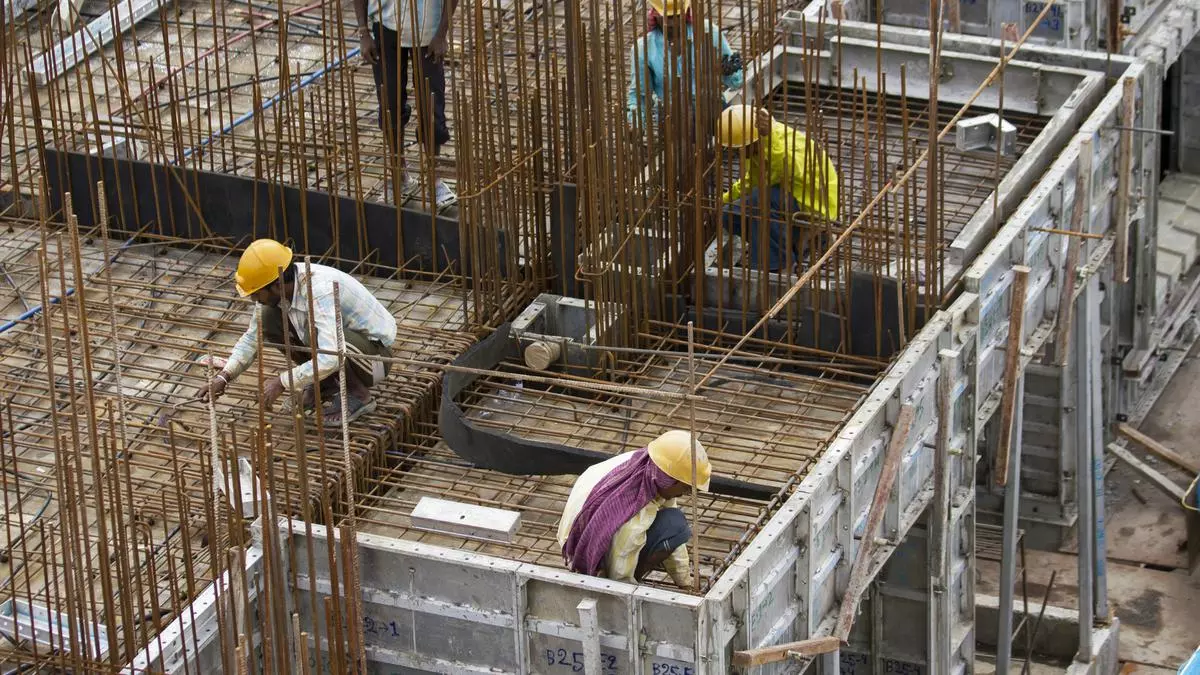
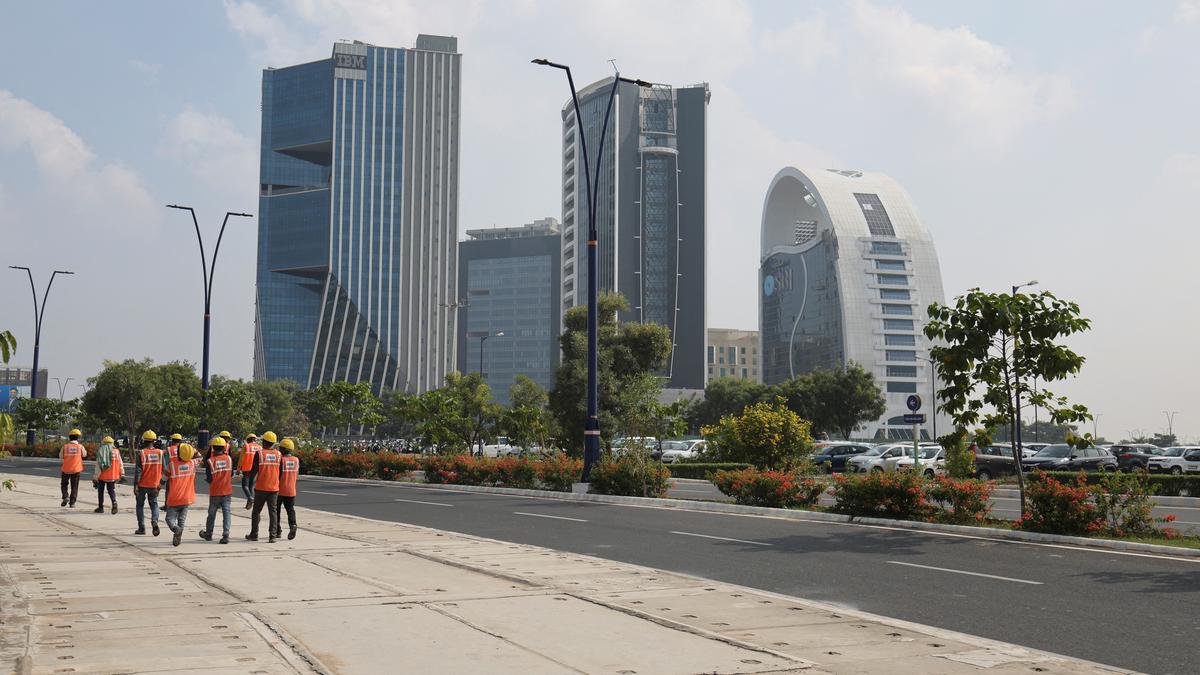
Earlier last year, a US-based news daily, reported that the construction sites around China appear visibly less busy and construction of apartment towers has faltered because of falling apartment prices.

  • Also read: Luxury housing boom draws global biggies into India

Quoting data released for prices of new apartments in 70 large and medium-sized cities across China, Goldman Sachs calculated that prices fell in August at a seasonally adjusted annual rate of 2.9 per cent, compared with 2.6 per cent in July.

Moreover, the data shows that new apartments considerably understate the speed and extent of price declines, however, as local governments have put heavy pressure on developers not to cut prices.

Prices of existing homes in 100 cities across China fell an average of 14 per cent by early August from their peak two years earlier, according to the Beike Research Institute, a Tianjin research firm. Rents have fallen five per cent.

Apart from this, China’s banking sector is also struggling with the repayment of debt payments from defaulters as loans that banks have made to property developers have been defaulted.

According to The New York Times, the main barrier behind the immediate repayment of loans from defaulters is the involvement of loans to the local governments and their financial affiliates.

Earlier, the central bank, the People’s Bank of China, announced that it was freeing banks to set aside smaller reserves and start extending more credit. The move was widely seen as intended to accommodate a large batch of bonds that local and provincial governments will issue to pay for their infrastructure projects, reported The New York Times.

2023 set to see record housing sales on sustained demand

No Comments

The residential real estate sector is set to end the year with record sales of over 7 lakh units in terms of volumes and over ₹7-lakh crore in terms of value, as housing demand remains sustained despite price hikes and elevated mortgage rates.

2023 is expected to end with residential sales of 706,680 units, a rise of 8.7 per cent from 2022, according to data and estimates provided to businessline by data and analytics platform PropEquity.

In value terms, this would be 7.3 lakh crore, a 30.4 per cent increase from last year.  “This may turn out to be the peak year for sales,” said PropEquity’s Founder and MD, Samir Jasuja.

In the first nine months of the year, more than 5.3 lakh units have been sold with a total value of ₹5.5 lakh crore, the data showed. PropEquity data covers 44 cities, and over 1.5 lakh projects of more than 52,000 developers.

“We find the residential sector doing exceedingly well, coming out of a long trough and 2022 onward it has been really phenomenal for the sector,” said Jasuja. He said the momentum looked like it would sustain next year as well but declined to give a projection.

After more than a decade, sales are running ahead of launches, sending inventory levels down to near lows of 17 months.

Slew of projects

Developers have lined up a slew of projects for the second half and the year is expected to end with new launches of 5.74 lakh units, but well short of the over 6.1 lakh units launched in 2022, which is the peak year for launches so far, Jasuja said.

According to Jefferies, the top seven listed developers are launching about 17 projects in the current quarter with a total area of 28 million square feet.

The highest number of launches are being seen in Hyderabad, Pune, and Thane, which have consistently seen launches of over 75,000 units each in the recent past. Pune is becoming an attractive alternative to Mumbai, while rapid infrastructure development in the Mumbai Metropolitan Region and connectivity to Mumbai city have resulted in an explosion of projects in Thane.

Post-pandemic, Hyderabad is experiencing a significant surge in demand, especially for larger units with 3 bedrooms, and developers adapting to the changing preferences. “Hyderabad has been steadily growing, and it has grown to 75,000 units from as low as 20,000 units 6-7 years back,” Jasuja said.

In the National Capital Region, Gurugram has seen close to three times rise in launches over the last 3-4 years, despite the prices that have doubled since the pandemic.

While tier-1 cities have the major share of launches and sales, tier-2 cities are also seeing demand growth. Of the total, tier- 1 cities are expected to see sales of 1.4 lakh units in 2023, a 7.7 per cent rise from last year while in terms of value it is just about ₹1 lakh crore up about a fourth.

Fund inflow in real estate from foreign investors dips 30 pc last yr: Vestian data

No Comments

The inflow of funds in Indian real estate from foreign investors fell 30 per cent to $2.73 billion last year, but the influx jumped more than two times from domestic players to $1.51 billion, according to real estate consultant Vestian.

  • Also read: Luxury housing boom draws global biggies into India

According to Vestian data, the total institutional investments in real estate declined 12 per cent to $4.3 billion in 2023, from $4.9 billion in the previous year.

The consultant highlighted that investments from foreign funds fell 30 per cent annually because of their cautious approach, but rose 120 per cent from domestic investors.

Domestic investors pumped in $1,511 million ($1.5 billion) last year, as against $687 million in the 2022 calendar year.

However, the inflow from foreign funds stood lower at $2,733 million last year, as against $3,926 million in 2022.

Accordingly, the share of domestic investors increased to 35 per cent in 2023 from 14 per cent in 2022.

Shrinivas Rao, CEO of Vestian, said, “Despite uncertainty in demand across the real estate sector, investments remained robust throughout the year. The optimism of domestic investors kept the real estate market buoyant, as they continued to show confidence in India’s growth story.” Although investments reached a five-year low in 2023, Vestian expects a resurgence in 2024 on the back of robust performance of the Indian economy and a healthy pipeline of planned infrastructure developments.

  • Also read: Zero stamp duty, registration charges for home buyers at Mumbai expo

“Stabilizing world economy, robust economic growth in India, huge domestic consumer base, growing emphasis on work-from-office policies, and favourable government policies such as National Logistics Policy and Make in India initiatives are likely to attract foreign and domestic investors to actively participate in India’s growth story,” it added.

Rao said the Indian real estate sector is rapidly expanding with the emergence of new asset classes and therefore the requirement of funds is also growing.

“This elevated demand for capital may lead to high returns on investments for investors. In anticipation of high returns, investors may infuse capital into the sector,” Rao felt.

In 2019, institutional investments in Indian real estate stood at $6.5 billion. The inflow was $5.9 billion in 2020 and $4.8 billion in 2021.

Real estate company White Lotus raises ₹150 cr funding

No Comments

Real estate company White Lotus Group has raised an investment of ₹150 crore in a funding round led by the Dubai-based Luxe Port Group of Companies.

The capital raised in this funding round will be used primarily to fuel the organisation’s growth, build a 2.5 million sq ft pipeline of luxury projects, strengthen the brand’s presence in Bengaluru, and expand into similar geographies in Hyderabad, Pune, Chennai, and other major cities, said the company.

“This funding serves as a catalyst in our journey, empowering us to replicate and scale our success in the bespoke luxury segment. By doing so, we are on the path to creating unparalleled living experiences and fulfilling the discerning desires of our esteemed clientele,” said Pavan Kumar, Founder and CEO, White Lotus Group.

The real estate company plays in the luxury segment and has developed projects in Bengaluru, with unit prices starting at ₹5 crore and above.

According to Padma Kumar, MD and Chairman of Luxe Port Group, they were looking to diversify into other luxury lifestyle segments globally. “White Lotus Group emerged as a natural long-term strategic partner in luxury real estate. We are excited to join hands with the team.”

Kolte-Patil Developers aims for ₹2,800 crore sales, eyes Mumbai expansion, says CEO

No Comments

Pune-based Kolte-Patil Developers ended the first nine months of FY24 with sales of over ₹2,000 crore and is confident of meeting its stated target of ₹2,800 crore for the entire year and growing at 25 per cent in the next two years.

The bulk of the company’s sales have been from Pune so far, but that representation could change with a slew of launches in Mumbai in the next few quarters.

 businessline met with Rahul Talele, Group CEO, to discuss the company and the real estate sector.

Excerpts.:

What is the breakup of your sales among the three cities – Pune, Mumbai, and Bengaluru? Do you expect to meet or exceed your sales target for the year?

In the first nine months, most sales have come from Pune, barring ₹100 crore from Mumbai and some from Bengaluru. Around 95 per cent of sales came from Pune itself. For this year, we have given the target of around ₹2,800 crore, and already we have around ₹2,100 crore. We are confident of meeting this target, and for the next two years, pre-sales growth of around 25 per cent is what we are anticipating for the company.

How are you increasing your presence in Mumbai and Bengaluru?

There are multiple projects that we have closed in Mumbai. In the last financial year, we closed around ₹2,700 crore worth of projects in Mumbai, and they will eventually get launched in the next financial year, there will be the right balance of diversification beyond Pune to around 25 to 30 per cent.

How do you assess the demand in the three cities where you are present?

Well, around 35 to 40 per cent of household earnings are going into paying EMIs, so affordability is very high. If you analyse the three parameters of wage growth, property price growth and interest rate growth you will realise that affordability is very good. Another important factor is the inventory replenishment ratio. In the geographies where we are operating, particularly in Pune, where we have a concentrated and very large portfolio, the inventory replenishment ratio is less than one. This means that whatever inventory is getting sold, less than that is getting added in the city. The inventory hangover has gone down from 25 months a few quarters back to just 6 or 7 months. Considering that accumulated savings are there, a strong desire to purchase property and from established developers – all these things together, we believe there is a strong demand. I can see these numbers after 10-12 years. This cycle is driven by end users, unlike the earlier real estate cycles.

How many projects do you plan to launch in the next quarter?

We plan to launch around ₹7,000 crore worth of projects in the next financial year. A few of the projects will be launched in the first half and the others in the second half. So maybe around ₹1,500 to ₹2,000 crore worth of projects will be launched in the first quarter of the next financial year. One can be the NIBM project (Pune), the second can be the next phase of the Little Earth and Manor and Lakshmi Ratan project at Mumbai and maybe a few projects under Life Republic.

What is your strategy to strengthen your presence in the Mumbai market?

Our Mumbai strategy is a simple business development strategy. We want to acquire project with a topline potential of ₹300 to ₹900 crore and build houses with ticket sizes of around ₹1.5 crore to ₹3.5 crore.  From a Mumbai context, these are the mid-income and upper-mid-income segments, and we are comfortably achieving good sales traction with this size and in this price range.. Our projects are mostly concentrated in the western part of the city. We have delivered a couple of projects, and three more are on the verge of delivery. We are also looking at central and Navi Mumbai as well.

Affordable housing company SMFG Grihashakti secures Rs 300 cr from NHB

No Comments

Affordable housing finance company SMFG Grihashakti has secured Rs 300 crore funding from National Housing Bank (NHB).

This is the company’s maiden long-term loan from NHB and opens up an additional avenue for long-term, low-cost funding, it said, adding that the money will help it expand its financing solutions to the under-served population, SMFG Grihashakti Chief Executive Deepak Patkar, said.

As of December 2023, it had Assets Under Management (AUM) of Rs 8,028 crore, which grew 37 per cent year-on-year.

SMFG Grihashakti provides home loans, loans for home improvement, home construction and extension, loan against property, and for purchasing commercial property, apart from project construction financing.

India is poised to witness a 30-35 m sq ft expansion in mall space: Crisil

No Comments

India is expected to witness a 30-35 million square feet (msf) expansion in mall space over the next 3–4 years, constituting a third of the existing stock, as per Crisil Ratings.

This growth is fuelled by a robust rebound in retail sales during the last fiscal. The anticipation is that the ongoing retail recovery will persist, supported by widespread consumption across regions and sectors, strengthening demand resilience, says the report.

Mall owners are projected to achieve revenue of about 125 per cent of the pre-pandemic level in the current fiscal.

“Malls are expected to attract investments of more than ₹20,000 crore over the next 3–4 years,” says Anand Kulkarni, Director, Crisil Ratings.

The resumption of work on new supply, which was stalled during the pandemic, and robust retail sales at malls are the reasons for the sizeable supply addition, says Kulkarni.

The upcoming substantial supply possesses two key features. Initially, it exhibits geographical diversity, with tier-2 cities accounting for 25 per cent of the forthcoming mall space. This highlights a growing trend of consumption beyond traditional metros and tier-1 cities, contributing positively to the risk profiles of mall owners.

Secondly, robust investor interest is expected to support the expansion, with Crisil Ratings projecting that 15-20 per cent of investments in new supply will come from entities like private equity, global pension funds, and sovereign wealth funds.

Nevertheless, it’s essential to monitor the potential effects of rising interest rates and inflationary pressures on discretionary spending, as these factors could influence the performance of malls in the future, according to the report.

Zero stamp duty, registration charges for home buyers at Mumbai expo

No Comments

Developers participating at a real estate expo in Mumbai will be offering houses to home buyers with zero registrations charges and stamp duty.

Organised by CREDAI-MCHI, the apex body of the real estate industry of the Mumbai Metropolitan Region, this offer will be available to all buyers who make purchases during the three-day period of the event, that kicks off on Republic Day.

Over 75 developers are expected to participate in the event this year, compared to 68-70 developers last year. Based on the feedback received the association also expects more than double the number of units to be sold this year, compared to last year, at 300-400 units.

With the catch phrase “Zero is our Hero”, the intent is to take advantage of the ongoing demand for residential housing and give a boost to the momentum with the added incentive, that will result in a saving of around 6 per cent for the consumer.

  • Also read: Home buying now seen as a stable investment proposition: Manoj Gaur, Chairman, CREDAI

Banks such as HDFC Bank and State Bank of India will be offering financing options. All the projects are aproved by SBI. While actual mortgage rates will be pegged to an individual’s CIBIL score, the floor rate is at aorund 8.35 per cent.

The value of houses on offer at the expo will range from around Rs 12 lakh to over Rs 10 crore, with those at the lower end of the range being in far flung suburbs that are part of MMR.

  • Also read: HDFC Bank reduces stake in CAMS, retains 3.94% ownership

“Indian property has taken off in a big way,” said CREDAI President, Boman Irani who also heads Keystone Developers, which sells houses under the Rustomjee brand. He added that 60 per cent of the traditional wealth of Indians has been created out of real estate, underling the importance of this asset class for investors.

The event will be inaugurated by Eknath Shinde, Chief Minister of Maharashtra.

Co-living startup Union Living to invest ₹10 crore; to add 1,000 beds in Mumbai

No Comments

Co-living startup Union Living has earmarked ₹10 crore for a strategic expansion initiative which will see addition of 1,000 beds in Mumbai within the current year.

At present, the startup operates 1,050 operational beds spread across nine properties in Mumbai, Pune, and Ahmedabad. The impending expansion will see the introduction of 220 beds in Mahalakshmi, 180 in Juhu, 100 in Khar/Santacruz, 150 in Goregaon/Malad, 100 in Chembur, and 200 in Navi Mumbai.

Of these, a minimum of three properties, comprising roughly 500 beds, will be developed as built-to-suit (BTS) facilities. According to the startup, this approach aims to provide tailor-made amenities to better align with the specific requirements of the occupants. Anticipated to be operational by July this year, these BTS properties underscore its commitment to customization.

  • Also read: Zero stamp duty, registration charges for home buyers at Mumbai expo

Rishabh Soni, co-founder of Union Living, articulated the strategy, emphasizing the commitment to delivering quality living spaces across diverse Mumbai neighbourhoods. The expansion aligns with the company’s mission to cater to the distinct needs and preferences of its target tenants.

The ₹10 crore investment will primarily be allocated to security deposits to landlords and interior enhancements in the upcoming centres.

Catering to a diverse demographic that includes both students and working professionals, the startup also offers short-term lodging facilities. With rental prices ranging from a modest Rs 20,000 per bed to a premium ₹45,000 per bed, the startup is positioned to meet varying budgetary considerations.

  • Also read: Demand for luxury homes surges in Mumbai’s Pali Hill

Moreover, it also aims to extend its footprint beyond Mumbai, with plans to introduce new properties in Pune and other cities. Parth Soni, co-founder of Union Living, expressed optimism about the robust demand for quality co-living spaces, signalling potential growth within this segment.

Demand for luxury homes surges in Mumbai’s Pali Hill

No Comments

The Mumbai real estate market, known for its opulent properties, saw the launch of nearly 150 property units daily, on average, in the first half of 2023, against the average launch rate of 100 units in the pre-Covid era, according to data of the Maharashtra Real Estate Regulatory Authority.

Among Mumbai’s many tony areas, Bandra West, particularly the Pali Hill area, with a captivating fusion of high-end residences, Bollywood glamour, and a touch of old-world charm, has become the focal point of the real estate scene.

In 2023, 39 homes were sold in Pali Hill in the price bracket of Rs 15 crore to Rs 55 crore. The total agreement value of homes sold in the year touched over Rs 500 crore. This marked a significant increase on the 172 homes sold in the previous six years.

A notable trend is the shifting preference for larger homes, with 3-bedroom apartments leading the market, with 17 units sold during the year. The demand for 4-bedroom units followed closely, with 13 units sold.

The surge in demand for high-end properties signifies a strategic shift in lifestyle aspirations, with discerning buyers prioritising the exclusivity and prestige associated with Pali Hill’s address.

Ayushi Ashar, Director, Ashar Group and Member of the Managing Committee of MCHI-CREDAI, said Pali Hill as a market remains a prominent centre for high-end property investment, consistently attracting investors in search of stability and growth prospects.

The trend is driven by discerning customers who prioritise spaces featuring distinctive residences with tailored amenities, shaping a comprehensive lifestyle for themselves and their family members, she said.

Ashar Group itself has launched ‘The Legend by Ashar’, its second luxury project in Pali Hill, which is being developed on the land on which legendary Bollywood actor late Dilip Kumar’s bungalow once stood, she added.

Mumbai property registrations a tad under 10,000 in November

No Comments

Property registrations in Mumbai in November was just short of the 10,000-mark, but still 7.6 per cent higher from year ago.

The city registered 9643 units in the reporting month, and garnered revenue of ₹707 crore, which was 3.4 per cent higher from year ago, according to state government data.

The registrations were however 9.1 per cent down month-on-month and the revenue down 15.3 per cent (m-o-m). In the previous five months registrations were consistently above the 10,000-mark.

Bullish Market

Knight Frank India said that this was the best November sales in 11 years, both in terms of volume and revenue. Analysis of data by the property consultant showed that buyers were buying both in the central and western suburbs.

There is considerable upgradation in infrastructure that is taking place all over Mumbai and the suburbs as well as the prospect of better connectivity with the island city where a majority of the offices are located. With buildings mushrooming close to upcoming arterial roads and metro lines, homebuyers are also booking houses in these locations in anticipation that by the time they occupy it, the infrastructure would be in place.

In the first 11 months of 2023, the city’s registration figures have crossed 1.1 lakh units while revenue is close to ₹10,000 crore.

Knight Frank India’s CMD Shishir Baijal said that the sustained demand for housing would further drive up prices in Mumbai and forecast a 5.5 per cent price rise in 2024.

Property registrations in Maharashtra at 1.2 lakh units in November was down 1.4 per cent on year and down 4.2 per cent on month. The revenue at ₹2372 crore was flat from year ago and lower than the ₹2535 it received in October.

Industrial & logistics space demand hit record in 2023 at 38.8 million sq ft in 8 cities: CBRE

No Comments

Demand for industrial and logistics spaces hit an all-time high across eight major cities last year with leasing activity rising annually by eight per cent, according to CBRE.

In its latest report, real estate consultant CBRE said that the leasing of industrial and logistics spaces rose to 38.8 million square feet in 2023 from 36 million square feet in the previous year driven mainly by demand from third-party logistics (3PL) companies.

Anshuman Magazine, Chairman & CEO, India, Southeast Asia, Middle East & Africa, CBRE, said, “As we envision the future of the industrial and logistics sector, this robust growth is a testament to the sector’s resilience despite global economic challenges.” Leasing activities across the top eight cities remained robust in 2023, showing a steady annual space occupancy, he said.

“The leasing landscape in 2023 reflects a pronounced influence of 3PL players, commanding a substantial 45% share,” Magazine said.

  • Also read:Tiger Logistics enters into MoU with PowerPac Holdings

The consultant noted that diverse industries, including e-commerce, retail, and manufacturing, chose to outsource their supply chain operations to 3PL firms.

This strategic move was aimed at meeting storage requirements, attaining increased flexibility, cost reduction, and overcoming challenges associated with labour sourcing.

Engineering and manufacturing companies constituted 17 per cent of the total leasing activity.

The proactive government policies and initiatives such as the Production Linked Incentive (PLI) scheme played a pivotal role in fuelling the growth of domestic engineering and manufacturing firms.

Leasing of industrial and logistics spaces in Mumbai touched an all-time high, registering 9.9 million sq ft in 2023 as against 7.3 million square feet in the previous year.

In Delhi-NCR, the demand fell to 7 million square feet last year from 9.4 million square feet during 2022 calendar year.

Bengaluru saw a decline to 4.7 million square feet from 5.9 million square feet. Kolkata too witnessed a dip to three million square feet from 3.8 million square feet.

However, in Hyderabad, the demand grew to 4.3 million square feet from 3.7 million square feet.

  • Also read:TVS Industrial & Logistics Parks to invest ₹1,500 crore in FY25 to expand presence in smaller markets

Leasing of industrial and logistics spaces in Chennai increased to 6 million square feet from 3.9 million square feet. In Pune, the leasing went up to 1.7 million square feet from 0.7 million square feet.

The demand for industrial and logistic warehousing spaces in Ahmedabad rose to 2.2 million square feet last year from 1.2 million square feet in the 2022 calendar year.

“Driven by increased demand for high-quality spaces, restricted availability of quality supply in specific locations, and an escalation in land costs, rental values witnessed an annual rise in prominent micro-markets across cities, except in the case of Kolkata,” CBRE said.

Tantia Constructions bags ₹7 crore contract from Tripura Govt

No Comments

Tantia Constructions has received a ₹7 crore work order from the Government of Tripura, Office of the Executive Engineer, PWD (R&B), Kailashahar Division, Kailashahar, Unakoli

The contract pertains to the construction of seven residential quarters for Judicial Officers at various grades, storied at Kailashahar, Unakoti District, including internal water supply, sanitary installation, sewage, drainage works, underground tank, boundary wall and internal electrification works.

  • Also read:L&T bags power transmission and distribution projects in West Asia

The company had earlier bagged a ₹68 crore contract from COMT Constructions Pvt. Ltd. It involved the construction work for UNIHOMES-03 (Phase-I), Noida.

India’s flex space stock to reach 80 m sq ft by 2026: Report

No Comments

India’s flex space stock is projected to touch 80 million sq ft by 2026, forming 9–10 per cent of the total Grade A office stock of the country, according to Colliers’ report. 

Currently, flex space stock across the top six cities stands at 43.5 million square feet. This is relatively higher compared to the 3–4 cent flex space market penetration in other key markets within APAC. 

Moreover, the office market clearly indicates a higher affinity for shared work spaces. A positive economic outlook, evolving workplace trends, and increasing diversification of the occupier base will continue to drive flex space demand across the top markets in the country, the report noted. 

“Flex leasing in the country has gathered significant momentum in recent years, reaching an all-time high of 7 million square feet in 2022. This spurt in flex activity continued in 2023 as well, reinforcing the gradual shift in the way businesses are realigning their real estate portfolio decisions,” said Arpit Mehrotra, Managing Director, South India, Office Services & Head of Flex, Colliers India.

Micro-markets

Similar to the overall India office market, the flex market is also highly concentrated in certain prominent clusters across the Tier-I cities. The top 10 flex micro-markets such as ORR-Bengaluru, SBD-Bengaluru, SBD-Hyderabad, Andheri East-Mumbai, Baner Balewadi-Pune, and others, house almost 60 per cent of the total flex stock of the country.

Bengaluru remains the largest flex space market, housing 1/3rd of the total flex stock of the country, followed by Delhi-NCR. In addition, prominent tech hubs such as Pune and Hyderabad are also witnessing increased traction and are expected to grow at a faster pace owing to rising demand from large technology occupiers. 

Owing to their strategic location, superior connectivity to other parts of the city, and strong physical and social infrastructure, secondary business districts (SBDs) remain the most active flex markets within cities, accounting for more than half of the flex stock of the country. 

Similarly, peripheral markets are also among the fast-emerging flex market hotspots owing to comparatively lower price points, upgradation of infrastructure, and improving connectivity within the city. As occupiers look to decentralize their office portfolios to enable a distributed workforce strategy, PBDs are poised to witness a significant upswing in the next few years.

PBDs are rapidly gaining traction as an affordable and viable alternative for flex spaces, accounting for a significant 27 per cent share of the flex space portfolio. “Furthermore, the emerging trend of decentralization in office portfolios, with off-shoot offices in PBDs, is poised to drive heightened activity in these micromarkets,” said Vimal Nadar, Senior Director and Head of Research, Colliers India.

According to the report, CBDs, which were the primary hubs for flex spaces, have seen limited activity in recent years due to the scarce availability of new-age Grade A workplaces and relatively high rentals. 

Everest Food promoter family buys three flats in Oberoi Realty’s Three Sixty West

No Comments

Several members of the Vadilal Shah family, belonging to the promoter group of Everest Food Products, have purchased apartments in the Oberoi Realty’s plush project Three Sixty West in Worli for a combined value of ₹217 crore.

The buyers are Rajeev Vadilal Shah and Sanjeev Vadilal Shah, the two sons of the original founder Vadilal Bhai Shah, and Rajeev’s son Aditya.

They have purchased three apartments, each of 6,921 square feet. One of the apartments was sold for ₹70 crore and the other two for ₹73.5 crore each, according to documents provided by Indextap.com. The average rate of the purchases is at well over ₹1 lakh a square feet.

Three Sixty West is arguably the most expensive apartment complex in Mumbai and while the inventory moves slowly, it attracts the who’s who of the Indian corporate sector and top honchos of industry.

  • Also read: India to attract big inflows in real estate in 2024, says Colliers

In February, Avenue Supermarts founder Radhakishan Damani’s family and friends bought around 28 flats in the high-rise for around ₹1240 crore. In August, Westbridge Capital’s MD, Sumir Chadha, bought a flat for close to ₹100 crore.

In a recent analyst call, Oberoi Realty’s chairman and managing director Vikas Oberoi said that around 50 families have moved into the complex.

The project has also gained from the unprecedented demand that luxury houses have seen over the last two years. In a recent report, property consultant ANAROCK Research observed that the sales of houses priced at over ₹40 crore have surged 3.5 times on year in terms of value. In 2023 so far, close to 60 ultra-luxury homes have been sold across the top seven cities in the country, with total sales value of over ₹4000 crore. Of this, Mumbai alone accounted for 53 deals.

Around 79 per cent of the deals were closed by business owners and 16 per cent by corner office occupants.

  • Also read: 2023 set to see record housing sales on sustained demand

WeWork India sees robust growth its operations

No Comments

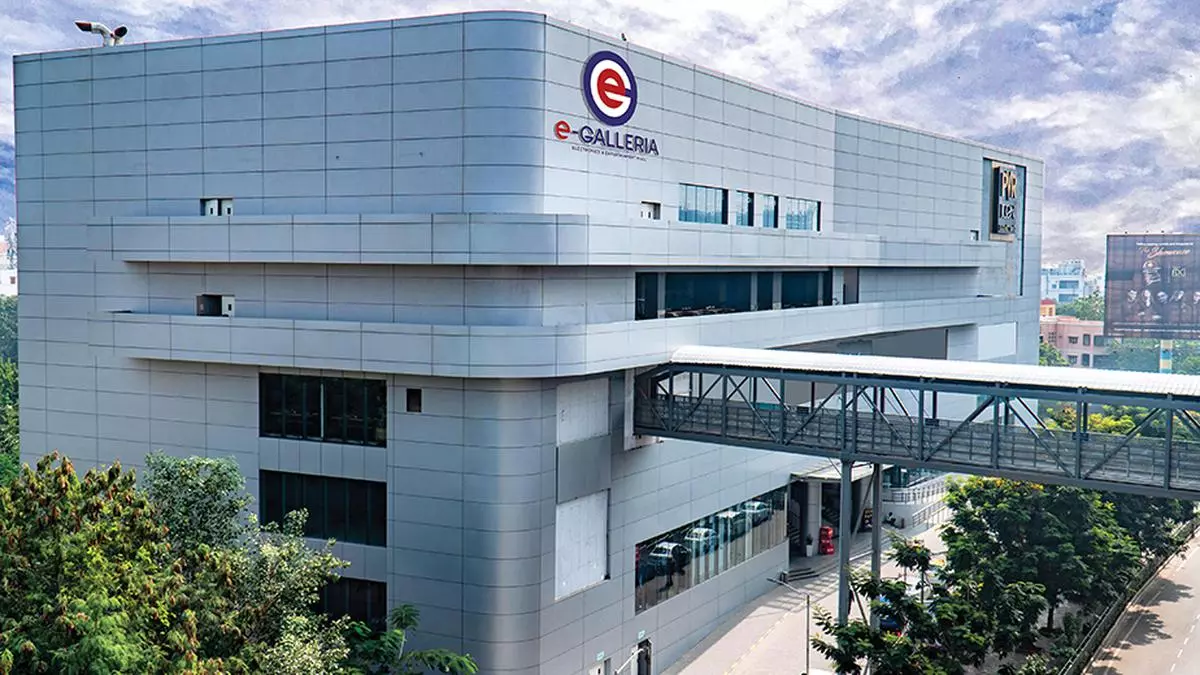
Unlike its global parent, WeWork India is seeing robust growth and expects to end the current fiscal year with 93,000 seats and 8 million square feet of operational space from 90,000 seats and 7 msf space at the end of September. It is also hopeful that its growth will be a support to the parent company.

“The year has been great since the start of 2023,” WeWork India CEO, Karan Virwani told businessline. “And also from the start of the financial year we have been very focused on growing the business,” he added.

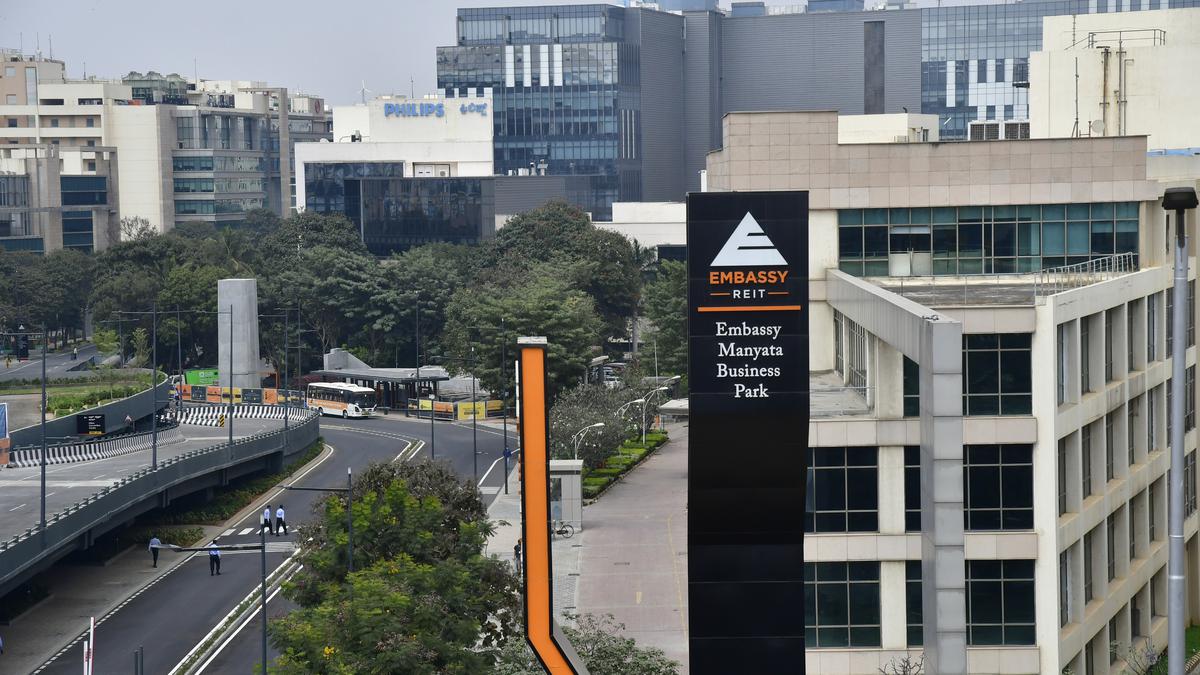
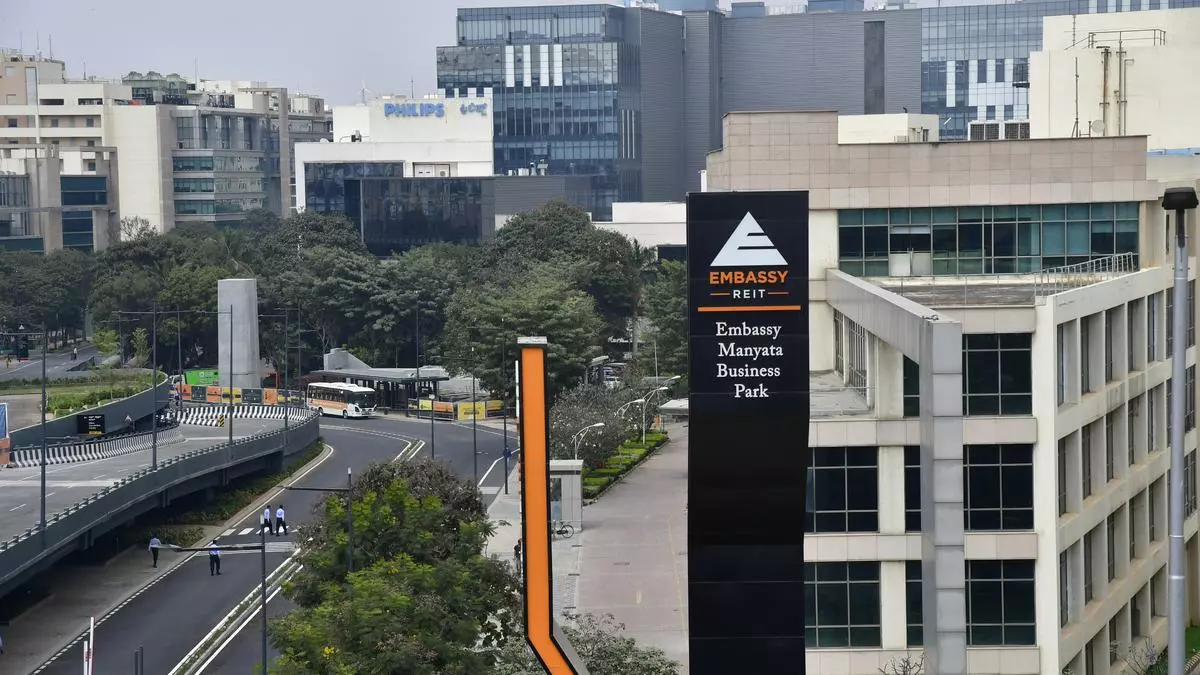
For the half year to September the co-working office operator had around Rs 831 crore revenue and EBITDA of Rs 532 crore, a 90 per cent rise from year ago. Next year it plans to add Chennai to its network, having added Delhi this year. It added the 53rd building to its portfolio on Friday, in an Embassy-owned building ‘Manyata’ in Bengaluru.

  • Also Read: WeWork bankruptcy will not impact India operations: CEO

Virwani made it clear that there was no spillover of the troubles plaguing WeWork Inc which has recently filed for bankruptcy, having expanded at an unsustainable rate.  He said that WeWork Inc had provided monetary support to the Indian company when it was “not at its healthiest.”

“So if they’re going through some pain right now, we will do whatever we can to support them and we see no risk from them holding a stake or impacting our business at this point,” Virwani said.

WeWork India operates on a franchise model with Bengaluru-based Embassy group holding over 71 per cent stake and the remaining stake being held by the subsidiaries of WeWork Inc.

Growth

The flex segment is seeing good demand, especially from global corporations who are delaying decisions on taking up permanent office space in India.

The company has been growing steadily, selling close to 40,000 desks a year, and adding 20,000-25,000 members a year. Virwani said that since COVID they had grown in a “calculated” way.

“We are tailoring our growth to just make sure that it keeps up with the demand and we keep our occupancies healthy.” The co-working operator has consistently kept its occupancy at 80-82 per cent across its portfolio throughout the year.

The aim is to be in the top 7-8 metro cities where it will concentrate on growing. The strategy is to pick the best micro markets in the cities and take up space in multiple locations within those markets, “rather than spreading out into places where there’s not much demand.” Bulk of its tenants are large corporates and enterprises while small and medium enterprises make up the remaining.

Virwani said that they had already identified locations where they plan to be in the next few years and started signing leases.

  • Also Read: WeWork raises ‘substantial doubt’ about staying in business

Embassy properties account for 15-20 per cent of its total space, but there is no particular preference given to that and Virwani said that they did lease space with all other developers as well. The Embassy group has over 70 msf of operational area.

WeWork brand               

Despite the travails of WeWork Inc, the brand has not suffered in India. Virwani said that the brand recall was strong and “it is still a category-defining brand” globally.

He pointed out that many of its customers were global and they were satisfied with the products and the experience that the Indian franchise was offering. Virwani said that many other global companies had gone through bankruptcy and emerged stronger.

India was the first country where WeWork initiated the licensed franchise model and the success of it has encouraged it to follow it in other places as well such as Israel.

In response to a question as whether Embassy would buy out WeWork’s stake in the Indian unit, Virwani said “I am always ready to be a buyer of equity in this company.” He said that a stake buy was not “off the table”, but there were no discussions now.

He also said that the Embassy group was open to bringing in a strategic investor on board, if they could add more value to the business.

Housing loans surge 37% in H1FY24 at ₹5.4 lakh crore

No Comments

Bank credit in the form of housing loans saw a good growth of 37 per cent on year at ₹5.4 lakh crore in the first half of FY24, an indicator of the brisk demand for residences. 

In FY23, incremental bank credit to the housing sector was 2.5 lakh crore, a growth of 15 per cent per year, according to SBI Funds Management. The data includes priority sector lending as well. 

One of the reasons for the jump in the bank credit is the merger effect of HDFC Ltd with the bank, as pointed out by Subha Sri Narayanan, Director, CRISIL RATINGS. Excluding this, the increase was Rs 1.2 lakh crore, broadly in line with the annual growth seen in FY23 of Rs 2.5 lakh crore, she said.

The momentum seems to be sustained in the third quarter as well, with data showing that in October, housing loans saw a 4 per cent rise per month and 14 per cent per year, Nuvama Institutional Equities said. Housing loans contributed about a third to the overall growth in credit in October. 

Housing loans currently contribute about 15 per cent to total banking system credit, Jefferies data showed.

The first half of FY24 had looked better for housing loans, led by the pause in the interest rate cycle, strong launch pipeline on the residential projects side and incentives and schemes offered by developers in the festive season, according to Shweta Daptardar, Vice President, Diversified Financials, Elara Capital.

She said that the HDFC-HDFC Bank merger has created more room for housing finance companies NBFCs to lend in the growing mid-income or Rs 25 lakhs to Rs 1 crore ticket size market.

Mortgage penetration in India is low, while housing remains a core basic need. “Structural demand for housing remains intact with increasing urbanisation and rising per capita income. Hence, we expect to continue to see steady housing credit growth over the longer term,” Narayanan said. 

The housing sector has seen an unprecedented boom since the onset of the pandemic and the broad momentum seems unabated despite price hikes and the rise in mortgage rates from May 2022. 

For the first time since 2013, absorption or sales of houses are running ahead of launches or new supply, testifying to the dizzy demand for houses. In the first nine months of 2023, launches were at 4.3 lakh units, while sales were 5.3 lakh units, according to PropEquity Research. 

With the bulk of the sales in the mid-income to premium segment driven by funding, demand for home loans is not seen abating any time soon.

“Asset quality metrics for home loans saw a marginal uptick during the pandemic. But since then they have trended low and are expected to remain stable over the medium term,” said Narayan.

The recent RBI clampdown on retail unsecured personal loans by increasing risk weightage requirements, leaving housing loans outside this purview, would imply a leg up for housing loans going ahead for lenders, said Daptardar.

Private capital leading growth factor for commercial real estate in APAC

No Comments

Private capital is expected to remain a driving force in the Asia-Pacific commercial real estate market, according to global property advisory Knight Frank in itsNew Horizon Outlook 2024 Part 1: Asia-Pacific Tomorrow report.

Private capital including High Net Worth Individuals (HNWIs) has been proactive in commercial real estate, raising their investment exposure in 2023, with decision-making guided by the pursuit of capital preservation rather than chasing yields.

  • Also read: India to attract big inflows in real estate in 2024, says Colliers

Further, in the higher-for-longer interest rate environment, private capital is expected to persist as a driving force in the Asia-Pacific commercial real estate market.

Key factors

However, factors such as higher financing costs, global economic uncertainty, a misalignment between seller and buyer price expectations and slow repricing persist as challenges to the Asia-Pacific investment market, leading to a 53.4 per cent contraction in overall transaction volume for the first three quarters of 2023.

  • Also read: Mumbai property registrations a tad under 10,000 in November

Given the significant challenges in the macroeconomic landscape, 2023 is likely to close with the lowest total volume for the first time, the report noted.

“The sharp rise in bond yields has shifted the investment landscape and altered the appeal of different asset classes. However, despite the challenging macro backdrop, ample capital remains to be deployed. Opportunities for private credit and attractive entry points for assets are likely to emerge in the higher-for-longer environment, which will continue to favour long-term private investors with a low reliance on debt,” said Neil Brookes, Global Head of Capital Markets.

Puravankara launches plotted development project in Chennai, stock surges

No Comments

Puravankara Ltd has launched a ‘wellness’ themed plotted development project named Purva Soukhyam in Guduvancheri, Chennai. The project comprises over 2,200 plots ranging from 600 sq. ft. to 5,000 sq. ft.

Abhishek Kapoor, Group CEO of Puravankara, said, “Purva Soukhyam is designed to provide residents with a comfortable and balanced lifestyle and marks a paradigm shift in the plotted development space in Chennai.”

  • Also read: Puravankara reports net loss of ₹11 crore in Q2

It will also feature health and fitness programs, yoga and meditation classes, spa services, nutritional counselling, sports courts, swimming pools, outdoor fitness areas, walking and cycling tracks, meditation zones, green spaces, and community gathering spots promoting an active lifestyle. Earlier last year, the company launched a music-themed project, Purva Raagam, in Thirumazhisai.

The stock surged by 5.90 per cent on the BSE, trading at ₹228.15 as of 12:26 pm.

Rich-young Indians prep-up premium, luxury and ultra-luxury home sales

No Comments

India’s rich and ultra-rich are lapping up properties priced upwards of ₹4 crore and the demand is being driven by young professionals like lawyers, doctors, start-up founders (including unicorns) and promoter families of recently-listed companies. Celebrity buyers are also a part of this brigade. A price rise of 30-40 per cent notwithstanding, many are using their resources – and going low on mortgages – to make such big-ticket purchases.

  • Also read: Rising demand for villas in Tier II cities fuels real estate boom

Delhi – NCR which includes bungalows in Lutyens and farmhouses in Chattarpur and Mumbai including Alibag, continue to be favourites. But Goa has emerged as one of the hottest destinations for the now younger buyers, mostly the millennials.

From upgrade requirements which drove demand nearly two years, the rich and ultra-rich are buying primarily for investment purposes that include anticipation of capital appreciation. Some own more than one such luxury property. As per Sotheby’s International Realty, 44 per cent of people buying luxury real estate are looking at a capital appreciation, almost double (22 per cent) the number last year; while only 23 per cent of buyers are looking at lifestyle upgrade (against 35 per cent last year).

Similarly, there is an increasing trend of owning farmhouses in suburbs or city peripheries, driven by the need for larger spaces, open green areas, work from home, privacy and amenities such as a private swimming pool, Sotherby’s findings say.

  • Also read: Developers put REITs on hold on uncertain market conditions

In the Chattarpur and Mehrauli – Gurgaon Road areas of Delhi, which are known for farmhouses, property prices have moved upwards of ₹10 crore and up to ₹100 crore.

According to Amit Goyal, MD India, Sotheby’s, out of holiday home buyers, nearly 35 per cent are looking at investments in Goa. While others have preferred hill-stations and other sea front destinations. “India’s ultra-wealthy are growing. The robust start-up eco-systems and a growing number of unicorns have added to the super-rich. The average buyer is also younger,” he told businessline.

The High Networth Individuals (HNIs) are defined as those having an average disposable income of ₹1 crore; while the ultra – HNIs (UHNIs) are ones with a net worth (including their business values) of ₹3.5 – 4 crore. As per Hurun India, the country’s billionaire numbers have taken a 38 per cent leap, y-o-y.

Goyal adds, income levels for the HNIs and UHNIs have seen a 30-40 per cent increase, primarily driven by market-linked portfolio appreciation, which also reflects in the commensurate price rise in luxury and ultra-luxury residences.

Rise of Luxury Homes

DLF’s luxury real estate offering Privana South in Gurugram was sold-out in 72 hours with the pre-formal launch garnering sales of ₹7,200 crores. The real estate major had sought a booking amount of ₹50 lakh and the average price of one apartment was ₹ 7 crore.

As per ANAROCK, there were 58 ultra-luxury home sales, priced upwards of ₹40 crore in 2023 with sales valued at ₹4,063 crore. On a y-o-y basis, there was a 247 per cent rise in sales of ultra-luxury homes. In 2022, 13 ultra-luxury homes were sold for a total sales value of ₹1,170 crore.

Anuj Puri, Chairman, ANAROCK said, 2023 sales included 53 apartments and 5 bungalows. “In 2023, Mumbai saw 53 ultra-luxury residential deals, Delhi-NCR recorded 4 deals and Hyderabad saw one. At least 12 of these deals were over ₹100 crore each,” he said.

According to Amar Sarin, MD and CEO, TARC Ltd, demand continues to be good across the premium and super-luxury segments; with price points being upwards of ₹2 crore. Existing projects are witnessing appreciation too. TARC launched a project along the Delhi – Gurugram border at ₹15,000 per sq ft and over a one-year period there was a near 100 per cent appreciation to ₹30,000 per sq ft. Similarly, for its Patel Road project, there has been a 65 per cent-odd increase in prices to ₹25,000 -28,000 per sq ft, up from ₹16,000 – 17,000 per sq ft a year-back.

Knight Frank, which categorises premium residencies at those priced upwards ₹1 crore, maintained the segment witnessed an 82 per cent rise in demand y-o-y with 1,10,833 units being sold last year. The category overtook affordable housing sales; and one out of every three homes being sold in India was a premium one.

Rising demand for villas in Tier II cities fuels real estate boom

No Comments

Demand for housing in Tier II cities, especially villas, is soaring due to surging property prices in the top seven cities, increased economic activity, and robust amenities such as schools and hospitals in Tier 2 cities, according to industry stakeholders.  

Luxury villas in Tier II cities range from ₹1 to 2 crore, as per Sotheby International Realty. In Delhi, luxury properties start at ₹7.5 crore; Mumbai’s starting price is ₹75 crore. In Goa, independent villas begin at ₹6 crore, while in Bengaluru, luxury villas range from ₹5 to 50 crore, the company added.

  • Read: Luxury homes expected to find fancy with younger buyers in 2024

Tier II cities, including Ahmedabad, Surat, Nasik, Jaipur, Mysore, Kochi, Thiruvananthapuram, and Chandigarh , have witnessed significant demand for villas.  

Prospective home buyers are attracted not only for residential purposes but also as lucrative investment opportunities in Tier II cities and popular holiday destinations. According to Ashwin Chadha, CEO of India Sotheby’s International Realty, organized growth within the sector is pivotal.  

“Developers are drawn to lower land values, enjoying higher profit margins compared to saturated markets. The appeal for villas in Tier II cities is boosted by comparatively lower property rates and the availability of well-located land parcels,” he added. 

  • Read: Home buying may be more affordable in 2024 across cities

Moreover, between January and September 2023, around 35 prominent domestic and international retail brands expanded their presence into 14 Tier II cities, showcasing a growing appetite for high-street brands, states real estate consulting firm CBRE South Asia. 

Similarly, the rising interest in owning a villa is also driven by lifestyle choices and long-term investments. Saurabh Garg, co-founder and chief business officer of proptech unicorn NoBroker, notes that people are increasingly drawn to personalized and expansive properties, anticipating future appreciation.  

In fact, the real estate cycle is expected to maintain upward momentum in the next few years, with villas likely witnessing heightened traction. 

“If we take into consideration the current scenario, then yes, villaments will witness heightened traction in the coming year. With the overall growth of the luxury segment, it is likely that villas will become largely popular amongst homebuyers and will push the developers to innovate in space,” said Angad Bedi, MD, BCD Group, which has developed projects in cities such as Raipur, Indore.

This demand is not limited to Tier II cities; a report by NoBroker indicates a 32 per cent jump in demand for villas in Bangalore compared to pre-COVID years, followed by 25 per cent in Delhi NCR, 30 per cent in Mumbai, and 27 per cent in Hyderabad. 

The luxury segment is experiencing increased demand for spacious and luxury real estate properties, extending beyond metropolitan areas.  

Plotted developments and villas are preferred, indicating a broader trend towards a diversified real estate market. Homebuyers seek residences and strategic investment options in regions beyond major urban centres. 

Developers put REITs on hold on uncertain market conditions

No Comments

Several developers with commercial assets in their portfolio, who were planning to float real estate investment trusts and list their units, have put them on hold as they feel that the current market conditions are not conducive for a REIT offering.

Bengaluru-based Bagmane Developers was working on filing draft papers for a REIT, but sources indicated that it has been postponed for now and it is looking at a pre-IPO placement. DLF, which was earlier talking about a REIT for its rental arm DLF Cyber City Developers, has shelved its plans altogether. Prestige Estates Projects has also put its REIT plans on the backburner and so have some other Kolkata-based developers.

A spokesman for DLF said there were no plans for a REIT now. There was no response from Prestige Estates to an email seeking comment while Bagmane could not be contacted.

According to property consultants and market estimates around 90 to 95 million square feet of REIT-ready assets were there in the market in early and middle of 2023. However, with the high interest rates attracting good tenants, the sluggishness in office take up due to global slowdown and regulatory norms are some of the major factors that are acting as deterrents.

  • Also read: SEBI moots new rules to issue subordinate REIT InvITs

Though REITs have been around for five years now, they are still nascent products, largely subscribed to by institutional investors. A quick look at the performance of the existing three office REITs show that distribution yields last year ranged between 5.9 per cent and 8.9 per cent. Compare this with the seven-plus per cent yield of the benchmark ten-year government paper.

According to Nuvama Research, the yields are not expected to improve over the next two to three years.

Distribution yields are not the only way to gauge the returns of REITs, as they also offer capital appreciation, said KunalMoktan, Co-Founder and CEO of PropertyShare, a real-estate investment platform. However, till last year all of them were underperformers and had given very little appreciation for unitholders. Those who entered when the unit prices were high after listing, would be sitting on losses.

Moktan pointed out that the future growth potential of the REITs should be factored in since around 20 per cent of the portfolio is under construction assets that will add to the net operating income when they are fully developed. “As the rents go up and the value of the land appreciates that translates into the stock price and that’s why institutional investors are buying,” he said. He added that rents have mirrored the inflation rate over the past 15 years and would likely grow at a stable five to six  per cent over the next ten years.

  • Also read: Blackstone offloads entire stake in Embassy REIT for ₹7,100 crore

Vacancy rates in office sector are at around 18 per cent and the high supply of office space that is expected to come in will likely keep them at those levels putting a downward pressure on rentals. REITs distributions are directly related to the rents that they are able to extract from tenants.

“Everyone is waiting for the right time,” said Amit Gupta, partner at law firm Saraf and Partners. He said that developers were not getting good rents and getting a property REIT-ready was taking time as tenants were looking for ESG-compliant, platinum graded spaces.

Regulatory changes such as sponsors continuing for perpetuity in the REITs are also obstacles, he said.

Pune witnesses 10 per cent YoY surge in annual property registrations, reaching 152,323 units in 2023: Knight Frank India 

No Comments

The total amount collected in stamp duty for 2023 was ₹ 5,352 crores, exhibiting a 10.5 per cent year-on-year (YoY) increase. In December 2023, 14,725 property sales were registered contributing ₹ 560 crores to the State government’s revenue. While registrations witnessed a 10 per cent rise YoY, revenue from stamp duty increased by 12 per cent compared to same time the previous year.

  • Also read: Pune residential sales near 50,000-mark

In December 2023, residential units priced between ₹ 50 lakhs and ₹ 1 crore were the most sought-after, comprising 34 per cent of all housing transactions. Similarly, the share of properties priced between ₹ 25 lakhs and ₹ 50 lakhs stood at 31 per cent of the market share, a close second to the ₹ 50 lakhs and ₹ 1 crore category.

Growth in market share for higher value segment

Interestingly, the higher value segment, comprising of properties priced at ₹ 1 crore and above, experienced growth in market share. This segment’s share increased from 9 per cent in December 2022 to 12 per cent in December 2023, indicating a rising buyer preference for properties in this price range. In December 2023, apartments within the range of 500 to 800 sq ft, had a substantial 40 per cent share. Apartments with an area under 500 sq ft also garnered significant attention, comprising 35 per cent of transactions in December 2023, making it the second most preferred apartment size.

Notably, there was a significant shift towards larger apartments, with those exceeding 1000 sq ft experiencing an increase in market share from 11 per cent in December 2022 to 14 per cent in December 2023.

  • Also read: 2023 set to see record housing sales on sustained demand

Shishir Baijal, Chairman and Managing Director, Knight Frank India said, “Pune’s real estate market’s growth underscores the strong desire for homeownership and the appealing affordability factor within the city. This trend is evident in the notable surge in both property registrations and stamp duty collections throughout 2023. The growing preference for larger properties highlights the dynamism of Pune’s realty market. With ongoing enhancements in infrastructure and a rise in economic activity, the residential market in Pune is solidifying its sturdy base, paving the way for a flourishing real estate sector.”

=============

Dutch pension manager APG struggles to exit Virtuous Retail

No Comments

Dutch pension fund APG is finding it difficult to find a buyer for its stake in Virtuous Retail South Asia, a joint venture with the Xander Group, which owns several malls in India, according to sources.

Sources indicated that APG has been selling its stake to Xander, which is likely owning a majority stake now, though it was not clear how much. In 2016 when the JV was formed, APG had the major stake at over 70 per cent.

In response to an e-mail from businessline seeking clarification, a spokesman for APG said that it would not comment, while Xander Group did not respond at all.

APG announced the JV with Xander Group, which has investments of over $6 billion in India, in 2016 with an investment of $450 million, with the Dutch pension manager bringing in the lion’s share. A year later, APG infused another $175 million into the venture to buy more malls.

  • Also read: Nexus Select Trust to buy 3 malls in Hyderabad from L&T for $300-350 million
Exit taking time

The asset manager, which has several investments in India in real estate and other sectors worth billions of dollars, has been trying to exit the venture for a while now at a valuation of around $1 billion, and sources said it was taking time.

APG is one of the largest pension investors in the world with assets under management of €521 billion and it has given average absolute return of 5.1 per cent for the past 15 years, according to its website.

Virtuous Retail has six malls located in Chennai, Bengaluru, Chandigarh, Surat, Amritsar, and Nagpur. It has a significant stake in North Delhi Metro Mall through a subsidiary and a year before the pandemic struck it acquired a 20-acre land parcel in Thane from Gautam Singhania-promoted Raymond Ltd. It is setting up a mixed-use retail development there, while another shopping centre is set to come up in Bengaluru.

Investments from America in Indian real estate fall 39 per centpc to $USD 1.35 bn last year: JLL

No Comments

Investments from American institutions in Indian real estate market declined 39 per cent last year to $ 1.35 billion amid global uncertainties, according to JLL India.

During 2022, US-based institutional investors had pumped $ 2.2 billion in the Indian real estate.

American funds have generally been the biggest investors in Indian real estate market.

Report suggest investment increase

According to the JLL India report released on Monday, the total institutional investments in Indian real estate rose 14 per cent to $ 5,878 million ($ 5.87 billion) in 2023 from $ 5,151 million in the previous year.

The consultant said this reflected India’s resilience in the face of global economic headwinds.

JLL anticipates investor confidence in the Indian growth story to continue in 2024 as well.

In 2023, the largest contributors were foreign institutional investors with 63 per cent share in the total investments.

  • Also read:India needs to build a huge stock of ‘rental houses’: Hiranandani 

However, the share of inflow from Americas, the conventionally highest contributor in investments, witnessed a significant dip of 23 per cent from 43 per cent in 2022.

Indian real estate market witnessed a significant increase in investments from domestic domiciled investors’ 37 per cent compared to an average of 19 per cent in the previous 5 years.

Equity continued to dominate investments in real estate at 81 per cent share of the total investments.

The office sector continued to lead by a huge margin, at 52 per cent share in the investment pie, followed by residential and warehousing at 16 per cent and 13 per cent, respectively.

Capital flow in the office sector witnessed an increase of 61 per cent from $ 1.8 billion in 2022 to $ 3 billion across 15 deals in 2023.

  • Also read:Tai, Goyal discuss diverse industry concerns at US-India TPF meeting

“Inflation and uncertainty about the direction of the global economy did not seem to be a deterrent for institutional investments in India in 2023,” said Lata Pillai, Senior Managing Director & Head of Capital Markets, JLL India.

Multiple rate hikes in the Americas have curbed investment activities from the US and Canada, Pillai pointed out.

“However, 2023 saw a significant contribution from the APAC region,” she said.

Pillai expected this optimistic trend to continue in 2024.

“While the upcoming elections may cause delays in decision-making, the India growth story will continue to be robust, driven by its inherent strengths and continued focus on economic development,” Pillai said.

Apart from institutional investments, JLL India said the year 2023 witnessed the announcement of $ 2.8 billion of platform commitments to be invested over the next few years.

There was a significant dip (38 per cent) in platform commitments as compared to 2022, it added.

Dharavi residents to get 350 sq ft flats with independents kitchens

No Comments

 Residents of Asia’s largest slum, Dharavi in Mumbai, will get apartments with independent kitchens and toilets measuring a minimum 350 square feet, the highest carpet area and 17 per cent more than what other slum redevelopment projects in the city are offering.

 Dharavi Redevelopment Project, a joint venture between the Adani Group and the Government of Maharashtra said that eligible tenements will get flats that “will be dream homes for all Dharavikars and will upgrade their living conditions.” Eligible residential tenements are those that were in existence before January 1, 2000.

Last year the Adani group won the bid to redevelop one of the largest slum clusters in the world, more than two decades after it was initially mooted.

In a release the joint venture said that the house would be well-lit, ventilated, hygienic and secure.

  • Also read: Adani Group ropes in global designers, experts for Dharavi redevelopment project

It pointed out that earlier slum resettlement schemes in the city offered smaller houses of 269 sq ft. “Since 2018, the state government started giving them homes measuring between 315 sq ft and 322 sq ft, in line with the minimum area mandated under the Pradhan Mantri Awas Yojana for houses for the urban poor.”

The company said that it would transform Dharavi “into a globally connected city with commercial and industrial premises, keeping its vibrant and unique entrepreneurial culture intact.”

  • Also read: Genesys International bags ₹22-crore contract for Dharavi redevelopment

Community halls, recreational areas, public gardens, dispensaries, and daycare centres for children, are some of the other amenities that it is promising.

Earlier this month it said it had roped in high profile planners and designers from India and around the world to design the project and develop the master plan. Architect Hafeez Contractor, UK’s consultancy firm Buro Happold and US-based design firm Sasaki, as well as experts from Singapore will be working on the project.

Amendment allows demarcation of non-processing area in IT/ITES SEZ

No Comments

UPDATED STORY.

Added one comment just above the sub-head Processing vs non-processing. Please include in final copy

The Centre has amended the Special Economic Zone (SEZ) Rules to allow demarcation of a portion of the built-up area in an IT/ITES SEZ as a non-processing area, subject to conditions including repayment of tax concessions attributable to the area.

“A non-processing area may be used for setting up and operation of businesses engaged in IT/ITES, and at such terms and conditions as may be specified by the Board of Approval,” stated a notification issued on December 6 by the Commerce and Industry Ministry.

Under the Special Economic Zones (Fifth Amendment) Rules, 2023, the repayment of tax benefits is to be calculated as the benefits provided for the processing area of the SEZ, in proportion of the built-up non-processing area to the total built-up processing area of the IT/ITES SEZ, as specified by the Centre, it stated.

Tax benefits from the creation of social or commercial infrastructure and other facilities, if proposed to be used by both SEZ units and those in the non-processing area, must be repaid based on a certificate issued by a chartered engineer, it added.

The amendment has been long demanded by the industry since the phasing out of tax benefits had resulted in occupiers not wanting to be located in SEZ because of the compliances required leading to vacancies, according to Gaurav Karnik, Tax Partner and National Leader – Real Estate, EY. “Though some of the fine print around tax benefits having to be returned needs to be ironed out, this move should help reduce vacancy and also have a positive impact on current REITs which have large SEZ space in their portfolios,” he noted.

Processing vs non-processing area

The processing area in an SEZ is where units are located for manufacture of goods or rendering of services. Non-processing area is where supporting infrastructure is created.

 “Demarcation of a non-processing area shall not be allowed if it results in decreasing the processing area to less than fifty per cent of the total area or less than the area specified,” according to the notification.

The minimum built-up processing area in Category A, Category B and Category C cities have to be 50,000 sq m, 25,000 sq ms and 15,000 sq m, respectively.

“Non-processing area shall consist of complete floor and part of a floor shall not be demarcated as a non-processing area,” the notification further specified.

Blackstone-backed Nexus Select Trust circles R City Mall in Mumbai

No Comments

Blackstone-sponsored Nexus Select Trust is understood to be keen to add R City Mall in Mumbai to its REIT portfolio, three sources said.

Talks have been on for some time between the REIT and mall owner Runwal Developers, and sources indicated that it was not certain whether a transaction would emerge from the discussions.

  • Also Read: Making the REIT market more attractive 

A lot would depend on whether Runwal was willing to sell it. In response to a query from businessline over WhatsApp, Managing Director Sandeep Runwal replied, “No plans whatsoever to sell R City.”

In May, Runwal Developers acquired Singapore’s sovereign wealth fund GIC’s 50 per cent stake in the mall for ₹1000 crore, roughly valuing it at around ₹2000 crore. Runwal’s intention in acquiring full ownership of the mall was to grow his company’s annuity business and have a dominant share in the city’s retail landscape.

At the time of the acquisition, Runwal had said that he would be investing more in upgrading the mall to attract more footfalls. The developer owns three other malls in the city.

  • Also Read: Fractional ownership platform hBits aims to be first MSM REIT

R City, which has been operational for around 13 years, is spread over 1.2 million square feet of retail space and has grown over the years. One of the largest malls in the city, it is the only mall that has an Ikea store on its premises.

Nexus Select Trust, the country’s only mall-focused REIT owns 17 malls across 13 cities and has only one in the Mumbai Metropolitan Region – Nexus Seawoods in Navi Mumbai, which it acquired from Larsen & Toubro. It has been scouting for more malls in the financial capital, which is seeing a rapid upgrade in infrastructure and connectivity.

R City is strategically located in the busy eastern suburb of Ghatkopar, which has a rich catchment of residences and consumers across a wide spectrum, assuring it of ready footfalls. A metro line already connects it to the western suburbs, while another under-construction metro line passes right over the mall and once operational will provide connectivity to more and distant areas.

Nexus Select Trust declined any comment on the story.

As it turns net debt positive, DLF to focus on high margin projects  

No Comments

Backed by strong demand from a new generation of double-income, younger crop of buyers besides NRIs, real estate major DLF Ltd will look at high margin projects. The company is also “on course” to “surpass” its bookings guidance of ₹13,000 crore for FY24.

The company turned net debt positive earlier this year. And according to Aakash Ohri, Joint Managing Director and Chief Business Officer, DLF, the cash surplus would now help the company tap “high margin projects”. 

  • Also read: DLF announces pre-launch sale of ₹7,200 crore, shares up
Changing demography

Good residential demand with a “relatively younger buyer base” — the average age now is around 35-40 against 45 years earlier — has seen the company come up with a series of launches, most of which has been “completely sold out”.  

Younger buyers are also open to paying premium on residential projects if they “cater to the requirements”. 

While in the first half of the fiscal, the average sales were around ₹4,200-4,300 crore, launches in Q3 saw the company report sales of nearly ₹9,000 crore. 

Its latest luxury residential development ‘DLF Privana’ – 1,113 residencies across seven towers in Sectors 76 and 77 of Gurugram – was sold out, garnering a turnover of about ₹7,200 crore. DLF clocked ₹15,083 crore of sales in FY23, with nearly ₹8,000 crore coming from The Arbour. 

“We are well on course with the bookings guidance….may be surpass it. Demand is good. And we expect our upcoming launches to do well too,” Ohri told businessline

“And now that we are net debt positive, we will continue to look into the high margin projects,” he said. 

  • Also read: DLF to raise ₹800 crore via bonds, say sources
New buyers 

Buyers, including new ones, have “prioritised” home-buying making it “among the top three requirements now”. 

“The first-time home buyer is someone who is into his second job or so; is a double-income household. So as this younger crop comes into the market, particularly increasing in numbers post-Covid, we do see a huge opportunity to tap into,” Ohri added. 

New launches are planned in Mumbai, Chennai and Gurugram. “We will look to advance some of our Q1FY25 launches into Q4FY24. There is demand in the market,” he said. 

Although demand continues to be good, Ohri doesn’t see “arbitrary price rise” in the sector any more. Price rise will be “demand and market driven” and continue to be a factor of project specifications, amenities, market demand and buyer interest. 

“Developers are in no position to arbitrarily increase prices. The buyer is smart and very conscious. Plus, we have a crop of young buyers who are very sure of what they want, for what period they want to spread their loans and so on,” he said. 

As per ANAROCK Research, housing prices rose between 10 per cent and 24 per cent, across the top seven cities, primarily due to increased input costs and strong demand. Hyderabad recorded the highest yearly jump of 24 per cent in average residential prices.

NRI outreach 

DLF has also upped its NRI outreach programme.

“Real estate is back to being a stable asset. So people are investing back. And our outreach programmes have done well,” Ohri said. 

Incidentally,  available inventory declined 5 per cent in 2023-end across the top seven cities despite strong new housing supply during the current year. About six lakh units are available for sale across these cities, indicating strong demand. Interestingly, NCR saw the highest decline of 23 per cent in unsold stock on a yearly basis to 94,800 units as of 2023-end. 

PE investments in real estate sector drops 26% to $2.65 billion in 9 months of FY24: Report

No Comments

Private equity (PE) investments in the real estate sector dropped by almost 26 per cent YoY to $2.65 billion in 9M (nine months of) FY24, owing to subdued momentum, as both foreign and domestic investors reported lower activity, according to an ANAROCK Capital’s FLUX report. In nine months of FY23, PE investments stood at $3.6 billion.

The domestic alternate investment funds (AIFs) have seen lower activity levels as their preferred asset class and residential real estate debt witnessed lower demand for high-cost funds, noted Shobhit Agarwal, Managing Director and CEO, ANAROCK Capital. Strong residential pre-sales and an accommodating stance by state-owned banks have led to reduced demand for capital from the more expensive alternate investment funds (AIFs), he added. 

Data shows that the share of the top ten deals was 87 per cent of the total value of PE investments in 9M FY24 as compared to 76 per cent in 9M FY23. The top deals includes Brookfield India Real Estate Investments Trust and wealth fund GIC — $ 1.4 billion.; CPP Investments –$325 million and more.

Additionally, the average ticket size saw a marginal growth to $95 million in 9M FY24 from $91 million in 9M FY23. This is largely due to a large deal, in which Brookfield India Real Estate Trust REIT and Singapore’s sovereign wealth fund GIC together acquired two commercial assets from Brookfield Asset Management with an enterprise value of $1.4 billion.

In fact, the deal also aided to the growth of the commercial real estate sector share in PE deals in 9M FY24, attracting 70 per cent of the total investments. The commercial office space reported a robust performance particularly in the top six cities. The sector’s reliance on IT/ITeS has diminished, with manufacturing, BFSI, and coworking contributing to the resilient demand.

With respect to geographic trends, multi-city transactions increased sharply during the period, dominated by the Brookfield India REIT and GIC. MMR led the transaction league tables in city-specific transactions, with the region reporting investments of $694 million in 9M FY24, against $375 million in 9M FY23.

“Investments by foreign investors have increased to 86 per cent in 9M FY24 as compared to 79 per cent in 9M FY23,” said Agarwal. “Correspondingly, domestic investments decreased to 14 per cent of the total capital inflows into Indian real estate in 9M FY24, at $360 million, compared to $717 million in 9M FY23.

Housing demand to hit 93 million units by 2036 driven by tier 2,3 cities

No Comments

Housing demand in India is projected to reach 93 million houses by 2036, owing to the increase in demand in housing due to growth in key parameters including population in both urban and rural areas, healthy macro-economic indicators and favourable demographics, with several tier two and three cities projected to spearhead both demand and supply.

A report by CREDAI in collaboration with Liases Foras said that the next wave of real estate growth will come from tier two and three cities. Around 44 per cent of the 3,294 acres of land that were acquired by real estate developers were in these regions “signaling a growth of the real estate sector in these cities at a much more rapid pace than expected,” said CREDAI president, Boman Irani.

Currently on a pan-India basis, the unsold inventory in India was 10.4 lakh units, that is down three per cent sequentially but two per cent higher on year. Of the total unsold inventory, over one-fourth is due to stalled projects most of which were launched prior to 2016. Over one-fifth of the unsold stock is in the Mumbai Metropolitan Region, which is the largest residential market in the country.

  • Also read: Pune residential sales near 50,000-mark

As of September-end, tier two cities experienced a notable inventory decline, standing at 20 months, contrasting with the national average of 26 months

While the national average shows a six per cent annual price growth, smaller cities like Bhopal, Lucknow, and Coimbatore have witnessed significant spikes exceeding 20 percent.

  • Also read: India Ratings revises PNB Housing Finance NCD ratings from AA to AA+

The government’s focus on “housing for all” is influencing developers to prioritize affordable and lower-income segments. “Housing in such cities will witness a sharper trajectory as crucial Government Programs and increasing commercial activities come to the forefront to create a strong pipeline of projects across all segments,” said Irani.

Mumbai Trans Harbour link will open huge land for real estate development, says Hiranandani 

No Comments

The Mumbai Trans Harbour link will open huge parcels of land for real estate development, practically doubling the land of Mumbai, says Niranjan Hiranandani, Founder and Managing Director of Hiranandani Constructions. 

The link, which is a road, 16.5 km of which is a bridge on the sea (Thane creek), connects south Mumbai with Navi Mumbai, cutting the travel time from two hours to 20 minutes. 

As people can live in Navi Mumbai and work in south Mumbai, there will be opportunities to develop housing in Navi Mumbai, Raigad district, Hiranandani told businessline recently. 

The foundation stone for the ₹18,000-crore link was laid by Prime Minister Modi on December 24, 2016. The project was conceived in the 1990s and suffered several false starts. Now that the ₹18,000-crore link has come alive, shortening the distance between places where people can live (Sewri, Ulwe, Navi Mumbai, Chembur, Panvel, etc) and places where there are jobs (south Mumbai), it unlocks scope for real estate development.  

A further boost will come to Navi Mumbai when the new Navi Mumbai International Airport becomes operational. When all its three phases are completed, the airport will be capable of handling 90 million passengers, by 2032. 

Development manager model

Hiranandani said that the group has just begun working on a new model, which it calls ‘development manager’ model. Under this, it will put up projects for third parties—essentially providing them the whole suite of services such as design, architecture, construction and sales and marketing. ‘ELEVA by Hiranandani’ is the service provider. 

In Mumbai, the company has five such projects. One, of 300,000 sq ft, was taken up last month, another will be taken up this month. “Three more are coming soon,” Hiranandani said. 

Hiranandani said that development of housing will give a big boost to India’s growth. Today, housing contributes 7 per cent to India’s GDP, which, according to Niti Aayog, will be 20 per cent, when India becomes a $ 5 trillion economy, he said. Housing is the second largest provider of employment, after agriculture, and touches 270 feeder industries, such as cement, steel, wood, paint and bricks, he said. Therefore, when land becomes available for housing, it is good for the economy, he added. 

Domestic investors bullish on realty sector; investments grow 120% to $1.5 billion in 2023: Report 

No Comments

While institutional investments in the real estate sector declined by 12 per cent annually to $4.3 billion in 2023, investments in the sector from domestic investors more than doubled to $1.5 billion in 2023, according to the Vestian report. In 2022, the overall investment in the sector stood at $4.9 billion.

The inflow of funds from domestic investors stood at $1,511 million ($1.5 billion) last year, registering a 120 per cent growth over $687 million in 2022. This also led to an increased share of domestic investors, from 14 per cent in 2022 to 35 per cent in 2023, amid global headwinds.

Foreign investments

Meanwhile, the share of foreign investors shrank over the previous year on account of the macroeconomic slowdown. While foreign investors continued to dominate investments with a 65 per cent share in 2023, their share decreased from 79 per cent a year earlier to $2,733 million.

Nearly 72 per cent of the foreign investments were concentrated in commercial assets, followed by the industrial and warehousing segments with only 15 per cent.

“Despite uncertainty in demand across the real estate sector, investments remained robust throughout the year. The optimism of domestic investors kept the real estate market buoyant as they continued to show confidence in India’s growth story,” saidShrinivas Rao, FRICS, CEO, Vestian.

In terms of asset class, commercial assets (office, retail, co-working, and hospitality projects) turned out to be the preferred investment option for domestic investors, with a 42 per cent concentration of investments, followed by 39 per cent in residential projects.

Additionally, a significant rise in bank outstanding and the easy availability of funds through new investment tools (AIFs, REITs, and InvITs) paved the way for heightened construction activities across the sub-sectors of real estate.

Commercial lending

According to RBI data, banks’ lending to commercial real estate increased by 38 per cent in November 2023 compared to the same period last year. On the other hand, banks’ outstandings for housing, including priority sector housing, increased by 37 per cent during the same period, according to the report.

Although investments reached a five-year low, accentuating the cautious stance adopted by foreign investors amid global macroeconomic uncertainty, the report expects a resurgence in 2024 on the back of the robust performance of the Indian economy and a healthy pipeline of planned infrastructure developments. Stabilising the world economy, economic growth in India, a huge domestic consumer base, growing emphasis on work-from-office policies, and favourable government policies such as the National Logistics Policy and Make in India initiatives are likely to attract foreign and domestic investors to actively participate in India’s growth story.

Nexus Select Trust to buy 3 malls in Hyderabad from L&T for $300-350 million

No Comments

Nexus Select Trust, the retail-focused real estate investment trust sponsored by global private equity giant Blackstone, has signed a preliminary agreement to acquire three malls from Larsen & Toubro in Hyderabad for around $300-350 million, sources said.

The malls under the brand name ‘Hyderabad Next Galleria Malls’ are located at strategic metro stations and have been developed by Larsen & Toubro as part of the ecosystem to transform the shopping and entertainment experience in the city.

There are four malls under L&T along the metro line with a total leasable area of 1.2 million square feet. Nexus has signed a deal for three of the malls with a total area of 1 msf and with a leased occupancy of 84 per cent.

The three malls that are likely part of the deal are e-Galleria located next to Hitec City metro station and with an area of 2 lakh square feet, Next Galleria Mall at Punjagutta Metro and an area of 5 lakh square feet and Premia next to Irrum Manzil station.

Nexus Select Trust and Larsen & Toubro did not respond to requests for comment on the deal.

The acquisition of these malls will take Nexus Select Trust’s portfolio to around 11 msf of retail portfolio. It has only signed a non-binding term sheet and the final transaction will depend on the pricing and valuations.

All the malls have a good tenant base with Reliance Trends as an anchor tenant and PVR-INOX, the multiplex operator tenant.

This is not the first deal that Blackstone has done with L&T. In 2017, it had acquired Seawoods Mall in Navi Mumbai from the engineering and construction major for over ₹1,300 crore. At around 1 msf, it is one of the largest retail properties in the REIT’s portfolio after Nexus Elante in Chandigarh.

The gross asset value of Nexus Select’s retail portfolio was ₹21,924 core at the end of September 2023 with an occupancy of 97 per cent. It also has three office assets in its portfolio and two hotels.

In the first half of FY24, the REIT reported a net operating income of around ₹600 crore on revenue of ₹815.6 crore, of which the retail portfolio’s contribution was ₹726 crore.

India needs to build a huge stock of ‘rental houses’: Hiranandani 

No Comments

Niranjan Hiranandani, Founder and MD of Hiranandani Constructions, which builds residential and industrial townships and commercial office spaces, is calling for building a huge stock of “rental houses”, so that people in the lower strata of society can live at affordable rents. 

In a conversation with businessline, Hirananadani said that the government should incentivise companies so that the companies could build rental houses — perhaps by giving a five-years income-tax exemption on rental incomes. This, he said, should be applicable for houses below a certain size, say, 60 sq meters. 

Elaborating on the idea, he said that today houses are built with the owner in mind, though many of them are rented. Rental houses, on the other hand, are accommodations that are meant to be rented out — so, they are built accordingly. “During the British days, there used to be chowks in Mumbai, which used to rent out houses for (say) ₹10 a month — with common bathrooms and toilets. We need to bring them back,” he said. 

A worker or a peon in an office should be able to quickly get a house on rent and live there. “Today, he can’t — he lives in a jhompda (hutment) or something like that,” Dr Hiranandani, who is also the Chairman of the National Real Estate Development Council, said. 

He said that if there were incentives, any company could build rental houses for their workers. Given incentives “Reliance, Hiranandani, HDFC, banks and financial institutions can all build rental houses,” he said, stressing that the multiplier effect of this would enable economic growth of 10 per cent. “In the US, which is the richest country in the world, 50 per cent of the people live in rental houses,” Dr Hiranandani said. 

Giving an example, he said, “today you have many factories in Oragadam (an industrial township near Chennai, where Hiranandani is building several residential complexes). There are 25,000 workers there. You can build 25,000 rental rooms.” 

But could this not be done without incentives? “Who wants to block the money?” he posed. A builder would want to build houses and sell them. To hold them for rent would be to lock in capital. 

Asked if the Council had formally given this suggestion to the government, he said that it had, and the government was “considering” the idea. He said that if building rental houses were to become a movement, “at least $20 billion per year of foreign capital will come into India.” 

Huge employment potential 

Hiranandani said that the housing sector was the second largest employment provider, after agriculture, and provides business to 270 feeder industries — cement and steel, paints, wood, flooring, tiles and so on. 

He feels that in the next year, India’s GDP will grow at 8 per cent, thanks to all the infrastructure development. If India must get to double digit GDP growth, it has to focus on housing, he said, pointing out that the Government of India’s think-tank, Niti Aayog, had said that when India becomes $5 trillion economy, housing would account for 20 per cent of GDP. Today, it is 7 per cent. 

Cushman & Wakefield, Nuvama to launch Rs 3000-cr office platform

No Comments

Cushman & Wakefield (C&W) and Nuvama Asset Management have formed an equal joint venture to set up a ₹3000-crore platform that will invest in office projects.

The Prime Offices Fund, slated as a six-year close-ended fund, is anticipated to launch in approximately six months, pending approval from the Securities and Exchange Board of India (SEBI).

“The platform that we intend to build will create great solutions for Indian investors,” said Anshu Kapoor, President, Nuvama Asset Management. The platform will have the fund management expertise of Nuvama and C&W’s expertise as a consultant in the commercial real estate sector. “Indian investors do not have access to this asset class,” he said, adding that it is a $100-billion opportunity that would double in 10 years.

  • Also read: Office space demand in Chennai is expected to grow amid supply overhang

The fund aims to attract high-net-worth individuals and family offices for fund-raising purposes. Assets are being identified in the top six cities: Bengaluru, Delhi, Pune, Mumbai, Chennai, and Hyderabad. Kapoor said that initial investment would be in around five to seven assets and investment in each would be in the range of ₹500-1,000 crore. “We are working on the deal pipeline,” he said. Investments would be in under- construction as well as fully leased assets. The expense ratio would be capped at 30 basis points.

Kapoor said that the two companies are in it for the long haul and once the current fund had provided an exit for its investors at the end of its tenure, another and larger fund would be set up. Most of the office space in India is in the hands of foreign institutional investors such as Blackstone and Brookfield, and the Prime Office Fund would attempt to challenge that dominance.

  • Also read: India’s office sector anticipates 20–22% y-o-y growth in 2024: report

The platform has been in the works for about a year, said Anshul Jain, Managing Director, India and South-East Asia, and Head of APAC tenant representation at C&W. He noted that despite uncertainties and occupancy challenges, the Indian office market notably absorbed 41 million sq ft last year.

High-quality offices are being built and stock worth over ₹8-lakh crore will be added over the next 10 years in India.

Aarin Hospitality launches luxury serviced apartments at Oragadam

No Comments

Chennai-based Aarin Hospitality has launched Apartel, luxury serviced apartments, at Hiranandani Parks, Oragadam, near Chennai.

Launched in partnership with Hiranandani Residences, Apartel Oragadam, which was inaugurated by Niranjan Hiranandani, Co-Founder, Managing Director, Hiranandani Group, seeks to cater primarily to expats, business executives & business travellers. 

It will feature 1, 2, and 3 BHK apartments, ranging from 900 to 1700 sq ft.

Apartel will offer a home-like ambience and serve as an alternative to hotel accommodation, according to a statement. 

“Apartel Oragadam provides a home away from home experience, offering a sense of community along with luxurious amenities. It offers what a business traveller looks for — modern amenities, ample space, and privacy – in a modern integrated township,” said Samvel Sathyan, Founder, Aarin Hospitality.

Apartel’s serviced residences are available weekly and monthly, providing budget-friendly options for both corporate relocations and extended visits. With over 150 keys across their two properties, the company aims to expand to 3,000+ keys and employ 1,200 staff by 2030, it said.

Other amenities in Apartel include a gym, and a global-cuisine restaurant where you can indulge in authentic local cuisine.

Aarin Hospitality plans to expand its presence across Chennai, Bangalore, and Hyderabad as it sees rising demand for premium serviced residences.

Demand for office space seen at 55-57 mn sq ft in 2023

No Comments

The current calendar year is expected to close with office demand or absorption of 55-57 million square feet, much lower than the 70 million square feet seen last year, but higher than initially anticipated because of the subdued sentiment in the office market in the first half of the year.

In the first nine months of the current year, office demand was at 42 msf, and the last quarter is seen adding 13-15 msf, according to a report by industry body, the Confederation of Real Estate Developers’ Associations of India and market intelligence platform CRE Matrix.

After a subdued start to the year, leasing activity picked up in the third quarter, with demand up 29 per cent sequentially, aided by supply that grew 35 per cent. The supply in the first nine months of the year in absolute terms was close to 40 msf.

‘India to see explosion in demand for office space in 12-18 months’

However, despite the optimism, uncertainty looming over office take-up is reflected in the vacancy numbers that have shown a distinct uptrend since the middle of last year. In the third quarter of 2023, the vacancy level was at 17.4 per cent, up from 16.9 per cent a year ago. Hyderabad had the maximum vacancy at 25.7 per cent, and Bengaluru the least at 8.3 per cent.

In the first nine months of this year, office demand has touched 42 msf, with Bengaluru contributing about a fourth and Delhi-NCR about a fifth. Despite the information technology sector facing stiff headwinds, about two-thirds of the demand for office space still came from this sector.

The total grade A stock on a pan-India basis is currently at 770 msf, and another 257 msf under construction will take another three years to come into the market.

Bengaluru and Hyderabad contributed roughly half of total demand in the third quarter, and 57 per cent of to the total supply.

Provident Housing offers 2% discount to armed forces on home purchases

No Comments

Puravankara Limited’s subsidiary, Provident Housing Limited, introduced a scheme to support serving and retired armed forces personnel in acquiring homes. The company will provide a special 2% discount on housing across its projects for eligible armed forces personnel.

With a focus on mid-segment housing, Provident Housing aims to assist the approximately 1.4 million serving personnel and 2.6 million veterans in India. The initiative, designed to express gratitude to the armed forces, was formally communicated to Major General Ravi Murugan, AVSM, General Officer Commanding (GOC), Karnataka and Kerala Sub Area.

Mallanna Sasalu, CEO of Provident Housing, highlighted the company’s forward-looking approach and the desire to show respect for the protection provided by the armed forces. The eligibility criteria encompass all serving and retired members of the Army, Navy, and Air Force, along with their spouses and children, and officers of the Short Service Commission who have completed full tenure. Individuals with less than five years of service are excluded from the scheme.

The shares were down by 0.99 per cent to Rs 185.55 at 12.56 pm on the BSE

Sobha Q3 sales bookings up 37% to ₹1,952 cr on strong housing demand

No Comments

Realty firm Sobha Ltd reported a 37 per cent increase in sales bookings at ₹1,951.6 crore in the third quarter of this financial year, mainly on the back of strong housing demand in Bengaluru.

  • Also read: Puravankara reports net loss of ₹11 crore in Q2

Its sales bookings stood at ₹1,424.7 crore in the year-ago period.

“The Q3 (third quarter) of this financial year has been the best-ever sales quarter for Sobha,” the company said in a regulatory filing late on Thursday.

The average price realization improved to ₹11,732 per square foot during the third quarter of this fiscal year, from ₹9,653 per square foot in the year-ago period.

Sales bookings in volume terms also increased to 16.63 lakh square foot , from 14.76 lakh square foot during the period under review.

“Bengaluru has achieved its highest ever quarterly sales of 1.25 million square feet with a value of ₹14.99 billion, led by the successful launch of the Sobha Neopolis project in the beginning of the quarter,” the company said.

  • Also read: Ramco Cements reports big increase in Q2 profit at ₹101 crore amid pricing pressures

Sobha highlighted that the Delhi-NCR region continued with its strong momentum completing the sale of Sobha City in Gurugram.

“We launched two new projects in the third quarter with a total saleable area of 3.84 million square feet. Cash flows for the quarter remained strong and has resulted in further net debt reduction,” Sobha said.

Pune residential sales near 50,000-mark

No Comments

Knight Frank’s India Real Estate 2023 report stated that Pune’s residential market witnessed 13.5 per cent sales growth year-on-year, with 49,266 housing units sold during the year. The weighted average price of residential units in Pune increased by 5 per cent YoY to Rs 4,507 per sq ft.

In the case of office spaces, the January to December 2023 period saw 9 per cent growth in transaction volumes at 6.7 million sq ft, the highest till date. Rentals increased by over 5 per cent. New office completions fell by 46 per cent YoY to 3.6 million sq ft. Completions are expected to improve in the coming months. Global capability centres accounted for 49 per cent of office space transactions.

In 2023, Pune’s real estate market displayed continued growth, recording the best residential sales since 2013, according to the report. A considerable segment of homebuyers in Pune consists mainly of migrant workers, particularly salaried individuals seeking housing mortgages. Despite the elevated home loan rates, the outlook remains optimistic. There were new launches of 42,437 residential units, up 10 per cent YoY.

Vilas P Menon, National Director, Occupier Services, Capital Markets and Branch Head, Pune, Knight Frank India, said, “Pune’s real estate market witnessed continuous growth in 2023, fuelled by improved market sentiment. The city’s evolution as a thriving IT hub, bolstered by the government’s continued infrastructure development, has firmly established Pune as a pivotal housing destination. The notable uptick in property sales above Rs 1 crore reflects rising buyer’s confidence. The city’s emergence as a thriving IT and ITeS hub, coupled with the government’s emphasis on infrastructure development, positions Pune as an emerging housing destination.”

2023 office absorption near record high, home sales at 10-year high

No Comments

In 2023 office absorption came near an all-time high at 59.6 million square feet, while residential sales at 3.3 lakh units set a new 10-year record, according to a report by Knight Frank India.

  • Also read: Office sector dominates: Indian real estate attracts $5.4 billion in institutional investments

Transactions in the office sector rose 15 per cent on year but fell short of the record 60.6 msf seen in 2019. Residential sales rose five per cent on year. The data pertained to the top eight cities in India.

Office Sector

The office sector started the year on a subdued note and remained so for most of the year as multinational office occupiers were still making up their minds about taking up office space. The slowdown in the information technology sector dented demand, as they have been accounting for a significant volume of office occupancy so far.

Domestic companies have, however, taken the slack resulting in better-than-expected office leasing volume in the year.

The performance of the office market is reflective of the strong occupier activity, said the Knight Frank report. Bengaluru remained the largest market by volume leasing over 12 msf in 2023, followed by Chennai with 10.8 msf and the National Capital Region at 10.1 msf. Chennai also recorded the strongest annual growth of 92 per cent. Bengaluru saw a decline in leasing volumes.

The office market witnessed 42.9 msf of office space completions in 2023.

Rents firmed up across all markets encouraged by demand and a relatively contained supply. Kolkata led the rental growth at 11 per cent, followed by Bengaluru at seven per cent.

  • Also read: Office space demand in Chennai is expected to grow amid supply overhang

The physical occupancies have steadily increased across markets at 57-65 per cent levels in the REIT portfolios, compared to 47-55 per cent last year. The vacancy levels decreased by 94 basis points over last year to 16.1 per cent in 2023.

Office space transactions by India-facing business and Global Capability Centres (GCC) were recorded at 21.9 msf and 20.8 msf, respectively.

“The impetus behind India’s recent dominance in office absorption is attributed to its strong economic fundamentals. The forthcoming year is poised for steady expansion, and 2024 promises to be a standout year for the office market, driven by India-facing businesses and GCCs,” said Knight Frank India CMD Shishir Baijal.

Residential sales, launches

On the residential side, Mumbai was the leader in residential sales in 2023 with sales of 86,871 units, followed by the National Capital Region at 60,002 units and Bengaluru with 54,046 units. These three cities together constituted 61 per cent of the total residential sales during the year.

The renewed demand has led to an accelerated pace in residential development, with both half-yearly and annual volume of units launched reaching their highest levels in a decade, said the report. New home launches witnessed a rise of seven per cent in 2023 with the addition of 3.5 lakh units.

The launch volumes in 2022 and 2023 have surpassed the sales figures for the corresponding periods, a phenomenon that has occurred only thrice in the past ten years.

Mumbai recorded highest residential launches in the country with supply of 93,051 units during the year. Kolkata witnessed the highest growth at 28 per cent followed by Bengaluru at 18 per cent. NCR was the only market to record a marginal slowdown in launches.

Office space demand in Chennai is expected to grow amid supply overhang

No Comments

Chennai market is likely to witness an addition of about 14 million sq ft (msf) in office space in the next two years amid slow growth in demand, say industry analysts.

The supply in the office space segment has been outstripping absorption across the country over the past few years. 2023 witnessed some moderation. However, incremental supply is likely to be higher.

“In Chennai market, supply of about 14 msf is anticipated over the next two years (2024 and 2025), half of which would come up in the peripheral South and suburban South micro-markets,” said Parvez Qazi and Vasudev Ganatra, analysts of Nuvama Institutional Equities, said in a report.

The December 2023 quarter witnessed the highest-ever demand for office spaces in India, with all three southern cities of Bengaluru, Chennai, and Hyderabad registering the best performance since the pandemic.

Leasing demand is expected to increase in Chennai supported by robust enquiries from the IT-BPM sector and an increase in the supply of Grade A office space. The absorption of office space is likely to be higher in 2023 and 2024 than the annual average demand over CY15–19.

Cushman & Wakefield has projected a total new supply of 17.5 msf during 2023-2025. “A little over one-fourth of the upcoming space is pre-committed mainly by BFSI and IT-BPM sectors,” it said.

Net absorption for 2023 and 2024 are estimated at 2.45 msf and 2.5 msf respectively, largely driven by IT-BPM sectors.

Vacancy levels

Vacancy levels in India had reached 18.1 per cent in the September 2023 quarter due to supply eclipsing demand post-CY19. Hyderabad is likely to witness the highest growth in vacant office space, followed by Chennai. With the rise in vacancies, annual rental growth in Chennai is likely to be constrained (1–2 per cent).

“Amid an increase in vacancy levels from 18 per cent in 2023 to 24 per cent in 2025, the Chennai office market is expected to experience robust demand, particularly from the IT-BPM, engineering, manufacturing, BFSI and flexible workspace operator segments,” said Cushman &Wakefield.

Most cities need a significant uptick in demand for absorption of upcoming supply. Chennai, particularly, may struggle given about 14 msf of upcoming supply by CY25 against about 2 msf demand. Bengaluru and Hyderabad are also in the same boat, wherein 32–36 msf of supply is expected to come on stream by CY25 in each city.

Travel and hospitality sector to witness continued recruitment in 2024

No Comments

Recruitment momentum in the travel and hospitality sector will continue in 2024.

According to TeamLease Services, the coming year will witness increased hiring in the travel and hospitality by 15 – 20 per cent, as compared to 2023. This surge is particularly evident in the fourth quarter of fiscal year 2024, with an expected uptick of 68 per cent compared to the preceding quarter.

  • Also read: Travel, hospitality, restaurant industries witness uptick of 11.7% in credit deployment in Oct: RBI data

On the hospitality front, major hospitality players including Indian Hotels Company Limited (IHCL), which operates Taj Hotels, said it plans to add 20 hotels across its brands in cities like Patna, Nagpur, Puri, Udaipur, Bhutan, Goa, Gurgaon, and Cochin. Another listed player Lemon Tree Hotels is likely to have 20 openings expected in CY2024, in India, Nepal and Bhutan. Accor has a pipeline of five hotels in the coming year. Marriott International, with a pipeline of 60-plus hotels in the next few years, and Wyndham has a pipeline for adding 40.

A report by hospitality consultancy firm Hotelivate stated With a base of ~ 1,65,000 branded and organised rooms operating in India, another ~ 70,000 new rooms were signed and planned as of 31st March 2023. Of these, about 79 per cent are actively under development and are likely to open for business over the next 60 months. That amounts to a 33 per cent increase in supply on the existing base over the next 4-5 years. 

Covid-19 had pushed the construction of several hotels over the past two years. The cascading effect was visible in 2023. IHCL opened 20 hotels, whereas Accord added six new properties in 2023. Lemon Tree added a 23 per cent higher room inventory to its hotels in 2023 alone. According to industry experts, the Indian hospitality sector witnessed the highest room addition in 2023.

  • Also read: Hotel rooms in North East states rise 2.5x as brands check in

The impact of this could be witnessed on hiring as well. According to a report by ‘foundit’ (formerly Monster.com) there were 44 per cent higher listings for jobs in the travel and hospitality sector compared to 2022.

TeamLease believes that this strong churn of hiring will continue in the last quarter of FY24 ending on March 31, 2024 as well. Its analysis states that there will be a 68 per cent increase in hiring compared to the Q3FY24.

According to Balasubramanian A, VP & Business Head, TeamLease Services, the hiring boom is likely to continue for the entire 2024. “The Indian travel and hospitality sector’s hiring rebound after the pandemic is set to continue in 2024, with projections exceeding 2023 levels by 15-20 per cent,” he told businessline.

Another reason for the hiring in the hospitality sector is it faces a higher attrition rate than pre-pandemic times, and hotel companies are seen adjusting their workplace policies to retain existing staff and attract new talent. Job roles for IT, Engineering, Office Services, and blue-collar professions continue to be the top roles for hiring. 

In the travel sector too, roles like sales, engineers, marketing, and customer service will see high demand. Tech skills in AI, AR/VR, and online platforms are increasingly sought after. City-wise, Mumbai, Delhi, Kolkata, Chennai, and Hyderabad will lead the charge, leveraging their established infrastructure and tourist activity. 

However, the landscape isn’t static.

“Sustainability and responsible tourism will create new job avenues like eco-tourism and conservation, while upskilling existing workforce will be crucial. Government initiatives like Incredible India campaign and infrastructure projects will also play a key role in job creation. So, the travel sector will be brimming with opportunities in 2024 too,” Balasubramanian added.

As MahaRERA cracks whip, developers hurry to file progress reports

No Comments

With the Maharashtra Real Estate Regulatory Authority cracking down on developers who fail to furnish their quarterly progress reports (QPRs) on time, compliance levels have increased remarkably in the state.

Of the 480 projects registered in April, 222 filed quarterly progress reports within the prescribed time.

In the event of non-compliance, MahaRERA puts projects on hold and freezes bank accounts. According to the regulator, currently 546 projects have been held in abeyance for non-compliance and their bank accounts frozen.

The regulations require developers to post quarterly progress reports of projects on the MahaRERA website.

“This helps homebuyers know the current and true status of the project,” said Ajoy Mehta, chairman, MahaRERA.

He said that the response from 46.25 per cent of projects in March was “certainly comforting”, compared to 0.02 per cent in January. But “MahaRERA aims for 100 per cent response and  insists on that”, he added.

Empowering homebuyers

Knowing the project status not only provides comfort to homeowners, who invest hard-earned money or costly loans in them, but also empowers them, he said. Earlier, before the advent of RERA, homeowners had practically little to no rights and developers had the upper hand.

Mehta, who has been at the helm of MahaRERA since 2021, has taken a hard line, telling developers to toe the line or face consequences.

The QPRs give homebuyers an idea about the progress of the project, including details such as how many units have been sold, how much money was collected, the expenditure incurred, and whether the expenditure was commensurate with the progress made.

.

Godrej Properties buys 4-acre land parcel in Bengaluru

No Comments

Godrej Properties has purchased a 4-acre land parcel in Bengaluru on an outright basis. The company is planning to develop a premium residential project at the site with a revenue potential of ₹1,000 crore from 7 lakh square feet area.

The acquisition of an additional 1 acre land will increase the estimated revenue from the project to ₹1250 crore, it said in an exchange filing.

The land is located in Yeshwanthpur near National Highway 75, one of the prime locations in Bengaluru. The area offers well-developed commercial and social infrastructure and is in proximity to Goraguntepalya and Peenya metro stations providing access to the Central Business District and other parts of Bengaluru.

Also read: 2023 and your personal finance: How bl.portfolio stayed agile to deliver our best to readers

“Yeshwanthpur is an important micro market for us, and we are happy to add this land parcel to our portfolio,” Gaurav Pandey, MD & CEO, said.

“This will further strengthen our presence in Bengaluru and complement our strategy of deepening our presence in key micro markets across India’s leading cities,” he added.

Adani Group ropes in global designers, experts for Dharavi redevelopment project

No Comments

The Adani Group, which is undertaking the redevelopment of Mumbai’s Dharavi, one of the largest slum clusters in the world, has roped in high-profile planners and designers from India and around the world — they will help in designing and conceptualising the master plan.

The Dharavi Redevelopment Project Pvt Ltd (DRPPL) will be working with architect Hafeez Contractor, UK’s consultancy firm Buro Happold and US-based design firm Sasaki, as well as experts from Singapore. Together, all of them will “reimagine one of the largest and most vibrant informal settlements in Asia”, said a release.

Buro Happold is known for Varso Tower in Warsaw, the tallest building in the European Union, the regeneration of Battersea Power Station and other projects. Sasaki has experience in city infrastructure projects such as the Denargo Market Master Plan and Public Realm development in Denver and the Ellinikon Park in Greece. Hafeez Contractor has been involved with social housing and slum redevelopment projects in Mumbai.

modern renaissance

The Adani Group is planning to embark on the renaissance of Dharavi. There are over 50,000 families living in Dharavi in crowded tenements, and it has developed an ecosystem of its own. DRPPL plans to build private homes with independent toilets, airy kitchens and rooms for family living and resting. Apart from this, there will also be provisions for shops and businesses, while for a more sustainable future there will be vocational job opportunities and upskilling of the local community.

It is more than an urban renewal and revitalising of infrastructure project. “Our goal is to elevate the quality of life of the residents of Dharavi while nurturing the essence of its vibrant culture,” said the release. The aim is to create a model of urban redevelopment for projects across in the country and across the world.

The project administrators are also taking help from Singapore, which till the 1960s, had shanties, slums and ghettos. Towards the end of that decade the Singapore Housing Board was set up and it started building world-class infrastructure that are now held up as prime examples of urban rejuvenation.

Office sector dominates: Indian real estate attracts $5.4 billion in institutional investments

No Comments

In 2023, Institutional investments in the Indian real estate sector reached $5.4 billion, marking a 10 per cent YoY increase, according to Colliers India.

Foreign investments maintained dominance, constituting 67 per cent of total inflows, while domestic investments surged by 66 per cent to $1.7 billion.

The office sector led with a 56 per cent share in total inflows, attracting global and domestic capital.

Despite overall stability, Q4 witnessed a 37 per cent YoY drop in investments, totalling $0.8 billion. Alternatives claimed a 51 per cent share in Q4 inflows, reflecting strong demand in segments like data centres, student housing, life sciences, and schools.

  • Read: Indian real-estate funding up 82% in Q3 2023: Report

While global investment markets faced challenges, India remained a fast-growing economy, sustaining investor confidence. Although US inflows declined from 2020 levels, Canada and Singapore emerged as leading sources of foreign capital, contributing 78 per cent of global real estate inflows into India in 2023.

Notably, APAC countries increased their investment inflows 3.6 times compared to 2020, with investors favouring India due to its robust economic performance, improved regulatory framework, and sustained demand across real estate segments.

Piyush Gupta, Managing Director at Colliers India, highlighted the positive trend, stating, “As India’s real estate sector concludes another promising year, institutional investments increased by 10 per cent to USD 5.4 billion—the highest since 2020. Investments diversified across education, shared spaces, and data centres, contributing to a strong domestic upcycle in office, residential, and industrial areas. Looking ahead to 2024, investment activity is expected to remain robust, supported by strong domestic economic fundamentals, with technology and ESG factors playing key roles in investment decisions.”

Mumbai property registrations surge to second-highest level in 11 years, revenue climbs 4% in December

No Comments

Property registrations in Mumbai in December rose about a third on year, the second highest level in 11 years, while revenue collections increased 4 per cent yearly, state government data showed.

The city registered around 12,500 units in December; the stamp duty collected was ₹952 crore. Sequentially, registrations were up 28 per cent and revenue up 34 per cent.

Homebuyers in Mumbai continue demonstrating confidence in the property market, buoyed by stable demand and an enhanced positive sentiment. Property consultant Knight Frank said this optimism has resulted in a significant surge in Mumbai property registrations.

  • Read: Mumbai property registrations a tad under 10,000 in November

The increase can be attributed to rising income levels and a favourable perception towards homeownership, it added.

In 2023, property registrations at 1.27 lakh units are the best since 2013, data from Knight Frank showed. This was also 4 per cent higher than last year. The total value of stamp duty collected during the year was close to Rs 11,000 crore, up by over a fifth on the year.

The considerable growth in revenue can be credited to various factors, including the registration of properties with higher values and the increased stamp duty rate, said Knight Frank.

“The year 2023 witnessed a remarkable upswing for the city’s real estate market as the city achieved its highest property registrations in 11 years driven by rising income levels, better affordability, and a positive homeownership outlook,” said Shishir Baijal, Chairman and Managing Director, Knight Frank India.

“Notably, a 57 per cent increase in share of high-value property registrations attests to the robustness of the market. Supported by stable interest rate and an increasing preference for bigger and better homes, homebuyer confidence continues to fuel Mumbai’s real estate momentum,” he added.

Housing sales in Gurugram up 13% in 2023; down 7-8% each in Noida, Gr Noida: Anarock

No Comments

Housing sales in Gurugram rose 13 per cent annually in 2023 on high demand, especially for luxury flats, but Noida and Greater Noida saw a seven-eight per cent fall, according to Anarock data on the Delhi NCR market.

  • Also read: Luxury homes expected to find fancy with younger buyers in 2024

Real estate consultant Anarock’s data showed that sales of residential properties in Gurugram went up 13 per cent to 36,970 in 2023 from 32,615 units in the previous year.

However, sales in Noida fell eight per cent to 5,840 units from 6,360 units. Greater Noida saw a seven per cent drop in sales to 10,180 units from 10,985 units. Ghaziabad, too, witnessed a fall of eight per cent to 6,340 units from 6,890 units.

The total housing sales in Faridabad, Delhi and Bhiwadi decreased to 6,295 units during 2023 from 6,860 units in the previous year.

Overall, the Delhi-NCR saw only a marginal growth of three per cent in housing sales to 65,625 units during 2023 from 63,710 units in the previous year.

Anarock Group Regional Director & Head of Research Prashant Thakur said, “Apart from Gurugram, sales have fallen in other parts of NCR because of the lesser launch of new housing projects.” Realty firms Signature Global, TARC Ltd, and Elan Group attributed the rise in sales in Gurugram to strong consumer sentiment and the development of various infrastructure projects.

Pradeep Aggarwal, founder and chairman of Signature Global, said, “Gurugram’s real estate market is witnessing a surge in demand for the mid-income and luxury homes, driven by young professionals and nuclear families seeking an aspirational and convenient lifestyle.

  • Also read: Mumbai property registrations surge to second-highest level in 11 years, revenue climbs 4% in December

Hotspot zones like New Gurugram, Dwarka Expressway and the Southern Peripheral Road are drawing huge buyer interest, fueling double-digit capital value jumps, he said.

Amar Sarin, MD and CEO of TARC Ltd, said, “Delhi NCR’s real estate landscape, especially Gurugram, is witnessing a renaissance, defying market challenges and illustrating robust demand.

Ravish Kapoor, Managing Director of Elan Group, noted that “within the NCR region, Gurugram stood out as the prime destination, bolstered by burgeoning infrastructure.” Dwarka Expressway, within the city, emerged as the most promising micro-market for the residential sector, Kapoor added.

Travel and hospitality sector to witness continued recruitment in 2024

No Comments

Recruitment momentum in the travel and hospitality sector will continue in 2024.

According to TeamLease Services, the coming year will witness increased hiring in the travel and hospitality by 15 – 20 per cent, as compared to 2023. This surge is particularly evident in the fourth quarter of fiscal year 2024, with an expected uptick of 68 per cent compared to the preceding quarter.

  • Also read: Travel, hospitality, restaurant industries witness uptick of 11.7% in credit deployment in Oct: RBI data

On the hospitality front, major hospitality players including Indian Hotels Company Limited (IHCL), which operates Taj Hotels, said it plans to add 20 hotels across its brands in cities like Patna, Nagpur, Puri, Udaipur, Bhutan, Goa, Gurgaon, and Cochin. Another listed player Lemon Tree Hotels is likely to have 20 openings expected in CY2024, in India, Nepal and Bhutan. Accor has a pipeline of five hotels in the coming year. Marriott International, with a pipeline of 60-plus hotels in the next few years, and Wyndham has a pipeline for adding 40.

A report by hospitality consultancy firm Hotelivate stated With a base of ~ 1,65,000 branded and organised rooms operating in India, another ~ 70,000 new rooms were signed and planned as of 31st March 2023. Of these, about 79 per cent are actively under development and are likely to open for business over the next 60 months. That amounts to a 33 per cent increase in supply on the existing base over the next 4-5 years. 

Covid-19 had pushed the construction of several hotels over the past two years. The cascading effect was visible in 2023. IHCL opened 20 hotels, whereas Accord added six new properties in 2023. Lemon Tree added a 23 per cent higher room inventory to its hotels in 2023 alone. According to industry experts, the Indian hospitality sector witnessed the highest room addition in 2023.

  • Also read: Hotel rooms in North East states rise 2.5x as brands check in

The impact of this could be witnessed on hiring as well. According to a report by ‘foundit’ (formerly Monster.com) there were 44 per cent higher listings for jobs in the travel and hospitality sector compared to 2022.

TeamLease believes that this strong churn of hiring will continue in the last quarter of FY24 ending on March 31, 2024 as well. Its analysis states that there will be a 68 per cent increase in hiring compared to the Q3FY24.

According to Balasubramanian A, VP & Business Head, TeamLease Services, the hiring boom is likely to continue for the entire 2024. “The Indian travel and hospitality sector’s hiring rebound after the pandemic is set to continue in 2024, with projections exceeding 2023 levels by 15-20 per cent,” he told businessline.

Another reason for the hiring in the hospitality sector is it faces a higher attrition rate than pre-pandemic times, and hotel companies are seen adjusting their workplace policies to retain existing staff and attract new talent. Job roles for IT, Engineering, Office Services, and blue-collar professions continue to be the top roles for hiring. 

In the travel sector too, roles like sales, engineers, marketing, and customer service will see high demand. Tech skills in AI, AR/VR, and online platforms are increasingly sought after. City-wise, Mumbai, Delhi, Kolkata, Chennai, and Hyderabad will lead the charge, leveraging their established infrastructure and tourist activity. 

However, the landscape isn’t static.

“Sustainability and responsible tourism will create new job avenues like eco-tourism and conservation, while upskilling existing workforce will be crucial. Government initiatives like Incredible India campaign and infrastructure projects will also play a key role in job creation. So, the travel sector will be brimming with opportunities in 2024 too,” Balasubramanian added.

NoBroker revenue grows 96%, losses up 62.6% in FY22

No Comments

Protech unicorn NoBroker achieved a substantial 96 per cent Y-o-Y revenue growth, reaching ₹325.88 crore in FY22, compared to ₹166 crore in FY21.

  • Also read: Fine Organic Industries invests ₹60 crore

The Bengaluru-based startup, which has set its eyes on turning profitable in the next two years, reported a significant increase in losses for FY22. The company’s losses surged 62.6 per cent to ₹309 crore compared to ₹190 crore in FY21, according to the ROC filing shared by PrivateCircle Research.

The company operates as a comprehensive real estate solution, offering services including renting, buying, selling, home services (such as packers and movers, home interiors, and more), financial services, and society management through NoBrokerHood.

On the expenses side, In FY22, it also posted an increase in its employee benefit expense to ₹261.66 crore compared to ₹178.41 crore. While the total expenses increased by 67 per cent Y-o-Y to ₹678.94 crore compared to ₹406.32 crore.

  • Also read: Punjab National Bank plans to raise capital up to ₹7,500 crore in 2024-25

The start-up currently has a footprint in 6 cities: Bengaluru, Mumbai, Pune, Hyderabad, Chennai, and the national capital region. Backed by players including Tiger Global Management, Elevation and General Atlantic, it has raised $366 million in funding over five rounds, with the last raise in March this year from a Series E round. 

Developers, REITs cheer amendments in SEZ rules, expect occupancies to rise

No Comments

The government’s decision to amend the SEZ rules and allow floor-wise denotification has brought in much needed relief to commercial space and office owners, who expect occupancy levels to rise.

In an office memorandum late on Wednesday, the government notified the changes to the regulations governing Special Economic Zones allowed denotification of an SEZ area on a floor-wise basis. Denotification is currently permitted building-wise leading to large portions of SEZs lying vacant.

The notification

The notification said, “…. the board of approval, on request of a developer of an information technology or information technology-enabled services special economic zone, may permit demarcation of a portion of the built-up area of an information technology or information technology-enabled services special economic zone as a non-processing area of the information technology or information technology-enabled services special economic zone to be called a non-processing area.”

“This marks a highly positive development for India’s office sector, already gaining strong momentum from global captive centers (GCCs),” said Aravind Maiya, Chief Executive Officer, Embassy REIT.

“…this amendment will further elevate the attractiveness of our 20 msf premium grade-A SEZ office spaces, positioning Embassy REIT on a trajectory towards achieving pre-COVID occupancy levels,” he added.

Ever since direct tax benefits were taken away for new units in SEZs from March 2020, they have become extremely unattractive, especially in the case of IT parks and with few takers for it, vacancies have been high. Currently there is around 170 million square feet of ready IT SEZ office space in the top 6 cities, of which over 30 msf is lying vacant. Another 10 msf of SEZ space is coming up that will be completed over the net two years.

Both Mindspace Office Parks REIT and Embassy REIT have a 20 per cent vacancy in their SEZs.

This is expected to change with the amended rules. The revision will infuse new office supply since the adaptability provided by floor-wise denotification offers various leasing prospects and will contribute to increased office occupancy rates in SEZ assets, according to Knight Frank India’s research head, Vivek Rathi. 

progressive reform

“This progressive reform is a significant step in the ongoing efforts to increase occupancy within IT SEZ Parks, boosting economic activity and creating more jobs,” said Mindspace REIT CEO, Ramesh Nair.

“This will help us now bring together businesses that focus on both the export and domestic market, under one roof,” Nari said, adding that it would  strengthen the appeal of its Grade A workspaces, “positioning us as the preferred choice for businesses eyeing operational consolidation.”

Brookfield REIT’s CEO Alok Aggarwal, said that the changed rules will help it meet the needs of IT, ITES companies as well as GCCs and aid in diversifying its tenant base.

“Our SEZ campuses are seeing significant leasing activities and rebound in occupancies. These amendments are going to further fasten the achieving of higher occupancies and enhance  value for all stakeholders,” he said.

Tata Realty and Infrastructure said the new policy would give the opportunity for seamless integration between SEZ and non-SEZ entities within a unified campus.

This revised policy not only facilitates the expansion of companies’ office spaces but also extends the benefits of SEZ areas to Non-SEZ entities,” it said. It would by unlock vacant spaces in operational SEZs for the establishment of Domestic Tariff Area (DTA) units, boosting industry.

Home buying may be more affordable in 2024 across cities: Knight Frank India 

No Comments

An expected moderation in inflation and a projected downward trend in interest rates should further improve home affordability in 2024, according to Knight Frank India’s affordability index.  

While Ahmedabad tops as the most affordable city, Mumbai remains the most expensive residential market in the country.   

Ahmedabad has an affordability ratio of 21 per cent, which implies that, on average, a household in Ahmedabad needs to spend 21 per cent of its household income to pay EMI for housing loans. Kolkata and Pune followed at 24 per cent each in 2023.   

In the case of Kolkata, the ratio improved by 1 per cent from 2022 and by 8 per cent from the pre-pandemic year of 2019. 

Expensive cities   

Mumbai is the only city beyond the affordability threshold of 50 per cent, a level exceeding which banks rarely underwrite a mortgage. The city, however, did see an improvement of 2 per cent in its affordability index — 51 per cent in 2023 from 53 per cent in 2022.   

Hyderabad is the second-most expensive residential market in the country. The affordability index of the city remained unchanged at 30 per cent for both 2023 and 2022, as home prices increased by 11 per cent in 2023.   

The National Capital Region (NCR) has seen its affordability index improve to 27 per cent in 2023 from 29 per cent in 2022.   

Bengaluru is the fourth-most expensive market, with an affordability index of 26 per cent in 2023. The ratio has improved marginally by 1 per cent since 2022 and by 6 per cent from the pre-pandemic year of 2019.  

The affordability index of Chennai has improved by 2 per cent, from 27 per cent in 2022 to 25 per cent in 2023.  

“Further, if the RBI decides to lower the repo rate later in 2024, as is widely expected, leading to a reduction in home loan interest rates, the affordability of homes in 2024 could see a noteworthy enhancement, providing a comprehensive boost to the sector,” said Shishir Baijal, Chairman and Managing Director, Knight Frank India. 

Methodology  

The Knight Frank Affordability Index indicates the proportion of income that a household requires to fund the monthly instalment (EMI) of a housing unit in a particular city. The affordability index level of 40 per cent for a city implies that, on an average, households in that city need to spend 40 per cent of their income to fund the EMI of a housing loan for a unit. An EMI-income ratio of over 50 per cent is considered unaffordable as it is the limit beyond which banks rarely underwrite a mortgage. 

Net absorption and new completions of commercial office space in top 7 cities remain flat: report

No Comments

During the first half of FY 2024, the commercial office space experienced sluggish growth with a 5 per cent increase in new office supply across the top 7 cities compared to H1 FY23, states a report by Anarock. Additionally, the net office absorption dropped by 1 per cent y-o-y.

Grade A office rental values averaged ₹83 per sq. ft. per month, showing an increase from approximately ₹77.5 per sq. ft. in H1 FY23, according to Prashant Thakur, Regional Director & Head – Research, Anarock Group.

Chennai led with a notable 10 per cent annual increase in average monthly office rental values, reaching around ₹68 per sq. ft. in H1 FY2023. Hyderabad followed closely with an 8 per cent yearly growth, rising from ₹61 per sq. ft. in H1 FY2023 to about ₹66 per sq. ft. in H1 FY 2024. Bengaluru, Pune, and Kolkata each witnessed a 7 per cent annual growth, while MMR and NCR registered a 5 per cent increase.

largely stable

Despite global corporate layoffs and reduced business volumes, office activity remained largely stable in the first half of FY 2024. New completions saw a modest 5 per cent yearly increase, and net absorption dropped by just 1 per cent. IT/ITeS continued to dominate leasing transactions in H1 FY2024 but saw a decline in overall leasing share from 46 per cent in H1 FY2020 to 29 per cent in H1 FY2024. Coworking spaces, on the other hand, saw an increase in share from 11 per cent to 24 per cent.

With increased office space completions, vacancy levels rose marginally across most top cities, except in NCR, MMR, and Kolkata. The average vacancy rate of Grade-A offices in the top 7 cities collectively increased by 0.95 per cent, reaching 16.85 per cent in H1 FY24. Pune had the lowest annual average vacancy rate at 8.3 per cent, while NCR, MMR, and Kolkata witnessed a year-on-year reduction in vacancy levels.

In terms of variations, Pune, Bengaluru, and Hyderabad experienced increases in office space vacancy levels over the financial year.

Despite short-term challenges, the mid-to-long-term outlook for Indian commercial office space remains positive, especially with Grade A offices available at sub-dollar rents. Stability in the office market is anticipated to return from the second half of 2024, noted the report.

Luxury homes expected to find fancy with younger buyers in 2024

No Comments

Larger homes, upgrade to premium properties (of over ₹1 crore) and a young buyer-base mostly in their early to mid-thirties drove residential sales demand in India in 2023. And initial indications show that the trend is here to stay “prominently” in 2024 with developers fine tuning their launches targeting a “more aspirational” and “younger buyer profile”.

ANAROCK research maintains that the first nine months of calendar year 2023 saw housing sales of 3.49 lakh across the top 7 cities which were 96 per cent of the total sales of full-year 2022 and “the trend for Q4 (October–December) looks equally strong”.

Several developers had a healthy pipeline of new project launches during the year. In 9 months 2023 3.28 units were launched, a 24 per cent rise against 2022’s 2.65 lakh units.

“We saw an overall 8-10 per cent jump in average residential prices in 2023 as against the previous year. In 2024, we may see up to 12 per cent increase in average prices across cities, proviso the current momentum continues,” Anuj Puri Chairman, ANAROCK, said.

According to him, the fact is, rising interest rates and global headwinds notwithstanding, residential demand “remained at an all-time high”, across cities. The average property prices in the top seven cities combined increased by some 11 per cent-odd in the year, from ₹6,105 per sq ft. in Q3 2022 to nearly ₹6,800 per sq ft as on September-end in 2023.

Manoj Gaur, Chairman, CREDAI, said he does not anticipate any significant price rise. At best, it would grow linearly as supply and demand are matched. He, however, maintains that it is unlikely that there will be a slowdown in the premium housing segment.

“The premium housing segment will show no signs of slowing down,” he told businessline adding that, there continues to be a preference for larger living spaces and luxury.

Premium and Luxury offerings

Amar Sarin, CEO and MD of TARC echoes his view. “Anticipating a robust economic trajectory, particular attention is directed towards the burgeoning luxury residential sector,” he said.

The premium and luxury segment comprising units priced at ₹2 crore and above in India “maintained strong sales momentum”, registering a 70 per cent y-o-y increase in the January -September period. The trend is even more pronounced in certain cities such as Delhi-NCR and Mumbai, where the combined share of these categories in overall sales is around 20 per cent.

Data from CREDAI shows, that in the Delhi-NCR region, saw a 216 per cent surge in luxury housing sales in 2023, the highest in India.

“The premium and luxury segment emerged as a sought-after investment avenue, particularly for HNIs and NRIs seeking to safeguard their investments amid global macroeconomic uncertainties,” said Anshuman Magazine, Chairman and CEO – India, South East Asia, Middle East and Africa of CBRE.

In fact, sales of only luxury units (priced upwards of ₹4 crore) during the period grew by more than 75 per cent when compared to the same period last year.

“This demand is supported by quality supply being launched by leading developers including DLF, who are launching projects across configurations such as independent floors, villas and condominiums,” Aakash Ohri, Joint Managing Director and Chief Business Officer, DLF said.

Developers operating in this segment are not only tapping the demand for good-quality homes but are also in a position to strengthen their balance sheets via this self-liquidating, high-profit margin segment.

Changing Buyer Profiles

Amid transforming preferences, affordability is no longer be the sole decisive factor for homebuyers. The average age of the first-time home-buyer in India is now around 30-35 years, almost 10 years younger than the previous generations, where home buying was made post-45 years.

Sources say, the younger buyers are investing into homes which are priced upwards of ₹1 crore and some are especially investing in premium ones upwards of ₹3 –4crore.

“The average age of the first time buyer is down to around 30-35 years now,” said Ohri.

Real Estate Investments

The land acquisition space has been buzzing with high interest, primarily from developers in the recent past.

According to CBRE, in 2023, out of the cumulative $ 5.1 billion inflows into the Indian real estate sector, around 40 per cent of the overall investment was committed for land acquisition. On a cumulative basis, nearly 7,700 acres of land have been acquired by developers and investors during the 2018-22 period.

“Evidently, the residential sector has been at the forefront of these commitments as its garnered a share of 83 per cent out of the total $ 2 billion that was committed for land investments during Jan,” CBRE’s Magazine said.

Godrej Properties notches sales of over ₹2,600 crore in Gurugram project

No Comments

Godrej Properties has sold inventory worth over ₹2,600 crore in its project, Godrej Aristocrat, in Gurugram, on Golf Course Extension Road — an established residential location with good infrastructural facilities. The company has sold over 600 units in the project.

In an exchange filing, the Mumbai-based real estate developer said that this is its most successful launch ever, surpassing the previous best when it had sold homes worth over ₹2,000 crore at its project, Godrej Tropical Isle in Noida, last quarter.

“Gurugram is an extremely important market for Godrej Properties. We hope to launch four new projects in Gurugram in 2024 and will endeavour to create outstanding residential communities that deliver long-term value for residents,” said Gaurav Pandey, MD & CEO, Godrej Properties.

‘Luxury home demand trend is broad-based’

No Comments

The year 2023 is set to see record sales of luxury homes, as buyers are digging deep into their pockets to buy fully-loaded homes, the trend being seen across all well-heeled income brackets. It’s not merely the much publicised tech CXOs, the unicorn billionaires or the rarefied breed of top dollar earners; the demand for luxury is coming from all segments.

“I am seeing the buying of luxury homes is much more broad-based,” Cyrus Mody, Founder and Managing Partner of Viceroy Properties, told businessline.

Viceroy Properties, which has positioned itself as a luxury residences builder, launched its first project just prior to the pandemic and has reaped the benefits of the unprecedented demand for luxury homes over the last year or so.

Mody says the demand has received a further fillip with the positivity in the economy, the wealth created in the equity markets and that is translating into higher spending power.

Here are edited excerpts of the interview with Mody.

How do you assess the demand for housing in India in 2023 from the point of view of the luxury segment?

It has been a great year. India’s growth has been tearaway economically and a lot of that has been translated into the real estate sector, especially the luxury segment. A lot of the luxury inventory is being absorbed faster than the developers can build.

When you launched your project, were you able to foresee the kind of demand that would come in?

In hindsight, we can say that we were lucky to have launched our project before Covid. Initially, we thought the demand would drop away, but very early on we realised that flat purchasers had started understanding the value of their homes. They started enjoying the homes they lived in. People started introspecting into their lives and what they wanted out of it, not just work. They wanted a better product and lifestyle, and that translated into huge demand.

During the lockdowns and once some of the restrictions were removed, we saw the demand for larger format, better-built homes. What has happened over the last four-five months is that demand has been supplemented by positive economic sentiments, translating into higher spending power. So that is a powerful compounding effect for luxury real estate.

Where is all this demand coming from? Is it the CXOs, the unicorn billionaires? And is the wealth created in the stock markets being channelled into real estate?

I am seeing the buying of luxury homes as much more broad-based, across the spectrum of demand rather than only the super luxury ₹30 crore-plus flats. No doubt there is a good amount of that sort of inventory also being sold, but that is a shallow segment of the market. In the ₹5-15 crore range, the demand has picked up massively.

As to the stock markets, for any developing nation that goes through that cycle, one of the first sectors to really benefit is the real estate. You will want a good amount of your wealth to be from the stock markets, but you can’t live in the stock markets – you live in the home that you purchase.

What are the new trends that you are seeing in the sector?

Upgrade buyers, that’s definitely a trend – people who want to upgrade to newer, better homes. With respect to design, the industry is moving to clean aesthetics, for a more cosmopolitan look. Another major trend is that buyers are looking for homes that fit their lifestyle requirements. They don’t want to be told by the developer to join the lifestyle on offer.

Home buying among top five priorities now: Aakash Ohri

No Comments

India’s residential real estate saw a good year in 2023, both in term of launches and demand. And the current trends indicate a good 2024 too, says Aakash Ohri, Joint Managing Director and Chief Business Officer, DLF Ltd, the country’s largest real estate player.

According to him, real estate investment or home-buying is among the top five priorities now. In an interview to businessline, he talks about the year gone by and the future outlook. Edited excerpts:

2023 was a good year for real estate. What does 2024 look like?

People are hungry for real estate; and home-buying is among the top five priorities now. It is expected to be so in 2024. There will be continued investments not just in DLF, but also across the market. The demand is expected to be strong for organised players as people continue to be wary of fly-by-night operators. Investments are coming back into real estate, and home buying is seen as a favourable asset class.

Do you foresee a price rise in 2024?

Price hikes, I think, will be micro-market, project and developer-specific. Agreed they are also linked to demand, but corrections will happen if they are not at par with buyer expectations. Buyers are ready to exercise caution if their expectations (of deliverables) do not match with the price quoted. Developers also cannot get away now quoting arbitrary prices with very discerning buyers coming in. This is a time when developers should consolidate their position, build long terms relationships, and see to it that the confidence of investors are not hampered.

Are buyers in the position to command market corrections, if necessary?

Yes, they are. Today there are self-correcting mechanisms in the market. Regulations are also on the side of the buyers, in most cases. Earlier we saw developers out-pricing themselves and buyers taking up properties, some of which hit a rough patch. But today such price quotations are summarily rejected. The buyer profile has witnessed a change, and he has increased redressal mechanism at his disposal.

And how is the buyer profile changing?

The average age of the first-time home-buyer in India is now in 30-35 years; which till before Covid was 40-45 years or so. The new buyers, some of which are the double income generation, see home-buying as a priority. They are quick to take loans, which could be as high as ₹4 – 5 crore, spread out over twenty years or so; and book premium or luxury offerings. Markets are doing well, and the economy too; and so there is good demand that is coming in from the younger generation.

Change in buyer perception, pent-up demand driving home sales: Knight Frank India MD

No Comments

The real estate sector is set to see record housing sales of over 7 lakh units and on the commercial side, office absorption is expected at over 58 million sq ft, much higher than expected.

businessline caught up with Shishir Baijal, Chairman and Managing Director of Knight Frank India to understand the trends in the residential and commercial segments and the outlook in the new year.

Here are excerpts from the interview.

When you look back at this year, what is the overwhelming trend that you have seen compared with previous years?

2023 has been a year of many dramatic shifts and a tumultuous year in terms of interest rate hikes. The debate on whether to implement work from office or let employees continue to work from home has been doing the rounds. From 2012 onwards, the residential sector was on a complete decline till 2020, and while structural reforms were made by the government in this segment, the demand just didn’t pick up, more specifically amongst the youngsters. They were happy leasing apartments rather than buying. The businesses were also under severe stress and pressure.

Then the pandemic happened; we saw a major shift in the buyer’s perception towards owning a home. Of course, it was also aided by decadal low interest rates (during the pandemic time). The buyer perception change that took place in 2020 has continued and all the runway that had been built up with pent-up demand in the time from 2012 to 2020, has now erupted. There is continuous buying, regardless of the interest rate increases over the last two years after the high levels of inflation.

Despite the fact that interest rates increased by about 250 basis points which lead to 200 basis points increase in the housing rates, the demand for housing has continued to rise. That’s the real positive that I see in this sector, and this is throughout the country.

How would you account for the buying frenzy if we can call it that?

We have a huge pent up demand for over a decade in which we had postponed buying decisions for various reasons, and that’s going to affect people. If you look at it, they have substantial runway to growth at this point of time, when they’ve been in a mature market for a long time and ours has been a fairly declining market. You may have noticed that within the residential sector also. If one dices and deciphers a number, we will see that the sectors which are less likely to be affected by high level interest changes, which are the mid-income and premium, have done far better than the affordable. The game is very different from what was happening in the period from 2012 to 2020, when the majority of the residential purchases were in the affordable sector.

Another thing that we are seeing, is that many of the many of the real estate players, who were not there for last so many years, slowly they’re emerging, encouraged by the sales. Do you fear that some kind of bubble may be created?

I hope not. I think there’s been a substantial amount of consolidation over the last 10-12 years. There are mature players in the market today and I do hope that the supply and demand keep track of themselves. If there is, again like what happened prior to 2012, and there is unreal expansion regardless of the demand, then you could have a situation with a bubble coming in. But at this point of time it’s too early in the growth story. It’s just been over a year really.

You spoke of consolidation. The last two years, we saw a lot of joint developments and JVs. And now we see the reverse is happening. The top listed players don’t want to get into JVs because they feel that the partner with whom they are aligning and whose projects are stuck may not be viable. How do you see that trend?

They (top players) are far more confident of placing bets on purchase of property, and thereby doing it themselves. There’s a lot of confidence in the market today by the developers to go ahead and build and construct the project. During the time when the markets were slightly depressed and declining, they preferred to restrict the investments perhaps only to such construction, sharing risks and profits. But today they are far more confident and bullish in doing the development themselves. And with all the regulations, many developers prefer to have no other baggage and do the development themselves.

Developers have been raising prices. How do you see the price outlook and what is a sustainable level of price growth?

 I wouldn’t give any outlook on the growth. But I think last year, we perhaps may have had an overall 8-10 per cent increase in prices. And as long as the growth in prices remain in line with what the income appreciation is, I think it’s sustainable to that extent. It really depends on how the GDP grows, and how the income levels grow. Knight Frank comes out with an affordability index.

The affordability has improved substantially, since 2010 right up to 2021. In Mumbai, our affordability ratio, which is a ratio between the EMI versus the income levels, was close to 93 per cent; the affordability has improved substantially and grown up by 53-54 per cent, while in all the other cities, the affordability has improved to amounts less than 30 per cent. So, if the affordability index still remains below 40 per cent in many of the cities, it is still all right. But if it’s suddenly shooting up there, then there are signs to worry.

On the commercial side, how do you see the demand and supply playing out? There are so many conflicting reports as to how much of office absorption we’ll see this year.

We have always been bullish on the office market. We feel that the office segment is a great segment to be in, especially in a country like India. Unlike the rest of the world, in India the return to office was very strong. Barring some sectors which had problems, most of the India-facing businesses saw return to work at a much higher percentage than many of the other western economies.

We have a strong economic growth, strong return to office, as well as strong levels of employment, and the requirement of space was strong. In addition, a large number of global capabilities centres started coming to the country. I reckon they’re close to 2,000 odd GCCs in the country today. We reckon that this year, we might just about equal if not surpass the highs of 2019.

Do you think that office landlords should now focus more on Indian companies rather than relying too much on MNCs?

I think India facing businesses is as important today as foreign companies. And foreign companies have been with us for a long time anyway. So whether it is tech or multinationals or India facing, it’s a good combination of all. I think it’s a nice balance to have.

Do you do expect a lot of PE investments to come into the office sector?

Office segment has always been a favourite segment for PE investors, and they’ll continue to put money in if they feel that the long-term macro trends are positive. PE investors were a little sceptical about what was happening in the office segment, work from home or from office. People were perhaps more mindful about the investments. In India I would say 50 to 60 per cent of the PE investments coming into India would be in the office segment.

Published on December 25, 2023

Uptick in office occupancy, rent to come with a lag despite SEZ denotification

No Comments

The much-awaited amendments in the SEZ regulations, while a positive development for the commercial real estate sector, are unlikely to have any immediate impact on SEZ occupancies and on office rents, which are likely to take some time to go up.

Last week the government issued a notification allowing floor-wise denotification of SEZ spaces into non-SEZ use within information technology and IT-enabled services SEZ parks. It was hailed as a positive move by office and commercial space owners including Real Estate Investment Trusts (REITs) sitting on considerable SEZ inventory.

Office demand continues to be subdued especially among the IT/ITES segment and a recent report by CREDAI-CRE Matrix forecast office absorption in 2023 at around 55-57 million square feet, much lower compared to 70 msf last year. With demand for housing continuing unabated residential development is proving to be more attractive compared to office development.

The higher vacancies mean lower room for rental growth making office unattractive for developers, especially with residential prices rising every quarter. 

Compared to 20-100 per cent increase in prices across cities from pre-Covid times, office rents have been fairly stagnant due to the higher vacancies.

SEZ vacancies

The total SEZ stock across the top six cities – Bengaluru, Chennai, Delhi-NCR, Hyderabad, Mumbai and Pune – is 173 msf and the pan-India vacancy is at around 19 per cent, according to data from Colliers.

Hyderabad has the highest vacancy at 29 per cent, followed by Mumbai at 24 per cent. Bengaluru has the least vacancy at 12 per cent followed by Pune at 18 per cent.

The IT and ITES SEZs comprise about one-third of the total office stock. The headwinds that the sector is battling and a slowdown in the major economies leading to delays in decision-making on taking up real estate space are challenges for the sector.

Among office landlords, builder DLF Ltd and two REITs, Mindspace Business Parks REIT and Embassy Office Parks REIT have SEZ space ranging from 46-58 per cent of their portfolio, according to a note by Jefferies, higher than the pan-India average. The brokerage firm said that the large office owners could benefit the most from the changes in SEZ rules.

“There will be better utilisation of SEZ spaces now, than prior to the notification,” countered Vivek Rathi, head of research at Knight Frank India.

Rathi pointed out that with the denotification, restrictions on such spaces had been removed for other occupiers. “They’ll also become eligible for such spaces now,” he added.

Stagnant office rents

The high vacancies and low demand have kept office rents stable, a disincentive for builders to develop office spaces.

In 2021 and 2022 several frontline builders, enthused by the unprecedented demand for housing and the scope to raise prices, had said that they would be focusing on building residences since that was where they were getting all their cashflows. Even now bulk of the real estate developers’ resources are directed toward the residential segment.

Though fresh stock of high quality office space is yet to come into the market, the existing vacancies are high enough to keep rents low. Jefferies said that the SEZ notification is unlikely to create new demand.

Rathi said that SEZ spaces were of very high quality and due to the sunset clause in 2020 and removal of direct tax benefits such spaces have started going at a discount to the non-SEZ areas. This could make them more attractive for prospective occupiers.

For instance, the rents at DLF Cyber City SEZ are at a 30 per cent discount to non-SEZ rents in the vicinity, according to Jefferies.

Q4 records high office leasing activity, witnessing 16% y-o-y growth in demand: report

No Comments

In the fourth quarter of 2023, the Indian office market saw 58.2 million square feet of gross absorption across the top six cities, representing a 16 per cent y-o-y growth in demand, states Colliers India.

While the contribution of the tech sector to office leasing continues to decline, from around 50 per cent in 2020 to 25 per cent in 2023, overall leasing activity continued to diversify. The sectoral contributions from BFSI and engineering and manufacturing sectors have almost doubled, increasing from 10-12 per cent in 2020 to around 16-20 per cent in 2023. 

In addition, demand from flex operators stood at 8.7 million square feet, marking a 24 per cent growth compared to 2022. Moreover, flex penetration in the Indian office market is expected to rise further in 2024 as developers are likely to adopt a core plus flex strategy for decision-making.

  • Also read: India’s office sector anticipates 20–22% y-o-y growth in 2024: report

The last quarter of the year witnessed the highest-ever demand for office spaces in India, with all three southern cities of Bengaluru, Chennai, and Hyderabad registering the best performance since the Covid-19 pandemic, said the report.

While Bengaluru and Delhi NCR drove leasing activity during 2023, accounting for about half of the total demand for office space in India, Chennai made it to the top three list for the first time. Furthermore, with more than 2x leasing activity in 2023 compared to 2022, Chennai breached all earlier highs and recorded 10.5 mn sq ft of gross absorption. 

  • Also read: RERA gains momentum in addressing consumer complaints across India

The demand momentum, particularly as seen during the last quarter, will pave the way for an optimistic start to 2024. “Moreover, increased preference for a combination of core and flex real estate spaces, heightened activity in Tier II markets, and next-generation offices with more sustainable elements will be the key themes for office markets in 2024,” noted Arpit Mehrotra, Managing Director, Head of Office Services, Colliers India. 

Even large transactions with around 30 million square feet saw a 24 per cent increase. Global Capability Centers (GCCs), which typically have large space requirements, have resumed their expansionary activities with greater fervor towards the second half of 2023, especially in the fourth quarter. Almost 40 per cent of the large deals in the top six cities have come from GCCs, particularly from the technology and BFSI sectors.  

With 50.1 million square feet of new completions, fresh supply across the top six cities rose about 17 per cent y-o-y, indicating higher developer confidence for near-term space uptake.  

India poised to become global leader in Construction Equipment Manufacturing by 2028: Gadkari 

No Comments

Nitin Gadkari, Minister for Road Transport and Highways urged India’s construction sector to invest in research and to cut India’s net carbon emissions to zero by switching to Hydrogen fuel instead of fossil fuel. These decisions could make India’s construction sector the largest in the world, he said. 

The Union Minister was speaking at the inauguration of EXCON, a construction equipment trade fair conducted in Bengaluru. “India’s construction sector currently is the world’s third-largest. By fostering collaborative endeavors among stakeholders and corporations, and through substantial government support, we have the potential to propel it to the top spot within the next five years,” he said. 

He further emphasised the construction sector’s significant contribution to Prime Minister Narendra Modi’s vision to make India a carbon-neutral economy. “Construction and mining operations consume 400 crore liters of diesel, which is quite detrimental to the environment and the economy. By embracing alternative fuels like ethanol, methanol, and hydrogen, the construction and mining sectors can effectively reduce emissions”, Gadkari noted.

Job creation

The Road Transport minister also said that the construction industry alone has created 30 lakh job opportunities thus far. Highlighting that the current import of fossil fuels is ₹16 lakh crore, Gadkari spoke about making Indian construction companies the best in the world within the next five years. He spoke about business prospects for the construction industry within the state, with significant opportunities arising from several infrastructure development initiatives. These projects may be building roads, flyovers, industrial infrastructure, and power.

Chandrajit Banerjee, Director-General of Confederation of Indian Industry (CII), said, “Currently, India’s construction equipment industry is exporting to over 140 countries. To enhance sustainability and efficiency, private players in the construction sector should focus on automation, the adoption of advanced technologies, global best practices, the use of alternative fuels, and innovations in utilizing waste materials as raw materials for construction projects. This approach can reduce both the cost of construction and the rate of pollution.”

The event accommodated over 1,000 exhibitors, with over 100 from 15 countries including France, Germany, Italy, Turkey, and the UK. EXCON 2023 will showcase the latest strides in artificial intelligence, IoT, and automation, sustainable power solutions, and exhibits of electric and hybrid machinery tailored for low emissions and optimal energy efficiency.

With inputs from BL Intern Sanjana B

Fractional ownership platform hBits aims to be first MSM REIT

No Comments

Last month Securities and Exchange Board of India (SEBI) greenlighted the launch of micro, small and medium real estate investment trusts (REITs) paving the way for unregulated fractional ownership platforms to function under a REIT framework. Mumbai-based hBits intends to be first off the block in launching a REIT. “We are working on creating the structure that will be required….our aim is to be the first fractional platform that lists as a MSM REIT,” hBits founder and CEO Shiv Parekh told businessline.

The fractional ownership platform has assets under management of ₹260 crore, which it intends to double in the next four months and take that to ₹1,000 crore by the end of the next fiscal year.

Fractional ownership platforms raise money from investors through a special-purpose vehicle, and the funds are used to own and manage properties. Effectively, the concept involves several investors who jointly own a fraction of the rent-yielding real estate asset, which can be offices, warehouses, malls, and data centres.

Parekh feels that being regulated will increase interest in such platforms. Following are edited excerpts of the interview with Parekh.

How would you assess the past year for fractional ownership platforms and what would be the impact of SEBI regulations?

Fractional ownership, as a concept, has picked up a lot of traction in the country. It’s a relatively new concept, about five or six years old. This year has been monumental for the fractional ownership space. One of the biggest reasons is the SEBI regulation that has come into play.

We have seen a lot of interest in this asset class as an investment. As an investment product, it makes a lot of sense, because you get 8-9 per cent rental yield and along with appreciation, you can make a 15 per cent IRR (internal rate of return). Compared to even investing in a broad index, you can make higher returns with minimal downside risk.

First, as a concept it didn’t exist, and after it came as a concept, it was not regulated by SEBI, so people were not sure. But now that’s changed and overall investor interest is growing significantly.

As a company, it has been a very important year for us. We picked up quite a few assets in Mumbai. We are also excited for 2024 because in my opinion, this industry is going to explode with the new regulation. Already the product was great, now investor interest as well as distributor interest is going to increase substantially. On the flip side, there are numerous developers seeking an exit strategy who previously had limited options available. Commercial leasing in 2023 has been touching 2019 highs, at pre-Covid levels. So there are a lot of assets that are leased out and now developers want to exit them.

What kind of assets are you evaluating?

We have probably a database of about ₹30,000-odd crore worth of assets that we sourced from the market in the last 12 months. There are a lot of assets in the market. But obviously, not all the assets are worthy of investment. We look at a lot of criteria — it should be in a good micro market, it should be a Grade A asset, long term agreement, and a good market capital value. Ideally, we should negotiate for below market value, so that investors come in and make a good return.

Is there enough quality commercial assets in the market?

If we just talk about offices, there is 800 million sq ft of Grade A offices in the top six cities and that is our focus markets.

To give some examples, in Mumbai we work with Kanakia Developers, who are Grade A builders. There are other Grade A developers like Boomerang and Wall Street. We work with Ajmera, a listed company. In Pune, we are talking to 3-4 developers; in Bengaluru, we are talking to one of the top three developers, and they have an option for a REIT. So there’s a lot of Grade A stock that’s available.

The question, however, is not about it being Grade A stock, but whether in that asset we have rented it at the right pricing. Are we negotiating the right pricing? It’s about getting Grade A stock at the right pricing with the right tenant and that’s where we add value.

How has your growth metrics been and what is your growth outlook?

Now, we have 60,000 registered users on our platform. I think three years ago, we must have been at 10,000 users. Our assets under management right now is ₹260 crore, we’re looking to double that in the next four months. Currently, we have 260,000 sq ft and after four months, we will be up to about half a million sq ft. Our target for the next financial year is to go from ₹260 crore to ₹1,000 crore in investments.

Have you started work on the REIT structure?

The details are not fully announced but we have started working towards it and are building the tech platform that will enable investment at a lower ticket size, so it’s completely digital. We are working on creating the structure that will be required because the regulator has given six plus six months to migrate, but our aim is to be the first fractional platform that lists as a MSM REIT.

Blackstone to exit Embassy REIT for ₹6,931.5 crore

No Comments

US private equity firm Blackstone plans to exit its holding in Embassy Office Parks REIT for ₹6,931.5 crore ($833 million) in a block deal on December 20.

According to the term-sheet seen by businessline, Blackstone-sponsored special purpose vehicles will be selling 22.4 crore units or 23.59 per cent stake in Embassy REIT, the country’s first REIT to be listed.

The floor price for the deal is ₹310 a share, which is at a 7.7 per cent discount to the closing price of Embassy REIT on Tuesday.

Blackstone, which held a stake of 55.3 per cent in the REIT in June 2019, has been paring its stake over the years through strategic sales.

Talks with Bain Capital

This year, it has been attempting a full exit but could not find the right price. In January, talks with Bain Capital for a possible stake-sale floundered on valuations. Blackstone India officials also told businessline on two occasions during the year that it was not the right time to exit because the price was not right.

The REIT’s units listed at ₹314.10 in 2019 with modest listing gains and reached a high of ₹512 in March. It is currently trading at ₹335.75 on the NSE. It has fallen 3.8 per cent over a 52-week period to date and is down 13.7 per cent over a three-year period.

IIFL Securities and Kotak Securities are the bookrunners to the deal.

RERA gains momentum in addressing consumer complaints across India

No Comments

The Real Estate (Regulation and Development) Act (RERA) has gained momentum in addressing consumer complaints, with State authorities resolving 1,16,300 cases as of November 28, 2023, according to data from the Ministry of Housing and Urban Affairs.

Out of the total, Uttar Pradesh led with 38 per cent (44,602 cases), followed by Haryana with 20,604 cases (18 per cent) and Maharashtra with 15,423 cases (13 per cent, jointly accounting for 69 per cent of resolved cases nationwide, states ANAROCK Property Consultants.

Maharashtra dominates project registrations under RERA, constituting 36 per cent, while Tamil Nadu (16 per cent), Telangana (11 per cent), and Gujarat (7 per cent) follow.

In fact, registrations for projects and real estate agents under RERA have also been increasing steadily. Nationally, 116,117 projects and 82,755 real estate brokers were registered by November 28, 2023, marking a 63 per cent and 47 per cent growth, respectively, over the previous two years.

  • Also read: IBBI seeks to smoothen insolvency processes for real estate projects

“Resolving homebuyer concerns is one of the main functions of the Real Estate (Regulation and Development) Act, which it has been demonstrably fulfilling,” said Anuj Puri, Chairman – ANAROCK Group. “More than 1.16 lakh consumer complaints have been handled by the various State and Union Territories’ RERA bodies, according to official data from MoHUA. Over the previous two years, the pace of project and real estate agent registrations was not slowed down,” he added.

Almost all States/UTs have notified rules under RERA. The North-Eastern State of Nagaland is still under process to notify its rules, while West Bengal – which earlier enacted its own legislation – was challenged on this by MoHUA before the Supreme Court. In March 2022, the apex court struck down the West Bengal Housing Industry Regulation Act, 2017 (WBHIRA), stating that it overlapped with RERA, which was enacted a law in the Parliament.

With 32 States/UTs having a functional Real Estate Regulatory Authority, Ladakh, Meghalaya, Nagaland, and Sikkim are yet to establish theirs. Real Estate Appellate Tribunals have been set up in 28 States/UTs, with Arunachal Pradesh, Jammu and Kashmir, Ladakh, Meghalaya, Mizoram, Nagaland, West Bengal, and Sikkim in progress.

Websites under RERA provisions are operational in 30 States/UTs, while Arunachal Pradesh and Manipur are in the process of implementation.

Moreover, adjudicating officers have been appointed in 26 States/UTs, with 10, including Arunachal Pradesh, Bihar, Manipur, Meghalaya, Nagaland, Sikkim, Uttarakhand, West Bengal, Jammu and Kashmir, and Ladakh yet to do so. The Supreme Court’s decision in March 2022 struck down the West Bengal Housing Industry Regulation Act, 2017, acknowledging its overlap with RERA.

Residential sales in India expected to touch 260k units by end of 2023, highest since 2008: report 

No Comments

India’s residential sector marked a notable upswing in the first nine months of 2023, recording 1,96,227 unit sales— equivalent to 91 per cent of the total sales in 2022 — hitting the highest since 2008 at approximately 260,000 units, according to JLL’s report.   

The growth trajectory is poised to extend into 2024, anticipating sales to reach between 2,90,000 and 3,00,000 units, fueled by robust demand and quality launches.

  • Also Read: 2023 set to see record housing sales on sustained demand
Record sales

The report underscores record-breaking quarterly sales, exceeding 65,000 units on average until the third quarter of 2023. Sales during the first nine months of 2023 soared to a record 2,23,905 units, reflecting a y-o-y increase of 21.5 per cent. Projections indicate around 2,80,000 launches by the end of 2023, with a strong continuation into 2024, estimated at 280,000-290,000 units.

Dr. Samantak Das, Chief Economist at JLL India, remains optimistic despite rising home loan interest rates and prices. The domestic housing market retains a positive sentiment, with expectations of surpassing 260,000 units in residential sales and launching 280,000 units in 2023.

  • Also Read: Residential sales in top 7 cities expected to surpass 215,000 units by the end of 2023: JLL report

A potential policy rate cut in 2024, contingent on GDP growth and inflation, could further stimulate residential sector growth, with sales expected to be around 290,000 to 300,000 units in 2024.

From January to September 2023, 71 per cent of residential sales were attributed to projects launched between January 2022 and September 2023. Consumers are increasingly drawn to under-construction projects due to developers’ track record in timely execution and delivery.

Premium segment

In the premium segment, the mid-segment price category (₹50 – 75 lakh) dominated 9 months 2023 sales, while the share of premium segments (above ₹1.50 crore) increased from 18 per cent in 9 months 2022 to 22 per cent in 9 months 2023. Delhi NCR and Mumbai led premium segment sales. The luxury segment, priced above ₹3 crore, experienced an 83 per cent surge from 8,013 units in 9 months 2022 to 14,627 in 9 months 2023.

Looking ahead to 2024, Siva Krishnan, Sr. MD, Chennai & Coimbatore, Head of Residential, India, foresees a buoyant residential market with sustained growth in the mid- and premium segments. A robust supply pipeline and new launches by branded developers are expected to maintain the market’s strength, with an estimated range of 2,80,000–2,90,000 units.

PE inflow in Indian real estate dips 44% YoY in 2023

No Comments

Private equity inflows into the Indian real estate sector fell 44 per cent in 2023 to $3 billion, as global investors exercised caution, said a report by property consultant Knight Frank India.

PE investments in real estate are on a downtrend since 2021, the lowest in eight years with near record low deals. Only 23 deals were struck during the year, with the lowest ever being during the pandemic year 2020 at 20, although the amount raised was higher at around $4 billion.

“Global geopolitical uncertainties and high interest rate environment with multiple rate hikes from US Federal Reserve and Central Bank of Canada have curbed investment activities from US and Canada, leading to significant reduction,” said the report. Over half of the inflows were from PE investors in Singapore.

Most of the inflows were in the office sector, following by warehousing and residential. There were no PE deals in the retail sector.

Yet, foreign inflows dominated investments during the year with domestic investment lagging.

“We have also witnessed a rise in interest from Asian private equity players in the recent past. This, particularly amid the impact on investments from western countries, could signal a positive shift for the Indian PE market,” said Shishir Baijal, Chairman and Managing Director, Knight Frank India.

hBits expects ₹1500-2000 cr investments from Gujarat

No Comments

hBits, a fractional ownership platform for commercial real estate, expects investments worth ₹1500-2000 Crore from Gujarat-based HNIs and investors through its platform over the next 3 to 4 years, stated the company in an official release here Wednesday.

“Gujarat has always been one of our key markets with so far almost 20 percent of the investors on our platform being from this state. The investors from Gujarat are known for their versatility, and opting for fractional ownership further diversifies their portfolio by enabling them to invest in Grade A commercial assets spread across India. Amid the positive sentiments in the sector, we aim to further enhance our investor base from the state and scale up their investment value. The HNI population of the state remains our key target audience and we will be actively reaching out to them over the next few quarters,” stated Shiv Parekh, Founder and CEO of the company.

Gujarat Market

hBits allows investments in Grade A commercial real estate across key markets in India through its fractional ownership model.

Also read: Blackstone offloads entire stake in Embassy REIT for ₹7,100 crore

Ahmedabad ranks among the top six cities in India with a huge population of high net worth (HNI) individuals. Among other cities in Gujarat, Surat and Rajkot also have a high HNI base. hBits offers innovative opportunities for the HNIs to invest in Grade-A commercial properties such as offices, warehouses, etc. spread across India through fractional ownership and earn an average rental yield of up to 10 per cent with an IRR of up to 18 per cent, the statement added.

Ahmedabad has over 4.6 million square feet of Grade A commercial office spaces. The company is expanding its portfolio, engaging in negotiations with prominent developers in Ahmedabad and other key cities like Surat and Rajkot to acquire assets of comparable caliber.

Blackstone offloads entire stake in Embassy REIT for ₹7,100 crore

No Comments

Blackstone has sold its entire 23.5% stake in Embassy Office Parks REIT for ₹7,100 crore ($850 million) at ₹316.10 a unit, sources said.

The acquirers included existing investors Capital Group, Fidelity, Bain Capital, ICICI Mutual Fund, HDFC Mutual Fund and SBI Mutual Fund, who have become new investors.

The trade price was slightly higher than the floor price of ₹310 but at a discount to the current market price of ₹335.

With this transaction Blackstone has fully exited its investment in Embassy REIT, which was listed on the bourses in 2019 as the first REIT in the country. In 2022 it exited Mindspace Business Parks REIT, where was been one of the sponsors.

The PE firm had been negotiating with Bain Capital earlier this year to sell its stake in Embassy REIT but could not agree on the pricing and valuation.

India’s office sector anticipates 20–22% y-o-y growth in 2024: report

No Comments

The office sector anticipates strong 20–22 per cent year-on-year (y-o-y) growth in 2024, according to the JLL report.

In 2023, net absorption in the office market is expected to be on par with 2022, closing at 37–39 million sq ft. With leasing activity expected to further pick up pace in the last quarter of 2023, the year is expected to surpass the 2017–2019 average.

Further, the office markets’ performance is a testament to the strong fundamentals of demand and the absence of any lasting effects of the global headwinds. In 2024, net absorption is further expected to increase by 20–22 per cent to touch 45-47 mn sq ft. 

Despite a 23.9 per cent year-on-year decrease in supply during the first nine months of 2023, it is anticipated to strengthen and reach approximately 47-49 mn sq ft by the end of the year.

In line with the net absorption, the supply in 2023 will be higher than the 2017-2019 pre-pandemic average. In 2024, it is expected to increase by 22-23 per cent y-o-y to reach 58-60 mn sq ft. It is seen that there is a trend of flight to quality creating demand polarization towards buildings owned by institutional owners and established developers. 

Top seven markets

“The office space in India’s top seven markets is expected to increase to over 800 mn sq ft by the fourth quarter of 2023, up from the current 792.8 mn sq ft as of September 2023. The increasing importance of sustainability is reflected in the increase in green-certified buildings in the last few years. Green-certified buildings share in Grade A office stock went up from 39 per cent in 2020 to 53 per cent in 2023,” said Rahul Arora, Head, Office Leasing Advisory and Retail Services, India, JLL. 

Meanwhile, vacancies are expected to remain within the 16–17 per cent range by the end of the year. With a strong supply pipeline of 55–60 million square feet lined up in 2024, vacancies are likely to remain sticky at 16–17 per cent on the back of strong demand. Core markets, however, will continue to see single-digit vacancy levels.  

In 9 months 2023, there is a slight decline in space take-up by tech firms, but it is still likely to account for the biggest share in gross leasing by the end of the year. Other segments, such as manufacturing/industrial, BFSI, and consulting, increased their participation in leasing activity by establishing Global Capability Centres (GCCs). Notably, GCCs have a 54 per cent share of active office space requirements in the top seven cities of India. 

“In the year 2023, so far, India’s office market has stayed truly on course to see remarkable performance as net absorption is expected to exceed the three-year pre-pandemic average. We are likely to see net absorption of around 37-39 mn sq ft which is further expected to go up by 20-22 per cent y-o-y to reach 45-47 mn sq ft in 2024,” said,Dr Samantak Das, Chief Economist and Head of Research and REIS, India, JLL.  

With sustained demand for flexible and managed enterprise services, flex leasing in 2023 is expected to surpass the previous peak achieved in 2022 to close at 145,000 seats. the first 9 months, of 2023 already accounts for 80 per cent of the total seats leased in the full year 2022.

In 2024, around 150,000 seats are expected to be leased by the flex segment. There is sustained demand for flex as an essential element of occupier strategies, which now assimilate both conventional and on-demand flex spaces for portfolio optimization and a better employee experience. 

IT/ITeS SEZ developers want ‘proportionate’ tax benefits for common areas in demarcated zones

No Comments

The government is examining a proposal from SEZ developers to allow them to retain part of the tax sops they received for common infrastructure in demarcated IT/ITeS SEZs that can be accessed by both SEZ units and non-SEZ IT/ITeS businesses, sources have said.

“SEZ developers have sought clarification from the government on whether they need to return the entire tax benefits they availed for building infrastructure in the common area of IT/ITeS SEZ units, such as lifts or cafeterias, that they choose to partly denotify. The developers want to convince the government to allow them to repay tax concessions only proportionate to the area that they de-notify,” a source tracking the matter told businessline.

The Commerce & Industry Ministry, however, is hesitant about getting into complexities such as “proportionality” as it could lead to assessment problems, the official added.

The Centre recently amended the Special Economic Zone (SEZ) Rules to allow demarcation of a portion of the built-up area in an IT/ITeS SEZ as a non-processing area, subject to conditions including repayment of tax concessions attributable to the area.

Tax benefits

This also came with a caveat that tax benefits from the creation of social or commercial infrastructure and other facilities, if proposed to be used by both SEZ units and those in the non-processing area, must be repaid based on a certificate issued by a chartered engineer.

“What the developers say is that if they are denotifying two floors in an IT/ITES SEZ building comprising 10 floors, then they are basically denotifying 20 per cent of the area and should be asked to repay tax benefits for common area infrastructure in the same proportion. The problem is that the government wants to take a decision whereby the interpretation of the assessing officer is reduced to the minimum,” the source added.

The government’s decision to allowing co-existence of SEZ units and non-SEZ IT/ITeS business in the same SEZ premises has been largely welcomed by developers who can now optimally utilise the vacant space in existing SEZs.

K Raheja Corp sees revenue of ₹1,700 crore from luxe project in Bengaluru

No Comments

K Raheja Corp Homes, the residential vertical of developer K Raheja Corp group, has taken its luxury brand ‘Vivarea’ to Bengaluru with a project in Koramangala with a revenue potential of ₹1,700 crore.

Built on a 8.25-acre land parcel owned by group company Chalet Hotels, the luxury project has nine towers and 300 apartments.

The apartments are fairly large going up to around 3500-4000 square feet and configurations ranging from 3 to 5 bedrooms and a price ticket of over ₹6 crore. The average rate is around ₹26,000-27,000 per sq ft.

“The Koramangala market with limited greenfield land prospects, make this project highly aspirational,” said Ramesh Ranganathan, the chief executive officer of K Raheja Homes.

While the bulk of the area is occupied by residences there will also be a commercial development within the premises.

Industry circles said that there is limited housing stock in Bengaluru and the current inventory will likely be exhausted in a year or so, providing a favourable opportunity for builders in terms of demand. Availability of land is also a constraint especially in central Bengaluru.

Fuure plans

K Raheja Corp’s plan is to build at least 2-3 more luxury projects in the city as well as some semi-premium residences in specific locations. While the central part of the city is a preferred location, it is looking at opportunities in other micro markets as well.

Pune and Hyderabad are the other cities where it is looking to take the luxury brand.

Earlier this year the company had launched Raheja Modern Vivarea in Mumbai, an even more upscale version of the brand, and the project created a near-record by fetching pre-sales revenue of ₹1,100 crore in less than three months of its launch. The houses were priced at around ₹90,000 a sq ft.

The demand for luxury homes that started just after the end of the Covid pandemic continues unabated. While the pandemic impoverished many, a lot of wealth was also created by others especially in the equity markets, and this wealth is being channelised into the real estate market.

The demand for residences is not just about owning a home, but also about having more space. People are upgrading and buying larger residences with more amenities.

Naredco asks FM to go for SWAMIH-2 fund with ₹50,000 crore

No Comments

The National Real Estate Development Council (Naredco) has appealed to Union Finance Minister Nirmala Sitharaman to continue with the Special Window for Affordable and Mid-Income Housing (SWAMIH) fund by launching the second edition with a corpus of ₹50,000 crore.

In a pre-budget memorandum to the Finance Minister, the council also wanted budgetary support and relaxations including allowing input tax credit under GST and incentives for rental housing to achieve the housing for all target.

Noting that the SWAMIH fund has played a critical role and unlocked liquidity leading to renewed interest among investors, both foreign and domestic in the Indian real estate sector, the industry body has requested the government to create a second tranche of the SWAMIH fund.

  • Also Read: Naredco to organise property show in Hyderabad from October 6

While introducing the maiden fund in 2019, the government said the fund would provide priority debt financing for the completion of stalled housing projects that are in the affordable and middle-income housing sector.

As per industry estimates, in 2019, 90 per cent of the stalled projects were under the affordable and mid-income segment, constituting about 1,509 housing projects comprising approximately 4.58 lakh housing units in the stalled category.

Revival of stalled projects was expected to lead to early completion and timely possession of homes for home-buyers who have invested their hard-earned money.

‘win-win scenario’

“As the ultimate beneficiaries of the fund are the home buyers who have been able to take delivery of their long-stuck dream homes, an extension of the lending scheme would be a win-win scenario for both the industry and buyers,” G Hari Babu, President, NAREDCO, said.

The industry body reiterated its long-standing request for allowing the option of claiming input tax credit by residential project developers with higher GST. Stating that accounting processes, it said that the ITC would also help in enhancing compliance as it would encourage developers to reduce purchase from unregistered players.

  • Also Read: Real estate sector set to expand to $5.8 trillion by 2047: report

“Due to three waves of Covid and subsequent lockdowns since two years and consequential impact on the economy, many tenants who were occupying offices and shops have either closed down or negotiated rentals and have paid zero or minimum rentals,” he pointed out.

“To incentivise rental housing in the country the tax burden on notional rental income should be exempted,” he felt.

The council also suggested several other taxation-related amendments including the removal of the ₹2 lakh limit of interest deduction under Section 24 of IT Act 1961 on housing loans to boost housing demand.

In a bid to help real estate projects get better liquidity and relaxations the industry body has also recommended MSME status to projects with the required parameters and also allowing priority sector lending for real estate projects.

PM Modi to inaugurate Surat Diamond Bourse tomorrow

No Comments

Prime Minister Narendra Modi will inaugurate a newly built ₹3,400-crore Surat Diamond Bourse in Gujarat on December 17. Dubbed as the “world’s largest corporate office hub”, the Diamond Bourse in Surat is positioned to be a global centre for rough and polished diamond trading.

  • Also read: India in talks with World Diamond Council, G7 nations on Russia ban

The Bourse, located in the Khajod locality of Surat, stands as the world’s largest interconnected building, featuring over 4,500 interconnected offices and hosts India’s largest customs clearance house within its premises.

The primary objective behind establishing the bourse is to facilitate the import, export, and trade of diamonds, gems, and jewellery from India. It also aims to provide a modern infrastructure and a global platform for diamond trading, catering to both small and large enterprises, as well as MSMEs involved in diamond production and business, said the Gujarat government in a statement.

The title of the world’s largest office building used to belong to the Pentagon in the United States, boasting a construction of 65 lakh square feet. However, the Diamond Bourse Building, constructed in Surat, Gujarat, has now claimed the title with its expansive 67 lakh square feet, the statement added. In addition to established diamond companies, small entrepreneurs from MSMEs who couldn’t afford offices in Mumbai have also acquired offices in the Diamond Bourse, establishing direct connectivity with international buyers. According to sources, about 135 of the offices within the Bourse have started operations after Diwali.

With the commissioning of the Diamond Bourse, the state government expects Surat’s diamond industry to double its business to ₹4 lakh crore from the current ₹2 lakh crore. 

  • Also read: GIFT City unveils draft development plan for expansion; to engulf 5 villages in vicinity

Bourse features a spacious entrance, reception area, security surveillance and control room, trading hall, self-deposit vault, museum, food zone, bank, customs office, amphitheatre, money transfer desk, travel desk, retail zone, and auction facilities. Multipurpose spaces, including housing, a security control room, and the Diamond Club, have been incorporated. The offices vary in size from 300 square feet to 1,00,000 square feet. The Bourse comprises a total of 9 towers with a ground floor, 15 additional floors, and 2 basements. 

The auction house, equipped with Israel’s C4i technology, operates from a central command and control centre, featuring over 4000 CCTVs for polished and rough diamond auctions. The building’s security consists of an advanced hi-tech security system with cameras.

The Bourse is equipped with 131 high-speed lifts, each operating at a speed of 3 meters per second and managed by an advanced destination control system. This ensures a swift three-minute journey for anyone to reach the 16th floor. A significant portion of the Bourse premises, totalling 35.54 acres, dedicate 15 acres exclusively to a garden area following the Panchatatva theme.

District Cooling & Utility Tunnels excluded in ₹6,200 cr GIFT City expansion plan

No Comments

A capex of an estimated ₹6,200 crore will be spent on developing infrastructure in the expanded area of GIFT City in Gujarat. However some of the “smart” infrastructure that is currently part of the urban topography of GIFT City — like District Cooling System and Underground Utility Tunnels — are unlikely to be extended to the newer areas.

The draft development plan unveiled by the Gujarat government on Friday proposes to expand GIFT City in three phases over 15 years. A large portion of the ₹6,200 crore needed for this expansion is expected to be sourced as grants and loans from central and state governments.

Draft Plan

On Friday, the Gujarat government unveiled a draft plan to expand the limits of GIFT City by three times to 3,430 acres and opened it to public consultation for 60 days. As per this plan, Phase-1 of the GIFT City expansion is expected to cost ₹826 crore, while Phase-2 and Phase-3 will cost ₹2,765 crore and ₹2,596 crore respectively. The funds will be used for streets, water supply, sewerage, stormwater drainage, solid waste management, landscape, lake development and water channel development.

The Public Private Partnership (PPP) model has been proposed to quickly implement the development plan for future infrastructure development like roads, public transit systems, water supply, solid waste management and other developments like waterfront development and affordable housing.

However, the draft development plan does not recommend that existing smart infrastructure like the District Cooling System and Underground Utility Tunnels be extended into this new area of 2,441 acres, currently part of five villages surrounding GIFT City.

Cooling System and Utility Tunnels

GIFT City has India’s first District Cooling System, which eliminates using separate air-conditioners for office and residential spaces. However, the draft plan states,”In case of extended area, the proposed streets will have large tree cover along with green spaces within 200-400 meter radial distance, resulting in a cooler environment. Hence, DCS is not recommended for such area.”

Similarly, the Utility Tunnels — that carry water pipelines, Automated solid waste collection pipes, power cables, Fibre Optic Cables and chilled water pipelines — that make GIFT City “dig-free” are not expected to extend into the expanded areas. “Ownership of land, capital and operational expenses” has been cited as reasons.

As per the draft development plan, the expanded area of GIFT City is also likely to rely more on the door-to-door waste collection system as it exists in other municipal areas of Gujarat, rather than on the more modern Automatic Waste Collection and Segregation System, which connects all the high-rise buildings at GIFT City.

When asked why the unique smart infrastructure present in GIFT City has not been recommended for the area that will be expanded, a state government official told Business Line, “It is a draft plan which has been opened up for public consultation. If people insist on having similar infrastructure for the expanded area and are able to bear the cost, then the same can be included in the final development plan. The government will have the final say.”

However, other infrastructure facilities like electric supply, round-the-clock availability of Narmada water, water treatment infrastructure, and stormwater network, among others are expected to be similar to those existing in GIFT City.