
How Do You Validate New Training Data in Regression Testing?
Validate New Training Data in Regression Testing
Validating new training data in regression testing is essential to ensure that AI models continue to perform accurately after updates. Training data plays a critical role in shaping an AI system’s behavior, and any modifications can impact its performance, predictions, and overall reliability. Regression testing helps verify that adding or modifying training data does not introduce errors, degrade performance, or cause unintended biases. By thoroughly validating new training data, developers can maintain model consistency and prevent regressions in AI applications.
One of the primary steps in validating new training data is data quality assessment. This involves checking for inconsistencies, duplicates, missing values, and formatting errors. Poor-quality data can introduce noise and reduce model accuracy. Automated data validation tools help detect anomalies in the dataset and ensure that the new data follows the same structure and standards as existing data. If any issues are found, they must be corrected before incorporating the new data into the training process.
Another important aspect of validation is bias detection. When new training data is added, it must be analyzed for potential biases that could skew the model’s outputs. AI models learn from patterns in data, and if the new data is imbalanced or favors certain groups disproportionately, it may lead to biased predictions. Al regression testing for voice agents involves comparing model performance before and after training with the new data to ensure that it does not introduce unfairness or discrimination. Various fairness metrics can be applied to measure whether the updated model provides equitable outcomes across different user demographics.
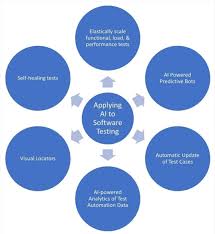
How Do You Validate New Training Data in Regression Testing?
Performance benchmarking is a crucial part of regression testing when validating new training data. Developers run test cases using the model trained with previous data and compare its accuracy, response times, and decision-making consistency against the newly trained model. If the new data negatively impacts performance, it may indicate overfitting, underfitting, or misalignment with existing patterns. By analyzing key metrics such as precision, recall, and F1-score, teams can determine whether the updated model maintains or improves performance.
Another validation approach involves running controlled A/B tests. By deploying both the old and updated models in parallel, developers can compare their outputs in real-world scenarios. This helps determine whether the newly trained model behaves as expected and whether it introduces any unexpected regressions. A/B testing is particularly useful in applications such as chatbots and voice agents, where user interactions provide valuable feedback on model effectiveness.
Regression testing also includes stress testing to evaluate how the model handles edge cases and diverse user inputs. New training data should improve the AI system’s ability to manage a wider range of scenarios rather than limit its flexibility. Testers introduce challenging queries, ambiguous inputs, and extreme cases to check whether the updated model remains robust. If the new training data reduces adaptability or causes unexpected failures, further refinements are necessary before deployment.
Ultimately, validating new training data in regression testing involves assessing data quality, detecting bias, benchmarking performance, conducting A/B tests, and stress-testing model responses. These steps ensure that AI models continue to function optimally, providing accurate and fair results even as they evolve. By incorporating rigorous validation techniques, developers can maintain AI reliability and improve model performance without introducing unintended errors or regressions.
Leave a Reply